NYSE Unveils Blockchain Platform For 24/7 Stock Trading – What You Need To Know

bitcoinistPublicado a 2026-01-20Actualizado a 2026-01-20

Resumen

The New York Stock Exchange (NYSE) has announced plans to develop a blockchain-based platform for trading tokenized securities, pending regulatory approval. The platform will enable 24/7 stock trading, instant settlements, and support for stablecoin funding. It aims to integrate the NYSE’s existing matching engine with blockchain technology to streamline trading and settlement processes. Tokenized shares will retain shareholder rights such as dividends and governance participation, while maintaining compatibility with traditional securities. This initiative is part of Intercontinental Exchange’s broader digital strategy, which includes collaborations with institutions like BNY Mellon and Citigroup. The move comes as competitors like Nasdaq and CME Group also expand into crypto-index products for institutional investors.

On Monday, the New York Stock Exchange (NYSE) unveiled its latest plan to develop a tokenized securities platform, utilizing blockchain technology to facilitate 24/7 stock trading, now seeking regulatory approval.

New Digital Trading Venue At NYSE

According to Monday’s announcement, the proposed digital platform will offer a tokenized trading experience that includes around-the-clock operations, instant settlements, dollar-sized orders, and stablecoin (dollar-pegged cryptocurrencies) funding options.

By integrating the NYSE’s “advanced Pillar matching engine” with blockchain-based post-trade systems, the firm disclosed that the new platform will support multiple chains for settlement and custody, streamlining the trading process significantly.

Once regulatory approvals are secured, this platform will reportedly create a new venue at the NYSE for trading tokenized shares. These shares will not only be fungible with traditional securities but will also comprise tokens that are issued natively as digital assets.

Interestingly, tokenized shareholders will retain their rights, including eligibility for dividends and participation in company governance, much like traditional shareholders. The trading venue aims to align with established market structure principles and will provide non-discriminatory access to all qualified broker-dealers.

The launch of this tokenized securities platform is part of the Intercontinental Exchange’s (ICE) broader digital strategy, which includes preparing its clearing infrastructure for continuous trading and potentially integrating tokenized collateral.

Competition Heats Up

ICE is collaborating with major financial institutions like BNY Mellon and Citigroup to facilitate tokenized deposits across its clearinghouses. This effort will help clearing members manage funds and fulfill margin requirements outside of regular banking hours.

Lynn Martin, President of NYSE Group, emphasized the significance and innovation surrounding this development, stating:

For more than two centuries, the NYSE has transformed the way markets operate. We are leading the industry toward fully on-chain solutions grounded in unmatched protections and high regulatory standards.

The company’s President further stated that the New York Stock Exchange aims to combine trust with “state-of-the-art technology,” effectively reinventing market infrastructure to meet the evolving demands of a digital future.

Michael Blaugrund, Vice President of Strategic Initiatives at the Intercontinental Exchange, echoed Martin’s sentiment, noting:

Since its founding, ICE has propelled markets from analog to digital. Supporting tokenized securities is a pivotal step in our strategy to operate on-chain market infrastructure for trading, settlement, custody, and capital formation in the new era of global finance.

In parallel to these developments, the NYSE’s main competitor, Nasdaq, along with the CME Group, has intensified efforts to provide institutional investors with a regulated mechanism to measure cryptocurrency markets.

They recently reintroduced the Nasdaq Crypto Index, renamed as the Nasdaq-CME Crypto Index (NCI), designed to support products such as exchange-traded funds (ETFs) and structured funds. This move aims to establish clearer rules and governance for index-based cryptocurrency exposure.

The daily chart shows the total crypto market cap at $3.11 trillion. Source: TOTAL on TradingView.com

Featured image from DALL-E, chart from TradingView.com

Preguntas relacionadas

QWhat is the NYSE's latest plan announced on Monday?

AThe NYSE unveiled its plan to develop a tokenized securities platform that utilizes blockchain technology to facilitate 24/7 stock trading, and it is now seeking regulatory approval.

QWhat are some key features of the proposed digital trading platform?

AThe platform will offer around-the-clock operations, instant settlements, dollar-sized orders, stablecoin funding options, and will support multiple chains for settlement and custody.

QHow will tokenized shareholders' rights compare to traditional shareholders?

ATokenized shareholders will retain the same rights as traditional shareholders, including eligibility for dividends and participation in company governance.

QWhich major financial institutions is ICE collaborating with for this initiative?

AICE is collaborating with BNY Mellon and Citigroup to facilitate tokenized deposits across its clearinghouses.

QWhat move has Nasdaq, a main competitor of the NYSE, recently made in the crypto space?

ANasdaq, along with CME Group, reintroduced the Nasdaq Crypto Index (renamed as the Nasdaq-CME Crypto Index) to support products like ETFs and provide a regulated mechanism for institutional cryptocurrency exposure.

Lecturas Relacionadas

This Week's Key Events Preview | U.S. to Release April CPI Data; U.S. Senate Banking Committee to Review "Digital Asset Market Structure Act of 2025"

Weekly News Preview: Key events for May 12-16 include major economic and crypto industry developments. On Tuesday, May 12, the U.S. will release its April CPI data. Additionally, the gaming blockchain Ronin will begin a 10-hour migration to an Ethereum Layer 2, built on OP Stack with EigenDA for data availability. This aims to leverage Ethereum's security and settle RON's annual inflation below 1%. Base's first independent network upgrade, "Base Azul," is scheduled for mainnet activation on Wednesday, May 13, focusing on security, performance, and developer experience enhancements. Thursday, May 14, sees the U.S. Senate Banking Committee voting on the "Digital Asset Market Structure Act of 2025." In other news, Solana DeFi protocol Carrot will shut down, setting a final withdrawal deadline due to impacts from the Drift exploit. The Moscow Exchange will launch futures trading for Solana, Ripple, and Tron indices (RUB-settled) for qualified investors. Multiple service closures are scheduled for Friday, May 15. Dmail Network will begin winding down due to unsustainable infrastructure costs and failed commercialization. Users must export data before this date. Separately, the Cosmos-based lending blockchain UX Chain will fully shut down. Finally, on Saturday, May 16, gaming infrastructure provider Lattice will wind down operations, with its Redstone Layer 2 network ceasing. Users are urged to withdraw assets, especially from contracts like Uniswap pools, before the shutdown.

链捕手Hace 2 min(s)

This Week's Key Events Preview | U.S. to Release April CPI Data; U.S. Senate Banking Committee to Review "Digital Asset Market Structure Act of 2025"

链捕手Hace 2 min(s)

Morning Post | Trump Media Group Releases Q1 Financial Report; Top Three DeFi Applications Return Nearly $100 Million in Revenue to Token Holders in 30 Days; Michael Saylor Shares Bitcoin Tracker Info Again

**Title: Daily Briefing | Trump Media Group Releases Q1 Report; Top 3 DeFi Apps Return Nearly $100M to Token Holders; Michael Saylor Signals Potential Bitcoin Buy** **Summary:** Key developments in the past 24 hours include: * **Economic Outlook:** Goldman Sachs has pushed back its forecast for the next two Federal Reserve interest rate cuts to December 2026 and March 2027, citing persistent inflationary pressures from energy costs. This delayed timeline is expected to tighten liquidity flow into risk assets, including cryptocurrencies. * **DeFi & Revenue:** Data from DefiLlama shows that three leading DeFi applications—Hyperliquid, Pump.fun, and EdgeX—collectively distributed $96.3 million in revenue to their token holders over the last 30 days. This trend highlights a shift in the crypto community's focus towards real protocol earnings and sustainable economic models. * **Corporate Bitcoin Moves:** Michael Saylor, founder of MicroStrategy (note: referred to as 'Strategy' in the text, likely a typographical error), has signaled potential upcoming Bitcoin purchases by posting a "Bitcoin Tracker" update, following a pattern that typically precedes the company's official disclosure of new acquisitions. * **Market Integrity:** Prediction market platform Polymarket announced updates to address platform issues, including identifying and banning clusters of accounts involved in "ghost-fill" activities and implementing measures to prevent bulk account creation. * **Regulation:** The Bank of England Governor warned that stablecoin regulation could lead to tensions between US and international regulators. In South Korea, the National Tax Service has launched a pilot program to entrust seized virtual assets to private custody firms for management. * **Meme Token Trends:** GMGN data lists the top trending meme tokens on Ethereum (e.g., HEX, SHIB), Solana (e.g., FWOG, TROLL), and Base (e.g., SKITTEN, PEPE) over the past day. **Financial Note:** Trump Media & Technology Group reported a Q1 loss of approximately $4 billion, primarily attributed to unrealized losses on its Bitcoin and other digital asset holdings.

链捕手Hace 32 min(s)

Morning Post | Trump Media Group Releases Q1 Financial Report; Top Three DeFi Applications Return Nearly $100 Million in Revenue to Token Holders in 30 Days; Michael Saylor Shares Bitcoin Tracker Info Again

链捕手Hace 32 min(s)

Telegram Takes Direct Control of TON, Social Traffic Rewrites the Public Chain Narrative

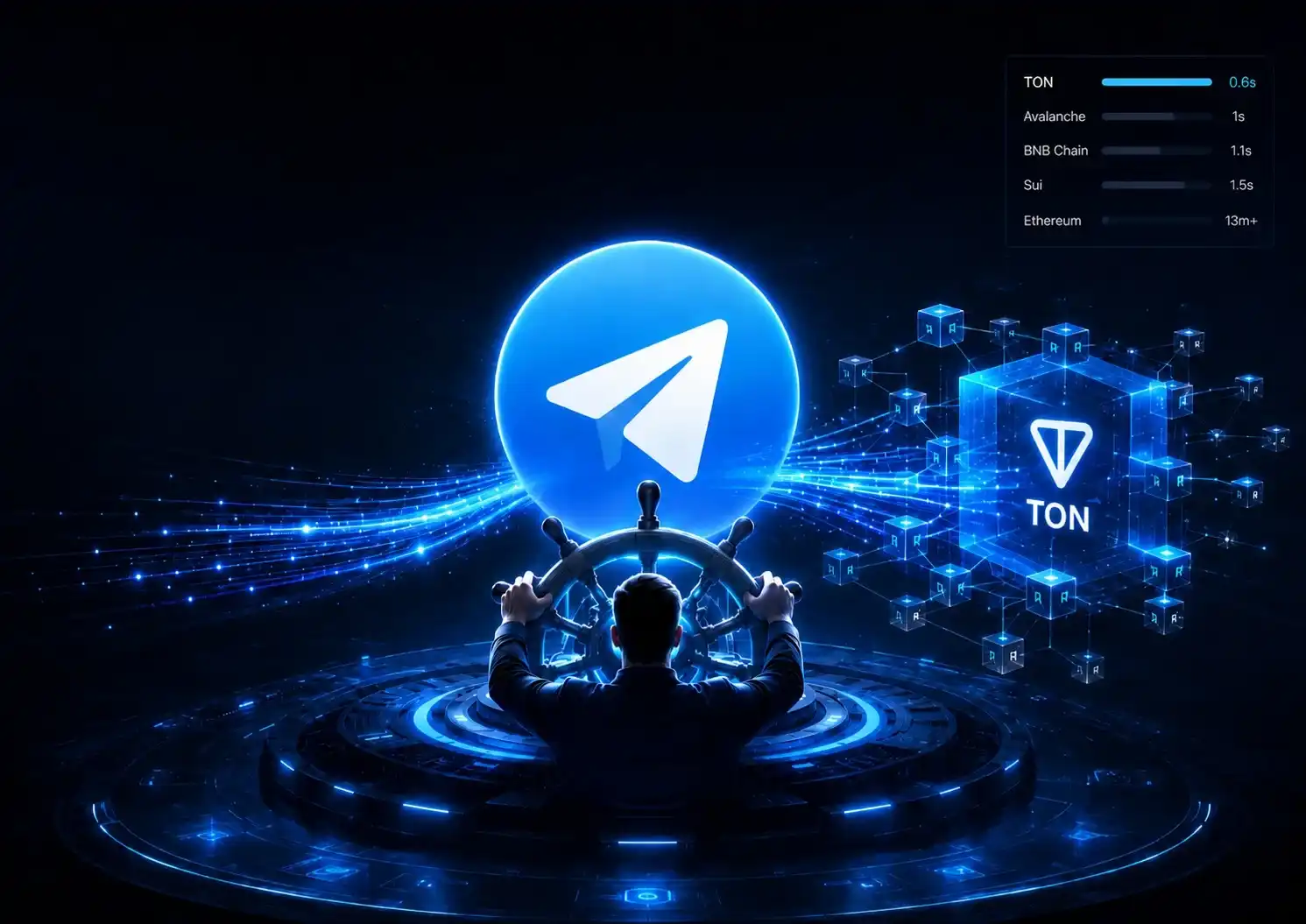
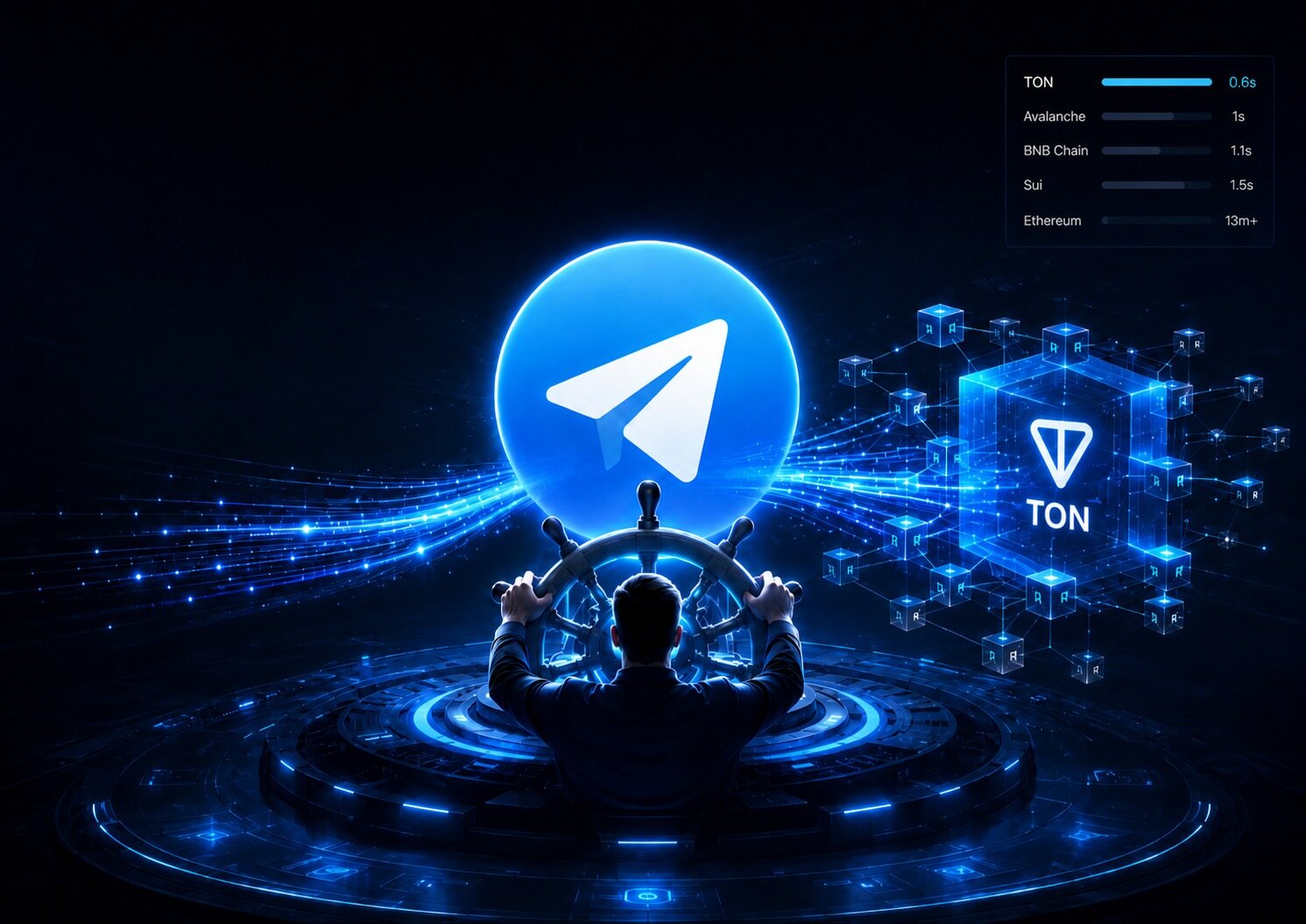
Telegram founder Pavel Durov announced that Telegram will replace the TON Foundation as the core driver and largest validator of The Open Network (TON). Key initiatives include a sixfold reduction in transaction fees, performance upgrades, and improved developer tools within the next few weeks. This marks a strategic shift from Telegram merely providing user access to deeply integrating TON into its platform's core infrastructure. The goal is to transform Telegram's massive social traffic into sustainable on-chain activity. While viral mini-apps like Notcoin have demonstrated Telegram's ability to drive user adoption, TON aims to support frequent, low-value transactions inherent to social platforms—such as tipping, in-app payments, and game rewards. Ultra-low fees and sub-second finality (0.6 seconds) are crucial to making blockchain interactions seamless and nearly invisible within the Telegram user experience. However, Telegram's increased central role raises questions about network decentralization. Durov argues that Telegram's participation will attract more large validators, thereby enhancing decentralization. TON also offers high annual staking rewards (18.8%), aiming to retain capital within its ecosystem. The fundamental challenge for TON is no longer leveraging Telegram's user base, but becoming an indispensable, seamless infrastructure layer for Telegram's everyday applications—moving from an adjacent chain to an embedded utility.

marsbitHace 34 min(s)

Telegram Takes Direct Control of TON, Social Traffic Rewrites the Public Chain Narrative

marsbitHace 34 min(s)

Telegram Takes Direct Control of TON, Social Traffic Reshapes Public Chain Narrative

Telegram's founder, Pavel Durov, has announced a major shift in the development of The Open Network (TON). Telegram will now become the core driver of TON, replacing the TON Foundation and becoming its largest validator. The focus will be on technical upgrades over the next few weeks, including slashing network fees by six times to near-zero and improving finality time to 0.6 seconds. This move signifies a deeper integration between Telegram and TON, moving beyond just providing a user base. The goal is to transform Telegram's vast social traffic and built-in features—like Mini Apps, payments, and bots—into sustainable, on-chain usage scenarios. The reduced fees and faster speeds are crucial for enabling the small, frequent transactions typical of social interactions. While this promises stronger execution and product alignment, it raises questions about centralization. Durov argues Telegram's involvement will attract more validators, enhancing decentralization, but the outcome remains to be seen. Additionally, TON's high annual staking reward of 18.8% aims to retain capital within the ecosystem. The key challenge for TON is no longer just leveraging Telegram's entry point, but becoming an invisible, seamless infrastructure layer within Telegram's daily use. Its success hinges on converting viral attention into lasting, embedded utility.

Odaily星球日报Hace 44 min(s)

Telegram Takes Direct Control of TON, Social Traffic Reshapes Public Chain Narrative

Odaily星球日报Hace 44 min(s)

Trading

Spot
Futuros
活动图片