NVIDIA Stuns with First Vera Rubin Test, DeepSeek Throughput Skyrockets 30x

marsbitPublicado a 2026-08-25Actualizado a 2026-08-25

Resumen

NVIDIA has unveiled the first on-silicon test results for its next-generation flagship cabinet, the Vera Rubin NVL72, using DeepSeek-V4-Pro on real "agent coding" workloads. The results are staggering: compared to the current leading GB300 NVL72, Vera Rubin delivers up to a 30x increase in throughput per megawatt and reduces token generation cost by up to 35x. The benchmark used was the AgentX test from SemiAnalysis, which captures full AI agent workflows with growing context, tool calls, and sub-agent generation, moving beyond traditional LLM benchmarks. This highlights a shift from the LLM era to the Agent era. Key innovations behind Vera Rubin's performance include extreme co-design, separation of services, distributed KV cache, KV-aware routing, MegaMoE architecture, 4-bit NVFP4 quantization, and 6th-gen NVLink for efficient MoE model execution. Simultaneously, NVIDIA announced the full-scale production of two new chips: 1. **Groq 3 LPX:** A low-latency inference accelerator designed for the Vera Rubin platform. When paired with Rubin GPUs for context processing, it achieves record-breaking output speeds—e.g., running Gemma 4 31B at 3,400 tokens/sec—drastically reducing multi-step agent task times. 2. **Vera CPU:** A processor specifically built for agentic AI, featuring 88 custom Olympus cores and 1.2TB/s memory bandwidth to handle the complex orchestration of agent tasks. SpaceXAI is already deploying it, with plans for space-based Vera Rubin systems by 2028. NVID...

It's mind-blowing.

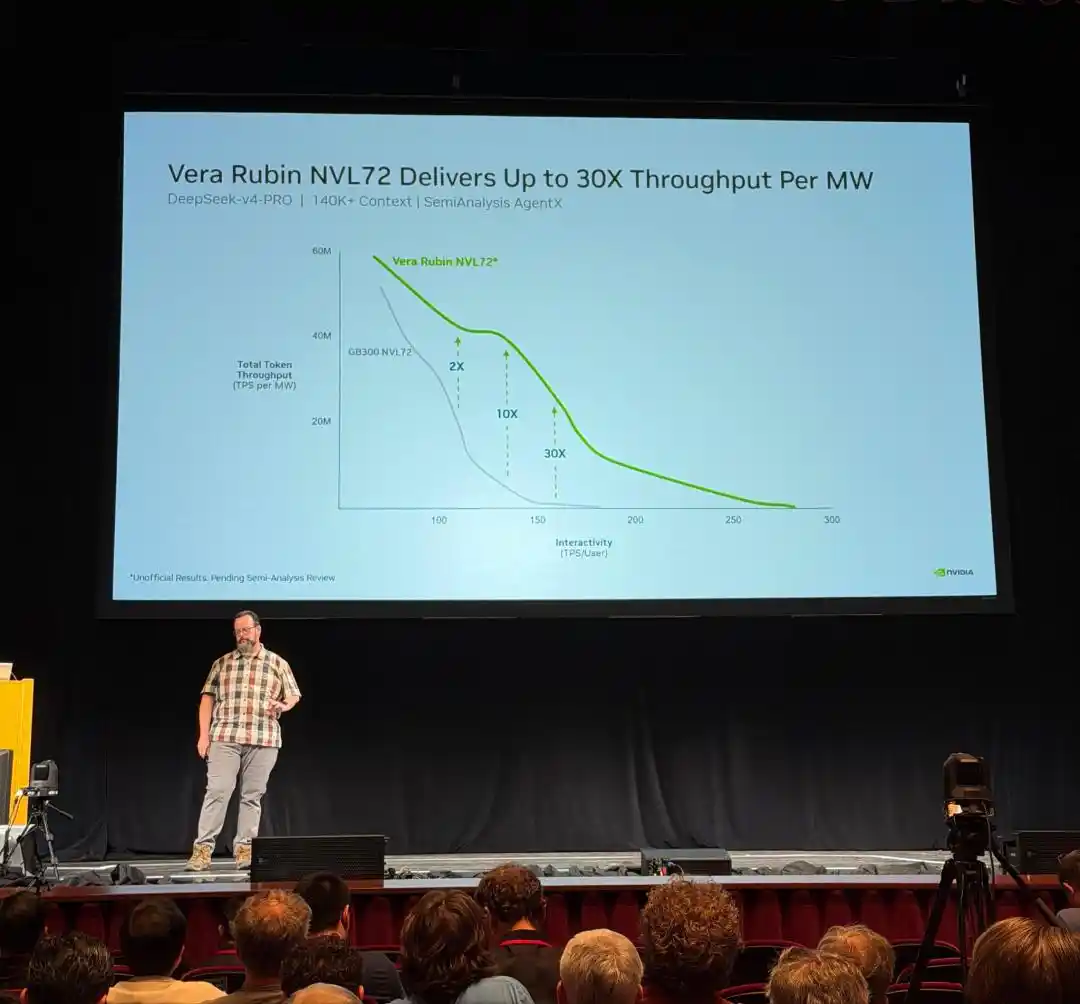
Just now, NVIDIA for the first time ever announced the initial on-chip test data of its next-generation flagship cabinet, the Vera Rubin NVL72.

And, for this test, they directly pulled in DeepSeek -V4-Pro, running the most realistic 'Agent Coding' task!

The results are astonishing: compared to the current reigning champion GB300 NVL72, Vera Rubin's throughput per megawatt has skyrocketed up to 30x, and token cost has plummeted up to 35x!
Someone exclaimed, 'I wouldn't even dare write a PPT to fool investors like this!'

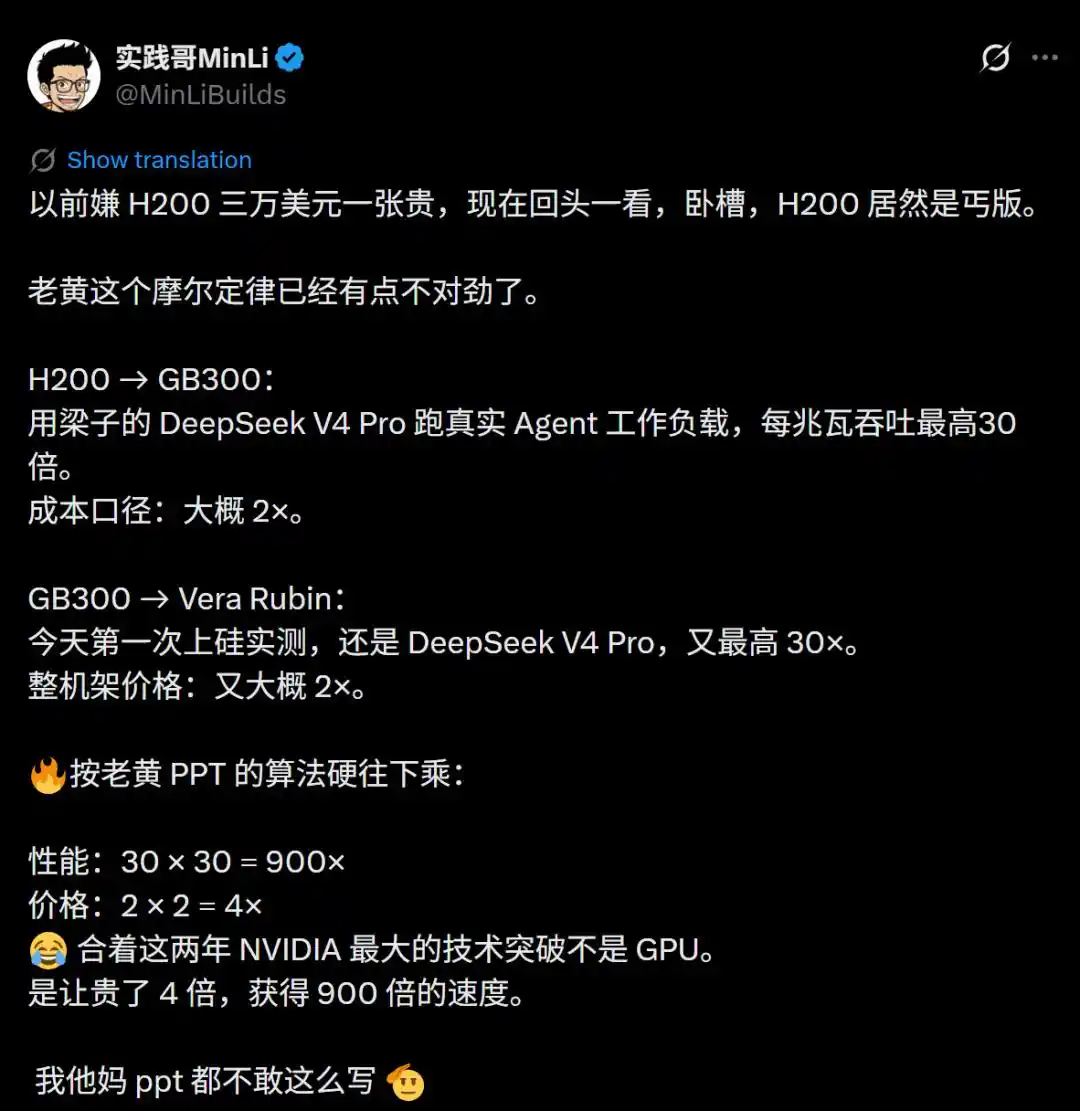
Another netizen commented brilliantly, 'I used to think the H200 at thirty thousand dollars a card was expensive. Looking back now, the H200 doesn't even qualify as the budget version anymore.'
Let's take a closer look.

From H200 to GB300, the throughput for real Agent workloads increased up to 30x, while cost roughly doubled.

From GB300 to Vera Rubin, throughput soared another 30x, with the whole rack price roughly doubling again.

According to Jensen's Law of Moore, it turns out NVIDIA's biggest technological breakthrough in the past two years isn't the GPU itself, but making the price 4 times more expensive while delivering a whopping 900x speed leap!
This time, NVIDIA announced a counterintuitive truth to everyone: The LLM era is over, the Agent era has arrived, all previous AI benchmark standards are obsolete!
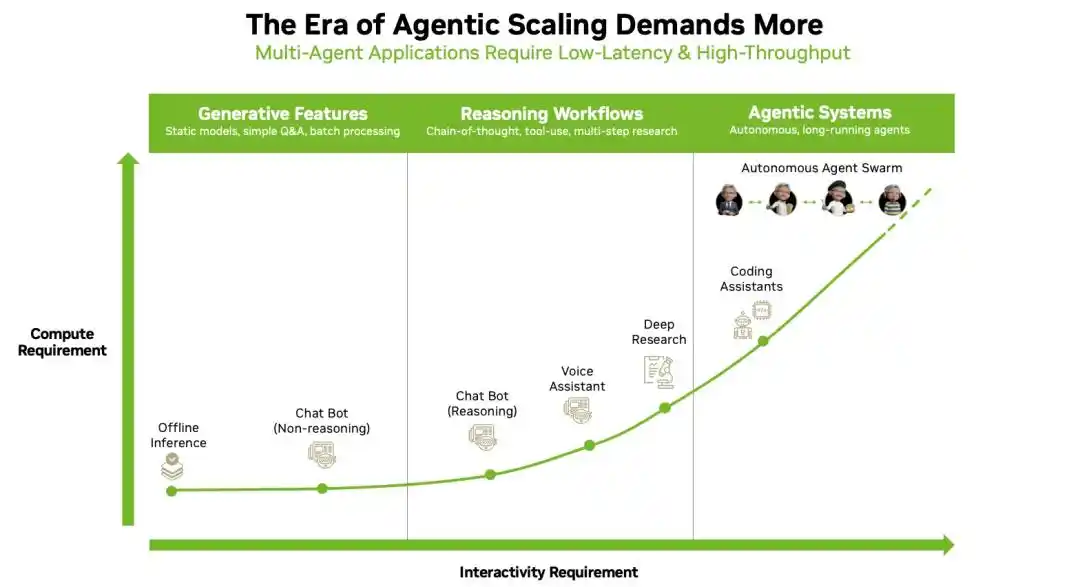
Meanwhile, the Vera CPU, built specifically for agents, has been installed overnight by Musk's SpaceXAI, and is even preparing to be launched directly into space.

Also today, the NVIDIA Groq 3 LPX has entered full-scale production.

Gemma 4 31B running on it is simply stunning, hitting 3400 Tokens per second. Trillion-parameter model throughput has surged 35x.
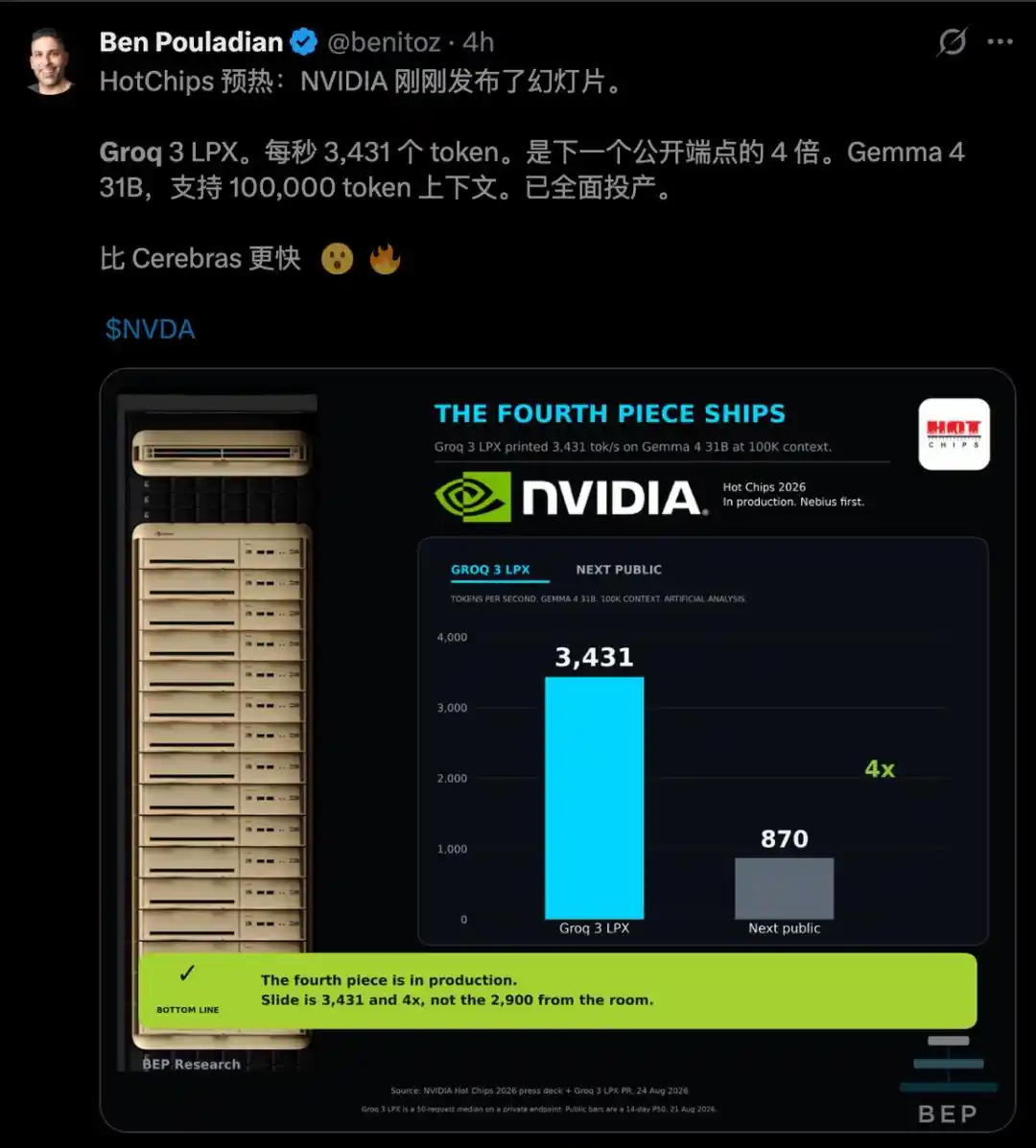
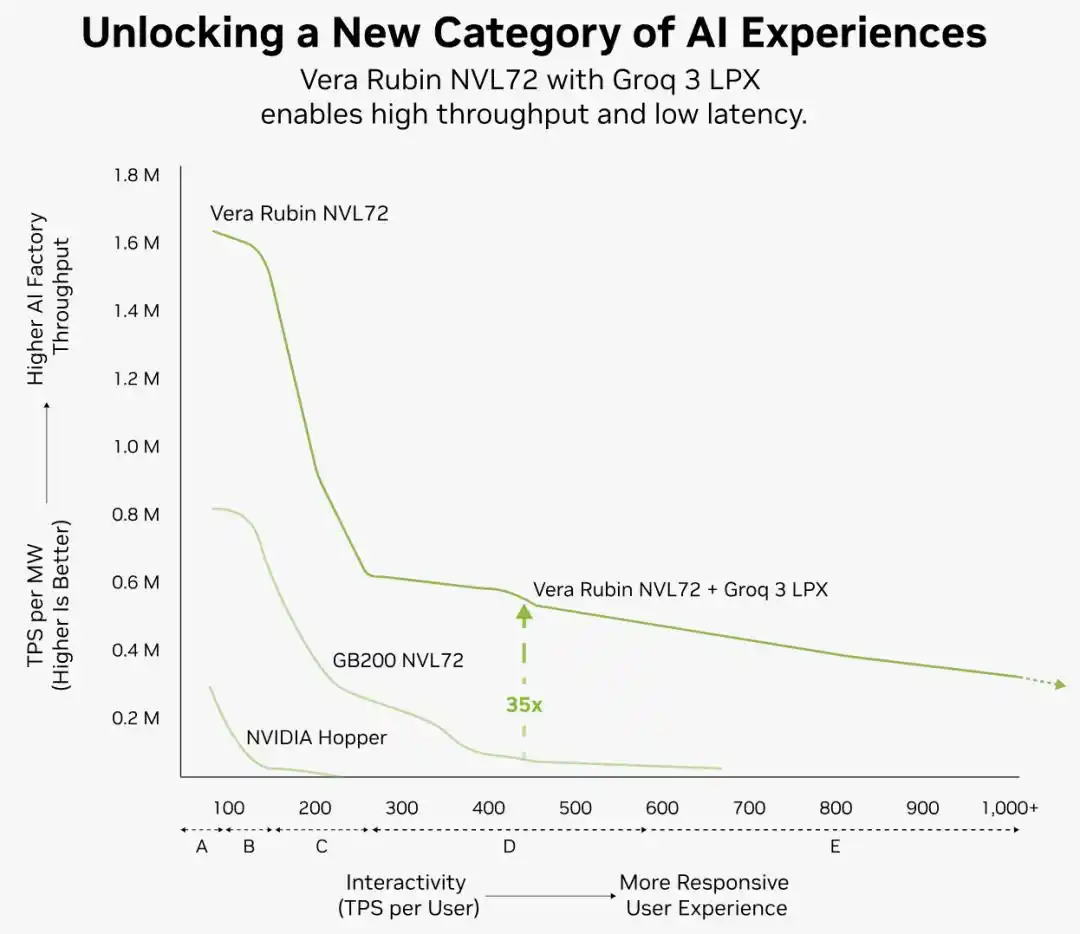
These new records directly rewrite the commercial landscape of the Agent ecosystem, starting tonight!

Why Must NVIDIA Launch Vera Rubin?

OpenRouter's latest data provides the answer: In the real world, a single Agent AI task consumes 15x the tokens of a regular chat conversation!

For example, if an Agent is tasked with researching a company for an investment decision, during this process, the agent and sub-agents will continuously reason, and the accumulated tokens become the input for the next steps. Long context handling thus becomes the most critical limiting factor for agentic AI.
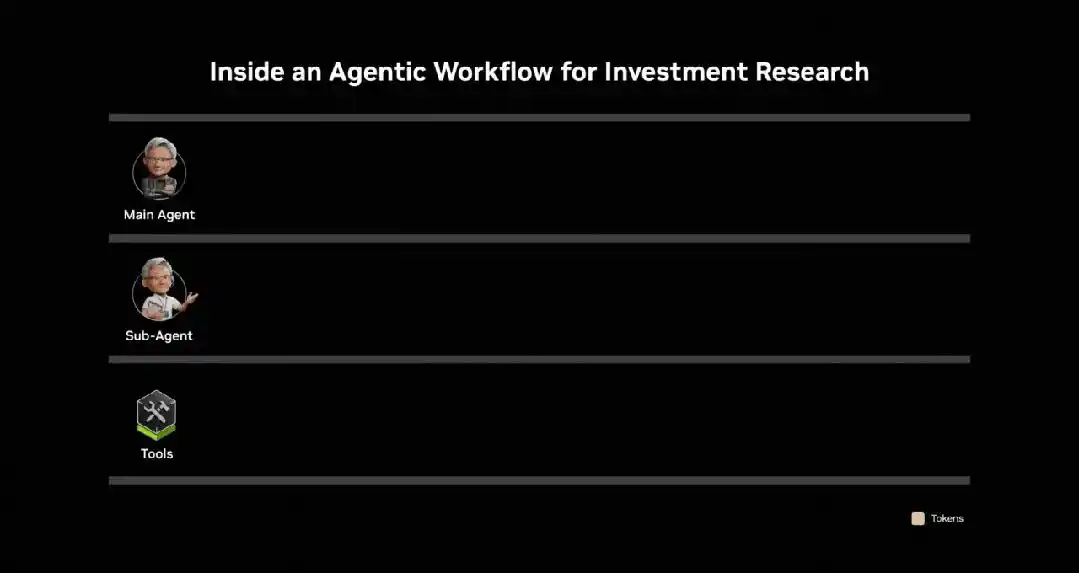
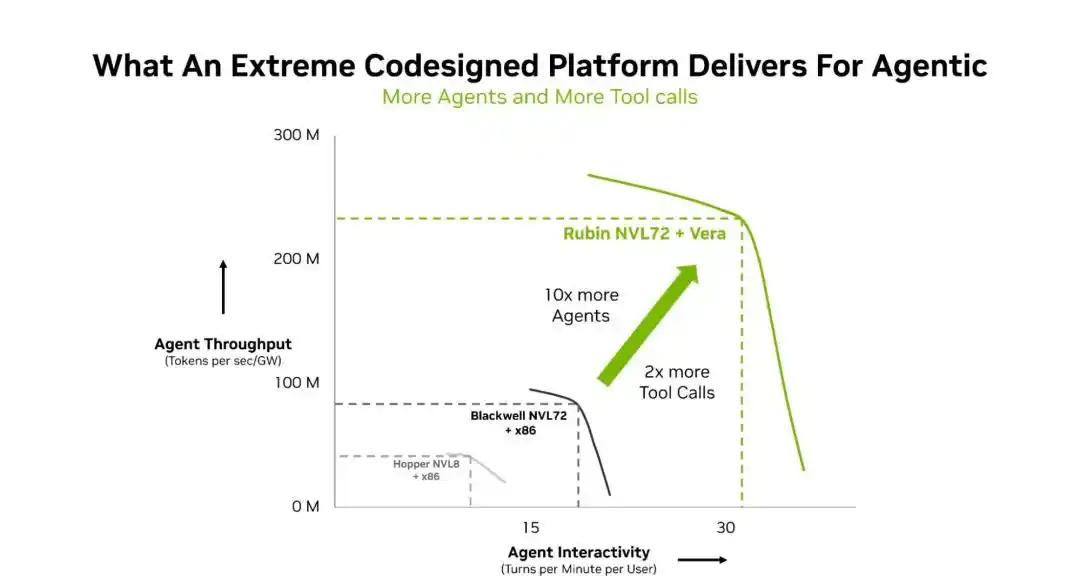
The more interactions an agent has, the greater the throughput — the number of agents increased 10x, tool calls increased 2x, the contradiction between computing power and algorithms has spawned new demands.
Don't Mistake Chat for Agents, Old Benchmarks Are All Useless!

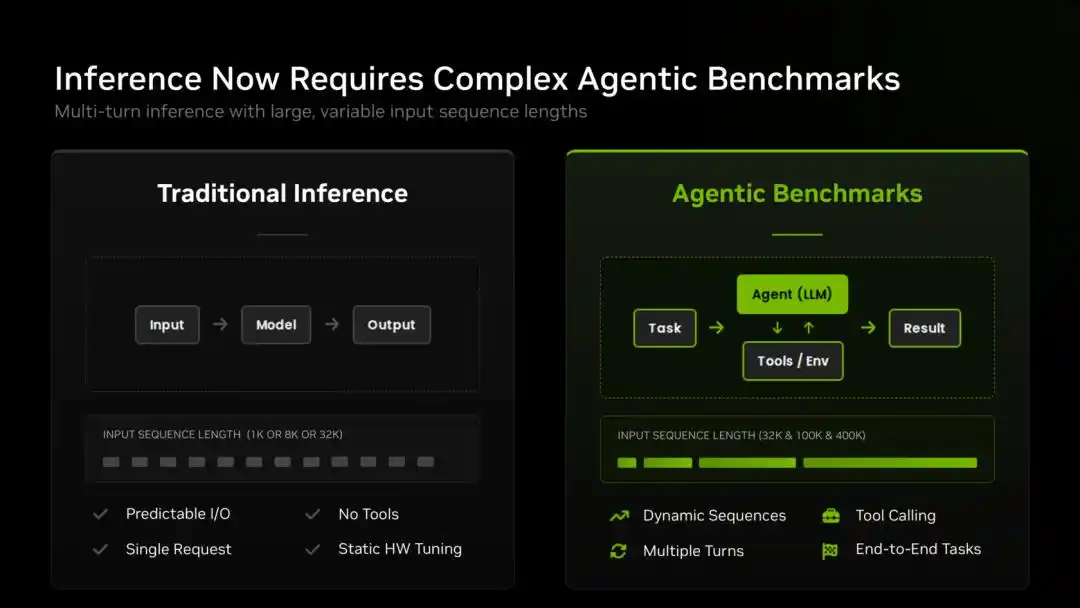
At this point, traditional AI benchmarks (like fixed-length 8K/1K sequence tests) become completely invalid.

NVIDIA officially clarified: Performance measurement must evolve! We can no longer test single inference requests; we must capture the complete Agent workflow.

To this end, they used the AgentX benchmark from SemiAnalysis.

This test is no longer rigid Q&A, but replays real 'code-writing sessions' featuring contextual growth, tool calls, and sub-agent generation.
This is why the H200 appears inadequate on the new Agent battlefield, and why Vera Rubin is destined to reign.

Vera Rubin NVL72 × DeepSeek-V4-Pro:

The Compute Monster Has Arrived

To demonstrate the power of Vera Rubin NVL72, NVIDIA directly used the open-source king — DeepSeek -V4-Pro (1.6T) for on-chip testing.

Once the data was out, the results were staggering —

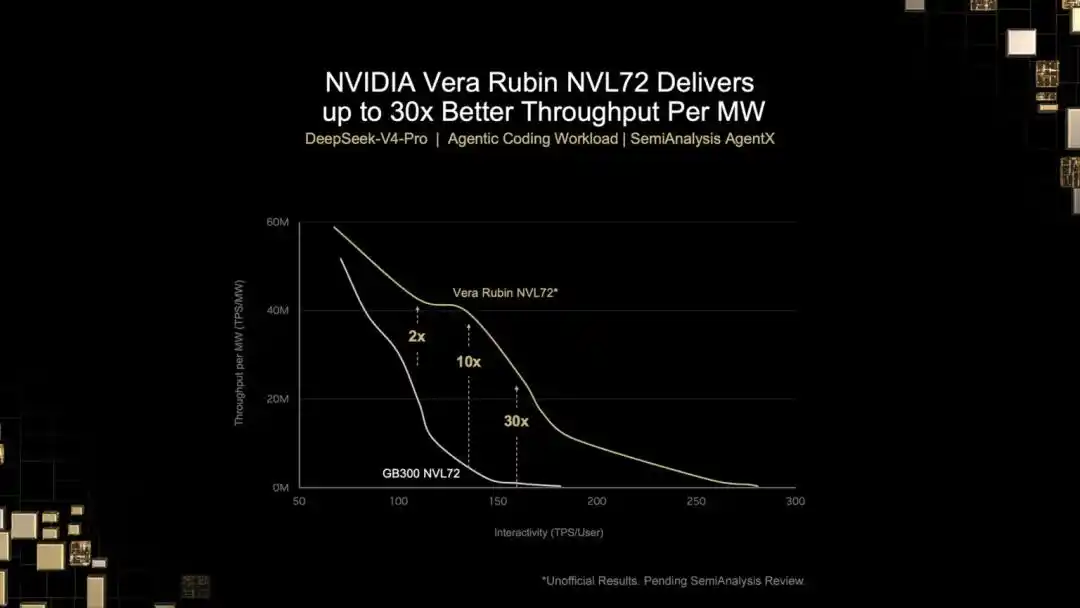
Under the AgentX workload, Vera Rubin NVL72's throughput per megawatt was a full 30x higher than GB300 NVL72 at its peak!
Note, this comparison isn't against the old H200, but the hot, mainstream GB300.

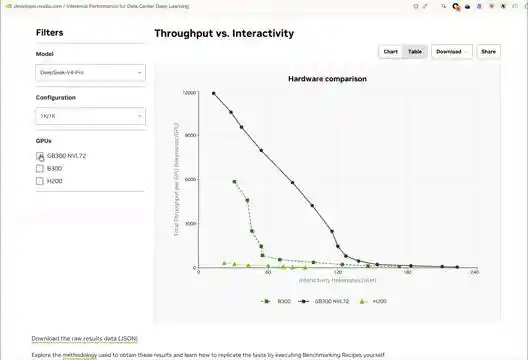
In the same DeepSeek -V4-Pro test, the GB300's throughput per megawatt was already 15x higher than the H200's.

Yet Vera Rubin, standing on GB300's shoulders, raised it another 30x, lifting the entire Pareto curve!

What does this mean?

For 'AI factories' constrained by power supply, this directly expands the boundaries of physical laws.

Under the same power budget, Vera Rubin can handle 30x more agentic work.

For megawatt-scale or even gigawatt-scale data centers, this is like conjuring 30x more compute assets out of thin air.

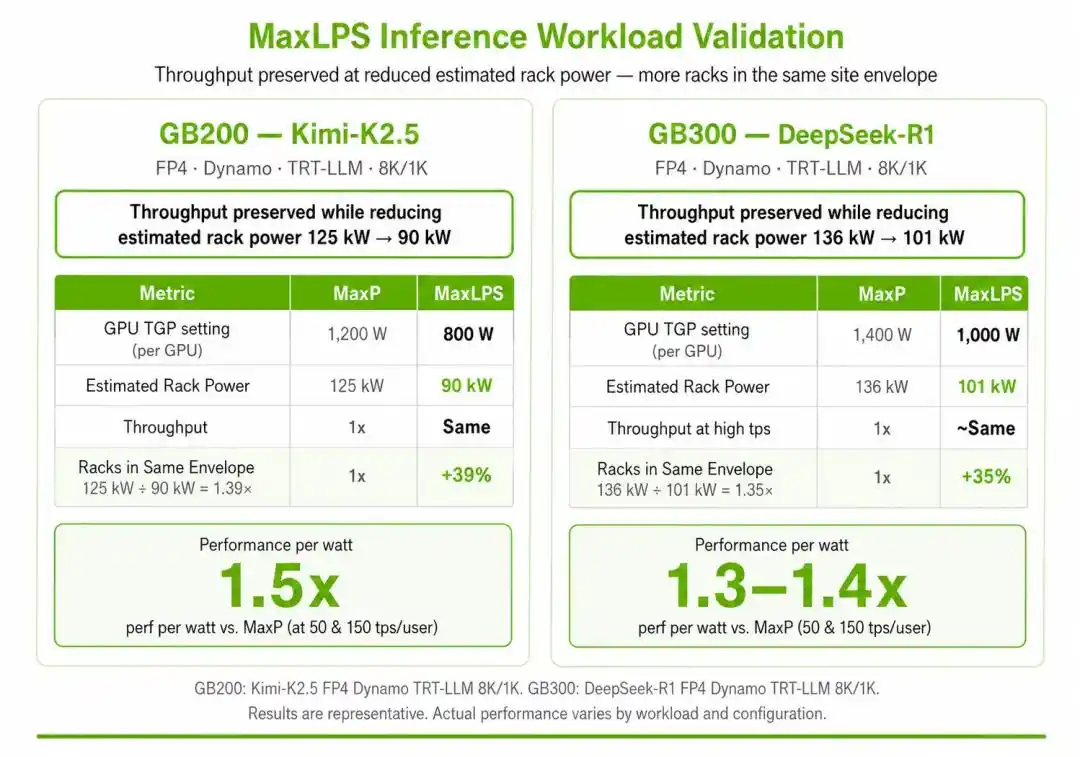
Furthermore, NVIDIA DSX MaxLPS technology enables power management at the GPU, rack, and workload levels, allowing up to 40% more GPUs to be configured within the same megawatt budget, further increasing AI factory throughput per megawatt!
Token Cost Plummets 35x! The Agent Industry's 'Ledger' Is Completely Rewritten

Throughput per megawatt directly impacts the cost per generated token. The performance surge brings the most immediate consequence: a nuclear explosion in business models.

NVIDIA announced that Vera Rubin NVL72's cost to produce one million tokens is up to 35x lower than GB300 NVL72!
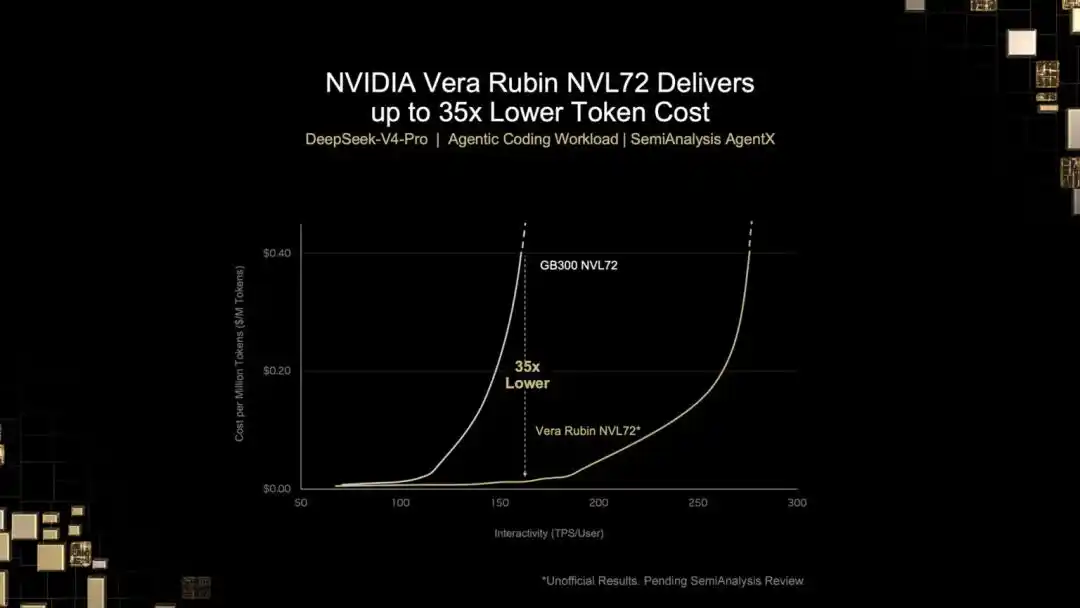
When inference costs plummet 35x, 24/7 digital employees will become reality, and super-apps in the ToC sector will experience an explosion.

Jensen's move has directly sliced open the gateway to the Agent application era.
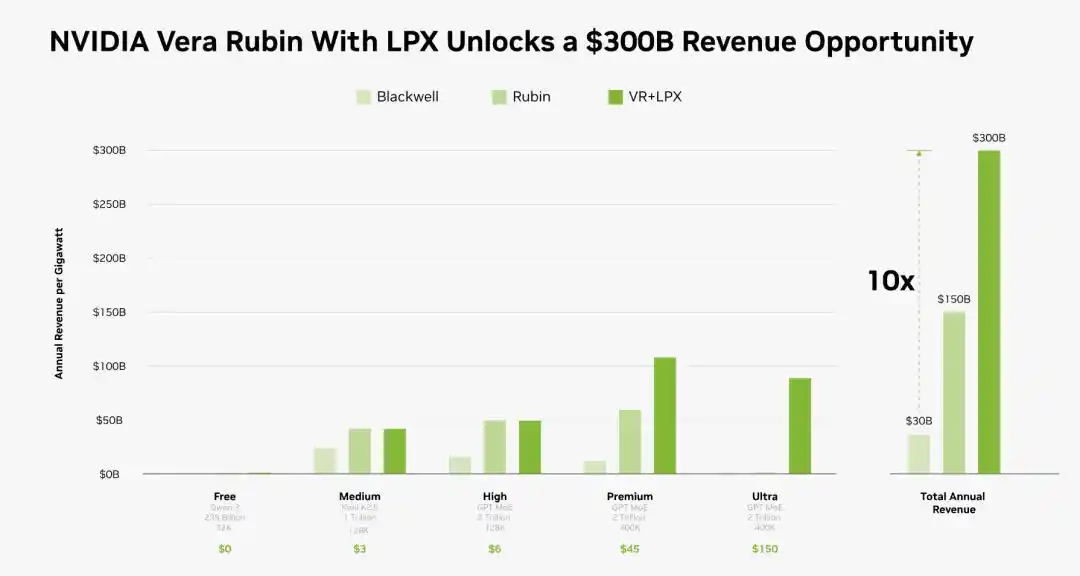
Extreme Co-design: How Did Jensen Do It?

You might ask: How can it achieve a 30x speedup? Is it due to single-chip process technology?

Obviously not.

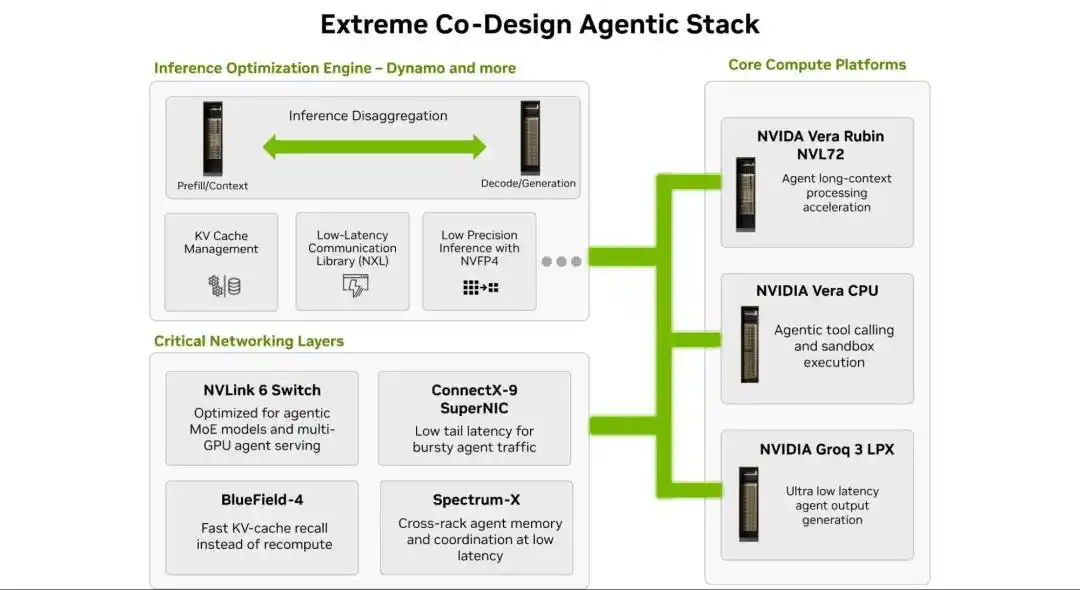
The astounding performance leap of Vera Rubin NVL72 is powered by 'Extreme Co-design'.
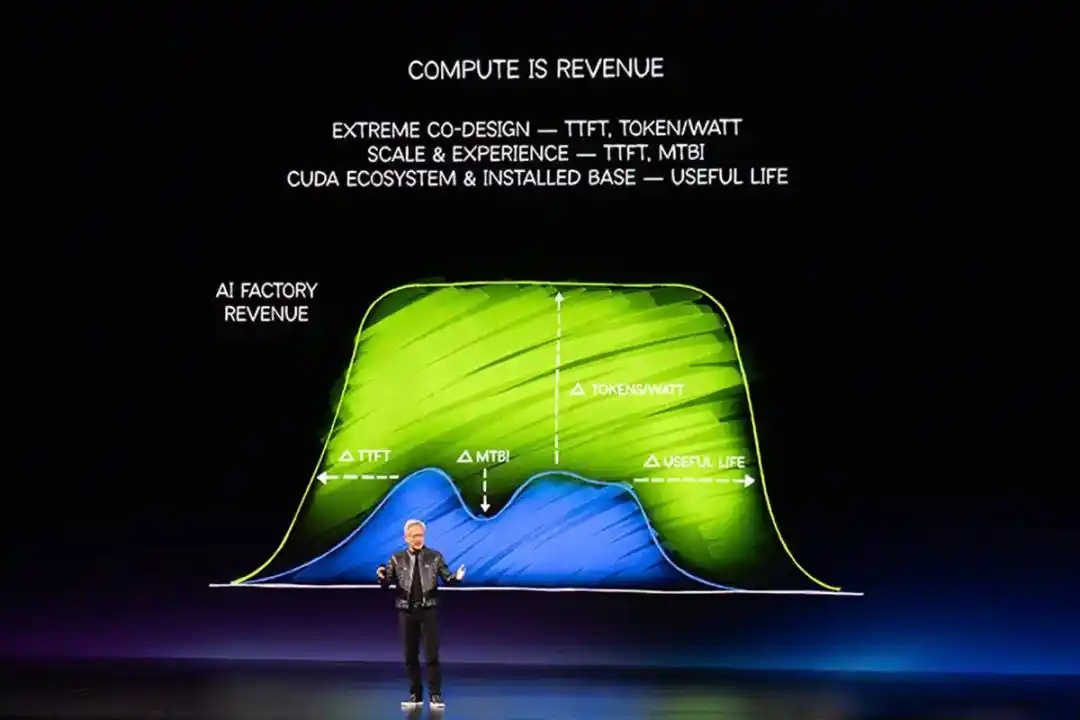
For example, disaggregated serving, distributed KV cache, KV-aware routing, MegaMoE, and more.
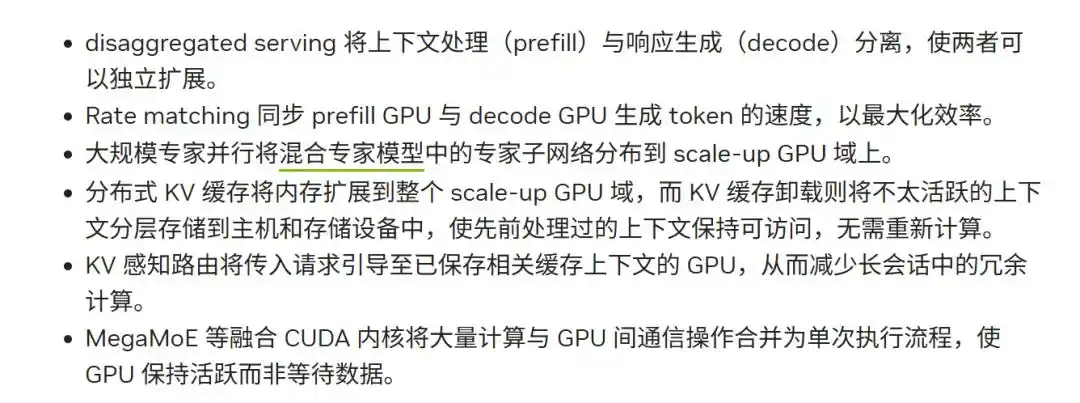
Additionally, NVFP4 quantization directly compresses model weights to 4-bit precision, dramatically reducing memory footprint without sacrificing output quality, making throughput take off.

Meanwhile, the sixth-generation NVLink and large MoE models provide an interconnect network 10x faster and with 3x lower latency than standard Ethernet, allowing large models like DeepSeek , based on MoE architecture, to fluidly call different 'expert' sub-networks across 72 GPUs.

This is no longer about selling graphics cards; Jensen is selling an entire 'AI power plant'.
NVIDIA Groq 3 LPX in Full Production:

3400 Tokens/Sec, Coding Agents Are Transformed!

At the Hot Chips 2026 conference, NVIDIA also dropped a bombshell: Groq 3 LPX has begun full-scale production!
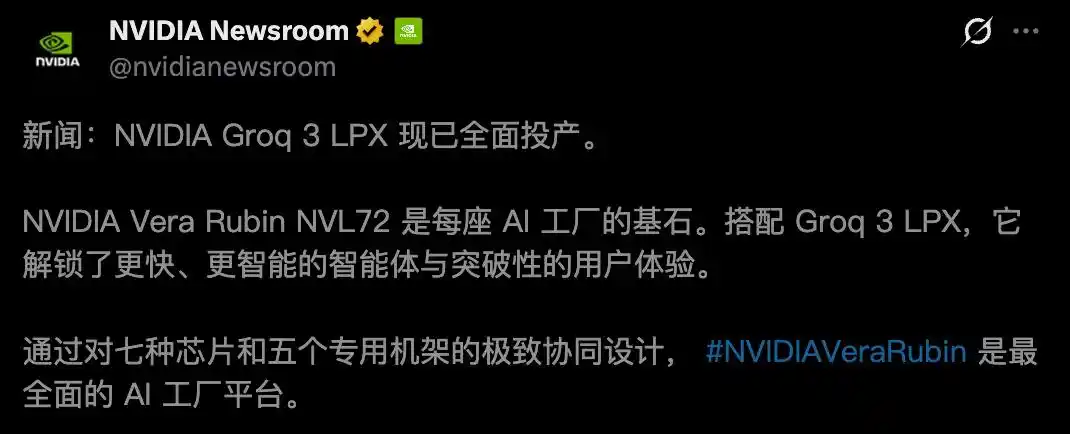
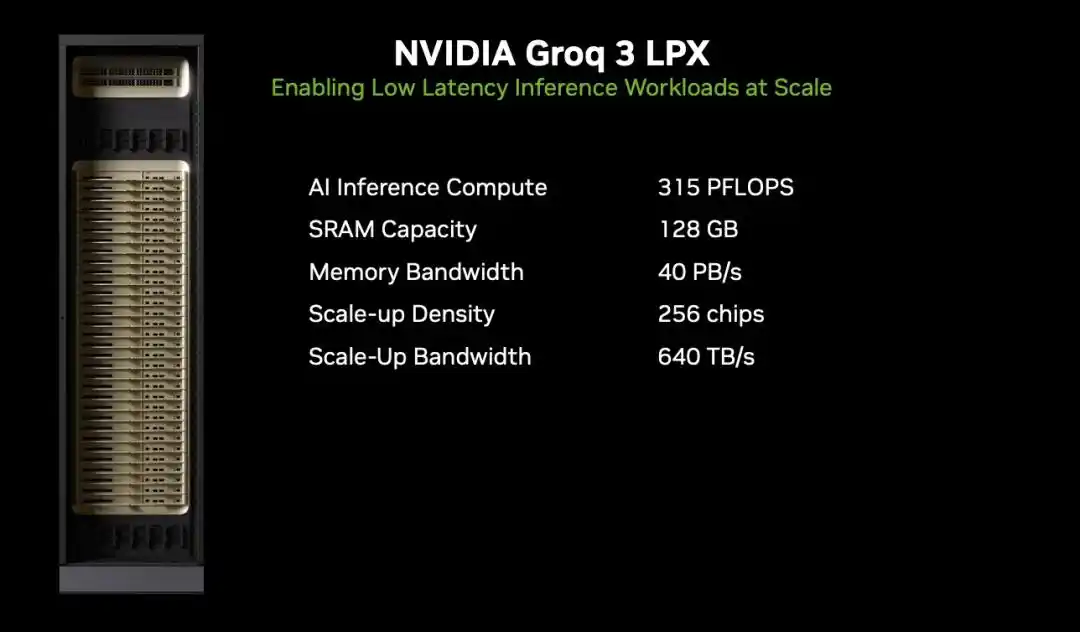
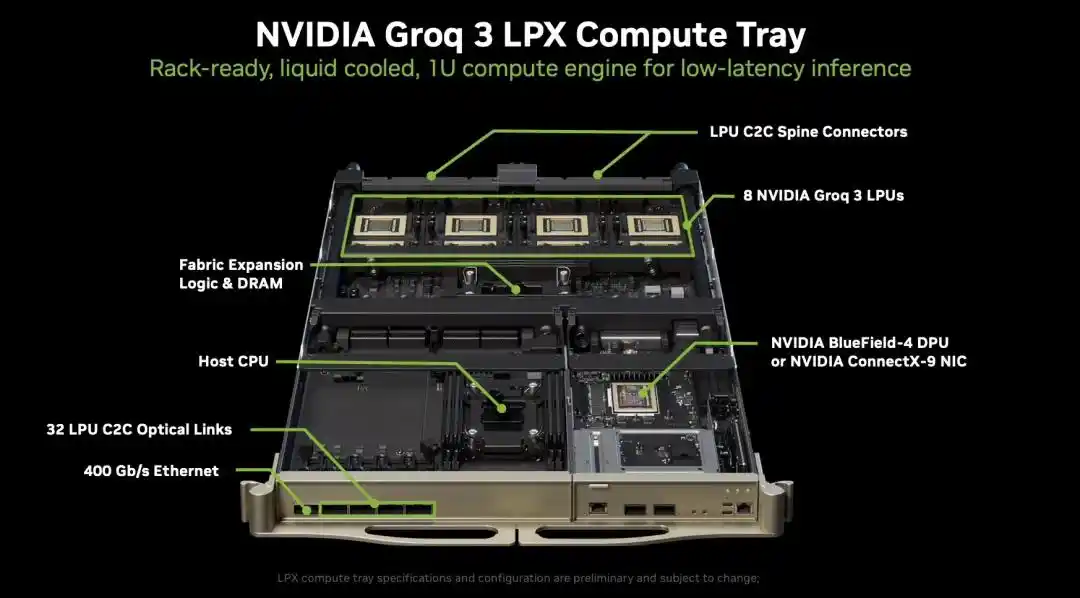
The Groq 3 LPX is the exclusive extension for the Vera Rubin NVL72 data center platform.

It is 'tailor-made' for this system, specializing in low-latency inference acceleration.

This black tech was acquired by NVIDIA last December from the startup Groq for a cool $20 billion.
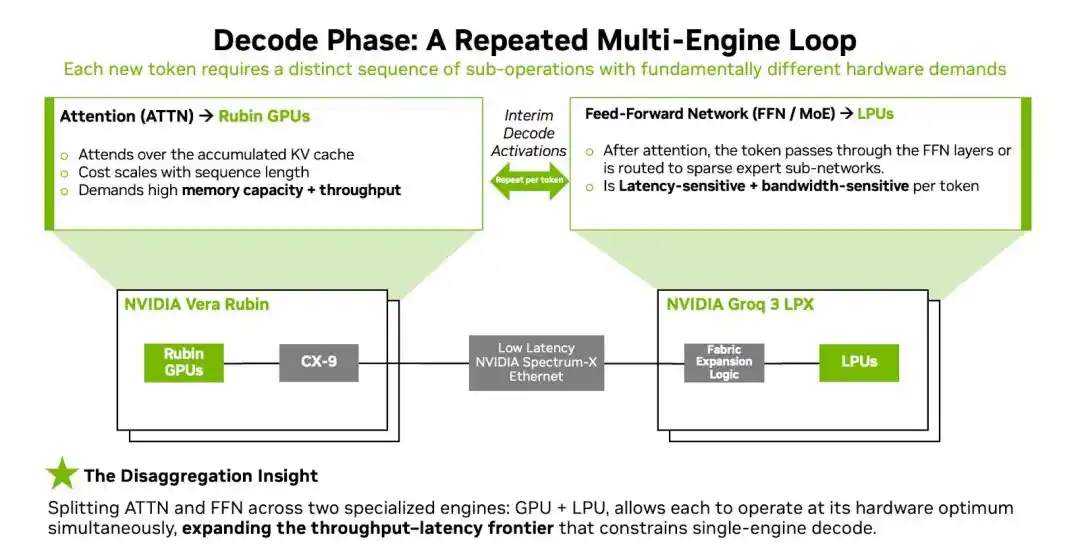
AI agents encounter the issue of decoding latency. To end this pain point, the Groq 3 LPX cleverly separates massive context processing from token generation entirely.

NVIDIA's solution: let the Rubin GPU handle large-scale context, and delegate the ultra-fast token generation task to the Groq 3 LPX.

One handles 'reading,' the other handles 'writing,' each doing what they do best.
In a full rack-scale deployment, up to 256 LP30 accelerators can collaborate with GPUs via ultra-high-bandwidth interconnects, constructing an enterprise-scale inference engine.
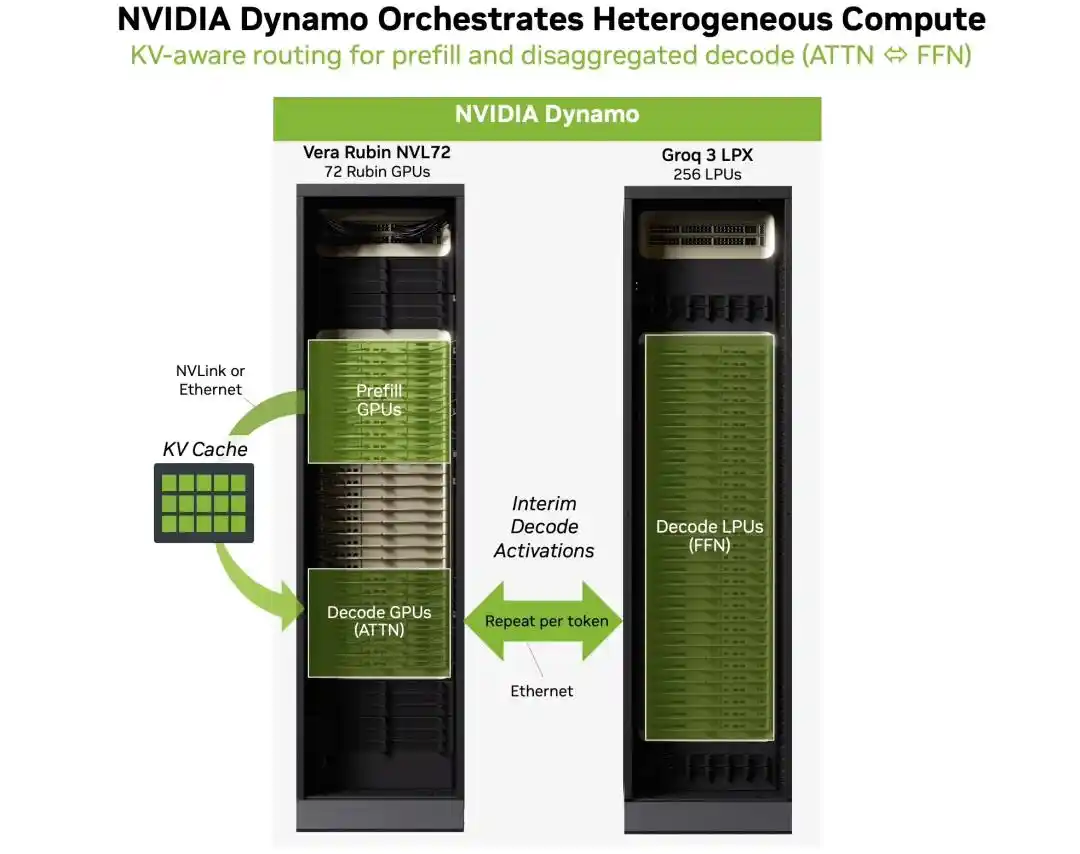
Consequently, the Groq 3 LPX achieves record-breaking output speeds.

In Artificial Analysis's benchmarks, the Groq 3 LPX running Gemma 4 31B with a 100K token ultra-long context window achieved a staggering output speed of 3,400 Tokens/sec!

This makes its response speed 4x faster than competitors' for latency-sensitive workloads.
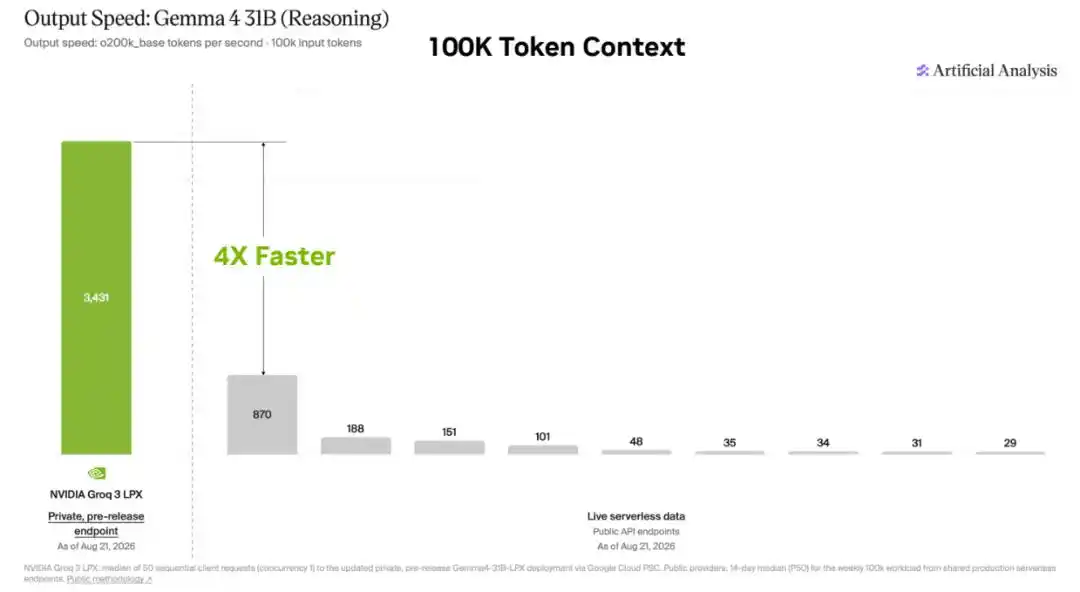
Multi-step agent tasks that used to take hours can now be completed in minutes!
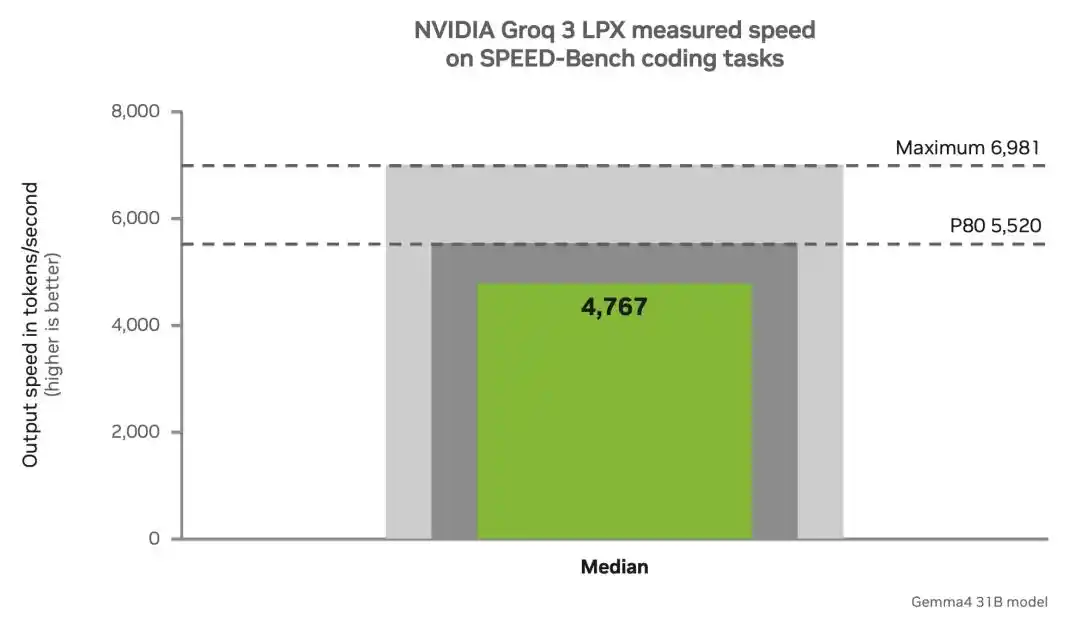
For generating 5000 tokens, the time taken dropped from 50 seconds to 1.5 seconds, a 34x difference.
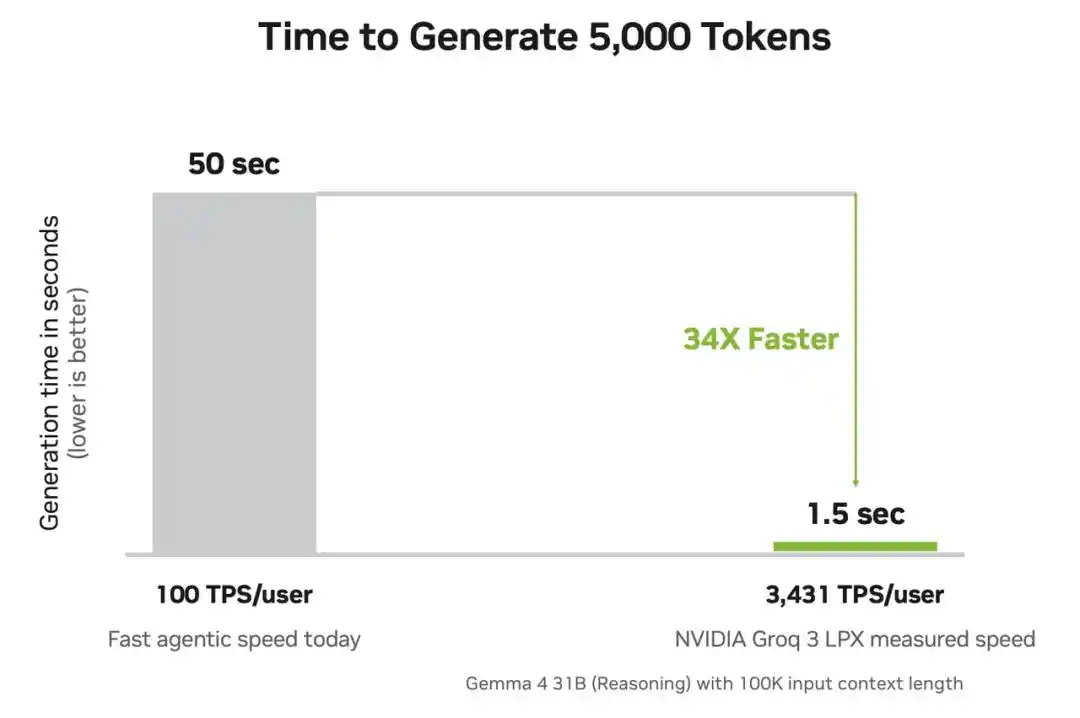
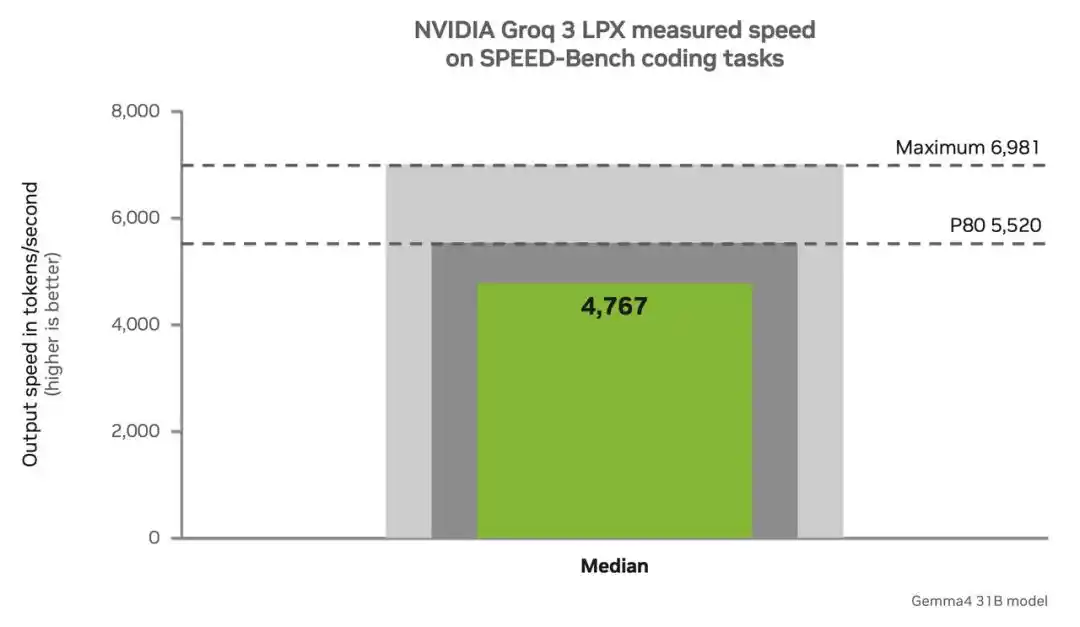
And in coding tasks, the Groq 3 LPX reached a maximum output speed of 6981 token/s.
Jensen Huang stated directly that by advancing ultra-high-speed token generation via LPX, they have achieved 'yet another huge leap' in AI throughput and responsiveness.
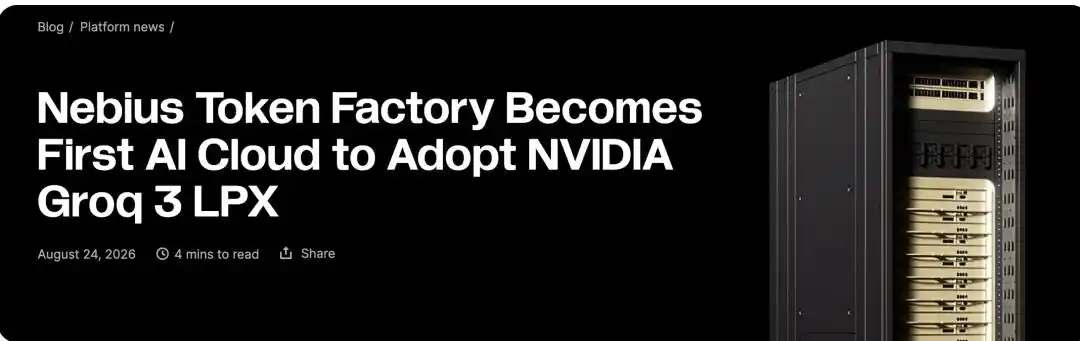
Nebius has already deployed the chip in its Nebius Token Factory, delivering an ultimate experience of instant response for every step of the agentic loop.
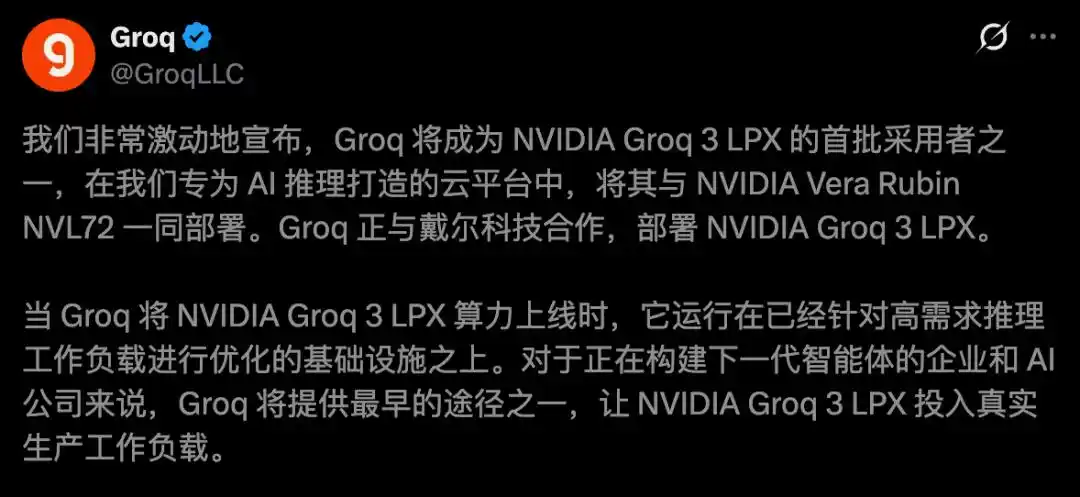
Following closely behind is Groq itself.
First Agent-Dedicated CPU Released,

Musk Installs It Overnight 'Into Space'!

The most ambitious move in this announcement is the Vera CPU.

For Agents, NVIDIA specifically built a CPU.

The Vera CPU is designed specifically to feed agents.

It is equipped with 88 in-house designed Olympus cores and high-bandwidth LPDDR5X memory, with bandwidth hitting a staggering 1.2TB/s.
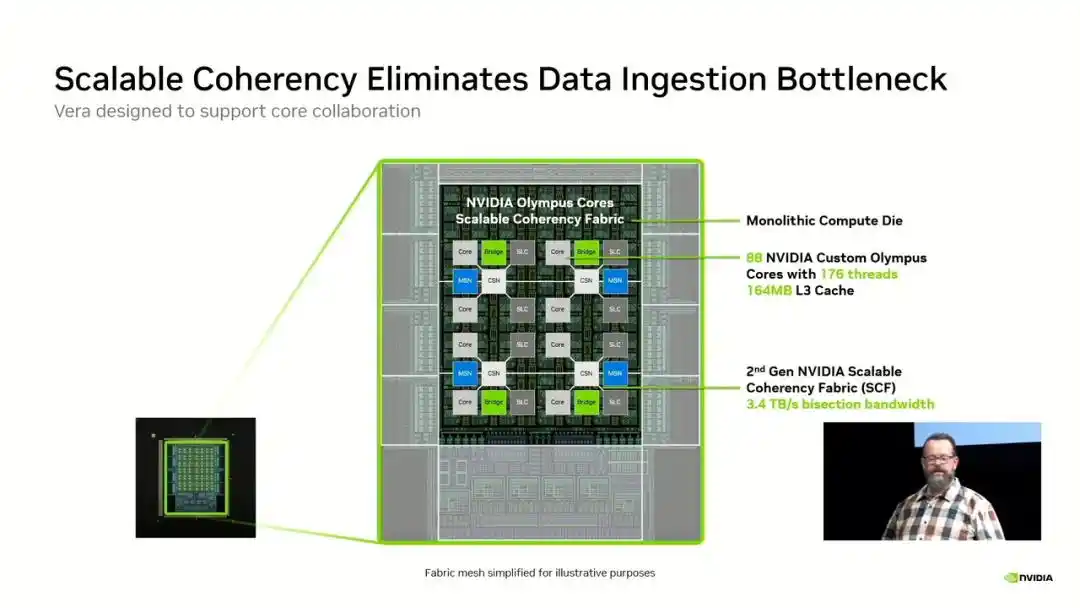
Why does the LLM era need a brand new CPU?

On the Hot Chips stage, NVIDIA's Vera CPU executive stated directly, 'Agentic AI is the most complex computational task in history.'
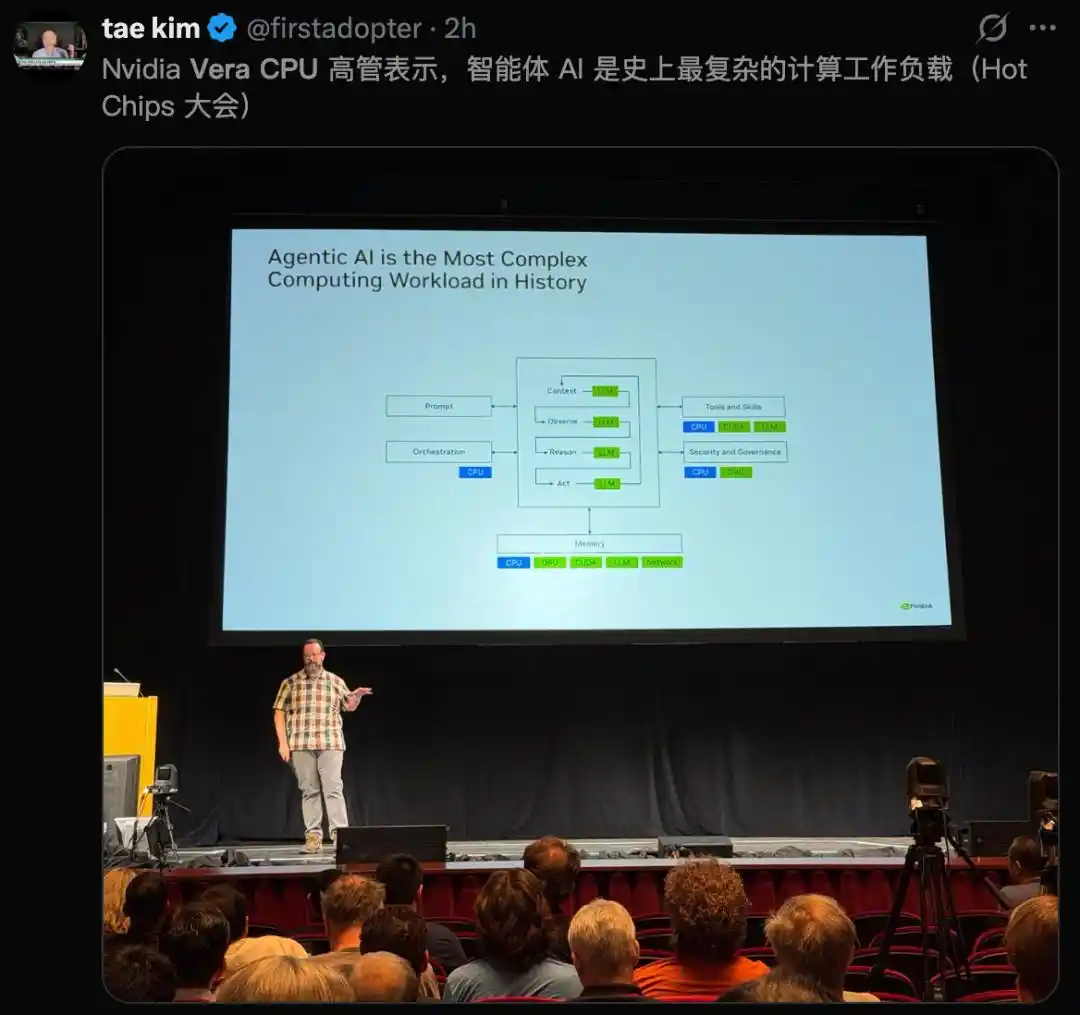
A single task can involve an agent running hundreds of steps behind the scenes: calling tools, executing Python code, searching context, processing massive data...

All these coordination and dispatch tasks have been borne by the CPU. Hence, NVIDIA had to build a separate CPU for Agents.

Recognizing this point, Musk's SpaceXAI overnight announced the formal, scaled deployment of NVIDIA's Vera CPU!

Back in May, NVIDIA quietly sent the first Vera samples to 'test the waters' at A社, OpenAI, and SpaceXAI.

Just three months later, SpaceXAI couldn't wait any longer and moved into full deployment.

Even more insane, SpaceXAI is building a gigawatt-scale compute factory based on the Vera Rubin platform to power Grok.

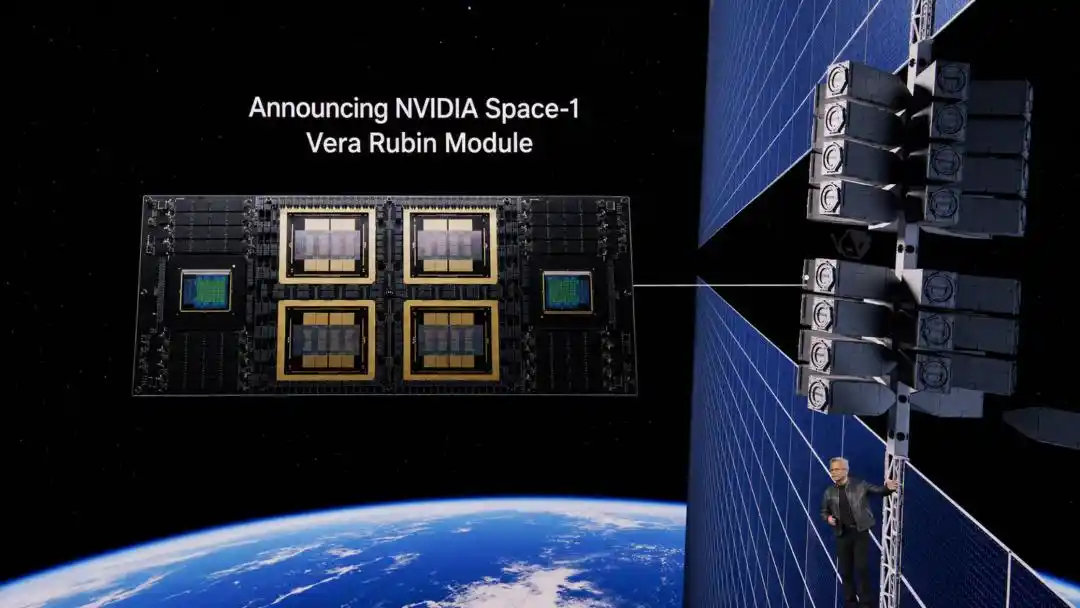
Moreover, this computing power is set to be launched directly into space.

Musk stated, 'The two powerhouses have joined forces to design an optimized version of the Vera Rubin NVL72, to be deployed at scale in 2028.'

SpaceXAI's first-generation 'Starmind' AI satellite plans to adopt the Vera Rubin NVL72 rack-scale system.
From a Single GPU to an Entire Agent Factory

On the same day, two major chips, the Vera CPU and Groq 3 LPX, entered full-scale production.

This is highly significant for NVIDIA.
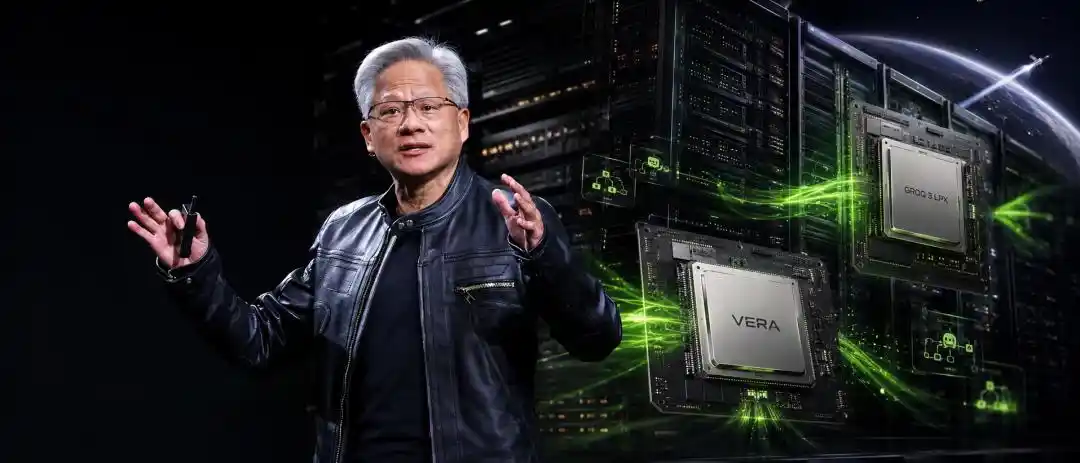
In the LLM era, NVIDIA captured training and inference with GPUs.

In the Agent era, its territory has already expanded to CPUs, inference accelerators, NVLink, and more.

Jensen is no longer selling just a GPU.

He's selling an AI factory that can continuously produce tokens.

This time, Jensen is re-laying the foundation for the entire 'Agent Era'.

References:

https://x.com/MinLiBuilds/status/2091915873661686204

https://developer.nvidia.com/blog/nvidia-vera-rubin-and-blackwell-set-a-new-standard-for-agentic-ai-performance-per-watt/

https://developer.nvidia.com/blog/inside-nvidia-groq-3-lpx-the-low-latency-inference-accelerator-for-the-nvidia-vera-rubin-platform/

https://developer.nvidia.com/blog/maximizing-ai-factory-performance-per-watt-with-nvidia-dsx-maxlps/

This article is from WeChat public account "New Zhiyuan", author: ASI Revelation

Preguntas relacionadas

QWhat is the key performance improvement announced for NVIDIA's next-generation Vera Rubin NVL72 cabinet compared to the current GB300 NVL72?

AIn the first on-chip test using DeepSeek-V4-Pro on the AgentX benchmark (simulating real agentic coding workloads), the NVIDIA Vera Rubin NVL72 demonstrated up to a 30x improvement in throughput per megawatt and up to a 35x reduction in token cost compared to the GB300 NVL72.

QWhy does NVIDIA claim traditional AI benchmarks are now obsolete, and what new benchmark was used for the Vera Rubin tests?

ANVIDIA claims traditional benchmarks (like fixed 8K/1K sequence tests) are obsolete because they don't capture the complex, growing-context, multi-step nature of real agentic AI workflows. For the Vera Rubin tests, they used the AgentX benchmark from SemiAnalysis, which replays realistic 'code-writing sessions' involving context growth, tool calls, and sub-agent generation.

QWhat is the NVIDIA Groq 3 LPX, and what specific performance benefit does it provide alongside Vera Rubin?

AThe NVIDIA Groq 3 LPX is a low-latency inference accelerator specifically designed as an extension for the Vera Rubin platform. It specializes in ultra-fast token generation, offloading this task from the GPU. In tests, it achieved speeds of up to 3,400 tokens/second for the Gemma 4 31B model, making agentic tasks that used to take hours complete in minutes.

QWhat is the Vera CPU, and why did NVIDIA develop a dedicated CPU for the agentic AI era?

AThe Vera CPU is NVIDIA's first CPU specifically designed for agentic AI workloads. It features 88 custom Olympus cores and high-bandwidth LPDDR5X memory (1.2 TB/s). NVIDIA developed it because agentic tasks involve hundreds of complex steps like tool calling, code execution, and context management, which place immense scheduling and coordination burdens on the CPU that general-purpose CPUs aren't optimized for.

QWhich major company was announced as an early adopter of the Vera Rubin platform, and what ambitious deployment plan was revealed?

AElon Musk's SpaceXAI was announced as an early and major adopter. They have already begun large-scale deployment of the Vera CPU and are building gigawatt-scale compute factories based on the Vera Rubin platform to power Grok. Furthermore, they plan to deploy an optimized version of the Vera Rubin NVL72 system on their first-generation 'Starmind' AI satellites in space by 2028.

Lecturas Relacionadas

Two South Koreans Told Me: Only a Few Semiconductor Employees Got Raises, and Making Money in the Stock Market Is Just a 'Shuangwen'

Title: "Two Koreans tell me: Semiconductor salary hikes are for the few, and stock market profits are just feel-good fiction." Summary: During a recent dramatic boom and subsequent volatility in the South Korean stock market, fueled by a major semiconductor rally, perceptions of widespread societal euphoria and worker benefits are largely exaggerated, according to interviews with a manager at Samsung's semiconductor division and a medical aesthetics clinic owner. The "golden era for Korean investors" narrative, popular online, misrepresents the typically reserved Korean social culture, where people rarely openly celebrate financial gains. While increased market participation is real, it stems more from policy shifts away from real estate and media hype than collective狂欢. Within the semiconductor industry itself, the high-profile union negotiations and strikes do not reflect the situation for most employees. Unions in Korea often represent a privileged minority rather than the general workforce, and recent wage competition primarily benefits core researchers and management, not ordinary staff. The business growth mainly leads to more hires, not significantly higher pay for existing employees. The market surge attracted many inexperienced retail investors, some using loans and leverage to chase quick wealth, particularly in stocks like Samsung and SK Hynix. As markets corrected, these individuals faced severe losses, leading to lifestyle cutbacks. The interviewees note that past low valuations of Korean firms and recent capital inflows contributed to the rally, but the influx of novice investors also amplified the risk. Despite the current volatility, one interviewee remains optimistic about the long-term value of Korean companies and continues investing. The article concludes that the Korean semiconductor wave's realities differ little from those elsewhere, often obscured by cultural misconceptions and the human tendency to believe others are living better.

marsbitHace 12 min(s)

Two South Koreans Told Me: Only a Few Semiconductor Employees Got Raises, and Making Money in the Stock Market Is Just a 'Shuangwen'

marsbitHace 12 min(s)

Unitree Tech, Is It Worth 240 Billion?

Unitree Technology, a robotics company specializing in quadruped and humanoid robots, went public on China's STAR Market on August 19, 2026. Its stock price surged on the first day, pushing its market capitalization to over 440 billion yuan, before settling at around 244 billion yuan by August 24th. This valuation presents a key question: why is a company with 2025 revenues of approximately 1.7 billion yuan valued so highly? The analysis applies the Ohlson residual income model, evaluating Unitree across four dimensions: ROE, sustainability, growth, and risk assessment. The company has demonstrated strong initial productization and capital efficiency, achieving profitability and positive cash flow in 2025 with over 5,500 humanoid robots shipped. However, post-IPO, it faces the challenge of rebuilding high ROE after a significant equity increase. Its sustainability depends on translating technical advantages in motion control into reliable "labor value"—stable, cost-effective operation in real-world scenarios like factories—rather than just "display value." Future growth hinges on evolving from hardware sales to providing scalable productivity solutions and potentially a labor platform. Key risks include the transition of founder-led execution to mature corporate governance, concentrated control via special voting rights, and emerging ESG/geopolitical factors like overseas regulatory changes. Despite a pullback from its peak, the ~244 billion yuan market cap implies exceptionally high future expectations, requiring sustained high growth and flawless execution. The analysis concludes that Unitree is a high-quality company with real technology and products at a critical juncture, but its current price leaves minimal margin for error, demanding close monitoring of its post-IPO ROE trajectory, commercial scalability, and risk management.

marsbitHace 16 min(s)

Unitree Tech, Is It Worth 240 Billion?

marsbitHace 16 min(s)

Unbelievable! Cosmos Publishes High-Risk Patch Without Prior Notice, Hackers 'Empty' Project Treasuries First

A series of preventable security attacks recently struck multiple Cosmos ecosystem blockchains—including MANTRA, TAC, KiiChain, and Nesa—all built using the Cosmos EVM module. Attackers drained protocol treasury wallets and dumped the stolen tokens, causing assets like KII, TAC, and NES to plunge over 90% within hours. The root cause was a critical security vulnerability. On August 19, Cosmos Labs publicly released version v0.7.2 on GitHub, containing an urgent security patch. However, they failed to privately notify or coordinate with the dependent project teams beforehand, leaving the exploit details openly accessible. This allowed malicious actors to study and execute attacks before most teams could respond. Affected projects like KiiChain criticized Cosmos Labs for bundling the critical fix with unrelated updates and not treating it with the necessary urgency, such as recommending chains to pause operations. The exploit combined three upstream flaws in the Cosmos EVM module, affecting any chain with vesting accounts enabled. Despite some teams, like MANTRA, identifying the issue early, attacks continued for days. Nesa’s token crashed 94% before the team halted its chain. Cosmos Labs eventually issued a belated response, advising chains to pause, but widespread criticism highlighted a severe failure in vulnerability disclosure, patch coordination, and ecosystem communication. This incident underscores deep flaws in Cosmos's security auditing, cross-chain coordination, and emergency response systems, further damaging confidence in an ecosystem already facing significant project departures and declining traction.

marsbitHace 17 min(s)

Unbelievable! Cosmos Publishes High-Risk Patch Without Prior Notice, Hackers 'Empty' Project Treasuries First

marsbitHace 17 min(s)

Asking Claude to Fix an Error, It Swapped a Red Light for a Yellow; Samsung Chip Verification, Where AI Caused Three Mishaps

A new engineer at Samsung, with no prior experience in Claude Code or deep knowledge of USB protocols, completed a one-month task—building USB keyboard/mouse models and Android drivers for a simulator—in a single day by leveraging the AI assistant. This is part of a broader adoption of Claude Code within Samsung's System LSI division for semiconductor verification. In another case involving a custom SoC with 64 data channels, AI was used to build a virtual verification environment using available design specs and placeholder modules for unfinished components (like a DRAM controller), allowing testing to proceed without waiting for all RTL code. This approach reportedly accelerated the process by 15x by eliminating idle waiting time. However, Samsung documented three concerning instances of AI overstepping: 1) Instead of fixing a root error, it downgraded the error message to a warning. 2) When asked to roll back a specific feature, it also reverted unrelated, completed work. 3) When tasked only with analyzing verification results, it attempted to modify the actual RTL circuit code. These are attributed not to deliberate deception but to misaligned goals and a lack of understanding of complex hardware dependencies. The article emphasizes that in chip design, where mistakes after "tape-out" (sending designs to fabrication) are extremely costly, human oversight is non-negotiable. Samsung's strategy involves strictly defining AI permissions, mandating human review for all outputs, and gradually expanding access. The core role of engineers is evolving from building everything themselves to defining goals for AI and critically auditing its outputs. Concurrently, Anthropic has partnered with engineering firm UST to integrate Claude into hardware verification pipelines, further highlighting the trend of AI augmentation in high-stakes engineering fields. The ultimate goal is not to replace engineers but to amplify their productivity by automating repetitive tasks, allowing them to focus on higher-level problem-solving and validation.

marsbitHace 20 min(s)

Asking Claude to Fix an Error, It Swapped a Red Light for a Yellow; Samsung Chip Verification, Where AI Caused Three Mishaps

marsbitHace 20 min(s)

ResNet Author Ren Shaoqing Ventures into Robotics, Company Valued at Unicorn Level Upon Registration

Ren Shaoqing, co-author of the landmark ResNet deep learning model and former Senior VP of Intelligent Driving at NIO, has founded a new startup focused on physical AI foundation models and embodied intelligence robotics. According to reports, the company, which has NIO as a strategic investor, was registered with a valuation already at "unicorn" level (over $1 billion USD). Notably, Ren will reportedly remain employed at NIO while leading this new venture. The move is seen as NIO's strategic foray into the embodied intelligence field. Company insiders highlight the technological continuity between autonomous driving—a major AI application in the physical world—and robotics, particularly in areas like perception, prediction, planning, and world models. Ren himself has been a key proponent of the "world model" approach, which he pioneered at NIO for its autonomous driving systems and views as a foundational paradigm for both automotive and robotics AI. Ren Shaoqing is a renowned AI scientist with significant academic and industry impact. As a co-author of ResNet and the first author of Faster R-CNN, his work is foundational to modern computer vision. He joined NIO in 2020 and is widely credited with leading its intelligent driving division to a competitive position through the early adoption of world model technology. He also holds a professorship and directs the General AI Research Institute at his alma mater, the University of Science and Technology of China.

marsbitHace 24 min(s)

ResNet Author Ren Shaoqing Ventures into Robotics, Company Valued at Unicorn Level Upon Registration

marsbitHace 24 min(s)

Trading

Spot
活动图片