NVIDIA Q4 Revenue Surges 73%, Q1 Guidance 'Explosive' Hits New High, Jensen Huang Raises 500 Billion Revenue Forecast

marsbitPublicado a 2026-02-26Actualizado a 2026-02-26

Resumen

NVIDIA reported record-breaking Q4 FY2026 results, with revenue surging 73% year-over-year to $68.13 billion, significantly exceeding analyst expectations. Non-GAAP EPS grew over 80%, and gross margin reached a new high of 75.2%. The Data Center segment was the primary growth driver, with revenue up 75% to $62.31 billion, fueled by strong demand for AI computing and a 263% surge in Networking revenue. Gaming and Professional Visualization also saw robust growth. For Q1 FY2027, NVIDIA provided strong guidance, forecasting revenue of approximately $78 billion (up nearly 77% YoY), again surpassing consensus estimates. The company noted this outlook excludes Data Center compute revenue from China. CEO Jensen Huang raised the company's chip revenue target, stating they will exceed the previously stated $500 billion goal for orders through 2026, driven by next-generation Rubin chips and sustained AI demand. However, the stock experienced volatility post-earnings as investors weighed concerns over AI economic overheating and a change in non-GAAP accounting to include stock-based compensation.

Author:Li Dan

Amid recent investor panic fueled by a series of product releases from Anthropic and Citrini's "doomsday report," the AI boom has withstood a direct test. NVIDIA delivered "explosive" earnings, proving that the demand generated by AI remains strong.

On Wednesday, February 25th, US Eastern Time, NVIDIA announced that for the company's fiscal fourth quarter ("Q4") ended January 31, 2026, revenue reached a record $681 billion, a surge of approximately seventy percent year-over-year. The core data center business, contributing over ninety percent of revenue, also set a new quarterly revenue record, both exceeding analyst expectations by over 3%.

NVIDIA's profitability in QQ4 was equally robust. On a non-GAAP basis, adjusted earnings per share (EPS) increased by over eighty percent year-over-year, approximately 5.9% higher than analyst expectations. The gross margin also climbed beyond expectations to 75.2%, reaching a new high in a year and a half.

Even more encouraging for investors was NVIDIA's guidance for the first quarter of fiscal year 2027 (Q1), which was stronger than expected. Revenue is expected to set another record high, with the midpoint of the guidance range being 7.1% higher than the analyst consensus midpoint and even 4% higher than the optimistic expectations of buy-side analysts. The year-over-year growth rate accelerated compared to QQ4 to nearly 77%. NVIDIA noted that this guidance excludes data center computing revenue from the China market.
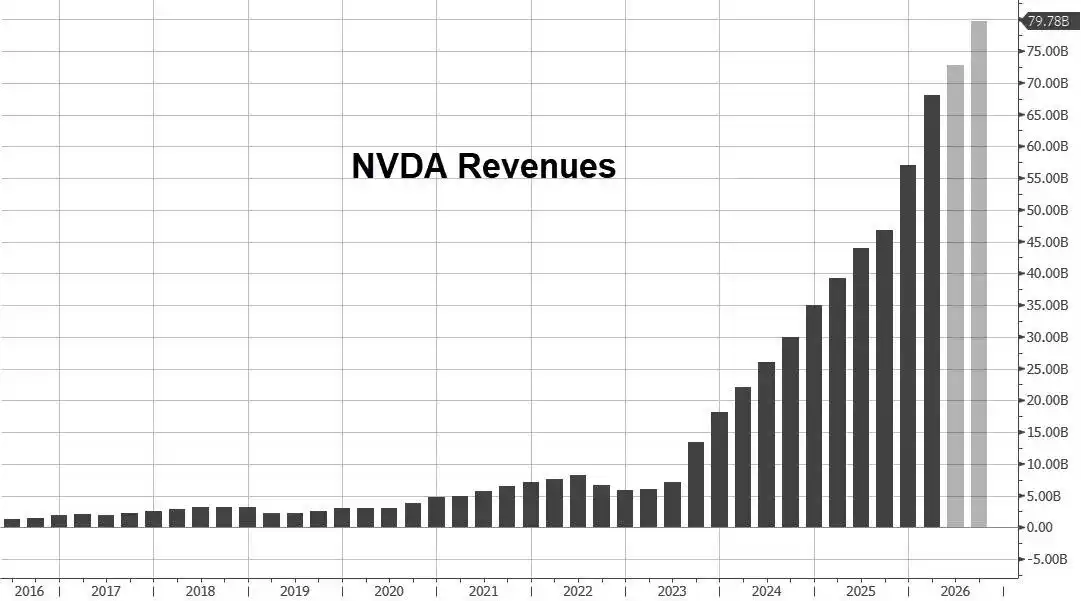
During the earnings call this Wednesday, NVIDIA CEO Jensen Huang also raised the chip revenue forecast he had previously provided, stating, "We will exceed the $500 billion target. Supply will meet demand through next year and beyond." At the GTC conference last October, Huang revealed that NVIDIA had collectively received chip orders worth $500 billion for the calendar years 2025 and 2026, including the next-generation Rubin chip, which will begin mass production this year.

Huang stated that customers are racing to invest in AI computing. Computing demand is growing迅猛ly. The use of agents by enterprises is surging. He mentioned "space data centers," saying the current economics of space data centers are still "barren," but the situation will change over time.

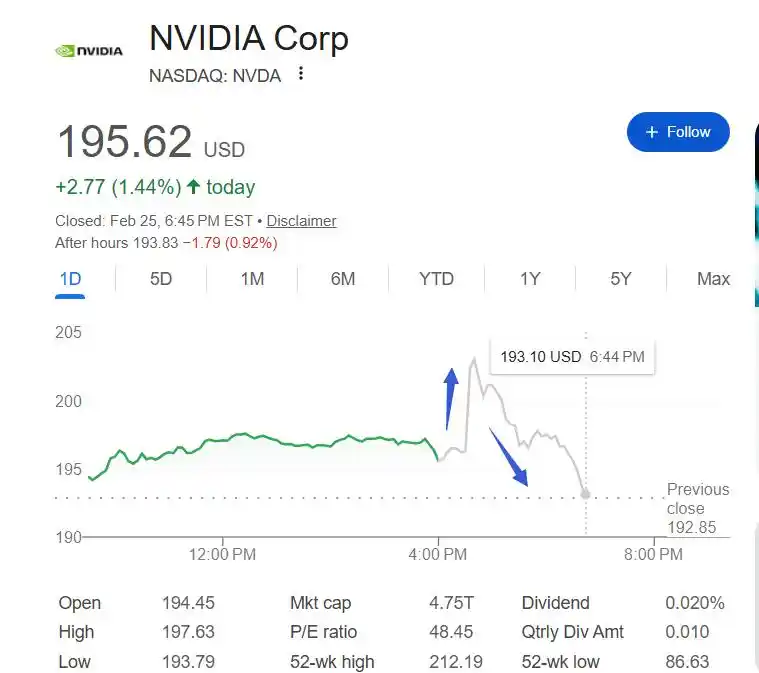
After the earnings release, NVIDIA's stock price, which had already closed up over 1% on Wednesday, surged in after-hours trading, with gains rapidly widening to over 4%. Analysis suggests the key reasons the market bought into it were: Data center revenue and total revenue both exceeded expectations; the gross margin continues to improve as production of the new Blackwell architecture chips ramps up; and the guidance for the current fiscal quarter is even stronger despite excluding some China market revenue, reinforcing the narrative of resilient AI computing demand.

However, during the conference call, NVIDIA's stock price continued to give up its gains, turning negative in after-hours trading and falling over 1%. Some commentary noted that the stock's turn lower indicates investors were not impressed by the latest guidance, suggesting that market concerns about an overheated AI economy will continue to haunt NVIDIA. Other analysis pointed out that operating expenses continue to grow rapidly, and the inclusion of stock-based compensation (SBC) in non-GAAP metrics starting in Q1 may temporarily alter investors' perception of "profit growth."
Q4 Revenue Hits Quarterly Record, Gross Margin Reaches 1.5-Year High

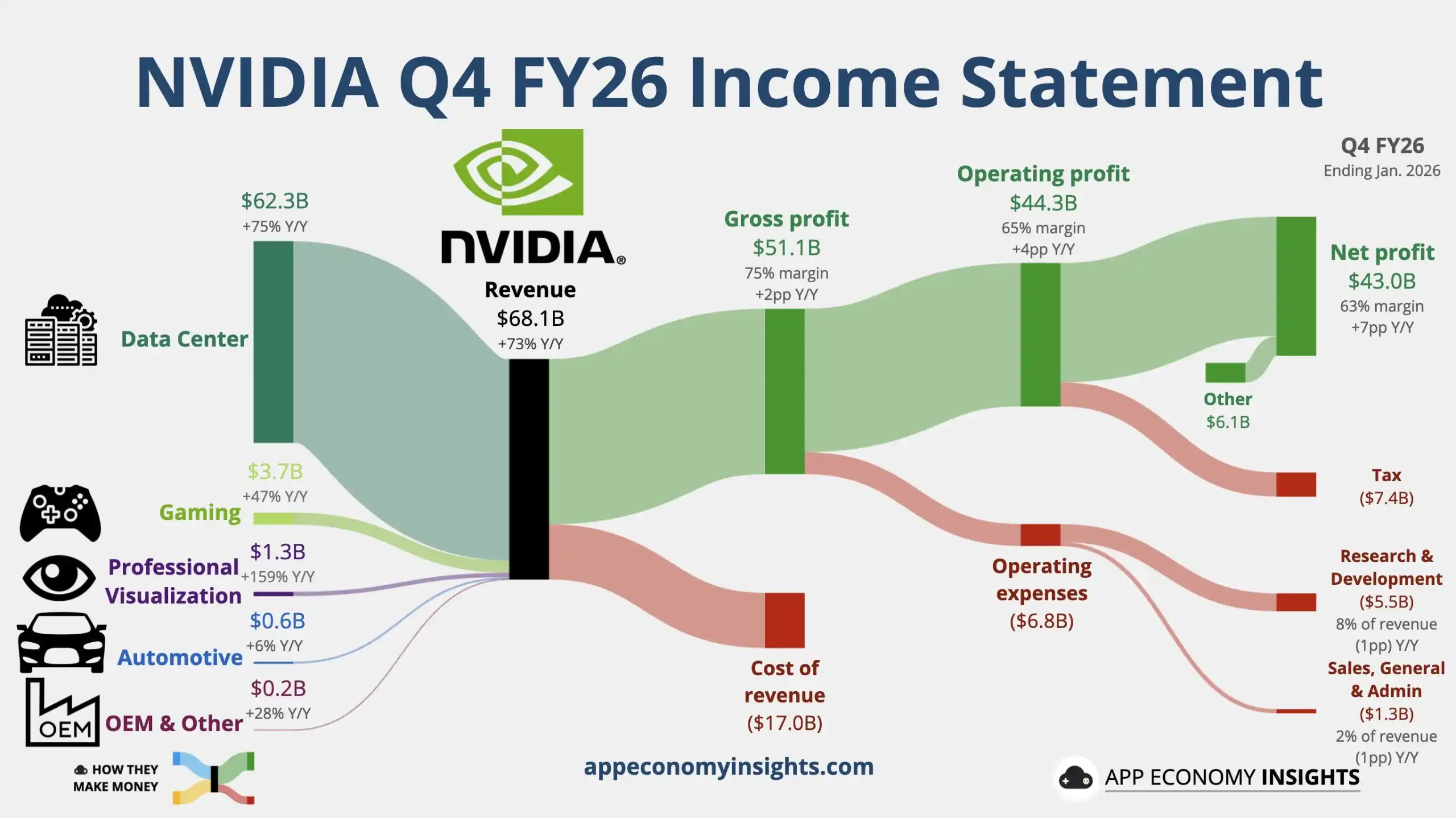
NVIDIA's QQ4 revenue grew 73% year-over-year to $681.27 billion, a growth rate significantly higher than the previous quarter's 62% and exceeding NVIDIA's own guidance midpoint of $650 billion. Analysts had expected revenue of $659.1 billion, representing approximately 68% year-over-year growth. For the full fiscal year, NVIDIA's revenue also set an annual record, reaching $2,159.38 billion, a 65% increase compared to the previous year.

Gross margin was another highlight in QQ4: the non-GAAP gross margin was 75.2%, up 1.7 percentage points year-over-year and 1.6 percentage points sequentially, reaching the highest level since Q2 of fiscal year 2025. This exceeded the analyst consensus expectation of 74.7% and the optimistic expectation of 75.0%.

NVIDIA CFO Colette Kress interpreted this, stating that the year-over-year improvement in gross margin came from "reduced inventory charges," while the sequential improvement was related to the "improved product mix and cost structure" brought by the continued volume ramp of Blackwell chips.

However, for the entire 2026 fiscal year, the non-GAAP gross margin declined, falling from 75.5% in the previous fiscal year to 71.3%, a decrease of 4.2 percentage points year-over-year, indicating that full-year profit margins were still subject to structural disruptions during the platform transition and supply ramp phase.
Data Center: Compute Growth Stabilizes, Networking Accelerates

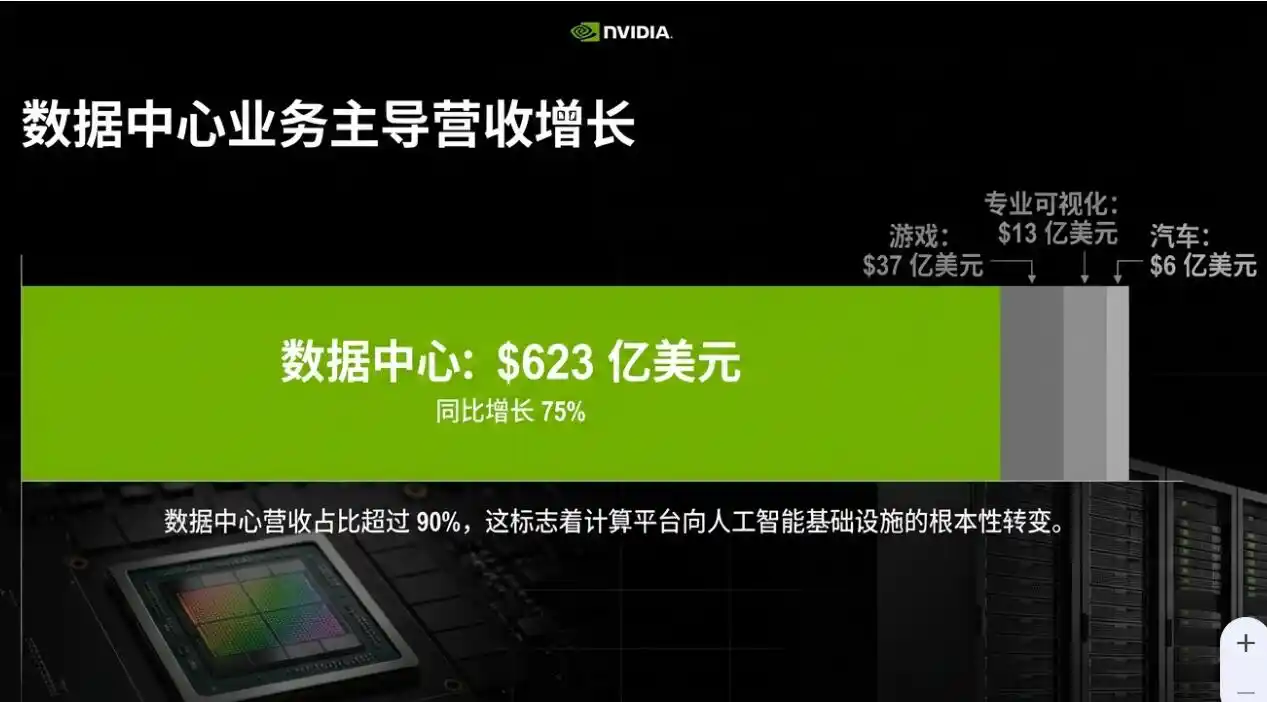
In QQ4, NVIDIA's Data Center business recorded revenue of $623.14 billion, a 75% increase year-over-year, with growth higher than the 66% in the previous quarter. Analysts had expected a near 70% year-over-year increase to $603.6 billion.
Within the Data Center segment, NVIDIA provided two sets of numbers that are even more noteworthy:

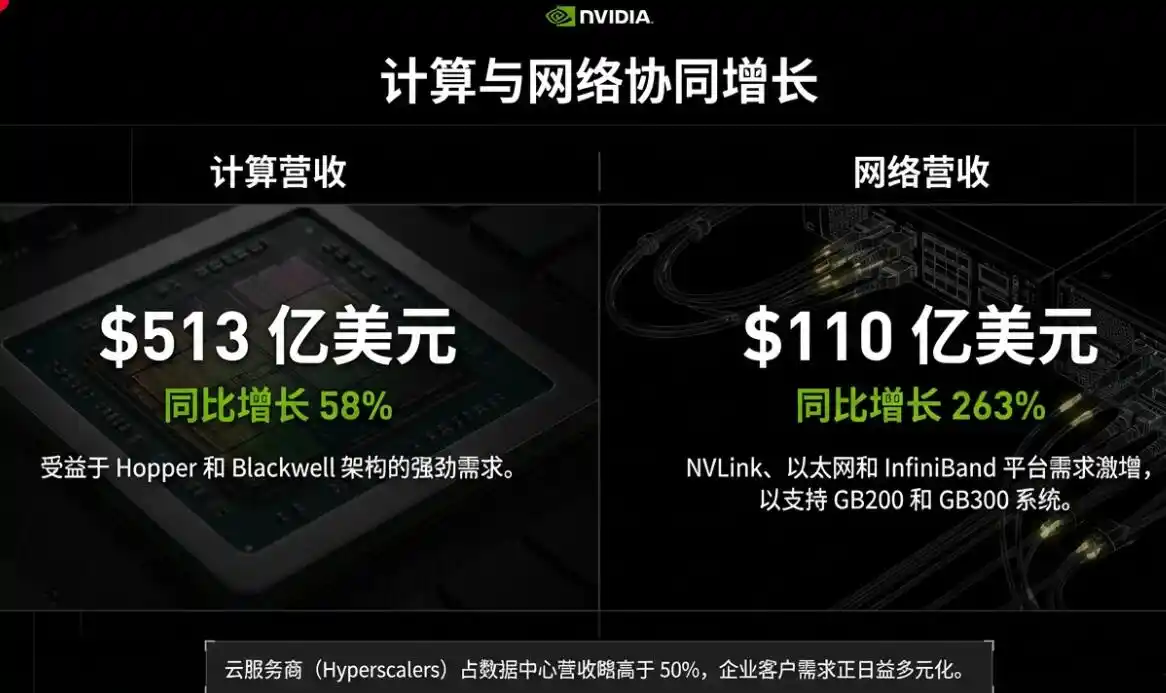
  • Data Center Compute revenue was $513.34 billion, up 58% year-over-year, with growth slightly higher than the 56% in Q3.
  • Data Center Networking revenue was $109.80 billion, up 263% year-over-year, far exceeding the 162% growth in Q3.

NVIDIA attributed the explosion in Networking revenue to: the launch and continued ramp of the NVLink compute fabric for GB200 and GB300 systems, coupled with continued growth in Ethernet and InfiniBand platforms.

In other words, the market should not only focus on the shipment pace of the GPUs themselves but also see that NVIDIA is packaging "computing power, interconnect, and systems" into an overall solution that is harder to replace. The high growth rate of Networking revenue is the financial reflection of this strategy.

Regarding customer structure, the company disclosed: In QQ4, revenue from hyperscale cloud providers accounted for slightly over 50% of the total Data Center business revenue, remaining the largest customer category. However, growth in the quarter came more from other data center customers, indicating a diffusion of revenue sources and a marginal mitigation of concentration risk.
Blackwell Drives Gaming Demand, Short-Term Disruptions from Supply and Channels

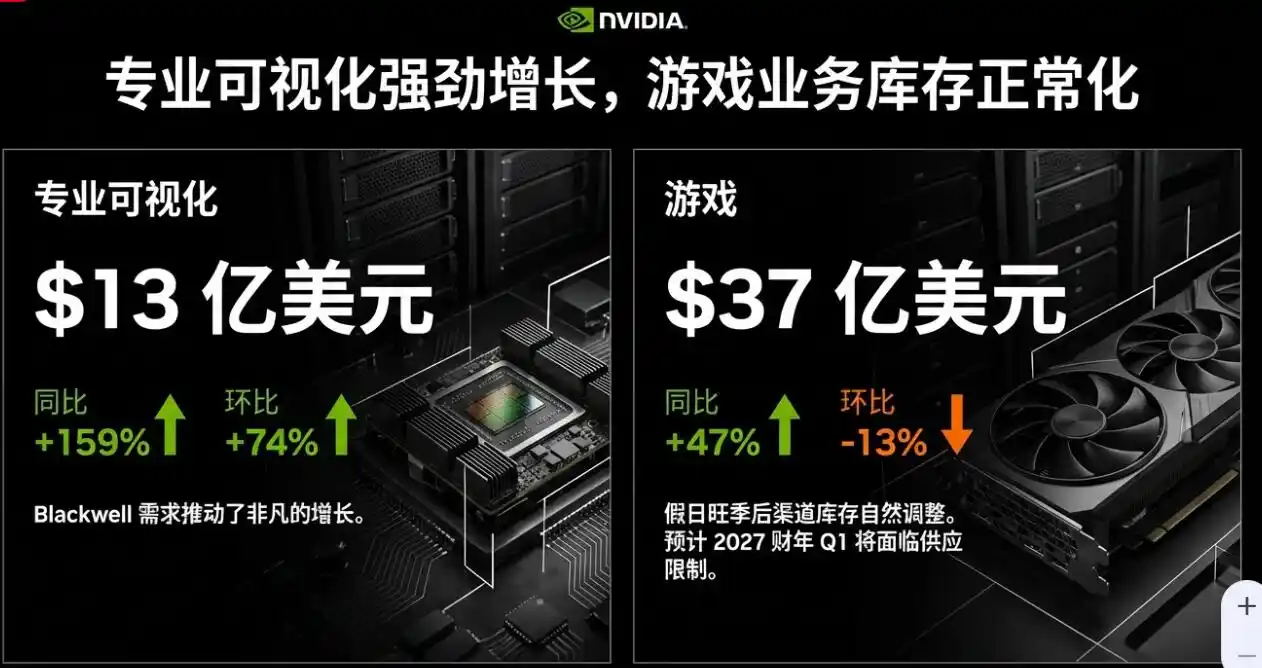
NVIDIA's Gaming business revenue in QQ4 was $37.27 billion, a 47% increase year-over-year. Analysts had expected $40.1 billion. The previous quarter saw 30% year-over-year growth.

The accelerated year-over-year growth in the Gaming business in QQ4 was explained by NVIDIA as primarily driven by strong demand for Blackwell chips. However, revenue for this segment decreased 13% sequentially due to a "natural post-holiday season channel inventory drawdown." Notably, NVIDIA explicitly warned: Supply constraints are expected to be a headwind for the Gaming business in Q1 and beyond.

Professional Visualization revenue in QQ4 was $13.21 billion, a 159% increase year-over-year. Analysts had expected $7.707 billion. The previous quarter saw 56% year-over-year growth.

Professional Visualization also saw revenue more than double year-over-year and grow 74% sequentially, driven by Blackwell, becoming one of the brightest incremental businesses besides Data Center. However, the scale of this business is far smaller than Data Center.
Q1 Revenue Guidance Midpoint Indicates ~77% YoY Growth, Excludes China Data Center Compute Revenue

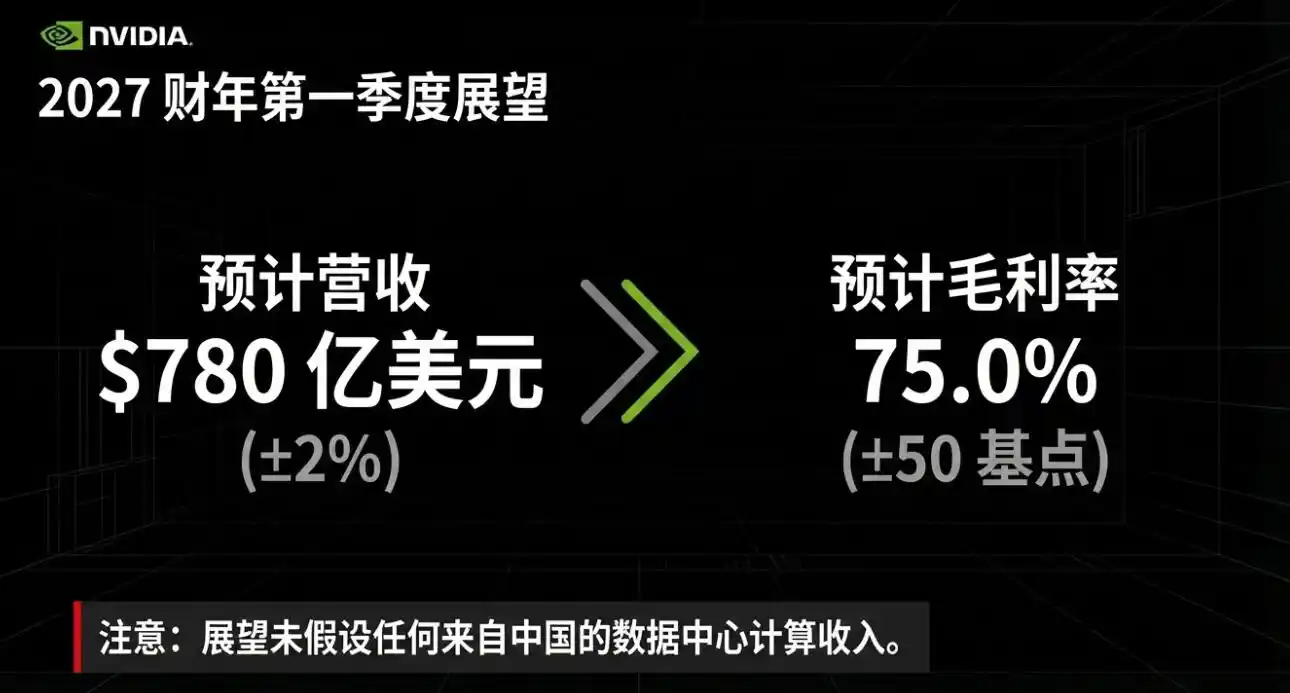
Regarding performance guidance, NVIDIA announced that Q1 revenue is expected to be $780 billion, plus or minus 2%, i.e., $764.4 billion to $795.6 billion. This range implies that NVIDIA's revenue this fiscal quarter will refresh the record high set in QQ4.

Calculated using the revenue guidance midpoint, this means NVIDIA expects Q1 revenue to grow 76.9% year-over-year, further accelerating from the 73% growth rate in QQ4.

NVIDIA's revenue guidance midpoint is not only higher than the analyst consensus midpoint of $727.8 billion but also exceeds the buy-side's optimistic expectations of $740 to $750 billion.

NVIDIA's Q1 gross margin guidance is consistent with the optimistic expectations of Wall Street buy-side analysts, expected to reach a new high since Q2 of fiscal year 2025.

The Q1 non-GAAP adjusted gross margin is expected to be 75%, plus or minus 50 basis points, i.e., 74.5% to 75.5%. The buy-side optimistic expectation was 75%, and the sell-side consensus expectation was 74.7%.
Stock-Based Compensation Included in Non-GAAP Starting Q1

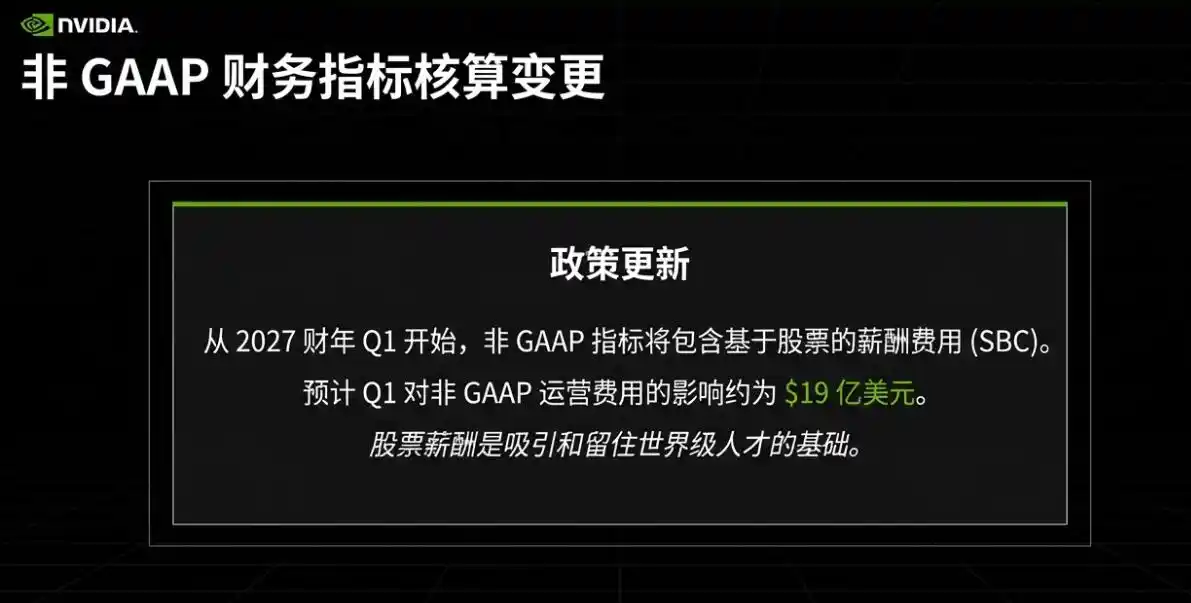
Along with the earnings release, NVIDIA announced that starting in Q1, non-GAAP financial metrics will no longer exclude stock-based compensation (SBC). Due to this adjustment, NVIDIA estimates the impact on Q1 non-GAAP operating expenses will be approximately $19 billion.

This change will directly alter the "customary口径" that the market has long used for横向 comparing profit margins and expense ratios. In the short term, it may lead to a recalibration of consensus expectation models and will also allow investors to see more clearly the真实 cost NVIDIA incurs to maintain talent and R&D leadership.
Preguntas relacionadas

QWhat was NVIDIA's Q4 revenue growth rate and how did it exceed expectations?

ANVIDIA's Q4 revenue grew by 73% year-over-year to $68.127 billion, exceeding analyst expectations of approximately 68% growth and $65.91 billion in revenue.

QWhat is NVIDIA's Q1 revenue guidance and how does it compare to market expectations?

ANVIDIA provided Q1 revenue guidance of $78 billion, plus or minus 2%, which represents approximately 76.9% year-over-year growth. This exceeded both the analyst consensus midpoint of $72.78 billion and buyer optimistic expectations of $74-75 billion.

QHow did NVIDIA's data center business perform in Q4 and what were the key growth drivers?

ANVIDIA's data center business revenue reached $62.314 billion in Q4, growing 75% year-over-year. The networking segment was particularly strong with 263% growth, driven by NVLink compute fabric for GB200/GB300 systems and growth in Ethernet and InfiniBand platforms.

QWhat changes did NVIDIA announce regarding non-GAAP financial reporting starting Q1?

ANVIDIA announced that starting Q1, non-GAAP financial metrics will no longer exclude stock-based compensation (SBC). This change is expected to impact non-GAAP operating expenses by approximately $1.9 billion in Q1.

QHow did CEO Jensen Huang update NVIDIA's chip revenue expectations?

ACEO Jensen Huang raised NVIDIA's chip revenue expectations, stating that the company will exceed the previously stated $500 billion target for chip orders received for 2025 and 2026 calendar years, which includes the next-generation Rubin chips beginning mass production this year.

Lecturas Relacionadas

This Week's Key Events Preview | U.S. to Release April CPI Data; U.S. Senate Banking Committee to Review "Digital Asset Market Structure Act of 2025"

Weekly News Preview: Key events for May 12-16 include major economic and crypto industry developments. On Tuesday, May 12, the U.S. will release its April CPI data. Additionally, the gaming blockchain Ronin will begin a 10-hour migration to an Ethereum Layer 2, built on OP Stack with EigenDA for data availability. This aims to leverage Ethereum's security and settle RON's annual inflation below 1%. Base's first independent network upgrade, "Base Azul," is scheduled for mainnet activation on Wednesday, May 13, focusing on security, performance, and developer experience enhancements. Thursday, May 14, sees the U.S. Senate Banking Committee voting on the "Digital Asset Market Structure Act of 2025." In other news, Solana DeFi protocol Carrot will shut down, setting a final withdrawal deadline due to impacts from the Drift exploit. The Moscow Exchange will launch futures trading for Solana, Ripple, and Tron indices (RUB-settled) for qualified investors. Multiple service closures are scheduled for Friday, May 15. Dmail Network will begin winding down due to unsustainable infrastructure costs and failed commercialization. Users must export data before this date. Separately, the Cosmos-based lending blockchain UX Chain will fully shut down. Finally, on Saturday, May 16, gaming infrastructure provider Lattice will wind down operations, with its Redstone Layer 2 network ceasing. Users are urged to withdraw assets, especially from contracts like Uniswap pools, before the shutdown.

链捕手Hace 3 min(s)

This Week's Key Events Preview | U.S. to Release April CPI Data; U.S. Senate Banking Committee to Review "Digital Asset Market Structure Act of 2025"

链捕手Hace 3 min(s)

Morning Post | Trump Media Group Releases Q1 Financial Report; Top Three DeFi Applications Return Nearly $100 Million in Revenue to Token Holders in 30 Days; Michael Saylor Shares Bitcoin Tracker Info Again

**Title: Daily Briefing | Trump Media Group Releases Q1 Report; Top 3 DeFi Apps Return Nearly $100M to Token Holders; Michael Saylor Signals Potential Bitcoin Buy** **Summary:** Key developments in the past 24 hours include: * **Economic Outlook:** Goldman Sachs has pushed back its forecast for the next two Federal Reserve interest rate cuts to December 2026 and March 2027, citing persistent inflationary pressures from energy costs. This delayed timeline is expected to tighten liquidity flow into risk assets, including cryptocurrencies. * **DeFi & Revenue:** Data from DefiLlama shows that three leading DeFi applications—Hyperliquid, Pump.fun, and EdgeX—collectively distributed $96.3 million in revenue to their token holders over the last 30 days. This trend highlights a shift in the crypto community's focus towards real protocol earnings and sustainable economic models. * **Corporate Bitcoin Moves:** Michael Saylor, founder of MicroStrategy (note: referred to as 'Strategy' in the text, likely a typographical error), has signaled potential upcoming Bitcoin purchases by posting a "Bitcoin Tracker" update, following a pattern that typically precedes the company's official disclosure of new acquisitions. * **Market Integrity:** Prediction market platform Polymarket announced updates to address platform issues, including identifying and banning clusters of accounts involved in "ghost-fill" activities and implementing measures to prevent bulk account creation. * **Regulation:** The Bank of England Governor warned that stablecoin regulation could lead to tensions between US and international regulators. In South Korea, the National Tax Service has launched a pilot program to entrust seized virtual assets to private custody firms for management. * **Meme Token Trends:** GMGN data lists the top trending meme tokens on Ethereum (e.g., HEX, SHIB), Solana (e.g., FWOG, TROLL), and Base (e.g., SKITTEN, PEPE) over the past day. **Financial Note:** Trump Media & Technology Group reported a Q1 loss of approximately $4 billion, primarily attributed to unrealized losses on its Bitcoin and other digital asset holdings.

链捕手Hace 34 min(s)

Morning Post | Trump Media Group Releases Q1 Financial Report; Top Three DeFi Applications Return Nearly $100 Million in Revenue to Token Holders in 30 Days; Michael Saylor Shares Bitcoin Tracker Info Again

链捕手Hace 34 min(s)

Telegram Takes Direct Control of TON, Social Traffic Rewrites the Public Chain Narrative

Telegram founder Pavel Durov announced that Telegram will replace the TON Foundation as the core driver and largest validator of The Open Network (TON). Key initiatives include a sixfold reduction in transaction fees, performance upgrades, and improved developer tools within the next few weeks. This marks a strategic shift from Telegram merely providing user access to deeply integrating TON into its platform's core infrastructure. The goal is to transform Telegram's massive social traffic into sustainable on-chain activity. While viral mini-apps like Notcoin have demonstrated Telegram's ability to drive user adoption, TON aims to support frequent, low-value transactions inherent to social platforms—such as tipping, in-app payments, and game rewards. Ultra-low fees and sub-second finality (0.6 seconds) are crucial to making blockchain interactions seamless and nearly invisible within the Telegram user experience. However, Telegram's increased central role raises questions about network decentralization. Durov argues that Telegram's participation will attract more large validators, thereby enhancing decentralization. TON also offers high annual staking rewards (18.8%), aiming to retain capital within its ecosystem. The fundamental challenge for TON is no longer leveraging Telegram's user base, but becoming an indispensable, seamless infrastructure layer for Telegram's everyday applications—moving from an adjacent chain to an embedded utility.

marsbitHace 35 min(s)

Telegram Takes Direct Control of TON, Social Traffic Rewrites the Public Chain Narrative

marsbitHace 35 min(s)

Telegram Takes Direct Control of TON, Social Traffic Reshapes Public Chain Narrative

Telegram's founder, Pavel Durov, has announced a major shift in the development of The Open Network (TON). Telegram will now become the core driver of TON, replacing the TON Foundation and becoming its largest validator. The focus will be on technical upgrades over the next few weeks, including slashing network fees by six times to near-zero and improving finality time to 0.6 seconds. This move signifies a deeper integration between Telegram and TON, moving beyond just providing a user base. The goal is to transform Telegram's vast social traffic and built-in features—like Mini Apps, payments, and bots—into sustainable, on-chain usage scenarios. The reduced fees and faster speeds are crucial for enabling the small, frequent transactions typical of social interactions. While this promises stronger execution and product alignment, it raises questions about centralization. Durov argues Telegram's involvement will attract more validators, enhancing decentralization, but the outcome remains to be seen. Additionally, TON's high annual staking reward of 18.8% aims to retain capital within the ecosystem. The key challenge for TON is no longer just leveraging Telegram's entry point, but becoming an invisible, seamless infrastructure layer within Telegram's daily use. Its success hinges on converting viral attention into lasting, embedded utility.

Odaily星球日报Hace 45 min(s)

Telegram Takes Direct Control of TON, Social Traffic Reshapes Public Chain Narrative

Odaily星球日报Hace 45 min(s)

Trading

Spot
Futuros
活动图片





