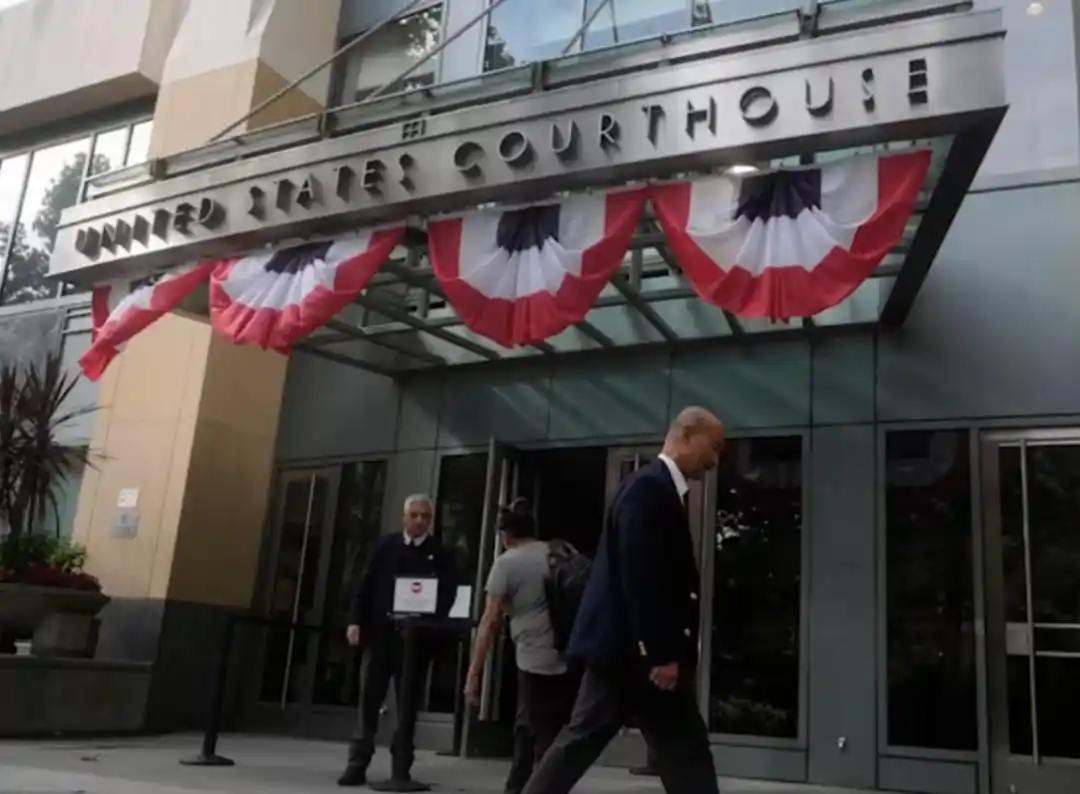
OAKLAND, Calif. — At the entrance to a federal courthouse, three parents held up a banner bearing the names of nearly 400 young people. The families allege these deaths are linked to social media.
The defendant seated in the courtroom is one of the world's wealthiest companies: Meta. It reported revenue of $200.97 billion in 2025, a 22% year-over-year increase; as of the end of 2025, its cash and marketable securities exceeded $81.5 billion.
This trial seeks to answer a question: What size penalty would make a company like this feel the pain?
The theoretical maximum proposed by the states is — $1.4 trillion.
What This Lawsuit Is About
First, let's clarify the case itself.
In 2023, a bipartisan coalition of 29 state attorneys general jointly sued Meta. On August 18, California, Colorado, Kentucky, and New Jersey, as the first batch, opened their trial in the Oakland federal court. The trial is expected to last six weeks.
The allegations have two layers:
• Consumer Protection Laws: Meta misled the public about platform safety and designed features on Instagram and Facebook that addict children and teenagers;
• Children's Online Privacy Protection Act (COPPA): Meta long collected data from children under 13 without parental consent. Expert analysis commissioned by the states suggests approximately 4.6 million children under 13 used Instagram during the review period, with another 3.9 million using Facebook.
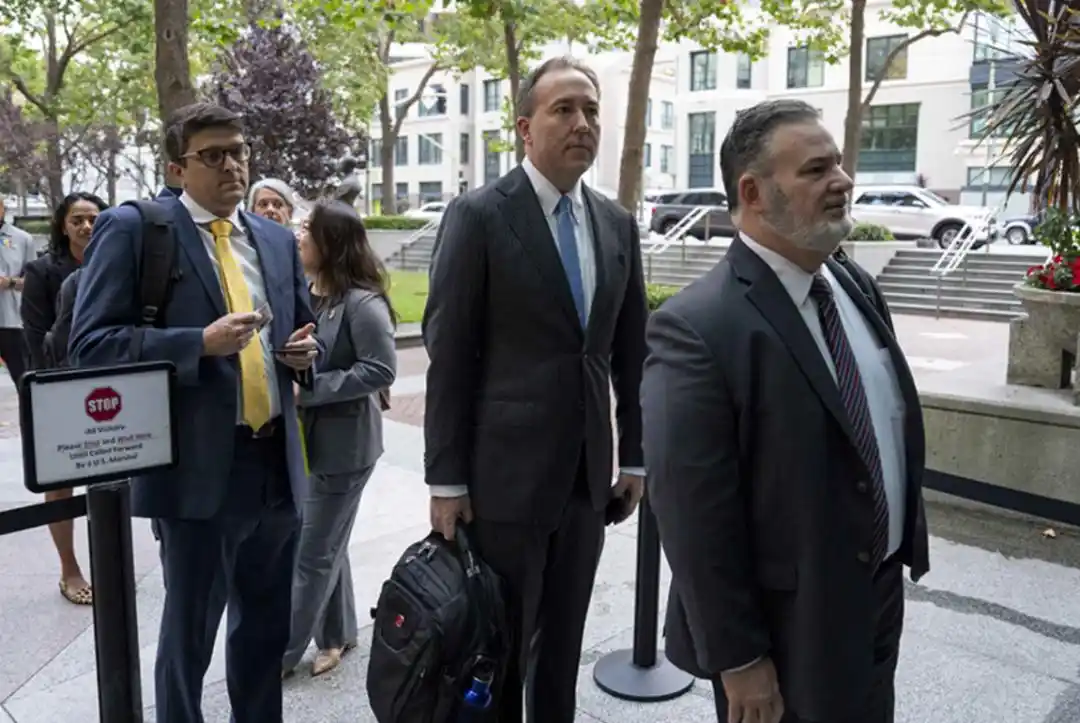
In opening statements, California Deputy Attorney General Megan O’Neill broke down Meta's business model into four steps: hook users, retain them as long as possible, harvest their data, and hide the truth from the public. She presented an internal email sent to Instagram head Adam Mosseri, stating that "teen time spent" was the goal; some employees privately referred to Instagram as "cocaine" and themselves as "dealers."
Meta's response was equally direct: a spokesperson said the states' allegations "lack substantial evidence" and the penalty calculation is "sky-high" — double-counting the same teenagers inflated the figure to the trillion-dollar range. Meta's lawyers also emphasized that "social media addiction" has not been formally recognized by the medical community as a mental disorder, so claiming a platform is "non-addictive" cannot be considered false advertising.
Both Mark Zuckerberg and Mosseri are expected to testify in court.
How Algorithms Landed in the Dock
The real technical significance of this trial is that the states have bypassed a wall that has protected the internet industry for three decades: Section 230 of the Communications Decency Act.
Previously, this law shielded platforms from liability for third-party content posted by users. Sue Facebook because someone posted harmful content? Sorry, that was posted by a user.
This time, the states have adopted a different attack vector, targeting the platform's own design — how recommendation algorithms distribute content, how infinite scroll prolongs engagement, how likes create social feedback loops.

There is fierce academic debate over whether this logic holds. Eric Goldman, a professor at Santa Clara University School of Law, bluntly stated that separating "content" from "the presentation of content" is just wordplay — editorial distribution is essentially the same thing. He compared Meta's algorithmic ranking to a newspaper deciding headline font size and accompanying images, which falls under the editorial freedom protected by the First Amendment.
But presiding Judge Yvonne Gonzalez Rogers did not accept this argument. Consequently, the case proceeded to trial. In April this year, the Massachusetts Supreme Judicial Court also ruled in a similar case that Section 230 does not bar claims targeting the platform's own design.
Noteworthy is the "remedy list" proposed by the states: removing likes, eliminating infinite scroll, enforcing age restrictions, and implementing usage time limits. In other words, they seek to alter the product's fundamental interactions, not just make Meta write a check.
How the $1.4 Trillion Was Calculated
This number needs to be unpacked.
According to the states' arguments in hearings, the calculation is "number of violations × statutory penalty per violation under state law." The violation count is based on estimates of affected teenage users — millions multiplied by multiple violations, then multiplied by fines of several thousand dollars each, exponentially escalating to the trillions.
Meta countered in pre-trial filings: a penalty of this magnitude is "unprecedented in the history of consumer protection enforcement."
Public records confirm that even the states themselves do not expect to receive this amount. They conceded in hearings that the actual figure might be closer to $200 billion — roughly equivalent to Meta's after-tax profits for three years. Moreover, the eight-person jury in this case is advisory in nature; liability determination and final remedies rest entirely with Judge Rogers, and appellate courts can further reduce the amount.
For a realistic reference, consider New Mexico. In March this year, a local jury found Meta had violated the state's consumer protection laws 75,000 times, imposing the maximum penalty of $5,000 per violation, totaling $375 million. The judge subsequently ruled the platform constituted a public nuisance, adding $567 million for a youth mental health treatment fund, bringing the total to $942 million. Meta is appealing.
Around the same time, a jury in Los Angeles ruled in another landmark case that Meta and YouTube were negligent, awarding $6 million in damages. While the figure isn't large, the argumentative path of "harmful platform design + insufficient warning" successfully convinced a jury for the first time.
Beyond the Fine: A Replicable Template
More important than the fine is the spillover effect. TikTok, YouTube, and Snapchat face similar lawsuits — TikTok chose to settle before trial.
If the four states prevail in Oakland, it would provide plaintiffs nationwide with a court-validated litigation template: how to bypass Section 230, how to organize internal document evidence, and how to calculate penalties.

A reasonable projection is that this playbook won't stop at social media. Lawsuits are already attempting to apply the same logic to generative AI, video games, and social games — essentially any product that relies on algorithmic distribution and engagement design to retain users is within range. For Chinese internet platforms expanding overseas, which similarly depend on recommendation algorithms, this trial serves as a free compliance stress test report.
Another easily overlooked point: state attorneys general hold different cards than ordinary plaintiffs. They can sue under COPPA and can seek court-ordered remedies covering millions of users. This means even if the fine is slashed, courts could still directly rewrite product rules.
What to Watch Next
Over the next six weeks, three things are worth monitoring: the testimonies of Zuckerberg and Mosseri, how many of the roughly 130 "misleading statements" on the states' list will be upheld, and Judge Rogers' final determination on "design liability."
Public records confirm a boundary: the $1.4 trillion figure is likely just a bargaining anchor. A reasonable projection is that even if the final penalty settles in the tens of billions, as long as the precedent that "platforms are responsible for algorithmic design" is established, the entire recommendation-algorithm-driven business model will need an additional "regulatory discount" in its valuation model.
To quote Eric Goldman: "What's on trial in Oakland today is the entire internet ecosystem."
This article is from the WeChat public account "AI Sings the Opposite," author: White Shell