Making AI Products Is No Longer the Hard Part; Being Seen Is: Developers, Web3, and Chinese AI Opportunities at mu Shanghai

marsbitPublicado a 2026-05-19Actualizado a 2026-05-19

Resumen

The article discusses the shifting challenges of AI entrepreneurship, based on insights from the mu Shanghai AI WEEK event in May 2026. As AI tools drastically lower the barrier to creating product prototypes, the core difficulty for startups has moved from "how to build" to "who to build for"—finding real users, sustainable business models, and community engagement. The event itself was structured as an extended, immersive developer community space rather than a traditional conference, attracting a global mix of participants (40% AI, 20-30% Web3). This format emphasized deep networking and collaborative creation over one-way presentations. A key observation is that with powerful models and coding assistants becoming ubiquitous, execution is less of a moat. The new scarce resource is judgment—identifying valuable, defensible scenarios where an application won't be quickly rendered obsolete by the next model update. This pushes competition downstream to distribution, user acquisition, and commercialization. Notably, many Web3 practitioners are migrating into AI, bringing with them expertise in community building, global collaboration, and grassroots marketing—skills highly relevant as AI apps fight for visibility. Meanwhile, opportunities in AI hardware, robotics, and embodied intelligence are seen as more durable, leveraging China's robust manufacturing and supply chain ecosystem as a key advantage. The article notes that major Chinese model companies (like MiniMax) are n...

Author: Frank, PANews

At most technology conferences, the most common question is "who released what." But at the mu Shanghai AI WEEK in May 2026, the frequent question PANews heard was more practical: As AI makes it increasingly easy to build product prototypes, what has truly become the hardest part of entrepreneurship?

What made this event special was that it didn't feel like a standard conference, but more like a temporarily constructed developer space. There were few booths, few corporate pitches, and no fixed topics. A large number of overseas developers flew to Shanghai from Argentina, Silicon Valley, Japan, or Southeast Asia, just to connect with Chinese developers, model companies, investors, and the local ecosystem over the course of a month.

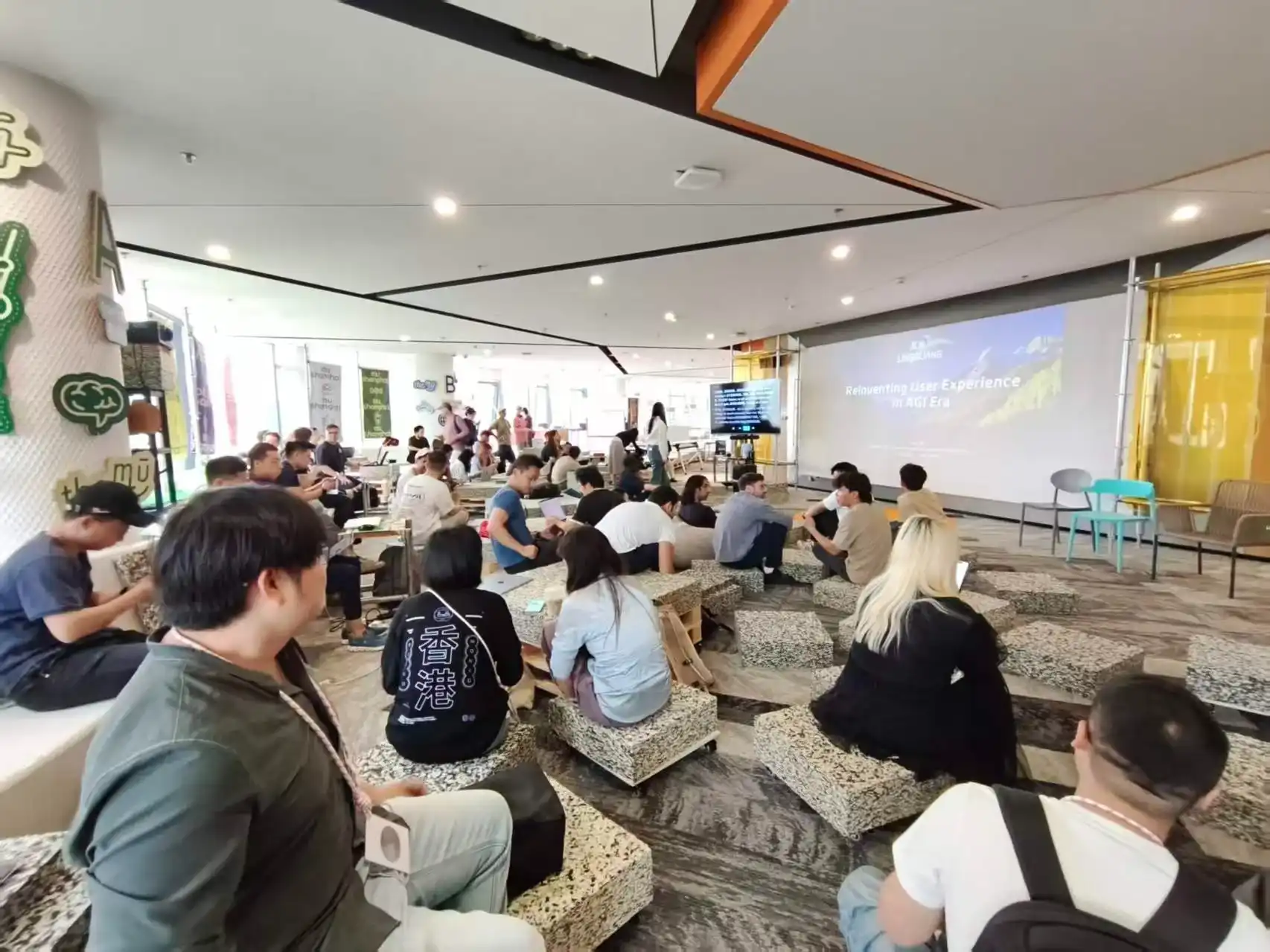
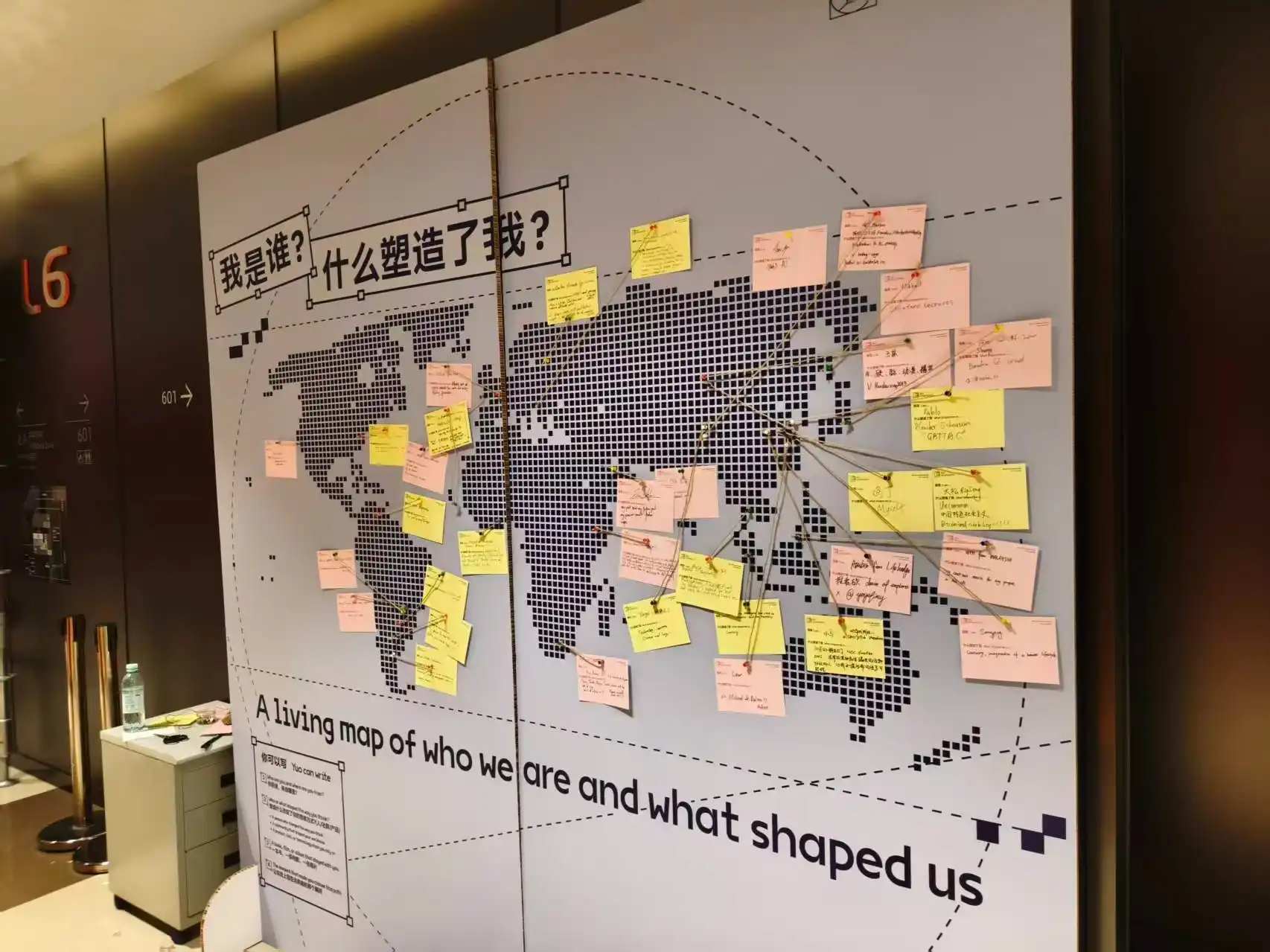
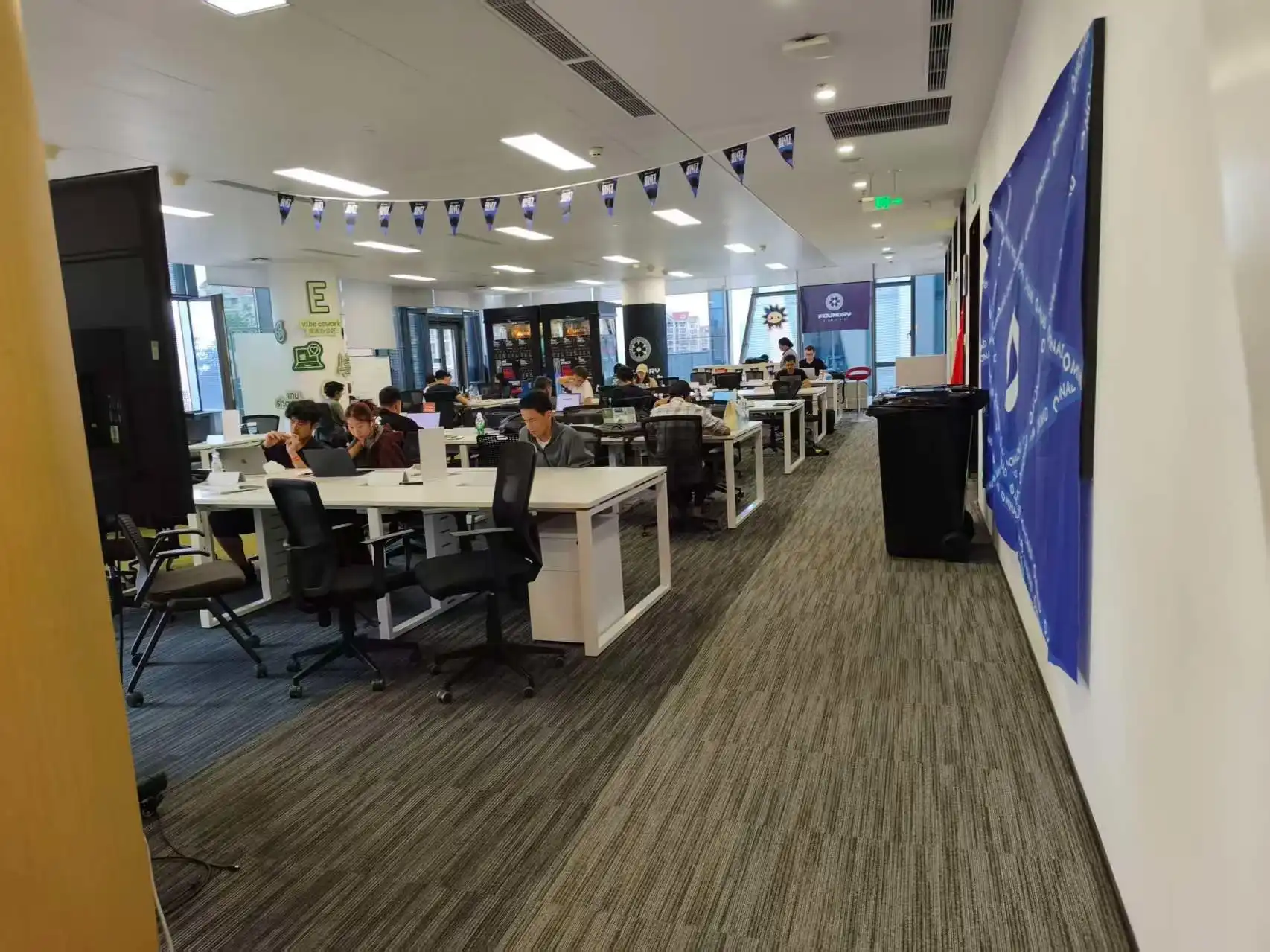
The venue wasn't set up as a traditional hotel conference hall, but as a hybrid space of open-plan work areas, stepped seating pads, bean bags, and temporary projectors. Some people sat at workstations typing code, others gathered on rugs and square cushions listening to talks, while some leaned in corners continuing to work on their products. Colorful mu Shanghai flags hung on the walls. A world map with the question "Who am I? What shaped me?" was covered with sticky notes and connecting lines, resembling an identity network being collectively filled in by participants.
Through conversations at the scene with multiple organizers, project teams, investors, and model company representatives, PANews found that AI entrepreneurship is entering a new phase. If "who can access models faster and build products" was the first phase of AI entrepreneurship; then the second phase is "who can find real-world scenarios, acquire users, build communities, and survive long enough." If models are the utilities (water, electricity, gas), then what is truly scarce now is no longer just the ability to connect the pipes, but who can find the people who most need the water.

A Deep Social Experiment with Global Developers

The most unusual aspect of mu Shanghai was first reflected in its organizational form. Founder Sun mentioned in an interview with PANews that mu didn't start in China initially, but spread in forms like pop-up cities and startup communities in places like Thailand, Argentina, Africa, and Japan. Compared to traditional two- or three-day conferences, it emphasizes a group of people entering the same city for about a month to co-create, exchange, live, and build relationships.

This format naturally gives the event a strong community attribute. According to Sun, about 2000 people registered for this mu Shanghai, with over 800 ultimately selected. The participant composition was also quite diverse: Chinese participants accounted for about 20%, other Asian regions like Japan, Korea, India about 18%, Southeast Asia about 16%, Latin America, the US, and Europe about 10%, 10%, and 11% respectively, and Africa about 6%. By industry background, AI practitioners accounted for about 40%, Web3-related practitioners about 20% to 30%, with additional groups from hardware, biotech, investment, etc.
Sun explained the appeal of this event format in the interview: "After leaving university, people rarely have that kind of deep relationship again. It's also hard to form such connections in work and big cities, so I think it's very valuable." In his view, what mu attempts to replicate is not the fleeting traffic of traditional conferences, but a relationship density closer to university, community, and shared living.

The scene indeed felt closer to this state. The main stage wasn't always the center of the space; subtitles next to projection screens, temporary display racks, and computers scattered everywhere together formed the daily backdrop of the event. During a sharing session on user experience, the audience wasn't neatly seated on chairs but dispersed among low cushions, the floor, and open workstations. The speaker shared at the front, while people below listened while taking notes, replying to messages, or continuing to work on their projects. This slightly loose state was closer to the real way developer communities operate.
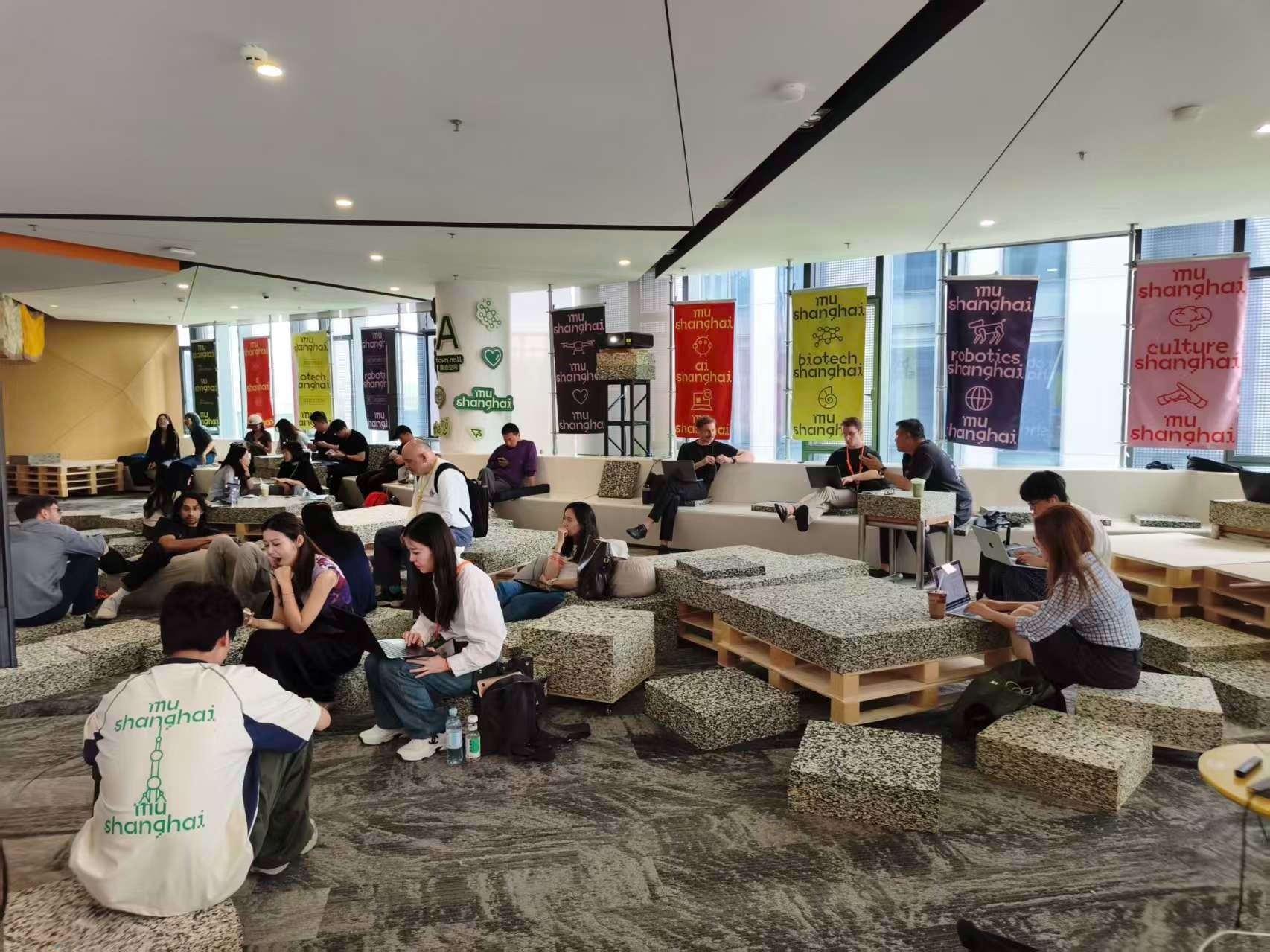
The significance of these numbers lies not in the event scale itself, but in showcasing an organizational logic different from traditional exhibitions. Traditional conferences often connect brands and users, companies and clients; mu Shanghai felt more like connecting Chinese and foreign developer cultures. There were large model roundtables, hackathons, co-creation activities, language learning, community sharing, and impromptu discussions. Feng Wen, Product Lead at MiniMax, mentioned in an on-site exchange that the atmosphere here wasn't just about "taking the stage to share about AI," but also included cultural exchange, developer co-creation, and community participation.

The presence of a large number of Web3 practitioners also made this connection more complex. What the Web3 industry has accumulated over the past few years isn't just on-chain assets and speculative narratives, but also a set of methods for community mobilization, global collaboration, social media dissemination, and developer organization. As AI entrepreneurship shifts from competing on model access to competing on user reach, this set of methods regains value.

From 'How to Build' to 'Who to Sell To': AI Entrepreneurship Enters Deep Waters

The most obvious feeling PANews had at the scene was that AI entrepreneurs are no longer excited for long about "whether they can build a product." Multimodal models, code generation tools, Agent frameworks, and automated workflows are rapidly lowering the barrier for product prototyping. A small tool that previously required designers, engineers, and operations to complete might now have an initial version built by a few people in a few nights using AI coding tools.

Newer data better illustrates this change in threshold. The AI Pulse survey conducted by JetBrains in January 2026 showed that 90% of professional developers already routinely use at least one AI tool at work, and 74% have adopted specialized AI tools for developers. For entrepreneurs, "being able to build" is becoming a more common capability, no longer a natural barrier.

However, once the product is built, the real problems begin. A founder named Nathan told PANews he is working on a product to help AI entrepreneurs find startup directions. The logic is that AI can already expand information collection range, solidify the judgment and taste of serial entrepreneurs into a set of rules, and then let AI discover signals of business opportunities. But this product itself reveals a larger reality: as building products becomes easier, "what exactly to build" becomes the scarcer question.

Nathan told PANews: "With AI coding tools, making something new is already fast. The real key is whether this direction is worth pursuing." The product he is making essentially productizes the act of "finding direction." This case is small but reflects a new change in AI entrepreneurship: when execution is amplified by AI, judgment becomes the scarce asset.

In the roundtable "Innovative Practices and Path Exploration in the AI Consumer Ecosystem" hosted by PANews, multiple guests expressed similar views: AI indeed makes rapid prototyping, demo samples, and initial launch easier, but the truly difficult parts of entrepreneurship haven't disappeared. User acquisition, commercialization, community stickiness, user education, and human-to-human connections still require teams to have more composite capabilities.

In other words, AI lowers the development threshold, not the entrepreneurship threshold. In the past, the first hurdle in product competition was "can it be built?" Now that this hurdle is significantly lowered, the real filtering starts moving later to distribution, scenarios, and commercialization. An on-site intervieee summarized it as: making tools isn't hard now; what's hard is getting the product, IP, and value seen by more people.

This is also a common dilemma faced by many AI tools. The more tools there are, the harder it is for users to choose; the stronger the models, the easier it is for single-point functions to be swallowed by the next model update. For entrepreneurs, a product that seems viable today might lose its raison d'être in 6 months because underlying model capabilities improve. Therefore, the real question isn't "whether to do AI," but whether one can find a specific scenario that the model cannot completely erase in the short term.

AI usage is rapidly spreading, but between tool usage and stable value, there still lies scenarios, processes, governance, and organizational capabilities.

Web3 People Flooding into AI, Not Just Chasing Hype

If viewed only from a narrative perspective, Web3 people flooding into AI might seem like just another hype migration. But at mu Shanghai, there were more practical reasons behind this migration.

On one hand, the wealth effects, capital dividends, and technological dividends of the crypto industry are waning, and many practitioners are looking for new tech directions; on the other hand, AI applications恰好 need the capabilities Web3 is most familiar with: community, globalized communication, developer relations, and social media distribution.

A senior Web3 practitioner said bluntly on-site that the crypto industry has been around for 10 years, and most of the capital and knowledge arbitrage opportunities are over; now it's better to move towards new tech directions. He advised entrepreneurs to gradually shift their careers, personal brands, and asset allocation towards AI, rather than continuing to heavily bet on cryptocurrencies. This assessment may not represent all Web3 practitioners, but it did reflect the real mindset of some people present.

He expressed it directly: "I think AI is worth long-term investment. By investment, I don't just mean using tools, but gradually shifting one's career, personal brand, and asset allocation towards AI." His personal choice was to transition into an AI-focused blogger, holding a sports camera to film Vlogs of teams building AI products at the event.

Such judgments may not represent all Web3 practitioners, but they were enough to illustrate the on-site atmosphere: AI is no longer just an optional track, but is becoming a direction for some Web3 practitioners to reconfigure their time, assets, and professional identities.

The AI-driven social media assistant XerpaAI had a booth at the event. Their staff said in an interview, "We are a pure AI project, technically not much related to Web3. But from the user side, we will definitely reach Web3 users. For example, the X AI Assistant will serve some Web3 users with operational needs." This statement well represents the ambiguous relationship between current AI applications and the Web3 community: the product doesn't have to be Web3, but users, dissemination, and early needs often cannot avoid Web3.

In on-site exchanges, model company representatives also mentioned that the user groups of AI and Web3 are increasingly difficult to completely separate; many heavy users of AI tools originally come from Web3 backgrounds. Especially in scenarios like Hong Kong and Shanghai, AI and Web3 often share the same group of high-frequency event attendees, early users, and community dissemination nodes. For them, they don't reject whether community members are Web3 users; as long as the theme is AI, everyone's goals are aligned.

From this perspective, Web3 entering AI isn't just a "change of scene." What Web3 brings isn't the on-chain technology itself, but a set of methods on how to gather global developers around a project, sustain discussions, and contribute attention. For current AI applications, this capability might be harder to replicate than a short-term feature.

Hardware, Supply Chain, and the Chinese Foundation

Compared to the anxiety over "whether AI software apps will be eaten by models," discussions on AI hardware, embodied intelligence, and the Chinese supply chain at the scene felt more certain. Multiple interviewees mentioned that as AI enters the real world in the future, hardware, robotics, embodied intelligence, and multi-sensory interaction will see greater opportunities. In the consumer-grade AI roundtable hosted by PANews, Feng Wen, Open Platform Product Lead at MiniMax, also predicted that smart hardware, robotics, and embodied intelligence will reach an important inflection point in the next three to five years; AI will no longer exist only in software interfaces but also enter the real physical world.

Outside the venue, the robotics track is also becoming a focus. A human vs. robot parcel sorting competition hosted by overseas robotics company Figur on May 18 sparked widespread online discussion. Even though humans won by a narrow margin within 10 hours, it's clear that over longer timeframes, robots have become the winners. The Stanford HAI "2026 AI Index" also shows that AI agents' accuracy in real-world computer task tests like OSWorld improved from about 12% to 66.3%, autonomous driving has begun to see scaled deployment, and China's Apollo Go completed 11 million fully driverless trips cumulatively.

AI entering the real world through hardware, robotics, and on-device deployment is no longer just a distant narrative.

This is precisely the special advantage of the Chinese ecosystem. Sun repeatedly mentioned in the interview that China possesses almost the entire supply chain from hardware, AI, life tech to infrastructure. For overseas entrepreneurs, if they want to do AI hardware, whether it's raw materials, factories, engineers, or rapid prototyping capabilities, it's ultimately hard to avoid China. He also revealed that for many entrepreneurs coming from overseas to China for this event, the goal was to experience and closely observe China's complete industrial chain.

Sun stated: "As long as you're doing hardware, overseas teams will eventually return to China to find supply chains, raw materials, engineers, and prototyping capabilities." He believes that in the next five to ten years, more international talent will come to China to find supply chains, raw materials, talent, and capital. For overseas entrepreneurs, China is not just a market, but a set of infrastructure for product realization.

A venture capital professional told PANews on-site that their main goal for participating was to see if there were more hard tech, embodied intelligence, and world model projects, rather than purely consumer applications. Their logic was that if the replication cost of software AI is decreasing, then hardware, supply chain, and real-world interaction might instead become barriers harder to be directly erased by model updates.

However, the attractiveness of the Chinese AI ecosystem to overseas developers doesn't come only from the supply chain. The emergence of domestic models like DeepSeek, Kimi, MiniMax, Zhipu, and Qwen has made overseas developers start to reconsider Chinese model capabilities. But Chinese models going overseas still face trust and deployment challenges. Feng Wen, Open Platform Product Lead at MiniMax, mentioned that Chinese models mainly gain attention and brand influence overseas through open source, but many overseas developers still worry about data, compliance, and trust issues. Even if models are open source, most people may not have enough computing power to deploy them themselves, leading to the emergence of an intermediary layer where US companies deploy Chinese open-source models and then provide them to overseas clients.

For overseas developers, the attractiveness of the Chinese AI ecosystem no longer comes only from cost or market size, but also from continuously expanding model supply, engineering capabilities, and industrial conversion capabilities.

This means the opportunity for the Chinese AI ecosystem isn't a single line. Model capabilities, hardware supply chain, government execution, and developer communities need to operate together to truly bring overseas entrepreneurs in. The role mu Shanghai plays in this process is more like a connector bringing overseas developers into China.

Large Model Companies Begin Competing for Developer Communities

If the competition among large model companies in the past year was mainly reflected in parameters, leaderboards, and prices, then at mu Shanghai, the importance of developer communities was pushed to the forefront. Domestic large model companies don't just need more API calls; they need developers to know about them, trust them, and be willing to build applications around their models.

Feng Wen mentioned in on-site exchanges that they do a lot of developer-related work. Developer experience, event screening, guest participation, hackathons, judging, token sponsorship, etc., all need to be incorporated into the ecosystem work of model companies.

"Developers are our users, so we value developer experience highly and also hope more developers understand what we are doing," Feng Wen stated. This sentence can almost be seen as a footnote to the ecosystem strategy of domestic large model companies: models are no longer just placed on a platform waiting to be called, but must actively enter spaces where developers gather.

This isn't a choice unique to MiniMax. On-site participants revealed that Zhipu has "Origin Academy" in Beijing, with activities almost every week, and close ties to university resources like Tsinghua and Peking University; AIGC and AGI communities also continuously gather talent through fixed spaces, hackathons, hotpot gatherings, and developer nights. These spaces are becoming offline versions of developer portals.
Behind this is a larger change: model companies are no longer satisfied with "releasing the model." They need documentation, trial platforms, case studies, video tutorials, and also communities, hackathons, and developer events to help users cross the initial threshold. As Agent capabilities improve, user education itself is being reshaped. In the past, developers needed to read documentation, check error codes, and understand parameters themselves; now, Agents can help users read documentation, search for solutions, select models, and automatically correct paths.

For model companies, the real competition isn't just model call prices, but who can enter developers' daily workflows earlier. For application entrepreneurs, the real opportunity isn't just which model to connect to, but whether they can find a group of early users willing to continuously use, provide feedback, and even actively spread the word.

Being Needed, Understood, and Kept

mu Shanghai didn't provide a unified answer for AI entrepreneurship. Some are bullish on hardware, some are making social media growth assistants, some are discovering entrepreneurial opportunities, some discussed cultural出海 and spiritual consumption, while others treated it as an entry point to meet overseas developers and local partners.

But these seemingly scattered clues precisely constitute the most real current state of AI entrepreneurship. Model capabilities continue to advance, but application forms are still searching for stable scenarios; development thresholds are lowered, but distribution and commercialization become more critical; Web3 hype cools, but the community methods it left behind are being absorbed by AI; Chinese supply chain and model capabilities become important, but overseas developers still need a trusted entry point to understand China.

Sun mentioned in the interview that mu Shanghai's long-term goal isn't just to host an event, but to form a continuous space where overseas and domestic people can meet, collaborate, and create new things in the same place. In fact, mu has very few formal employees; much of the work is driven by contributors and partners. This organizational method itself resembles Web3 and open-source communities: low centralization, emphasis on contribution and relationship networks, and thus more attractive to people familiar with this culture.

Of course, this model still has many uncertainties. Whether the event can transform into a long-term space, whether community enthusiasm can solidify into real projects, whether overseas developers will stay long-term in the Chinese ecosystem, whether large model companies can convert developer activities into stable call volumes, all remain to be seen. Communities can create encounters but cannot replace business closure; cities can provide scenarios but cannot guarantee product success.

However, mu Shanghai at least made one trend clear: AI entrepreneurship is moving from "model worship" to "scenario competition," from "making tools" to "being seen by users," from single-point products to comprehensive competition involving communities, supply chains, and cross-national collaboration. For ordinary entrepreneurs, the opportunity brought by AI isn't making everyone a winner easily, but exposing more people earlier to the same, more intense screening process.

When products become increasingly easy to produce, what is truly scarce becomes the ability to understand users, enter scenarios, build trust, and continuously connect people. AI will continue to lower the production cost of tools, but it won't automatically answer "why you?" In this sense, building the product is only the first step; being needed, understood, and kept is the harder second half of AI entrepreneurship.


Preguntas relacionadas

QWhat is the core shift in the difficulty of AI entrepreneurship discussed in the article about mu Shanghai?

AThe core shift is moving from the initial challenge of 'who can build a product prototype faster using AI models' to the current and more difficult challenge of 'who can find real user scenarios, acquire users, build a community, and survive in the long term.' The scarcity is no longer just the ability to connect to models (the 'plumbing'), but the ability to find those who most need the water.

QHow does the mu Shanghai event differ from a traditional tech conference according to the article?

AThe mu Shanghai event differs by being organized more like a temporary, month-long developer co-living and co-creation space rather than a standard short conference. It focuses on deep social connections and community building among global developers, featuring open workspaces, casual seating, impromptu discussions, and a mix of activities like hackathons and cultural exchanges, rather than a fixed agenda of corporate presentations and exhibition booths.

QWhy are many Web3 practitioners moving into the AI field, beyond just chasing trends?

AWeb3 practitioners are moving into AI because, while crypto industry opportunities are diminishing, the AI application field urgently needs the community-building, global communication, developer relations, and social media distribution skills that the Web3 industry has honed over the past decade. AI applications, even if not blockchain-based, often find their early users and community nodes within Web3 circles.

QWhat unique advantage does China's AI ecosystem offer to global entrepreneurs, especially in hardware?

AChina's AI ecosystem offers a complete hardware and supply chain advantage, including access to raw materials, factories, engineers, and rapid prototyping capabilities. For global entrepreneurs working on AI hardware, robotics, or embodied intelligence, China serves as essential infrastructure for product realization, not just a market.

QAccording to the article, how is the competition among major Chinese AI model companies (LLMs) evolving?

AThe competition is evolving from focusing solely on model parameters, benchmarks, and pricing to actively competing for developer community mindshare and loyalty. Model companies are now heavily investing in developer experience, documentation, tutorials, hackathons, sponsorships, and physical community spaces to integrate themselves into developers' workflows and build trust.

Lecturas Relacionadas

Eight Global Central Banks Enter the Fray, Aiming to Claim a Piece of the Stablecoin Pie?

The article discusses the Agorá project, a global cross-border payment system initiative led by the Bank for International Settlements (BIS) with participation from eight major central banks (including the Federal Reserve Bank of New York, Bank of England, and Bank of Japan) and over 40 private financial institutions like JPMorgan and SWIFT. Agorá aims to create a unified platform for the instant settlement of cross-border transactions using tokenized commercial bank deposits. A key feature is its strict "permissioned" design, where funds are pre-labeled by country and smart contracts enforce AML and sanctions checks. This contrasts with the "permissionless" ideal suggested by its ancient Greek namesake. The system employs a two-tier architecture: central banks retain full control over sovereign reserves on separate ledgers, while private entities manage a shared ledger for multi-currency clearing. The project, which completed a prototype in May 2026, seeks to streamline the slow, multi-step process of traditional cross-border payments. It is positioned as a centralized, regulatory-compliant alternative to decentralized stablecoins like Tether, targeting large-scale institutional transfers. The analysis highlights a potential future market split: projects like Agorá could dominate wholesale institutional payments, while public blockchain-based stablecoins retain their role in retail, remittance, and emerging market use cases. This represents an effort by traditional finance to establish boundaries for decentralized networks. The upcoming integration of the EU's Pontes framework with its core settlement system will test this dynamic.

marsbitHace 19 min(s)

Eight Global Central Banks Enter the Fray, Aiming to Claim a Piece of the Stablecoin Pie?

marsbitHace 19 min(s)

BitMart Research Institute Weekly Highlights: ETF Continued Outflows + AI Drain, Crypto Market Seeks Bottom Amid Volatility

**BitMart Research Weekly Highlights: ETF Outflows and AI Demand Weigh on Crypto Market** The crypto market saw a correction this past week, diverging from the all-time highs in U.S. equity markets. Bitcoin (BTC) fell roughly 6%, while Ethereum (ETH) declined about 4.5%. The primary pressure point was significant and sustained outflows from U.S. spot Bitcoin ETFs, which experienced a record nine consecutive days of net redemptions totaling approximately $2.8 billion. Spot Ethereum ETFs also faced continuous outflows. This weakness in digital assets contrasted with the continued surge in traditional markets, particularly AI-related stocks. The news of Anthropic's secret IPO filing, targeting a potential $750B IPO, and Alphabet's major new AI infrastructure funding further fueled the tech rally. The analysis suggests a potential "liquidity siphon" effect, where capital is being diverted from crypto into the dominant AI investment narrative. Other notable developments include DTCC's DTC announcing plans to integrate Stellar for tokenized asset services, signaling a major step for tokenized equities. Meanwhile, MicroStrategy paused its primary mechanism for funding Bitcoin purchases to focus on debt management, removing a key institutional buyer from the market. The report concludes that the crypto market remains under pressure from the competing AI narrative and major upcoming IPOs, with a potential for a broader market bottom if an AI-driven correction occurs later this cycle.

marsbitHace 34 min(s)

BitMart Research Institute Weekly Highlights: ETF Continued Outflows + AI Drain, Crypto Market Seeks Bottom Amid Volatility

marsbitHace 34 min(s)

The Death of the Three-Act Play: AI Ushers Enterprise Software Startups into the ‘Speedrun Era’

The Death of the Three-Act Play: How AI is Ushering in a 'Speedrun Era' for Enterprise Software Startups The traditional three-act play for building an enterprise software company—first, a niche wedge product; second, an expanded suite; third, a dominant platform—is becoming obsolete in the AI era. Previously, startups would spend 3-5 years perfecting a single-point solution to reach tens of millions in ARR (Act 1: The Wedge). Then, over another few years, they'd build adjacent products to form a suite and cross the $100M ARR threshold (Act 2: The Suite). Finally, with scale and user engagement, they could aim to become a foundational platform themselves (Act 3: The Platform). This model assumed a timeline measured in years. However, AI-driven tools have dramatically compressed software development costs and timelines. Companies like Cursor, Clay, and Harvey have scaled from near zero to approaching or surpassing $100M ARR in remarkably short periods, demonstrating a new competitive pace. The core argument is that in this rapidly changing market, relying on a small, "safe" wedge as a protective harbor may now be a conservative, even risky, strategy. The plummeting cost of building software means the time required for Acts 1 and 2 is approaching zero. Consequently, rational strategy now favors planning to build the entire vision from the outset. This shift changes the calculus for early-stage investment. The emphasis is moving from finding a defensible niche to backing founders with "unreasonable, relentless ambition" to reimagine entire workflows or replace incumbent platforms from day one. The age of gradual expansion is giving way to an era of immediate, full-scale ambition.

marsbitHace 53 min(s)

The Death of the Three-Act Play: AI Ushers Enterprise Software Startups into the ‘Speedrun Era’

marsbitHace 53 min(s)

After the 'Golden Finger' Points to IBM, the Stock God Trump's Next Target Emerges

The White House occupant is being called a "stock god." Financial disclosures show former President Trump executed 3,642 stock trades in Q1 2026, averaging 58 per trading day. More significantly, a pattern has emerged where companies he publicly praises often see their stock prices rise and frequently overlap with his personal portfolio holdings, government industrial policy, and federal funding. Since a high-profile Tesla event in March 2025, Trump has publicly endorsed at least nine companies, including Intel, Dell, Micron, Palantir, IBM, Apple, Thermo Fisher, Nvidia, and AMD. These "Trump concept stocks" share key traits: they are tied to AI, semiconductors, quantum computing, or "Made in America" narratives; they often receive government contracts, subsidies (like CHIPS Act funding), or regulatory favors; and their CEOs typically have strong personal or political ties to Trump. Timing raises questions. In several instances, such as with Palantir and Dell, Trump's personal account established or increased positions weeks before his public endorsements, which were followed by significant stock price jumps. While his assets are reportedly held in a blind trust managed by his children, the correlation is notable. Based on this pattern, analysis suggests the next companies likely to be endorsed are those where the US government has already taken a strategic equity stake but which haven't yet received a high-profile "call-out." Prime candidates include MP Materials (rare earths, 15% DoD interest), Lithium Americas (lithium, DoE-backed), and quantum computing firms like IonQ, Rigetti, and D-Wave, which are reportedly in talks for government equity-for-funding deals. Other potential names are Oracle (deep political ties) and GlobalFoundries (semiconductors and quantum funding). These stocks carry high political premium, meaning their valuations are highly sensitive to political favor, which can be volatile.

marsbitHace 1 hora(s)

After the 'Golden Finger' Points to IBM, the Stock God Trump's Next Target Emerges

marsbitHace 1 hora(s)

Trading

Spot
Futuros

Artículos destacados

Qué es GROK AI

Grok AI: Revolucionando la Tecnología Conversacional en la Era Web3 Introducción En el paisaje de rápida evolución de la inteligencia artificial, Grok AI se destaca como un proyecto notable que une los dominios de la tecnología avanzada y la interacción del usuario. Desarrollado por xAI, una empresa liderada por el renombrado empresario Elon Musk, Grok AI busca redefinir la forma en que interactuamos con la inteligencia artificial. A medida que el movimiento Web3 continúa floreciendo, Grok AI tiene como objetivo aprovechar el poder de la IA conversacional para responder consultas complejas, proporcionando a los usuarios una experiencia que no solo es informativa, sino también entretenida. ¿Qué es Grok AI? Grok AI es un sofisticado chatbot de IA conversacional diseñado para interactuar dinámicamente con los usuarios. A diferencia de muchos sistemas de IA tradicionales, Grok AI abraza una gama más amplia de consultas, incluyendo aquellas que normalmente se consideran inapropiadas o fuera de las respuestas estándar. Los objetivos centrales del proyecto incluyen: Razonamiento Confiable: Grok AI enfatiza el razonamiento de sentido común para proporcionar respuestas lógicas basadas en la comprensión contextual. Supervisión Escalable: La integración de asistencia de herramientas asegura que las interacciones de los usuarios sean monitoreadas y optimizadas para la calidad. Verificación Formal: La seguridad es primordial; Grok AI incorpora métodos de verificación formal para mejorar la confiabilidad de sus resultados. Comprensión de Largo Contexto: El modelo de IA sobresale en retener y recordar un extenso historial de conversaciones, facilitando discusiones significativas y contextualizadas. Robustez Adversarial: Al enfocarse en mejorar sus defensas contra entradas manipuladas o maliciosas, Grok AI busca mantener la integridad de las interacciones de los usuarios. En esencia, Grok AI no es solo un dispositivo de recuperación de información; es un compañero conversacional inmersivo que fomenta un diálogo dinámico. Creador de Grok AI La mente detrás de Grok AI no es otra que Elon Musk, una persona sinónimo de innovación en varios campos, incluyendo la automoción, los viajes espaciales y la tecnología. Bajo el paraguas de xAI, una empresa enfocada en avanzar la tecnología de IA de maneras beneficiosas, la visión de Musk busca remodelar la comprensión de las interacciones de IA. El liderazgo y la ética fundacional están profundamente influenciados por el compromiso de Musk de empujar los límites tecnológicos. Inversores de Grok AI Si bien los detalles específicos sobre los inversores que respaldan a Grok AI son limitados, se reconoce públicamente que xAI, el incubador del proyecto, está fundado y apoyado principalmente por el propio Elon Musk. Las empresas y participaciones anteriores de Musk proporcionan un respaldo robusto, fortaleciendo aún más la credibilidad y el potencial de crecimiento de Grok AI. Sin embargo, hasta ahora, la información sobre fundaciones de inversión adicionales u organizaciones que apoyan a Grok AI no está fácilmente accesible, marcando un área para una posible exploración futura. ¿Cómo Funciona Grok AI? La mecánica operativa de Grok AI es tan innovadora como su marco conceptual. El proyecto integra varias tecnologías de vanguardia que facilitan sus funcionalidades únicas: Infraestructura Robusta: Grok AI está construido utilizando Kubernetes para la orquestación de contenedores, Rust para rendimiento y seguridad, y JAX para computación numérica de alto rendimiento. Este trío asegura que el chatbot opere de manera eficiente, escale efectivamente y sirva a los usuarios de manera oportuna. Acceso a Conocimiento en Tiempo Real: Una de las características distintivas de Grok AI es su capacidad para acceder a datos en tiempo real a través de la plataforma X—anteriormente conocida como Twitter. Esta capacidad otorga a la IA acceso a la información más reciente, permitiéndole proporcionar respuestas y recomendaciones oportunas que otros modelos de IA podrían pasar por alto. Dos Modos de Interacción: Grok AI ofrece a los usuarios una elección entre “Modo Divertido” y “Modo Regular”. El Modo Divertido permite un estilo de interacción más lúdico y humorístico, mientras que el Modo Regular se centra en ofrecer respuestas precisas y exactas. Esta versatilidad asegura una experiencia personalizada que se adapta a diversas preferencias de los usuarios. En esencia, Grok AI une rendimiento con compromiso, creando una experiencia que es tanto enriquecedora como entretenida. Cronología de Grok AI El viaje de Grok AI está marcado por hitos cruciales que reflejan sus etapas de desarrollo y despliegue: Desarrollo Inicial: La fase fundamental de Grok AI tuvo lugar durante aproximadamente dos meses, durante los cuales se realizó el entrenamiento inicial y el ajuste del modelo. Lanzamiento Beta de Grok-2: En un avance significativo, se anunció la beta de Grok-2. Este lanzamiento introdujo dos versiones del chatbot—Grok-2 y Grok-2 mini—cada una equipada con capacidades para chatear, programar y razonar. Acceso Público: Tras su desarrollo beta, Grok AI se volvió disponible para los usuarios de la plataforma X. Aquellos con cuentas verificadas por un número de teléfono y activas durante al menos siete días pueden acceder a una versión limitada, haciendo que la tecnología esté disponible para un público más amplio. Esta cronología encapsula el crecimiento sistemático de Grok AI desde su inicio hasta el compromiso público, enfatizando su compromiso con la mejora continua y la interacción del usuario. Características Clave de Grok AI Grok AI abarca varias características clave que contribuyen a su identidad innovadora: Integración de Conocimiento en Tiempo Real: El acceso a información actual y relevante diferencia a Grok AI de muchos modelos estáticos, permitiendo una experiencia de usuario atractiva y precisa. Estilos de Interacción Versátiles: Al ofrecer modos de interacción distintos, Grok AI se adapta a diversas preferencias de los usuarios, invitando a la creatividad y la personalización en la conversación con la IA. Avanzada Infraestructura Tecnológica: La utilización de Kubernetes, Rust y JAX proporciona al proyecto un marco sólido para asegurar confiabilidad y rendimiento óptimo. Consideración de Discurso Ético: La inclusión de una función generadora de imágenes muestra el espíritu innovador del proyecto. Sin embargo, también plantea consideraciones éticas en torno a los derechos de autor y la representación respetuosa de figuras reconocibles—una discusión en curso dentro de la comunidad de IA. Conclusión Como una entidad pionera en el ámbito de la IA conversacional, Grok AI encapsula el potencial de experiencias transformadoras para los usuarios en la era digital. Desarrollado por xAI y guiado por el enfoque visionario de Elon Musk, Grok AI integra conocimiento en tiempo real con capacidades avanzadas de interacción. Busca empujar los límites de lo que la inteligencia artificial puede lograr mientras mantiene un enfoque en consideraciones éticas y la seguridad del usuario. Grok AI no solo encarna el avance tecnológico, sino que también representa un nuevo paradigma de conversación en el paisaje Web3, prometiendo involucrar a los usuarios con tanto conocimiento hábil como interacción lúdica. A medida que el proyecto continúa evolucionando, se erige como un testimonio de lo que la intersección de la tecnología, la creatividad y la interacción similar a la humana puede lograr.

389 Vistas totalesPublicado en 2024.12.26Actualizado en 2024.12.26

Qué es GROK AI

Qué es ERC AI

Euruka Tech: Una Visión General de $erc ai y sus Ambiciones en Web3 Introducción En el paisaje en rápida evolución de la tecnología blockchain y las aplicaciones descentralizadas, nuevos proyectos emergen con frecuencia, cada uno con objetivos y metodologías únicas. Uno de estos proyectos es Euruka Tech, que opera en el amplio dominio de las criptomonedas y Web3. El enfoque principal de Euruka Tech, particularmente su token $erc ai, es presentar soluciones innovadoras diseñadas para aprovechar las crecientes capacidades de la tecnología descentralizada. Este artículo tiene como objetivo proporcionar una visión general completa de Euruka Tech, una exploración de sus objetivos, funcionalidad, la identidad de su creador, posibles inversores y su importancia dentro del contexto más amplio de Web3. ¿Qué es Euruka Tech, $erc ai? Euruka Tech se caracteriza como un proyecto que aprovecha las herramientas y funcionalidades ofrecidas por el entorno Web3, centrándose en integrar inteligencia artificial dentro de sus operaciones. Aunque los detalles específicos sobre el marco del proyecto son algo elusivos, está diseñado para mejorar la participación del usuario y automatizar procesos en el espacio cripto. El proyecto tiene como objetivo crear un ecosistema descentralizado que no solo facilite transacciones, sino que también incorpore funcionalidades predictivas a través de inteligencia artificial, de ahí la designación de su token, $erc ai. El objetivo es proporcionar una plataforma intuitiva que facilite interacciones más inteligentes y un procesamiento eficiente de transacciones dentro de la creciente esfera de Web3. ¿Quién es el Creador de Euruka Tech, $erc ai? En la actualidad, la información sobre el creador o el equipo fundador detrás de Euruka Tech permanece no especificada y algo opaca. Esta ausencia de datos genera preocupaciones, ya que el conocimiento del trasfondo del equipo es a menudo esencial para establecer credibilidad dentro del sector blockchain. Por lo tanto, hemos categorizado esta información como desconocida hasta que se disponga de detalles concretos en el dominio público. ¿Quiénes son los Inversores de Euruka Tech, $erc ai? De manera similar, la identificación de inversores u organizaciones de respaldo para el proyecto Euruka Tech no se proporciona fácilmente a través de la investigación disponible. Un aspecto que es crucial para los posibles interesados o usuarios que consideren involucrarse con Euruka Tech es la garantía que proviene de asociaciones financieras establecidas o respaldo de firmas de inversión de renombre. Sin divulgaciones sobre afiliaciones de inversión, es difícil sacar conclusiones completas sobre la seguridad financiera o la longevidad del proyecto. De acuerdo con la información encontrada, esta sección también se encuentra en estado de desconocido. ¿Cómo Funciona Euruka Tech, $erc ai? A pesar de la falta de especificaciones técnicas detalladas para Euruka Tech, es esencial considerar sus ambiciones innovadoras. El proyecto busca aprovechar el poder computacional de la inteligencia artificial para automatizar y mejorar la experiencia del usuario dentro del entorno de las criptomonedas. Al integrar IA con tecnología blockchain, Euruka Tech tiene como objetivo proporcionar características como operaciones automatizadas, evaluaciones de riesgo e interfaces de usuario personalizadas. La esencia innovadora de Euruka Tech radica en su objetivo de crear una conexión fluida entre los usuarios y las vastas posibilidades que presentan las redes descentralizadas. A través de la utilización de algoritmos de aprendizaje automático e IA, busca minimizar los desafíos de los usuarios primerizos y optimizar las experiencias transaccionales dentro del marco de Web3. Esta simbiosis entre IA y blockchain subraya la importancia del token $erc ai, que actúa como un puente entre las interfaces de usuario tradicionales y las capacidades avanzadas de las tecnologías descentralizadas. Cronología de Euruka Tech, $erc ai Desafortunadamente, como resultado de la información limitada disponible sobre Euruka Tech, no podemos presentar una cronología detallada de los principales desarrollos o hitos en el viaje del proyecto. Esta cronología, típicamente invaluable para trazar la evolución de un proyecto y entender su trayectoria de crecimiento, no está actualmente disponible. A medida que la información sobre eventos notables, asociaciones o adiciones funcionales se haga evidente, las actualizaciones seguramente mejorarán la visibilidad de Euruka Tech en la esfera cripto. Aclaración sobre Otros Proyectos “Eureka” Es importante señalar que múltiples proyectos y empresas comparten una nomenclatura similar con “Eureka”. La investigación ha identificado iniciativas como un agente de IA de NVIDIA Research, que se centra en enseñar a los robots tareas complejas utilizando métodos generativos, así como Eureka Labs y Eureka AI, que mejoran la experiencia del usuario en educación y análisis de servicio al cliente, respectivamente. Sin embargo, estos proyectos son distintos de Euruka Tech y no deben confundirse con sus objetivos o funcionalidades. Conclusión Euruka Tech, junto con su token $erc ai, representa un jugador prometedor pero actualmente oscuro dentro del paisaje de Web3. Si bien los detalles sobre su creador e inversores permanecen no revelados, la ambición central de combinar inteligencia artificial con tecnología blockchain se presenta como un punto focal de interés. Los enfoques únicos del proyecto para fomentar la participación del usuario a través de la automatización avanzada podrían destacarlo a medida que el ecosistema Web3 progresa. A medida que el mercado cripto continúa evolucionando, los interesados deben mantener un ojo atento a los avances en torno a Euruka Tech, ya que el desarrollo de innovaciones documentadas, asociaciones o una hoja de ruta definida podría presentar oportunidades significativas en el futuro cercano. Tal como está, esperamos más información sustancial que podría revelar el potencial de Euruka Tech y su posición en el competitivo paisaje cripto.

341 Vistas totalesPublicado en 2025.01.02Actualizado en 2025.01.02

Qué es ERC AI

Qué es DUOLINGO AI

DUOLINGO AI: Integrando el Aprendizaje de Idiomas con Web3 e Innovación en IA En una era donde la tecnología redefine la educación, la integración de la inteligencia artificial (IA) y las redes blockchain anuncia una nueva frontera para el aprendizaje de idiomas. Entra DUOLINGO AI y su criptomoneda asociada, $DUOLINGO AI. Este proyecto aspira a fusionar la capacidad educativa de las principales plataformas de aprendizaje de idiomas con los beneficios de la tecnología descentralizada Web3. Este artículo profundiza en los aspectos clave de DUOLINGO AI, explorando sus objetivos, marco tecnológico, desarrollo histórico y potencial futuro, mientras mantiene claridad entre el recurso educativo original y esta iniciativa independiente de criptomoneda. Visión General de DUOLINGO AI En su esencia, DUOLINGO AI busca establecer un entorno descentralizado donde los aprendices puedan ganar recompensas criptográficas por alcanzar hitos educativos en la competencia lingüística. Al aplicar contratos inteligentes, el proyecto tiene como objetivo automatizar los procesos de verificación de habilidades y asignación de tokens, adhiriéndose a los principios de Web3 que enfatizan la transparencia y la propiedad del usuario. El modelo se aparta de los enfoques tradicionales para la adquisición de idiomas al apoyarse en gran medida en una estructura de gobernanza impulsada por la comunidad, permitiendo a los poseedores de tokens sugerir mejoras al contenido del curso y a las distribuciones de recompensas. Algunos de los objetivos notables de DUOLINGO AI incluyen: Aprendizaje Gamificado: El proyecto integra logros en blockchain y tokens no fungibles (NFTs) para representar niveles de competencia lingüística, fomentando la motivación a través de recompensas digitales atractivas. Creación de Contenido Descentralizada: Abre avenidas para que educadores y entusiastas de los idiomas contribuyan con sus cursos, facilitando un modelo de reparto de ingresos que beneficia a todos los contribuyentes. Personalización Impulsada por IA: Al emplear modelos avanzados de aprendizaje automático, DUOLINGO AI personaliza las lecciones para adaptarse al progreso de aprendizaje individual, similar a las características adaptativas que se encuentran en plataformas establecidas. Creadores del Proyecto y Gobernanza A partir de abril de 2025, el equipo detrás de $DUOLINGO AI permanece seudónimo, una práctica frecuente en el paisaje descentralizado de criptomonedas. Esta anonimidad está destinada a promover el crecimiento colectivo y la participación de los interesados en lugar de centrarse en desarrolladores individuales. El contrato inteligente desplegado en la blockchain de Solana anota la dirección de la billetera del desarrollador, lo que significa el compromiso con la transparencia en las transacciones a pesar de que la identidad de los creadores sea desconocida. Según su hoja de ruta, DUOLINGO AI aspira a evolucionar hacia una Organización Autónoma Descentralizada (DAO). Esta estructura de gobernanza permite a los poseedores de tokens votar sobre cuestiones críticas como implementaciones de características y asignaciones del tesoro. Este modelo se alinea con la ética del empoderamiento comunitario que se encuentra en diversas aplicaciones descentralizadas, enfatizando la importancia de la toma de decisiones colectiva. Inversores y Asociaciones Estratégicas Actualmente, no hay inversores institucionales o capitalistas de riesgo identificables públicamente vinculados a $DUOLINGO AI. En cambio, la liquidez del proyecto proviene principalmente de intercambios descentralizados (DEXs), marcando un contraste marcado con las estrategias de financiamiento de las empresas de tecnología educativa tradicionales. Este modelo de base indica un enfoque impulsado por la comunidad, reflejando el compromiso del proyecto con la descentralización. En su libro blanco, DUOLINGO AI menciona la formación de colaboraciones con “plataformas de educación blockchain” no especificadas, destinadas a enriquecer su oferta de cursos. Si bien aún no se han divulgado asociaciones específicas, estos esfuerzos colaborativos sugieren una estrategia para fusionar la innovación blockchain con iniciativas educativas, ampliando el acceso y la participación de los usuarios a través de diversas avenidas de aprendizaje. Arquitectura Tecnológica Integración de IA DUOLINGO AI incorpora dos componentes principales impulsados por IA para mejorar su oferta educativa: Motor de Aprendizaje Adaptativo: Este sofisticado motor aprende de las interacciones de los usuarios, similar a los modelos propietarios de las principales plataformas educativas. Ajusta dinámicamente la dificultad de las lecciones para abordar desafíos específicos de los aprendices, reforzando áreas débiles a través de ejercicios dirigidos. Agentes Conversacionales: Al emplear chatbots impulsados por GPT-4, DUOLINGO AI proporciona una plataforma para que los usuarios participen en conversaciones simuladas, fomentando una experiencia de aprendizaje de idiomas más interactiva y práctica. Infraestructura Blockchain Construido sobre la blockchain de Solana, $DUOLINGO AI utiliza un marco tecnológico integral que incluye: Contratos Inteligentes de Verificación de Habilidades: Esta característica otorga automáticamente tokens a los usuarios que superan con éxito las pruebas de competencia, reforzando la estructura de incentivos para resultados de aprendizaje genuinos. Insignias NFT: Estos tokens digitales significan varios hitos que los aprendices logran, como completar una sección de su curso o dominar habilidades específicas, permitiéndoles intercambiar o mostrar sus logros digitalmente. Gobernanza DAO: Los miembros de la comunidad con tokens pueden participar en la gobernanza votando sobre propuestas clave, facilitando una cultura participativa que fomenta la innovación en las ofertas de cursos y características de la plataforma. Línea de Tiempo Histórica 2022–2023: Conceptualización Los cimientos de DUOLINGO AI comienzan con la creación de un libro blanco, destacando la sinergia entre los avances en IA en el aprendizaje de idiomas y el potencial descentralizado de la tecnología blockchain. 2024: Lanzamiento Beta Un lanzamiento beta limitado introduce ofertas en idiomas populares, recompensando a los primeros usuarios con incentivos en tokens como parte de la estrategia de participación comunitaria del proyecto. 2025: Transición a DAO En abril, se produce un lanzamiento completo de la red principal con la circulación de tokens, lo que provoca discusiones comunitarias sobre posibles expansiones a idiomas asiáticos y otros desarrollos de cursos. Desafíos y Direcciones Futuras Obstáculos Técnicos A pesar de sus ambiciosos objetivos, DUOLINGO AI enfrenta desafíos significativos. La escalabilidad sigue siendo una preocupación constante, particularmente en equilibrar los costos asociados con el procesamiento de IA y mantener una red descentralizada y receptiva. Además, garantizar la creación y moderación de contenido de calidad en medio de una oferta descentralizada plantea complejidades en el mantenimiento de estándares educativos. Oportunidades Estratégicas Mirando hacia adelante, DUOLINGO AI tiene el potencial de aprovechar asociaciones de micro-certificación con instituciones académicas, proporcionando validaciones verificadas en blockchain de habilidades lingüísticas. Además, la expansión entre cadenas podría permitir que el proyecto acceda a bases de usuarios más amplias y a ecosistemas blockchain adicionales, mejorando su interoperabilidad y alcance. Conclusión DUOLINGO AI representa una fusión innovadora de inteligencia artificial y tecnología blockchain, presentando una alternativa centrada en la comunidad a los sistemas tradicionales de aprendizaje de idiomas. Si bien su desarrollo seudónimo y su modelo económico emergente traen ciertos riesgos, el compromiso del proyecto con el aprendizaje gamificado, la educación personalizada y la gobernanza descentralizada ilumina un camino hacia adelante para la tecnología educativa en el ámbito de Web3. A medida que la IA continúa avanzando y el ecosistema blockchain evoluciona, iniciativas como DUOLINGO AI podrían redefinir cómo los usuarios se involucran con la educación lingüística, empoderando comunidades y recompensando la participación a través de mecanismos de aprendizaje innovadores.

383 Vistas totalesPublicado en 2025.04.11Actualizado en 2025.04.11

Qué es DUOLINGO AI

Discusiones

Bienvenido a la comunidad de HTX. Aquí puedes mantenerte informado sobre los últimos desarrollos de la plataforma y acceder a análisis profesionales del mercado. A continuación se presentan las opiniones de los usuarios sobre el precio de AI (AI).

活动图片












