Litecoin Suffers Denial-of-Service Attack Due To Network Bug — Details

bitcoinistPublicado a 2026-04-27Actualizado a 2026-04-27

According to the latest report, major Litecoin mining pools were hit by a Denial-of-Service (DOS) attack this weekend due to a zero-day vulnerability in the network. The Litecoin Foundation confirmed that the bug has been patched and the network is fully operational.

Litecoin Attacker Attempts Double-Spend Exploits On Cross-Chain Protocols

On Saturday, April 25, the Litecoin Foundation reported in a post on the X platform that a Denial-of-Service attack occurred on its network. According to the foundation, this exploit, enabled by a zero-day bug in the network’s MimbleWimble Extension Block (MWEB) privacy layer, allowed the bad actor to attempt double-spends against cross-chain swap protocols.

The foundation explained that the vulnerability allowed non-updated mining nodes to facilitate an invalid MWEB transaction, which enabled individuals to peg out coins to third-party decentralized exchanges. This DOS attack caused a disruption to the normal operations of major mining pools, the post-mortem report read.

The Litecoin Foundation noted that the attack was mitigated through a 13-block reorganization (reorg), which reversed the invalid transactions and prevented them from being added to the blockchain. “All valid transactions during that period remain unaffected,” the foundation further clarified.

It is worth noting that the Litecoin Foundation didn’t identify any affected pools and didn’t specify the value of the invalid MWEB transactions created. Meanwhile, this incident comes at a time when blockchain insecurity has been rife, with the industry still reeling from the recent Kelp DAO attack.

Aurora Labs CEO: Zero-Day Or Inside Job?

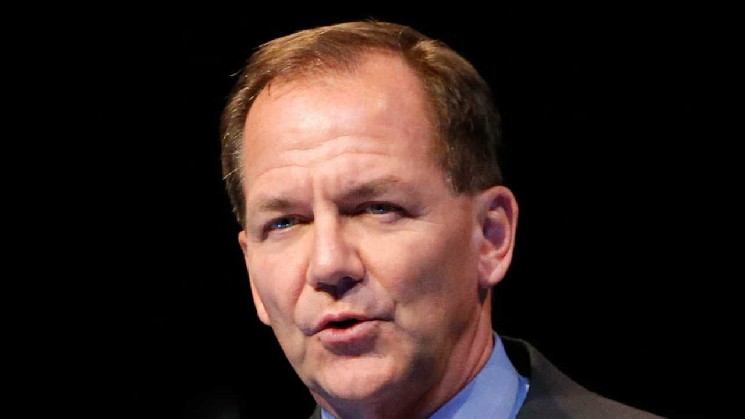
Aurora Labs CEO Alex Shevchenko, who caught the Litecoin attack early, suggested that the DOS exploit had the markings of an inside job. According to the crypto founder, the attacker planned to swap LTC into ETH on a recently funded address, suggesting the exploiter knew about the bug from the outset.

Hence, the Aurora Labs CEO thinks prior knowledge defeats the whole idea of a “zero-day buy,” which means a software vulnerability unknown to the creator or the public. Shevchenko explained that the DOS attack involved putting nodes down to decrease the hashrate and was a way to exploit the buy.

Shevchenko wrote on X:

The fact that protocol automatically handled the reorg once DoS stopped (which is great) means that some portion of the hashrate was actually running an updated code. Thus, this bug was known and it’s not a zero-day.

As of this writing, the price of LTC is around $55.92, with no significant change over the past 24 hours. Despite the FUD (fear, uncertainty, and doubt) surrounding news of this DOS attack, the altcoin dropped by about 1.2% on the day.

The price of LTC on the daily timeframe | Source: LTCUSDT chart on TradingView

Criptos en tendencia

Lecturas Relacionadas

Pax Silica vs. WAICO: The US Wants to Prohibit Europe from Using Chinese Artificial Intelligence

The United States is preparing to demand that European and other partners abandon Chinese artificial intelligence initiatives, threatening exclusion from the American-led "Pax Silica" coalition, according to a leaked U.S. State Department document. This ultimatum forces signatories of the "AI Opportunity Statement" to choose between the Western technological ecosystem and alternative frameworks, with China not explicitly named but clearly targeted. Pax Silica is a U.S. strategy for AI and semiconductor hegemony, launched in late 2025. Its European presence expanded significantly in mid-2026. Concurrently, China, Russia, and 27 other nations established the World AI Cooperation Organization (WAICO) in July 2026 as an independent intergovernmental platform promoting AI governance based on UN principles. This situation creates a difficult choice, especially for European nations balancing strategic autonomy with dependence on U.S. tech and security. It also pressures Global South countries with pragmatic ties to both Washington and Beijing. The formation of competing blocks risks fragmenting the global tech landscape, forcing companies to split supply chains, increasing costs, and potentially leading to incompatible standards and protocols. The era of open globalization in AI may be ending, replaced by geopolitical confrontation where technological sovereignty trumps economic efficiency. The decisions made will shape the global digital economy for decades.

cryptonews.ruHace 1 hora(s)

Pax Silica vs. WAICO: The US Wants to Prohibit Europe from Using Chinese Artificial Intelligence

cryptonews.ruHace 1 hora(s)

Robert Kiyosaki Shares His Mentor's Predictions About the Emergence of Bitcoin and AI

American entrepreneur and author of "Rich Dad Poor Dad," Robert Kiyosaki, discussed the influence of futurist R. Buckminster Fuller on his worldview, linking Fuller's past technological predictions to the emergence of Bitcoin and the development of artificial intelligence. In an X post, Kiyosaki also reflected on personal purpose, sharing his journey from the music business—where he worked with bands like The Police and Iron Maiden—to creating the "Cashflow" board game and writing his famous book. He described feeling an inner emptiness despite his success, a turning point that came after meeting Fuller, whom he studied with for three summers. Kiyosaki described Fuller as a "friendly genius" who foresaw world-changing developments like Bitcoin and AI. However, the core of his post focused on Fuller's philosophical impact, particularly a quote about belonging to the universe and finding purpose by dedicating one's life to the maximum benefit of others. The entrepreneur remains a vocal advocate for cryptocurrencies. He regularly advises buying Bitcoin during market panics, viewing it and assets like Ethereum, gold, and silver as hedges against traditional financial system failures. Kiyosaki has predicted a major market crash by 2026, seeing it as an opportunity for prepared investors, with long-term price targets including $750,000 for Bitcoin and $95,000 for Ethereum.

cryptonews.ruHace 3 hora(s)

Robert Kiyosaki Shares His Mentor's Predictions About the Emergence of Bitcoin and AI

cryptonews.ruHace 3 hora(s)

Etherealize CEO Calls Wall Street's Private Blockchains a 'Race to the Bottom'

Etherealize co-founder and CEO Vivek Raman criticized Wall Street's growing interest in private, permissioned blockchains, calling them a "race to the bottom." In an interview with CoinDesk, Raman argued that consortium networks fragment liquidity and return the industry to the siloed systems that blockchain technology was meant to overcome. He stated that closed networks do not interoperate, undermining two key advantages of the technology: system compatibility and liquidity concentration. Etherealize promotes Ethereum as an open, foundational layer for institutional players. Raman insists that privacy and access restrictions should be built on top of public infrastructure—at the application or L2 level—rather than creating separate, closed networks. He compared Ethereum to HTTP as a base layer, with additional permissioned and private layers akin to HTTPS. Examples of this new wave of "closed" solutions mentioned include Canton Network from Digital Asset, Circle's Arc project, and Stripe's Tempo. Raman termed this trend "consortium chains 2.0," recalling earlier initiatives like the R3 interbank consortium and the Hyperledger corporate ecosystem from 2016 that failed to gain significant traction. He reiterated his firm belief that a global, open, permissionless infrastructure is necessary as a foundational base layer. Raman previously noted in June that traditional financial institutions had begun implementing Ethereum-based solutions into real business processes.

cryptonews.ruHace 3 hora(s)

Etherealize CEO Calls Wall Street's Private Blockchains a 'Race to the Bottom'

cryptonews.ruHace 3 hora(s)

Trading

Spot

Artículos destacados

Cómo comprar LTC

¡Bienvenido a HTX.com! Hemos hecho que comprar Litecoin (LTC) sea simple y conveniente. Sigue nuestra guía paso a paso para iniciar tu viaje de criptos.Paso 1: crea tu cuenta HTXUtiliza tu correo electrónico o número de teléfono para registrarte y obtener una cuenta gratuita en HTX. Experimenta un proceso de registro sin complicaciones y desbloquea todas las funciones.Obtener mi cuentaPaso 2: ve a Comprar cripto y elige tu método de pagoTarjeta de crédito/débito: usa tu Visa o Mastercard para comprar Litecoin (LTC) al instante.Saldo: utiliza fondos del saldo de tu cuenta HTX para tradear sin problemas.Terceros: hemos agregado métodos de pago populares como Google Pay y Apple Pay para mejorar la comodidad.P2P: tradear directamente con otros usuarios en HTX.Over-the-Counter (OTC): ofrecemos servicios personalizados y tipos de cambio competitivos para los traders.Paso 3: guarda tu Litecoin (LTC)Después de comprar tu Litecoin (LTC), guárdalo en tu cuenta HTX. Alternativamente, puedes enviarlo a otro lugar mediante transferencia blockchain o utilizarlo para tradear otras criptomonedas.Paso 4: tradear Litecoin (LTC)Tradear fácilmente con Litecoin (LTC) en HTX's mercado spot. Simplemente accede a tu cuenta, selecciona tu par de trading, ejecuta tus trades y monitorea en tiempo real. Ofrecemos una experiencia fácil de usar tanto para principiantes como para traders experimentados.

1.1k Vistas totalesPublicado en 2024.12.11Actualizado en 2026.06.02

Cómo comprar LTC

Discusiones

Bienvenido a la comunidad de HTX. Aquí puedes mantenerte informado sobre los últimos desarrollos de la plataforma y acceder a análisis profesionales del mercado. A continuación se presentan las opiniones de los usuarios sobre el precio de LTC (LTC).

活动图片