L1 is Dead, Long Live Appchain

marsbitPublicado a 2026-04-20Actualizado a 2026-04-20

Resumen

"L1 is Dead, Appchain Rises" critiques the failure of current Layer-1 (L1) blockchain models, arguing their tokens are trending toward zero. The author identifies key flaws: linear token emissions that incentivize selling rather than value creation, weak value propositions like "gas token" and "governance" narratives, mismanagement by bloated "foundations" or "labs" that drain value through excessive spending and token sales, and poor industry leadership focused on short-term narratives and overhyped trends like RaaS and high TPS. The solution proposed is a fundamental shift. New L1 token models are needed, moving away from the "low float, high FDV" paradigm that disadvantages retail investors. Fundraising should be sufficient only for launch, not excessive. Token unlocks should be tied to real milestones like CEX listings or DeFi integration. The ultimate goal should be for L1 tokens to become widely used mediums of exchange, not just fuel for networks. Value is increasingly moving to the application layer, with successful apps building their own chains (appchains). The author concludes that L1s must build sustainable value by creating useful applications and services, fostering strong holder communities, and achieving self-sustainability without relying on continuous token emissions.

Author:iwillpat

Compiled by: Jiahuan, ChainCatcher

Since the era of "Rollup as a Service" (RaaS) began, the outcome was already predetermined. This is the precursor to the execution layer entering a death spiral and commoditization.

What I mean is, general-purpose L1 tokens will continue to trend towards zero, and likely no exceptions. I will try to explain why, and what I would do differently if I were an L1 operator.

The main drivers of L1 failure are as follows: linear token releases, failed value propositions, poor governance, and industry "leadership".

I will briefly elaborate on these points—these are just personal views, not definitive conclusions.

Linear staking releases in their current form have some benefits, namely distribution through liquid staking ("My 7% APY!"), but they fail in several key aspects.

Delegated Proof of Stake (DPoS) makes it easy for armchair "decentralization fundamentalists" to participate in network security, but it does not properly incentivize insiders, users, and developers. At best, it incentivizes people to hold tokens, doing nothing to create any real value.

The most classic argument I've heard about PoS is: large validators have an economic incentive not to dump on you. But that hasn't stopped them from selling every possible allocation and block reward.

This leads to my next point: they sell because L1 tokens have no long-term value proposition.

Tissue Paper Thin

The "gas token" and "governance" narratives are tired and unconvincing—like two-ply Bounty paper towels that disintegrate when wet. The value of a network token depends on what you can buy with it.

So the goal of all blockchain teams should be to push their token as a currency as widely as possible. In the pursuit of higher TPS and lower block times, the industry's vision of "peer-to-peer electronic cash" seems to have been lost.

Let's be brutally honest: throughput, TVL, and low latency give the token no value. Liquidity and usage rate do.

This next point is the most substantial and painful: blockchain "Labs". (And various foundations.)

Selling at unlock, large-discount OTC deals, eye-watering operational expenses, incentive programs to attract hot money, hiring "KOLs"... we can all name a few.

Ultimately, every dollar spent by Labs is a tax on token holders. Unless that Labs generates revenue through some service, first-party wallet, or application, it is surviving by selling tokens.

This in itself is not bad—they provide valuable services through engineering resources, explorers, and APIs. But if Labs does not bring net new buy pressure to the token, and expenses are climbing unsustainably, it is slowly bleeding to death.

One of the primary goals of Labs should be to build the network into a permissionless, self-sustaining system that passes the "hands-off test". Eventually, business development should be community-driven, and the network should have its own spiritual "CTO".

This doesn't require 400 employees; 30-40 excellent people are enough, plus those developing first-party apps and services.

Finally—after this I'll share my "solution"—cryptocurrency has been led astray by many large capital allocators and advisors.

Putting aside FTX, Celsius, and Luna, we have been force-fed by the industry's biggest players: short-term narratives, excessive leverage, "maximal extractable value", like stuffing a pathetic, bloated retail turkey.
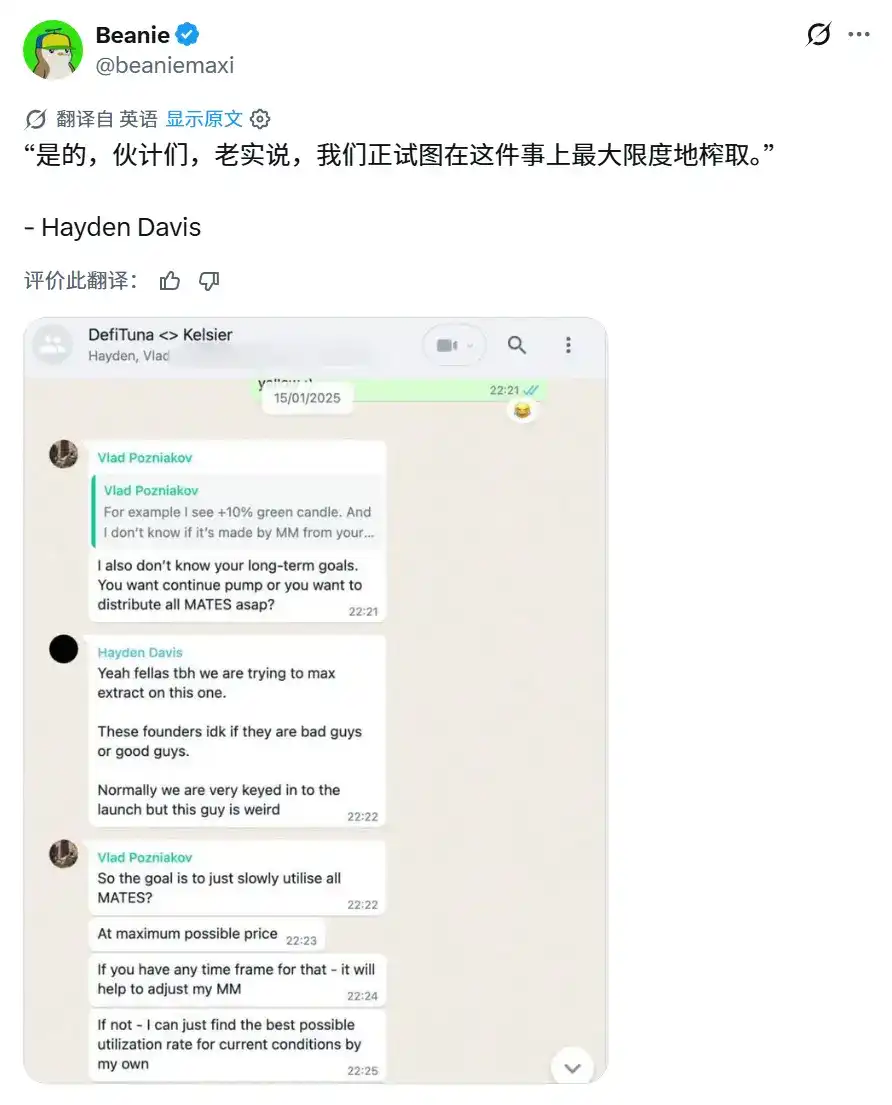
Promoting TPS over smart contract security, investing in the 10th general-purpose blockchain, raising funds at outrageous valuations, raising far more capital than needed, claiming security advantages that simply don't exist... these are all classic symptoms of severe crypto brain rot.

Placing bold bets on the direction of the industry is one thing—privacy coins, MoveVM, tokenized IP, decentralized social.

But burning money into another idiotic hype cycle or short-term cash grab is another matter entirely: RaaS, data availability, any L1 that tokens at a product with a multi-unicorn valuation before having a product, infrastructure solutions for crypto problems that don't exist or generate revenue...

(Full disclosure: I don't claim to be an investment genius, but I can do basic math. Buy pressure must exceed sell pressure.)

Where to Next?

Next, I will briefly talk about where the industry should go.

We need new L1 token models and a completely different way for crypto VCs to play. The current "low float, high FDV" paradigm works when valuations are lower and there is incremental capital flowing in.

But retail is no longer willing to pay for seed-round valuations that are 1000x at TGE, nor withstand the selling pressure from massive unlocks and insider staking rewards 12 months later.

L1s simply don't need hundreds of millions to launch a mainnet—unless I'm missing something. Raise enough to build the platform and go to market, then raise more later; everyone will be better off.

Token unlocks should be tied to milestones like CEX liquidity, payments, and DeFi lending, and on-chain governance should be given higher priority. Foundations should maintain at least some transparency regarding their balance sheets, expenses, and investments.

Retail doesn't want to pay for network security (i.e., validator rewards). Eventually, the network should be able to sustain itself without any staking rewards.

Maybe staking rewards shouldn't have existed from the start, and network or Labs revenue should go directly to validators. Then, see how hard validators would work.

Less and less value is flowing to the base layer, and we shouldn't be investing so much in their development. Gas fees on all chains are trending towards zero, successful applications are migrating to their own chains, and cross-chain bridging has never been easier.

So you can draw this conclusion: it's better to build an application (or appchain) first and then vertically integrate—Hyperliquid, Pump, etc. have done this.

I'm not saying to stop investing in general-purpose blockchains, but I do believe the core function of a network token should ultimately be a truly useful medium of exchange—permissionless L1s should be liquidity hubs for DeFi and testing grounds for new applications.

These are not new ideas. I think many L1 teams have realized: to survive, they need to build their own applications and services. The treadmill of foundations surviving by selling tokens is slowing down.

If you work in these teams on something that doesn't generate revenue, you might want to start thinking about what value you can create.

Interestingly, mass adoption by retail or institutions seems far less important than building a strong holder community and keeping them happy. When in doubt, ask the community.

Even if their advice is terrible, at least ask them who their favorite and least favorite person on your team is.

I hesitated for weeks about posting this. This is not a well-structured thought piece; it's more like a bunch of shower thoughts.

My point is: all L1s are making the same serious mistakes, differing only in luck and timing. The best-performing projects survive, usually due to stronger leadership and faster delivery, but the question of a sustainable value proposition remains unanswered.

We can continue down this long and painful path of value extraction, watching BTC maxis and sats stackers continue to outperform; or, we admit the problems with the current L1 model and start building for a slightly fairer outcome.


Preguntas relacionadas

QWhat are the main reasons the author believes that general L1 tokens will trend towards zero?

AThe author cites four main reasons: linear token releases, failed value propositions, poor governance, and flawed industry leadership that prioritizes short-term gains over sustainable development.

QAccording to the author, why do large validators in Proof-of-Stake systems continue to sell their tokens despite economic incentives not to?

AThey sell because L1 tokens lack a long-term value proposition; the 'gas token' and 'governance' narratives are weak, and token value ultimately depends on what it can be used to purchase.

QWhat criticism does the author level against blockchain 'Labs' and Foundations?

AThe author criticizes them for acting as a tax on token holders by selling tokens to fund high operational expenses, over-hiring, and unsustainable spending without generating net new buy pressure for the token.

QWhat does the author propose as a better model for launching and funding L1s?

AThe author suggests that L1s do not need hundreds of millions to launch, token unlocks should be tied to milestones like CEX listings and DeFi adoption, and governance should be more community-driven with greater transparency from foundations.

QWhat is the author's view on the future direction of the industry, and what does 'Appchain' represent in the title?

AThe author believes value is moving away from base layers (L1s) and that the future lies in application-specific blockchains (Appchains), where successful applications migrate to their own chains, enabling vertical integration and a more sustainable model.

Lecturas Relacionadas

From 'Old Guys' to 'New Favorites': How AI Is Revaluing Old Infrastructure from Dell to Nokia?

From "Vintage Tech" to "New AI Darlings": How AI Revalues Old Infrastructure One year ago, tech giants like Dell, Nokia, Cisco, and Western Data were seen as slow-growth, low-valuation stories, far from the AI spotlight dominated by players like Nvidia. Now, these legacy tech stocks are gaining market attention, sparking debate on whether this is genuine industry revaluation or a temporary narrative. As AI moves from model parameters to real-world data centers, the market is recognizing companies with proven delivery and infrastructure capabilities. This shift marks a change in the AI investment thesis: from pure model and GPU focus to the complex systems engineering required for deployment. Companies like Dell, HPE, and Corning are being revalued not for being "sexy" AI innovators, but for their decades of accumulated expertise in supply chains, enterprise delivery, and infrastructure—assets that have become critical in the AI buildout phase. The revaluation is unfolding across three key infrastructure lines: 1. **Servers & System Integration:** Dell and HPE are emerging as crucial system integrators or "general contractors" for AI data centers, translating GPU orders into complete, deployable server racks integrated with power, cooling, and networking. 2. **Networking & Connectivity:** AI's scale demands robust high-speed connections. Corning (fiber optics), Nokia (AI-RAN, 6G), and Cisco (data center switches) are gaining importance for enabling efficient data transfer within and between AI clusters. 3. **Storage:** Beyond high-speed memory (HBM/DRAM), the AI data explosion is driving demand for high-capacity hard drives (HDDs) from companies like Western Digital and Seagate to handle training data, logs, and cold storage cost-effectively. For this revaluation to be substantive and not just a narrative, three criteria are key: 1) Concrete AI-related order and revenue growth (e.g., Dell's AI server sales), 2) Upward revisions to company financial guidance, and 3) Sustainable improvements in profit quality, not just top-line revenue spikes. In essence, AI's transition to a real construction phase is re-pricing "old assets" against "new demand." The opportunity, however, is selective. Only those legacy firms that are demonstrably integrated into the capital expenditure chains of data center and enterprise AI deployment are likely to experience a true "logic re-rating" rather than just a temporary valuation bounce.

marsbitHace 3 min(s)

From 'Old Guys' to 'New Favorites': How AI Is Revaluing Old Infrastructure from Dell to Nokia?

marsbitHace 3 min(s)

The Merger of Codex and ChatGPT Marks the Beginning of a Major Reshuffle in Programming Tools

OpenAI is shifting its strategic focus from ChatGPT to Codex, merging them along with the browser tool Atlas into a unified desktop super-app. This move signals an internal belief that Codex, originally a programming tool, represents the next evolution of AI more than conversational models like ChatGPT. Over the past year, Codex's weekly active users have surged past 5 million. The key distinction is that while ChatGPT answers questions, Codex executes tasks. Enterprises increasingly value this ability to get work done over simply receiving advice. Consequently, Codex is attracting professionals beyond developers, including analysts, bankers, marketers, and product managers. OpenAI's reorganization and increased investment in Codex stem from recognizing that the future of AI competition lies in execution capabilities, not just conversation. The company is launching role-specific plugins (e.g., for data analysis, sales, design) to transform Codex into a broad knowledge work platform that automates and redefines white-collar workflows. Beyond being a tool, Codex reflects OpenAI's ambition to redefine software. New features like "Sites"—which generates interactive websites from documents—and collaborative "Annotations" aim to create a paradigm where the AI understands the goal and handles the tools and steps, functioning more like a digital colleague than traditional software. The ultimate goal is a unified experience where the user cares only about the completed task.

marsbitHace 12 min(s)

The Merger of Codex and ChatGPT Marks the Beginning of a Major Reshuffle in Programming Tools

marsbitHace 12 min(s)

Interpreting Investment Opportunities in the Age of Great Navigation, Invesco Great Wall Fund Releases '2026 Report on Chinese Enterprises Going Global'

Invesco Great Wall Fund has released its "2026 China Corporate Globalization Report," titled "The 'Great Navigation Era' of Chinese Enterprises." The report analyzes the new trends and investment opportunities as Chinese companies expand globally, moving from simple product exports to comprehensive overseas operations involving services, branding, and local production. Driven by factors like trade friction, the pursuit of higher profit margins abroad, and policy support, globalization is becoming essential for Chinese companies. The report outlines an evolution: from early product export ("Globalization 1.0") to the current "Globalization 2.0," characterized by overseas capacity, capital goods investment, consumer brand expansion, and service exports. Chinese firms' competitive advantages are highlighted, including a vast engineer talent pool, low-cost and robust infrastructure, and complete industrial clusters. Specific sectors with significant出海 potential are identified: * **Capital Goods** (e.g., engineering machinery, power equipment): Benefiting from global demand, especially in Belt & Road markets and the AI-driven power grid upgrade cycle. * **Consumer Brands**: Transitioning from cost to brand advantage, leveraging供应链 efficiency. * **Technology & Innovation**: Including AI applications, optical modules within global tech supply chains, and new energy vehicles focusing on local production. * **Pharmaceuticals**: Chinese biotech firms are becoming preferred partners for global pharma, with potential for breakthrough drugs in areas like oncology and weight loss. The report concludes that corporate globalization represents a sustained, core theme for China's capital markets, though companies must navigate challenges like geopolitics and localization.

marsbitHace 24 min(s)

Interpreting Investment Opportunities in the Age of Great Navigation, Invesco Great Wall Fund Releases '2026 Report on Chinese Enterprises Going Global'

marsbitHace 24 min(s)

GitHub, Transfixed by AI

On the night of February 9th, GitHub suffered a major outage caused by a simple configuration change—reducing a cache refresh interval from 12 to 2 hours—that triggered a cascade of failures. This was not an isolated event, but part of a broader pattern. In early 2026, GitHub experienced at least 8 major incidents, failing to meet its promised 99.9% availability. These outages stemmed from structural issues: explosive growth in load, tight service coupling, and insufficient protection against abnormal traffic. This unprecedented load is driven by AI Agents. In 2025, GitHub handled ~1 billion commits. By 2026, weekly commits reached 275 million, projecting to ~14 billion for the year—a 14x increase. AI tools like Claude Code now contribute 4.5% of all public repository commits, with weekly submissions surging 25x in just three months. AI-generated pull requests jumped from 4 million to 17 million per month in half a year. Unlike human developers, AI Agents work continuously, generating commits at a scale that overwhelms infrastructure designed for human rhythms. The surge also shattered GitHub's business model. Copilot's flat-rate pricing, based on assisting human developers, became unsustainable as Agentic AI sessions consumed resources worth hundreds of dollars for a few dollars in fees. In response, GitHub imposed usage limits and, by June 1st, shifted to a pay-per-use "AI Credits" system. Facing this new reality, GitHub realized a 10x scaling plan was insufficient. It announced a need to *redesign* its architecture for 30x current scale—decoupling services, adding fault isolation, and improving change management to prevent cascading failures. Other platforms like Stripe and AWS are facing similar challenges with AI Agents. Fundamentally, GitHub is transitioning from a human collaboration platform to an "exhaust pipe" for automated AI workflows. Its detailed post-mortem reports aim to maintain trust during this turbulent rebuild. The February outage was not just a technical glitch, but a signal of the software industry's entry into a new, AI-driven era.

marsbitHace 1 hora(s)

GitHub, Transfixed by AI

marsbitHace 1 hora(s)

Trading

Spot
Futuros

Artículos destacados

Cómo comprar ERA

¡Bienvenido a HTX.com! Hemos hecho que comprar Caldera (ERA) sea simple y conveniente. Sigue nuestra guía paso a paso para iniciar tu viaje de criptos.Paso 1: crea tu cuenta HTXUtiliza tu correo electrónico o número de teléfono para registrarte y obtener una cuenta gratuita en HTX. Experimenta un proceso de registro sin complicaciones y desbloquea todas las funciones.Obtener mi cuentaPaso 2: ve a Comprar cripto y elige tu método de pagoTarjeta de crédito/débito: usa tu Visa o Mastercard para comprar Caldera (ERA) al instante.Saldo: utiliza fondos del saldo de tu cuenta HTX para tradear sin problemas.Terceros: hemos agregado métodos de pago populares como Google Pay y Apple Pay para mejorar la comodidad.P2P: tradear directamente con otros usuarios en HTX.Over-the-Counter (OTC): ofrecemos servicios personalizados y tipos de cambio competitivos para los traders.Paso 3: guarda tu Caldera (ERA)Después de comprar tu Caldera (ERA), guárdalo en tu cuenta HTX. Alternativamente, puedes enviarlo a otro lugar mediante transferencia blockchain o utilizarlo para tradear otras criptomonedas.Paso 4: tradear Caldera (ERA)Tradear fácilmente con Caldera (ERA) en HTX's mercado spot. Simplemente accede a tu cuenta, selecciona tu par de trading, ejecuta tus trades y monitorea en tiempo real. Ofrecemos una experiencia fácil de usar tanto para principiantes como para traders experimentados.

371 Vistas totalesPublicado en 2025.07.17Actualizado en 2026.06.02

Cómo comprar ERA

Discusiones

Bienvenido a la comunidad de HTX. Aquí puedes mantenerte informado sobre los últimos desarrollos de la plataforma y acceder a análisis profesionales del mercado. A continuación se presentan las opiniones de los usuarios sobre el precio de ERA (ERA).

活动图片












