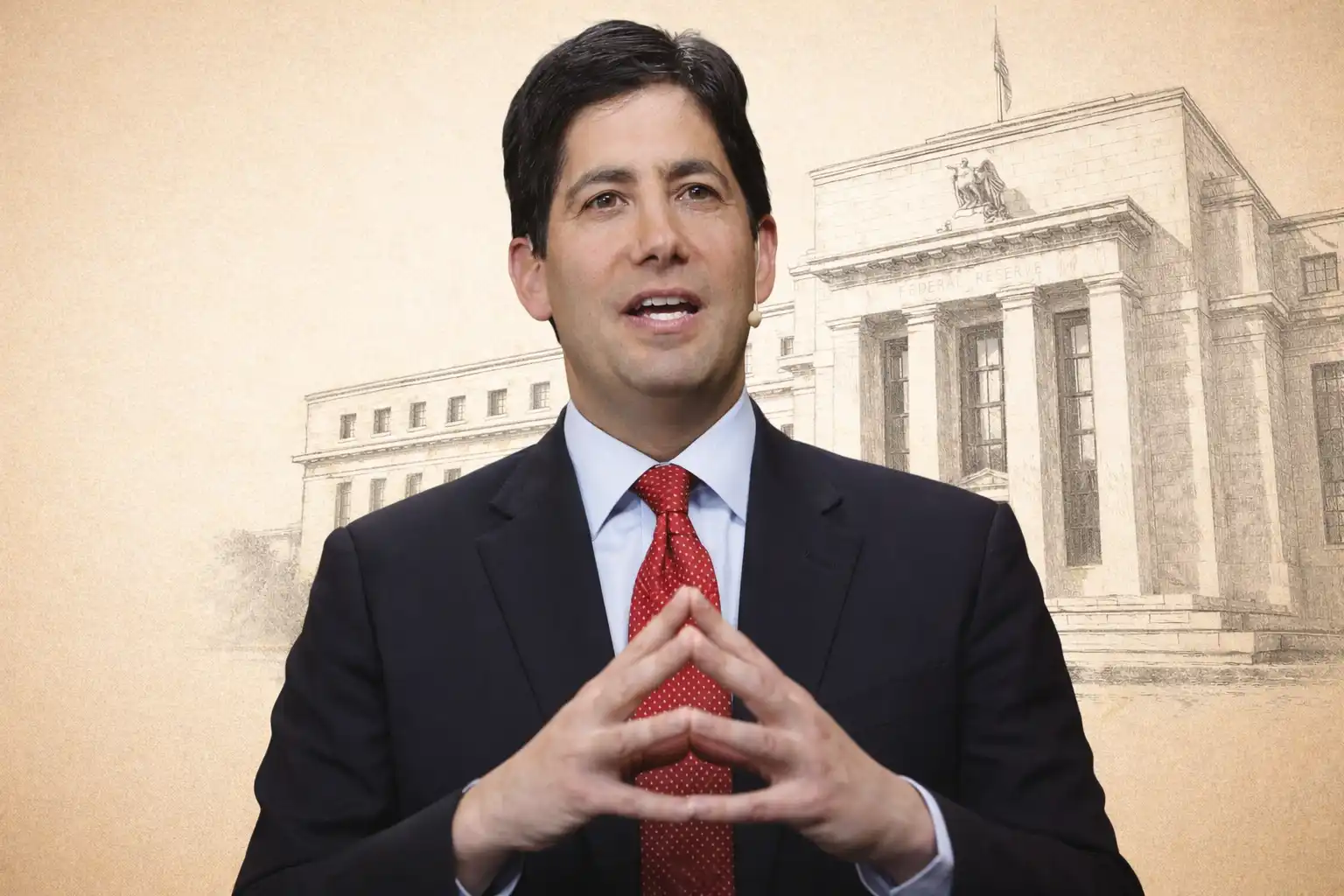
Kevin Warsh Emerges as a Surprise Contender: How Did an Inflation Hawk Become a Top Candidate for Fed Chair?

marsbitPublicado a 2025-12-18Actualizado a 2025-12-18

Resumen

Kevin Warsh, a former Federal Reserve governor known for his hawkish stance on inflation, has unexpectedly re-emerged as a top contender for the next Fed chair, competing against Trump’s longtime economic advisor Kevin Hassett. President Trump has indicated his next Fed pick will aggressively cut interest rates, a priority for his administration. Warsh brings a blend of Wall Street experience, academic credentials, and prior Fed service during the 2008 financial crisis. Despite his historical skepticism toward quantitative easing and concerns over inflation, Warsh has recently signaled openness to rate cuts, aligning with Trump’s demands. He has proposed a “rate cuts plus balance sheet reduction” strategy to reconcile stimulus with inflation control. Hassett, by contrast, is seen as a loyalist who would more directly implement Trump’s preference for looser monetary policy. However, some within Trump’s circle question his technical competence compared to Warsh’s deeper central banking experience. The competition reflects a broader tension between professional independence and political alignment. Warsh is viewed as more institutionally cautious, while demonstrating recent flexibility, whereas Hassett advocates for a Fed more directly responsive to the White House. The outcome will significantly influence the Fed’s future direction and perceived independence.

Author: Zen, PANews

Trump recently stated that he will announce the next Federal Reserve Chair "soon" and emphasized that the new chair would significantly lower interest rates. Trump's final selection is expected to be announced in early 2026. As the White House's screening for the next Fed Chair enters its final stage, former Federal Reserve Governor Kevin Warsh has unexpectedly re-emerged as a core candidate.

Against the backdrop of the Trump team publicly advocating for faster and deeper rate cuts, Warsh's return has drawn attention. He possesses both the central banking experience of participating in decision-making during the financial crisis and a long-standing critique of the Fed's excessive balance sheet expansion and policy direction shifts.

Now, Warsh, who is poised to potentially unseat the "shadow chair," faces a more practical test: how to meet the White House's expectations for low interest rates while simultaneously ensuring market confidence in the Fed's independence.

The Making of an "Inflation Hawk"

Kevin Warsh was born in 1970 and grew up in New York State in a business-oriented family. He graduated from Stanford University and earned a Juris Doctor degree from Harvard Law School. After completing his studies, Warsh embarked on a Wall Street career, working for years in Morgan Stanley's investment banking division, specializing in mergers and acquisitions and rising to the position of Executive Director. This Wall Street experience gave him a deep understanding of financial market operations, which proved highly valuable later when he entered public service.

In 2002, Warsh left Wall Street and turned to politics. He joined the team of then-President George W. Bush, serving as Special Assistant to the President for Economic Policy and working on domestic financial and capital market policies. In 2006, at just 35 years old, Warsh was nominated by President Bush to the Board of Governors of the Federal Reserve System, becoming one of the youngest Fed governors in history.

During his tenure at the Fed, he was responsible for liaising with international entities like the G20, accumulating extensive monetary policy experience. During the 2008 financial crisis, Governor Warsh worked closely with then-Chairman Ben Bernanke and New York Fed President Tim Geithner to help financial institutions weather the storm and participated in decisions regarding the Fed's launch of unconventional measures like quantitative easing (QE).

However, Warsh consistently maintained a cautious stance towards overly accommodative monetary policy, worrying that QE could lead to inflationary risks. Shortly after the launch of the second round of QE, he resigned from the Board prematurely in March 2011, a move widely seen as related to his concerns about QE and inflation risks. Warsh's demonstration of principled independence also earned him a reputation as an "inflation hawk" in financial circles.

After leaving the Fed, Warsh returned to his roots, shifting towards academia and think tanks, remaining active on the forefront of economic policy discussions. He became a Distinguished Visiting Fellow at the Hoover Institution at Stanford University and taught at the business school, focusing his research on monetary policy and financial stability. Simultaneously, Warsh was invited to join influential institutions like the Group of Thirty, frequently authoring media articles criticizing the Fed's overly loose policy orientation.

It is worth noting that Warsh also boasts prominent connections: his wife is from the renowned Estée Lauder family, and his father-in-law, Ronald Lauder, is an old friend and major supporter of President Trump. This provides Warsh with unique networking resources in both political and business circles. Tempered by experiences in government, Wall Street, and academia, Warsh has gradually built an image combining policy expertise and market insight, laying a solid foundation for his bid for higher office.

How Did Warsh Break Through Mid-Race?

After Trump's return to the White House, the new administration began the process of identifying a successor to Jerome Powell as the next Fed Chair. Initially, it was widely believed that Trump's chief economic advisor, Kevin Hassett, had the best chances. Hassett served as Chairman of the Council of Economic Advisers during Trump's first term, had long followed Trump's lead, was seen as a close confidant of the president, and was dubbed the "shadow chair" by outsiders.

However, Warsh unexpectedly emerged mid-race as a candidate, winning the favor of Trump's team. In early December, Trump revealed that his choice for Fed Chair had narrowed down to "two Kevins"—Hassett and Warsh. Warsh's strong rise has elevated him to a position where he can rival Hassett. Trump stated, "I think both Kevins are excellent," hinting that the final choice would be between the two.

Warsh's ability to catch up is closely tied to his active efforts. Trump disclosed that he had met with Warsh at the White House in mid-December, during which Warsh directly expressed support for rate cuts. Trump claimed that Warsh believed current rates "should be lower," a view aligning with his own demand for a more accommodative monetary environment. Having both professional background and a willingness to align with policy direction, particularly迎合 (catering to) the White House's demands on interest rates, this somewhat alleviated Trump's previous concerns about his hawkish stance.

Furthermore, Warsh's network of connections also played a role. Wall Street heavyweights like JPMorgan Chase CEO Jamie Dimon expressed support for Warsh leading the Fed. Dimon indicated in private settings that while Hassett might cut rates more aggressively in the short term, Warsh, with his richer central banking experience, was the steadier choice in the long run.

Moreover, changing evaluations of the candidates within Trump's inner circle contributed to Warsh's breakthrough. Media reports disclosed that some Trump administration officials privately expressed concerns about Hassett's capabilities. These insiders believed that during his tenure as Director of the National Economic Council, Hassett had no outstanding practical decision-making ability beyond promoting Trump's policies. Such reservations led some Trump aides to question whether Hassett was suited for the highly technical role of Fed Chair.

In contrast, Warsh, with his experience as a Fed governor and market expertise, was deemed more competent. This tension between "loyalty" and "expertise" created a博弈 (game) within Trump's team: on one hand, the president's political advisors valued Hassett's absolute loyalty to Trump; on the other hand, economic officials like Treasury Secretary Scott Bessent leaned towards Warsh, who possessed professional credibility.

Mid-December reports indicated that Trump had personally interviewed Warsh; it was uncertain if he would meet other candidates. However, mainstream analysis suggested the competition had increasingly focused on the "two Kevins" by year-end. The process of breaking through mid-race also shows that Warsh is adept at strategizing, mobilizing connections, and flexibly adjusting his stance according to the situation. For the Trump camp, he brings both professional credibility and political flexibility, which is precisely why he has become a top contender for the 2025 Fed Chair position.

The Battle of the Two Kevins

Due to differences in background and orientation, the economic policy proposals and approaches of the "two Kevins" also show distinct variations.

On monetary policy, Warsh has long been known as an "inflation hawk,"始终保持警惕 (always maintaining vigilance) towards measures like quantitative easing. He strongly focuses on long-term inflation risks, emphasizing the central bank must maintain resolve in controlling prices. Hassett, coming from an academic economic advisory background and not a career central banker, has a stance on monetary policy that changes more with political needs.

Under Trump's influence, Hassett's recent remarks have trended dovish, publicly calling for the Fed to increase the pace of rate cuts to stimulate growth. Comparing the two, Warsh's image is more that of a traditional central banker, cautious and focused on long-term stability; Hassett appears more as a strategist灵活迎合 (flexibly catering to) political intentions. As JPMorgan CEO Dimon evaluated, Hassett might cut rates more aggressively in the short term, while Wash embodies deeper policy expertise and a steadier立场 (stance).

However, it is noteworthy that Warsh has recently adjusted his policy proposals to move closer to Trump. In a Wall Street Journal op-ed published in November, Warsh proposed simultaneously cutting interest rates and significantly shrinking the Fed's balance sheet, thereby兼顾 (balancing) stimulating the economy and guarding against inflation. This combination of "rate cuts + balance sheet reduction" is seen as a concession and adaptation of his traditional hawkish stance: allowing rates to fall first but回收流动性 (mopping up liquidity) by reducing the scale of bonds held by the Fed to prevent inflation from rising. In contrast, Hassett has not proposed similar technical balancing measures; he prefers direct and sweeping rate cuts, believing this can immediately boost economic growth.

There are also clear differences in their attitudes towards curbing inflation. Warsh has bluntly criticized the Powell-led Fed for "making unwise mistakes in dealing with inflation." He proposes that "inflation is a choice," arguing that the high inflation in recent years was largely due to Fed policy errors, not an unavoidable force. Therefore, Warsh advocates that the new chair must strictly adhere to the price stability goal, prioritizing inflation control.

Based on this理念 (philosophy), he opposes simply attributing economic overheating and a tight labor market as causes of inflation, criticizing the Fed's past "dogma" of blaming inflation on excessive economic growth. Instead, Warsh believes that by increasing productivity and理顺供给 (smoothing out supply), higher growth and employment can be achieved without triggering inflation. Unlike Warsh's emphasis on the Fed's own responsibility, Hassett's stance on inflation is more politically colored.

The issue of the Fed's independence and political neutrality is a point of particular external concern. The differences in their concepts will not only reflect their personal styles but also profoundly impact the reputation and functional positioning of the Federal Reserve as an institution in the coming years.

Warsh, as a former Fed official,深知 (is deeply aware of) the value of central bank independence. He emphasized professional integrity during his 2017 bid for the chair nomination and demonstrated a degree of independent principle by resigning due to policy disagreements. Even though he has compromised somewhat this time to meet Trump's demand for lower rates, Warsh is still seen as a member of the financial elite, relatively reserved and steady in style. Trump has privately expressed不完全信任 (incomplete trust) in "Bush-era elites" like Warsh, worrying that he might be too independent and too polished to be fully controllable.

In comparison, Hassett has publicly argued that the Fed has become "politicized" and needs new leadership to align with the president's agenda. Even though Hassett has recently begun to constantly emphasize that he would ensure central bank independence upon taking office, he实质上仍主张 (still essentially advocates) for monetary policy to be more closely serve the goals of the administration. This aligns highly with Trump's public demands: Trump has repeatedly stated that the next Fed Chair "should listen to me" and demanded that his opinion be sought before interest rate decisions.

In summary, Kevin Warsh,凭借 (relying on) his unique resume and flexible strategy during the selection process, has successfully跻身 (joined the ranks of) the top candidates for the 2025 Fed Chair. His experiences in government, Wall Street, and academia add significant weight, and his interactions with President Trump's camp also demonstrate a pragmatic side. In comparison with his main competitor, Kevin Hassett, Wash demonstrates stronger professional independence and monetary policy experience, while Hassett excels in loyalty and political acumen. Their分歧 (divergences) on core economic policies reflect the different paths the Fed might face in the future: adhering to the independence and steadiness of a traditional central bank, or迎合 (catering to) political demands for looser policy and growth.

In the analysis and reporting of mainstream media, this contest between the "two Kevins" is not just a personnel battle but also a博弈 (game) concerning the Fed's independence and policy orientation. Regardless of who ultimately wins, investors in the US and globally are closely watching how the final victor of this tug-of-war will define the next chapter of the Federal Reserve.


Preguntas relacionadas

QWho are the two main candidates for the next Federal Reserve Chairman as mentioned in the article, and what are their respective backgrounds?

AThe two main candidates are Kevin Warsh and Kevin Hassett. Kevin Warsh is a former Federal Reserve Governor with a background in Wall Street (Morgan Stanley) and served in the Bush administration. Kevin Hassett is Trump's former chief economic advisor and former Chairman of the Council of Economic Advisers, known for his close alignment with Trump.

QWhy is Kevin Warsh, historically known as an inflation hawk, considered a candidate despite Trump's desire for lower interest rates?

ADespite his hawkish reputation, Warsh has recently adjusted his stance to align with Trump by expressing support for lower interest rates. He proposed a combination of 'rate cuts + balance sheet reduction' to stimulate the economy while controlling inflation, demonstrating flexibility that appealed to Trump's team.

QWhat role did Kevin Warsh play during the 2008 financial crisis?

ADuring the 2008 financial crisis, Kevin Warsh, as a Federal Reserve Governor, worked closely with Chairman Ben Bernanke and New York Fed President Tim Geithner. He helped financial institutions navigate the crisis and participated in decisions to implement unconventional measures like quantitative easing.

QWhat are the key differences in policy approach between Kevin Warsh and Kevin Hassett regarding the Federal Reserve's independence?

AKevin Warsh, as a former Fed official, values central bank independence and has a reputation for professional integrity. Kevin Hassett, however, has argued that the Fed has become too political and should align more closely with the presidential agenda, which matches Trump's desire for a chairman who would 'listen to him'.

QHow did Kevin Warsh's personal connections and Wall Street support influence his candidacy?

AWarsh's wife is from the Estée Lauder family, and his father-in-law, Ronald Lauder, is a longtime friend and supporter of Trump, providing valuable political and business connections. Additionally, Wall Street figures like JPMorgan CEO Jamie Dimon expressed support for Warsh, citing his extensive central banking experience as a稳健 choice.

Lecturas Relacionadas

The Largest IPO in History Ignites Heated Debate: Is SpaceX Worth $1.77 Trillion?

SpaceX's potential IPO is priced at $135 per share, aiming to raise $75 billion and valuing the company at approximately $1.77 trillion, which would make it the largest IPO in history. This valuation has sparked intense debate among investors. Bullish analysts, including major underwriters Goldman Sachs and Morgan Stanley, argue the valuation is justified by SpaceX's long-term potential. They see it not just as a rocket company but as a future leader in space infrastructure, with key growth drivers being Starlink satellite internet, low-cost rocket launches, and future AI-related ventures. They project revenues reaching hundreds of billions to trillions of dollars by 2030-2040. ARK Invest's model suggests a 2030 enterprise value could reach $2.5 trillion. Bearish analysts from independent research firms like Morningstar, PitchBook, and New Constructs contend the IPO price is excessively high, already pricing in unrealistic future growth. Using DCF and sum-of-the-parts models, they estimate fair value between $780 billion and $1.7 trillion, significantly below the IPO target. They highlight risks such as the speculative nature of AI projections, over-dependence on Elon Musk, high growth expectations, and corporate governance concerns. Trefis set a target price of just $79 per share. While both sides acknowledge SpaceX's unique position in commercial space, the core disagreement centers on whether the $135 share price offers a reasonable margin of safety or is overly optimistic. Despite the valuation controversy, reported strong demand for the IPO indicates significant market interest.

marsbitHace 48 min(s)

The Largest IPO in History Ignites Heated Debate: Is SpaceX Worth $1.77 Trillion?

marsbitHace 48 min(s)

After the Passage of the GENIUS Act and the CLARITY Act, What Is the Correct Architecture for On-Chain Yield?

The article discusses the evolution of on-chain credit, distinguishing three markets: overcollateralized crypto lending, unsecured lending (largely unsuccessful), and asset-backed credit (ABC). ABC, backed by identifiable real-world collateral with legal recourse, is identified as the fastest-growing category and the only one credibly addressing adverse selection—the core problem in credit where the riskiest borrowers self-select. Current growth in on-chain Real World Assets (RWAs), particularly tokenized private credit funds (e.g., Maple Finance, Centrifuge), is substantial but often merely "wraps" existing fund structures, inheriting their risks rather than solving adverse selection at the protocol level. The regulatory landscape is a key driver, with the US GENIUS Act (prohibiting stablecoin issuers from paying yield) and the proposed CLARITY Act (closing loopholes on indirect yield) set to redefine permissible yield-bearing products. This makes vaults (like ERC-4626) the critical architecture—they become the primary compliant vehicle for delivering yield, functioning as issuance, disclosure, distribution, and recovery mechanisms. The author's thesis is that the correct post-GENIUS/CLARITY architecture involves building ABC solutions where credit assessment, structure, and recovery are encoded directly into the smart contract vault layer, moving beyond mere tokenized fund wrappers to solve adverse selection fundamentally and ensure regulatory compliance.

Foresight NewsHace 1 hora(s)

After the Passage of the GENIUS Act and the CLARITY Act, What Is the Correct Architecture for On-Chain Yield?

Foresight NewsHace 1 hora(s)

TechFlow Intelligence Bureau: Anthropic's New Model Fable Sparks Controversy by Restricting Biosafety Research, US CPI Soars to 4.2%, a Three-Year High

**Summary of TechFlow Intelligence Report:** The newsletter covers several key tech and finance developments. In AI, Anthropic's new Fable model faced backlash for secretly limiting biomedical research capabilities and enforcing a 30-day data retention policy, prompting the company to promise more transparent adjustments. In a related story, Anthropic's founder revealed his departure from OpenAI was due to dishonesty from Sam Altman, not safety concerns. Meanwhile, OpenAI is considering significant price cuts to compete with Anthropic, potentially sparking a price war. In crypto/Web3, BlackRock filed a new amendment for a yield-generating Bitcoin ETF, while Bank of America's CEO warned that stablecoin yields could drain trillions from traditional banks. U.S. Senator Cynthia Lummis advocated for the U.S. to officially accumulate Bitcoin reserves. In hardware, Nvidia released the DiffusionGemma-2-6B image model optimized for efficient inference, and AMD promoted its unified memory architecture to challenge Nvidia's dominance. TSMC's CFO hinted at possible price increases due to soaring AI chip demand. A major legal ruling in Germany held Google legally responsible for inaccurate information generated by its AI Overviews feature. Google Chrome also moved to fully block ad-blocker workarounds like uBlock Origin. Macroeconomic headlines included U.S. CPI rising to 4.2% (a 3-year high) and Iran's complete closure of the Strait of Hormuz, raising oil price and inflation fears. South Korean markets saw continued volatility with massive foreign capital outflow. Other notable stories: Microsoft expanded its Copilot AI assistant "Mico" globally; a study found r/wallstreetbets users' stock picks outperformed Wall Street; a fully autonomous drone killed a human soldier for the first time, raising AI ethics concerns; and a Chinese hospital used brain-computer interface technology to help a blind person "see." The overarching theme connects debates over AI boundaries and responsibility (Anthropic's restrictions, Google's liability, lethal autonomous drones) with real-world economic and geopolitical turmoil (inflation, Strait of Hormuz closure, market instability), highlighting the tense interplay between technological advancement and global chaos.

marsbitHace 1 hora(s)

TechFlow Intelligence Bureau: Anthropic's New Model Fable Sparks Controversy by Restricting Biosafety Research, US CPI Soars to 4.2%, a Three-Year High

marsbitHace 1 hora(s)

Alibaba's Yet Another New Business Division: What Signal Does It Send?

Alibaba has established a new "Token Foundry" business unit, merging its Tongyi large model division and Future Life Lab. Led directly by Group CEO Wu Yongming, this marks the company's third significant AI organizational reshuffle in 2026, following the creation of the Alibaba Token Hub (ATH) and a Group Technology Committee. The move signals a strategic shift from consolidating AI resources to accelerating productization and commercialization. The "Token Foundry" name reflects Alibaba's ambition to become a foundational supplier in the AI era, focusing on model development and commercial application. Key teams, including those behind the high-performing HappyHorse video generation model, have been integrated into the new unit. Concurrently, Zhou Jingren, architect of the Qwen model series, has been appointed Group Chief Scientist to lead a new AI Future Research Institute, focusing on long-term technological breakthroughs like Agent capabilities. This restructuring creates a clear four-layer AI architecture within Alibaba: the research institute for frontier exploration, Token Foundry for core models and commercialization, MaaS for platform services, and business units like Qianwen (C端) and Wukong (B端) for end-user applications. The adjustments align with a global trend among tech giants like Google and Microsoft to centralize AI leadership under the CEO and deeply integrate research with business units. The urgency is driven by a narrowing competitive window. Alibaba has announced its AI business is now entering a commercialization phase, with AI-related revenue seeing triple-digit growth for eleven consecutive quarters. The company faces intense competition in the MaaS (Model-as-a-Service) sector from rivals like ByteDance and Tencent. The Token Foundry initiative represents Alibaba's effort to streamline execution and enhance competitiveness in this critical, fast-evolving landscape.

marsbitHace 2 hora(s)

Alibaba's Yet Another New Business Division: What Signal Does It Send?

marsbitHace 2 hora(s)

Trading

Spot
Futuros

Artículos destacados

Cómo comprar BILL

¡Bienvenido a HTX.com! Hemos hecho que comprar Billions Network (BILL) sea simple y conveniente. Sigue nuestra guía paso a paso para iniciar tu viaje de criptos.Paso 1: crea tu cuenta HTXUtiliza tu correo electrónico o número de teléfono para registrarte y obtener una cuenta gratuita en HTX. Experimenta un proceso de registro sin complicaciones y desbloquea todas las funciones.Obtener mi cuentaPaso 2: ve a Comprar cripto y elige tu método de pagoTarjeta de crédito/débito: usa tu Visa o Mastercard para comprar Billions Network (BILL) al instante.Saldo: utiliza fondos del saldo de tu cuenta HTX para tradear sin problemas.Terceros: hemos agregado métodos de pago populares como Google Pay y Apple Pay para mejorar la comodidad.P2P: tradear directamente con otros usuarios en HTX.Over-the-Counter (OTC): ofrecemos servicios personalizados y tipos de cambio competitivos para los traders.Paso 3: guarda tu Billions Network (BILL)Después de comprar tu Billions Network (BILL), guárdalo en tu cuenta HTX. Alternativamente, puedes enviarlo a otro lugar mediante transferencia blockchain o utilizarlo para tradear otras criptomonedas.Paso 4: tradear Billions Network (BILL)Tradear fácilmente con Billions Network (BILL) en HTX's mercado spot. Simplemente accede a tu cuenta, selecciona tu par de trading, ejecuta tus trades y monitorea en tiempo real. Ofrecemos una experiencia fácil de usar tanto para principiantes como para traders experimentados.

262 Vistas totalesPublicado en 2026.05.07Actualizado en 2026.06.02

Cómo comprar BILL

Qué es ATWO

I. Introducción al ProyectoArena Two es una plataforma interactiva descentralizada que permite a los fanáticos jugar un papel activo y tokenizado en los resultados de eventos en tiempo real. A diferencia de los modelos de transmisión tradicionales que reducen a los fanáticos a espectadores pasivos, Arena Two aprovecha la tecnología blockchain para permitir que los fanáticos voten directamente en tiempo real e influyan en los resultados en el campo.II. Información del TokenNombre del token: ATWO (Arena Two)III. Enlaces RelacionadosSitio web: https://arenatwo.com/Exploradores: https://basescan.org/token/0x499D35eBE6cEe9B2Ac35Fd003fcBbeeB9CFc7B32Twitter: https://x.com/arenatwoXNota: La introducción del proyecto proviene de los materiales publicados o proporcionados por el equipo oficial del proyecto, que es solo para referencia y no constituye asesoramiento de inversión. HTX no se hace responsable de ninguna pérdida directa o indirecta resultante.

161 Vistas totalesPublicado en 2026.05.18Actualizado en 2026.06.02

Qué es ATWO

Cómo comprar ATWO

¡Bienvenido a HTX.com! Hemos hecho que comprar Arena Two (ATWO) sea simple y conveniente. Sigue nuestra guía paso a paso para iniciar tu viaje de criptos.Paso 1: crea tu cuenta HTXUtiliza tu correo electrónico o número de teléfono para registrarte y obtener una cuenta gratuita en HTX. Experimenta un proceso de registro sin complicaciones y desbloquea todas las funciones.Obtener mi cuentaPaso 2: ve a Comprar cripto y elige tu método de pagoTarjeta de crédito/débito: usa tu Visa o Mastercard para comprar Arena Two (ATWO) al instante.Saldo: utiliza fondos del saldo de tu cuenta HTX para tradear sin problemas.Terceros: hemos agregado métodos de pago populares como Google Pay y Apple Pay para mejorar la comodidad.P2P: tradear directamente con otros usuarios en HTX.Over-the-Counter (OTC): ofrecemos servicios personalizados y tipos de cambio competitivos para los traders.Paso 3: guarda tu Arena Two (ATWO)Después de comprar tu Arena Two (ATWO), guárdalo en tu cuenta HTX. Alternativamente, puedes enviarlo a otro lugar mediante transferencia blockchain o utilizarlo para tradear otras criptomonedas.Paso 4: tradear Arena Two (ATWO)Tradear fácilmente con Arena Two (ATWO) en HTX's mercado spot. Simplemente accede a tu cuenta, selecciona tu par de trading, ejecuta tus trades y monitorea en tiempo real. Ofrecemos una experiencia fácil de usar tanto para principiantes como para traders experimentados.

193 Vistas totalesPublicado en 2026.05.18Actualizado en 2026.06.02

Cómo comprar ATWO

Discusiones

Bienvenido a la comunidad de HTX. Aquí puedes mantenerte informado sobre los últimos desarrollos de la plataforma y acceder a análisis profesionales del mercado. A continuación se presentan las opiniones de los usuarios sobre el precio de A (A).

活动图片













