Kamirai Defies the Bear Market: Presale Surges To Stage 3 Following Monumental 150 Billion Token Allocation

TheNewsCryptoPublicado a 2026-02-27Actualizado a 2026-02-27

Resumen

Despite a challenging bear market, Kamirai is gaining significant momentum as it enters Stage 3 of its presale, successfully allocating 150 billion tokens from a total initial supply of 888 billion. The project’s rapid progress reflects strong investor confidence, driven by its hyper-deflationary tokenomics. Kamirai employs an aggressive burn mechanism designed to reduce the total supply to a maximum of 1 billion tokens, promoting long-term scarcity and value preservation. According to lead analyst Kenjiro Matsuda, this approach represents a paradigm shift in digital asset economics. The team is now focused on expanding utility and securing exchange listings to ensure liquidity at launch.

Amidst a broader macroeconomic downturn and pervasive bearish sentiment across digital asset markets, Web3 innovator Kamirai is emerging as a distinct outlier. Charting a trajectory akin to a nova star against a dark market backdrop, the project has officially entered Stage 3 of its highly anticipated presale, shattering initial institutional and retail expectations.

Kamirai has successfully facilitated the allocation of 150 billion tokens out of its initial 888 billion total supply, signaling massive early-stage capital inflow and profound market confidence in its underlying architecture.

While traditional and decentralized markets alike navigate extreme volatility, Kamirai’s accelerated presale performance underscores a clear flight to quality among digital asset investors. The project’s success is largely attributed to a meticulously engineered economic model designed to prioritize long-term scarcity and sustainable value generation.

At the core of Kamirai’s market appeal is an aggressive, mathematically rigorous deflationary mechanism. The protocol enforces a systematic token burn explicitly structured to reduce the initial total supply of 888 billion tokens down to an absolute maximum of 1 billion tokens. This hyper-deflationary approach ensures that as the ecosystem matures and utility expands, the circulating supply actively constricts, structurally rewarding early participants and holding the line against inflationary pressures.

“What we are witnessing with Kamirai is a fundamental paradigm shift in how digital economies are capitalized during market contractions,” stated Kenjiro Matsuda, lead commentator and strategic analyst for the project. “While the broader industry retracts, Kamirai is moving with undeniable momentum. The market has instantly recognized the sheer economic power of our aggressive burn architecture. Driving a supply from 888 billion down to a hard cap of 1 billion is not just a mechanism; it is a profound commitment to absolute scarcity and elite value preservation.”

The rapid sell-out of the preceding presale stages validates the project’s strategic roadmap and the growing demand for highly deflationary assets. As Kamirai transitions through Stage 3, the development team remains actively focused on expanding its underlying utility and finalizing key exchange listing strategies to ensure high liquidity upon public launch.

The digital asset sector is closely monitoring Kamirai’s next phases, as its unique blend of robust tokenomics, unwavering market momentum, and aggressive supply-side compression establishes a new standard for token launches in constrained macroeconomic environments.

About Kamirai

Kamirai is a next-generation decentralized protocol built on hyper-deflationary tokenomics and rigorous market principles. By integrating a dynamic burn mechanism designed to eliminate over 99.8% of its initial supply, Kamirai offers a structurally sound digital asset focused on extreme scarcity, resilience, and long-term utility in the decentralized economy.

Media Contact:

  • Office of Kenjiro Matsuda
  • Email: Kami@kamirai.io
  • Website: www.kamirai.io

Disclaimer: TheNewsCrypto does not endorse any content on this page. The content depicted in this Press Release does not represent any investment advice. TheNewsCrypto recommends our readers to make decisions based on their own research. TheNewsCrypto is not accountable for any damage or loss related to content, products, or services stated in this Press Release.


TagsKamiraiPress Release

Preguntas relacionadas

QWhat is the total initial token supply of Kamirai and what is the target maximum supply after its deflationary mechanism?

AThe total initial token supply of Kamirai is 888 billion tokens. The protocol's deflationary mechanism is designed to systematically burn tokens to reduce the supply down to an absolute maximum of 1 billion tokens.

QHow many tokens have been successfully allocated so far in the Kamirai presale, and what does this signal?

AKamirai has successfully allocated 150 billion tokens so far. This signals massive early-stage capital inflow and profound market confidence in its underlying architecture.

QAccording to Kenjiro Matsuda, what does Kamirai's aggressive burn architecture represent?

AAccording to Kenjiro Matsuda, the aggressive burn architecture that drives the supply from 888 billion down to 1 billion is not just a mechanism, but a profound commitment to absolute scarcity and elite value preservation.

QWhat is the Kamirai project currently focused on as it transitions through Stage 3 of its presale?

AAs it transitions through Stage 3, the Kamirai development team is focused on expanding its underlying utility and finalizing key exchange listing strategies to ensure high liquidity upon public launch.

QWhat core feature is at the heart of Kamirai's market appeal, as described in the article?

AAt the core of Kamirai's market appeal is an aggressive, mathematically rigorous deflationary mechanism that systematically burns tokens to constrict the circulating supply.

Lecturas Relacionadas

Arthur Hayes' 10,000-Word New Article: When Will the AI Wave Peak? Will the Bubble Burst? Why Am I Fiercely Buying ETH?

In his latest essay, "When Will the AI Wave Peak? Will the Bubble Burst? Why Am I Loading Up on ETH?", crypto veteran Arthur Hayes presents a contrarian thesis on the AI investment boom, framing it as an impending credit bubble rather than a tech growth story. Hayes argues that massive AI infrastructure spending (AI CAPEX) is fundamentally a real estate play—building data centers—disguised as high-growth technology. This misclassification leads to dangerous capital misallocation. He predicts the bubble is a credit bubble akin to the 2008 financial crisis, not an earnings bubble like the 2000 dot-com bust. The turning point will not be AI companies failing to profit, but a slowdown in the growth rate of data center construction, which will cause over-leveraged players to falter. He anticipates AI CAPEX growth will slow by mid-to-late 2027, entering a "slowdown phase" in 2028. However, credit will continue flowing due to profitable lending, government pressure, and implicit bailout guarantees. This creates a period of misallocation where credit exceeds valuable projects. Hayes draws parallels to the 2006-2007 housing market "no man's land." Governments, particularly the US, will inevitably print money to bail out the system, possibly through direct equity purchases via SPVs—a form of "Equity QE." This massive future liquidity injection, exceeding the 2008 crisis response, will ultimately flow into crypto, specifically Bitcoin, potentially driving it past $1 million. Regarding the current crypto market, Hayes believes the AI boom has sucked away liquidity, contributing to Bitcoin's correction. He expects Bitcoin to bottom as AI capital misallocation accelerates, with the excess fiat liquidity eventually fueling its next bull run. Finally, Hayes reveals a major personal trade: aggressively accumulating ETH. He targets $5,000 by end-2026, betting on a new narrative where Ethereum becomes the settlement layer for TradFi RWA tokenization, citing projects like Robinhood using Arbitrum L2s as a catalyst. He views ETH as a hated, high-Lindy asset with strong liquidity, presenting an asymmetric opportunity.

Odaily星球日报Hace 7 min(s)

Arthur Hayes' 10,000-Word New Article: When Will the AI Wave Peak? Will the Bubble Burst? Why Am I Fiercely Buying ETH?

Odaily星球日报Hace 7 min(s)

Stunning, Musk Joins Forces with Huang Jen-hsun to Deploy the Stellar Brain! AI Computing Center Launched into Space

SpaceX, in its first public earnings report, has announced a partnership with NVIDIA to launch Starmind, an orbital AI computing network. This initiative aims to move AI's computational foundation into space to solve the critical challenges of energy consumption and heat dissipation faced by terrestrial data centers. The core concept involves deploying data centers equipped with NVIDIA's advanced GPUs (like the upcoming Rubin) into sun-synchronous orbit. Key advantages include near-continuous solar power for energy, the vacuum of space for highly efficient radiative cooling, and the absence of terrestrial constraints like land use and grid capacity. The first computational node, the Starmind AI1 satellite, is described as a massive vehicle with a 75-meter wingspan, generating 210 kW of solar power to run a 150 kW computing payload—equivalent to a full NVIDIA GB300 supercomputer rack. These "compute satellites" will connect to users via SpaceX's existing Starlink constellation using high-speed laser links, promising low-latency access from anywhere on Earth. SpaceX's ability to realize this vision is underpinned by its Starship rocket, designed for low-cost, high-frequency launches to transport thousands of satellites, and massive planned manufacturing facilities like the Gigasat factory and the Terafab chip plant. Elon Musk framed the project within the context of the Kardashev Scale, proposing Starmind as humanity's first substantive step toward becoming a Type II civilization capable of harnessing a star's energy. The ultimate goal is to deploy one terawatt of computational power in space, with even more ambitious plans involving lunar-based manufacturing and launch systems. The report positions Starmind not merely as a commercial AI service, but as a foundational infrastructure project to expand human intelligence and capability beyond Earth, leveraging SpaceX's integrated strengths in rockets, satellites, and global connectivity.

marsbitHace 58 min(s)

Stunning, Musk Joins Forces with Huang Jen-hsun to Deploy the Stellar Brain! AI Computing Center Launched into Space

marsbitHace 58 min(s)

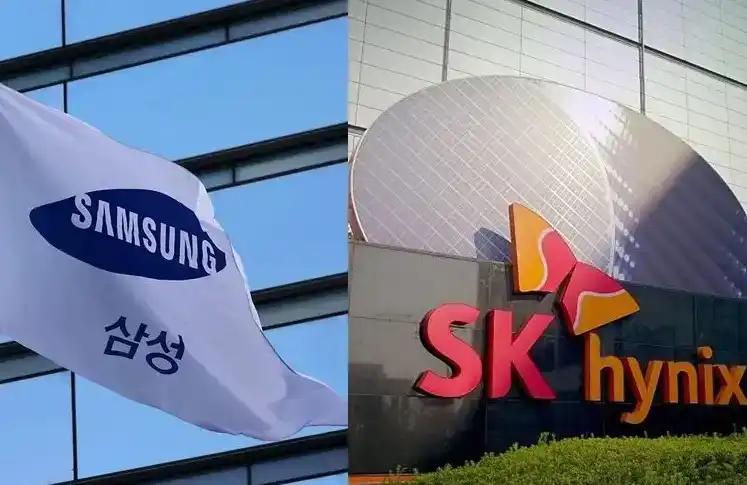
Despite the sell-off, Goldman Sachs remains bullish on Samsung and SK Hynix. Here's why.

Goldman Sachs maintains "Buy" ratings on Samsung Electronics and SK Hynix despite recent stock declines. Its bullish view centers on three core arguments. Firstly, it expects HBM (High Bandwidth Memory) pricing to re-establish a premium over conventional DRAM by 2027, with a projected blended ASP of around $2.9/Gb. This is driven by tight supply-demand dynamics, increasing manufacturing complexity for newer HBM generations, and the need to restore its historical price premium. Secondly, the volatility of the memory cycle is expected to moderate due to widespread adoption of 3-5 year Long-Term Agreements (LTAs) with key customers. These contracts, covering a significant portion of planned capacity, feature mechanisms like price floors, prepayments, and penalties, reducing supplier risk and improving earnings visibility. Thirdly, inventory levels remain low at key suppliers and major customers, providing a buffer against a sharp downturn. Furthermore, robust demand from enterprise SSDs for AI servers is seen offsetting weakness in consumer segments like smartphones and PCs, preventing NAND markets from slipping into oversupply in the near term. While risks exist—such as potential weaker AI demand or aggressive capacity expansion—Goldman Sachs believes the combination of HBM repricing, LTAs, and low inventory underpins a more stable earnings outlook for the leading Korean memory makers.

marsbitHace 1 hora(s)

Despite the sell-off, Goldman Sachs remains bullish on Samsung and SK Hynix. Here's why.

marsbitHace 1 hora(s)

Korean Cryptocurrency Market Platform Kimpga Integrates with Global Web3 Data Platform RootData, Providing Popularity and Growth Scores for Token Projects

South Korean cryptocurrency market data platform Kimpga (kimpga.com) has announced a data partnership with the global Web3 project data platform RootData. As a result, Kimpga has integrated comprehensive token project information directly into its platform services. The integration introduces a new "RD Score" column within Kimpga's market listings. Clicking the score opens a detailed data window that displays the "RD Popularity Index," the "RD Growth Index," and key fundamental project data such as leading investors, core team members, and project category tags. For example, for Solana (SOL), users can view its indices and identify major backers like Polychain Capital, a16z, and Multicoin Capital directly from the interface, with links to full RootData project pages for deeper research. Jin Jae-yong, a representative of Kimpga, stated that the partnership allows users to quickly assess a project's fundamental strength, including its development team and investor lineup, without leaving the market data screen. This addresses a key challenge for investors who previously had to rely solely on price and premium data. RootData is a widely used global platform providing Web3 project details on funding history, team composition, and investor portfolios for due diligence and investment analysis. Kimpga, which boasts 10 million cumulative users, is a leading Korean crypto market platform providing real-time data and price premiums from over 18 domestic and international exchanges. This collaboration with RootData follows Kimpga's previous partnership with the token rating platform APYWA, further enriching its data offering to support user investment decisions.

marsbitHace 1 hora(s)

Korean Cryptocurrency Market Platform Kimpga Integrates with Global Web3 Data Platform RootData, Providing Popularity and Growth Scores for Token Projects

marsbitHace 1 hora(s)

Trading

Spot
活动图片