K1 Research and Klein Labs Co-host "2026 Seoul Signal", Foreseeing the Next Wave of Web3

marsbitPublicado a 2026-01-12Actualizado a 2026-01-12

Resumen

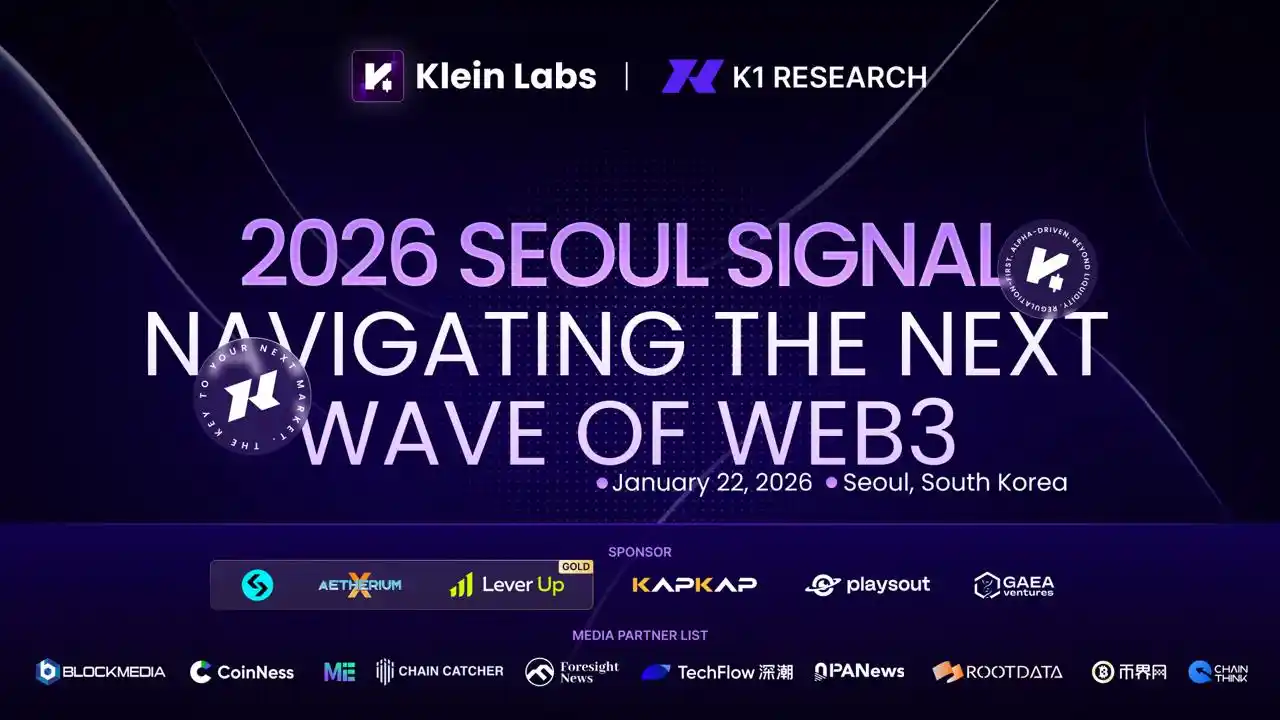
K1 Research, an Asia-Pacific market expansion consultancy, and Klein Labs, a strategic market maker and Web3 venture incubator, will co-host "2026 Seoul Signal: Insights into the Next Wave of Web3" on January 22 in Seoul at People the Terrace. Leveraging K1 Research's global network across Seoul, Hong Kong, Singapore, and Dubai, along with Klein Labs' expertise in liquidity design and market structure, the event aims to provide forward-looking strategic insights for the Web3 industry in 2026. It will bring together builders, creators, and traders to discuss survival strategies and long-term growth paths for the upcoming cycle. The forum is supported by three major gold sponsors: - BGB: The official platform token of Bitget Exchange, serving as a core asset within its ecosystem. - LeverUp: A perpetual contracts DEX on Monad, offering up to 1001x leverage and a fee-sharing mechanism. - AetheriumX: A Web3 ecosystem integrating staking, gaming, and a creator marketplace. Additional partners include Gaea Ventures, PlaysOut, and KapKap, all contributing to Web3 ecosystem collaboration. The organizers emphasize the event's goal to offer clear directional insights for key Web3 participants, combining practical market experience with systematic research to position Seoul as a global hub for Web3 innovation. Post-event, K1 Research and Klein Labs plan to deepen cooperation to accelerate the discovery and implementation of high-quality global projects. The event is ...

Asia-Pacific market expansion consulting firm K1 Research, in partnership with strategic market maker and Web3 startup incubator Klein Labs, will co-host "2026 Seoul Signal: Insights into the Next Wave of Web3" on January 22 at People the Terrace in Seoul.

This event leverages K1 Research's global research and industry network in Seoul, Hong Kong, Singapore, and Dubai, combined with Klein Labs' practical experience in liquidity design and market structure, aiming to provide forward-looking strategic references for the development of the Web3 industry in 2026. The forum will bring together Builders, Creators, and Traders for in-depth discussions on survival strategies and long-term growth paths for the next cycle.

The conference is supported by three heavyweight gold sponsors:

BGB — The official platform token of the Bitget exchange, serving as the core asset within the Bitget ecosystem, primarily used for trading, community, and platform benefits.

LeverUp — A perpetual contracts DEX based on Monad, offering up to 1001x leverage and a fee-sharing mechanism.

AetheriumX — A Web3 ecosystem integrating staking, gaming, and a creator marketplace.

Additionally, partners such as Gaea Ventures, PlaysOut, and KapKap will also participate, collectively promoting synergy within the Web3 ecosystem.

The organizers stated:

"'2026 Seoul Signal' aims to provide clear directional insights for core participants in Web3. By combining frontline market execution experience with systematic research, we look forward to further establishing Seoul as a key hub for global Web3 innovation." After the event, K1 Research and Klein Labs will continue to deepen their collaboration, accelerating the discovery and implementation of high-quality global projects and providing long-term support for ecosystem development.

Pre-registration for this event is now open. Interested participants are welcome to apply via the link below.

- Time: January 22, 2026 (18:30 ~ 23:00, Korea Time)

- Location: People the Terrace, 13 Dosandaero 81-gil, Gangnam-gu, Seoul, Korea (Cheongdam-dong)(Address Detail)

- Registration:Link

Preguntas relacionadas

QWhat is the name of the event co-hosted by K1 Research and Klein Labs, and what is its main focus?

AThe event is called '2026 Seoul Signal: Insight into the Next Wave of Web3'. Its main focus is to provide forward-looking strategic references for the development of the Web3 industry in 2026, bringing together builders, creators, and traders to discuss survival strategies and long-term growth paths for the next cycle.

QWhich three gold sponsors are supporting the '2026 Seoul Signal' event?

AThe three gold sponsors are BGB (Bitget's official platform token), LeverUp (a perpetual contract DEX on Monad offering up to 1001x leverage), and AetheriumX (a Web3 ecosystem integrating staking, gaming, and a creator market).

QWhat are the roles of the two co-hosting organizations, K1 Research and Klein Labs?

AK1 Research is an Asia-Pacific market expansion consulting firm with a global research and industry network. Klein Labs is a strategic market maker and Web3 startup incubator with practical experience in liquidity design and market structure.

QWhen and where will the '2026 Seoul Signal' event take place?

AThe event will take place on January 22, 2026, from 18:30 to 23:00 (KST) at People the Terrace, located at 13 Dosandaero 81-gil, Gangnam-gu, Seoul, South Korea (Cheongdam-dong).

QWhat is the stated long-term goal of K1 Research and Klein Labs after the event concludes?

AAfter the event, K1 Research and Klein Labs plan to deepen their cooperation to accelerate the discovery and implementation of high-quality global projects and provide long-term support for ecosystem development.

Lecturas Relacionadas

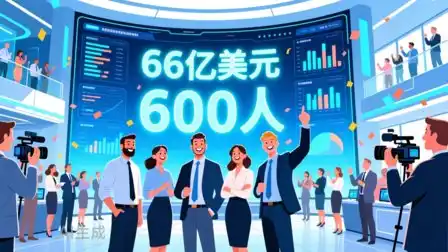
600 People, $66 Billion: The First Major Cash-Out in the Era of Large Models

The first systematic "big cash-out" of the AI era occurred in October 2025, when over 600 current and former OpenAI employees sold a total of $6.6 billion in shares via a secondary market. Approximately 75 individuals maxed out a $30 million per-person sale limit, while around 525 others cashed out an average of $8.3 million each. This event, exceeding the scale of any 2024 US IPO, functioned as a "shadow IPO." It marked a radical departure from the traditional Silicon Valley path of waiting for a public listing, instead allowing employees to convert equity to cash after just two years of tenure—a direct retention tool in a fiercely competitive talent market where rivals like Meta have offered packages worth hundreds of millions. This massive liquidity event presents a dual-edged sword for OpenAI. While it helps retain talent, it also risks triggering a brain drain as newly wealthy employees may depart. Furthermore, it creates a dilemma for those who sold: they forfeited potential future gains as the company's valuation soared from $400 billion to $852 billion within months. In stark contrast, employees at rival Anthropic demonstrated greater reluctance to sell during their own secondary offering. The financial narratives of the two labs also diverge sharply. OpenAI, while achieving over $20 billion in annualized revenue by 2025, faces massive projected losses (up to $14 billion in 2026), a long path to cash flow positivity, and significant revenue-sharing payments to Microsoft. Anthropic reports rapid revenue growth, improving gross margins, and a faster path to profitability. OpenAI's trajectory is thus balanced precariously between skyrocketing valuation based on funding narratives and the pressures of sustained financial losses post-cash-out. The event underscores that the AI race has evolved into a capital and human experiment, where immense wealth crystallizes the complex calculations of greed, fear, and ambition within the industry.

marsbitHace 4 min(s)

600 People, $66 Billion: The First Major Cash-Out in the Era of Large Models

marsbitHace 4 min(s)

NVIDIA Begins Adding Soap to the Bubble

NVIDIA is taking on a dual role: not just as a leading chip supplier, but as a massive capital allocator across the entire AI supply chain. In 2026, the company has committed over $40 billion in investments within five months, targeting everything from optical fiber manufacturing and data center operations to foundational AI model development. This investment spree, described as a systematic "sprinkler" approach, primarily funds companies that are major buyers of NVIDIA's own GPUs. Critics, including analysts from Goldman Sachs, label this a "circular revenue" loop—comparable to a supplier financing a customer to buy more of its products. A prominent example is NVIDIA's investment in OpenAI, which is expected to generate around $13 billion in revenue for NVIDIA, much of which may be reinvested back into OpenAI. While CEO Jensen Huang dismisses the "circular financing" critique as "absurd," arguing the investments are confidence votes in long-term generational shifts, some analysts express discomfort. They note that while investments in critical supply chain components like optics are strategically sound, funding new cloud providers like CoreWeave feels like "pre-paying for your own GPUs." The strategy carries significant risks. If the AI investment cycle turns, the market may question how much demand is genuine versus artificially sustained by NVIDIA's own balance sheet. Despite posting record-breaking earnings—$215.9 billion in annual revenue and $120 billion in net profit for FY2026—NVIDIA's stock fell after its report, signaling that "beating expectations" may no longer be enough to assure investors about the duration of the AI spending boom. The article concludes that while a bubble isn't necessarily a fraud, NVIDIA's actions resemble adding soap to a bubble—making it appear more robust and durable. This creates a complex scenario requiring extreme冷静 from investors to distinguish between real structural growth and financial engineering.

marsbitHace 21 min(s)

NVIDIA Begins Adding Soap to the Bubble

marsbitHace 21 min(s)

Short Positions Have Been Squeezed Out: Will the Next Leg of the U.S. Stock AI Rally Continue in Seoul?

"Short Squeeze Exhausted: Will the Next Leg of the AI Rally Continue in Seoul?" A Nomura report suggests the US AI stock rally, which saw the S&P 500 rise ~16.6% in 28 days largely driven by 10 key stocks, may be pausing. The fuel from short covering, CTA fund positioning, and volatility-control strategies is nearing its limit. For the rally to continue, new momentum from retail and sentiment-driven FOMO (Fear Of Missing Out) is needed. South Korea's market provided a potential answer on the very day the report was published. The KOSPI index surged 4.32%, triggering a buy-side circuit breaker, led by massive gains in chip giants SK Hynix (+11.98%) and Samsung. This surge is characterized by retail "hynix FOMO" and overseas funds precisely buying into AI themes via chip-focused ETFs, shifting from broad Korean market ETFs. The Korean rally is a high-beta extension of the US AI capital expenditure story, as major cloud providers plan massive infrastructure spending, directly benefiting memory chip leaders. However, this linkage also implies vulnerability. The sustainability of this next leg depends on whether US tech stocks correct, the trajectory of US inflation (with upcoming CPI data key), and geopolitical tensions around the Strait of Hormuz. Seoul has emerged as the new epicenter of the AI trade, but its fate remains tied to these broader macro and market dynamics.

marsbitHace 26 min(s)

Short Positions Have Been Squeezed Out: Will the Next Leg of the U.S. Stock AI Rally Continue in Seoul?

marsbitHace 26 min(s)

Trading

Spot
Futuros
活动图片