June Trading Platform Rankings: Spot Trading Volume Stops Declining and Rebounds, Leverage Demand Bounces Back Strongly

marsbitPublicado a 2026-07-15Actualizado a 2026-07-15

Resumen

June Trading Platform Rankings: Spot Trading Volume Recovers, Leverage Demand Surges. In June 2026, spot trading volume on mainstream CEXs increased by 6.51% compared to May 2026, while perpetual futures trading volume rose by 17.87%. The significantly higher growth in derivatives indicates a recovery in market risk appetite and a rapid increase in demand for leveraged trading. However, website visits to these CEXs decreased by 3.79% and app downloads dropped by 10.86% in June. This suggests the trading volume growth was driven not by new users, but rather by increased trading frequency and futures participation among existing users. For mainstream Perpetual DEXs, perpetual contract trading volume in June increased by 21.6% compared to May, and their website traffic grew by 9.85%. Note: Some data may be heavily influenced by wash trading or bot activity. Spot and derivatives data is sourced from CoinGecko, traffic data from Similarweb, and download data from a third-party platform.

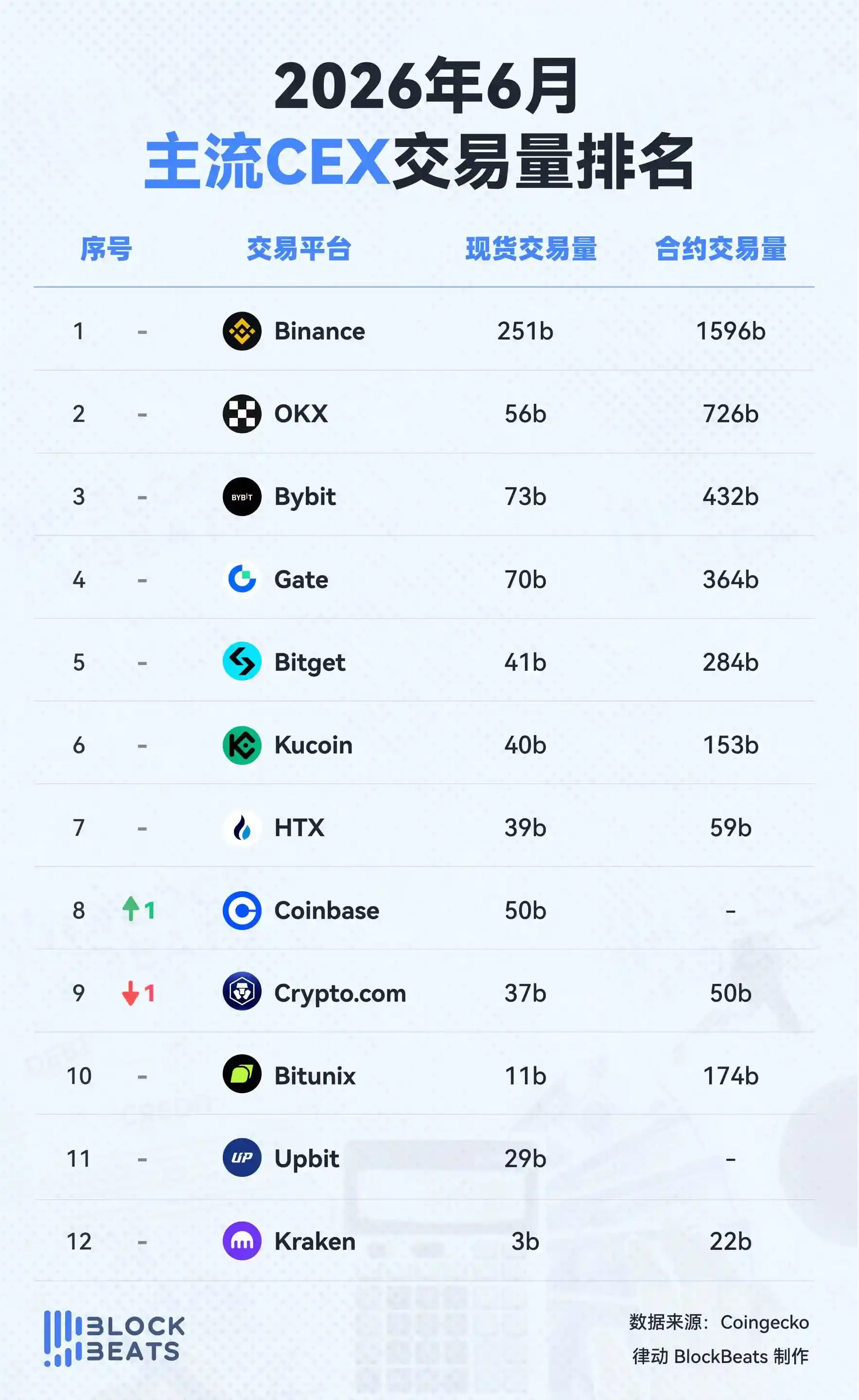
In June 2026, spot trading volume on mainstream CEXes increased by 6.51% compared to May 2026, while perpetual contract trading volume increased by 17.87% compared to May 2026. The growth in contract volume was significantly higher than that of spot trading, indicating a recovery in market risk appetite and a rapid warming of demand for leveraged trading.
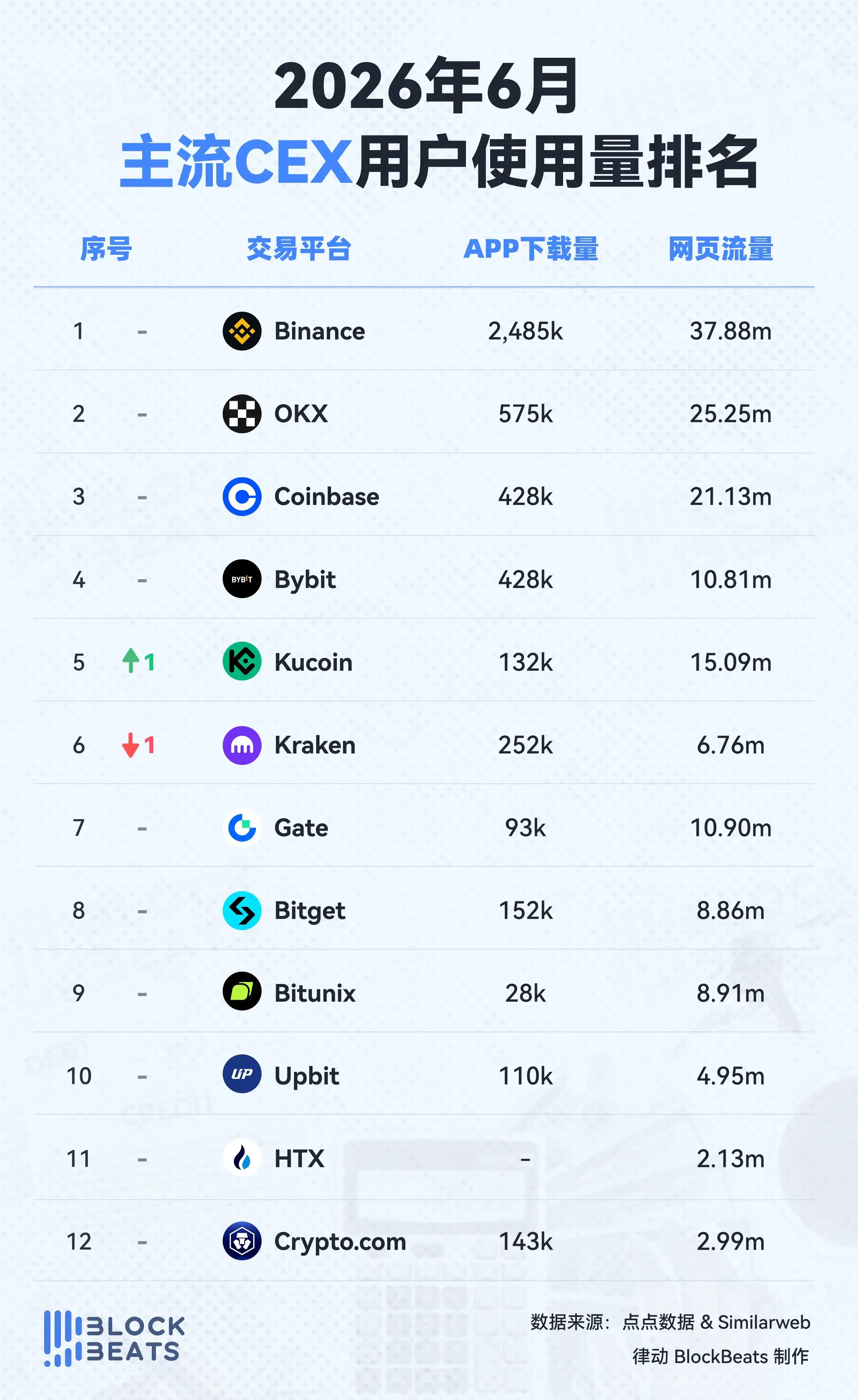
In June, website traffic for mainstream CEXes decreased by 3.79% compared to May 2026, and app downloads decreased by 10.86% compared to May 2026. The growth in trading volume was not driven by new users but rather resembled an increase in trading frequency and contract participation among existing users.
In June, perpetual contract trading volume on mainstream Perp DEXes increased by 21.6% compared to May 2026, while website traffic increased by 9.85%.
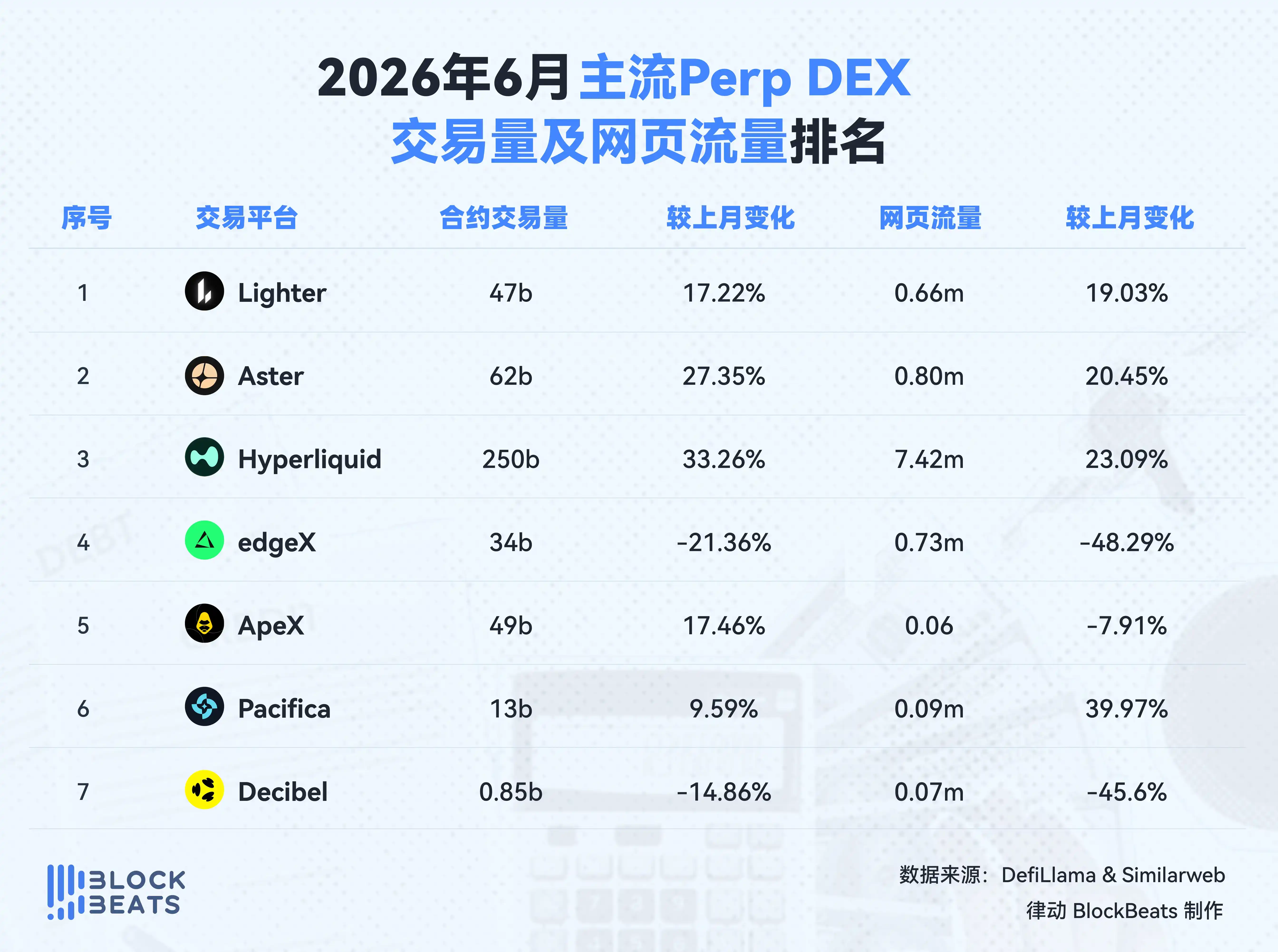
Note: Some data may be severely suspected of wash trading / bot activity. Spot and derivatives data source: Coingecko; Traffic data source: Similarweb; Download data source: Diandian platform.


Preguntas relacionadas

QAccording to the article, how did June 2026 spot trading volume on mainstream CEXs change compared to May 2026?

AThe spot trading volume on mainstream CEXs in June 2026 increased by 6.51% compared to May 2026.

QWhat was the percentage increase in perpetual futures trading volume for mainstream CEXs in June 2026 versus the previous month?

AThe perpetual futures trading volume for mainstream CEXs in June 2026 increased by 17.87% compared to May 2026.

QWhat does the article suggest is the primary driver behind the increase in trading volume, based on website traffic and download data?

AThe article suggests the trading volume increase was primarily driven by existing users (increased trading frequency and futures participation), not new user growth, as both website traffic and downloads declined.

QHow did the trading volume and website traffic for Perpetual DEXs change in June 2026?

AIn June 2026, Perpetual DEXs saw a 21.6% increase in perpetual futures trading volume and a 9.85% increase in website traffic compared to May.

QWhat are the three data sources mentioned in the article's footnote?

AThe three data sources mentioned are Coingecko (for spot and derivatives data), Similarweb (for traffic data), and Diandian Platform (for download data).

Lecturas Relacionadas

Bitcoin's "Anti-Data Spam" Soft Fork BIP110: Collective Miner Resistance, Doomed to Fail?

The article discusses the contentious BIP110 proposal, a "data-reducing" soft fork aimed at limiting transactions containing additional data interpretable by external software (such as in Ordinals inscriptions). Proponents argue this data violates network principles, but the author strongly opposes the fork. The core argument is that Bitcoin's fundamental value lies in its open-access, censorship-resistant ledger. Just as free speech protects unpopular opinions, Bitcoin must allow any valid transaction, regardless of its perceived "non-monetary" use. The author contends there's no clear line between monetary and non-monetary transactions, and node operators don't care about transaction details—only validity. Bitcoin's existing protocol limits (block size, sigops) already minimize network strain from data-heavy transactions and have spurred layer-2 innovation (e.g., Lightning Network). BIP110's proposed technical changes are described as the most radical script restrictions since 2010, including capping script sizes, disabling certain Tapscript features, and invalidating upgrades. Its activation process is criticized for having an unusually low 55% miner signaling threshold and a forced activation mechanism with a short timeline. The author argues BIP110 attempts the impossible—controlling how users interpret data on an open ledger—and that those it targets have already adapted to work around it. The proposal is deemed unnecessary, rushed, and lacking consensus. With miners, developers, and the broader ecosystem largely opposed, the article concludes BIP110 is destined to fail, leaving Bitcoin's core principles intact.

Foresight NewsHace 26 min(s)

Bitcoin's "Anti-Data Spam" Soft Fork BIP110: Collective Miner Resistance, Doomed to Fail?

Foresight NewsHace 26 min(s)

Trading

Spot
活动图片