After a brutal H1, is the worst over for the crypto-market in 2026?

ambcryptoPublicado a 2026-07-15Actualizado a 2026-07-15

Resumen

Bitcoin's price declined throughout H1 2026, dropping from a January peak of $96K to $62.7K. However, a recent $281.8 million weekly inflow into cryptocurrency ETFs, ending an eight-week outflow streak, has revived some bullish momentum. Geopolitical tensions, sustained high Federal Reserve interest rates, and a rise in blockchain security incidents contributed to the market stress in the first half. While the resilience of Bitcoin's price and significant growth in the Real-World Assets (RWA) sector offer hope, analysts caution that a market bottom is not yet confirmed. A single week of ETF inflows cannot reverse the prior $7 billion outflows, and the Crypto Fear and Greed Index remains in "Extreme Fear" territory. Overall, H2 2026 brings fresh optimism but significant concerns persist.

From its peak of $96K in January 2026 to $62.7K at press time, Bitcoin’s price [BTC] has been falling for the entirety of H1 2026. Although there were brief spikes in value, those were short-lived.

Bitcoin ETFs revive bullish momentum

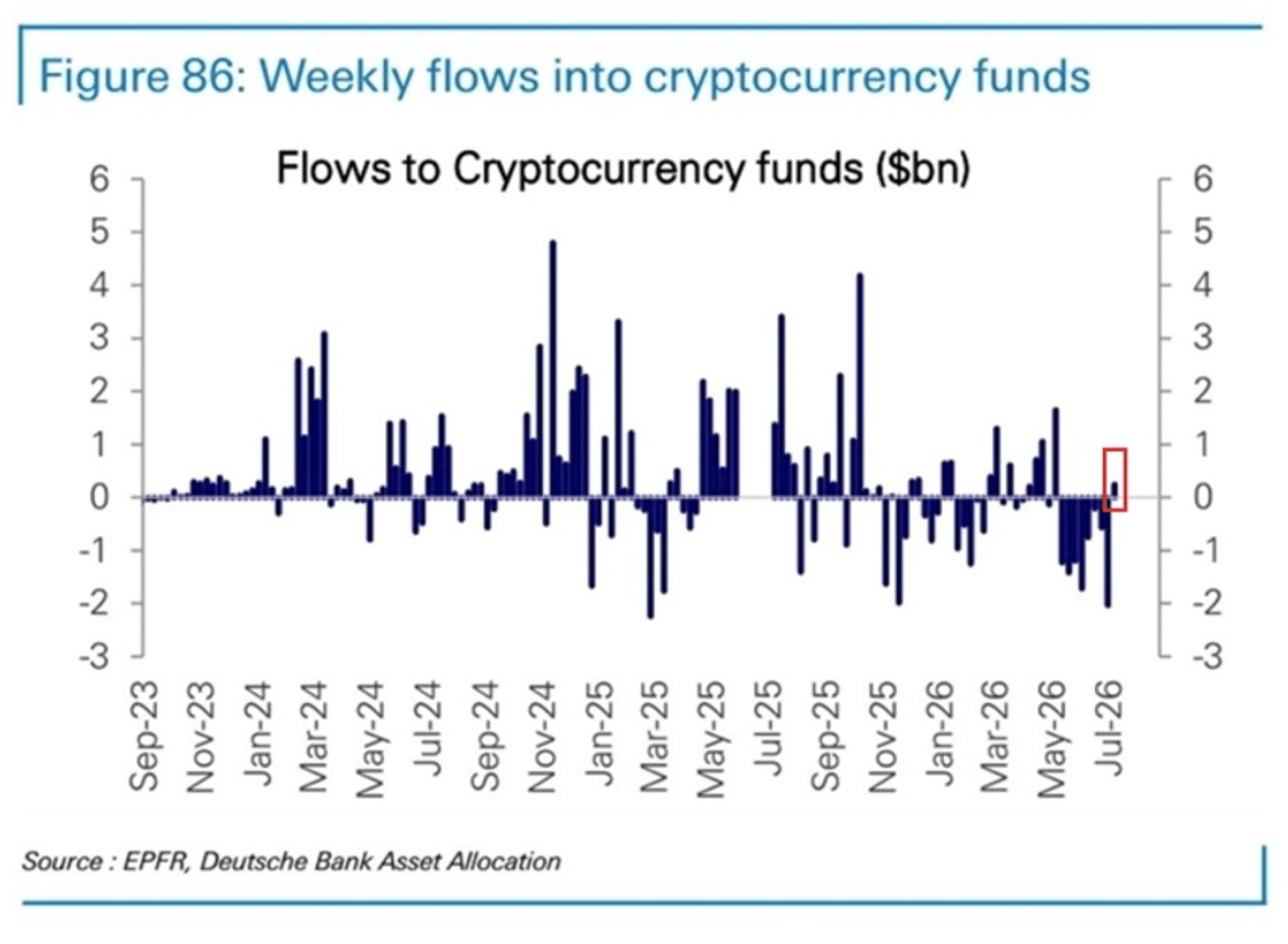
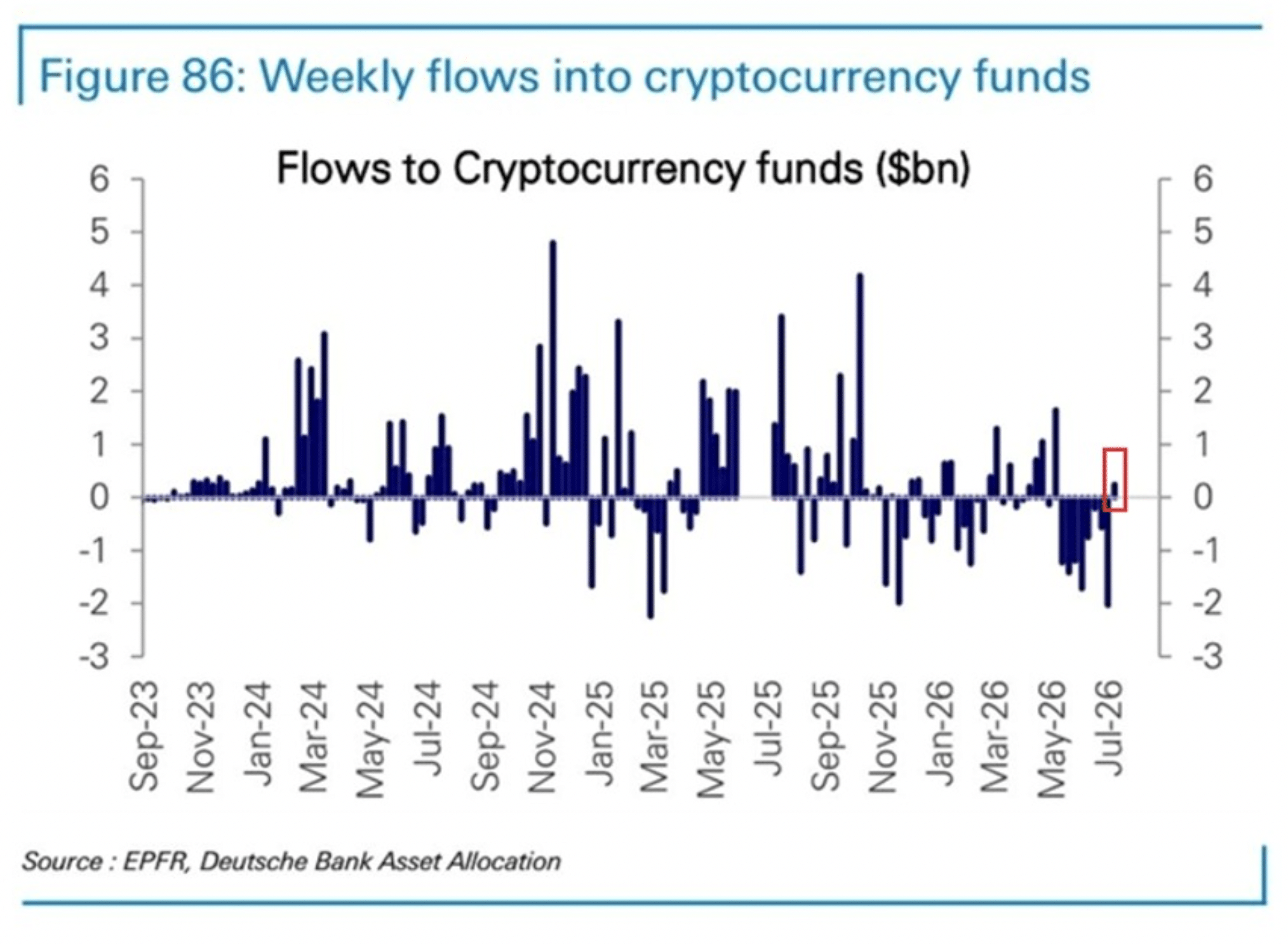
However, the stress could be smoothening out now. This, because exchange-traded funds (ETFs) recently reported figures of $281.8 million. This marked their first weekly inflow since the second week of May.
Source: The Kobeissi Letter

As per AMBCrypto’s previous report, $197.4 million flowed into Bitcoin funds, and $84.4 million flowed into Ethereum [ETH]. These inflows also ended an eight-week outflow streak that depleted more than $7 billion from cryptocurrency ETFs.

Unfortunately, even after zooming out, the image remains somehwat sobering. This, because the 12-month inflows fell to about $1 billion, from a peak of $12 billion in October 2025 and $10 billion in late April.

However, buyers may be beginning to return now after two grueling months. Even though no one is prepared to declare a bottom, the first two weeks of July appeared to be when flows stopped falling.

Geopolitical factors that stained H1 2026

To begin with, the conflict in the Middle East was the major reason behind Bitcoin’s bearish momentum. However, in H2 2026, things seemed to stabilize. Though oil jumped more than 5% towards the $75 resistance level, Bitcoin’s price remained comparatively resilient.

In fact, the resilience continued even after President Donald Trump withdrew from the Iran ceasefire, reigniting macro uncertainty.

How are Fed rates, DATs, and exploits also acting up?

Additionally, the central bank maintained interest rates between 3.50% and 3.75% through mid-2026, indicating that it is not in a rush to lower rates because inflation is still above its target.

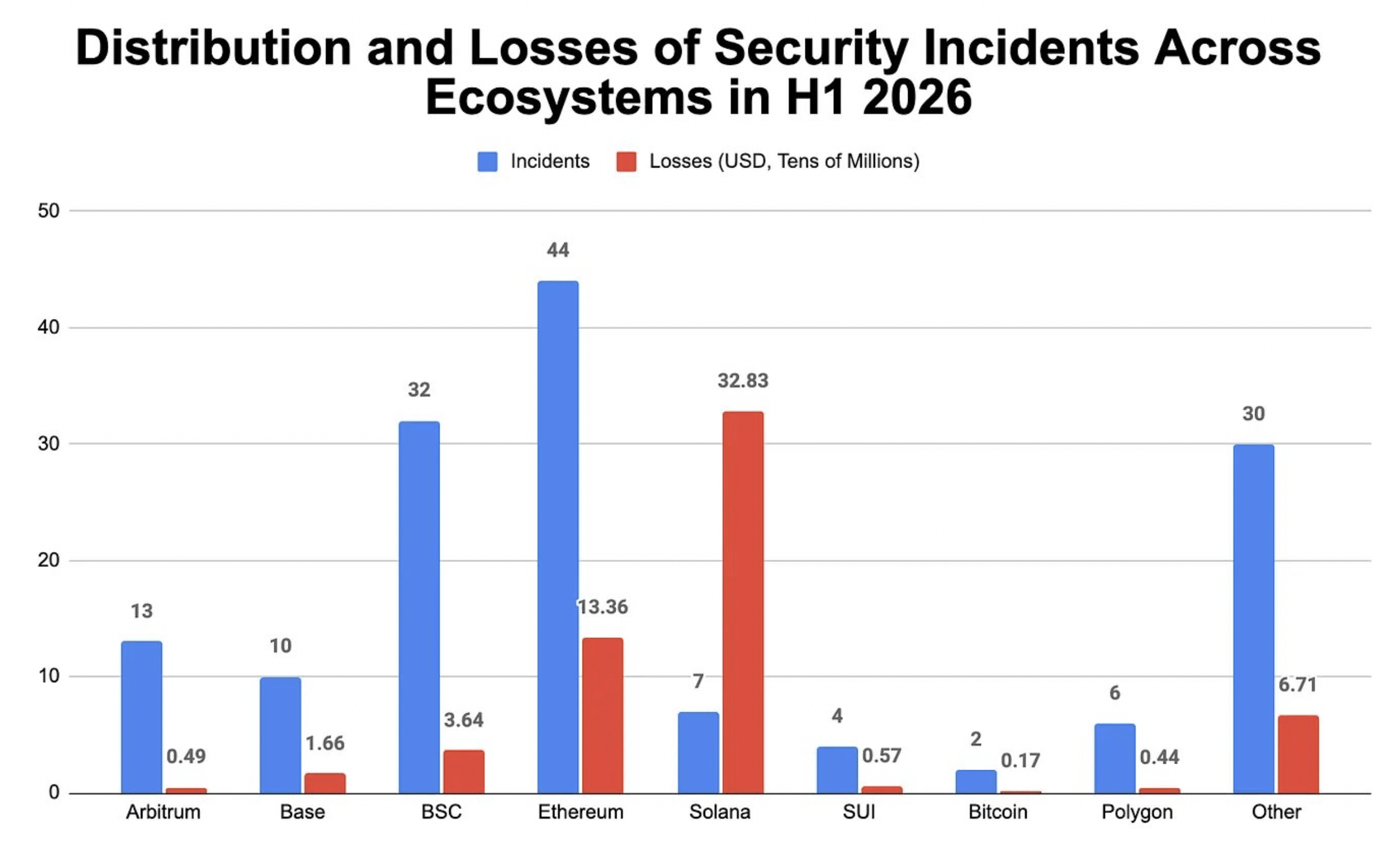
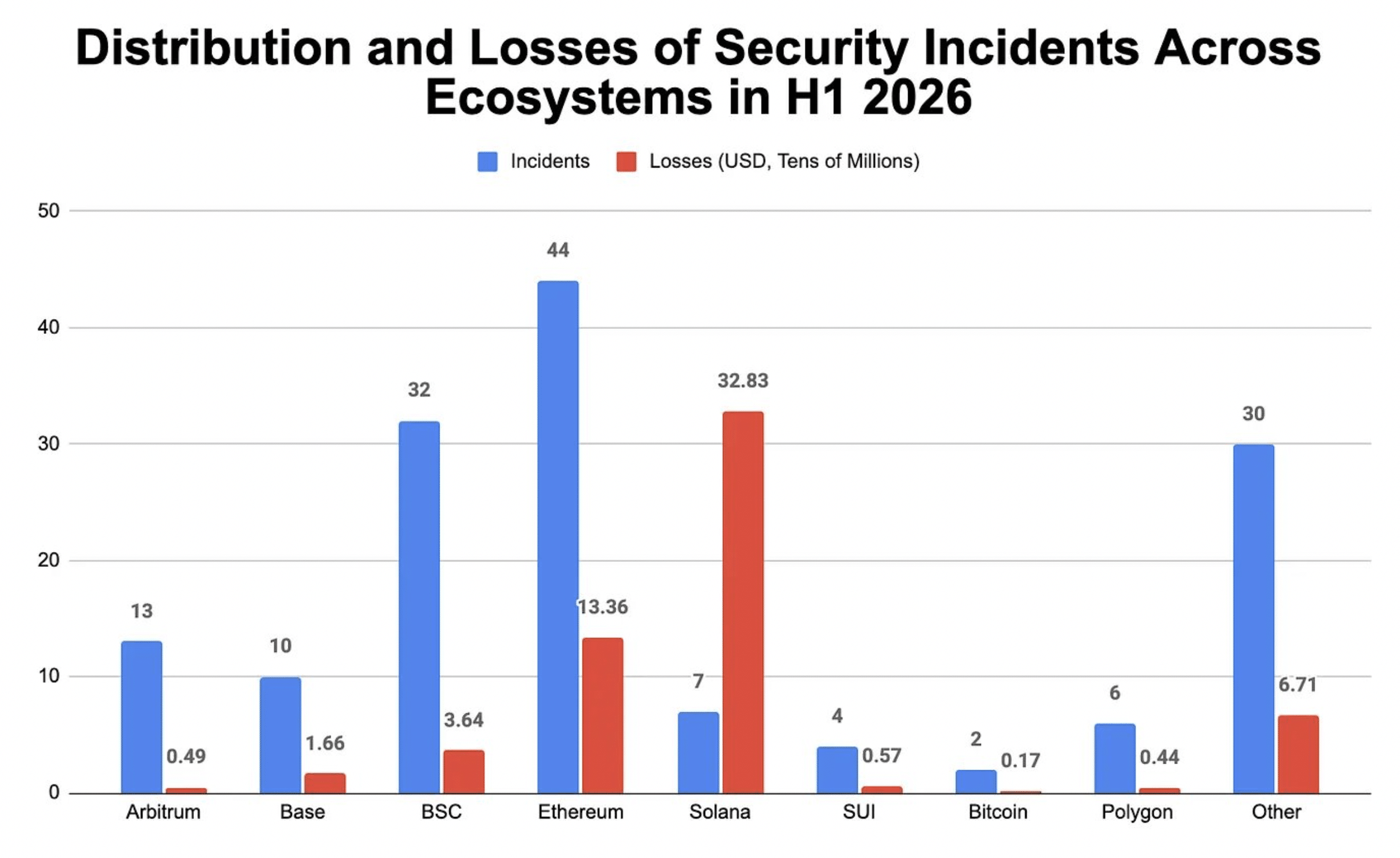
Another factor that hurt the cryptocurrency market in H1 2026 was the rise in blockchain security incidents, which increased by about 50% year over year to 182. However, overall losses decreased by about 60% to about $956 million, as opposed to $2.37 billion the previous year.
Source: SlowMist

Nevertheless, with Strategy selling 3,588 BTC, or roughly $216 million, to pay preferred stock dividends, the drop in BTC holdings stirred the pot in July.

This alone hinted at the fact that investors may be awaiting for more convincing evidence that inflation is decreasing.

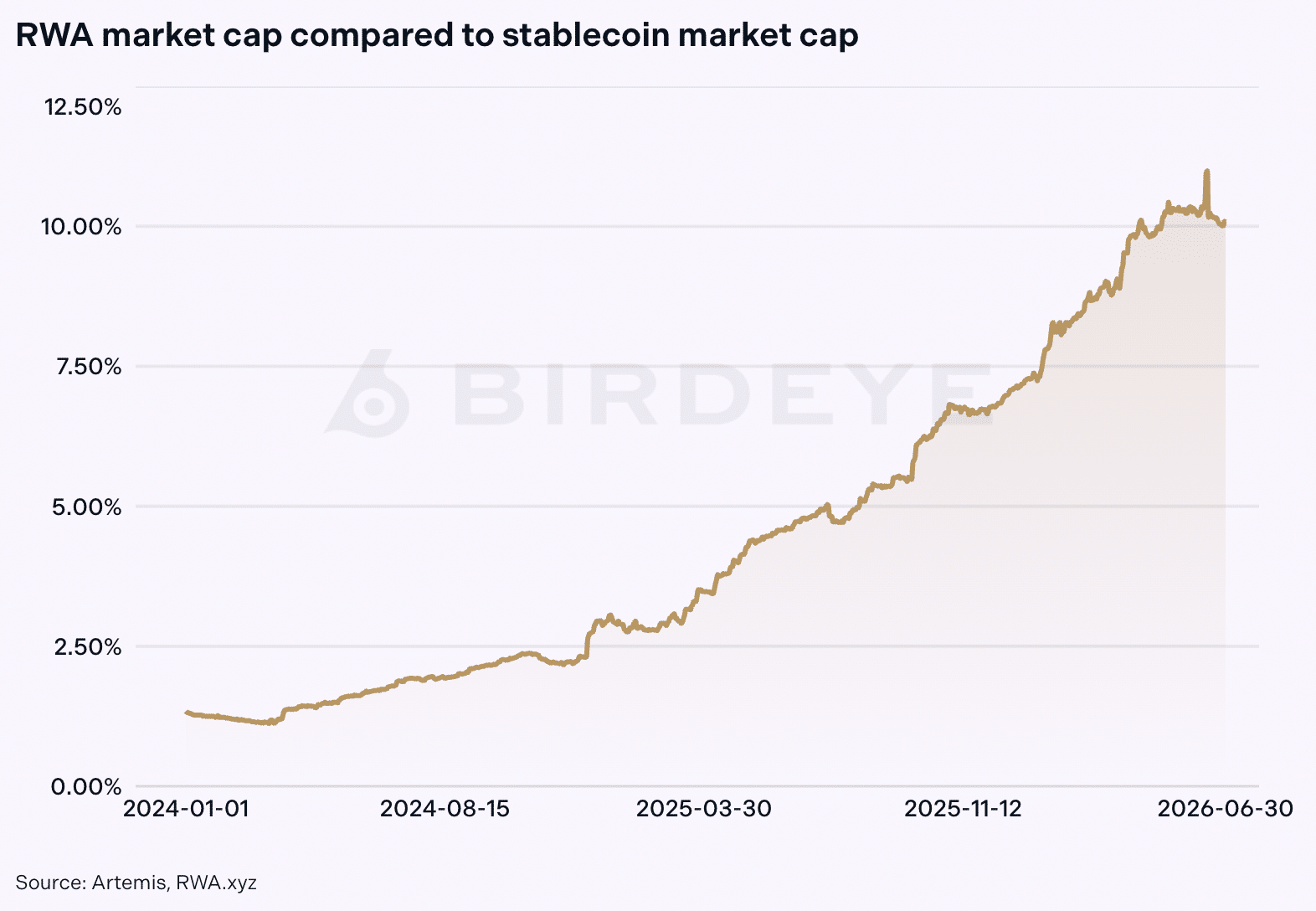
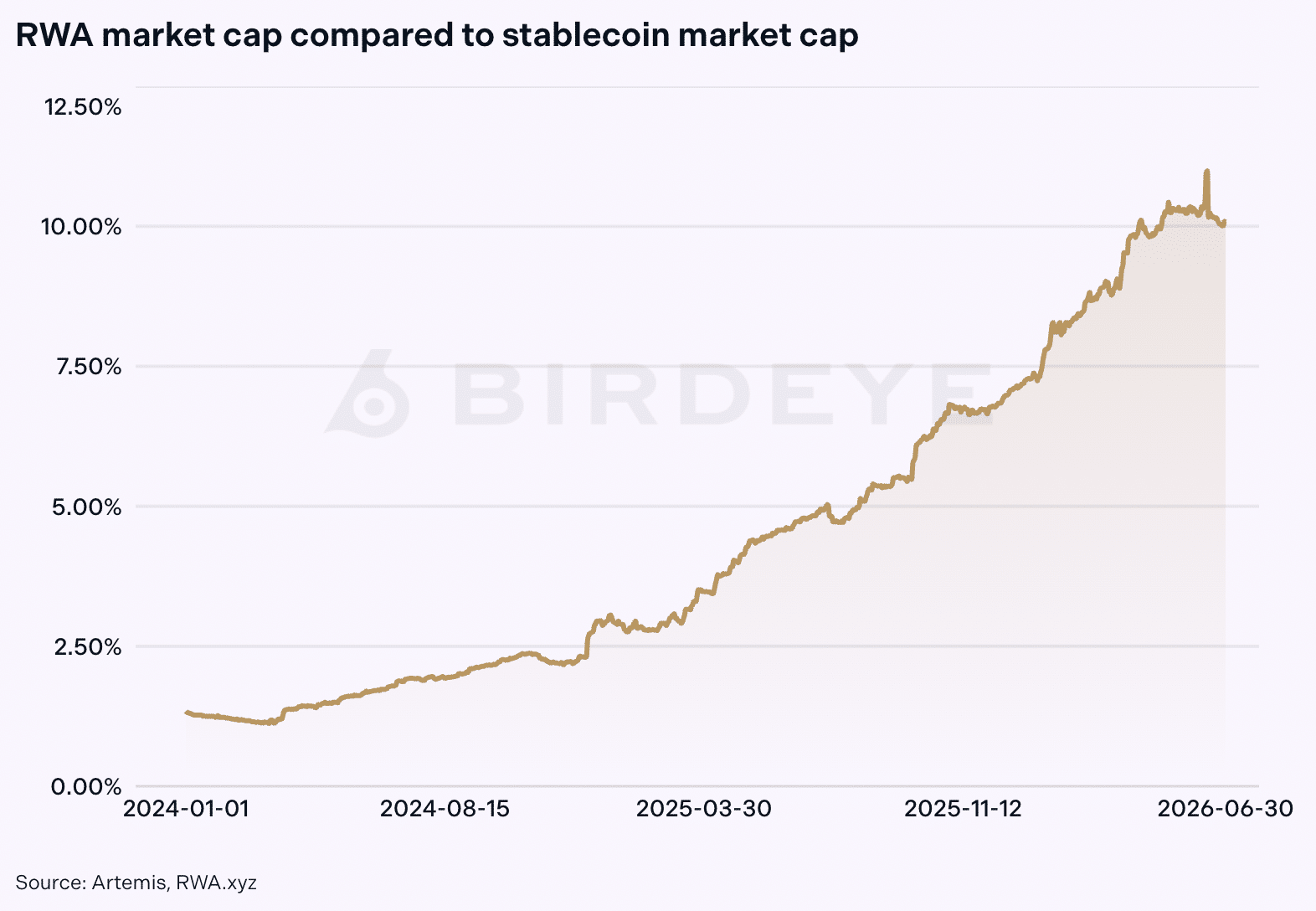
However, with the total distributed RWA market capitalization exceeding $33 billion, representing a 200% year-over-year growth and a nearly 20x increase since January 2024, hope remains.
Source: Birdeye

This, because the RWAs’ growth highlighted in the H1 2026 report from Birdeye Research significantly outpaced the stablecoins’ 2.4x growth during the same time period.

What’s ahead?

So, it’s best to conclude that a bottom is not confirmed by any of this.

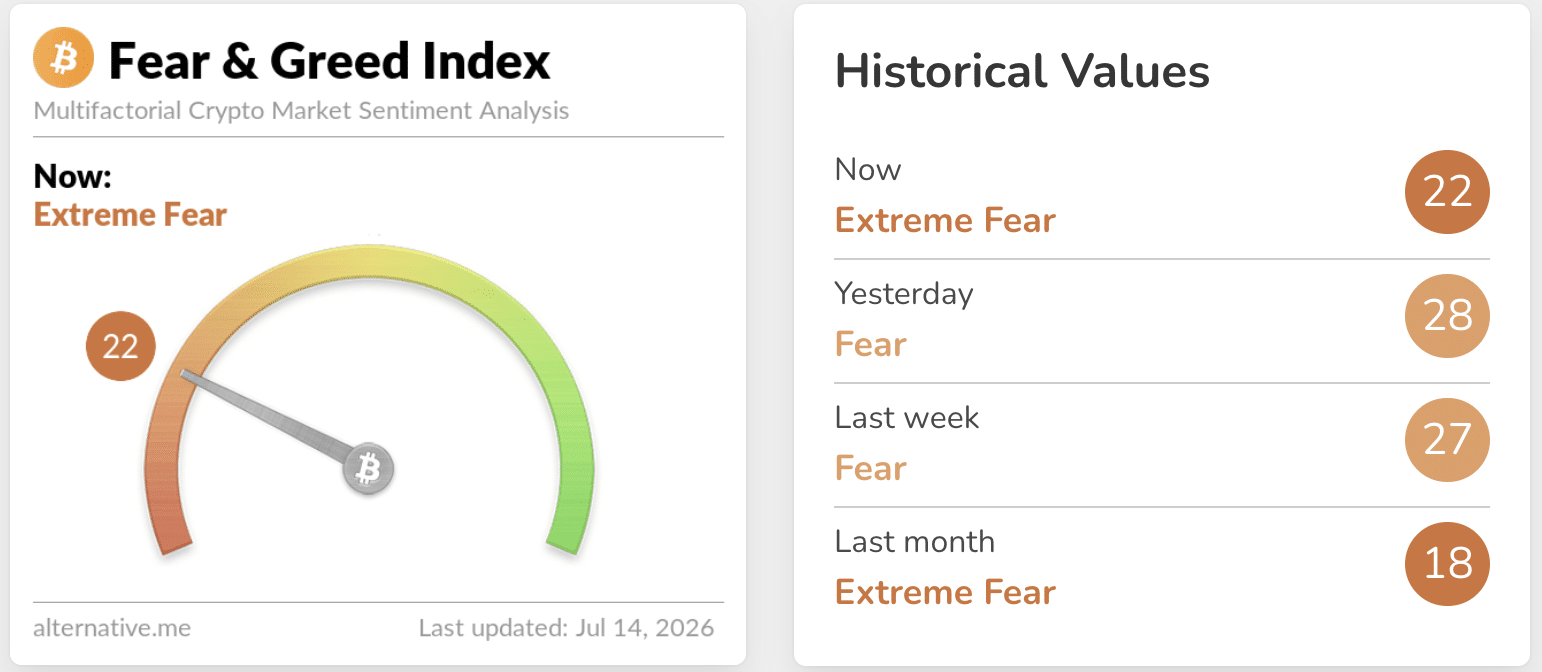
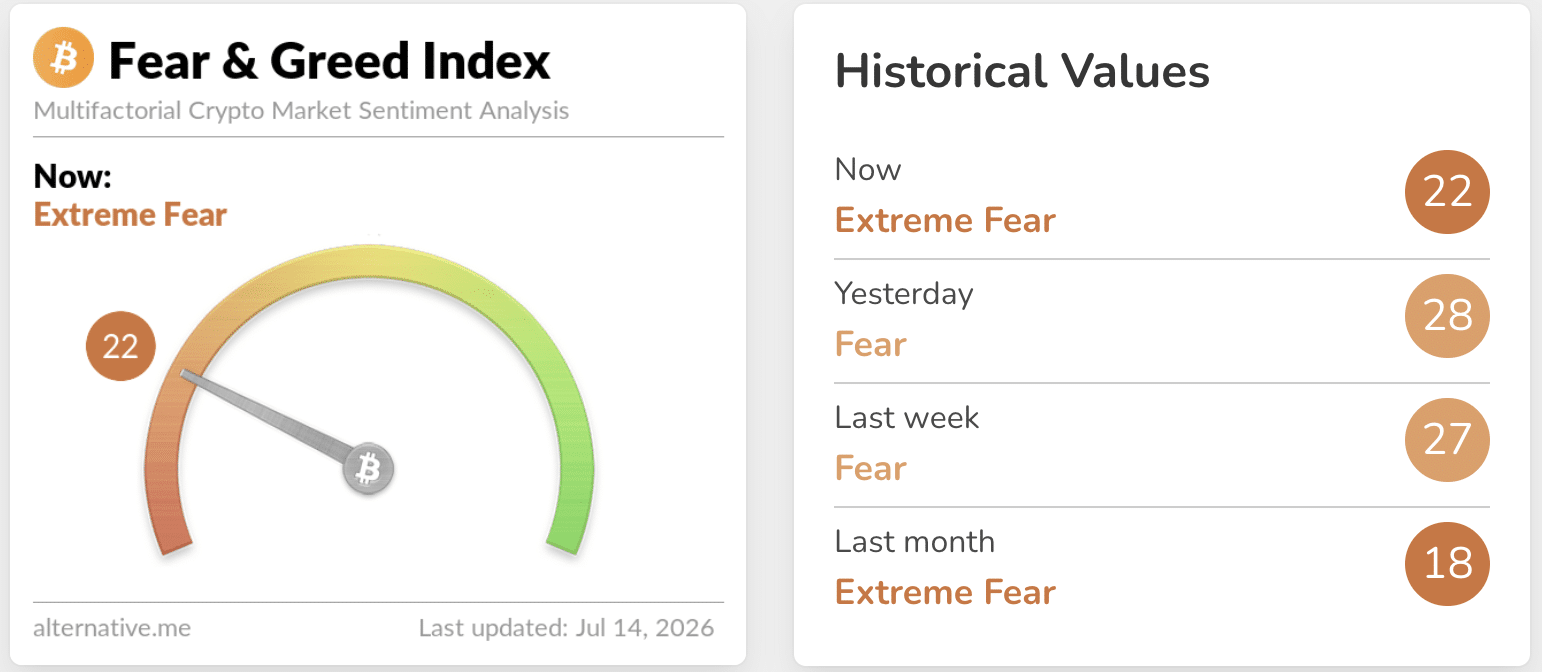
As expected, $7 billion in outflows cannot be reversed by a single strong week of inflows. This sentiment was well reflected by the Crypto Fear and Greed Index, which was still in the “Extreme Fear zone” at press time.
Source: Alternative

Final Summary

  • H2 2026 has brought in fresh optimism in the market, but concerns still remain.
  • Though Bitcoin ETFs shifted the bearish sentiments, security breaches, price actions, and others are putting stress on the market as a whole.

Preguntas relacionadas

QAccording to the article, what was the main geopolitical factor that negatively impacted Bitcoin's price in H1 2026?

AThe conflict in the Middle East was the major reason behind Bitcoin's bearish momentum in H1 2026.

QWhat recent development regarding Bitcoin and Ethereum ETFs provided some positive momentum for the crypto market?

ABitcoin and Ethereum ETFs reported a combined weekly inflow of $281.8 million, marking their first weekly inflow since the second week of May and ending an eight-week outflow streak.

QWhat does the article say about the total losses from blockchain security incidents in H1 2026 compared to the previous year?

AOverall losses from blockchain security incidents in H1 2026 decreased by about 60% to approximately $956 million, compared to $2.37 billion the previous year.

QDespite some positive signs, what is the current state of the Crypto Fear and Greed Index as mentioned in the article?

AAt the time of the article's publication, the Crypto Fear and Greed Index was still in the 'Extreme Fear' zone.

QWhat does the article conclude about whether the worst is over for the crypto market in 2026?

AThe article concludes that a market bottom is not confirmed. It states that $7 billion in outflows cannot be reversed by a single strong week of inflows, and significant concerns like security breaches and macroeconomic uncertainty remain.

Lecturas Relacionadas

Understanding the Q2 Crypto Market in 5 Charts: RWA Explosion, Fundamentals Continue to Recover

Summary of Q2 Crypto Market: RWA Boom and Continued Fundamental Recovery The second quarter of 2026 presented a mixed picture for the crypto market. While major crypto asset prices declined by 36% in H1 2026, the fundamentals of the industry showed significant strength. Key highlights from Bitwise's market review include: 1. **Divergence Between Crypto Stocks and Tokens:** Crypto-related public equities, tracked by the Bitwise Crypto Innovators 30 Index, rose 23% in H1, outperforming most major asset classes. This signals robust investment opportunities within the crypto ecosystem, such as Bitcoin miners benefiting from AI and traditional finance firms deepening crypto integration, even during a bear market for tokens. 2. **Substantial Crypto Application Revenue:** Leading decentralized applications generated a combined $5.9 billion in revenue over the past 12 months, with top protocols like PancakeSwap, Hyperliquid, and Aave each nearing $1 billion. This demonstrates the existence of real, revenue-generating businesses within the sector. 3. **Breakout Growth in Real-World Asset (RWA) Tokenization:** The total value of tokenized real-world assets reached a record $33 billion in Q2, up 12% quarterly and 45% year-to-date. Growth is driven by tokenized U.S. Treasuries, corporate credit, equities, and venture capital shares, indicating accelerating institutional adoption. 4. **Expanding Prediction Markets:** Prediction market open interest hit a new high of $1.8 billion in Q2, with sports being a key category. Quarterly trading volume also reached a record $43 billion. Platforms like Polymarket represent a form of mainstream, albeit often unaware, adoption of crypto infrastructure for event betting, with further growth expected around the U.S. midterm elections. 5. **Attractive Profile of Crypto Equities:** The Bitwise Crypto Innovators 30 Index exhibited low 90-day rolling correlations with most major assets (developed market stocks, EM stocks, REITs, bonds, gold) and negative correlation with commodities. This combination of high returns and portfolio diversification is highly attractive to institutional investors. In conclusion, despite weak token prices, core industry fundamentals—including user activity, business revenues, and institutional adoption—continue to advance, building a strong foundation for the next market cycle.

Foresight NewsHace 27 min(s)

Understanding the Q2 Crypto Market in 5 Charts: RWA Explosion, Fundamentals Continue to Recover

Foresight NewsHace 27 min(s)

GPT-5.6 Cracks a 50-Year-Old Math Problem in 1 Hour, 64 AIs Claim the Crown Jewel of Graph Theory

OpenAI announced that its AI model, GPT-5.6 Sol Ultra, has successfully proved the 50-year-old Cycle Double Cover (CDC) conjecture in graph theory in under an hour. This long-standing problem, posed independently by several prominent mathematicians, states that every bridgeless finite undirected graph contains a set of cycles where each edge is covered exactly twice. The breakthrough was achieved using a novel "parallel test-time computation" (TTC) approach. Instead of a single AI working sequentially, the system deployed 64 concurrent AI agents, each exploring distinct proof strategies—from algebraic perspectives to structural induction. The process included strict protocols to avoid common research pitfalls: initial exploration of fundamentally different paths, preventing herd mentality by not revealing the most promising direction, and employing a "critic squad" of agents to rigorously attack and verify every proposed proof step. The system forbade vague assertions, demanding concrete lemmas and constructions. The resulting proof, generated by GPT-5.6 and formatted with Codex, employed a sophisticated multi-step strategy. It first reduced the general case to cubic graphs, then leveraged Tutte's group-flow theorem to establish the existence of a nowhere-zero 8-flow on the graph. A key inventive step was introducing a "two-element set" labeling scheme (Lemma 2.1), which, if satisfied, guarantees a cycle double cover. The AI then transformed this combinatorial condition into a large system of linear equations (Lemma 2.2), using linear algebra over finite fields to conclusively demonstrate that a solution always exists. Researchers highlighted that parallel TTC dramatically compressed the reasoning time, making deep, extended AI problem-solving practically feasible. While some observers marveled at the implications for mathematics and science, others questioned whether parallel breadth can fully substitute for deep, continuous logical chains. Nonetheless, this achievement marks a significant advance in AI's autonomous capacity for high-level abstract reasoning and complex proof generation.

marsbitHace 32 min(s)

GPT-5.6 Cracks a 50-Year-Old Math Problem in 1 Hour, 64 AIs Claim the Crown Jewel of Graph Theory

marsbitHace 32 min(s)

Prompt Engineering Paper Accepted at ICML 2026 Sparks Heated Debate Among Netizens

A paper on prompt engineering, titled "Verbalized Sampling (VS)," has been accepted by the prestigious machine learning conference ICML 2026, sparking significant debate online. The paper addresses the problem of "mode collapse" in large language models (LLMs), where models tend to produce repetitive, safe, and homogeneous outputs. Instead of proposing new training algorithms or model architectures, the authors introduce a simple yet effective prompt-based method. The core technique, Verbalized Sampling, instructs the model to generate multiple responses (e.g., five jokes) while also outputting a possible probability value for each. This prompt adjustment alone was shown to significantly increase output diversity by 1.6x to 2.1x in creative writing tasks, without compromising factual accuracy or safety. The authors argue that the root cause of mode collapse lies not in optimization algorithms but in the "typicality bias" present in human preference data used for alignment. Human annotators naturally favor familiar and fluent text, which steers models toward conservative outputs. The VS method aims to counteract this by leveraging the model's inherent pre-training distribution during inference. The paper's acceptance has led to polarized reactions. Critics argue that prompt engineering lacks the theoretical depth and algorithmic innovation expected from top-tier conferences like ICML, questioning its novelty, generalizability across models, and experimental scale. Some draw parallels to reproducibility crises in other fields, citing a potential over-reliance on empirical results. Supporters, including an author who responded online, defend the work's rigor. They emphasize its comprehensive problem analysis, theoretical grounding, mathematical derivation, and extensive quantitative experiments. Proponents compare VS to seminal techniques like Chain-of-Thought (CoT) prompting, suggesting that inference-stage methods are becoming a core part of ML research capable of expanding model capabilities without retraining. The research was conducted by a team from Northeastern University, Stanford University, and West Virginia University, with Jiayi Zhang, Simon Yu, and Derek Chong as co-first authors.

marsbitHace 33 min(s)

Prompt Engineering Paper Accepted at ICML 2026 Sparks Heated Debate Among Netizens

marsbitHace 33 min(s)

Trading

Spot
活动图片