Interpreting the True Turning Point of Crypto Regulation: BTC, ETH, and USDC Gain Access to the U.S. Derivatives Market

Odaily星球日报Publicado a 2025-12-09Actualizado a 2025-12-09

Resumen

The U.S. Commodity Futures Trading Commission (CFTC), under Acting Chair Caroline D. Pham, has launched a Digital Asset Collateral Pilot Program. This initiative allows regulated derivatives market participants to use Bitcoin (BTC), Ethereum (ETH), and the stablecoin USDC as compliant margin. The program is a significant regulatory shift, marking the first time digital assets are formally recognized as collateral in mainstream U.S. finance. Key details of the pilot include: - **Participants:** Licensed Futures Commission Merchants (FCMs) are the eligible entities. - **Assets:** Initially limited to BTC, ETH, and USDC for a three-month period, with strict weekly reporting requirements to the CFTC. - **Safeguards:** Stringent rules are in place, including holding assets in segregated accounts, conservative haircuts to mitigate volatility risk, and immediate reporting of any issues. - **Framework:** The CFTC also issued new guidance for tokenized collateral and provided "No-Action Relief" to give institutions regulatory clarity for operating within the rules. Industry leaders from Coinbase, Crypto.com, Circle, and Ripple hailed the move. They see it as a milestone that unlocks capital efficiency, reduces settlement risk, legitimizes stablecoins for payments, and paves the way for 24/7 trading, ultimately signaling deeper integration between crypto and traditional finance. While the pilot's immediate impact on retail investors is limited, it is a major long-term signal...

Original | Odaily Planet Daily (@OdailyChina)

Author | Asher (@Asher_ 0210)
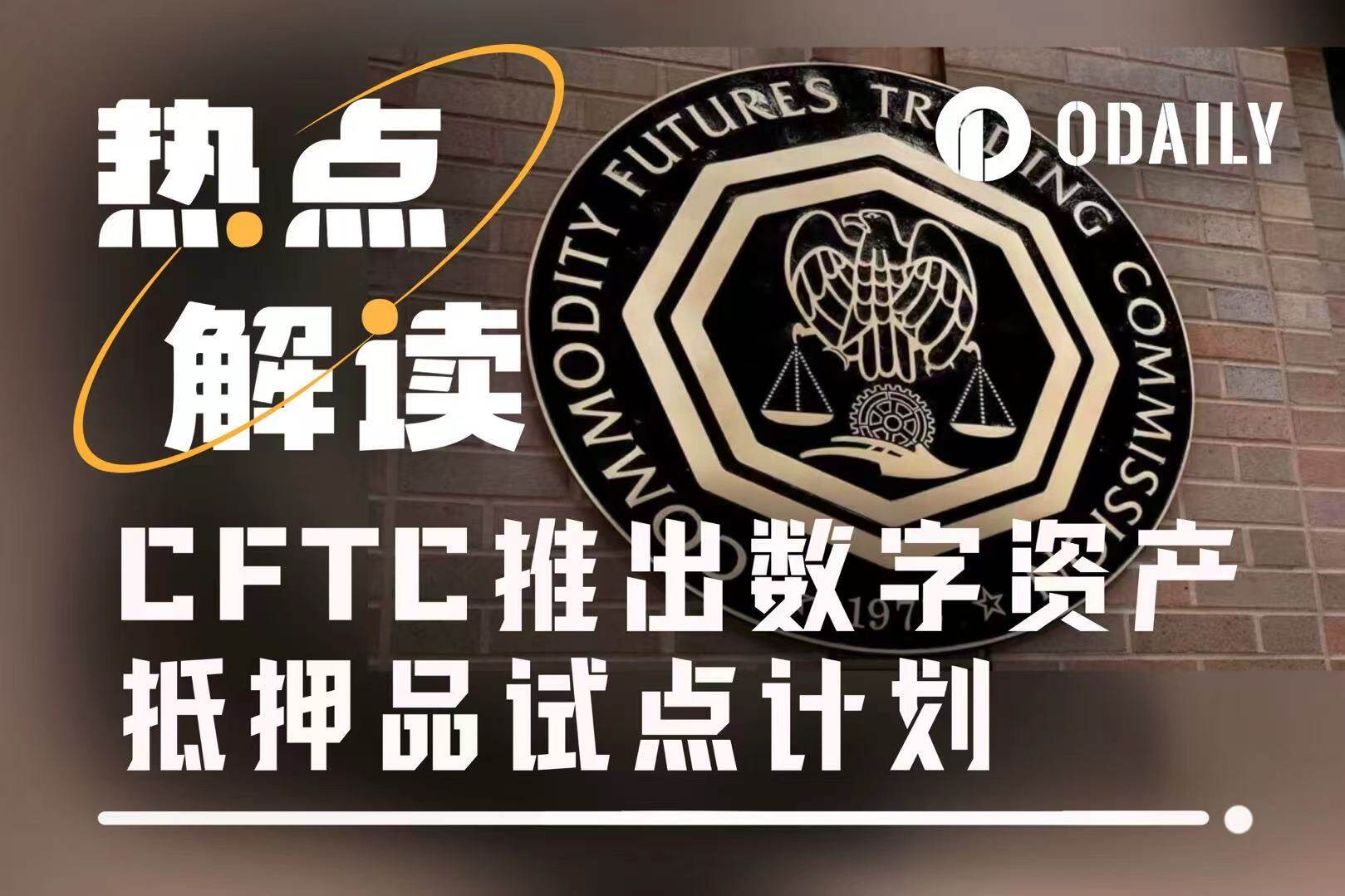
This morning, acting Chairman of the U.S. Commodity Futures Trading Commission (CFTC), Caroline D. Pham, announced the launch of a Digital Asset Collateral Pilot Program, allowing digital assets such as BTC, ETH, and USDC to be used as compliant margin in U.S. regulated derivatives markets, and issued regulatory guidance on tokenized collateral, while simultaneously repealing outdated rules that had become ineffective following the enactment of the GENIUS Act. Additionally, Caroline D. Pham stated: "As I have said before, embracing responsible innovation ensures that U.S. markets remain world-leading and drive U.S. economic growth, as market participants can deploy capital more safely to achieve greater investment returns."

Crypto Assets Officially Enter the Derivatives Market with a Compliant Identity

The Digital Asset Collateral Pilot Program launched by the CFTC is essentially a policy opening where U.S. regulators are proactively "clearing the way." In the past, in U.S. regulated derivatives markets, margin could only exist in the form of traditional assets like cash, Treasury bonds, commercial paper, etc., with crypto assets being excluded. The launch of the pilot program means regulators have, for the first time, explicitly acknowledged that digital assets can participate in mainstream financial transactions as collateral. The specific details of the program are interpreted as follows:

Applicable Entities: Futures Commission Merchants (FCMs)

The pilot targets licensed Futures Commission Merchants, who are core participants in the derivatives market, responsible for custoding client funds, providing margin management, and clearing channels.

Permissible Assets: BTC, ETH, USDC

For the initial three months, the digital asset collateral acceptable by FCMs (Futures Commission Merchants) is limited to BTC, ETH, and USDC, and they must report position sizes to the CFTC weekly on a per-account basis. The regulator clearly stated that this move adheres to a "technology-neutral" principle, focusing on risk attributes rather than asset labels.

Extremely Stringent Regulatory Requirements

To ensure the stability of the traditional financial system, the CFTC has issued highly prudent requirements, including:

  • Digital assets must be held in segregated accounts and cannot be commingled with institutional proprietary funds;
  • FCMs must report position changes to the CFTC weekly;
  • Major issues must be reported immediately;
  • The CFTC will apply the most conservative haircut to digital assets to hedge against price volatility risk.

In other words, the regulator is not simply granting permission but is establishing a controllable, auditable, and traceable institutional framework.

Repealing Old Rules, Introducing New Guidance

Alongside the launch of the Digital Asset Collateral Pilot Program, the CFTC announced the repeal of the 2020 Staff Advisory 20-34—this old rule was no longer suitable for the current market after the passage of the GENIUS Act. The CFTC also issued new regulatory guidelines for "tokenized collateral," providing an institutional foundation for the future on-chain representation of traditional assets like "tokenized Treasuries, tokenized funds."

Shift in Regulatory Attitude: Providing "No-Action Relief"

For FCMs wishing to pilot digital asset margin, the CFTC has provided "No-Action Relief," offering regulatory clarity to institutions and requiring them to maintain robust risk controls. This is equivalent to the CFTC clearly telling institutions: "Operate within the rule framework, and we will not impose additional enforcement risks." For traditional institutions looking to enter the crypto space, this is a crucial "confidence booster."

Industry Leaders' Perspectives

Coinbase: Confirming Industry Consensus, Driving a Payment Revolution

Coinbase Chief Legal Officer Paul Grewal posted on X: "The CFTC's launch of the Digital Asset Collateral Pilot Program confirms a long-standing consensus in the crypto industry: stablecoins and digital assets can make payments faster, cheaper, and reduce risk." Paul Grewal pointed out that this pilot aligns with the original intent of Congress when it passed the GENIUS Act, paving the way for stablecoins to serve as key settlement tools, enabling faster, lower-cost cross-border payments. Coinbase Chief Policy Officer Faryar Shirzad added that this move will significantly enhance the utility of digital assets, attracting more institutional investors into regulated markets. Simultaneously, the potential of stablecoins as settlement tools will be fully unleashed,有望实现有望实现有望实现有望实现有望实现有望实现有望实现有望实现有望实现有望实现有望实现有望实现有望实现有望实现有望实现有望实现有望实现有望实现有望实现有望实现有望实现有望实现有望实现有望实现有望实现有望实现有望实现有望实现有望实现有望实现有望实现有望实现有望实现有望实现有望实现有望实现有望实现有望实现有望实现有望实现有望实现有望实现有望实现有望实现有望实现有望实现有望实现有望实现有望实现有望实现有望实现有望实现有望实现有望实现有望实现有望实现有望实现有望实现有望实现有望实现有望实现有望实现有望实现有望实现有望实现有望实现有望实现有望实现有望实现有望实现有望实现有望实现有望实现有望实现有望实现有望实现有望实现有望实现有望实现有望实现有望实现有望实现有望实现有望实现有望实现有望实现有望实现有望实现有望实现有望实现有望实现有望实现有望实现有望实现有望实现有望实现有望实现有望实现有望实现有望实现有望实现有望实现有望实现有望实现有望实现有望实现有望实现有望实现有望实现有望实现有望实现有望实现有望实现有望实现有望实现有望实现有望实现有望实现有望实现有望实现有望实现有望实现有望实现有望实现有望实现有望实现有望实现有望实现有望实现有望实现有望实现有望实现有望实现有望实现有望实现有望实现有望实现有望实现有望实现有望实现有望实现有望实现有望实现有望实现有望实现有望实现有望实现有望实现有望实现有望实现有望实现有望实现有望实现有望实现有望实现有望实现有望实现有望实现有望实现有望实现有望实现有望实现有望实现有望实现有望实现有望实现有望实现有望实现有望实现有望实现有望实现有望实现有望实现有望实现有望实现有望实现有望实现有望实现有望实现有望实现有望实现有望实现有望实现有望实现有望实现有望实现有望实现有望实现有望实现有望实现有望实现有望实现有望实现有望实现有望实现有望实现有望实现有望实现有望实现有望实现有望实现有望实现有望实现有望实现有望实现有望实现有望实现有望实现有望实现有望实现有望实现有望实现有望实现有望实现有望实现有望实现有望实现有望实现有望实现有望实现有望实现有望实现有望实现有望实现有望实现有望实现有望实现有望实现有望实现有望实现有望实现有望实现有望实现有望实现有望实现有望实现有望实现有望实现有望实现有望实现有望实现有望实现有望实现有望实现有望实现有望实现有望实现有望实现有望实现有望实现有望实现有望实现有望实现有望实现有望实现有望实现有望实现有望实现有望实现有望实现有望实现有望实现有望实现有望实现有望实现有望实现有望实现有望实现有望实现有望实现有望实现有望实现有望实现有望实现有望实现有望实现有望实现有望实现有望实现有望实现有望实现有望实现有望实现有望实现有望实现有望实现有望实现有望实现有望实现有望实现有望实现有望实现有望实现有望实现有望实现有望实现有望实现有望实现有望实现有望实现有望实现有望实现有望实现有望实现有望实现有望实现有望实现有望实现有望实现有望实现有望实现有望实现有望实现有望实现有望实现有望实现有望实现有望实现有望实现有望实现有望实现有望实现有望实现有望实现有望实现有望实现有望实现有望实现有望实现有望实现有望实现有望实现有望实现有望实现有望实现有望实现有望实现有望实现有望实现有望实现有望实现有望实现有望实现有望实现有望实现有望实现有望实现有望实现有望实现有望实现有望实现有望实现有望实现有望实现有望实现有望实现有望实现有望实现有望实现有望实现有望实现有望实现有望实现有望实现有望实现有望实现有望实现有望实现有望实现有望实现有望实现有望实现有望实现有望实现有望实现有望实现有望实现有望实现有望实现有望实现有望实现有望实现有望实现有望实现有望实现有望实现有望实现有望实现有望实现有望实现有望实现有望实现有望实现有望实现有望实现有望实现有望实现有望实现有望实现有望实现有望实现有望实现有望实现有望实现有望实现有望实现有望实现有望实现有望实现有望实现有望实现有望实现有望实现有望实现有望实现有望实现有望实现有望实现有望实现有望实现有望实现有望实现有望实现有望实现有望实现有望实现有望实现有望实现有望实现有望实现有望实现有望实现有望实现有望实现有望实现有望实现有望实现有望实现有望实现有望实现有望实现有望实现有望实现有望实现有望实现有望实现有望实现有望实现有望实现有望实现有望实现有望实现有望实现有望实现有望实现有望实现有望实现有望实现有望实现有望实现有望实现有望实现有望实现有望实现有望实现有望实现有望实现有望实现有望实现有望实现有望实现有望实现有望实现有望实现有望实现有望实现有望实现有望实现有望实现有望实现有望实现有望实现有望实现有望实现有望实现有望实现有望实现有望实现有望实现有望实现有望实现有望实现有望实现有望实现有望实现有望实现有望实现有望实现有望实现有望实现有望实现有望实现有望实现有望实现有望实现有望实现有望实现有望实现有望实现有望实现有望实现有望实现有望实现有望实现有望实现有望实现有望实现有望实现有望实现有望实现有望实现有望实现有望实现有望实现有望实现有望实现有望实现有望实现有望实现有望实现有望实现有望实现有望实现有望实现有望实现有望实现有望实现有望实现有望实现有望实现有望实现有望实现有望实现有望实现有望实现有望实现有望实现有望实现有望实现有望实现有望实现有望实现有望实现有望实现有望实现有望实现有望实现有望实现有望实现有望实现有望实现有望实现有望实现有望实现有望实现有望实现有望实现有望实现有望实现有望实现有望实现有望实现有望实现有望实现有望实现有望实现有望实现有望实现有望实现有望实现有望实现有望实现有望实现有望实现有望实现有望实现有望实现有望实现有望实现有望实现有望实现有望实现有望实现有望实现有望实现有望实现有望实现有望实现有望实现有望实现有望实现有望实现有望实现有望实现有望实现有望实现有望实现有望实现有望实现有望实现有望实现有望实现有望实现有望实现有望实现有望实现有望实现有望实现有望实现有望实现有望实现有望实现有望实现有望实现有望实现有望实现有望实现有望实现有望实现有望实现有望实现有望实现有望实现有望实现有望实现有望实现有望实现有望实现有望实现有望实现有望实现有望实现有望实现有望实现有望实现有望实现有望实现有望实现有望实现有望极有可能实现faster, lower-cost cross-border payments.

Crypto.com: Ushering in the Era of 24/7 Trading in the U.S. Market, a Milestone for Crypto Assets Moving into Mainstream Finance

Crypto.com CEO Kris Marszalek posted on X: "This announcement will make the reality of true 24/7 trading in the U.S. a reality, promoting the deep integration of crypto assets with mainstream finance." He emphasized that the use of tokenized collateral will reduce settlement friction, enhance liquidity, and set a benchmark for global markets. This is not just a technological advancement but also a regulatory "green channel" for innovation.

Circle: Reducing Settlement Risk, Embracing Real-Time Clearing

Circle President Heath Tarbert commented: "This is an 'unlocking moment' for the crypto market, allowing institutions to efficiently manage risk while maintaining asset exposure. These changes will significantly reduce settlement risk and friction in derivatives trading by enabling near real-time margin calls." Additionally, Heath Tarbert specifically mentioned that USDC's qualification as eligible collateral will further solidify the stablecoin's core role in traditional finance.

Ripple: Unlocking Capital Efficiency, the U.S. Regains Leadership

Ripple stated in its response that this pilot "finally provides institutions with the long-awaited unlocking of capital efficiency," strengthening the U.S.'s global leadership at a critical moment. It also noted that allowing BTC, ETH, and USDC to be used directly as margin will reduce the friction of institutions needing to convert crypto assets to cash, driving trillions of dollars into regulated derivatives markets. This marks a strategic shift from "offshore uncertainty" to "onshore compliance."

Overall, while the Digital Asset Collateral Pilot Program is a short-term test (lasting three months), its stringent reporting and risk control mechanisms (such as weekly position disclosures, maximum haircuts) ensure a safety foundation while paving the way for future expansion. Its impact on retail investors is limited in the short term, but in the long run, it is indeed an important signal of institutional-grade recognition.

The True Turning Point of U.S. Crypto Regulation

The CFTC's Digital Asset Collateral Pilot not only means that BTC, ETH, and USDC can be used as compliant margin but also marks the first time digital assets have entered the core U.S. financial market with an institutionalized identity. Futures and swaps markets are the most important capital hubs globally. When crypto assets can be collateralized and used in these markets, they leap from "speculative assets" to regulated financial instruments. Institutional investors gain a clear compliance path, and market liquidity and capital efficiency improve accordingly.

The inclusion of the stablecoin USDC is particularly symbolic. It is officially recognized as a digitized载体 of the U.S. dollar capable of supporting financial transactions, not only consolidating the dollar's core position in on-chain payments and settlements but also paving the way for stablecoins to serve as critical financial infrastructure. This means U.S. regulation is beginning to shift from "restriction" to "institutionalized guidance," providing a clear framework for the development of tokenized finance, including core requirements for custody, segregation, valuation, and risk management, laying the foundation for the future on-chain representation of tokenized Treasuries, funds, and money market instruments.

In the short term, this pilot has limited impact on retail investors, as its strict reporting and risk management mechanisms ensure market safety. However, in the long term, it is an important signal of institutional recognition, meaning more capital will enter the crypto market through regulated channels, the settlement function of stablecoins will be fully unleashed, and derivatives liquidity and market efficiency are expected to improve significantly. More importantly, this pilot reflects a structural shift in U.S. regulation: crypto assets are no longer just objects of speculation but are institutionalized assets that can be incorporated into the mainstream financial system.

If crypto ETFs meant "crypto assets becoming assets," then the CFTC's launch of the Digital Asset Collateral Pilot marks the moment "crypto assets officially enter the U.S. financial system." In the future, more assets will be tokenized, institutions will use on-chain assets as collateral, and the U.S. dollar will circulate on-chain via stablecoins. This is not just a short-term policy but heralds a new cycle of deep integration between crypto and mainstream finance.


Preguntas relacionadas

QWhat is the significance of the CFTC's Digital Asset Collateral Pilot Program announced by Acting Chairman Caroline D. Pham?

AThe program is a significant policy shift that allows digital assets like BTC, ETH, and USDC to be used as compliant collateral in regulated U.S. derivatives markets for the first time. It marks a move from restriction to institutional guidance, providing a clear regulatory framework and a 'green channel' for innovation, integrating crypto into the core financial system.

QWhich specific entities are eligible to participate in the new pilot program, and what are their roles?

AThe eligible participants are licensed Futures Commission Merchants (FCMs). They are core participants in the derivatives market responsible for custoding client funds, providing margin management, and clearing channels.

QWhat are the three digital assets initially approved for use as collateral, and what is the reporting requirement for FCMs?

AThe initially approved digital assets are Bitcoin (BTC), Ethereum (ETH), and USD Coin (USDC). FCMs are required to report their holdings of these assets to the CFTC on a weekly basis.

QHow did industry leaders from companies like Coinbase and Circle react to the CFTC's announcement?

AIndustry leaders hailed it as a pivotal 'unlock moment.' Coinbase's CLO stated it confirms that stablecoins enable faster, cheaper payments. Circle's President said it reduces settlement risk and embraces real-time clearing, solidifying stablecoins' core role in traditional finance.

QWhat does the inclusion of the stablecoin USDC in this program symbolize for the future of finance?

AThe inclusion of USDC symbolically marks its official recognition as a digitized dollar vehicle for financial transactions. It paves the way for stablecoins to become critical financial infrastructure and lays the foundation for the future tokenization of assets like treasury bonds and funds.

Lecturas Relacionadas

Trading

Spot
Futuros

Artículos destacados

Qué es BITCOIN

Entendiendo HarryPotterObamaSonic10Inu (ERC-20) y Su Posición en el Espacio Cripto En los últimos años, el mercado de criptomonedas ha sido testigo de un aumento en la popularidad de las monedas meme, capturando el interés no solo de los comerciantes, sino también de aquellos que buscan compromiso comunitario y valor de entretenimiento. Entre estos tokens únicos se encuentra HarryPotterObamaSonic10Inu (ERC-20), un proyecto intrigante que mezcla referencias culturales en el tejido de las criptomonedas. Este artículo profundiza en los aspectos clave de HarryPotterObamaSonic10Inu, explorando sus mecanismos, ethos impulsado por la comunidad y su relación con el paisaje cripto más amplio. ¿Qué es HarryPotterObamaSonic10Inu (ERC-20)? Como su nombre sugiere, HarryPotterObamaSonic10Inu es una moneda meme construida sobre la blockchain de Ethereum, clasificada bajo el estándar ERC-20. A diferencia de las criptomonedas tradicionales que pueden enfatizar la utilidad práctica o el potencial de inversión, este token prospera en el valor de entretenimiento y la fuerza de su comunidad. El proyecto tiene como objetivo fomentar un entorno donde los usuarios comprometidos puedan reunirse, compartir ideas y participar en actividades inspiradas por diversos fenómenos culturales. Una característica notable de HarryPotterObamaSonic10Inu es su cero impuestos en las transacciones. Este atractivo elemento tiene como objetivo incentivar el comercio y la participación comunitaria, sin cargos adicionales que puedan disuadir a los comerciantes de pequeña escala. El suministro total de la moneda está establecido en mil millones de tokens, una cifra que marca su intención de mantener una circulación sustancial dentro de la comunidad. Creador de HarryPotterObamaSonic10Inu (ERC-20) Los orígenes de HarryPotterObamaSonic10Inu están algo envueltos en misterio; los detalles sobre el creador siguen siendo desconocidos. El desarrollo de este token carece de un equipo identificable o de un plan explícito, lo cual no es inusual dentro del sector de monedas meme. En cambio, el proyecto ha surgido de manera orgánica, con su progreso muy dependiente del entusiasmo y la participación de su comunidad. Inversores de HarryPotterObamaSonic10Inu (ERC-20) En cuanto a inversiones externas y respaldo, HarryPotterObamaSonic10Inu también sigue siendo ambiguo. El token no lista ninguna fundación de inversión conocida o apoyo organizacional significativo. En cambio, la savia del proyecto es su comunidad de base, que informa su crecimiento y sostenibilidad a través de la acción colectiva y el compromiso en el espacio cripto. ¿Cómo Funciona HarryPotterObamaSonic10Inu (ERC-20)? Como una moneda meme, HarryPotterObamaSonic10Inu opera principalmente fuera de los marcos tradicionales que a menudo rigen el valor de los activos. Hay varios aspectos distintivos que definen cómo funciona el proyecto: Transacciones Sin Impuestos: Sin tarifas impositivas en las transacciones, los usuarios pueden comprar y vender el token libremente sin preocuparse por costos ocultos. Compromiso Comunitario: El proyecto prospera en la interacción comunitaria, aprovechando plataformas de redes sociales para crear entusiasmo y facilitar la participación. Las discusiones, el intercambio de contenido y el compromiso son elementos cruciales que ayudan a expandir su alcance y fomentar la lealtad entre los seguidores. Sin Utilidad Práctica: Cabe señalar que HarryPotterObamaSonic10Inu no ofrece utilidad concreta dentro del ecosistema financiero. Más bien, se clasifica como un token principalmente para actividades de entretenimiento y comunitarias. Referencia Cultural: El token incorpora astutamente elementos de la cultura popular para atraer interés, conectando con entusiastas de los memes y seguidores de las criptomonedas por igual. HarryPotterObamaSonic10Inu ejemplifica cómo las monedas meme operan de manera diferente a los proyectos de criptomonedas más tradicionales, ingresando al mercado como construcciones sociales innovadoras en lugar de activos utilitarios. Cronología de HarryPotterObamaSonic10Inu (ERC-20) La historia de HarryPotterObamaSonic10Inu está marcada por varios hitos notables: Creación: El token surgió de un meme viral, capturando la imaginación de muchos entusiastas de las criptomonedas. Las fechas específicas de creación no están disponibles, subrayando su ascenso orgánico. Listado en Exchanges: HarryPotterObamaSonic10Inu ha llegado a varios exchanges, permitiendo un acceso y comercio más fácil por parte de la comunidad. Iniciativas de Compromiso Comunitario: Actividades continuas destinadas a mejorar la interacción comunitaria, incluyendo concursos, campañas en redes sociales y generación de contenido por parte de fanáticos y defensores. Planes de Expansión Futuros: La hoja de ruta del proyecto incluye el lanzamiento de una colección de NFT, mercancía y un sitio de comercio electrónico relacionado con sus temas culturales, involucrando aún más a la comunidad e intentando añadir más dimensiones a su ecosistema. Puntos Clave Sobre HarryPotterObamaSonic10Inu (ERC-20) Naturaleza Impulsada por la Comunidad: El proyecto prioriza la participación colectiva y la creatividad, asegurando que la involucración de los usuarios esté a la vanguardia de su desarrollo. Clasificación como Moneda Meme: Representa la epítome de las criptomonedas basadas en el entretenimiento, diferenciándose de los vehículos de inversión tradicionales. Sin Afiliación Directa con Bitcoin: A pesar de la similitud en el nombre del ticker, HarryPotterObamaSonic10Inu es distinto y no tiene relación con Bitcoin u otras criptomonedas establecidas. Enfoque en la Colaboración: HarryPotterObamaSonic10Inu está diseñado para crear un espacio para la colaboración y el intercambio de historias entre sus poseedores, proporcionando una vía para la creatividad y el vínculo comunitario. Perspectivas Futuras: La ambición de expandirse más allá de su premisa inicial hacia NFTs y mercancías describe un camino para que el proyecto potencialmente ingrese a avenidas más tradicionales dentro de la cultura digital. A medida que las monedas meme continúan capturando la imaginación de la comunidad de criptomonedas, HarryPotterObamaSonic10Inu (ERC-20) se destaca debido a sus lazos culturales y su enfoque centrado en la comunidad. Si bien puede no encajar en el molde típico de un token impulsado por la utilidad, su esencia radica en la alegría y la camaradería fomentadas entre sus seguidores, destacando la naturaleza en evolución de las criptomonedas en una era cada vez más digital. A medida que el proyecto continúa desarrollándose, será importante observar cómo las dinámicas comunitarias influyen en su trayectoria en el cambiante paisaje de la tecnología blockchain.

1.3k Vistas totalesPublicado en 2024.04.01Actualizado en 2024.12.03

Qué es BITCOIN

Cómo comprar BTC

¡Bienvenido a HTX.com! Hemos hecho que comprar Bitcoin (BTC) sea simple y conveniente. Sigue nuestra guía paso a paso para iniciar tu viaje de criptos.Paso 1: crea tu cuenta HTXUtiliza tu correo electrónico o número de teléfono para registrarte y obtener una cuenta gratuita en HTX. Experimenta un proceso de registro sin complicaciones y desbloquea todas las funciones.Obtener mi cuentaPaso 2: ve a Comprar cripto y elige tu método de pagoTarjeta de crédito/débito: usa tu Visa o Mastercard para comprar Bitcoin (BTC) al instante.Saldo: utiliza fondos del saldo de tu cuenta HTX para tradear sin problemas.Terceros: hemos agregado métodos de pago populares como Google Pay y Apple Pay para mejorar la comodidad.P2P: tradear directamente con otros usuarios en HTX.Over-the-Counter (OTC): ofrecemos servicios personalizados y tipos de cambio competitivos para los traders.Paso 3: guarda tu Bitcoin (BTC)Después de comprar tu Bitcoin (BTC), guárdalo en tu cuenta HTX. Alternativamente, puedes enviarlo a otro lugar mediante transferencia blockchain o utilizarlo para tradear otras criptomonedas.Paso 4: tradear Bitcoin (BTC)Tradear fácilmente con Bitcoin (BTC) en HTX's mercado spot. Simplemente accede a tu cuenta, selecciona tu par de trading, ejecuta tus trades y monitorea en tiempo real. Ofrecemos una experiencia fácil de usar tanto para principiantes como para traders experimentados.

4.7k Vistas totalesPublicado en 2024.12.12Actualizado en 2025.03.21

Cómo comprar BTC

Qué es $BITCOIN

ORO DIGITAL ($BITCOIN): Un Análisis Integral Introducción al ORO DIGITAL ($BITCOIN) ORO DIGITAL ($BITCOIN) es un proyecto basado en blockchain que opera en la red Solana, cuyo objetivo es combinar las características de los metales preciosos tradicionales con la innovación de las tecnologías descentralizadas. Aunque comparte un nombre con Bitcoin, a menudo referido como “oro digital” debido a su percepción como un refugio de valor, ORO DIGITAL es un token separado diseñado para crear un ecosistema único dentro del paisaje Web3. Su meta es posicionarse como un activo digital alternativo viable, aunque los detalles sobre sus aplicaciones y funcionalidades aún están en desarrollo. ¿Qué es ORO DIGITAL ($BITCOIN)? ORO DIGITAL ($BITCOIN) es un token de criptomoneda diseñado explícitamente para su uso en la blockchain de Solana. A diferencia de Bitcoin, que proporciona un papel de almacenamiento de valor ampliamente reconocido, este token parece centrarse en aplicaciones y características más amplias. Aspectos notables incluyen: Infraestructura Blockchain: El token está construido sobre la blockchain de Solana, conocida por su capacidad para manejar transacciones de alta velocidad y bajo costo. Dinámicas de Suministro: ORO DIGITAL tiene un suministro máximo limitado a 100 cuatrillones de tokens (100P $BITCOIN), aunque los detalles sobre su suministro circulante no se han divulgado actualmente. Utilidad: Si bien las funcionalidades precisas no están delineadas explícitamente, hay indicios de que el token podría ser utilizado para diversas aplicaciones, potencialmente involucrando aplicaciones descentralizadas (dApps) o estrategias de tokenización de activos. ¿Quién es el Creador de ORO DIGITAL ($BITCOIN)? En la actualidad, la identidad de los creadores y el equipo de desarrollo detrás de ORO DIGITAL ($BITCOIN) sigue siendo desconocida. Esta situación es típica entre muchos proyectos innovadores dentro del espacio blockchain, particularmente aquellos alineados con las finanzas descentralizadas y fenómenos de monedas meme. Si bien tal anonimato puede fomentar una cultura impulsada por la comunidad, intensifica las preocupaciones sobre la gobernanza y la responsabilidad. ¿Quiénes son los Inversores de ORO DIGITAL ($BITCOIN)? La información disponible indica que ORO DIGITAL ($BITCOIN) no tiene patrocinadores institucionales conocidos ni inversiones destacadas de capital de riesgo. El proyecto parece operar en un modelo de peer-to-peer centrado en el apoyo y la adopción de la comunidad en lugar de rutas de financiamiento tradicionales. Su actividad y liquidez se sitúan principalmente en intercambios descentralizados (DEX), como PumpSwap, en lugar de plataformas de trading centralizadas establecidas, lo que resalta aún más su enfoque de base. Cómo Funciona ORO DIGITAL ($BITCOIN) Los mecanismos operativos de ORO DIGITAL ($BITCOIN) pueden elaborarse en función de su diseño blockchain y atributos de red: Mecanismo de Consenso: Al aprovechar el único proof-of-history (PoH) de Solana combinado con un modelo de proof-of-stake (PoS), el proyecto asegura una validación de transacciones eficiente que contribuye al alto rendimiento de la red. Tokenómica: Si bien los mecanismos deflacionarios específicos no se han detallado extensamente, el vasto suministro máximo de tokens implica que podría atender microtransacciones o casos de uso nicho que aún están por definirse. Interoperabilidad: Existe el potencial de integración con el ecosistema más amplio de Solana, incluyendo varias plataformas de finanzas descentralizadas (DeFi). Sin embargo, los detalles sobre integraciones específicas permanecen no especificados. Cronología de Eventos Clave Aquí hay una cronología que destaca hitos significativos relacionados con ORO DIGITAL ($BITCOIN): 2023: El despliegue inicial del token ocurre en la blockchain de Solana, marcado por su dirección de contrato. 2024: ORO DIGITAL gana visibilidad al estar disponible para trading en intercambios descentralizados como PumpSwap, permitiendo a los usuarios comerciar contra SOL. 2025: El proyecto presencia actividad de trading esporádica y potencial interés en compromisos liderados por la comunidad, aunque no se han documentado asociaciones notables o avances técnicos hasta el momento. Análisis Crítico Fortalezas Escalabilidad: La infraestructura subyacente de Solana soporta altos volúmenes de transacciones, lo que podría mejorar la utilidad de $BITCOIN en varios escenarios de transacción. Accesibilidad: El potencial bajo precio de trading por token podría atraer a inversores minoristas, facilitando una participación más amplia debido a oportunidades de propiedad fraccionada. Riesgos Falta de Transparencia: La ausencia de patrocinadores, desarrolladores o un proceso de auditoría conocidos públicamente puede generar escepticismo sobre la sostenibilidad y confiabilidad del proyecto. Volatilidad del Mercado: La actividad de trading depende en gran medida del comportamiento especulativo, lo que puede resultar en una volatilidad de precios significativa y en incertidumbre para los inversores. Conclusión ORO DIGITAL ($BITCOIN) surge como un proyecto intrigante pero ambiguo dentro del ecosistema de Solana en rápida evolución. Si bien intenta aprovechar la narrativa del “oro digital”, su alejamiento del papel establecido de Bitcoin como refugio de valor subraya la necesidad de una diferenciación más clara de su utilidad y estructura de gobernanza previstas. La aceptación y adopción futura dependerán probablemente de abordar la actual opacidad y de definir sus estrategias operativas y económicas de manera más explícita. Nota: Este informe abarca información sintetizada disponible hasta octubre de 2023, y pueden haber ocurrido desarrollos más allá del período de investigación.

83 Vistas totalesPublicado en 2025.05.13Actualizado en 2025.05.13

Qué es $BITCOIN

Discusiones

Bienvenido a la comunidad de HTX. Aquí puedes mantenerte informado sobre los últimos desarrollos de la plataforma y acceder a análisis profesionales del mercado. A continuación se presentan las opiniones de los usuarios sobre el precio de BTC (BTC).

活动图片