How KITE’s pullback tests bullish resolve after 74% February rally

ambcryptoPublicado a 2026-02-27Actualizado a 2026-02-27

Resumen

After a significant 74% rally in February, KITE has experienced a 19% pullback, testing the resolve of bullish investors. The decline is accompanied by a shift in market sentiment, with perpetual contracts showing a rise in short positions and a drop in the Open Interest-Weighted Funding Rate to 0.0082%, indicating growing bearish pressure. The Long/Short Ratio has fallen to 0.82, further highlighting seller dominance. Spot markets reflect similar trends, with $200,000 worth of KITE flowing into exchanges, signaling net selling and a potential reversal from previous accumulation. Liquidity remains thin, making short-term price direction highly dependent on real-time trading momentum. A further price drop with increasing volume could confirm bearish conviction, while declining volume might indicate weakening selling pressure.

Kite [KITE] has lost the momentum it built over the weekend, recording a 19% decline, at press time, after posting a cumulative 74% gain in February alone.

The key question now is whether bulls can sustain their strength or whether the current slide marks the beginning of a deeper retracement rather than a temporary correction before another rebound.

Liquidity movements call for caution

Liquidity conditions in KITE’s perpetual contracts across centralized exchanges warrant careful attention.

As the price declines, the perpetual market shows a steady rise in short positions. The Open Interest-Weighted Funding Rate, which indicates where capital in the perpetual market is concentrated, shows that shorts currently hold the advantage.

At the time of writing, the metric has dropped to approximately 0.0082%, reflecting growing bearish positioning.

When capital increasingly skews toward short positions, it often adds downward price pressure. In addition, trading volume appears largely driven by short sellers.

CoinGlass’ Long/Short Ratio, which measures whether long or short volumes dominate the market, suggests that short traders currently maintain control.

The ratio has fallen to around 0.82 as of writing, highlighting the strength of sellers and the potential for price to tilt further in their favor.

Spot investors are selling

The selling pressure is not limited to derivatives. The spot market reflects a similar shift, with investors offloading holdings rather than building momentum.

CoinGlass’s spot exchange netflow data shows that roughly $200,000 worth of KITE has flowed into exchanges over the past 24 hours, indicating net selling. This follows a previous session in which spot traders accumulated approximately $1.89 million worth of KITE.

Such a reversal, particularly during a price downturn, often signals rising investor skepticism and the possibility of further downside. While the current sell-off remains moderate at the time of writing, continued price weakness could trigger a broader wave of selling.

That said, trader behavior remains fluid. Some participants may view the decline as a buying opportunity. If the price stabilizes or posts a modest rebound, it could indicate that certain spot investors accumulated positions during the dip.

Liquidity remains thin

An analysis of the liquidation cluster chart, which identifies potential liquidity attraction zones, suggests limited nearby clusters. This indicates relatively thin liquidity around current price levels.

In such conditions, KITE’s short-term direction will likely depend heavily on real-time momentum and active trading flows.

A key metric to monitor is overall trading volume. At present, volume stands at approximately $198 million, up about 3.4%. If price continues to fall while volume expands sharply, it would likely confirm strong bearish conviction and increase the probability of a deeper decline.

Conversely, if price declines alongside contracting volume, it would signal cooling selling pressure and suggest that the current move may be losing strength.


Final Summary

  • KITE has declined after an extended period of investor accumulation.
  • Spot investors and derivatives traders are adding to the pressure, increasing the risk of a steeper pullback.


Preguntas relacionadas

QWhat was the percentage decline in KITE's price at press time after its February rally?

AKITE recorded a 19% decline at press time after posting a cumulative 74% gain in February.

QWhat does the Open Interest-Weighted Funding Rate of approximately 0.0082% indicate about market positioning?

AThe Open Interest-Weighted Funding Rate dropping to approximately 0.0082% reflects growing bearish positioning, showing that shorts currently hold the advantage in the perpetual market.

QWhat does CoinGlass's Long/Short Ratio of 0.82 suggest about market control?

ACoinGlass's Long/Short Ratio of around 0.82 suggests that short traders currently maintain control, highlighting the strength of sellers and the potential for price to tilt further in their favor.

QWhat does the $200,000 netflow into exchanges in the past 24 hours indicate about spot investor behavior?

AThe $200,000 netflow into exchanges over the past 24 hours indicates net selling by spot investors, signaling a reversal from previous accumulation and suggesting rising investor skepticism.

QHow might trading volume behavior confirm bearish conviction or signal cooling selling pressure?

AIf price continues to fall while volume expands sharply, it would confirm strong bearish conviction and increase the probability of a deeper decline. Conversely, if price declines alongside contracting volume, it would signal cooling selling pressure and suggest the move is losing strength.

Lecturas Relacionadas

Day 6 of the rsETH Incident: DeFi United Secures Approximately $100 Million in Intentional Commitments, but a $50 Million Gap Remains

On April 18, Kelp DAO’s rsETH LayerZero bridge was exploited, resulting in the unauthorized minting of 116.5k rsETH (approx. $292M). The attacker borrowed around $190M on Aave V3. The Arbitrum Security Council froze 30,766 ETH linked to the incident. DeFi United, a cross-protocol rescue initiative led by Awe, was formed to cover a total shortfall of 112.2k rsETH ($258M). As of April 24, several protocols have pledged around $100M in support, though most commitments are still under DAO voting or discussion. Key pledges include: - Golem: 1,000 ETH ($2.3M) - Aave founder Stani Kulechov: 5,000 ETH ($11.5M) - EtherFi: up to 5,000 ETH ($11.5M) - Lido: up to 2,500 stETH ($5.75M), contingent on full coverage - Mantle: proposed a $69M loan to Aave DAO under specific terms The remaining shortfall is estimated at $50M. Aave’s treasury and safety module (~$236M combined) can cover the worst-case bad debt scenario ($230M). Three potential loss distribution paths were outlined by DefiLlama’s 0xngmi: 1. Uniform 18.5% haircut for all rsETH holders: Aave bad debt ~$216M 2. Only protect Mainnet, abandon L2: bad debt up to $341M 3. Repay only pre-attack holders: technically difficult, ~$91M net loss KelpDAO has not yet announced a specific plan. The success of DeFi United depends heavily on KelpDAO’s final decision on loss allocation.

marsbitHace 25 min(s)

Day 6 of the rsETH Incident: DeFi United Secures Approximately $100 Million in Intentional Commitments, but a $50 Million Gap Remains

marsbitHace 25 min(s)

Kicked Out of PayPal, Musk Aims for a Comeback in the Crypto Market

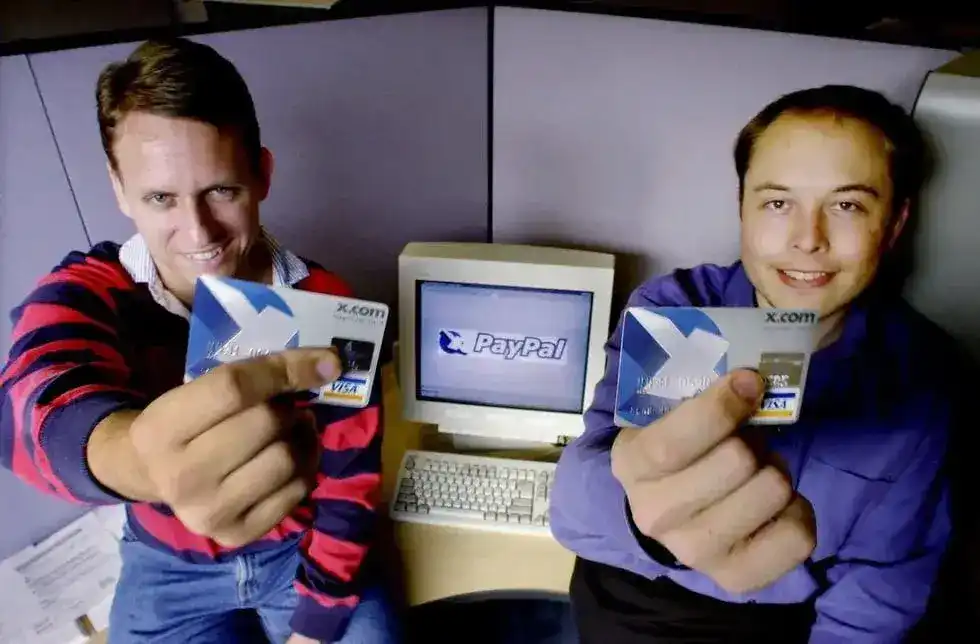
Elon Musk's X (formerly Twitter) has launched its "Smart Cashtags" feature, generating approximately $1 billion in trading volume within days of its April 2026 pilot launch. The feature allows users to click on stock or crypto tickers (or even full Solana token contract addresses) in posts to view real-time price charts and discussions without leaving the app. Initially available to iPhone users in the US and Canada, with a partnership in Canada enabling direct trading via the Wealthsimple app. This move is part of Musk's broader "Everything App" vision, spearheaded by the upcoming X Money platform. Analysts, such as Mizuho's Dan Dolev, see this as a potential disruptor to the US payments market, even prompting a downgrade of PayPal's stock. X Money's beta offers services like 6% APY on deposits, cashback, and P2P transfers, with speculation it may later incorporate crypto trading and stablecoin settlements for faster transactions. However, the ambitious plan faces significant regulatory scrutiny. Senator Elizabeth Warren has questioned the sustainability of the high 6% yield and raised concerns over X's banking partner, Cross River Bank, which has a history of regulatory violations. Additional risks involve the "GENIUS Act," which may create loopholes for stablecoin issuance without full FDIC insurance coverage, potentially leaving users unprotected. The integration of social trading on a platform with over 500 million users could inject new liquidity and retail interest into the crypto market. Yet, it also amplifies risks like herd mentality and the blurring of lines between entertainment and financial speculation. Musk's return to finance, after his ouster from PayPal, hinges on balancing innovation with regulatory compliance.

marsbitHace 2 hora(s)

Kicked Out of PayPal, Musk Aims for a Comeback in the Crypto Market

marsbitHace 2 hora(s)

Trading

Spot
Futuros

Artículos destacados

Cómo comprar KITE

¡Bienvenido a HTX.com! Hemos hecho que comprar Kite AI (KITE) sea simple y conveniente. Sigue nuestra guía paso a paso para iniciar tu viaje de criptos.Paso 1: crea tu cuenta HTXUtiliza tu correo electrónico o número de teléfono para registrarte y obtener una cuenta gratuita en HTX. Experimenta un proceso de registro sin complicaciones y desbloquea todas las funciones.Obtener mi cuentaPaso 2: ve a Comprar cripto y elige tu método de pagoTarjeta de crédito/débito: usa tu Visa o Mastercard para comprar Kite AI (KITE) al instante.Saldo: utiliza fondos del saldo de tu cuenta HTX para tradear sin problemas.Terceros: hemos agregado métodos de pago populares como Google Pay y Apple Pay para mejorar la comodidad.P2P: tradear directamente con otros usuarios en HTX.Over-the-Counter (OTC): ofrecemos servicios personalizados y tipos de cambio competitivos para los traders.Paso 3: guarda tu Kite AI (KITE)Después de comprar tu Kite AI (KITE), guárdalo en tu cuenta HTX. Alternativamente, puedes enviarlo a otro lugar mediante transferencia blockchain o utilizarlo para tradear otras criptomonedas.Paso 4: tradear Kite AI (KITE)Tradear fácilmente con Kite AI (KITE) en HTX's mercado spot. Simplemente accede a tu cuenta, selecciona tu par de trading, ejecuta tus trades y monitorea en tiempo real. Ofrecemos una experiencia fácil de usar tanto para principiantes como para traders experimentados.

504 Vistas totalesPublicado en 2025.11.03Actualizado en 2025.11.03

Cómo comprar KITE

Discusiones

Bienvenido a la comunidad de HTX. Aquí puedes mantenerte informado sobre los últimos desarrollos de la plataforma y acceder a análisis profesionales del mercado. A continuación se presentan las opiniones de los usuarios sobre el precio de KITE (KITE).

活动图片