$467K In Crypto Seized As Spain Cracks Down On Illegal Piracy Platform

bitcoinistPublicado a 2026-04-24Actualizado a 2026-04-24

Resumen

Spanish police seized €400,000 ($467,000) in cryptocurrency from two cold wallets hidden inside a wall thermometer during a raid in Almería. Three suspects were arrested in connection with the country’s largest illegal Spanish-language manga distribution platform, operational since 2014. The site generated over €4 million ($4.55 million) in ad revenue by offering pirated content. Authorities have not confirmed whether they can access the seized funds, as cold wallets require PINs or seed phrases. The case highlights challenges law enforcement face in handling crypto seizures, illustrated by custody failures in other countries like South Korea.

Spanish police made an unusual discovery during their raid — two crypto cold wallets tucked inside a household wall thermometer. The devices contained roughly 400,000 euros, about $467,000.

Authorities arrested three suspects in Almería in connection with what officials described as the biggest illegal Spanish-language manga distribution platform in the country’s history.

The site had been running since 2014. Over roughly a decade, it pulled in more than 4 million euros — around $4.55 million — mostly through advertising revenue. Visitors got free access to pirated manga while the operators quietly collected ad money in the background.

Spain’s Interior Ministry confirmed the arrests and the seizure. The investigation was opened in June 2025 after rights holders filed complaints against the platform.
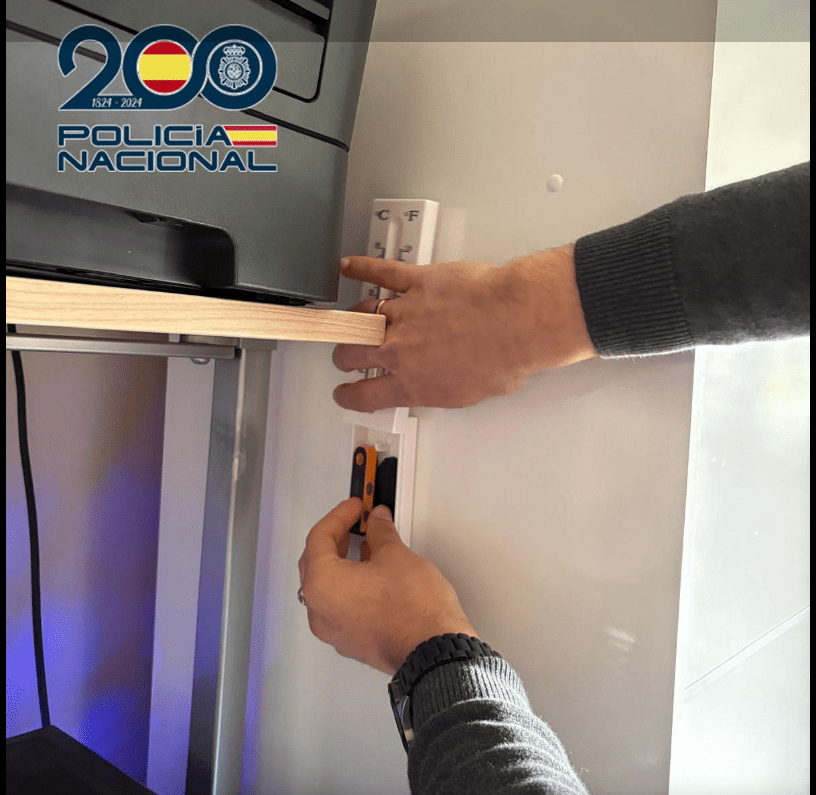
Authorities uncovered an unusual find during the raid: two crypto cold wallets hidden inside a household wall thermometer. Source: Ministerio Del Interior

Whether Police Can Actually Access The Funds Remains Unclear

Seizing a cold wallet is one thing. Getting inside it is another.

Cold wallets require a PIN or a seed phrase to unlock. Without those credentials, the hardware is essentially useless — the funds stay locked, inaccessible to anyone, including law enforcement.

Officials have not said whether they obtained the information needed to open the devices. Spain’s Interior Ministry had not responded to requests for comment before the story was published.

The case puts a spotlight on a problem that police departments worldwide are still working through. Hardware wallets are showing up in investigations that have nothing to do with crypto fraud or digital currency schemes. Piracy operations, it turns out, are now storing earnings the same way crypto investors do.

BTCUSD currently trading at $77,860. Chart: TradingView

South Korea Has Faced Its Own Custody Failures

Even when authorities can access seized crypto, holding onto it has proven difficult. South Korea has dealt with two high-profile losses of confiscated digital assets in recent years.

In one case, about 22 Bitcoin — valued at $1.5 million at the time — went missing from the Gangnam Police Station.

The funds had been seized in 2021 and vanished without the cold wallet being physically stolen, according to reports. A nationwide audit of digital asset custody practices uncovered the loss.

Featured image from DualShockers, chart from TradingView

Preguntas relacionadas

QWhat unusual item did Spanish police discover during their raid that contained the seized funds?

ATwo crypto cold wallets hidden inside a household wall thermometer.

QHow much money, in US dollars, was contained in the seized crypto wallets?

AApproximately $467,000.

QWhat was the primary source of revenue for the illegal manga distribution platform?

AAdvertising revenue.

QWhat is one major challenge law enforcement faces when seizing a cold wallet?

AAccessing the funds without the required PIN or seed phrase.

QWhich country was cited as an example of facing high-profile losses of confiscated digital assets?

ASouth Korea.

Lecturas Relacionadas

US Senate Makes Important Amendments to "Conflict of Interest" Section of Cryptocurrency Bill

The U.S. Senate has taken a key step regarding the CLARITY Act, which could shape the future of the U.S. crypto market. On July 29, Senators Tom Tillis and Ruben Gallego finalized amendments to the bill's "conflict of interest" rules, one of its most contentious aspects. The bipartisan bill aims to tighten restrictions on high-level federal officials' ties to digital assets. The new text, crafted as an alternative to a White House-endorsed ethics code, is expected to impose stricter rules limiting officials' ability to issue or directly participate in digital asset projects. However, with Congress entering an August recess and the revised text not yet reviewed by much of the Senate, the bill's timeline is uncertain. Senate Majority Leader John Thune indicated a procedural vote could occur between July 29 and August 1 but expressed doubt the full bill could pass before the break. The House-approved CLARITY Act, passed in July 2025, has been under Senate negotiation for over a year. Key goals of the CLARITY Act include clarifying jurisdictional boundaries between the SEC and CFTC, setting rules for digital commodity spot markets, and addressing topics like stablecoin yields, DeFi, and illicit financing. The stablecoin yield provisions could significantly impact U.S.-based DeFi protocols, exchanges, and issuers, affecting their global competitiveness. The outcome is being closely watched by both the U.S. and global digital asset markets.

cryptonews.ruHace 50 min(s)

US Senate Makes Important Amendments to "Conflict of Interest" Section of Cryptocurrency Bill

cryptonews.ruHace 50 min(s)

Pavel Durov Designated as a Terrorist in Russia. What Does This Mean for Telegram Users?

Pavel Durov, the founder of Telegram, has been added to Russia's list of terrorists and extremists by Rosfinmonitoring, as published on July 30. The entry includes his name and date of birth. The designation follows an announcement by the Russian Federal Security Service (FSB) on July 29, which charged Durov with aiding terrorist activity. The FSB alleges that a Telegram dating bot named "DaiVinchik" was used to recruit 46 individuals for attacks on police and arson, orchestrated by Ukrainian special services. The FSB also accuses Telegram's administration of failing to remove channels and bots used by Ukrainian intelligence and extremist groups. Durov is reportedly subject to an international arrest warrant. Inclusion on the Rosfinmonitoring list leads to significant restrictions: the freezing of Durov's bank accounts and assets, severe limitations on financial transactions, and a ban on election participation, media interaction, and event organization. Transfers to his accounts may be considered terrorism financing. For ordinary Russian Telegram users, purchasing Telegram Premium is not classified as financing terrorism, according to an IT expert. General use of the messenger—messaging, managing channels—does not automatically make a user a participant in extremist activity. There has been no official decision to ban Telegram itself. It is noted that French authorities are also investigating Durov over allegations of inadequate measures against criminal activity on the platform and insufficient cooperation with law enforcement. Durov denies all charges.

cryptonews.ruHace 59 min(s)

Pavel Durov Designated as a Terrorist in Russia. What Does This Mean for Telegram Users?

cryptonews.ruHace 59 min(s)

Trading

Spot
活动图片