How Ethereum quietly crushed its $50 gas problem in 2026

ambcryptoPublicado a 2026-01-19Actualizado a 2026-01-19

Resumen

Ethereum has successfully resolved its long-standing high gas fee problem, with costs plummeting to $50 during peak periods in 2021 and 2024 to just $0.01 as of January 2026. This dramatic reduction is attributed to major technical upgrades, including the Fusaka upgrade, PeerDAS implementation, and widespread Layer 2 adoption, which have eliminated network congestion. The change has altered Ethereum's competitive dynamic with Solana, shifting the comparison from cost to architectural differences—Ethereum emphasizes security and decentralization, while Solana focuses on speed. Despite lower fees reducing ETH's burn rate and causing slight inflation, the network set a record by processing 2.6 million transactions in a single day smoothly. Market response has been positive, with ETH trading at $3,319.87 and outperforming SOL, which declined. Ethereum co-founder Vitalik Buterin confirmed that the original Web3 vision is now operational, marking a new era of scalability and efficiency for the network.

For years, using Ethereum [ETH] felt expensive and out of reach for many people.

During the 2021 bull market and the 2024 NFT boom, even a basic transaction could cost around $50, while more complex actions often cost much more.

These high fees showed how popular Ethereum had become, but they also kept many users out.

That situation has now changed. As of January 2026, Ethereum gas fees have dropped to $0.01, per Etherscan data.

This drop isn’t because fewer people are using Ethereum. It’s the result of major technical changes.

Following the Fusaka upgrade in late 2025, the rollout of PeerDAS, and widespread Layer 2 adoption, Ethereum has cleared congestion on its main network.

What was once a costly, crowded system now works as a fast and efficient settlement layer.

Is Ethereum the new Solana?

This shift has also changed Ethereum’s competition with Solana [SOL]. Solana was known for being cheap and fast, but Ethereum now offers similarly low fees.

As a result, the comparison is no longer just about cost.

Ethereum focuses on security and decentralization, while Solana prioritizes speed with a more demanding setup. Solana is still faster for certain use cases, but Ethereum’s low fees remove the main reason users once left.

However, lower fees do come with a trade-off.

Ethereum burns part of every transaction fee, and when fees were high, the ETH supply often shrank. With fees now very low, the burn has slowed, and ETH is slightly inflationary for the moment.

The most important signal is usage.

On the 17th of January 2026, Ethereum processed 2.6 million transactions in a single day, a new record. In the past, this level of activity would have caused congestion and high fees.

This time, the network ran smoothly, showing that Ethereum can now handle very high usage without becoming expensive again. This fundamental strength is beginning to reflect in the markets.

Market reaction

At press time, ETH was trading at $3,319.87, maintaining a steady climb with a 0.62% gain in the last 24 hours. In contrast, its primary rival, SOL, is feeling the heat.

Despite its own robust ecosystem, SOL was currently trading at $142.26, down 1.23% over the same period.

In fact, Ethereum co-founder Vitalik Buterin also recently declared that the original Web3 architecture, first outlined in 2014 and long considered a distant roadmap, is now a functional reality.

All in all, in 2026, Ethereum isn’t just scaling; it’s coming home.


Final Thoughts

  • Ethereum has finally become cheap enough for everyday use without sacrificing scale or security.
  • This shift is structural, not temporary, as upgrades like Fusaka, PeerDAS, and mature Layer 2s have permanently unclogged the mainnet.


Preguntas relacionadas

QWhat was the average Ethereum gas fee in January 2026, according to the article?

AAs of January 2026, Ethereum gas fees had dropped to $0.01.

QWhat are the key technical changes mentioned that solved Ethereum's high gas fee problem?

AThe Fusaka upgrade, the rollout of PeerDAS, and widespread Layer 2 adoption are the major technical changes that cleared congestion on the Ethereum mainnet.

QHow does the article describe the new competitive dynamic between Ethereum and Solana?

AThe comparison is no longer just about cost, as Ethereum now offers similarly low fees. The focus has shifted to Ethereum's emphasis on security and decentralization versus Solana's prioritization of speed with a more demanding setup.

QWhat is the trade-off mentioned for Ethereum's new low-fee environment?

AThe trade-off is that with very low fees, the ETH burn mechanism has slowed down, making the ETH supply slightly inflationary for the moment.

QWhat record did Ethereum set on the 17th of January 2026, and why was it significant?

AEthereum processed 2.6 million transactions in a single day, a new record. It was significant because the network ran smoothly, demonstrating it can now handle very high usage without becoming expensive again.

Lecturas Relacionadas

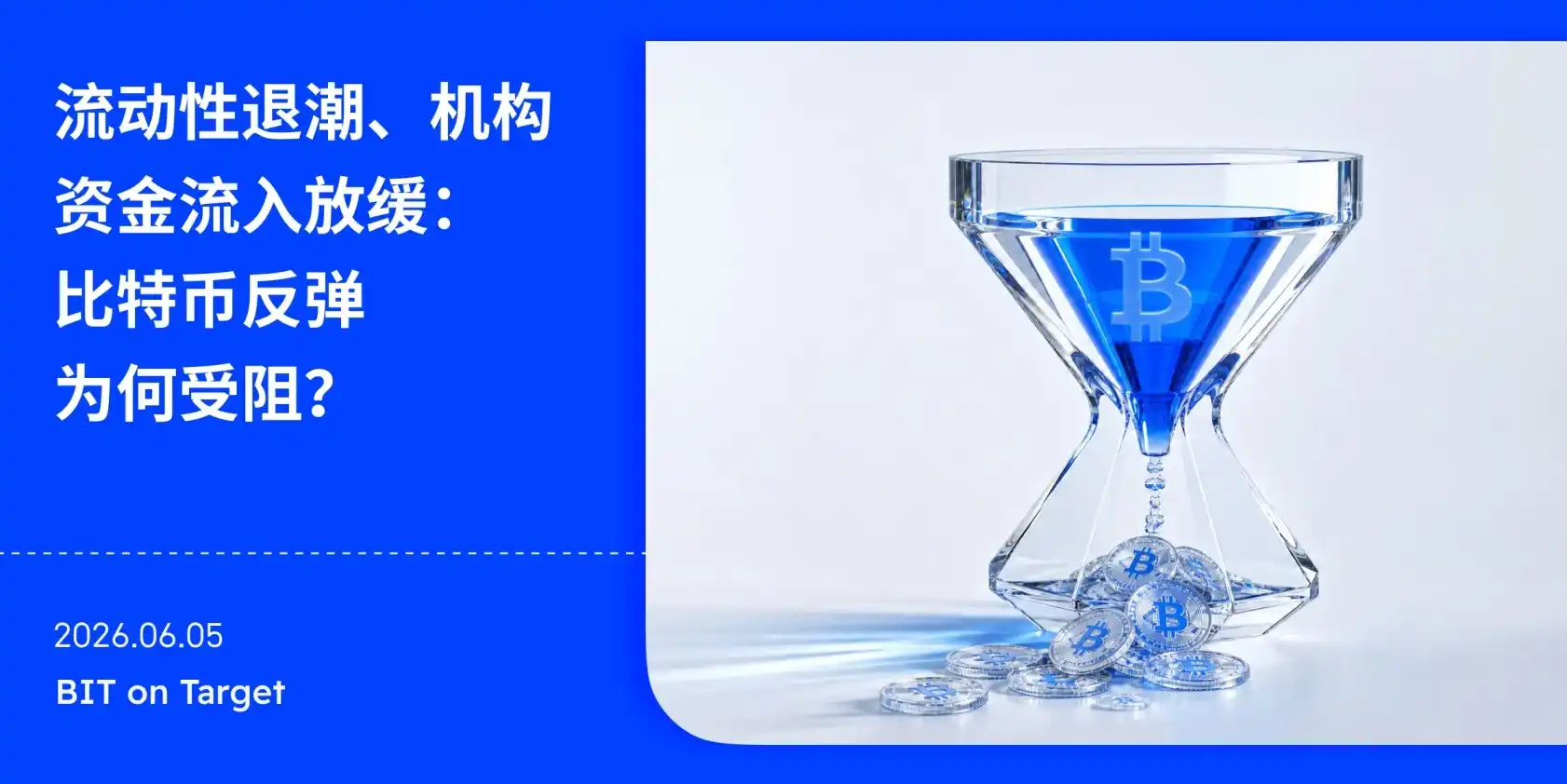
BIT Research: ETF Purchases Have Slowed, Strategy (MicroStrategy) Has Slowed, What Else Can Drive Bitcoin's Rise?

Market Refocus on Inflation and Rate Expectations Weighs on Bitcoin Currently, the market is in a phase of macro-repricing dominated by inflation and interest rate expectations. Bitcoin, which previously benefited from easy liquidity and low inflation, is seeing its core bullish drivers weaken. These drivers were market expectations for interest rate cuts and strong inflows from Bitcoin ETFs and institutions like MicroStrategy (referred to as "Strategy" in the text). The logic has shifted. Recent high inflation data (e.g., CPI hitting 3.8% in a May 2026 report) has caused the market to sharply reduce its rate cut expectations for 2025 and even price in potential hikes. This is a key constraint for Bitcoin, as it lacks cash flows and is highly sensitive to rate expectations. Concurrently, institutional capital flows have slowed significantly. Following the hot CPI data, Bitcoin ETFs saw accelerated outflows, with around $4.3 billion leaving over a period. MicroStrategy's ability to keep adding substantial Bitcoin to its balance sheet is also diminishing. Together, ETF and MicroStrategy holdings total roughly $110 billion, but their momentum as growth engines is cooling. In summary, Bitcoin's current pressure stems not from its own fundamentals but from a changing macro environment. As long as inflation stays elevated, Bitcoin is likely to remain in a consolidating phase. However, historically, inflation eventually peaks. Once it recedes and rate cut expectations rebuild, institutional capital could return, potentially fueling a new and more robust recovery phase for Bitcoin.

marsbitHace 7 min(s)

BIT Research: ETF Purchases Have Slowed, Strategy (MicroStrategy) Has Slowed, What Else Can Drive Bitcoin's Rise?

marsbitHace 7 min(s)

Earning 1000 Trillion in Half a Year, 'Pocketing' 20 Million per Capita: This Round of Wealth Creation in the Korean Stock Market is Unprecedented in Scale

The South Korean stock market is experiencing an unprecedented wealth surge in 2026, with household equity and fund asset values soaring by over 1,000 trillion KRW (~$730bn) year-to-date. This translates to an average per capita wealth increase of roughly 20 million KRW, fueled by a historic 109% rally in the KOSPI index. The boom is driven by three converging forces: an AI-driven semiconductor supercycle boosting giants like Samsung and SK Hynix; the government's "Value-Up" market reforms addressing long-standing corporate governance issues; and aggressive real estate regulations that have locked capital within financial markets, preventing profits from flowing back into property. This has triggered a wealth effect, boosting high-end consumption significantly. However, the gains are highly concentrated. The two semiconductor behemoths account for over half the index's value, but retail investors own relatively low stakes in them, systematically missing the biggest rallies. Wealth and consumption benefits are skewed towards luxury goods and imported cars, bypassing mainstream retail. Further risks stem from excessive leverage, with high trading volume in leveraged ETFs, and a market sentiment heavily reliant on the AI sector's fortunes and speculative rumors. While this cycle marks a potential shift from real estate to equities as a primary wealth generator for Koreans, its sustainability, amid structural imbalances and leverage, remains a critical test.

marsbitHace 12 min(s)

Earning 1000 Trillion in Half a Year, 'Pocketing' 20 Million per Capita: This Round of Wealth Creation in the Korean Stock Market is Unprecedented in Scale

marsbitHace 12 min(s)

Behind ZEC's Over 30% Plunge: An 'Unlimited Minting' Vulnerability with No Way to Prove if It Was Ever Exploited

A critical vulnerability was discovered in Zcash's Orchard privacy pool, allowing for the theoretical creation of undetectable counterfeit ZEC. Researcher Taylor Hornby found the flaw on May 29th, 2024, within the Orchard circuit's cryptographic constraints, which could let an attacker bypass asset conservation rules. Although a rapid emergency fix was deployed within days via a coordinated soft and hard fork, a core uncertainty remains: due to Orchard's privacy features, it is impossible to cryptographically prove whether this "unlimited mint" flaw was exploited in the nearly four years since the pool's 2022 launch. This uncertainty, rather than the patched flaw itself, triggered a market panic, causing ZEC's price to drop over 30%. While the Zcash Foundation stated no evidence of exploitation was found, independent entity Shielded Labs emphasized the impossibility of definitively proving no counterfeit ZEC was ever created. The incident highlights the unique trust challenge in privacy systems. To address this, developers are proposing a new network upgrade with enhanced auditing to allow verifiable proof of supply integrity. Notably, the researcher utilized the newly released AI model Claude Opus 4.8 as a tool during the security review, signaling the growing role of advanced AI in uncovering complex cryptographic vulnerabilities.

marsbitHace 14 min(s)

Behind ZEC's Over 30% Plunge: An 'Unlimited Minting' Vulnerability with No Way to Prove if It Was Ever Exploited

marsbitHace 14 min(s)

imToken's 10th Anniversary Unveils Strategic Direction for the Next Decade: Evolving from a Trusted Main Wallet to a Personal Digital Hub

On its tenth anniversary, decentralized wallet imToken announced its strategic vision for the next decade: evolving from a "trusted main wallet" into a "personal control interface." This new direction aims to help users manage not only digital assets but also identity, permissions, and AI agent actions in an increasingly open and intelligent internet. imToken outlined that while the past decade focused on Store, Send, and Stake—securing assets, enabling transfers, and facilitating network participation—the future introduces a fourth core proposition: Sign. This expanded concept goes beyond transaction signing to encompass expressing intent, granting permissions, setting rules, delegating actions, and revoking authorizations. As AI agents gain autonomy, imToken emphasizes the need for clear, verifiable, and revocable user control over their actions. CEO Ben He stated that imToken's mission is shifting from enabling ownership of digital assets to ensuring user sovereignty over their entire digital world in the AI era. The company's core principle has been upgraded from "Digital Assets, Under Your Control" to "Your Digital World, Under Your Control." Future development will focus on three areas: upholding self-custody principles, extending security from transactions to authorizations and automated actions, and building product capabilities for managing permissions, delegations, policies, and revocations. imToken views the wallet's role as expanding into a trusted control interface for human-AI collaboration, where managing keys, signatures, and permissions forms the infrastructure for personal digital sovereignty. Founded in 2016, imToken serves millions of users across 150+ countries, providing non-custodial wallet services supporting over 50 blockchain networks.

marsbitHace 15 min(s)

imToken's 10th Anniversary Unveils Strategic Direction for the Next Decade: Evolving from a Trusted Main Wallet to a Personal Digital Hub

marsbitHace 15 min(s)

Trading

Spot
Futuros

Artículos destacados

Cómo comprar GAS

¡Bienvenido a HTX.com! Hemos hecho que comprar GAS (GAS) sea simple y conveniente. Sigue nuestra guía paso a paso para iniciar tu viaje de criptos.Paso 1: crea tu cuenta HTXUtiliza tu correo electrónico o número de teléfono para registrarte y obtener una cuenta gratuita en HTX. Experimenta un proceso de registro sin complicaciones y desbloquea todas las funciones.Obtener mi cuentaPaso 2: ve a Comprar cripto y elige tu método de pagoTarjeta de crédito/débito: usa tu Visa o Mastercard para comprar GAS (GAS) al instante.Saldo: utiliza fondos del saldo de tu cuenta HTX para tradear sin problemas.Terceros: hemos agregado métodos de pago populares como Google Pay y Apple Pay para mejorar la comodidad.P2P: tradear directamente con otros usuarios en HTX.Over-the-Counter (OTC): ofrecemos servicios personalizados y tipos de cambio competitivos para los traders.Paso 3: guarda tu GAS (GAS)Después de comprar tu GAS (GAS), guárdalo en tu cuenta HTX. Alternativamente, puedes enviarlo a otro lugar mediante transferencia blockchain o utilizarlo para tradear otras criptomonedas.Paso 4: tradear GAS (GAS)Tradear fácilmente con GAS (GAS) en HTX's mercado spot. Simplemente accede a tu cuenta, selecciona tu par de trading, ejecuta tus trades y monitorea en tiempo real. Ofrecemos una experiencia fácil de usar tanto para principiantes como para traders experimentados.

308 Vistas totalesPublicado en 2024.12.12Actualizado en 2026.06.02

Cómo comprar GAS

Discusiones

Bienvenido a la comunidad de HTX. Aquí puedes mantenerte informado sobre los últimos desarrollos de la plataforma y acceder a análisis profesionales del mercado. A continuación se presentan las opiniones de los usuarios sobre el precio de GAS (GAS).

活动图片