He Was the Hero of Shanghai's Two Major Industries, Yet Passed Away Quietly in Regret

marsbitPublicado a 2026-08-05Actualizado a 2026-08-05

Resumen

He was a pivotal figure in the development of two major Shanghai industries—semiconductors and commercial aircraft—yet passed away in quiet regret. Jiang Shangzhou, son of a veteran revolutionary and a Swiss-educated technocrat, became Deputy Director of the Shanghai Economic Commission in 1997. Tasked with identifying strategic industries, he championed integrated circuits (ICs) despite a climate of skepticism. Countering a national plan for just two 8-inch chip production lines, he boldly declared Shanghai would build ten within five years. He masterminded the Zhangjiang microelectronics zone, personally recruited top talent like Morris Chang, and helped establish SMIC. Through innovative financing that circumvented Western embargoes, SMIC grew rapidly, with Shanghai exceeding its target by building 18 lines. Simultaneously, while battling lung cancer, Jiang led the push for China's large commercial aircraft program as head of a state major projects panel. He argued it was a strategic imperative that would drive advancements across multiple industries. His relentless advocacy culminated in the 2006 state approval that paved the way for the C919. Jiang's career was marked by foresight often deemed too超前. Earlier postings in Sanya and Yangpu saw his ideas for tourism and economic reform initially rejected, only to be validated years later. In 2009, he became Chairman of the embattled SMIC. Despite his deteriorating health, he steered the company until his death in 2011, le...

"Building two chip production lines in five years is far too bold."

When the microphone at the National Integrated Circuit "10th Five-Year Plan" Strategy Seminar was handed to Jiang Shangzhou, then Deputy Director of the Shanghai Municipal Economic Commission, he told the assembled experts:

"Not two. Shanghai will build ten lines in five years."

In 1997, 50-year-old Jiang Shangzhou received a new appointment: Deputy Director of the Shanghai Municipal Economic Commission.

He was a standard "red second generation." His father, Jiang Yizhen, was an old Red Army soldier who participated in the Long March, and had served as Minister of Agriculture, Minister of Health, and Secretary of the Hebei Provincial Party Committee.

He was also a rare official of that era with overseas study experience, having been sent by the state to study at the Swiss Federal Institute of Technology in Zurich, whose most famous alumnus is Albert Einstein.

This time, he was handed a difficult game to play.

At that time, Shanghai, China's largest industrial city, was experiencing the throes of transition.

Textiles, steel, petrochemicals... these past glories of Shanghai were gradually becoming the city's "burdens." In the central government's development plan, Shanghai's future was to rely on high technology and emerging industries.

As Deputy Director of the Economic Commission, Jiang Shangzhou's core task was to screen strategic industries that would lead Shanghai's future development. One of his answers: integrated circuits.

Over the past two decades, China's integrated circuit projects had always progressed in fits and starts. Under Western technological blockades, China could only purchase "second-hand production lines" already discarded by developed countries. Coupled with delays and time for absorption and implementation, by the time a production line was acquired, it was already three generations behind, trapping the industry in an inescapable cycle of "introduction — factory construction — production — falling behind — re-introduction."

The autonomous 908/909 projects failed successively, casting a pall of depression over the entire integrated circuit industry. Add to that the global semiconductor industry downturn at the time, and industry profits had already been severely slashed. At the national "10th Five-Year Plan" strategic planning seminar for integrated circuits, the prevailing tone was: we must develop chips, but aim for two 8-inch production lines over five years.

But when the microphone was passed to Jiang Shangzhou, he faced the room of experts and stated Shanghai's plan:

During the "10th Five-Year Plan" period, Shanghai would build ten 8-inch chip production lines.

As a technical official with a professional background, Jiang Shangzhou's words had their basis.

In his view, chips were one of the industries most severely constraining China's development, and they had to be mastered no matter how difficult.

By around 2000, chips had already become China's largest import product, exceeding the import volume of the five major strategic materials (minerals, grain, etc.), and more than all energy imports. Virtually 100% of chips for China's TVs and mobile phones were imported.

With this plan, Jiang Shangzhou returned to Shanghai.

After reviewing the history of Taiwan's Hsinchu Science Park and comparing Shanghai's strengths and weaknesses, he proposed to Shanghai's decision-makers: planning a 22-square-kilometer Zhangjiang Microelectronics Development Zone in Pudong, three times the size of Taiwan's Hsinchu Science Park.

In Jiang Shangzhou's view:

Within the semiconductor industry, ethnic Chinese are a remarkable group, possessing one of the world's best talent pools and networks. Shanghai, being the mainland city most favored by international capital and having a strong industrial foundation, would surely surpass Taiwan as long as it built the nest to attract the phoenixes.

Therefore, Jiang Shangzhou spared no effort traveling to Taiwan specifically to recruit talent. He sought out the renowned semiconductor industry figure, Zhang Rujing.

In Shanghai, Zhang Rujing received the strongest possible commitment: you can choose any plot of land in Zhangjiang.

But according to the manufacturing processes of the time, building 10 production lines required at least tens of billions more in investment. Where would the money come from? Jiang Shangzhou thought of introducing foreign capital.

SMIC, structured as a foreign-invested enterprise, ingeniously introduced a wide array of Chinese and foreign capital in a very dispersed manner, even including American firms like Goldman Sachs and Walden. This sophisticated calculation not only provided SMIC with capital but also circumvented Western blockade restrictions, enabling the acquisition of large amounts of semiconductor equipment to quickly join the race.

On August 24, 2000, he led SMIC in driving the first pile officially in Pudong's Zhangjiang. Just 13 months later, trial production began. Within 3 years, 4 eight-inch production lines and 1 twelve-inch production line were established—a speed unprecedented globally.

By 2003, SMIC had already surged to become the world's fourth-largest foundry, its rise astonishing.

In 2004, Jiang Shangzhou encountered another key figure: Yin Zhiyao, who had worked at semiconductor giants Intel, Lam Research, and Applied Materials, and was then Vice President at Applied Materials and a top global expert in chip etching. Jiang invited the 60-year-old Yin Zhiyao to Shanghai's Zhangjiang to establish AMEC (Advanced Micro-Fabrication Equipment Inc.), beginning China's "pioneering era" in etching equipment.

Through Jiang Shangzhou's efforts, a group of semiconductor talent set up companies in Shanghai. In less than five years, Shanghai had built or was building 18 eight-inch IC production lines, exceeding the target.

Jiang Shangzhou firmly believed that at this pace, his 1998 prediction that "the mainland chip industry will surpass Taiwan between 2015 and 2020" would surely come true.

Compared to integrated circuits, Jiang Shangzhou's other grand endeavor was commercial large aircraft.

Jiang Shangzhou's connection with large aircraft began in 2003 when he became the head of the State Council's Major Special Project Demonstration Group, participating in the formulation of the National Medium- and Long-Term Science and Technology Development Plan Outline.

But what no one knew was that this was his third year since being diagnosed with lung cancer.

As head of the demonstration group, "Large Civil Aircraft" became the first project he selected, and also the hardest "bone to chew" in the demonstrations.

For over half a century, China's journey in building civil large aircraft had been exceptionally difficult, with many twists and turns from the Y-10 to the C919.

At that time, discussions advocating "it's better to buy than to build, better to lease than to buy" were rampant. Due to technological monopolies by developed countries, China's commercial aircraft R&D faced problems of high costs and long payback periods. Moreover, the large aircraft project was entangled in complex interest games.

However, Jiang Shangzhou understood that large commercial aircraft were the pearl on the crown of modern industrial technology. "Large aircraft must be developed. This is not just an economic issue; it involves national strategic security."

In reality, what developed countries truly wanted to curb was not the technology of a particular aircraft, but the entire platform upon which such technological capabilities depended. Jiang Shangzhou saw early on the profound significance of the large aircraft project for China's industrial restructuring.

"Having 100 technologies doesn't necessarily mean you can build a large aircraft. Conversely, building a large aircraft can drive the development of 100 technologies."

Developing large aircraft could drive breakthroughs in key technologies across fields like new materials, electronic information, and automatic control, and would also spur major advances in fundamental disciplines such as fluid mechanics. Therefore, incorporating large aircraft into the national major strategic development plan was installing a leading force for China's machinery, electronics, materials, metallurgy, and all other related industries.

More importantly, Jiang Shangzhou saw that Shanghai possessed the capability to manufacture large aircraft—as early as the 1970s, Shanghai had independently produced the "Y-10" large civil airliner and had engaged in multiple collaborations with American company McDonnell Douglas, accumulating rich technical experience.

To this end, he pushed back against dissent and organized a three-year-long discussion within academia and industry.

For three years, Jiang Shangzhou shuttled constantly between Shanghai and Beijing until February 26, 2006, when the State Council approved the project, listing "Large Aircraft" as a national science and technology major special project.

The C919 passenger aircraft project took its first step.

Jiang Shangzhou dealt with major undertakings, but he was also someone who did not know how to "play the official game." His political career can be described as full of twists and turns.

Before the age of 40, Jiang Shangzhou was just a "scholar." In 1965, he was admitted to the Radio Department of Tsinghua University, but due to the "Cultural Revolution," he spent only a little over nine months at the university.

For over a decade, he never stopped studying. He and his classmate, later his wife Wu Qidi (former Vice Minister of Education), taught themselves university courses. In 1978, both returned to their alma mater as graduate students. They later became among the first intellectuals to study abroad since the reform and opening-up.

In 1987, Jiang Shangzhou came to Sanya, Hainan.

This was a new city that had just been upgraded from a county-level city. The entire city of Sanya had no more than 1,000 telephones, and phone numbers were only three digits.

Eight years of overseas study had endowed Jiang Shangzhou with forward-looking strategic vision. However, precisely because it was "ahead of its time," he was often controversial and misunderstood.

For example, he wanted to build a science city in Sanya, creating China's "Hawaii." However, in 1990, the GDP of mainland China was only $387.8 billion, while Hong Kong, with a population of just over 5 million, had a GDP as high as 20% of the mainland's.

At that time, China needed to solve the problem of feeding and clothing 1.1 billion people. The importance of high-tech industries and a tourism economy was still difficult for most to comprehend.

Concepts like creating urban public spaces and establishing land transaction systems, commonplace in urban management today, also faced significant resistance at the time for being "too advanced."

Consequently, Jiang Shangzhou lost the election for Vice Mayor of Sanya in 1989. Interestingly, at that time, his father Jiang Yizhen was the Vice President of the "Hainan Development Promotion Association," yet his son serving in Hainan lost the election.

Interestingly, after losing, he did not choose to leave but continued to work as the Mayor's Assistant, striving to steer Sanya towards becoming an international tourist city. Relying on this pragmatic work, Jiang Shangzhou was elected Vice Mayor with a high vote count in the 1991 election.

That year was Jiang Shangzhou's third year in politics. At 43, he was as energetic as a 23-year-old, always rushing tirelessly to conduct research at the grassroots level across various regions.

Regrettably, in the debate over focusing on "tourism" or "agriculture," Sanya at the time chose the latter, forcing Jiang Shangzhou to leave. The reality of Sanya today undoubtedly proves Jiang Shangzhou's foresight.

At the urging of Ruan Chongwu, then Party Secretary of Hainan Province, Jiang Shangzhou took up the post of Director of the Yangpu Economic Development Zone Administration.

In 1993, Yangpu was a testing ground for China's reform and opening-up. There, Jiang Shangzhou introduced concepts such as "seek the market, not the mayor" and "minimal administrative intervention, maximum economic freedom."

The experiences accumulated in Yangpu at that time, such as pioneering the civil service examination system, centralized procurement, and public finance, successively took center stage in China's administrative reforms over the following decade.

However, again because it was "too far ahead," Jiang Shangzhou encountered setbacks once more in Yangpu.

It wasn't until September 2007, when the State Council approved the establishment of the Yangpu Bonded Port Area, that Yangpu's development welcomed new opportunities. This seemed to affirm Jiang Shangzhou's earlier pioneering efforts in Yangpu, but by then, he had long since left Hainan for Shanghai.

Because it was too threatening, SMIC faced repeated sniping from industry leader TSMC from its inception, leading to high compensation demands.

In 2009, one of its founders, Zhang Rujing, was forced to leave the company. Jiang Shangzhou was appointed Chairman to handle the crisis, but what no one knew was that he was already in the late stages of lung cancer.

Facing this predicament, Jiang Shangzhou's stress was unimaginable. Although barely holding on, he never ceased pondering the development of China's chip industry.

"In terms of semiconductor processes, we don't necessarily have to master everything. As long as we lead in a few areas ahead of foreign countries, we can forge our own development path."

This might have been Jiang Shangzhou's final advice to China's chip industry in the last years of his life. On June 27, 2011, Jiang Shangzhou passed away due to illness. Subsequently, SMIC quickly descended into chaos. During a two-year period of internal strife, senior executives left one after another, and development nearly stalled.

During the same period, the national chip industry was also experiencing its darkest hour. It wasn't until 2014, when the National Integrated Circuit Industry Investment Fund, with a scale of hundreds of billions, was established, that the entire industry gradually emerged from the gloom and embarked on a new glorious journey.

Therefore, whether it was the ARJ21 regional jet (which formally entered market operation in 2015) or the C919 passenger aircraft, Jiang Shangzhou did not live to see the day they truly soared in the skies.

Looking back on Jiang Shangzhou's life, from a世俗 (worldly) perspective, he might be seen as a tragic "loser." However, he was also a true behind-the-scenes hero.

Relying on the foundation laid by Jiang Shangzhou back then, today's Shanghai has become a pioneer in integrated circuits and China's commercial aviation.

In 2025, the overall scale of Shanghai's integrated circuit industry exceeded 570 billion yuan, ranking first among Chinese cities for many consecutive years.

Today, Shanghai is the region with the most complete integrated circuit industry chain and the highest comprehensive technical level in China. From design, manufacturing, packaging and testing to materials and equipment, Shanghai has leading companies deployed in all five key areas of the chip industry chain.

SMIC, AMEC, Shanghai Micro Electronics Equipment (SMEE), Unisoc, Shanghai Simgui...... These enterprises, which were more or less "supported" by Jiang Shangzhou, represent China's hopes for breaking through blockades in different fields of the chip industry.

The large aircraft project, first advocated and landed by Jiang Shangzhou, has also seen the C919 aircraft series from COMAC (Commercial Aircraft Corporation of China) long since embarked on the journey of commercializing domestically produced passenger aircraft, becoming a new calling card for Chinese manufacturing.

Looking back, Jiang Shangzhou never "chased trends." Instead, he maintained an exceptionally calm attitude towards Shanghai's positioning and the real economy.

Jiang Shangzhou believed that Shanghai, as one of the world's most densely concentrated regions for manufacturing resources, should strive to occupy industrial high ground and drive the upgrading and adjustment of traditional industries nationwide.

Now, when we remember Jiang Shangzhou, what are we remembering?

We appreciate his strategic vision, admire his pragmatic and progressive character, and also regret that his great ambition remained unfulfilled, "his task unfinished, his body perished first." His achievements benefit the present, his contributions extend for generations; perhaps his life is the best testament to this.

"The government needs a group of people whose eyes are fixed on change and the forefront. The changes he brings to the economy may not be reflected in the present moment but play a crucial role in development over the next 30 years." In the eyes of his friend Wan Gang, Vice Chairman of the National Committee of the Chinese People's Political Consultative Conference (CPPCC), Jiang Shangzhou was "ahead of his time his whole life."

This article is from WeChat Official Account: 华商韬略 , author: 华商韬略

Criptos en tendencia

Preguntas relacionadas

QWhat were the two major strategic industries that Jiang Shangzhou played a key role in promoting for Shanghai's future development?

AThe two major strategic industries were integrated circuits (microchips) and commercial large aircraft (the C919 project).

QWhat ambitious goal did Jiang Shangzhou announce for Shanghai's integrated circuit industry at the 'Fifteenth Five-Year Plan' national strategic seminar, and how did the actual outcome compare?

AHe announced that Shanghai planned to build ten 8-inch chip production lines within five years. The actual outcome exceeded expectations, with Shanghai having 18 such lines built or under construction in less than five years.

QWhich two key figures and their companies did Jiang Shangzhou help bring to Shanghai's Zhangjiang area to develop the chip industry, and what were their roles?

AHe recruited Zhang Rujing, who founded SMIC (Semiconductor Manufacturing International Corporation), a major chip foundry. He also invited Yin Zhiyao, who founded AMEC (Advanced Micro-Fabrication Equipment Inc. China), a leading manufacturer of semiconductor etching equipment.

QDespite being diagnosed with lung cancer, what major national project did Jiang Shangzhou champion and help get approved as the head of the State Council's major project demonstration group?

AHe championed and helped get the 'Large Aircraft' project (which led to the C919 passenger jet) approved as a major national science and technology development project.

QAccording to the article, what is Jiang Shangzhou's lasting legacy for Shanghai's industrial landscape as of the time the article was written?

AHis legacy is that Shanghai became a leading base for China's integrated circuit and commercial aviation industries. Shanghai's IC industry scale exceeded 570 billion yuan, ranking first nationally, and the C919 aircraft began its commercial journey, becoming a new name card for Chinese manufacturing.

Lecturas Relacionadas

Stunning, Musk Joins Forces with Huang Jen-hsun to Deploy the Stellar Brain! AI Computing Center Launched into Space

SpaceX, in its first public earnings report, has announced a partnership with NVIDIA to launch Starmind, an orbital AI computing network. This initiative aims to move AI's computational foundation into space to solve the critical challenges of energy consumption and heat dissipation faced by terrestrial data centers. The core concept involves deploying data centers equipped with NVIDIA's advanced GPUs (like the upcoming Rubin) into sun-synchronous orbit. Key advantages include near-continuous solar power for energy, the vacuum of space for highly efficient radiative cooling, and the absence of terrestrial constraints like land use and grid capacity. The first computational node, the Starmind AI1 satellite, is described as a massive vehicle with a 75-meter wingspan, generating 210 kW of solar power to run a 150 kW computing payload—equivalent to a full NVIDIA GB300 supercomputer rack. These "compute satellites" will connect to users via SpaceX's existing Starlink constellation using high-speed laser links, promising low-latency access from anywhere on Earth. SpaceX's ability to realize this vision is underpinned by its Starship rocket, designed for low-cost, high-frequency launches to transport thousands of satellites, and massive planned manufacturing facilities like the Gigasat factory and the Terafab chip plant. Elon Musk framed the project within the context of the Kardashev Scale, proposing Starmind as humanity's first substantive step toward becoming a Type II civilization capable of harnessing a star's energy. The ultimate goal is to deploy one terawatt of computational power in space, with even more ambitious plans involving lunar-based manufacturing and launch systems. The report positions Starmind not merely as a commercial AI service, but as a foundational infrastructure project to expand human intelligence and capability beyond Earth, leveraging SpaceX's integrated strengths in rockets, satellites, and global connectivity.

marsbitHace 35 min(s)

Stunning, Musk Joins Forces with Huang Jen-hsun to Deploy the Stellar Brain! AI Computing Center Launched into Space

marsbitHace 35 min(s)

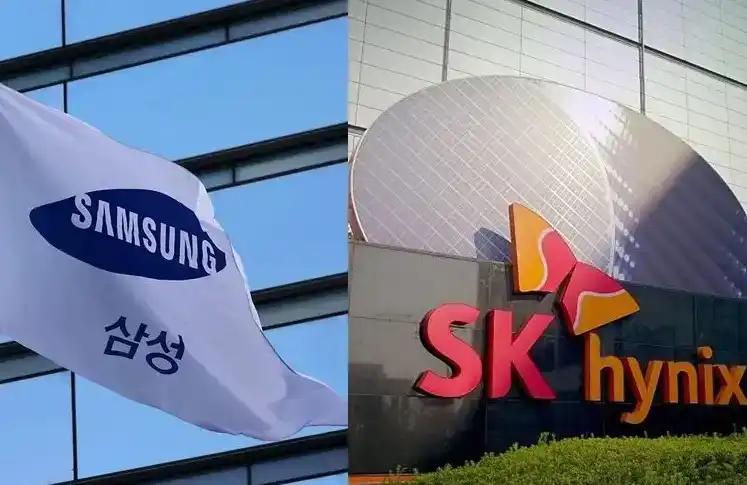
Despite the sell-off, Goldman Sachs remains bullish on Samsung and SK Hynix. Here's why.

Goldman Sachs maintains "Buy" ratings on Samsung Electronics and SK Hynix despite recent stock declines. Its bullish view centers on three core arguments. Firstly, it expects HBM (High Bandwidth Memory) pricing to re-establish a premium over conventional DRAM by 2027, with a projected blended ASP of around $2.9/Gb. This is driven by tight supply-demand dynamics, increasing manufacturing complexity for newer HBM generations, and the need to restore its historical price premium. Secondly, the volatility of the memory cycle is expected to moderate due to widespread adoption of 3-5 year Long-Term Agreements (LTAs) with key customers. These contracts, covering a significant portion of planned capacity, feature mechanisms like price floors, prepayments, and penalties, reducing supplier risk and improving earnings visibility. Thirdly, inventory levels remain low at key suppliers and major customers, providing a buffer against a sharp downturn. Furthermore, robust demand from enterprise SSDs for AI servers is seen offsetting weakness in consumer segments like smartphones and PCs, preventing NAND markets from slipping into oversupply in the near term. While risks exist—such as potential weaker AI demand or aggressive capacity expansion—Goldman Sachs believes the combination of HBM repricing, LTAs, and low inventory underpins a more stable earnings outlook for the leading Korean memory makers.

marsbitHace 50 min(s)

Despite the sell-off, Goldman Sachs remains bullish on Samsung and SK Hynix. Here's why.

marsbitHace 50 min(s)

Korean Cryptocurrency Market Platform Kimpga Integrates with Global Web3 Data Platform RootData, Providing Popularity and Growth Scores for Token Projects

South Korean cryptocurrency market data platform Kimpga (kimpga.com) has announced a data partnership with the global Web3 project data platform RootData. As a result, Kimpga has integrated comprehensive token project information directly into its platform services. The integration introduces a new "RD Score" column within Kimpga's market listings. Clicking the score opens a detailed data window that displays the "RD Popularity Index," the "RD Growth Index," and key fundamental project data such as leading investors, core team members, and project category tags. For example, for Solana (SOL), users can view its indices and identify major backers like Polychain Capital, a16z, and Multicoin Capital directly from the interface, with links to full RootData project pages for deeper research. Jin Jae-yong, a representative of Kimpga, stated that the partnership allows users to quickly assess a project's fundamental strength, including its development team and investor lineup, without leaving the market data screen. This addresses a key challenge for investors who previously had to rely solely on price and premium data. RootData is a widely used global platform providing Web3 project details on funding history, team composition, and investor portfolios for due diligence and investment analysis. Kimpga, which boasts 10 million cumulative users, is a leading Korean crypto market platform providing real-time data and price premiums from over 18 domestic and international exchanges. This collaboration with RootData follows Kimpga's previous partnership with the token rating platform APYWA, further enriching its data offering to support user investment decisions.

marsbitHace 51 min(s)

Korean Cryptocurrency Market Platform Kimpga Integrates with Global Web3 Data Platform RootData, Providing Popularity and Growth Scores for Token Projects

marsbitHace 51 min(s)

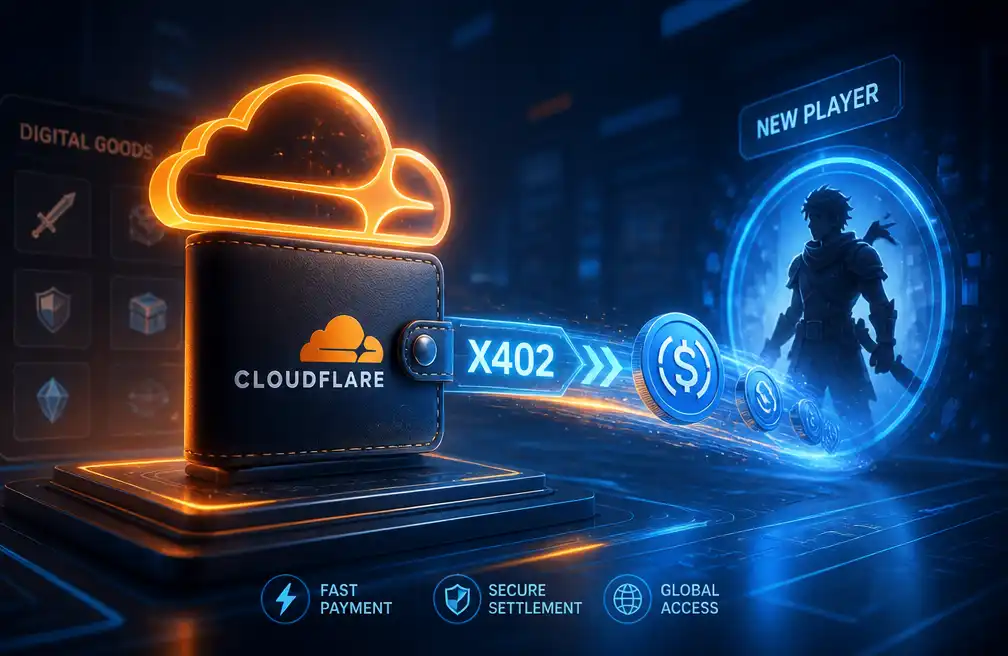
Illustrating the Cloudflare Wallet: The New Player in Stablecoin Payments Using x402

On August 4th, Cloudflare announced the launch of "Wallets," though the initial offering is limited to claiming a user handle. Full functionality for topping up, making payments, and using a Virtual Wallet via API keys is marked "Soon." The announcement clarifies that this handle is not yet a functional wallet. It represents a key piece in Cloudflare's broader payments strategy, alongside the Stripe Projects service (currently in open beta for agent-assisted purchases) and the Monetization Gateway for merchants (on a waitlist). The Wallet is positioned as the payer-side component for managing identity, balances, and authorization rules. While the underlying x402 protocol shows activity (75.41 million transactions, $24.24M volume in 30 days, averaging ~$0.32 per transaction), this data reflects the open network's usage, not specifically Cloudflare Wallet adoption. These metrics indicate suitability for frequent micro-payments like API calls. Cloudflare's documentation uses a $0.01 per-call example to illustrate the x402 flow: a server returns HTTP 402, the agent signs the payment, a facilitator verifies it, and the server delivers the result. Currently, developers must manage private keys and use test networks/USDC for agent payments. The Wallet roadmap aims to separate the user's Account Wallet from an agent's Virtual Wallet, adding controls for spending limits, whitelists, and per-transaction caps. This design resembles a corporate card with approval rules. However, these controls are not yet available for configuration. In summary, Cloudflare Wallet's current launch is a preliminary step. Critical details like supported stablecoins, blockchains, regions, KYC, custody, and fees remain undisclosed. The announcement primarily establishes a payer identity framework, with the full payment and agent autonomy system still under development.

marsbitHace 1 hora(s)

Illustrating the Cloudflare Wallet: The New Player in Stablecoin Payments Using x402

marsbitHace 1 hora(s)

Trading

Spot

Artículos destacados

Qué es $S$

Entendiendo SPERO: Una Visión General Completa Introducción a SPERO A medida que el panorama de la innovación continúa evolucionando, la aparición de tecnologías web3 y proyectos de criptomonedas juega un papel fundamental en la configuración del futuro digital. Un proyecto que ha atraído la atención en este campo dinámico es SPERO, denotado como SPERO,$$s$. Este artículo tiene como objetivo reunir y presentar información detallada sobre SPERO, para ayudar a entusiastas e inversores a comprender sus fundamentos, objetivos e innovaciones dentro de los dominios web3 y cripto. ¿Qué es SPERO,$$s$? SPERO,$$s$ es un proyecto único dentro del espacio cripto que busca aprovechar los principios de descentralización y tecnología blockchain para crear un ecosistema que promueva la participación, la utilidad y la inclusión financiera. El proyecto está diseñado para facilitar interacciones de igual a igual de nuevas maneras, proporcionando a los usuarios soluciones y servicios financieros innovadores. En su esencia, SPERO,$$s$ tiene como objetivo empoderar a los individuos al proporcionar herramientas y plataformas que mejoren la experiencia del usuario en el espacio de las criptomonedas. Esto incluye habilitar métodos de transacción más flexibles, fomentar iniciativas impulsadas por la comunidad y crear caminos para oportunidades financieras a través de aplicaciones descentralizadas (dApps). La visión subyacente de SPERO,$$s$ gira en torno a la inclusividad, buscando cerrar brechas dentro de las finanzas tradicionales mientras aprovecha los beneficios de la tecnología blockchain. ¿Quién es el Creador de SPERO,$$s$? La identidad del creador de SPERO,$$s$ sigue siendo algo oscura, ya que hay recursos públicos limitados que proporcionan información de fondo detallada sobre su(s) fundador(es). Esta falta de transparencia puede derivarse del compromiso del proyecto con la descentralización, una ética que muchos proyectos web3 comparten, priorizando las contribuciones colectivas sobre el reconocimiento individual. Al centrar las discusiones en torno a la comunidad y sus objetivos colectivos, SPERO,$$s$ encarna la esencia del empoderamiento sin señalar a individuos específicos. Como tal, comprender la ética y la misión de SPERO sigue siendo más importante que identificar a un creador singular. ¿Quiénes son los Inversores de SPERO,$$s$? SPERO,$$s$ cuenta con el apoyo de una diversa gama de inversores que van desde capitalistas de riesgo hasta inversores ángeles dedicados a fomentar la innovación en el sector cripto. El enfoque de estos inversores generalmente se alinea con la misión de SPERO, priorizando proyectos que prometen avances tecnológicos sociales, inclusión financiera y gobernanza descentralizada. Estas fundaciones de inversores suelen estar interesadas en proyectos que no solo ofrecen productos innovadores, sino que también contribuyen positivamente a la comunidad blockchain y sus ecosistemas. El respaldo de estos inversores refuerza a SPERO,$$s$ como un contendiente notable en el dominio de proyectos cripto que evoluciona rápidamente. ¿Cómo Funciona SPERO,$$s$? SPERO,$$s$ emplea un marco multifacético que lo distingue de los proyectos de criptomonedas convencionales. Aquí hay algunas de las características clave que subrayan su singularidad e innovación: Gobernanza Descentralizada: SPERO,$$s$ integra modelos de gobernanza descentralizada, empoderando a los usuarios para participar activamente en los procesos de toma de decisiones sobre el futuro del proyecto. Este enfoque fomenta un sentido de propiedad y responsabilidad entre los miembros de la comunidad. Utilidad del Token: SPERO,$$s$ utiliza su propio token de criptomoneda, diseñado para servir diversas funciones dentro del ecosistema. Estos tokens permiten transacciones, recompensas y la facilitación de servicios ofrecidos en la plataforma, mejorando la participación y la utilidad general. Arquitectura en Capas: La arquitectura técnica de SPERO,$$s$ apoya la modularidad y escalabilidad, permitiendo la integración fluida de características y aplicaciones adicionales a medida que el proyecto evoluciona. Esta adaptabilidad es fundamental para mantener la relevancia en el cambiante paisaje cripto. Participación de la Comunidad: El proyecto enfatiza iniciativas impulsadas por la comunidad, empleando mecanismos que incentivan la colaboración y la retroalimentación. Al nutrir una comunidad sólida, SPERO,$$s$ puede abordar mejor las necesidades de los usuarios y adaptarse a las tendencias del mercado. Enfoque en la Inclusión: Al ofrecer tarifas de transacción bajas e interfaces amigables para el usuario, SPERO,$$s$ busca atraer a una base de usuarios diversa, incluyendo a individuos que anteriormente pueden no haber participado en el espacio cripto. Este compromiso con la inclusión se alinea con su misión general de empoderamiento a través de la accesibilidad. Cronología de SPERO,$$s$ Entender la historia de un proyecto proporciona información crucial sobre su trayectoria de desarrollo y hitos. A continuación se presenta una cronología sugerida que mapea eventos significativos en la evolución de SPERO,$$s$: Fase de Conceptualización e Ideación: Las ideas iniciales que forman la base de SPERO,$$s$ fueron concebidas, alineándose estrechamente con los principios de descentralización y enfoque comunitario dentro de la industria blockchain. Lanzamiento del Whitepaper del Proyecto: Tras la fase conceptual, se lanzó un whitepaper completo que detalla la visión, los objetivos y la infraestructura tecnológica de SPERO,$$s$ para generar interés y retroalimentación de la comunidad. Construcción de Comunidad y Primeras Interacciones: Se realizaron esfuerzos de divulgación activa para construir una comunidad de primeros adoptantes y posibles inversores, facilitando discusiones en torno a los objetivos del proyecto y obteniendo apoyo. Evento de Generación de Tokens: SPERO,$$s$ llevó a cabo un evento de generación de tokens (TGE) para distribuir sus tokens nativos a los primeros seguidores y establecer liquidez inicial dentro del ecosistema. Lanzamiento de la dApp Inicial: La primera aplicación descentralizada (dApp) asociada con SPERO,$$s$ se puso en marcha, permitiendo a los usuarios interactuar con las funcionalidades centrales de la plataforma. Desarrollo Continuo y Alianzas: Actualizaciones y mejoras continuas a las ofertas del proyecto, incluyendo alianzas estratégicas con otros actores en el espacio blockchain, han moldeado a SPERO,$$s$ en un jugador competitivo y en evolución en el mercado cripto. Conclusión SPERO,$$s$ se erige como un testimonio del potencial de web3 y las criptomonedas para revolucionar los sistemas financieros y empoderar a los individuos. Con un compromiso con la gobernanza descentralizada, la participación comunitaria y funcionalidades diseñadas de manera innovadora, allana el camino hacia un paisaje financiero más inclusivo. Como con cualquier inversión en el espacio cripto que evoluciona rápidamente, se anima a los posibles inversores y usuarios a investigar a fondo y participar de manera reflexiva con los desarrollos en curso dentro de SPERO,$$s$. El proyecto muestra el espíritu innovador de la industria cripto, invitando a una mayor exploración de sus innumerables posibilidades. Mientras el viaje de SPERO,$$s$ aún se desarrolla, sus principios fundamentales pueden, de hecho, influir en el futuro de cómo interactuamos con la tecnología, las finanzas y entre nosotros en ecosistemas digitales interconectados.

258 Vistas totalesPublicado en 2024.12.17Actualizado en 2024.12.17

Qué es $S$

Qué es AGENT S

Agent S: El Futuro de la Interacción Autónoma en Web3 Introducción En el paisaje en constante evolución de Web3 y las criptomonedas, las innovaciones están redefiniendo constantemente cómo los individuos interactúan con las plataformas digitales. Uno de estos proyectos pioneros, Agent S, promete revolucionar la interacción humano-computadora a través de su marco agente abierto. Al allanar el camino para interacciones autónomas, Agent S busca simplificar tareas complejas, ofreciendo aplicaciones transformadoras en inteligencia artificial (IA). Esta exploración detallada profundizará en las complejidades del proyecto, sus características únicas y las implicaciones para el dominio de las criptomonedas. ¿Qué es Agent S? Agent S se presenta como un marco agente abierto innovador, diseñado específicamente para abordar tres desafíos fundamentales en la automatización de tareas informáticas: Adquisición de Conocimiento Específico del Dominio: El marco aprende inteligentemente de diversas fuentes de conocimiento externas y experiencias internas. Este enfoque dual le permite construir un rico repositorio de conocimiento específico del dominio, mejorando su rendimiento en la ejecución de tareas. Planificación a Largo Plazo de Tareas: Agent S emplea planificación jerárquica aumentada por la experiencia, un enfoque estratégico que facilita la descomposición y ejecución eficiente de tareas complejas. Esta característica mejora significativamente su capacidad para gestionar múltiples subtareas de manera eficiente y efectiva. Manejo de Interfaces Dinámicas y No Uniformes: El proyecto introduce la Interfaz Agente-Computadora (ACI), una solución innovadora que mejora la interacción entre agentes y usuarios. Utilizando Modelos de Lenguaje Multimodal de Gran Escala (MLLMs), Agent S puede navegar y manipular diversas interfaces gráficas de usuario sin problemas. A través de estas características pioneras, Agent S proporciona un marco robusto que aborda las complejidades involucradas en la automatización de la interacción humana con las máquinas, preparando el terreno para una multitud de aplicaciones en IA y más allá. ¿Quién es el Creador de Agent S? Si bien el concepto de Agent S es fundamentalmente innovador, la información específica sobre su creador sigue siendo elusiva. El creador es actualmente desconocido, lo que resalta ya sea la etapa incipiente del proyecto o la elección estratégica de mantener a los miembros fundadores en el anonimato. Independientemente de la anonimidad, el enfoque sigue siendo en las capacidades y el potencial del marco. ¿Quiénes son los Inversores de Agent S? Dado que Agent S es relativamente nuevo en el ecosistema criptográfico, la información detallada sobre sus inversores y patrocinadores financieros no está documentada explícitamente. La falta de información disponible públicamente sobre las bases de inversión u organizaciones que apoyan el proyecto plantea preguntas sobre su estructura de financiamiento y hoja de ruta de desarrollo. Comprender el respaldo es crucial para evaluar la sostenibilidad del proyecto y su posible impacto en el mercado. ¿Cómo Funciona Agent S? En el núcleo de Agent S se encuentra una tecnología de vanguardia que le permite funcionar de manera efectiva en diversos entornos. Su modelo operativo se basa en varias características clave: Interacción Humano-Computadora Similar a la Humana: El marco ofrece planificación avanzada de IA, esforzándose por hacer que las interacciones con las computadoras sean más intuitivas. Al imitar el comportamiento humano en la ejecución de tareas, promete elevar las experiencias de los usuarios. Memoria Narrativa: Empleada para aprovechar experiencias de alto nivel, Agent S utiliza memoria narrativa para hacer un seguimiento de las historias de tareas, mejorando así sus procesos de toma de decisiones. Memoria Episódica: Esta característica proporciona a los usuarios una guía paso a paso, permitiendo que el marco ofrezca apoyo contextual a medida que se desarrollan las tareas. Soporte para OpenACI: Con la capacidad de ejecutarse localmente, Agent S permite a los usuarios mantener el control sobre sus interacciones y flujos de trabajo, alineándose con la ética descentralizada de Web3. Fácil Integración con APIs Externas: Su versatilidad y compatibilidad con varias plataformas de IA aseguran que Agent S pueda encajar sin problemas en ecosistemas tecnológicos existentes, convirtiéndolo en una opción atractiva para desarrolladores y organizaciones. Estas funcionalidades contribuyen colectivamente a la posición única de Agent S dentro del espacio cripto, ya que automatiza tareas complejas y de múltiples pasos con una intervención humana mínima. A medida que el proyecto evoluciona, sus posibles aplicaciones en Web3 podrían redefinir cómo se desarrollan las interacciones digitales. Cronología de Agent S El desarrollo y los hitos de Agent S pueden encapsularse en una cronología que resalta sus eventos significativos: 27 de septiembre de 2024: El concepto de Agent S fue lanzado en un documento de investigación integral titulado “Un Marco Agente Abierto que Usa Computadoras Como un Humano”, mostrando las bases del proyecto. 10 de octubre de 2024: El documento de investigación fue puesto a disposición del público en arXiv, ofreciendo una exploración profunda del marco y su evaluación de rendimiento basada en el benchmark OSWorld. 12 de octubre de 2024: Se lanzó una presentación en video, proporcionando una visión visual de las capacidades y características de Agent S, involucrando aún más a posibles usuarios e inversores. Estos marcadores en la cronología no solo ilustran el progreso de Agent S, sino que también indican su compromiso con la transparencia y la participación comunitaria. Puntos Clave Sobre Agent S A medida que el marco Agent S continúa evolucionando, varios atributos clave destacan, subrayando su naturaleza innovadora y potencial: Marco Innovador: Diseñado para proporcionar un uso intuitivo de las computadoras similar a la interacción humana, Agent S aporta un enfoque novedoso a la automatización de tareas. Interacción Autónoma: La capacidad de interactuar de manera autónoma con las computadoras a través de GUI significa un salto hacia soluciones informáticas más inteligentes y eficientes. Automatización de Tareas Complejas: Con su metodología robusta, puede automatizar tareas complejas y de múltiples pasos, haciendo que los procesos sean más rápidos y menos propensos a errores. Mejora Continua: Los mecanismos de aprendizaje permiten a Agent S mejorar a partir de experiencias pasadas, mejorando continuamente su rendimiento y eficacia. Versatilidad: Su adaptabilidad en diferentes entornos operativos como OSWorld y WindowsAgentArena asegura que pueda servir a una amplia gama de aplicaciones. A medida que Agent S se posiciona en el paisaje de Web3 y criptomonedas, su potencial para mejorar las capacidades de interacción y automatizar procesos significa un avance significativo en las tecnologías de IA. A través de su marco innovador, Agent S ejemplifica el futuro de las interacciones digitales, prometiendo una experiencia más fluida y eficiente para los usuarios en diversas industrias. Conclusión Agent S representa un audaz avance en la unión de la IA y Web3, con la capacidad de redefinir cómo interactuamos con la tecnología. Aunque aún se encuentra en sus primeras etapas, las posibilidades para su aplicación son vastas y atractivas. A través de su marco integral que aborda desafíos críticos, Agent S busca llevar las interacciones autónomas al primer plano de la experiencia digital. A medida que nos adentramos más en los reinos de las criptomonedas y la descentralización, proyectos como Agent S sin duda desempeñarán un papel crucial en la configuración del futuro de la tecnología y la colaboración humano-computadora.

654 Vistas totalesPublicado en 2025.01.14Actualizado en 2025.01.14

Qué es AGENT S

Cómo comprar S

¡Bienvenido a HTX.com! Hemos hecho que comprar Sonic (S) sea simple y conveniente. Sigue nuestra guía paso a paso para iniciar tu viaje de criptos.Paso 1: crea tu cuenta HTXUtiliza tu correo electrónico o número de teléfono para registrarte y obtener una cuenta gratuita en HTX. Experimenta un proceso de registro sin complicaciones y desbloquea todas las funciones.Obtener mi cuentaPaso 2: ve a Comprar cripto y elige tu método de pagoTarjeta de crédito/débito: usa tu Visa o Mastercard para comprar Sonic (S) al instante.Saldo: utiliza fondos del saldo de tu cuenta HTX para tradear sin problemas.Terceros: hemos agregado métodos de pago populares como Google Pay y Apple Pay para mejorar la comodidad.P2P: tradear directamente con otros usuarios en HTX.Over-the-Counter (OTC): ofrecemos servicios personalizados y tipos de cambio competitivos para los traders.Paso 3: guarda tu Sonic (S)Después de comprar tu Sonic (S), guárdalo en tu cuenta HTX. Alternativamente, puedes enviarlo a otro lugar mediante transferencia blockchain o utilizarlo para tradear otras criptomonedas.Paso 4: tradear Sonic (S)Tradear fácilmente con Sonic (S) en HTX's mercado spot. Simplemente accede a tu cuenta, selecciona tu par de trading, ejecuta tus trades y monitorea en tiempo real. Ofrecemos una experiencia fácil de usar tanto para principiantes como para traders experimentados.

1.3k Vistas totalesPublicado en 2025.01.15Actualizado en 2026.06.02

Cómo comprar S

Discusiones

Bienvenido a la comunidad de HTX. Aquí puedes mantenerte informado sobre los últimos desarrollos de la plataforma y acceder a análisis profesionales del mercado. A continuación se presentan las opiniones de los usuarios sobre el precio de S (S).

活动图片