The US, the United Arab Emirates (UAE), and Chinese authorities have cracked down on multiple cryptocurrency pig-butchering scam centers that have taken millions of dollars from American victims.
276 Arrested, 6 Indicted In Global Crackdown
On Wednesday, the US Department of Justice (DOJ) announced that an unprecedented collaboration between the FBI, the Dubai Police Department, and the Chinese Ministry of Public Security had led to the crackdown of at least nine crypto scam centers targeting Americans.
Earlier this month, the FBI revealed that US victims had lost $11.4 billion to crypto fraud in 2025, representing a 22% increase over 2024. As reported by Bitcoinist, phishing, extortion, and investment schemes remained the most reported scams, with older Americans suffering roughly $7.7 billion in losses.
The international crackdown was led by the Dubai Police, under the UAE Ministry of Interior, which arrested 275 individuals last week, including three people charged in the Southern District of California with federal wire fraud and money laundering charges. Meanwhile, the Royal Thai Police arrested an additional person, bringing the total of detentions to 276.
According to the DOJ, Thet Min Nyi, Wiliang Awang, Andreas Chandra, Lisa Mariam, and two other fugitive co-conspirators have been charged with federal fraud and money laundering and could face up to 20 years in prison if convicted.
Specifically, a grand jury in the Southern District of California indicted Thet Min Nyi and a fugitive co-defendant in March, charging them with wire fraud, money laundering conspiracy, and criminal forfeiture allegations.
In April 2026, Awang, Chandra, their fugitive co-defendant, and Mariam were also charged with wire fraud conspiracy, based on the crypto investment fraud schemes of two alleged scam organizations, Sanduo Group and Giant Company.
“These scammers thought they were safe half a world away,” said US Attorney Adam Gordon for the Southern District of California. “But their world has changed. Global crime now faces global justice.”
Assistant Attorney General A. Tysen Duva of the Justice Department’s Criminal Division emphasized that “the charges and arrests announced today reflect an international consensus that scam centers are unwelcome everywhere and must be rooted out.”
“Scam center organizers and fraudsters who defraud Americans and others will face justice in American courts and in courts around the world. In contemporary society, fraud is borderless, and law enforcement activity to combat it and eliminate it is as well,” he added.
Crypto Pig-Butchering Centers Busted
In 2025, FBI agents in San Diego opened an investigation after identifying multiple companies and individuals operating scam centers that conducted crypto investment fraud. Law enforcement authorities discovered that the six defendants managed, worked for, and recruited others to work at three companies that operated multiple alleged scam centers.
According to the indictment and other court records, the defendants seemingly engaged in crypto fraud schemes through “pit-butchering” scams, in which scammers gain a victim’s trust before exploiting them financially.
“The defendants targeted citizens of the United States and other countries by cultivating trust and affection with the victims, based on the charging documents and court filings,” the DOJ explained. “After that, the scammers promoted investments in cryptocurrencies and assisted victims in setting up accounts and transferring cryptocurrency to investment platforms that, unbeknownst to the victims, were false.”
Notably, the scammers encouraged victims to invest more by touting their alleged returns from the fake crypto investments, asking them to borrow money from friends and family or take out loans.
FBI agents have identified multiple victims in the US through complaints filed with the FBI’s Internet Crime Complaint Center (IC3). After analyzing the complaints and crypto records, investigators have identified millions of dollars in losses from these crypto investment schemes.
The Dubai Police Department, through its parallel investigation, helped disrupt the scam operations, the DOJ noted, highlighting its close collaboration with international law enforcement agencies to identify and dismantle transnational criminal networks.
The announcement also underscored the Royal Thai Police (RTP) Immigration Bureau, Foreign Affairs, and Anti-Cyber Scam Center, and Meta Platforms’ assistance in the investigation.
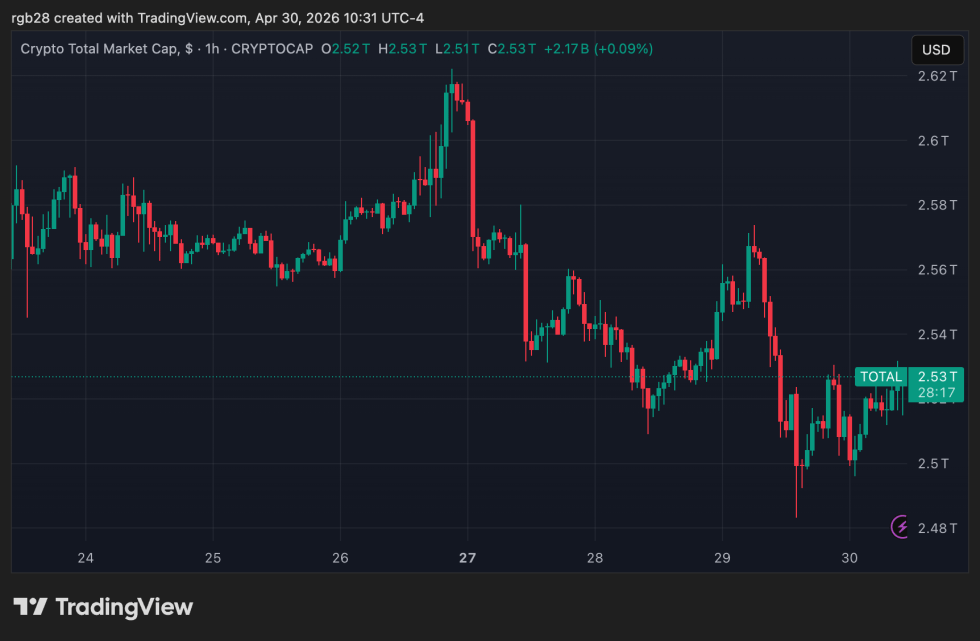
The total crypto market capitalization is at $2.53 trillion on the one-week chart. Source: TOTAL on TradingView