Elon Musk is Building Terafab: The Largest Chip Plant for AI, Robots, and Space Data Centers

cryptonews.ruPublicado a 2026-08-15Actualizado a 2026-08-15

Resumen

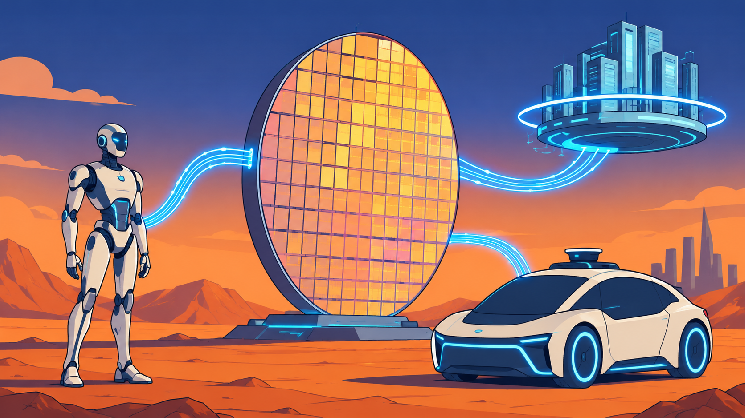
Elon Musk's SpaceX and Tesla have launched the massive Terafab project to build a semiconductor plant in Grimes County, Texas. Spanning over 9.3 million square meters, the facility will integrate logic chip and memory production, advanced packaging, and testing. The initial phase requires $16.8 billion in capital investment, with a long-term goal of producing over 1 terawatt of computing power annually. This output is intended to supply Tesla's Optimus robots and Cybercab autonomous vehicles, as well as SpaceX's orbital data centers. Texas Governor Greg Abbott confirmed the project's start on August 6, 2026, highlighting the creation of 3,000 jobs and a $30 million grant from the Texas Enterprise Fund. Musk emphasized the strategic advantage of combining chip design, memory production, and packaging under one roof to accelerate hardware development. He stated the fully built complex would be "the largest and most valuable building on Earth," about 50 times larger than the Pentagon. An estimated 25% of production is earmarked for Tesla's robotics, with 75% for SpaceX's space-based AI systems. Earlier tax documents suggested a total project cost of up to $119 billion, but this has not been officially confirmed. Intel is the key technology partner, with plans to use its 14A process node for chip manufacturing. This partnership aims to diversify supply chains and reduce dependence on dominant foundries like TSMC. The initiative aligns with the broader U.S. Pax Silica program, w...

SpaceX and Tesla have launched the large-scale Terafab project to build a semiconductor plant in Grimes County, Texas. The facility will integrate logic chip production, memory production, chip packaging, and testing across an area exceeding 9.3 million square meters. The first phase of the complex will require capital investment of $16.8 billion, and the stated long-term goal is to produce computing hardware with a capacity of over 1 terawatt per year to support Optimus robots, Cybercab autonomous vehicles, and orbital data centers.

Government Support and First Phase Parameters

Texas Governor Greg Abbott confirmed the project's start on August 6, 2026, highlighting the creation of 3,000 new jobs and a $30 million grant from the Texas Enterprise Fund. The initiative also qualifies under the Texas Jobs, Energy, Technology, and Innovation (JETI) program, securing additional benefits. SpaceX and Tesla CEO Elon Musk emphasized the strategic importance of combining logic design, memory production, and advanced packaging under one roof to accelerate hardware solution development.

On social network X, Elon Musk called the future complex "the largest and most valuable building on Earth," stating that its fully equipped area would exceed the size of the Pentagon by approximately 50 times. The distribution of production capacity is planned as follows: about 25% of the output is intended for Tesla robotics, and the remaining 75% is for SpaceX space-based artificial intelligence systems. Earlier tax incentive documents mentioned estimates of around $55 billion for the initial phase, with a possible total of up to $119 billion if all stages are realized, although an official confirmation of the total investment amount is currently absent.

Technology Partnership and Geopolitical Context

A key partner for design and production is Intel: back in April 2026, Musk announced plans to use Intel's 14A process technology for chip production at the new plant. This decision aims to diversify supply chains, as TSMC maintains a dominant position in contract manufacturing with a market share of about 70–73%, and the concentration is even higher on advanced nodes below 5 nm. Vertical integration helps reduce dependence on external suppliers and control critical stages of microelectronics creation.

The Pax Silica initiative, launched by the U.S. Department of State in December 2025, is forming an international coalition to ensure reliable supply chains from critical minerals to AI infrastructure. The program unites Japan, the Republic of Korea, the Netherlands, the EU, and the UK, creating an alternative security ecosystem. According to the Stanford AI Index Report 2026, in 2025, the U.S. produced 59 notable AI models compared to 35 Chinese ones, and the number of data centers in the country reached 5,427 units, highlighting the need to increase domestic production capacity.

Construction of the Terafab plant will begin in the coming months following the official announcement, and the commissioning of the facility will be a significant step in forming a national semiconductor base. The project's implementation could change the balance of power in chip manufacturing and strengthen the U.S. position in global technological competition by creating a closed-loop cycle for computing hardware development and production.

AI Opinion

From a machine data analysis perspective, the scale of Terafab should be compared with the history of major semiconductor construction projects in the U.S. in recent years. A similar Intel project in Ohio (New Albany) was repeatedly delayed: the launch, initially planned for 2026, was postponed by the company to 2030 due to corporate difficulties and shifting priorities. This experience demonstrates that announced timelines and budgets for mega-fabs often diverge from reality by years, and factors such as workforce availability, power supply, and stability of partner chains (in this case, collaboration with Intel on the 14A process) are rarely factored into initial forecasts.

The situation also shows an interesting paradox: the larger the project, the greater the dependence on external factors that are difficult to control even for companies like SpaceX and Tesla. Whether Terafab can avoid the fate of similar giant construction projects is a question, the answer to which will not be clear until the end of this decade.

Criptos en tendencia

Preguntas relacionadas

QWhat is the primary purpose of Elon Musk's Terafab factory project in Texas?

AThe primary purpose of the Terafab factory is to produce semiconductor chips, integrating logic chip design, memory production, advanced packaging, and testing. Its long-term goal is to manufacture over 1 terawatt of computing power annually to support Tesla's Optimus robots and Cybercab autonomous vehicles, as well as SpaceX's orbital data centers.

QWhat is the estimated investment for the first phase of the Terafab project and how many jobs will it create?

AThe estimated investment for the first phase of the Terafab project is $16.8 billion. It is expected to create 3,000 new jobs in Texas.

QWhich company is the key technology partner for the Terafab factory's chip manufacturing process?

AIntel is the key technology partner. Elon Musk announced plans to use Intel's 14A process technology for chip production at the Terafab factory.

QWhat geopolitical initiative mentioned in the article aims to secure semiconductor supply chains?

AThe geopolitical initiative mentioned is the 'Pax Silica' program, launched by the U.S. State Department in December 2025. It forms an international coalition including Japan, South Korea, the Netherlands, the EU, and the UK to ensure secure supply chains from critical minerals to AI infrastructure.

QWhat concern does the AI Opinion section raise about the Terafab project, based on historical precedent?

AThe AI Opinion section raises the concern that large-scale semiconductor fab projects often experience significant delays and budget overruns, citing the example of Intel's repeatedly delayed Ohio fab. It questions whether Terafab can avoid similar fates due to dependencies on external factors like talent availability, power supply, and the stability of the partnership with Intel.

Lecturas Relacionadas

Elon Musk Building Terafab: The Largest Chip Factory for AI, Robots, and Space Data Centers

Elon Musk's SpaceX and Tesla have launched the Terafab project to build a massive semiconductor facility in Grimes County, Texas. The plant, exceeding 9.3 million square meters, aims to integrate logic chip manufacturing, memory production, advanced packaging, and testing. The initial phase requires $16.8 billion in capital investment, with a long-term goal of producing over 1 terawatt of computing power annually. This capacity will support Tesla's Optimus robots and Cybercab autonomous vehicles, as well as SpaceX's orbital data centers. Texas Governor Greg Abbott confirmed the project's start in August 2026, highlighting 3,000 new jobs and a $30 million state grant. Elon Musk emphasized the strategic advantage of combining logic, memory, and packaging under one roof. Musk called the future complex the "largest and most valuable building on Earth," with an area roughly 50 times that of the Pentagon. Intel is the key technology partner, with plans to use its 14A process node for chip production. This partnership aims to diversify supply chains currently dominated by TSMC. The project aligns with the U.S. Pax Silica initiative to secure semiconductor supply chains. An AI analysis notes the project's scale and potential challenges, comparing it to delays seen in other U.S. megafab projects like Intel's Ohio facility. It questions whether Terafab can avoid similar pitfalls related to timelines, budgets, workforce, and supply chain stability. The facility's success could significantly shift the global semiconductor balance and strengthen the U.S. position in the tech race.

cryptonews.ruHace 37 min(s)

Elon Musk Building Terafab: The Largest Chip Factory for AI, Robots, and Space Data Centers

cryptonews.ruHace 37 min(s)

"AI God of Stocks" Blowup Dragged Down, Jane Street Suffered Massive 15 Billion Loss in July, First Monthly Loss in a Decade

Jane Street, a major proprietary trading firm, suffered an estimated $15 billion loss in July, marking its first monthly loss in about a decade. The loss was primarily triggered by the blow-up of the AI-focused hedge fund Situational Awareness, which faced massive margin calls amid a sharp sell-off in AI and semiconductor stocks in July. Jane Street, an investor in the fund, was significantly impacted. Compounding the loss were substantial declines in Jane Street's own Asian non-AI equity long positions, which had performed well earlier in the year. The firm described the losses as a concentrated reversal of previously successful trading strategies in AI and tech sectors. Despite the historic monthly loss, Jane Street's net trading income for the year to date remains strong at over $40 billion. In response, the firm stated it has become more selective in risk-taking, closing specific losing exposures and reducing risk in other strategies. Coinciding with the loss, Jane Street is undergoing a major debt refinancing of approximately $14.6 billion, led by JPMorgan. The move aims to shift more debt from public markets to private investors like Pimco and Fidelity, accepting higher costs for greater flexibility and less public disclosure. The Situational Awareness incident highlights systemic risks in the prime brokerage ecosystem, where leveraged bets on crowded AI trades can lead to forced liquidations and market volatility. Jane Street's subsequent risk reduction and debt restructuring are seen as key responses to this costly lesson.

marsbitHace 57 min(s)

"AI God of Stocks" Blowup Dragged Down, Jane Street Suffered Massive 15 Billion Loss in July, First Monthly Loss in a Decade

marsbitHace 57 min(s)

QCP Capital Analysts Explained Why Bitcoin Stalled at $63,000

QCP Capital's latest report explains that Bitcoin has stalled around $63,000, testing the lower boundary of its recent trading range ($62,500–$64,000). The retreat wasn't due to a single catalyst but stems from several cross-market pressures: heightened geopolitical risks, rising oil prices, uncertainty around global liquidity, and a muted reaction to positive U.S. macroeconomic data. While U.S. inflation and jobs data softened, reducing expectations of imminent Fed tightening, Bitcoin's price response has been subdued. This highlights the importance of other factors like trader positioning, liquidity conditions, and overall risk appetite. The regulatory landscape is progressing on two tracks: congressional legislation (like the CLARITY Act) is delayed, but SEC rulemaking continues. Corporate treasury activity, exemplified by Strategy's new Bitcoin monetization program, now creates a potential two-way flow, adding complexity to supply dynamics. Geopolitical tensions around the Strait of Hormuz keep oil prices elevated, impacting crypto indirectly through inflation expectations and financial conditions. Historical seasonality shows August and September are typically weak for Bitcoin, but this is descriptive, not predictive, in today's ETF-driven market. In conclusion, Bitcoin has shown resilience by absorbing multiple negative forces without a decisive breakdown. However, it has failed to convert improving macro fundamentals into sustained upward momentum. The market awaits key events like the U.S. PCE data, the Jackson Hole symposium, and the September FOMC meeting for a potential catalyst to break the current range.

cryptonews.ruHace 1 hora(s)

QCP Capital Analysts Explained Why Bitcoin Stalled at $63,000

cryptonews.ruHace 1 hora(s)

Trading

Spot

Artículos destacados

Cómo comprar ELON

¡Bienvenido a HTX.com! Hemos hecho que comprar Dogelon Mars (ELON) sea simple y conveniente. Sigue nuestra guía paso a paso para iniciar tu viaje de criptos.Paso 1: crea tu cuenta HTXUtiliza tu correo electrónico o número de teléfono para registrarte y obtener una cuenta gratuita en HTX. Experimenta un proceso de registro sin complicaciones y desbloquea todas las funciones.Obtener mi cuentaPaso 2: ve a Comprar cripto y elige tu método de pagoTarjeta de crédito/débito: usa tu Visa o Mastercard para comprar Dogelon Mars (ELON) al instante.Saldo: utiliza fondos del saldo de tu cuenta HTX para tradear sin problemas.Terceros: hemos agregado métodos de pago populares como Google Pay y Apple Pay para mejorar la comodidad.P2P: tradear directamente con otros usuarios en HTX.Over-the-Counter (OTC): ofrecemos servicios personalizados y tipos de cambio competitivos para los traders.Paso 3: guarda tu Dogelon Mars (ELON)Después de comprar tu Dogelon Mars (ELON), guárdalo en tu cuenta HTX. Alternativamente, puedes enviarlo a otro lugar mediante transferencia blockchain o utilizarlo para tradear otras criptomonedas.Paso 4: tradear Dogelon Mars (ELON)Tradear fácilmente con Dogelon Mars (ELON) en HTX's mercado spot. Simplemente accede a tu cuenta, selecciona tu par de trading, ejecuta tus trades y monitorea en tiempo real. Ofrecemos una experiencia fácil de usar tanto para principiantes como para traders experimentados.

242 Vistas totalesPublicado en 2024.12.12Actualizado en 2025.03.21

Cómo comprar ELON

Discusiones

Bienvenido a la comunidad de HTX. Aquí puedes mantenerte informado sobre los últimos desarrollos de la plataforma y acceder a análisis profesionales del mercado. A continuación se presentan las opiniones de los usuarios sobre el precio de ELON (ELON).

活动图片