From Mayor to Cryptocurrency Salesman: A Clash of Politics and Business

比推Publicado a 2026-01-13Actualizado a 2026-01-13

Resumen

Former New York City Mayor Eric Adams has swiftly transitioned from public office to promoting a New York City-themed cryptocurrency just weeks after leaving his position. Smiling and enthusiastic, Adams advocated for blockchain technology and claimed he would not initially profit from the venture. He criticized his successor, Zohran Mamdani, for policy reversals and highlighted his plans to leverage his municipal experience—including expertise in areas like garbage collection—as marketable "professional capital" abroad. Adams, known for his unorthodox style, has been active internationally, meeting with foreign leaders and business figures in Dubai, the Democratic Republic of Congo, and Senegal. His post-mayoral activities appear focused on rehabilitating his reputation, attacking his political opponents, and addressing personal legal debts. The cryptocurrency project, named NYC Token, is framed as a philanthropic effort to combat antisemitism and anti-Americanism while promoting blockchain education. However, the token’s website faced technical issues, with purchase links non-functional at launch. Adams also expressed interest in exporting New York’s public services expertise globally but affirmed he has no plans to leave the city permanently.

Author: Nicholas Fandos, Debra Kamin

Compiled by: Chopper, Foresight News

Original Title: After Stepping Down as New York Mayor, He Turned to Selling Cryptocurrency


Two weeks ago, Eric Adams held one of the most powerful positions in the U.S. government system; today, he stands under the neon billboards of Times Square, promoting a New York City-themed cryptocurrency.

For anyone else, such a shift in identity might be embarrassing, but the former mayor of New York was all smiles, enthusiastically discussing the advantages of blockchain technology and promising not to profit from it for the time being.

"I've missed you all so much, ladies and gentlemen," he said to a group of reporters, before shifting gears to criticize his successor's "major mistakes," talk about business opportunities in foreign capitals, and admit that his experience in municipal services like garbage collection has now become monetizable "expert capital."
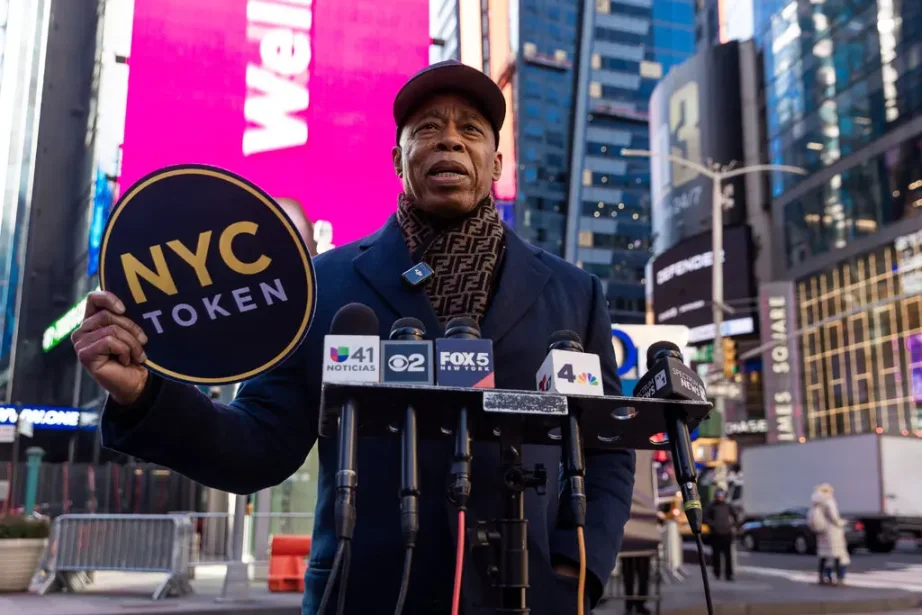
This was his first public appearance since leaving office on January 1, but it was cut short because he had to catch a flight. He was headed first to Dallas, then to Senegal, claiming more opportunities awaited him there.

The 65-year-old Adams is one of the most unconventional mayors in New York City's history: from a working-class background, a former police officer, yet federally indicted for his pursuit of a luxurious lifestyle. All signs indicate that his post-mayoral career will continue this "unconventional" approach.

Just in the past two weeks, he met with a Saudi prince in Dubai, visited the President of the Democratic Republic of the Congo, and repeatedly attacked his successor, Zohran Mamdani, accusing him of overturning some of the pro-Israel policies implemented during his term. This move broke the unwritten tradition of former mayors showing respect to their successors.

Many details of Adams's business dealings remain shrouded in mystery, including his partnership in the cryptocurrency project. But his core post-mayoral agenda is becoming increasingly clear: restoring his personal reputation, attacking his successor, and repaying the massive debts incurred from legal battles. The priority among these three remains unclear.

"I won't be taking a nine-to-five salaried job," Adams said. "I only work for myself."

Adams isn't the only one planning his post-office livelihood while targeting Mamdani. Former New York Governor Andrew Cuomo is finalizing a deal to host a weekly show on the conservative talk radio station WABC, where he was a frequent guest during his unsuccessful campaign.

According to the New York Post, the show will provide Cuomo with a platform to promote his centrist Democratic political views, and he will likely use it to criticize Mamdani, whom he previously called a "far-left radical."

The station's owner, Republican billionaire John Catsimatidis, said he does not plan to pay Cuomo, but simply wants to help him after his electoral defeat. The broadcast time slot has not been finalized. "We feel sorry for what happened to him, and we love New York deeply," Catsimatidis said. "He wants to maintain public visibility and stay connected with New Yorkers."

But so far, Adams's post-mayoral performance is undoubtedly more eye-catching.

Just hours after attending Mamdani's inauguration, he boarded an Emirates flight to Dubai with his long-time partner, Tracey Collins. Besides the Saudi prince, he was photographed meeting with several wealthy Israeli and Uzbek businessmen.
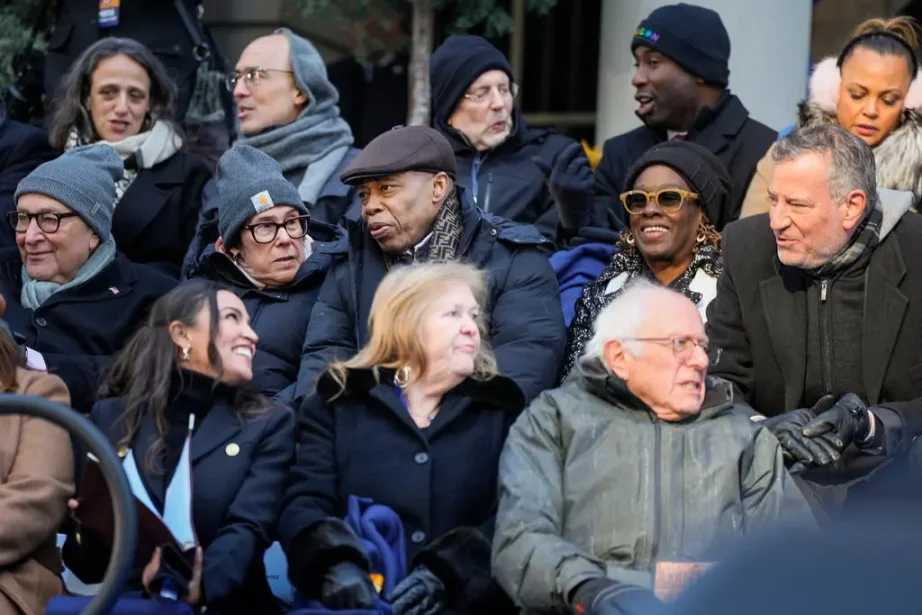
Numerous current and former political figures attended Zohran Mamdani's mayoral inauguration, with Adams among them

He dined with real estate agent and reality TV star Eleonora Srugo and posted a photo on social media with Amir Marashi. Marashi, born in Iran, is a New York gynecologist and women's health advocate specializing in procedures like vaginal rejuvenation.

Meanwhile, Adams has kept a close eye on developments in New York City. He frequently posts on social media to express dissatisfaction with Mamdani's policies: for example, Mamdani's reversal of the expanded definition of antisemitism previously adopted by the city, and质疑 (questioning) some of his personnel appointments.

"Everyone deserves a grace period, but hate doesn't allow grace for anyone," Adams said at Monday's event.

Mamdani, at another event, declined to respond to Adams's criticism.

Adams's interest in cryptocurrency is not new. During his tenure as mayor, he chose to receive his first paycheck in cryptocurrency; he is close friends with cryptocurrency billionaire Brock Pierce, who, along with other crypto industry figures, funded his campaign last fall before he dropped his re-election bid.

Adams made "support for Israel and combating antisemitism" a core part of his administration, and he has packaged this new token as a public welfare project, claiming its proceeds will be used to fight antisemitism, anti-Americanism, and "teaching children to embrace blockchain technology."

The token's official website states its total supply will be 1 billion tokens. Adams said he would donate the proceeds from some of these tokens to non-profit organizations dedicated to the aforementioned causes and stated that he would not receive a salary or any compensation, at least initially.

"NYC Token is a new generation cryptocurrency inspired by the relentless energy and innovative spirit of New York City," the project's website reads. "Leveraging cutting-edge blockchain technology, we are building a decentralized financial ecosystem with ambitions matching those of the city itself."

Nevertheless, Adams seemed somewhat struggling when describing the project's details on multiple occasions. During Monday's event and in an interview with Fox News, he repeatedly misnamed the new product as "New York City Coin."

Adams's image is prominently featured on the token's website, which invites visitors to "Buy Now," but as of Monday evening, all purchase links on the site were non-functional.

The former mayor said he is also exploring other business areas, including plans to be advanced during this week's trip to Africa.

"I realized that many services New York City has, even garbage collection, are hard to find in many parts of the world," Adams said. "I plan to provide such assistance to other cities and countries."

All these actions raise questions about whether Adams will continue to reside in New York in the future. He previously stated his desire to retire in an overseas city rather than return to his home in Brooklyn's Bedford-Stuyvesant neighborhood.

But two people familiar with the matter revealed that the former mayor plans to keep New York City as his base and intends to rent an apartment in Manhattan, preferably with a view. Adams himself tried to dispel doubts during Monday's event. "I'm not going anywhere," he said.


Twitter:https://twitter.com/BitpushNewsCN

Bitpush TG Discussion Group:https://t.me/BitPushCommunity

Bitpush TG Subscription: https://t.me/bitpush

Original article link:https://www.bitpush.news/articles/7602300

Preguntas relacionadas

QWhat is the main focus of Eric Adams' new venture after leaving office as mayor of New York City?

AEric Adams is promoting a New York City-themed cryptocurrency called NYC Token, with proceeds aimed at combating anti-Semitism, anti-Americanism, and teaching children about blockchain technology.

QHow does Eric Adams plan to fund his post-mayoral activities and address his legal debts?

AAdams intends to work for himself through various business ventures, including the cryptocurrency project and offering municipal service expertise globally, rather than taking a salaried job, to repay legal debts and maintain his reputation.

QWhat criticisms has Eric Adams leveled against his successor, Zohran Mamdani?

AAdams has criticized Mamdani for reversing some pro-Israel policies, such as overturning an expanded definition of anti-Semitism, and has questioned certain personnel appointments, breaking the tradition of respecting successors.

QWhat international engagements has Eric Adams pursued since leaving office?

AAdams has met with a Saudi prince in Dubai, visited the president of the Democratic Republic of Congo, and plans to travel to Senegal and other countries to explore business opportunities, leveraging his experience in services like garbage collection.

QWhat are the details and current status of the NYC Token cryptocurrency project promoted by Eric Adams?

AThe NYC Token has a total supply of 1 billion coins, with Adams donating some proceeds to non-profits and not taking initial salary or compensation. However, as of the article, purchase links on the website were non-functional, and Adams occasionally misrefers to it as 'New York City Coin'.

Lecturas Relacionadas

This Week's Key Events Preview | U.S. to Release April CPI Data; U.S. Senate Banking Committee to Review "Digital Asset Market Structure Act of 2025"

Weekly News Preview: Key events for May 12-16 include major economic and crypto industry developments. On Tuesday, May 12, the U.S. will release its April CPI data. Additionally, the gaming blockchain Ronin will begin a 10-hour migration to an Ethereum Layer 2, built on OP Stack with EigenDA for data availability. This aims to leverage Ethereum's security and settle RON's annual inflation below 1%. Base's first independent network upgrade, "Base Azul," is scheduled for mainnet activation on Wednesday, May 13, focusing on security, performance, and developer experience enhancements. Thursday, May 14, sees the U.S. Senate Banking Committee voting on the "Digital Asset Market Structure Act of 2025." In other news, Solana DeFi protocol Carrot will shut down, setting a final withdrawal deadline due to impacts from the Drift exploit. The Moscow Exchange will launch futures trading for Solana, Ripple, and Tron indices (RUB-settled) for qualified investors. Multiple service closures are scheduled for Friday, May 15. Dmail Network will begin winding down due to unsustainable infrastructure costs and failed commercialization. Users must export data before this date. Separately, the Cosmos-based lending blockchain UX Chain will fully shut down. Finally, on Saturday, May 16, gaming infrastructure provider Lattice will wind down operations, with its Redstone Layer 2 network ceasing. Users are urged to withdraw assets, especially from contracts like Uniswap pools, before the shutdown.

链捕手Hace 6 min(s)

This Week's Key Events Preview | U.S. to Release April CPI Data; U.S. Senate Banking Committee to Review "Digital Asset Market Structure Act of 2025"

链捕手Hace 6 min(s)

Morning Post | Trump Media Group Releases Q1 Financial Report; Top Three DeFi Applications Return Nearly $100 Million in Revenue to Token Holders in 30 Days; Michael Saylor Shares Bitcoin Tracker Info Again

**Title: Daily Briefing | Trump Media Group Releases Q1 Report; Top 3 DeFi Apps Return Nearly $100M to Token Holders; Michael Saylor Signals Potential Bitcoin Buy** **Summary:** Key developments in the past 24 hours include: * **Economic Outlook:** Goldman Sachs has pushed back its forecast for the next two Federal Reserve interest rate cuts to December 2026 and March 2027, citing persistent inflationary pressures from energy costs. This delayed timeline is expected to tighten liquidity flow into risk assets, including cryptocurrencies. * **DeFi & Revenue:** Data from DefiLlama shows that three leading DeFi applications—Hyperliquid, Pump.fun, and EdgeX—collectively distributed $96.3 million in revenue to their token holders over the last 30 days. This trend highlights a shift in the crypto community's focus towards real protocol earnings and sustainable economic models. * **Corporate Bitcoin Moves:** Michael Saylor, founder of MicroStrategy (note: referred to as 'Strategy' in the text, likely a typographical error), has signaled potential upcoming Bitcoin purchases by posting a "Bitcoin Tracker" update, following a pattern that typically precedes the company's official disclosure of new acquisitions. * **Market Integrity:** Prediction market platform Polymarket announced updates to address platform issues, including identifying and banning clusters of accounts involved in "ghost-fill" activities and implementing measures to prevent bulk account creation. * **Regulation:** The Bank of England Governor warned that stablecoin regulation could lead to tensions between US and international regulators. In South Korea, the National Tax Service has launched a pilot program to entrust seized virtual assets to private custody firms for management. * **Meme Token Trends:** GMGN data lists the top trending meme tokens on Ethereum (e.g., HEX, SHIB), Solana (e.g., FWOG, TROLL), and Base (e.g., SKITTEN, PEPE) over the past day. **Financial Note:** Trump Media & Technology Group reported a Q1 loss of approximately $4 billion, primarily attributed to unrealized losses on its Bitcoin and other digital asset holdings.

链捕手Hace 36 min(s)

Morning Post | Trump Media Group Releases Q1 Financial Report; Top Three DeFi Applications Return Nearly $100 Million in Revenue to Token Holders in 30 Days; Michael Saylor Shares Bitcoin Tracker Info Again

链捕手Hace 36 min(s)

Telegram Takes Direct Control of TON, Social Traffic Rewrites the Public Chain Narrative

Telegram founder Pavel Durov announced that Telegram will replace the TON Foundation as the core driver and largest validator of The Open Network (TON). Key initiatives include a sixfold reduction in transaction fees, performance upgrades, and improved developer tools within the next few weeks. This marks a strategic shift from Telegram merely providing user access to deeply integrating TON into its platform's core infrastructure. The goal is to transform Telegram's massive social traffic into sustainable on-chain activity. While viral mini-apps like Notcoin have demonstrated Telegram's ability to drive user adoption, TON aims to support frequent, low-value transactions inherent to social platforms—such as tipping, in-app payments, and game rewards. Ultra-low fees and sub-second finality (0.6 seconds) are crucial to making blockchain interactions seamless and nearly invisible within the Telegram user experience. However, Telegram's increased central role raises questions about network decentralization. Durov argues that Telegram's participation will attract more large validators, thereby enhancing decentralization. TON also offers high annual staking rewards (18.8%), aiming to retain capital within its ecosystem. The fundamental challenge for TON is no longer leveraging Telegram's user base, but becoming an indispensable, seamless infrastructure layer for Telegram's everyday applications—moving from an adjacent chain to an embedded utility.

marsbitHace 37 min(s)

Telegram Takes Direct Control of TON, Social Traffic Rewrites the Public Chain Narrative

marsbitHace 37 min(s)

Telegram Takes Direct Control of TON, Social Traffic Reshapes Public Chain Narrative

Telegram's founder, Pavel Durov, has announced a major shift in the development of The Open Network (TON). Telegram will now become the core driver of TON, replacing the TON Foundation and becoming its largest validator. The focus will be on technical upgrades over the next few weeks, including slashing network fees by six times to near-zero and improving finality time to 0.6 seconds. This move signifies a deeper integration between Telegram and TON, moving beyond just providing a user base. The goal is to transform Telegram's vast social traffic and built-in features—like Mini Apps, payments, and bots—into sustainable, on-chain usage scenarios. The reduced fees and faster speeds are crucial for enabling the small, frequent transactions typical of social interactions. While this promises stronger execution and product alignment, it raises questions about centralization. Durov argues Telegram's involvement will attract more validators, enhancing decentralization, but the outcome remains to be seen. Additionally, TON's high annual staking reward of 18.8% aims to retain capital within the ecosystem. The key challenge for TON is no longer just leveraging Telegram's entry point, but becoming an invisible, seamless infrastructure layer within Telegram's daily use. Its success hinges on converting viral attention into lasting, embedded utility.

Odaily星球日报Hace 47 min(s)

Telegram Takes Direct Control of TON, Social Traffic Reshapes Public Chain Narrative

Odaily星球日报Hace 47 min(s)

Trading

Spot
Futuros
活动图片