Ethereum is Building an 'Economic Special Zone', the Archipelago Era is Over

marsbitPublicado a 2026-03-31Actualizado a 2026-03-31

Resumen

Ethereum is shifting from its fragmented "archipelago" model of Layer-2 solutions to a unified "Ethereum Economic Zone" (EEZ), a new initiative backed by the Ethereum Foundation and key protocols like Aave. This move aims to enable seamless, synchronous transactions across L2s, eliminating the delays and risks of bridges by allowing atomic cross-chain executions settled on Ethereum with ETH gas. However, this comes amid a significant decline in Ethereum’s activity and ETH price, which has dropped over 60% from its 2025 peak. While on-chain data shows Ethereum still holds the largest share of institutional capital—including $163.3B in stablecoins, 58% of real-world assets, and a $53B DeFi TVL—the economic model is struggling. With most activity moving to L2s, mainnet gas fees have collapsed, turning ETH inflationary and undermining its "ultrasound money" narrative. The article suggests Ethereum is becoming a "vault" or utility pipeline—secure and fundamental to global crypto finance, but increasingly boring and unable to capture value through fees. If Ethereum evolves into pure infrastructure like SWIFT, ETH may be revalued based on its utility as a settlement layer rather than speculative growth, challenging current investor expectations.

Author: David, Deep Tide TechFlow

Do you still care about Ethereum?

On February 3rd this year, Vitalik posted on X.

No long essay, just one sentence: The original vision of L2 and its role in Ethereum is no longer reasonable. We need a new path.

For the past five years, Ethereum's entire scaling roadmap has been built on L2. The mainnet is responsible for security and settlement, leaving all execution layer work to L2. Rollups, bridges, cross-chain messaging... The entire architecture was designed under the leadership of Vitalik himself.
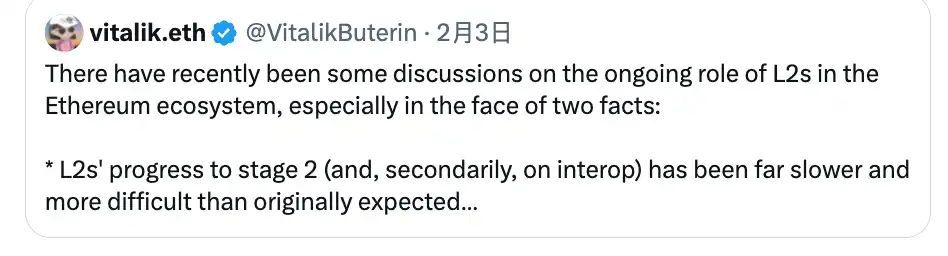
Now the designer himself says this path is wrong.

Less than two months later, at the EthCC Cannes conference on March 29th, Gnosis co-founder Friederike Ernst and zero-knowledge proof developer Jordi Baylina took the stage to announce something called EEZ:

Full name Ethereum Economic Zone.

Co-funded by the Ethereum Foundation, with protocols like Aave joining as founding members. What EEZ aims to do can be summed up in one sentence: make all L2s no longer isolated islands, but one connected continent.

The direction is certainly correct.

But the problem is, this archipelago has been built for five years... The islands were once prosperous, but surely no one is there now. Is it too late to start building tunnels now?

Closing the Stable Door After the Horse Has Bolted?

From the name EEZ, you can actually see what Ethereum wants to do.

The logic of an economic zone is well understood: unified rules within the zone, free flow of capital, no checkpoints. In the past, Ethereum's twenty-plus L2s were like twenty small economies, each with its own customs, currency, and clearance procedures. Moving money from Arbitrum to Base required finding a middleman to exchange currency and bridge.
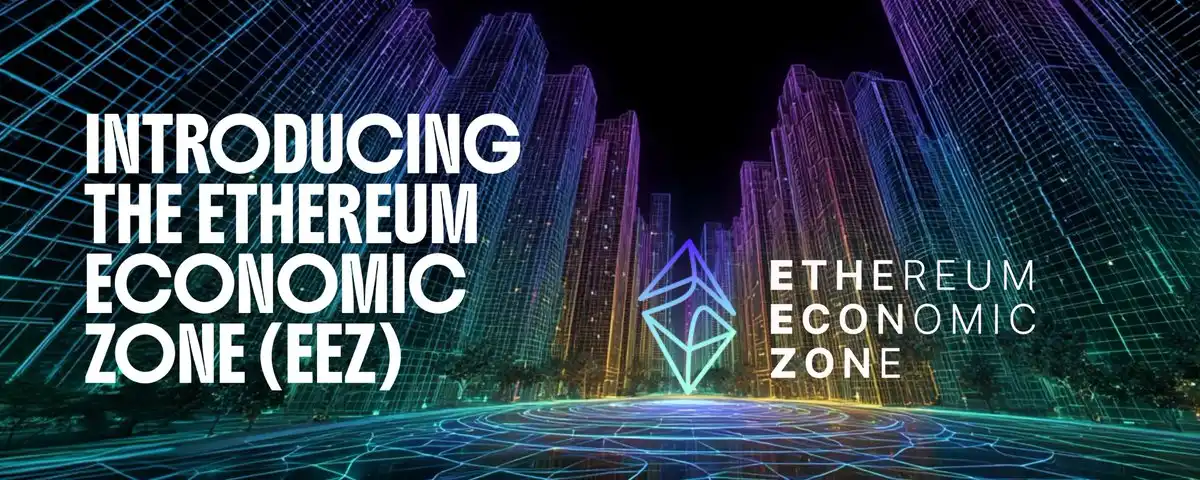
What EEZ aims to do is remove tariffs, unify the currency, and dismantle customs. Your operations on any chain can directly interact with contracts on another chain, settling back to the Ethereum mainnet, with Gas uniformly paid in ETH.

Does that sound familiar?

LayerZero and Wormhole told similar stories back in the day. Connect all chains, free flow of assets... all old tricks.

The difference here is that those cross-chain protocols are asynchronous. For example, you initiate an operation on chain A, and chain B executes it after a while; there's a delay in the middle, a risk of failure, and the bridge itself is a favorite target for hackers.

This EEZ is synchronous. Contracts on two chains execute simultaneously within one transaction, either both succeed or both roll back. The technical prerequisite for this is the real-time proving of Ethereum blocks.

This wasn't possible before. For two chains to operate synchronously, they need to be able to verify each other's ledgers in real-time. But Ethereum produces a new block every 12 seconds, and the speed of verifying the previous block couldn't keep up. The accounting wasn't finished before the next block arrived.

This year, this speed was technically achieved. Synchronous operation became an engineering reality for the first time, leading to the EZZ proposal.

The direction is fine. But if you check Twitter, who is still talking about Ethereum?

It's not just Ethereum that's cold; the whole industry is quiet. Last year there was meme coin frenzy, Solana's comeback, the AI Agent hype. From the start of this year until now, no narrative has taken off.

Ethereum is just colder—ETH dropped from $4800 at the end of 2025 to just over $2000 now, evaporating over 60%. There isn't even much anger in the community, more a kind of weary silence.

From Archipelago to Treasury Era

But if you look at on-chain data, you see a completely different picture.

According to AMBCrypto, the supply of stablecoins on the Ethereum mainnet is still about $163.3 billion. In the $16.5 billion on-chain real-world asset market, Ethereum accounts for 58%. Last year, Ethereum spot ETFs saw a net inflow of $9.9 billion. DeFi TVL is still the highest in the industry, about $53 billion.

The people left, but the money remains. And it's not retail money, it's institutional money.
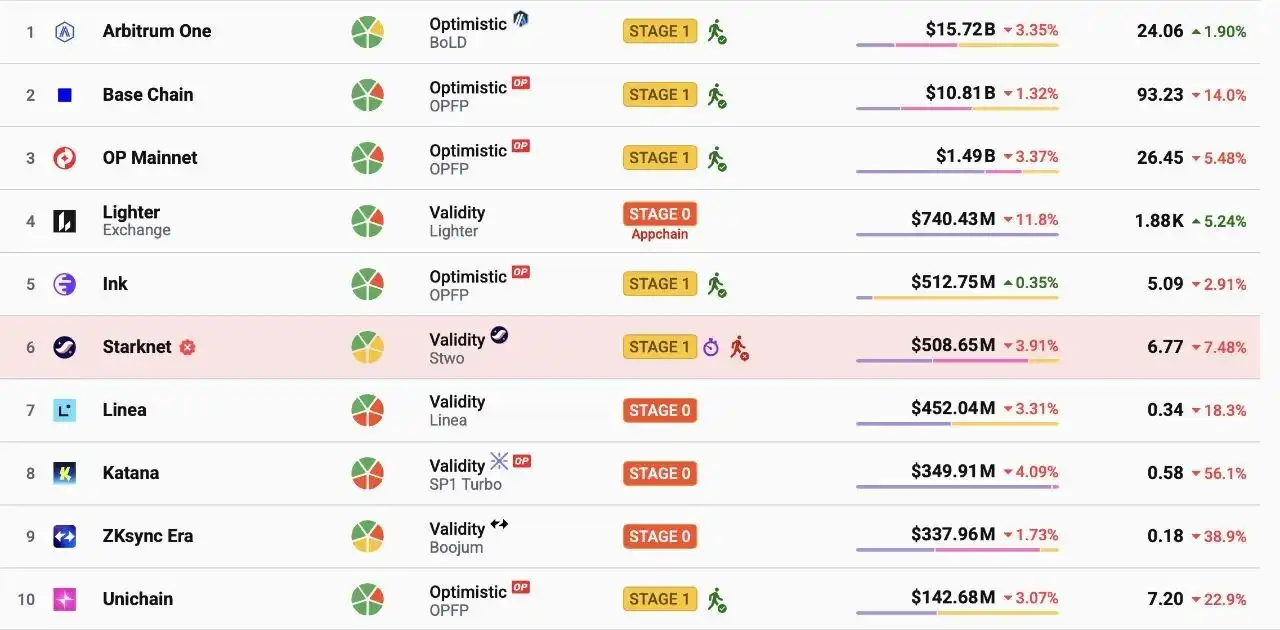
The Ethereum Foundation's own actions point in the same direction. It paused its public grants program in the middle of last year, reducing its burn rate to below 5% per year. But last week it completed its largest single staking event ever—22,517 ETH, worth about $46.2 million, locked into the Beacon Chain.

Cutting the budget while locking money into the treasury, and simultaneously funding an interoperability solution that's arriving last.

All these actions pieced together point to one judgment: Ethereum's archipelago era is indeed over. But what replaces it is not a bustling continent.

It's a treasury.

Quiet, sturdy, filled with institutional assets. Not many people live there, but it holds the most money in the industry.

Even Treasuries Don't Generate Tax Revenue, Ethereum Doesn't Make Money

Ethereum's economic model has a very simple cycle:

Users transact on the mainnet, transactions generate Gas fees, and a portion of the Gas fees (ETH) is permanently burned. The more users, the more burning, the more the ETH supply decreases.

When this mechanism first started running in 2022, the community gave it a name: ultrasound money. Meaning ETH is not only anti-inflation, but deflationary—harder than Bitcoin.

This narrative held for two years. Then L2 dismantled it.

When a large number of transactions moved from the mainnet to L2, the mainnet's Gas fee income collapsed. According to BitKE, Ethereum mainnet revenue has fallen by about 75% over the past two years. One week, the combined blob fees generated by L2s submitting data to the mainnet were only 3.18 ETH.

3.18 ETH, at the price then, was only about $5000.

A network locking $53 billion in TVL, with weekly blob revenue enough for a decent New Year's Eve dinner table in Shanghai.
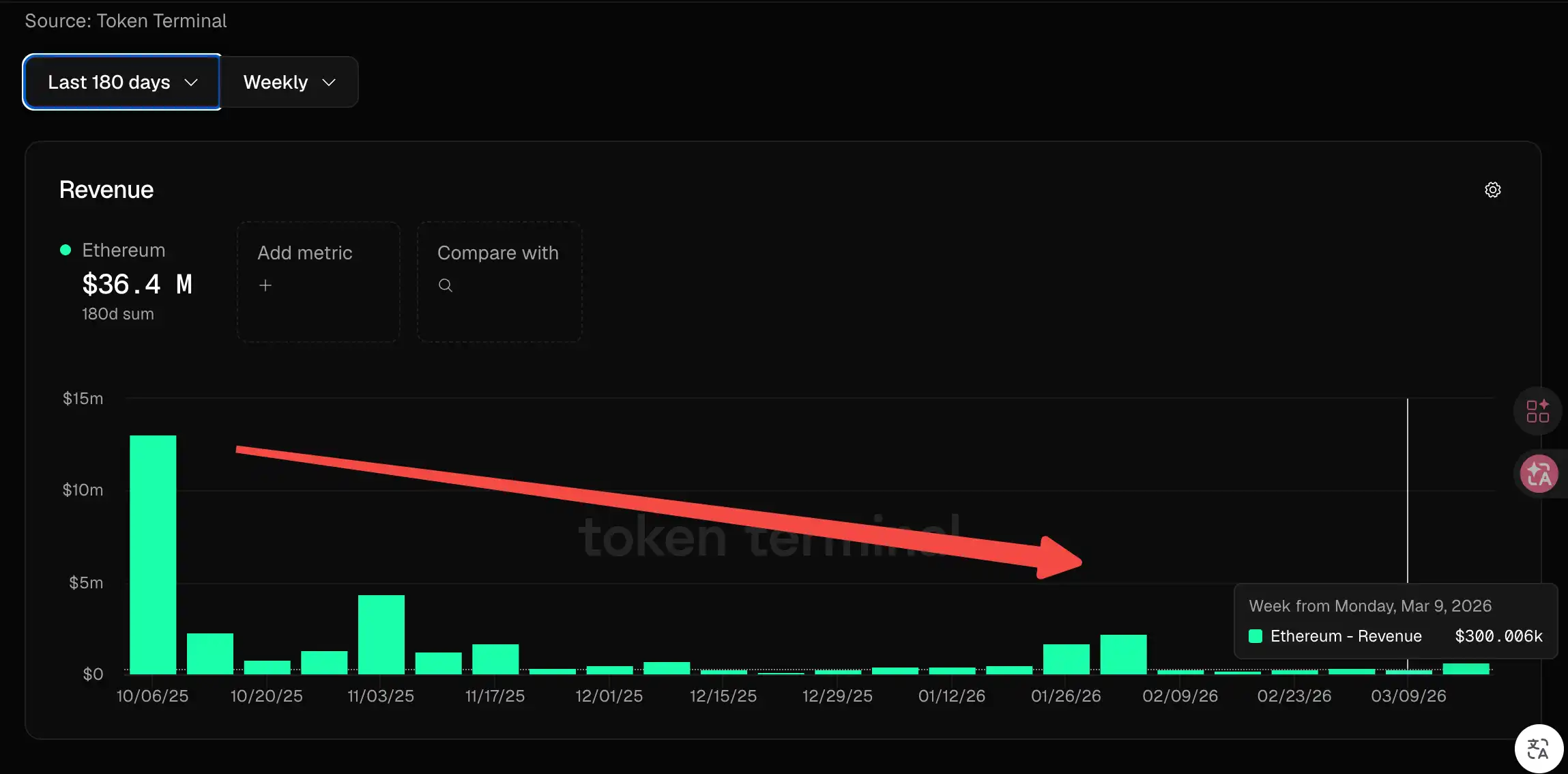
If it can't burn, the supply can't be suppressed. In February this year, ETH's supply officially turned to net growth, with an annualized inflation rate of about 0.74%. "Ultrasound money" became an expired marketing slogan.

This is the cost of the L2 roadmap. Users and transactions move to L2, L2s take the fee income, and the mainnet is left with only settlement work. Settlement is important, but settlement doesn't make money.

To use an analogy, Ethereum built an economic special zone, moved the factories and shops inside, and the zone is bustling. But the tax revenue goes to the zone itself, and the central government's fiscal revenue反而 decreases. The EEZ scheme mentioned in the previous chapter wants to reconnect the special zone to the center, but what it connects back is liquidity, not tax revenue.

The institutional money is locked in the treasury, very safe. But the treasury itself, the ETH asset, is becoming increasingly difficult to narrate because it has no income.

The price drop from $4800 to $2000 is not just an emotional issue. When an asset's core narrative shifts from "deflationary" to "actually still inflationary," the market reprices it.

The situation Ethereum faces now is:

The strongest in the industry in terms of infrastructure, the most institutional capital in the industry, but the economic model is leaking. EEZ fixes fragmentation, but it doesn't fix this.

Is an Uninhabited House Valuable?

Back to the opening question: Do you still care about Ethereum?

The honest answer for most people is probably not really. ETH isn't rising, the narrative is outdated, it's troublesome to use,还不如Solana next door.

But ask it another way: Do you care about the water pipes under your building?

No, you just turn on the tap and there's water. You don't research what purification technology the water plant uses, you don't care what material the pipes are made of, and you certainly don't post on social media because of the pipe brand.

Ethereum is becoming that water pipe.

$53 billion TVL, $163.3 billion in stablecoins, 58% of the industry's real-world assets, nearly $10 billion in annual ETF inflows... These numbers indicate one thing: most of the global crypto-financial on-chain clearing is still done on Ethereum.

Not because users like Ethereum, but because institutions can't find a second pipe as thick.

What the economic zone EEZ is doing now is essentially increasing the diameter of this pipe—allowing institutional funds to flow faster between L2s, reducing settlement friction. This is useful, even necessary.

But pipes have one characteristic: no one wants to pay a premium for a pipe.

Water companies are one of the most important infrastructures in a city, but have you ever seen a water company's P/E ratio higher than an internet company's? The global clearing giant DTCC processes over $2000 trillion in transactions annually, but almost no one discusses its stock price.

If Ethereum truly moves towards becoming a treasury, a pipe, it will become extremely important, and simultaneously extremely boring. Important enough that all institutional money passes through it, boring enough that no retail investor wants to hold ETH waiting for it to rise.

But most people holding ETH today are still pricing it according to the logic of a "city." Users will grow, the ecosystem will prosper, L2 will feed back to the mainnet, the coin price will hit new highs? This is the story the Ethereum community has been telling itself for the past five years.

The reality is, Ethereum is becoming SWIFT, not New York.

SWIFT handles over $150 trillion in cross-border payments annually, and the global financial system cannot do without it. But no one speculates on SWIFT's stock because the valuation logic of infrastructure is stability.

ETH's drop from $4800 to $2000 is not just emotion; the market is re-understanding what this asset actually is.

If Ethereum's future is a treasury, then ETH's reasonable pricing shouldn't be based on user numbers and ecosystem heat, but on how much value it can capture annually as a settlement layer. At the current level of $5000 weekly mainnet blob revenue, that answer isn't very pretty.

The archipelago era is over. EEZ is here, the institutional money remains. But for those holding ETH, there's really only one thing to figure out clearly:

Did you buy a house in a city, or the right to use a pipe.

Preguntas relacionadas

QWhat is the Ethereum Economic Zone (EEZ) and what problem does it aim to solve?

AThe Ethereum Economic Zone (EEZ) is a new initiative announced at EthCC Cannes, backed by the Ethereum Foundation and protocols like Aave. Its goal is to connect all Ethereum Layer 2s (L2s) into a unified economic zone, eliminating the current fragmentation where each L2 operates as an isolated 'island' with its own rules, currencies, and bridging processes. EEZ aims to enable synchronous operations across L2s, allowing transactions to interact with contracts on different chains simultaneously and settle on the Ethereum mainnet using ETH for gas, thereby improving capital efficiency and user experience.

QAccording to the article, why did Vitalik Buterin state that the original vision for L2s is 'no longer reasonable'?

AVitalik Buterin stated that the original vision for Layer 2s (L2s) and their role in Ethereum is 'no longer reasonable' because the five-year scaling roadmap, which relied on L2s for execution while the mainnet handled security and settlement, has led to significant unintended consequences. The main issue is that the economic model is 'leaking': transaction activity and fee revenue have largely moved to L2s, drastically reducing the mainnet's gas fee income and causing ETH's supply to become inflationary again, undermining its 'ultrasound money' narrative.

QWhat does the article mean by Ethereum entering a 'treasury era' or becoming a 'vault'?

AThe article uses the terms 'treasury era' and 'vault' to describe Ethereum's current state where a massive amount of institutional capital (e.g., $1633B in stablecoins, 58% of the on-chain real-world asset market, $99B ETF inflows) remains locked on the chain, but active user engagement and retail interest have significantly declined. It has become a secure, foundational settlement layer for global crypto finance—like a fortified vault storing immense value—but it is no longer a vibrant city with a growing ecosystem and users, making it 'important yet boring'.

QHow has the shift of activity to L2s impacted Ethereum's economic model and the ETH token?

AThe shift of user activity and transactions to L2s has severely damaged Ethereum's economic model. The mainnet's gas fee revenue, which was used to burn ETH and create deflationary pressure, has collapsed (e.g., reported blob fees as low as 3.18 ETH in a week). This has caused ETH's inflation rate to turn positive (approx. 0.74% annualized), ending the 'ultrasound money' narrative. Consequently, ETH's price has fallen over 60% from its peak, as the market reprices the asset based on its reduced capacity to capture value and generate fees.

QWhat is the fundamental valuation question the article poses for ETH holders?

AThe article poses a critical valuation question for ETH holders: are they investing in the potential of a growing, vibrant 'city' (with user growth, ecosystem expansion, and price appreciation) or are they merely buying a 'utility token' for a foundational financial 'pipe'? If Ethereum's future is that of a decentralized settlement infrastructure-like SWIFT or DTCC—essential but boring—then ETH should be valued based on the fees it captures as a结算层 (settlement layer), not on speculative ecosystem growth, which would imply a lower valuation multiple.

Lecturas Relacionadas

Trading

Spot
Futuros

Artículos destacados

Qué es ETH 2.0

ETH 2.0: Una Nueva Era para Ethereum Introducción ETH 2.0, conocido ampliamente como Ethereum 2.0, marca una actualización monumental para la blockchain de Ethereum. Esta transición no es solo una mejora superficial; busca mejorar fundamentalmente la escalabilidad, seguridad y sostenibilidad de la red. Con un cambio del mecanismo de consenso intensivo en energía Prueba de Trabajo (PoW) a una Prueba de Participación (PoS) más eficiente, ETH 2.0 promete un enfoque transformador para el ecosistema blockchain. ¿Qué es ETH 2.0? ETH 2.0 es un conjunto de actualizaciones interconectadas y distintivas centradas en optimizar las capacidades y el rendimiento de Ethereum. La reestructuración está diseñada para abordar desafíos críticos que el mecanismo actual de Ethereum ha enfrentado, particularmente en lo que respecta a la velocidad de transacción y la congestión de la red. Objetivos de ETH 2.0 Los objetivos principales de ETH 2.0 giran en torno a mejorar tres aspectos clave: Escalabilidad: Con el objetivo de aumentar significativamente el número de transacciones que la red puede manejar por segundo, ETH 2.0 busca superar la limitación actual de aproximadamente 15 transacciones por segundo, potencialmente alcanzando miles. Seguridad: Las medidas de seguridad mejoradas son fundamentales para ETH 2.0, particularmente a través de una mejor resistencia contra ciberataques y la preservación del ethos descentralizado de Ethereum. Sostenibilidad: El nuevo mecanismo PoS está diseñado no solo para mejorar la eficiencia, sino también para reducir drásticamente el consumo de energía, alineando el marco operativo de Ethereum con consideraciones ambientales. ¿Quién es el Creador de ETH 2.0? La creación de ETH 2.0 se puede atribuir a la Fundación Ethereum. Esta organización sin fines de lucro, que desempeña un papel crucial en el apoyo al desarrollo de Ethereum, es liderada por el notable cofundador Vitalik Buterin. Su visión de un Ethereum más escalable y sostenible ha sido la fuerza motriz detrás de esta actualización, involucrando contribuciones de una comunidad global de desarrolladores y entusiastas dedicados a mejorar el protocolo. ¿Quiénes son los Inversores de ETH 2.0? Si bien los detalles sobre los inversores de ETH 2.0 no se han hecho públicos, se sabe que la Fundación Ethereum recibe apoyo de varias organizaciones e individuos en el ámbito de blockchain y tecnología. Estos socios incluyen firmas de capital de riesgo, compañías tecnológicas y organizaciones filantrópicas que comparten un interés mutuo en apoyar el desarrollo de tecnologías descentralizadas e infraestructura blockchain. ¿Cómo Funciona ETH 2.0? ETH 2.0 se distingue por introducir una serie de características clave que lo diferencian de su predecesor. Prueba de Participación (PoS) La transición a un mecanismo de consenso PoS es uno de los cambios más destacados de ETH 2.0. A diferencia de PoW, que se basa en la minería intensiva en energía para la verificación de transacciones, PoS permite a los usuarios validar transacciones y crear nuevos bloques de acuerdo con la cantidad de ETH que apuestan en la red. Esto conduce a una mayor eficiencia energética, reduciendo el consumo en aproximadamente un 99.95%, convirtiendo a Ethereum 2.0 en una alternativa considerablemente más verde. Cadenas Shard Las cadenas shard son otra innovación crítica de ETH 2.0. Estas cadenas más pequeñas operan en paralelo con la cadena principal de Ethereum, lo que permite que múltiples transacciones sean procesadas simultáneamente. Este enfoque mejora la capacidad general de la red, abordando las preocupaciones de escalabilidad que han afectado a Ethereum. Cadena Beacon En el núcleo de ETH 2.0 se encuentra la Cadena Beacon, que coordina la red y gestiona el protocolo PoS. Funciona como un organizador de cierta manera: supervisa a los validadores, asegura que los shards permanezcan conectados a la red y monitorea la salud general del ecosistema blockchain. Cronología de ETH 2.0 El viaje de ETH 2.0 ha estado marcado por varios hitos clave que trazan la evolución de esta importante actualización: Diciembre 2020: El lanzamiento de la Cadena Beacon marcó la introducción de PoS, preparándose para la migración hacia ETH 2.0. Septiembre 2022: La finalización de “La Fusión” representa un momento crucial en el que la red Ethereum se trasladó exitosamente de un marco PoW a uno PoS, anunciando una nueva era para Ethereum. 2023: El lanzamiento esperado de cadenas shard tiene como objetivo mejorar aún más la escalabilidad de la red Ethereum, consolidando a ETH 2.0 como una plataforma robusta para aplicaciones y servicios descentralizados. Características Clave y Beneficios Escalabilidad Mejorada Una de las ventajas más significativas de ETH 2.0 es su escalabilidad mejorada. La combinación de PoS y cadenas shard permite que la red expanda su capacidad, permitiendo acomodar un volumen mucho mayor de transacciones en comparación con el sistema heredado. Eficiencia Energética La implementación de PoS representa un gran paso hacia la eficiencia energética en la tecnología blockchain. Al reducir drásticamente el consumo de energía, ETH 2.0 no solo disminuye los costos operativos, sino que también se alinea más estrechamente con los objetivos de sostenibilidad global. Seguridad Mejorada Los mecanismos actualizados de ETH 2.0 contribuyen a mejorar la seguridad en toda la red. El despliegue de PoS, junto con las medidas de control innovadoras establecidas a través de cadenas shard y la Cadena Beacon, asegura un mayor grado de protección contra posibles amenazas. Costos Más Bajos para los Usuarios A medida que la escalabilidad mejora, los efectos sobre los costos de transacción también serán evidentes. Se espera que una mayor capacidad y una menor congestión se traduzcan en tarifas más bajas para los usuarios, haciendo que Ethereum sea más accesible para transacciones cotidianas. Conclusión ETH 2.0 marca una evolución significativa en el ecosistema blockchain de Ethereum. A medida que aborda problemas fundamentales como la escalabilidad, el consumo de energía, la eficiencia en las transacciones y la seguridad general, la importancia de esta actualización no puede ser subestimada. La transición a la Prueba de Participación, la introducción de cadenas shard y el trabajo fundamental de la Cadena Beacon son indicativos de un futuro donde Ethereum puede satisfacer las crecientes demandas del mercado descentralizado. En una industria impulsada por la innovación y el progreso, ETH 2.0 se erige como un testimonio de las capacidades de la tecnología blockchain para allanar el camino hacia una economía digital más sostenible y eficiente.

166 Vistas totalesPublicado en 2024.04.04Actualizado en 2024.12.03

Qué es ETH 2.0

Qué es ETH 3.0

ETH3.0 y $eth 3.0: Un Examen Profundo del Futuro de Ethereum Introducción En el paisaje en rápida evolución de las criptomonedas y la tecnología blockchain, ETH3.0, a menudo denotado como $eth 3.0, ha surgido como un tema de considerable interés y especulación. El término abarca dos conceptos principales que merecen aclaración: Ethereum 3.0: Esto representa una posible actualización futura destinada a aumentar las capacidades de la blockchain existente de Ethereum, enfocándose particularmente en mejorar la escalabilidad y el rendimiento. ETH3.0 Meme Token: Este proyecto de criptomoneda distinto busca aprovechar la blockchain de Ethereum para crear un ecosistema centrado en memes, promoviendo la participación dentro de la comunidad de criptomonedas. Comprender estos aspectos de ETH3.0 es esencial no solo para los entusiastas de las criptomonedas, sino también para aquellos que observan tendencias tecnológicas más amplias en el espacio digital. ¿Qué es ETH3.0? Ethereum 3.0 Ethereum 3.0 se presenta como una actualización propuesta para la red de Ethereum ya establecida, que ha sido la columna vertebral de muchas aplicaciones descentralizadas (dApps) y contratos inteligentes desde su inicio. Las mejoras previstas se concentran principalmente en la escalabilidad, integrando tecnologías avanzadas como sharding y pruebas de conocimiento cero (zk-proofs). Estas innovaciones tecnológicas tienen como objetivo facilitar un número sin precedentes de transacciones por segundo (TPS), potencialmente alcanzando millones, abordando así una de las limitaciones más significativas que enfrenta la tecnología blockchain actual. La mejora no es meramente técnica, sino también estratégica; está destinada a preparar la red de Ethereum para su adopción generalizada y utilidad en un futuro marcado por una mayor demanda de soluciones descentralizadas. ETH3.0 Meme Token En contraste con Ethereum 3.0, el ETH3.0 Meme Token se aventura en un ámbito más ligero y juguetón al combinar la cultura de memes de internet con la dinámica de las criptomonedas. Este proyecto permite a los usuarios comprar, vender e intercambiar memes en la blockchain de Ethereum, proporcionando una plataforma que fomenta la participación comunitaria a través de la creatividad y los intereses compartidos. El ETH3.0 Meme Token tiene como objetivo demostrar cómo la tecnología blockchain puede intersectarse con la cultura digital, creando casos de uso que son tanto entretenidos como financieramente viables. ¿Quién es el Creador de ETH3.0? Ethereum 3.0 La iniciativa hacia Ethereum 3.0 es impulsada principalmente por un consorcio de desarrolladores e investigadores dentro de la comunidad de Ethereum, incluyendo notablemente a Justin Drake. Conocido por sus ideas y contribuciones a la evolución de Ethereum, Drake ha sido una figura prominente en las discusiones sobre la transición de Ethereum a una nueva capa de consenso, denominada “Beam Chain.” Este enfoque colaborativo para el desarrollo significa que Ethereum 3.0 no es el producto de un creador singular, sino más bien una manifestación de ingenio colectivo centrado en avanzar la tecnología blockchain. ETH3.0 Meme Token Los detalles sobre el creador del ETH3.0 Meme Token son actualmente inidentificables. La naturaleza de los tokens de memes a menudo conduce a una estructura más descentralizada y dirigida por la comunidad, lo que podría explicar la falta de atribución específica. Esto se alinea con la ética de la comunidad cripto más amplia, donde la innovación a menudo surge de esfuerzos colaborativos en lugar de individuales. ¿Quiénes son los Inversores de ETH3.0? Ethereum 3.0 El apoyo a Ethereum 3.0 proviene principalmente de la Fundación Ethereum junto con una entusiasta comunidad de desarrolladores e inversores. Esta asociación fundamental proporciona un grado significativo de legitimidad y mejora la perspectiva de una implementación exitosa, ya que aprovecha la confianza y credibilidad construidas a lo largo de años de operaciones en la red. En el clima cambiando rápidamente de las criptomonedas, el apoyo de la comunidad juega un papel crucial en impulsar el desarrollo y la adopción, posicionando a Ethereum 3.0 como un contendiente serio para futuros avances en blockchain. ETH3.0 Meme Token Si bien las fuentes actualmente disponibles no proporcionan información explícita sobre las fundaciones o organizaciones de inversión que respaldan el ETH3.0 Meme Token, es indicativo del modelo de financiamiento típico para tokens de memes, que a menudo depende del apoyo de base y la participación comunitaria. Los inversores en tales proyectos suelen consistir en individuos motivados por el potencial de innovación impulsada por la comunidad y el espíritu de cooperación que se encuentra dentro de la comunidad cripto. ¿Cómo Funciona ETH3.0? Ethereum 3.0 Las características distintivas de Ethereum 3.0 radican en su implementación propuesta de sharding y tecnología zk-proof. Sharding es un método de particionamiento de la blockchain en piezas más pequeñas y manejables o “shards,” que pueden procesar transacciones de manera concurrente en lugar de secuencial. Esta descentralización del procesamiento ayuda a prevenir la congestión y asegura que la red permanezca receptiva incluso bajo una carga pesada. La tecnología de prueba de conocimiento cero (zk-proof) contribuye con otra capa de sofisticación al permitir la validación de transacciones sin revelar los datos subyacentes involucrados. Este aspecto no solo mejora la privacidad, sino que también aumenta la eficiencia general de la red. También se habla de incorporar una Máquina Virtual de Ethereum de conocimiento cero (zkEVM) en esta actualización, amplificando aún más las capacidades y utilidad de la red. ETH3.0 Meme Token El ETH3.0 Meme Token se distingue al capitalizar la popularidad de la cultura de memes. Establece un mercado para que los usuarios participen en el comercio de memes, no solo por entretenimiento sino también por el posible beneficio económico. Al integrar características como staking, provisión de liquidez y mecanismos de gobernanza, el proyecto fomenta un entorno que incentiva la interacción y participación de la comunidad. Al ofrecer una mezcla única de entretenimiento y oportunidad económica, el ETH3.0 Meme Token tiene como objetivo atraer a una audiencia diversa, que abarca desde entusiastas de las criptomonedas hasta conocedores casuales de memes. Línea de Tiempo de ETH3.0 Ethereum 3.0 11 de noviembre de 2024: Justin Drake insinúa la próxima actualización de ETH 3.0, centrada en mejoras de escalabilidad. Este anuncio significa el comienzo de las discusiones formales sobre la futura arquitectura de Ethereum. 12 de noviembre de 2024: Se espera que la propuesta anticipada para Ethereum 3.0 se desvele en Devcon en Bangkok, preparando el escenario para una mayor retroalimentación de la comunidad y posibles próximos pasos en el desarrollo. ETH3.0 Meme Token 21 de marzo de 2024: El ETH3.0 Meme Token se lista oficialmente en CoinMarketCap, marcando su incursión en el dominio público de las criptomonedas y mejorando la visibilidad de su ecosistema basado en memes. Puntos Clave En conclusión, Ethereum 3.0 representa una evolución significativa dentro de la red de Ethereum, enfocándose en superar las limitaciones en términos de escalabilidad y rendimiento a través de tecnologías avanzadas. Sus actualizaciones propuestas reflejan un enfoque proactivo hacia las demandas y la usabilidad futura. Por otro lado, el ETH3.0 Meme Token encapsula la esencia de la cultura impulsada por la comunidad en el espacio de las criptomonedas, aprovechando la cultura de memes para crear plataformas atractivas que fomentan la creatividad y participación del usuario. Comprender los distintos propósitos y funcionalidades de ETH3.0 y $eth 3.0 es fundamental para cualquiera interesado en los desarrollos en curso dentro del espacio cripto. Con ambas iniciativas abriendo caminos únicos, subrayan colectivamente la naturaleza dinámica y multifacética de la innovación en blockchain.

178 Vistas totalesPublicado en 2024.04.04Actualizado en 2024.12.03

Qué es ETH 3.0

Cómo comprar ETH

¡Bienvenido a HTX.com! Hemos hecho que comprar Ethereum (ETH) sea simple y conveniente. Sigue nuestra guía paso a paso para iniciar tu viaje de criptos.Paso 1: crea tu cuenta HTXUtiliza tu correo electrónico o número de teléfono para registrarte y obtener una cuenta gratuita en HTX. Experimenta un proceso de registro sin complicaciones y desbloquea todas las funciones.Obtener mi cuentaPaso 2: ve a Comprar cripto y elige tu método de pagoTarjeta de crédito/débito: usa tu Visa o Mastercard para comprar Ethereum (ETH) al instante.Saldo: utiliza fondos del saldo de tu cuenta HTX para tradear sin problemas.Terceros: hemos agregado métodos de pago populares como Google Pay y Apple Pay para mejorar la comodidad.P2P: tradear directamente con otros usuarios en HTX.Over-the-Counter (OTC): ofrecemos servicios personalizados y tipos de cambio competitivos para los traders.Paso 3: guarda tu Ethereum (ETH)Después de comprar tu Ethereum (ETH), guárdalo en tu cuenta HTX. Alternativamente, puedes enviarlo a otro lugar mediante transferencia blockchain o utilizarlo para tradear otras criptomonedas.Paso 4: tradear Ethereum (ETH)Tradear fácilmente con Ethereum (ETH) en HTX's mercado spot. Simplemente accede a tu cuenta, selecciona tu par de trading, ejecuta tus trades y monitorea en tiempo real. Ofrecemos una experiencia fácil de usar tanto para principiantes como para traders experimentados.

4.0k Vistas totalesPublicado en 2024.12.10Actualizado en 2025.03.21

Cómo comprar ETH

Discusiones

Bienvenido a la comunidad de HTX. Aquí puedes mantenerte informado sobre los últimos desarrollos de la plataforma y acceder a análisis profesionales del mercado. A continuación se presentan las opiniones de los usuarios sobre el precio de ETH (ETH).

活动图片