ETFs See Net Inflows for Two Consecutive Weeks, On-Chain Gold Surpasses $6.1 Billion, Crypto Outperforms US Stocks This Week

marsbitPublicado a 2026-03-15Actualizado a 2026-03-15

Resumen

Cryptocurrency markets outperformed traditional equities this week, with assets like HYPE (+18.8%), Ethereum (+5.2%), and Bitcoin (+4.7%) posting gains. Crypto ETFs recorded net inflows for the second consecutive week, totaling $609.9 million, signaling renewed institutional interest amid macroeconomic uncertainty. HIP-3 open interest reached a record $1.3 billion, largely driven by oil futures, which now account for 31% of total open interest—a significant shift indicating growing demand for real-world asset exposure on-chain. Tokenized gold supply also surged, surpassing 1.2 million ounces (worth ~$6.1 billion), reflecting increased demand for blockchain-based hard assets. Other notable developments include Mastercard’s expanded crypto partnership program, Coinbase’s potential collaboration with Bybit, and Kraken’s progress toward direct Fed payment access. These trends suggest a broader shift of capital into crypto and tokenized real-world assets as macro conditions favor alternative stores of value.

Author: Artemis Analytics

Compiled by: Deep Tide TechFlow

Deep Tide Insight: This weekly report illustrates one thing with data—the crypto market is shifting from defense to offense. ETFs recording net inflows for two consecutive weeks, on-chain gold tripling in scale, and HIP-3 open interest hitting a record high—the simultaneous strength of these three trends reflects macro uncertainties driving capital to reprice hard assets.

Market Overview: Weekly Review

Welcome back to Artemis' "Digital Finance Fundamentals" weekly report!

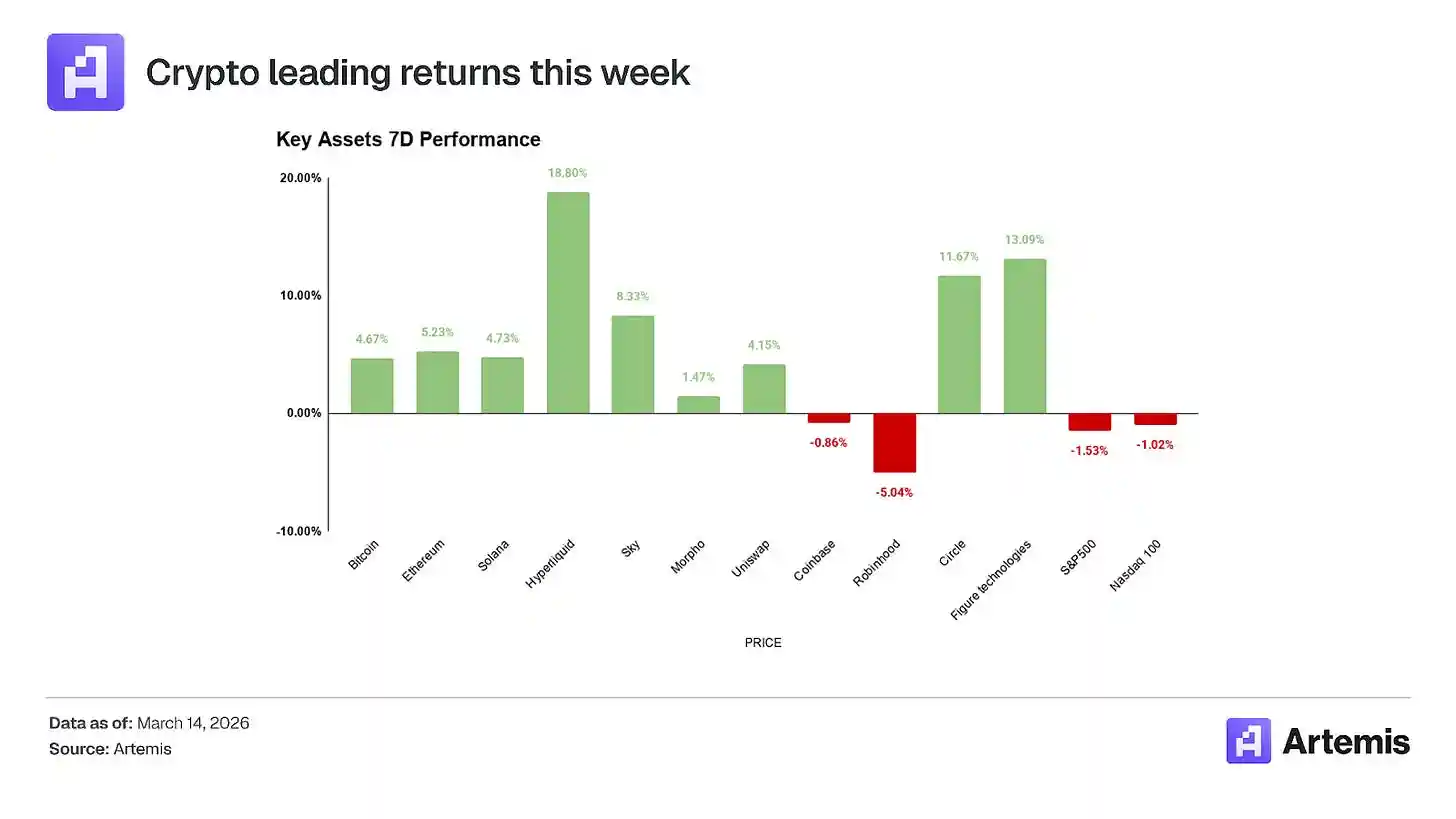
This week, crypto asset returns significantly outperformed. HYPE was the standout performer, surging +18.8% over the past 7 days; Figure Technologies (+13.1%) and Circle (+11.7%) also posted substantial gains. Among mainstream assets, Ethereum (+5.2%), Solana (+4.7%), and Bitcoin (+4.7%) all advanced, with Uniswap (+4.2%) and SKY (+8.3%) further boosting the overall rally in digital assets.

Notably, crypto clearly outperformed traditional stocks this week. Although digital assets and crypto-related stocks were mostly in the green, Coinbase (-0.9%) and Robinhood (-5.0%) underperformed the broader market, showing more divergence at the equity level. Among traditional benchmarks, the S&P 500 fell -1.5% weekly, and the Nasdaq 100 declined -1.0%. Overall, risk appetite clearly flowed back into crypto assets, with tokens and some crypto-linked instruments significantly outperforming the market.
Highlights of the Week

HIP-3 open interest and trading volume hit record highs, driven by oil futures

Crypto ETFs see net inflows for two consecutive weeks

On-chain tokenized gold supply exceeds 1.2 million ounces

1. HIP-3 Open Interest and Volume Hit Record Highs, Oil Futures Become Key Driver
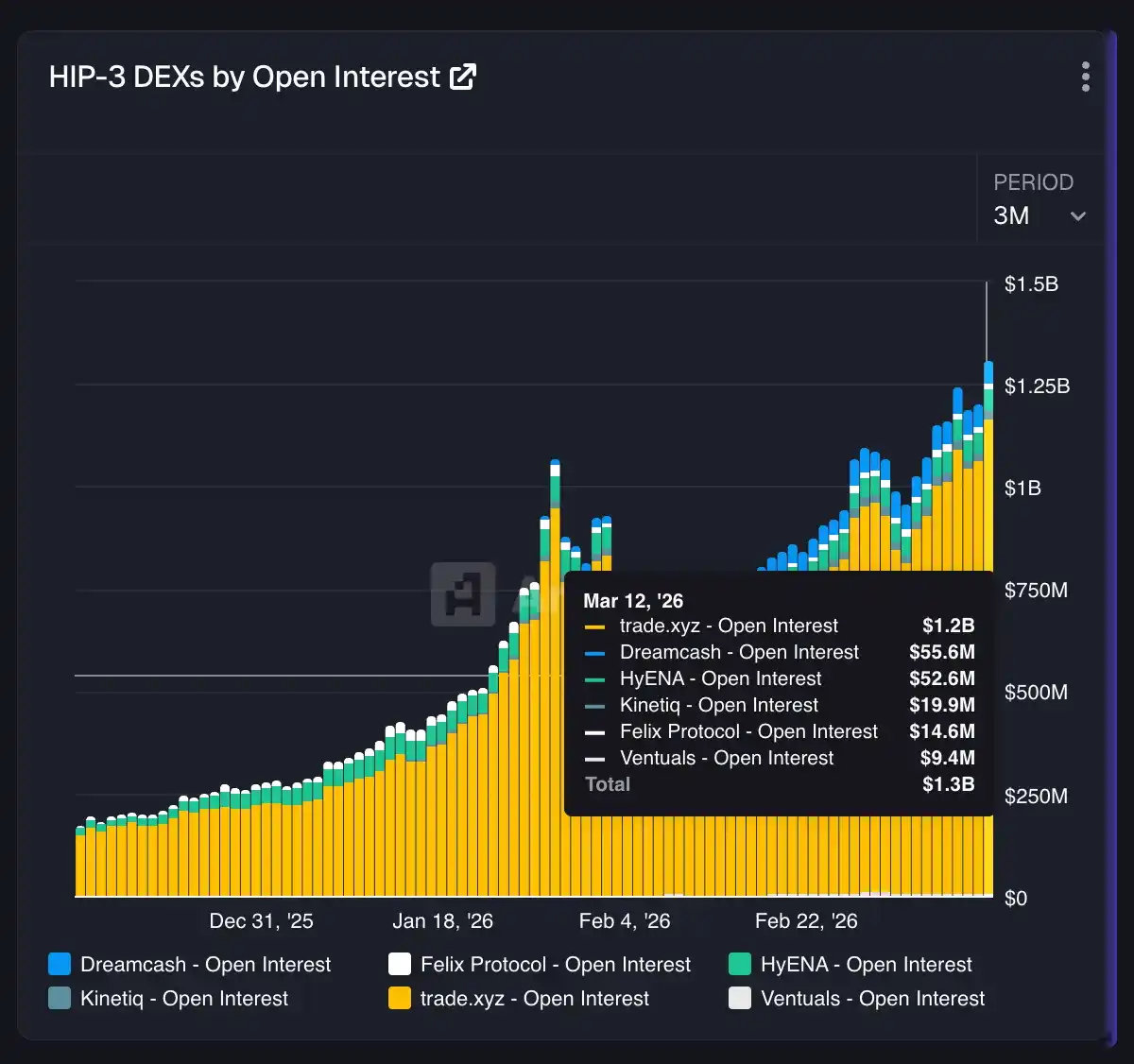
HIP-3 market open interest (OI) reached another record high this week: on March 12, total OI hit approximately $1.3 billion. The platform trade.xyz contributed about $1.2 billion of this, with smaller platforms like Dreamcash and HyENA providing additional depth.
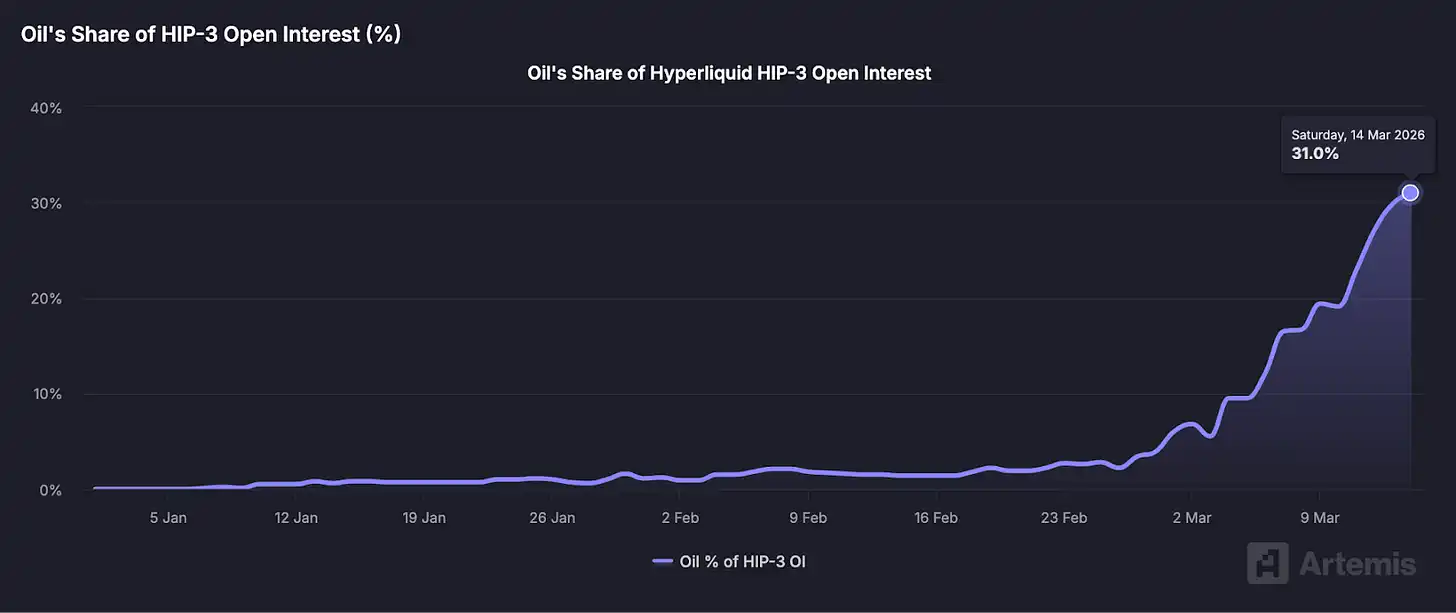
More important than the absolute numbers is the shift in drivers. Oil's share of HIP-3 total open interest rose to 31% by March 14—up from nearly negligible levels for most of January and February. In less than two weeks, oil went from a marginal role to one of the most in-demand sources in the entire ecosystem.

This shift signals that HIP-3 is evolving beyond crypto-native long-tail experiments into a truly permissionless venue for macro expression. When offshore traders seek quick exposure to oil, indices, and event-driven volatility, capital is accelerating its flow on-chain. If this trend continues, HIP-3 could become the clearest case of on-chain markets beginning to capture global commodity flows.

2. Crypto ETFs See Net Inflows for Two Consecutive Weeks

Crypto ETF flows remained positive for the second consecutive week, further indicating a resurgence in institutional demand. For the week ending March 8, net inflows totaled $609.9 million, led by Bitcoin ETFs (+$568.5 million), with healthy inflows also seen in Ethereum (+$23.5 million) and Solana (+$22.0 million). Ripple-related products saw minor outflows (-$4.1 million), but overall flows remained positive.
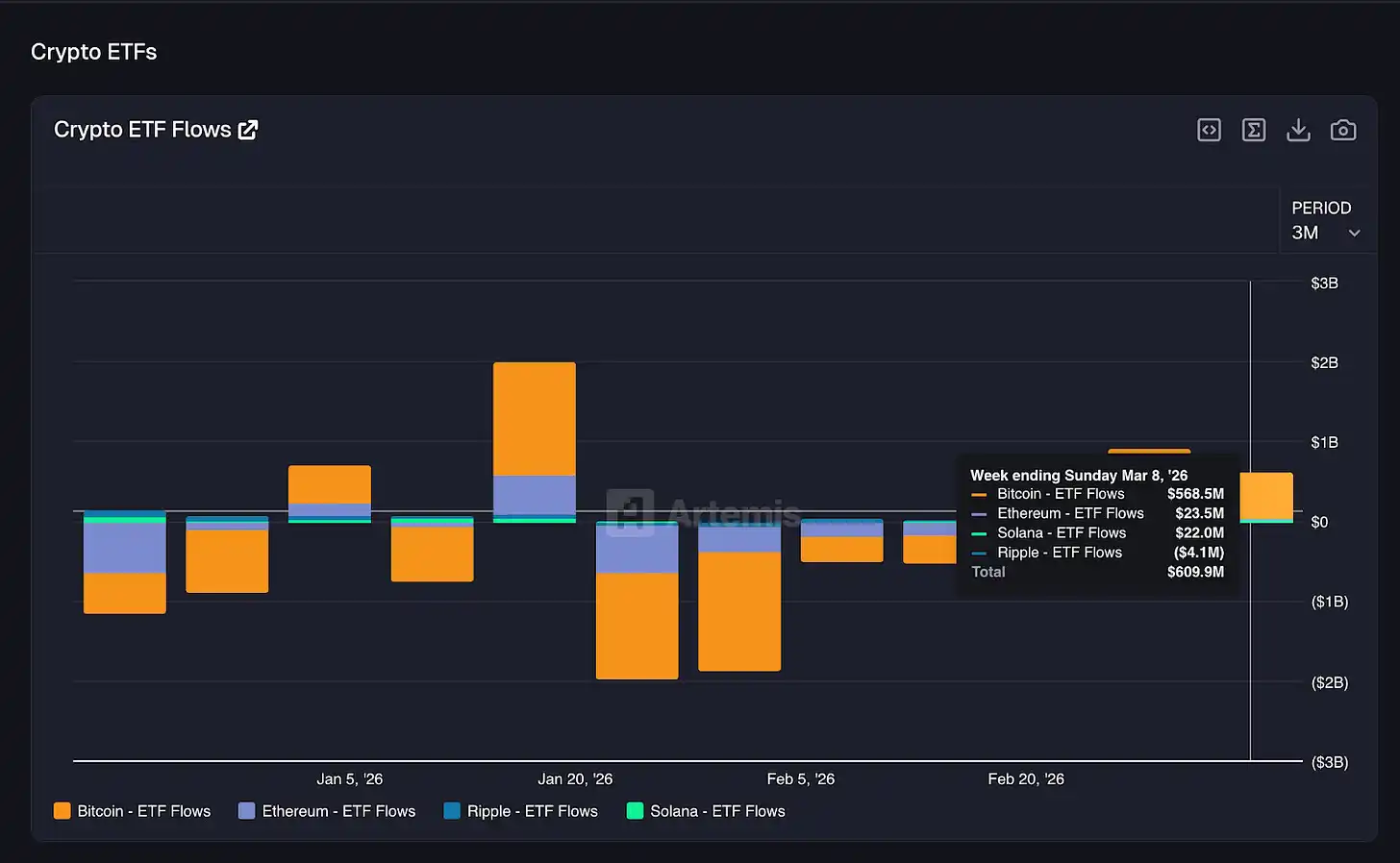
The more critical takeaway: this no longer appears to be a one-week rebound. After weeks of pressure, two consecutive weeks of positive data suggest asset allocators are gradually rebuilding crypto exposure.

The macro logic supporting these sustained flows is directly related to the Iran conflict.
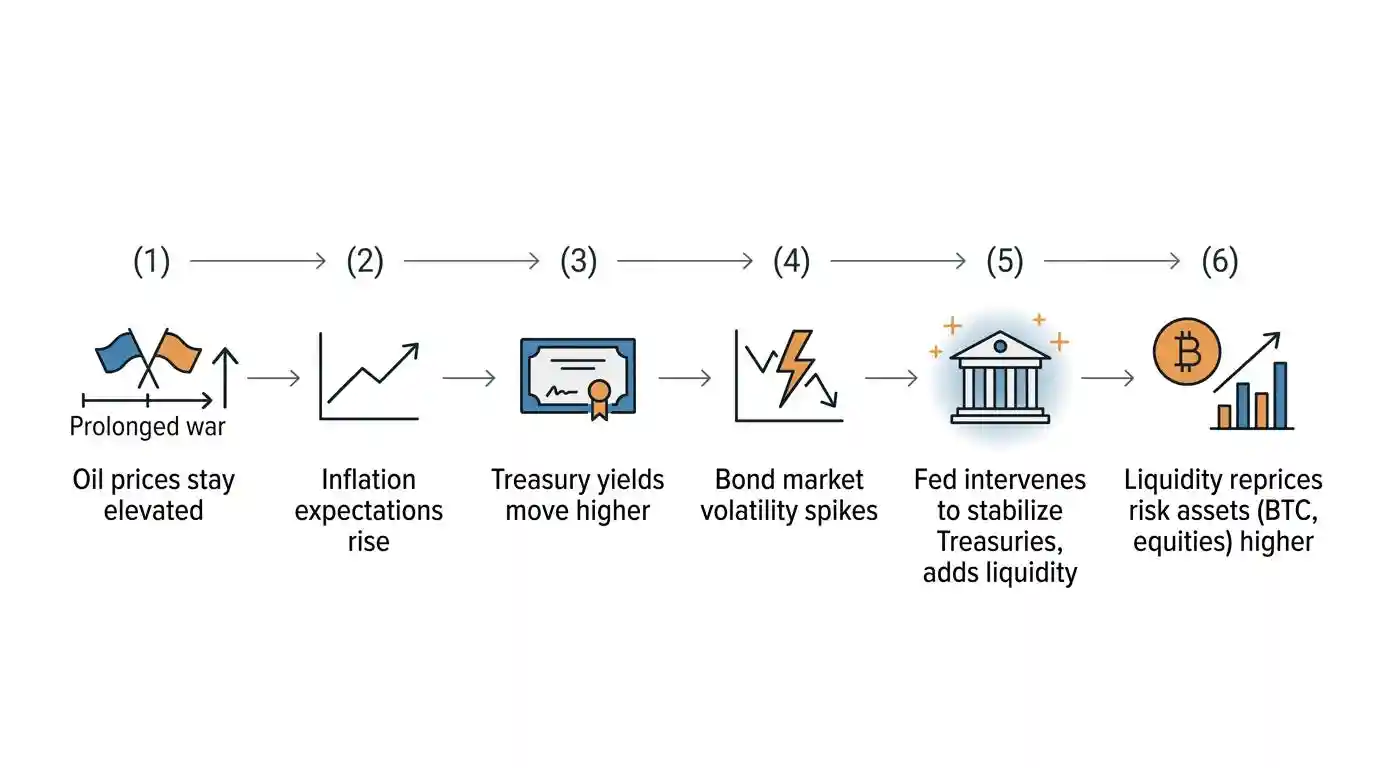
(Hayes' "iOS Warfare" is currently the most detailed exposition of this logic.)

The macro backdrop may continue to provide support. Geopolitical tensions, rising oil prices, and the market's reassessment of Fed rate cut expectations are pushing investors to more seriously consider hard assets and alternative stores of value. If macro uncertainties persist, ETF demand could remain robust as allocators rebuild crypto positions.

3. On-Chain Tokenized Gold Supply Exceeds 1.2 Million Ounces

Tokenized gold supply continued to breakneck growth this week, with on-chain holdings reaching approximately 1.2 million ounces, equivalent to about $6.1 billion. Compared to less than $2 billion just under a year ago, the rapid growth highlights investors' accelerating demand for blockchain-based hard asset exposure.
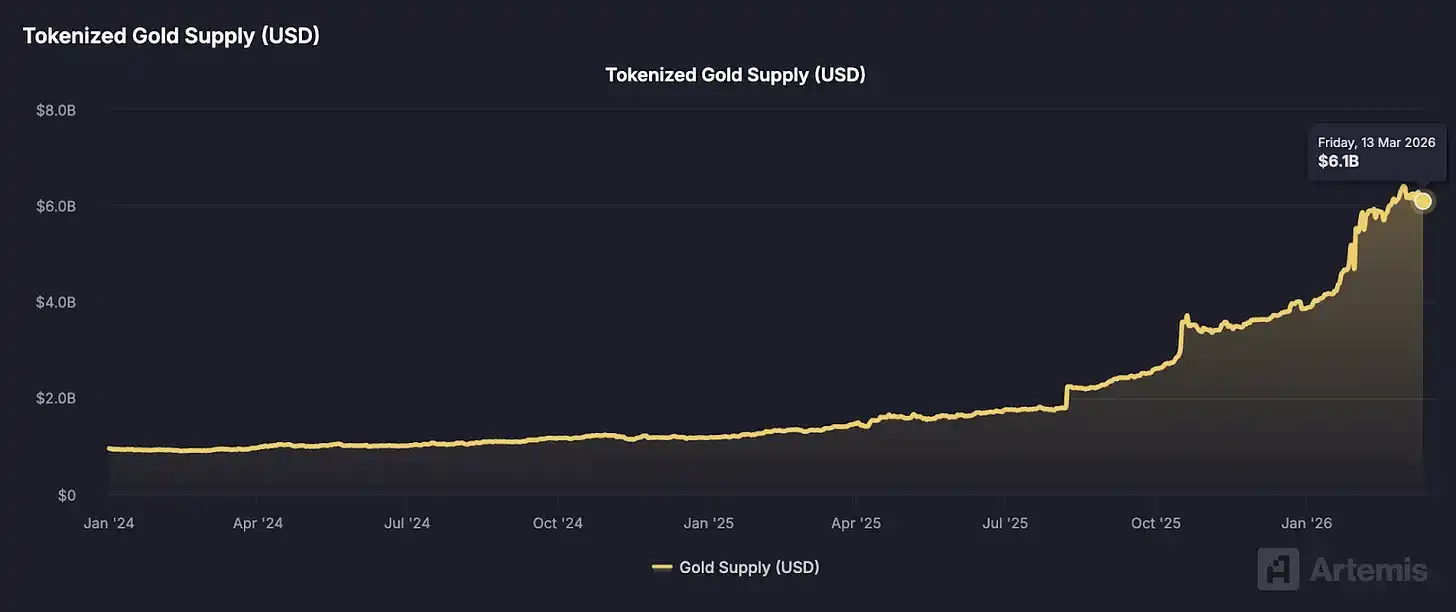
Amid increasing macro uncertainty dominating markets, tokenized gold is benefiting from two trends: gold's traditional role as a safe-haven asset, and growing acceptance of its on-chain wrapped form as a circulation channel.

The bigger conclusion: tokenization is no longer just a payments or stablecoin story; it is meaningfully extending to store-of-value assets, with gold emerging as one of the clearest real-world beneficiaries.

Chart of the Week

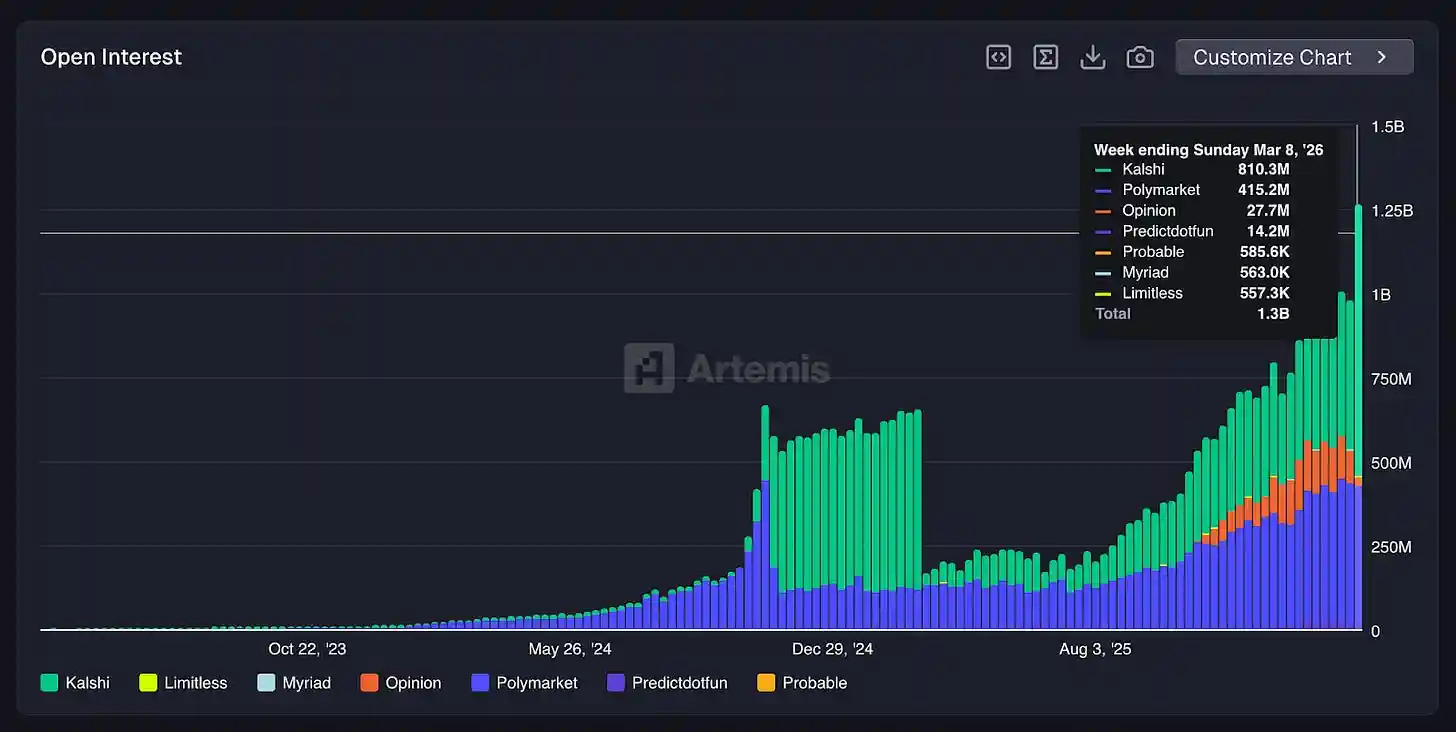
Prediction markets continued growing this week, with total open interest reaching approximately $1.3 billion, led by Kalshi and Polymarket. Traders are increasingly using event markets to express real-time views on political, macro, and geopolitical volatility. This landscape is worth watching—it indicates demand has expanded beyond pure crypto price speculation into broader real-world information and probability pricing markets.
Other Noteworthy News

Mastercard launches large-scale crypto partnership program. On March 11, Mastercard announced a new crypto collaboration program involving over 85 institutions, including Binance, Circle, Ripple, PayPal, Gemini, and Paxos. The initiative aims to leverage stablecoins and digital assets to support cross-border payments, B2B transfers, and global settlement on networks like Solana, Polygon, Avalanche, and Aptos. This marks another step in the integration of blockchain payment infrastructure with the mainstream financial system.

Coinbase in talks with Bybit for potential investment partnership. Reports on March 14 indicated Coinbase is negotiating a possible investment or strategic partnership with Bybit. A deal would bring Bybit closer to the compliant US market, while Coinbase would gain access to one of the largest offshore exchanges globally. From a macro perspective, such talks confirm a trend: as market structure matures, major global exchanges are increasingly aligning with regulated counterparts.

BitGo selected by SoFi to provide infrastructure and institutional distribution support for SoFiUSD. This partnership makes BitGo the core provider for issuance, custody, and distribution of SoFi's bank-issued stablecoin, with institutional clients able to access SoFiUSD directly via BitGo's platform. This again shows regulated banks moving from stablecoin experimentation to actual deployment, backed by crypto-native infrastructure providers.

Kraken's banking unit moves closer to US direct payment access. Kraken Financial's pursuit of a Federal Reserve master account continues to draw attention as one of the most significant infrastructure developments in the space. Direct access to Fedwire and related payment channels would reduce friction for institutional fiat transfers, representing another case of crypto companies integrating into core financial plumbing rather than building alternatives.


Preguntas relacionadas

QWhat were the main drivers behind the record high in HIP-3 open interest, and why is this significant?

AThe record high in HIP-3 open interest was primarily driven by a surge in oil futures, which grew from a negligible share to 31% of the total in under two weeks. This is significant because it signals that HIP-3 is evolving from a crypto-native experiment into a permissionless venue for macro-economic expression, potentially capturing global commodity flows on-chain.

QWhat does the data show about cryptocurrency ETF flows for the week ending March 8th?

ACryptocurrency ETF flows were positive for the second consecutive week, with a net inflow of $609.9 million. Bitcoin ETFs led with an inflow of $568.5 million, followed by Ethereum ($23.5 million) and Solana ($22 million), indicating a rebuilding of institutional crypto exposure.

QHow much has the supply of on-chain tokenized gold grown, and what does this trend indicate?

AThe supply of on-chain tokenized gold has grown to approximately 1.2 million ounces, valued at around $6.1 billion, a significant increase from less than $2 billion a year ago. This rapid growth indicates rising investor demand for blockchain-based hard asset exposure and greater acceptance of tokenized forms of traditional safe-haven assets.

QAccording to the report, how did the performance of crypto assets compare to traditional stocks this week?

ACrypto assets significantly outperformed traditional stocks this week. Major cryptocurrencies like HYPE (+18.8%), Ethereum (+5.2%), Solana (+4.7%), and Bitcoin (+4.7%) posted gains, while traditional benchmarks like the S&P 500 (-1.5%) and Nasdaq 100 (-1.0%) declined, showing a clear shift in risk appetite towards crypto assets.

QWhat major partnership did Mastercard announce, and what is its goal?

AMastercard announced a new Crypto Partner Program involving over 85 institutions, such as Binance, Circle, and PayPal. The program aims to leverage stablecoins and digital assets on networks like Solana and Polygon to support cross-border payments, B2B transfers, and global settlement, marking a step towards integrating blockchain payment infrastructure with the mainstream financial system.

Lecturas Relacionadas

In Conversation with Ray Dalio: We Are Currently in an AI Bubble, with 1% of My Portfolio in Bitcoin

Ray Dalio, founder of Bridgewater Associates, warns in an interview that the current AI boom shows classic bubble characteristics, which could lead to significant economic downturns as seen in past cycles like 1929 or 2000. He explains that speculative enthusiasm, fueled by debt and overvaluation, often precedes a crash when rising rates or taxation force asset sales, causing widespread losses and recession. Dalio also outlines his "Big Cycle" theory, describing an approximate 80-year pattern where widening wealth gaps, massive government deficits, and shifting geopolitical power (like China's rise) create internal conflict and global instability. He emphasizes that we are in a late-cycle, transitional phase where traditional powers like the US and UK face decline. For personal wealth protection, Dalio advises diversification beyond cash into assets like stocks, bonds, real estate, and particularly gold, which he prefers over Bitcoin. While he holds about 1% of his portfolio in Bitcoin as a non-printable hard asset, he views gold as more secure from technological or governmental threats. Regarding AI's impact, Dalio believes it will disproportionately benefit capital owners, worsening inequality by replacing both physical and cognitive labor. He suggests that human intuition and emotional intelligence, combined with AI, will be key for future workers. On taxation, Dalio argues that wealth taxes are impractical and risk triggering asset sell-offs, reducing productive investment. He points to the UK as a cautionary example of debt, low productivity, and political strife. Geopolitically, Dalio foresees a more regionalized world, with the US showing weakness in prolonged conflicts like with Iran, akin to past imperial declines. The ideal outcome, he suggests, is coexisting powerful blocs (e.g., Americas, China-Asia Pacific) without major war.

marsbitHace 38 min(s)

In Conversation with Ray Dalio: We Are Currently in an AI Bubble, with 1% of My Portfolio in Bitcoin

marsbitHace 38 min(s)

Daily 7.2 Trillion KRW: Foreign Capital's Record Net Buying on Friday! Wall Street Says Headwinds for Korean Stock Fund Flows Have Subsided

South Korean stock market sees a dramatic shift in fund flows. On July 31, foreign investors made a record net purchase of approximately KRW 7.2 trillion in KOSPI stocks, marking a fundamental reversal from the persistent large-scale net outflows seen in previous months. This contributed to a significant narrowing of foreign net selling in July to KRW 9.8 trillion, down sharply from KRW 48.4 trillion in June and KRW 44.5 trillion in May. Simultaneously, domestic institutional pressure eased. South Korean pension funds and asset managers turned to a net buying position in July, purchasing KRW 1.0 trillion worth of KOSPI shares, contrasting with net sales in May and June. Market volatility is expected to be dampened by new financial regulations. Effective July 31, the Financial Services Commission tightened access for retail investors to single-stock leveraged ETFs by raising the minimum cash deposit requirement. Trading volumes for these products subsequently dropped to about 50% of their monthly average. Citigroup Research maintains its year-end KOSPI target of 10,000 points. The firm cites several supportive factors: the substantial easing of headwinds from capital outflows, a robust fundamental outlook for the semiconductor sector, historically low market valuations, strong economic fundamentals, and the potential for policy support from financial authorities if needed.

marsbitHace 38 min(s)

Daily 7.2 Trillion KRW: Foreign Capital's Record Net Buying on Friday! Wall Street Says Headwinds for Korean Stock Fund Flows Have Subsided

marsbitHace 38 min(s)

Thanks to Dice Rolls, Bitcoin Keys Are Stored Offline, But Not Everyone Will Do It

The article discusses using dice rolls to generate secure Bitcoin wallet seeds, providing entropy independent of potentially flawed hardware random number generators. It explains that each fair dice roll offers about 2.585 bits of entropy, with around 50 rolls needed for a standard 12-word seed phrase and 99+ recommended for higher security. This method gained attention after a vulnerability was revealed in some Coldcard hardware wallets, where a faulty firmware RNG (dating back to 2021) compromised generated keys. The analysis notes that while a dice-generated main seed was safe from this specific flaw, other Coldcard functions (like creating paper wallets, backup keys, or passwords) could still be vulnerable if they used the defective RNG. The piece argues that while dice-based entropy is technically robust, the manual process is error-prone, tedious, and unrealistic for most new users, who might make mistakes in recording or inputting rolls. It concludes that while manual entropy generation should remain an option for advanced users, the long-term goal is to develop reliable, user-friendly hardware and software that securely generates randomness without requiring specialized knowledge. Coldcard users are advised to check their firmware version and replace any secondary secrets (like paper wallet keys) created with vulnerable devices, while also considering multi-signature setups with devices from different manufacturers for added security.

cryptonews.ruHace 5 hora(s)

Thanks to Dice Rolls, Bitcoin Keys Are Stored Offline, But Not Everyone Will Do It

cryptonews.ruHace 5 hora(s)

Trading

Spot
活动图片




