Don't Waste Every Loss: The 'Sisyphean Revelation' of the Crypto Market

marsbitPublicado a 2025-12-23Actualizado a 2025-12-23

Resumen

The article "Don't Waste Every Loss: The Sisyphus Lesson for Crypto Markets" addresses skilled traders facing significant profit drawdowns despite strong historical performance. It draws a parallel to the myth of Sisyphus, who found meaning in the struggle itself, suggesting that success in crypto trading lies not in avoiding losses but in embracing the process with awareness and resilience. The piece critiques two common emotional reactions to major losses: doubling down aggressively (like a Martingale strategy) or quitting entirely. Both are seen as superficial fixes that avoid the core issue: flawed risk management. The real challenge isn’t knowing risk principles but executing them consistently under emotional pressure, ego, and stress. To recover, traders must accept the loss as a tuition fee for personal flaws, not bad luck. They should anchor to current net worth, not past highs, and avoid the dangerous urge to "win it back." Strict rules on position sizing, stop-losses, and discipline are essential to prevent catastrophic failures. Emotional release is encouraged, but the key is converting pain into a lesson to avoid repetition. The article concludes that such losses, if approached with a冷静, machine-like mindset, can build resilience and improve one’s system. Each failure becomes a moat that others must pay to learn. The goal is not redemption or revenge but growth, ensuring the same mistakes never recur.

Author: thiccy

Compiled by: Tim, PANews

In 2025, the crypto market once again staged a dramatic script of volatility, yet many suffered significant losses in their trades.

This article is not written for those who consistently lose money trading, but for those with strong profitability who have seen their profits severely draw down this quarter.

One of life's greatest pains is witnessing months or even years of effort vanish overnight.

In Greek mythology, Sisyphus is punished to endlessly push a boulder up a mountain, only to watch it roll back down each time he reaches the top. The cruelty of this punishment lies in how it precisely targets the core of the human experience—that sense of absurdity in futility and repetition. However, Camus saw another possibility in Sisyphus: when he acknowledges the absurd, ceases to hope for ultimate salvation, and instead throws himself wholeheartedly into the act of pushing the rock itself, he changes his fate through the process. True victory might not lie in the rock staying atop the mountain, but in that conscious awareness and unyielding peace each time he bends to push the stone.

Crypto trading requires this same quality. Unlike most professions, this field has no所谓的“progress bar”. One wrong decision is enough to completely destroy an entire career, a reality that has driven many to despair.
When the boulder truly rolls down, people respond in two ways.

Some double down, trying to recoup their losses. They adopt more aggressive trading styles, essentially using a Martingale strategy (a method of doubling down after losses) to try and break even. If they can quickly earn the money back, they avoid emotionally confronting the reality of the loss. This method often works in the short term, but it is an extremely dangerous strategy because it reinforces a trading habit that is mathematically destined to bankrupt you.

Others become exhausted and choose to leave the game entirely. They often already have enough funds to live comfortably and believe the market's risk-reward ratio is no longer justified. They console themselves by telling themselves that no edge exists in the market anymore, or that any edge is about to disappear. Their choice to exit is, in effect, a pronouncement of a 'death sentence' on the market, vowing to never return.

While understandable, both reactions are merely coping mechanisms that fail to address the root cause. The real problem is that there is a flaw in your risk management system. Most people overestimate the actual level of their risk management.

Risk management itself is not some unsolvable puzzle; the mathematical principles behind it are well-proven. The true challenge lies not in not knowing what to do, but in consistently executing the established strategy in the face of emotions, ego, stress, and fatigue. Aligning actions with knowledge is one of humanity's most difficult disciplines, and the market ruthlessly exposes any disconnect between this awareness and reality.

After a loss, how do you move forward?

First, you must accept one thing: you were not unlucky, nor were you treated unfairly. This loss was an inevitable result of your human weaknesses. If you don't find and fix the issue, the loss will happen again.

Second, you need to fully accept your current net worth; you cannot always anchor yourself to past all-time highs. The impulse to “make it back” is one of the most dangerous impulses in the market. Step away from the screen for a while and be grateful for what you have already achieved. You are alive, you are still in the game, you are no longer trying to recoup losses, but are simply focused on generating new profits.

View this loss as tuition paid for your own flaws, a lesson you were bound to learn sooner or later. Thankfully, you paid it now rather than at a higher cost in the future. If you handle it correctly, you will look back on this moment with gratitude. Character is often forged in extreme circumstances.

Pinpoint the exact cause of the failure. For most people, the problem usually lies in a combination of the following: excessive position sizing, entering a position without a predetermined stop-loss, or failing to execute the stop-loss when it was hit. Establishing ironclad rules for risk control and stop-losses can prevent most catastrophic losses.

Remind yourself that the only way to prevent the boulder from rolling all the way down again is to strictly adhere to those rules. They are the only barrier between you and the torment you are experiencing. Without rules, you are nothing.

Allow yourself to vent fully about the loss—scream, break things. Let the emotions out, don't let them fester inside.

Most importantly, you must transform the pain into a lesson. Otherwise, it will inevitably repeat.

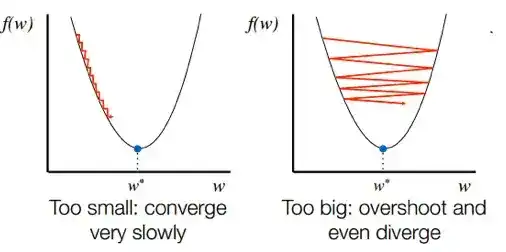
This insight about dealing with pain applies not only to trading losses but also broadly to life. The common coping mechanisms mentioned earlier are crude because, while they may solve the immediate problem, they often introduce just as many new ones. If you cannot recover from a loss in a refined, precise manner, you will end up like a gradient descent algorithm with too large a step size—oscillating wildly around the optimum, constantly overshooting, never converging to the right position.
When Napoleon lost a battle, he would immediately begin rebuilding his army and planning his next move. A single defeat is not fatal, unless it robs you of the ability to continue fighting. The primary task after a setback is to ensure this weakness can no longer be exploited and to restore your best competitive state as quickly as possible.

You should not seek redemption, nor should you seek revenge. You should not react passively, nor should you harbor anger. You must become a cold, calculating machine. You must repair yourself, then rebuild the system, ensuring the same mistake is never made again. Every failure you endure becomes a moat in your system—a moat that everyone else must pay the price to learn themselves.
Be grateful for losses that build character; they appear so you may learn. This loss did not happen without reason. Allow yourself to feel the pain, but transform it into motivation, and ensure you will never make the same mistake again.

These things are difficult because once you find the right direction, the continued growth of wealth becomes a matter of course.

Good luck.

Preguntas relacionadas

QWhat is the main message of the article regarding losses in crypto trading?

AThe article emphasizes that losses should not be wasted but treated as valuable lessons. It argues that traders should accept the loss, avoid revenge trading, and instead focus on identifying and fixing flaws in their risk management system to prevent future failures.

QHow does the article use the myth of Sisyphus to relate to crypto trading?

AThe article draws a parallel between Sisyphus's endless task of pushing a boulder up a hill only for it roll back down and the experience of crypto traders who see profits vanish suddenly. It suggests that, like Sisyphus finding meaning in the struggle, traders can find value in the process and maintain resilience despite market absurdities.

QWhat are the two common reactions to significant trading losses mentioned in the article?

AThe two common reactions are: 1. Increasing bets aggressively to recover losses quickly, often using a Martingale strategy, which is dangerous and mathematically unsound. 2. Becoming emotionally exhausted and quitting the market entirely, effectively 'sentencing' the market to death and never returning.

QWhat does the article identify as the real challenge in risk management for traders?

AThe real challenge is not a lack of knowledge about risk management principles, but the difficulty in consistently executing those strategies under pressure from emotions, ego, stress, and fatigue. The market exposes the gap between one's cognitive understanding and actual behavior.

QAccording to the article, what is the proper way to transform the pain of a loss?

AThe proper way is to fully accept the current net worth, not anchor to past highs, and view the loss as tuition paid to learn a lesson about one's flaws. One should allow themselves to feel the pain, but then channel it into motivation to rebuild their system with strict rules to ensure the same mistake is never repeated.

Lecturas Relacionadas

Breaking: OpenAI Undergoes Major Reorganization, President Brockman Assumes Command

OpenAI has announced a major internal reorganization just months before its anticipated IPO. The company is merging its three flagship product lines—ChatGPT, Codex, and the API platform—into a single, unified product organization. The most significant leadership change involves co-founder and President Greg Brockman moving from a background technical role to take full, permanent control over all product strategy. This follows the indefinite medical leave of AGI Deployment CEO Fidji Simo. Additionally, ChatGPT's longtime lead, Nick Turley, has been reassigned to enterprise products, with former Instagram executive Ashley Alexander taking over consumer offerings. The consolidation, internally framed as a strategic move towards an "Agentic Future," aims to break down internal silos and create a cohesive "Super App." This planned desktop application would integrate ChatGPT's conversational abilities, Codex's coding power, and a rumored internal web browser named "Atlas" to autonomously perform complex user tasks. The reorganization occurs amid significant internal and external pressures. OpenAI has recently seen a wave of high-profile departures, including Sora co-lead Bill Peebles and other senior technical leaders, leading to concerns about a thinning executive bench. Externally, rival Anthropic recently secured funding at a staggering $900 billion valuation, surpassing OpenAI's own. Google's upcoming I/O developer conference also poses a competitive threat. Analysts suggest the dramatic restructure is a pre-IPO move to present a clearer, more focused narrative to Wall Street—streamlining operations and demonstrating decisive leadership under Brockman to counter internal turbulence and intense market competition.

marsbitHace 3 hora(s)

Breaking: OpenAI Undergoes Major Reorganization, President Brockman Assumes Command

marsbitHace 3 hora(s)

Two Survival Structures of Market Makers and Arbitrageurs

Market makers and arbitrageurs represent two distinct survival structures in high-frequency trading. Market makers primarily use limit orders (makers) to profit from the bid-ask spread, enjoying high capital efficiency (nominally 100%) but bearing inventory risk. This "inventory risk" arises from passive, fragmented, and discontinuous order fills in the limit order book (LOB). This risk, while a potential cost, can also contribute to excess profit if managed within control boundaries, allowing for mean reversion. Market makers essentially sell "time" (uncertainty over execution timing) to the market for price control and low fees. In contrast, cross-exchange arbitrageurs typically use market orders (takers) to exploit price differences or funding rates, resulting in lower nominal capital efficiency (requiring capital on both exchanges) and higher transaction costs. Their risk exposure stems from asymmetries in exchange rules (e.g., minimum order sizes), execution latency, and infrastructure risks (e.g., ADL, oracle drift). These exposures are active, exogenous gaps that primarily erode profits rather than contribute to them. Arbitrageurs essentially sell "space" (capital sunk across venues) for localized, immediate certainty. Both strategies engage in a trade-off between execution friction and residual risk. Optimal systems allow for temporary, controlled risk exposure rather than enforcing zero exposure at all costs. Their evolution converges towards hybrid models: arbitrageurs may use maker orders to reduce costs, while market makers may use taker orders or hedges for risk management. Ultimately, both use different forms of risk exposure—market makers exposing inventory, arbitrageurs immobilizing capital—to extract marginal, hard-won certainty from the market.

链捕手Hace 3 hora(s)

Two Survival Structures of Market Makers and Arbitrageurs

链捕手Hace 3 hora(s)

Who Will Define the Rules of the AI Era? Anthropic Discusses the 2028 US-China AI Landscape

This article, based on Anthropic's analysis, outlines the intensifying systemic competition between the U.S./allies and China for AI leadership by 2028. It argues that access to advanced computing power ("compute") is the critical bottleneck, where the U.S. currently holds a significant advantage through chip export controls and allied innovation. However, China's AI labs remain competitive by exploiting policy loopholes—via chip smuggling, overseas data center access, and "model distillation" attacks to copy U.S. model capabilities—keeping them close to the frontier. The piece presents two contrasting scenarios for 2028. In the first, decisive U.S. action to tighten compute controls and curb distillation locks in a 12-24 month AI capability lead, cementing democratic influence over global AI norms, security, and economic infrastructure. In the second, policy inaction allows China to achieve near-parity through continued access to U.S. technology, enabling Beijing to promote its AI stack globally and integrate advanced AI into its military and governance systems, altering the strategic balance. Anthropic contends that maintaining a decisive U.S. lead is essential for shaping safe AI development and governance. The core recommendation is for U.S. policymakers to urgently close compute and model access loopholes while promoting global adoption of the U.S. AI technology stack to secure a lasting strategic advantage.

marsbitHace 5 hora(s)

Who Will Define the Rules of the AI Era? Anthropic Discusses the 2028 US-China AI Landscape

marsbitHace 5 hora(s)

Trading

Spot
Futuros

Artículos destacados

Cómo comprar T

¡Bienvenido a HTX.com! Hemos hecho que comprar Threshold Network Token (T) sea simple y conveniente. Sigue nuestra guía paso a paso para iniciar tu viaje de criptos.Paso 1: crea tu cuenta HTXUtiliza tu correo electrónico o número de teléfono para registrarte y obtener una cuenta gratuita en HTX. Experimenta un proceso de registro sin complicaciones y desbloquea todas las funciones.Obtener mi cuentaPaso 2: ve a Comprar cripto y elige tu método de pagoTarjeta de crédito/débito: usa tu Visa o Mastercard para comprar Threshold Network Token (T) al instante.Saldo: utiliza fondos del saldo de tu cuenta HTX para tradear sin problemas.Terceros: hemos agregado métodos de pago populares como Google Pay y Apple Pay para mejorar la comodidad.P2P: tradear directamente con otros usuarios en HTX.Over-the-Counter (OTC): ofrecemos servicios personalizados y tipos de cambio competitivos para los traders.Paso 3: guarda tu Threshold Network Token (T)Después de comprar tu Threshold Network Token (T), guárdalo en tu cuenta HTX. Alternativamente, puedes enviarlo a otro lugar mediante transferencia blockchain o utilizarlo para tradear otras criptomonedas.Paso 4: tradear Threshold Network Token (T)Tradear fácilmente con Threshold Network Token (T) en HTX's mercado spot. Simplemente accede a tu cuenta, selecciona tu par de trading, ejecuta tus trades y monitorea en tiempo real. Ofrecemos una experiencia fácil de usar tanto para principiantes como para traders experimentados.

587 Vistas totalesPublicado en 2024.12.10Actualizado en 2025.03.21

Cómo comprar T

Discusiones

Bienvenido a la comunidad de HTX. Aquí puedes mantenerte informado sobre los últimos desarrollos de la plataforma y acceder a análisis profesionales del mercado. A continuación se presentan las opiniones de los usuarios sobre el precio de T (T).

活动图片