Delphi Digital Outlook: 10 Paradigm Shifts in the Crypto Market by 2026

Odaily星球日报Publicado a 2026-01-14Actualizado a 2026-01-14

Resumen

Delphi Digital's "2026 Outlook" identifies 10 major paradigm shifts for the crypto market. Key trends include the rise of autonomous AI Agents using protocols like x402 and ERC-8004 for trustless transactions. Perp DEXs like Hyperliquid are poised to consolidate traditional finance roles. Prediction markets evolve into critical financial tools for risk management. Ecosystems are reclaiming revenue from stablecoin issuers through models like Ethena's "stablecoin-as-a-service." DeFi overcomes over-collateralization with zkTLS proofs for undercollateralized lending. On-chain FX finds product-market fit in emerging markets. Gold and Bitcoin lead as "debasement trades" amid monetary expansion. Exchanges like Coinbase transform into super-apps. Privacy infrastructure accelerates due to regulatory pressure. Finally, altcoin returns will diverge, with capital flowing to tokens with ETFs, real yield, and proven product-market fit. Crypto is becoming a foundational layer for global finance.

Author | Delphi Digital

Compiled | Odaily Planet Daily (@OdailyChina)

Translator | DingDang (@XiaMiPP)

Editor's Note: Bitcoin has strongly broken through the $96,000 mark, and market sentiment is rapidly heating up again. But compared to short-term price fluctuations, what is more worthy of discussion might be the directions truly worth paying attention to in the next phase of the crypto market. Delphi Digital provides 10 core judgments in its latest "2026 Outlook Report".

1. AI Agents Begin Autonomous Trading
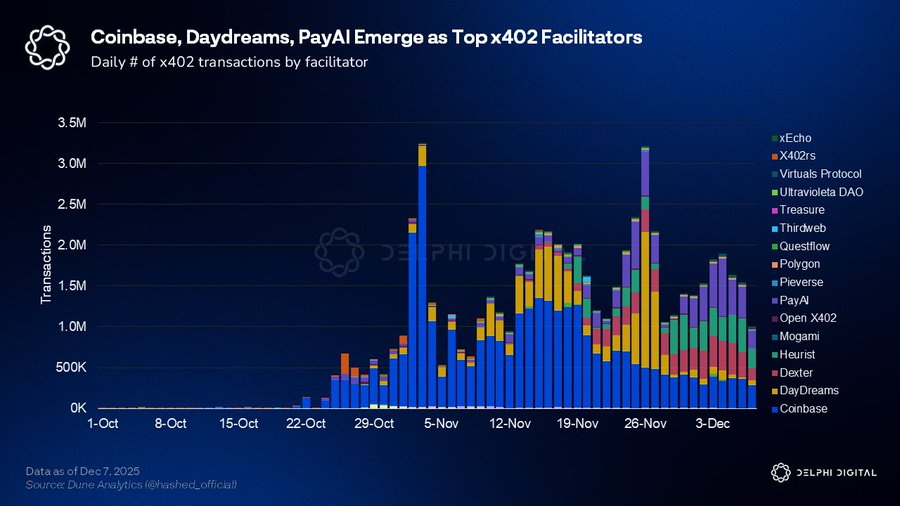
The x402 protocol allows any API to control access via crypto payments. When an Agent needs a service, it can directly use stablecoins for instant payment—no shopping cart or subscription system needed. ERC-8004 introduces a trust mechanism by establishing a reputation registry for Agents: recording their historical performance and requiring them to provide staking guarantees.

When combined, a true "Autonomous Agent Economy" begins to take shape. Users can completely delegate travel planning to an Agent: it will subcontract the task to a flight search Agent, pay for data via x402, complete the booking process on-chain, all without any human intervention.

2. Perp DEX Devours Traditional Finance
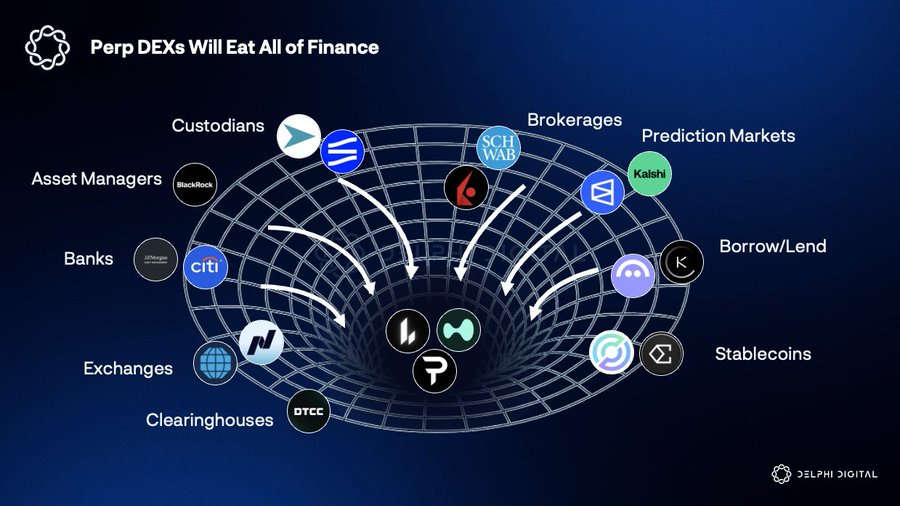
Traditional finance is costly, essentially due to high fragmentation: trading happens on exchanges, settlement relies on clearinghouses, and asset custody is handled by banks. Blockchain is compressing these steps into a single, unified smart contract.

Now, Hyperliquid is building native lending functionality. Perpetual contract DEXs have the potential to simultaneously act as brokers, exchanges, custodians, banks, and even clearinghouses. Competitors like @Aster_DEX, @Lighter_xyz, and @paradex are accelerating their pursuit.

3. Prediction Markets Evolve into Financial Infrastructure
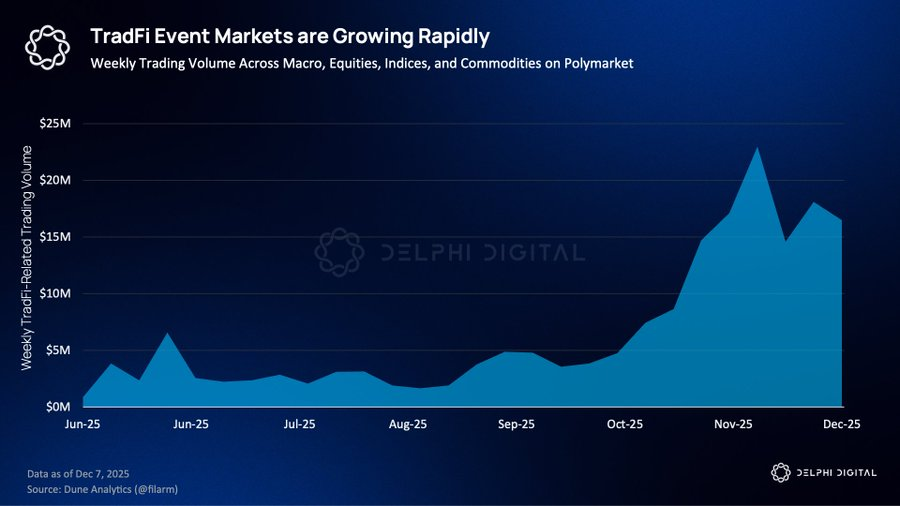
Interactive Brokers Chairman Thomas Peterffy described prediction markets as a "real-time information layer for portfolios." Currently, early demand on IBKR is mainly focused on weather contracts for energy, logistics, and insurance risk management.

Entering 2026, prediction markets will expand into more categories: equity event markets around corporate earnings surprises and guidance ranges, macro data markets for CPI and Fed decisions, and cross-asset relative value markets. A trader holding tokenized AAPL can hedge earnings risk with a simple binary contract, without resorting to complex option structures. Prediction markets will officially become a first-class derivative tool.

4. Ecosystems "Reclaim" Yield from Stablecoin Issuers
From distribution rights alone, Coinbase earned over $900 million from USDC reserves last year. Meanwhile, public chains like Solana, BSC, Arbitrum, Aptos, and Avalanche generate a combined annual fee income of about $800 million, but they host over $30 billion in USDC and USDT. The platforms driving stablecoin usage were "losing" more value to issuers than they were capturing.

This situation is being disrupted. Hyperliquid initiated a competitive bidding process for USDH, channeling half of the reserve yield into its Assistance Fund. Ethena's "Stablecoin-as-a-Service" model has been adopted by Sui, MegaETH, and Jupiter. Yield that previously flowed passively to established issuers is now returning to the platforms that actually create use cases.

5. DeFi Breaks the Under-Collateralized Lending Dilemma

DeFi lending protocols have locked in billions in TVL, but almost entirely rely on over-collateralization. The real breakthrough lies in Zero-Knowledge Transport Layer Security (zkTLS): users can prove their bank balance exceeds a certain threshold without revealing account numbers, transaction history, or identity.

@3janexyz already offers instant, under-collateralized USDC credit lines based on verified Web2 financial data; its algorithm monitors borrower status in real-time and dynamically adjusts interest rates. The same framework can introduce "historical performance" as a credit score to provide credit support for AI Agents. @maplefinance, @centrifuge, and @USDai_Official are entering adjacent fields. In 2026, unsecured/under-collateralized lending will move from proof-of-concept to infrastructure stage.

6. On-Chain Forex Finds Product-Market Fit
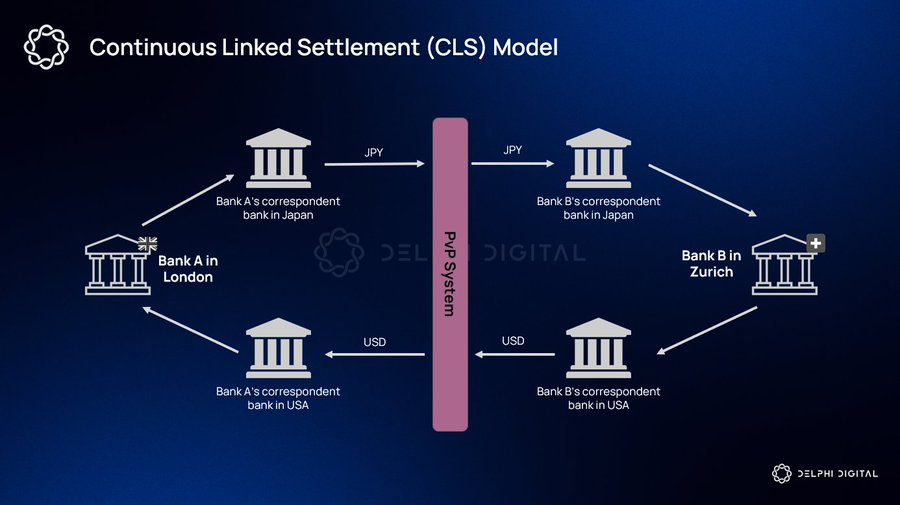
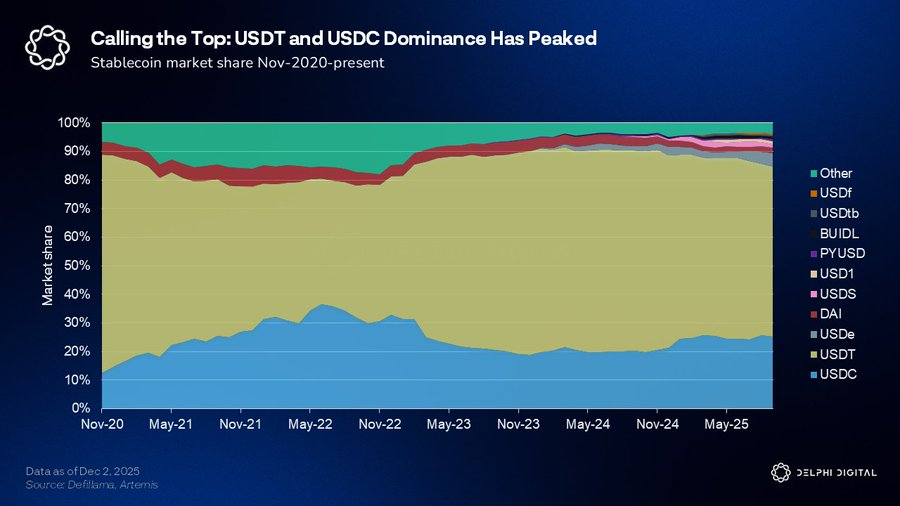
Currently, USD stablecoins account for 99.7% of total supply, but this dominance may be nearing a阶段性高点 (stage high). The traditional forex market is worth trillions of dollars but is filled with intermediaries, fragmented settlement systems, and high fees. On-chain forex compresses the entire intermediary chain by allowing various currencies to coexist as tokenized assets on the same execution layer.

True product-market fit might first appear in emerging market currency pairs—where traditional forex channels are the most expensive and inefficient, making the crypto value proposition clearest.

7. Gold and Bitcoin Lead the "Devaluation Trade"
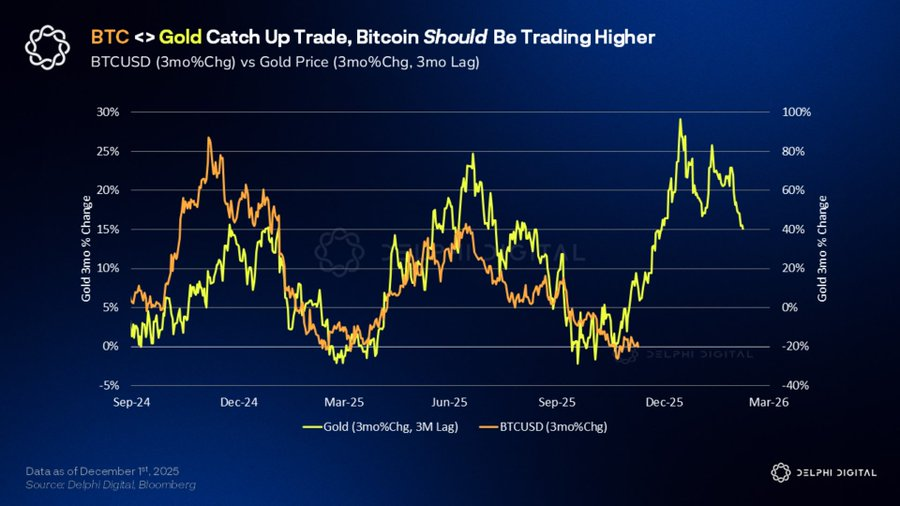
Since we listed gold as the "chart most worth watching," its price has risen about 60%. Even at historical highs, central banks have cumulatively purchased over 600 tons of gold, with China being one of the most active buyers.

The macro environment continues to support its strong performance: global central banks continue to cut interest rates, fiscal deficits persist at least until 2027, global M2 hits new highs, and the Fed is ending quantitative tightening. Historical experience shows gold typically leads Bitcoin by 3 to 4 months. When "currency devaluation" becomes a mainstream topic ahead of the 2026 midterm elections, both assets will see significant safe-haven inflows.

8. Exchanges Are Becoming "Everything Apps"
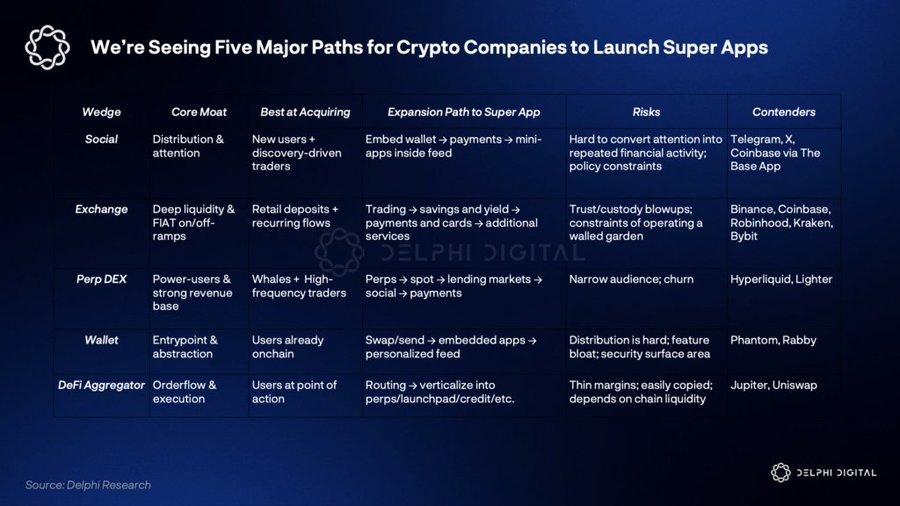
Coinbase, Robinhood, Binance, and Kraken are no longer just exchanges; they are building true super apps.

Coinbase has Base as its operating system, Base App as its user interface, USDC income forming the underlying cash flow, and a derivatives布局 through Deribit. Robinhood's Gold membership grew 77% year-over-year, gradually becoming its core retention engine. Binance has long reached super app scale, with over 270 million users and $250 billion in payment volume. When distribution costs approach zero, value concentrates on platforms that "own the user." In 2026, the leading effects will become significantly pronounced.

9. Privacy Infrastructure Catches Up with Demand

Privacy is under systemic pressure: the EU passed the "Chat Control Act," cash transaction limits are set at €10,000, and the ECB plans to introduce a digital euro with a holding limit of €3,000.

Meanwhile, privacy infrastructure is accelerating. @payy_link launched a private crypto card, @SeismicSys offers protocol-level encryption solutions, @KeetaNetwork enables on-chain KYC without exposing personal data, and @CantonNetwork provides privacy infrastructure for large financial institutions. Without private轨道 (tracks/channels), stablecoin adoption will hit a bottleneck.

10. Altcoin Returns Will Continue to Diverge
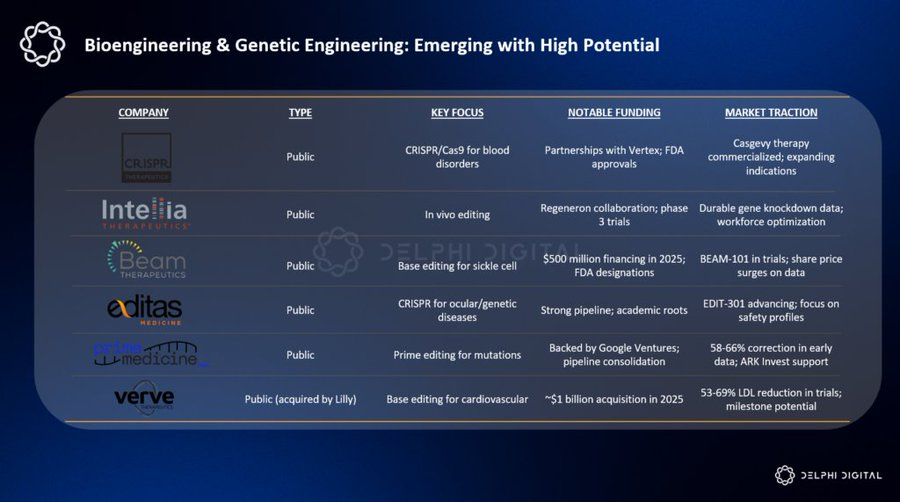
The past cycles of "across-the-board rallies" are unlikely to repeat. There is still over $3 billion in token unlock pressure, competition from fields like AI, robotics, and biotech is significantly intensifying, and ETF flows will concentrate more on Bitcoin and a few large assets.

Capital will be reallocated around "structural demand": tokens with ETF inflows, protocols with real revenue and buyback mechanisms, and applications that have truly found product-market fit. The ultimate winners will be concentrated among teams building defensive moats in real economic activity.

Conclusion

The crypto industry is entering its next phase; institutionalization is no longer the future but the ongoing reality. Prediction markets, on-chain credit, the Agent economy, and stablecoins as infrastructure are driving a true paradigm shift.

Crypto is becoming the infrastructure layer of global finance. The teams that truly understand this trend will define the next decade.


Preguntas relacionadas

QWhat are the two key protocols mentioned that enable the formation of a true 'autonomous agent economy'?

AThe two key protocols are the x402 protocol, which allows any API to control access via crypto payments, and ERC-8004, which establishes a reputation registry for agents, introducing a trust mechanism.

QAccording to the report, what is the fundamental reason for the high cost of traditional finance, and how are Perp DEXs solving this?

AThe fundamental reason is high fragmentation, where trading, settlement, and asset custody are handled by separate entities. Perp DEXs are solving this by compressing these functions into a single, unified smart contract, acting as broker, exchange, custodian, bank, and clearinghouse.

QHow are ecosystems reclaiming yield from stablecoin issuers, as described in the report?

AEcosystems are reclaiming yield by implementing new models. For example, Hyperliquid runs a competitive bidding process for USDH and directs half of the reserve yield to its Assistance Fund, while Ethena's 'stablecoin-as-a-service' model is being adopted by platforms like Sui, MegaETH, and Jupiter.

QWhat technology is identified as the key to enabling undercollateralized lending in DeFi?

AThe key to enabling undercollateralized lending is Zero-Knowledge Transport Layer Security (zkTLS), which allows users to prove their bank balance is above a certain threshold without revealing sensitive account or identity information.

QWhat is the predicted primary driver for capital allocation in the altcoin market in 2026?

ACapital will be reallocated around 'structural demand,' focusing on tokens with ETF inflows, protocols with real revenue and buyback mechanisms, and applications that have achieved true product-market fit.

Lecturas Relacionadas

In Conversation with Ray Dalio: We Are Currently in an AI Bubble, with 1% of My Portfolio in Bitcoin

Ray Dalio, founder of Bridgewater Associates, warns in an interview that the current AI boom shows classic bubble characteristics, which could lead to significant economic downturns as seen in past cycles like 1929 or 2000. He explains that speculative enthusiasm, fueled by debt and overvaluation, often precedes a crash when rising rates or taxation force asset sales, causing widespread losses and recession. Dalio also outlines his "Big Cycle" theory, describing an approximate 80-year pattern where widening wealth gaps, massive government deficits, and shifting geopolitical power (like China's rise) create internal conflict and global instability. He emphasizes that we are in a late-cycle, transitional phase where traditional powers like the US and UK face decline. For personal wealth protection, Dalio advises diversification beyond cash into assets like stocks, bonds, real estate, and particularly gold, which he prefers over Bitcoin. While he holds about 1% of his portfolio in Bitcoin as a non-printable hard asset, he views gold as more secure from technological or governmental threats. Regarding AI's impact, Dalio believes it will disproportionately benefit capital owners, worsening inequality by replacing both physical and cognitive labor. He suggests that human intuition and emotional intelligence, combined with AI, will be key for future workers. On taxation, Dalio argues that wealth taxes are impractical and risk triggering asset sell-offs, reducing productive investment. He points to the UK as a cautionary example of debt, low productivity, and political strife. Geopolitically, Dalio foresees a more regionalized world, with the US showing weakness in prolonged conflicts like with Iran, akin to past imperial declines. The ideal outcome, he suggests, is coexisting powerful blocs (e.g., Americas, China-Asia Pacific) without major war.

marsbitHace 30 min(s)

In Conversation with Ray Dalio: We Are Currently in an AI Bubble, with 1% of My Portfolio in Bitcoin

marsbitHace 30 min(s)

Daily 7.2 Trillion KRW: Foreign Capital's Record Net Buying on Friday! Wall Street Says Headwinds for Korean Stock Fund Flows Have Subsided

South Korean stock market sees a dramatic shift in fund flows. On July 31, foreign investors made a record net purchase of approximately KRW 7.2 trillion in KOSPI stocks, marking a fundamental reversal from the persistent large-scale net outflows seen in previous months. This contributed to a significant narrowing of foreign net selling in July to KRW 9.8 trillion, down sharply from KRW 48.4 trillion in June and KRW 44.5 trillion in May. Simultaneously, domestic institutional pressure eased. South Korean pension funds and asset managers turned to a net buying position in July, purchasing KRW 1.0 trillion worth of KOSPI shares, contrasting with net sales in May and June. Market volatility is expected to be dampened by new financial regulations. Effective July 31, the Financial Services Commission tightened access for retail investors to single-stock leveraged ETFs by raising the minimum cash deposit requirement. Trading volumes for these products subsequently dropped to about 50% of their monthly average. Citigroup Research maintains its year-end KOSPI target of 10,000 points. The firm cites several supportive factors: the substantial easing of headwinds from capital outflows, a robust fundamental outlook for the semiconductor sector, historically low market valuations, strong economic fundamentals, and the potential for policy support from financial authorities if needed.

marsbitHace 31 min(s)

Daily 7.2 Trillion KRW: Foreign Capital's Record Net Buying on Friday! Wall Street Says Headwinds for Korean Stock Fund Flows Have Subsided

marsbitHace 31 min(s)

Thanks to Dice Rolls, Bitcoin Keys Are Stored Offline, But Not Everyone Will Do It

The article discusses using dice rolls to generate secure Bitcoin wallet seeds, providing entropy independent of potentially flawed hardware random number generators. It explains that each fair dice roll offers about 2.585 bits of entropy, with around 50 rolls needed for a standard 12-word seed phrase and 99+ recommended for higher security. This method gained attention after a vulnerability was revealed in some Coldcard hardware wallets, where a faulty firmware RNG (dating back to 2021) compromised generated keys. The analysis notes that while a dice-generated main seed was safe from this specific flaw, other Coldcard functions (like creating paper wallets, backup keys, or passwords) could still be vulnerable if they used the defective RNG. The piece argues that while dice-based entropy is technically robust, the manual process is error-prone, tedious, and unrealistic for most new users, who might make mistakes in recording or inputting rolls. It concludes that while manual entropy generation should remain an option for advanced users, the long-term goal is to develop reliable, user-friendly hardware and software that securely generates randomness without requiring specialized knowledge. Coldcard users are advised to check their firmware version and replace any secondary secrets (like paper wallet keys) created with vulnerable devices, while also considering multi-signature setups with devices from different manufacturers for added security.

cryptonews.ruHace 5 hora(s)

Thanks to Dice Rolls, Bitcoin Keys Are Stored Offline, But Not Everyone Will Do It

cryptonews.ruHace 5 hora(s)

Trading

Spot
活动图片




