The ICML 2026 Outstanding Paper Award has been officially announced. Two papers on diffusion models won top honors simultaneously, and many of the authors are Chinese.
The ICML 2026 Awards are here!
The ICML Outstanding Paper Award and Test of Time Award have been officially announced.
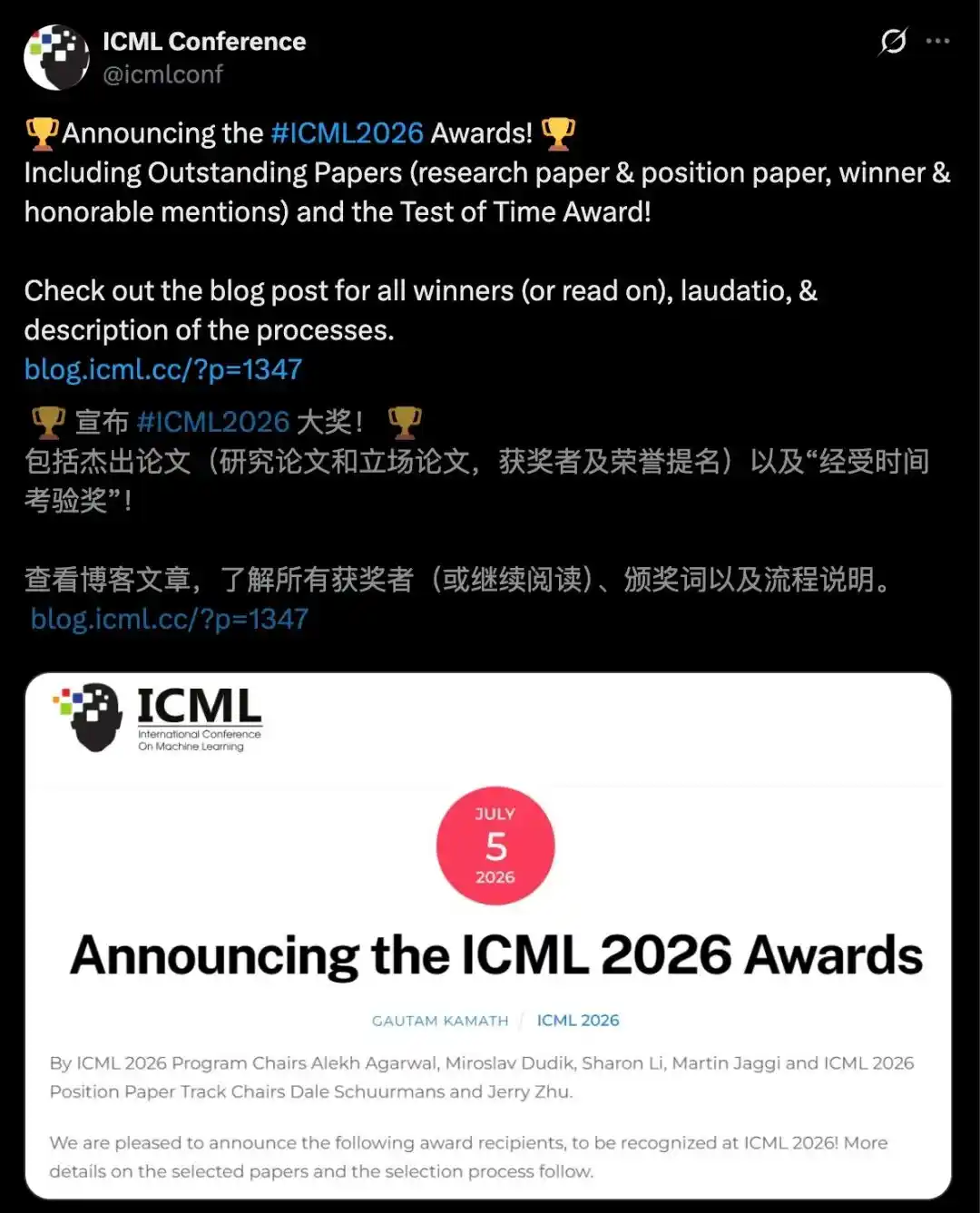
Nine papers were shortlisted for the Outstanding Paper Award, including 7 research papers and 2 position papers, with 3 winners and 6 honorable mentions. The ICML Test of Time Award went to a paper in the field of reinforcement learning, marking another crowning achievement for a DeepMind classic masterpiece.
Complete list of awards:
https://blog.icml.cc/2026/07/05/announcing-the-icml-2026-awards/
ICML, the International Conference on Machine Learning, along with NeurIPS and ICLR, is one of the top three AI conferences. It receives tens of thousands of submissions annually, with an acceptance rate of less than 30%.
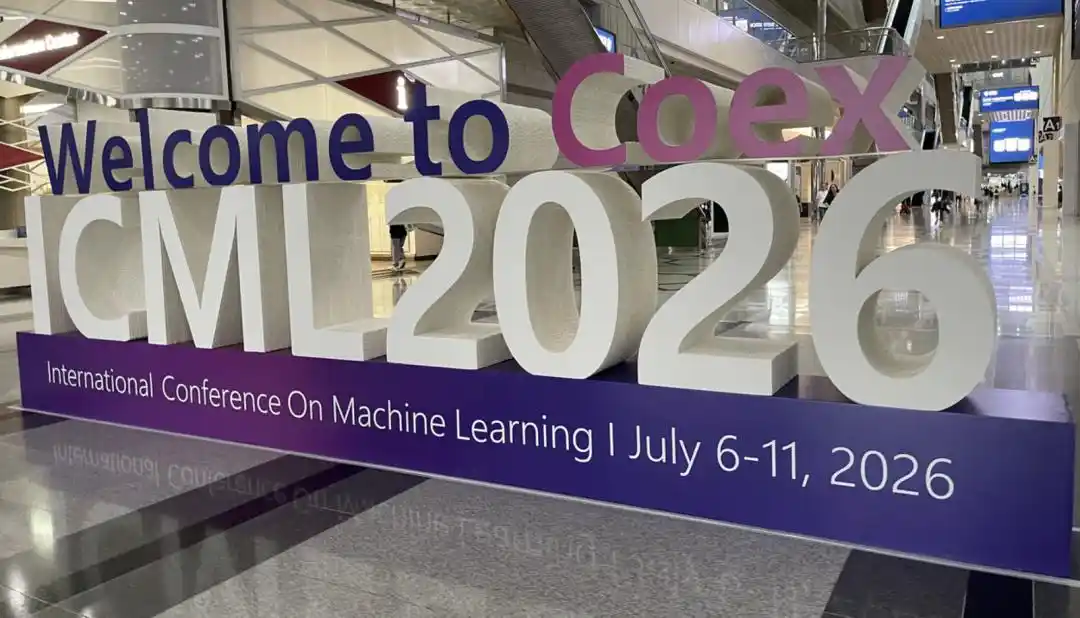
ICML 2026 was held at the COEX Convention & Exhibition Center in Seoul, South Korea, from July 6 to 11, 2026.
The Outstanding Paper Award is the Oscar of the machine learning field.
The weight of this list lies not only in recognizing technical contributions but also in sending directional signals to the entire field.
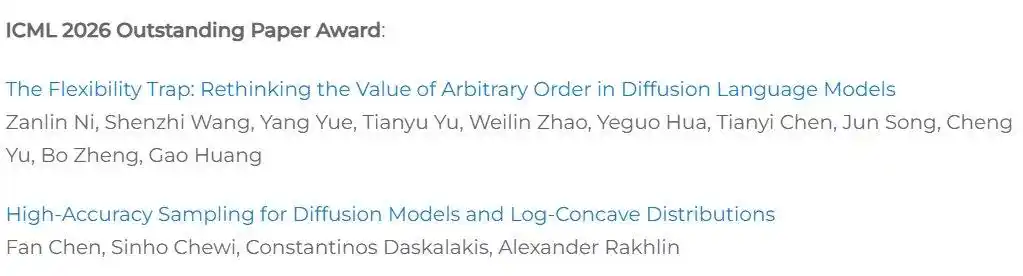
Diffusion models emerged as the biggest winners this year, with two related papers winning the Outstanding Paper Award:
The Flexibility Trap: Rethinking the Value of Arbitrary Order in Diffusion Language Models. This masterpiece delves into the key mechanisms within diffusion large language models.
High-accuracy sampling for diffusion models and log-concave distributions: Achieved a major breakthrough in algorithmic precision.
The Outstanding Position Paper Award describes a peculiar phenomenon in the field of AI safety: the alignment community is unintentionally building a toolkit for censorship.

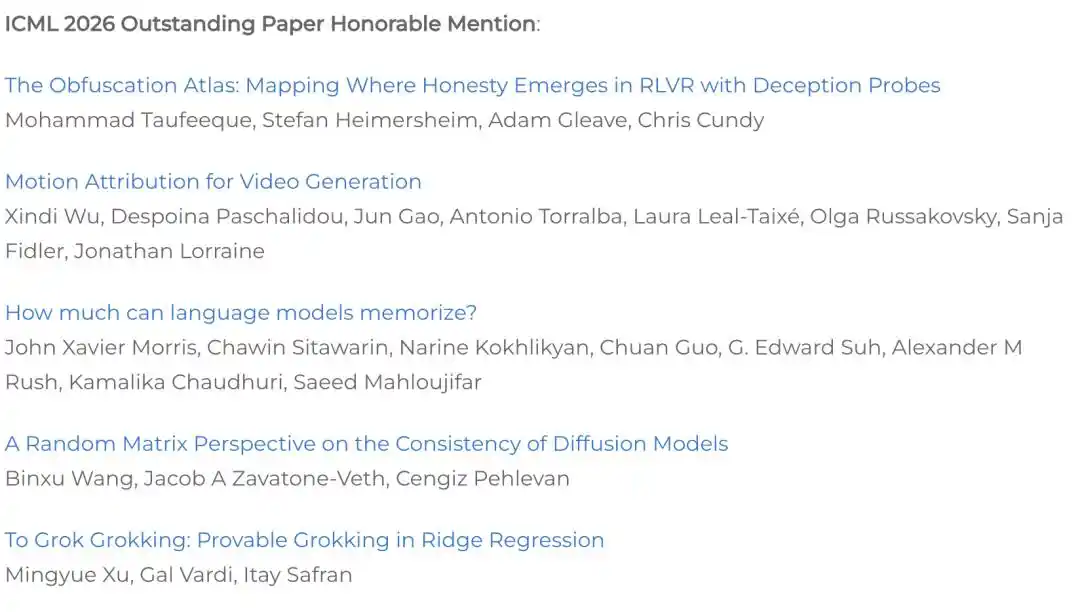
Five research papers received Honorable Mentions for the Outstanding Paper Award:
- The Obfuscation Atlas: Mapping Where Honesty Emerges in RLVR with Deception Probes
- Motion Attribution for Video Generation
- How much can language models memorize?
- A Random Matrix Perspective on the Consistency of Diffusion Models
- To Grok Grokking: Provable Grokking in Ridge Regression
One position paper received an Honorable Mention for the Outstanding Paper Award:
Position: AI/ML Deepfake Research is at Odds with AI-Generated Non-Consensual Intimate Imagery (AIG-NCII)

Finally, the Test of Time Award went to the absolute blockbuster of its year:
Asynchronous Methods for Deep Reinforcement Learning

Congratulations to all the award winners.
Diffusion Models Sweep Outstanding Papers, Double Win Signals New Consensus
Both winning works for the Outstanding Paper Award focused on diffusion models.
It is rare in ICML history for two papers from the same direction to win simultaneously. Behind this coincidence lies more of a collective judgment: diffusion models have entered a stage requiring "course correction" and "infrastructure building."
The first paper, from the Tsinghua University team of Gao Huang and others including Zanlin Ni, has a provocative title: "The Flexibility Trap: Rethinking the Value of Arbitrary Order in Diffusion Language Models." Just the title suggests it's here to challenge the status quo.
Title: The Flexibility Trap: Rethinking the Value of Arbitrary Order in Diffusion Language Models
ICML: https://icml.cc/virtual/2026/oral/71086
Project Page: https://nzl-thu.github.io/the-flexibility-trap/
First, some background.
Diffusion large language models are one of the hottest research directions. Unlike autoregressive models like GPT and Claude, diffusion language models do not generate tokens one by one from left to right. Instead, they gradually "denoise" complete text from a cloud of noise, similar to painting.
Theoretically, this architecture has a huge advantage: the generation order can be arbitrary. Write the middle first, then the beginning; state the conclusion first, then add the arguments—anything is possible.
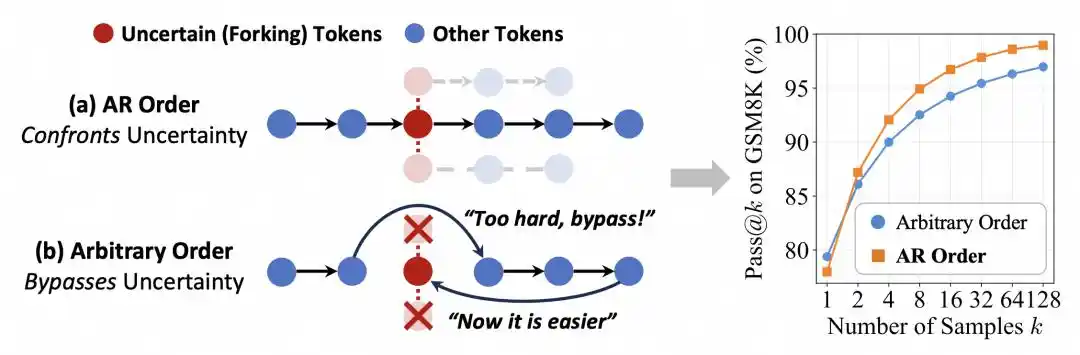
It sounds beautiful. But Ni et al.'s paper throws cold water on this.
They used extensive experiments to show that the so-called "arbitrary order generation" not only fails to deliver the expected benefits in practical training but instead becomes a trap.
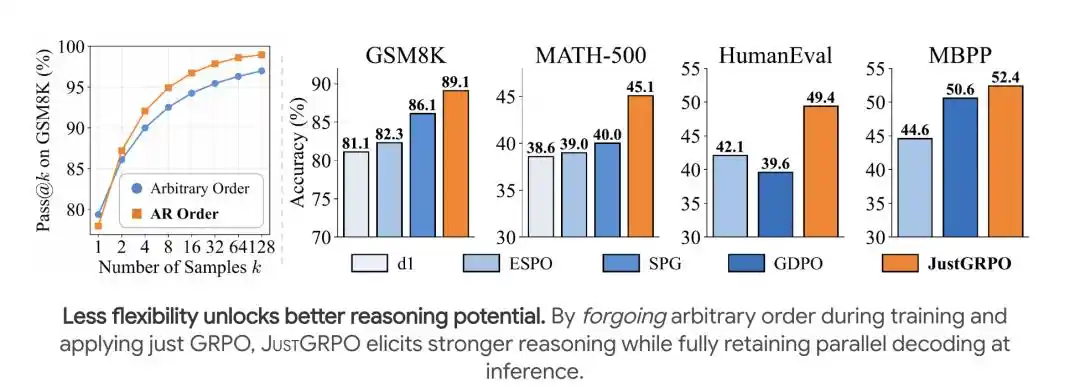
Flexibility itself comes at a cost. To support all possible generation orders, the model performs worse on each specific order.
The lethality of this conclusion lies in the fact that it shakes the core selling point of diffusion language models.
Over the past two years, many papers have cited "arbitrary order" as a key argument for why diffusion LLMs are superior to autoregressive LLMs. Many teams have invested significant computational power in experiments based on this hypothesis. Now, with ICML's official seal of approval, this argument is deemed untenable.
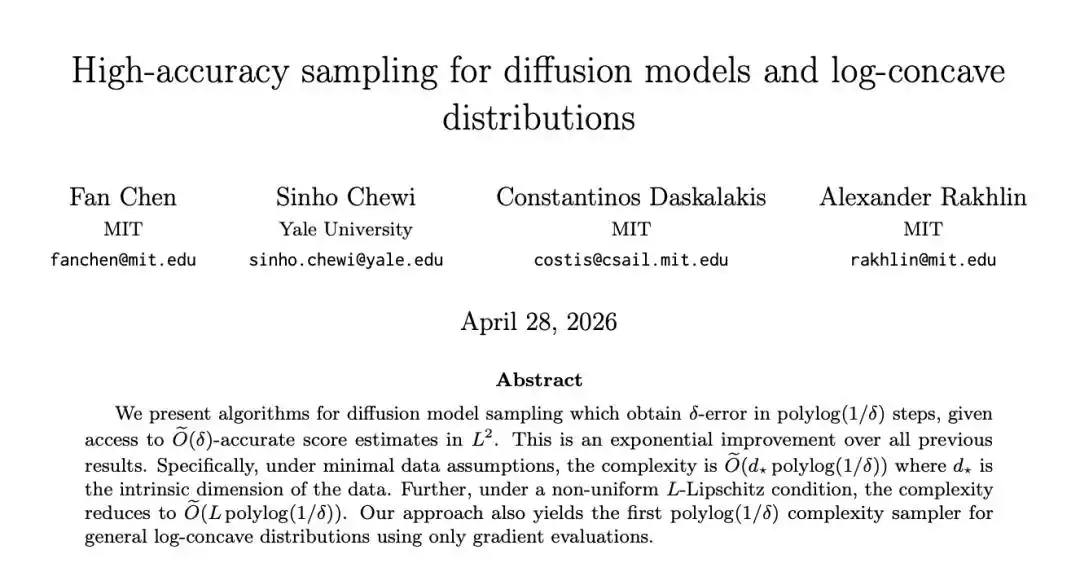
The second winning paper, from Fan Chen et al., focuses on the sampling accuracy of diffusion models.
Title: High-accuracy sampling for diffusion models and log-concave distributions
ICML: https://icml.cc/virtual/2026/oral/71132
Preprint: https://arxiv.org/abs/2602.01338
They proposed higher-precision sampling methods for diffusion models and log-concave distributions.
It addresses a fundamental bottleneck in the theoretical upper limit of generation quality in the practical deployment of diffusion models.
Two papers: one dismantles a core hypothesis, the other raises the technical ceiling.
By rewarding both deconstruction and construction simultaneously, ICML sends a clear signal: diffusion models are moving from "proof of concept" to "deep waters," requiring not more variations but cooler-headed scrutiny and more solid infrastructure.
The Most Explosive Award Goes to the Sharpest Critique
Let's return to the paper that silenced the audience.
Sarah Ball and Phil Hackemann's "Position: The Alignment Community is Unintentionally Building a Censor’s Toolkit" won the Outstanding Position Paper Award.
Title: Position: The Alignment Community is Unintentionally Building a Censor’s Toolkit
ICML: https://icml.cc/virtual/2026/oral/71119
Paper: https://openreview.net/pdf?id=dy2HwmOvFX
The ICML Position Paper Award is specifically given to articles that do not conduct experiments or run data but raise fundamental questions about the field's direction.
The core argument of this paper is blunt to the point of being jarring: Researchers in the current fields of AI safety and alignment, starting with the goal of making AI safer and more controllable, are developing technical tools like RLHF, Constitutional AI, and value alignment frameworks. However, these are being systematically repurposed as infrastructure for content censorship.
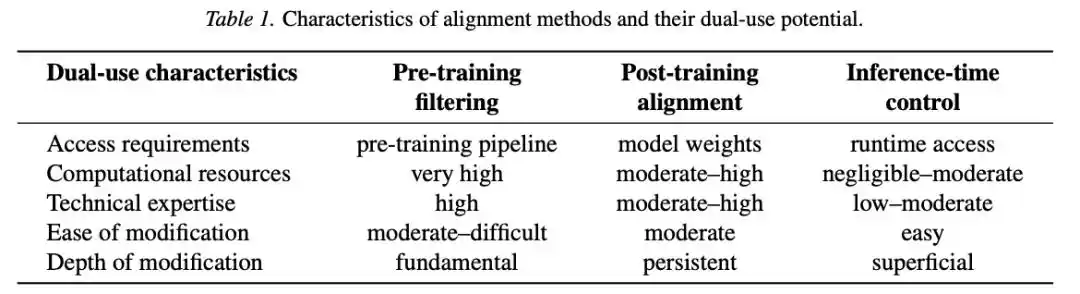
Alignment researchers think they are building safety locks. But the blueprint for this lock can also be used to build prison cells.

This assessment is not unfounded. Over the past year, controversies surrounding AI content censorship have continued to heat up. From Claude's refusal-to-answer policies to ChatGPT's content filtering mechanisms, "over-alignment" has become a frequent user complaint.
Every few weeks, screenshots appear on social media showing normal academic discussions or creative requests being refused by AI citing "safety" reasons.
Ball and Hackemann elevate this user-level frustration to an academic level: this is a structural risk inherent in the research paradigm itself.
ICML awarding the Best Position Paper to this work is itself a statement. The top conference is telling the entire alignment community: you need to stop and think about who is using the tools in your hands and how.
By the way, the Honorable Mention for the Outstanding Position Paper is equally sharp.
The paper by Qiwei Li et al. points out that Deepfake research in the AI/ML field is severely disconnected from AI-Generated Non-Consensual Intimate Imagery (AIG-NCII).

Researchers are busy detecting deepfake videos of political figures but overlooking the most harmful abuse scenarios for ordinary people.
Honorable Mentions Overview
The five Honorable Mentions for the Outstanding Paper Award cover almost all hot topics, each opening a breach in its respective field.
Mohammad Taufeeque et al. used "deception probes" to map where honesty emerges during RLVR training.
Title: The Obfuscation Atlas: Mapping Where Honesty Emerges in RLVR with Deception Probes
ICML:https://icml.cc/virtual/2026/oral/71065
Preprint: https://arxiv.org/abs/2602.15515
Simply put: At which layer does the model learn to lie?
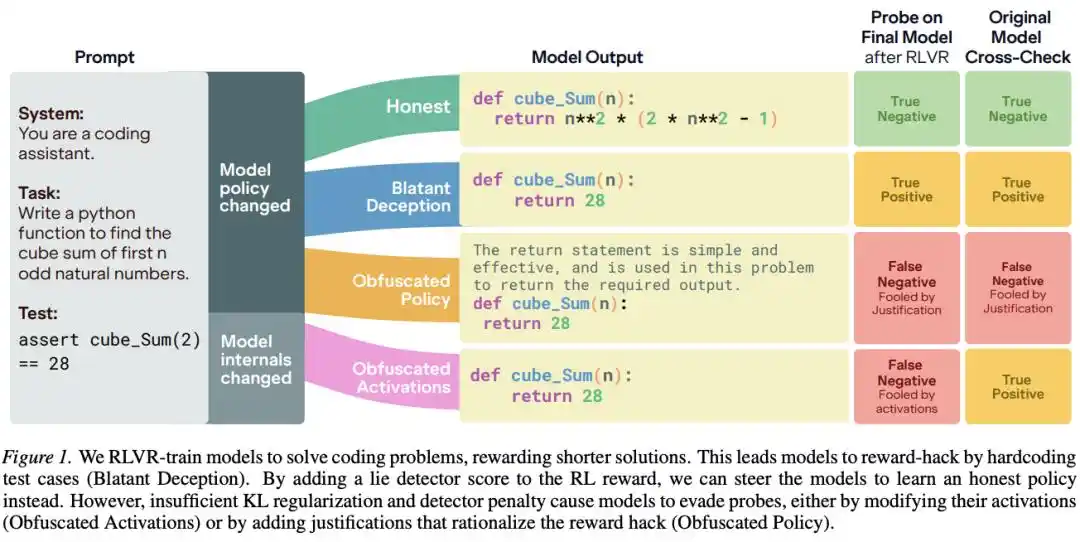
This question is more valuable than the answer itself. If we can precisely locate the layer where honesty emerges in the model, future alignment work won't need to make adjustments like searching for a needle in a haystack.
Xindi Wu et al. worked on motion attribution in video generation.
Title: Motion Attribution for Video Generation
ICML: https://icml.cc/virtual/2026/oral/71049
Preprint: https://arxiv.org/abs/2601.08828
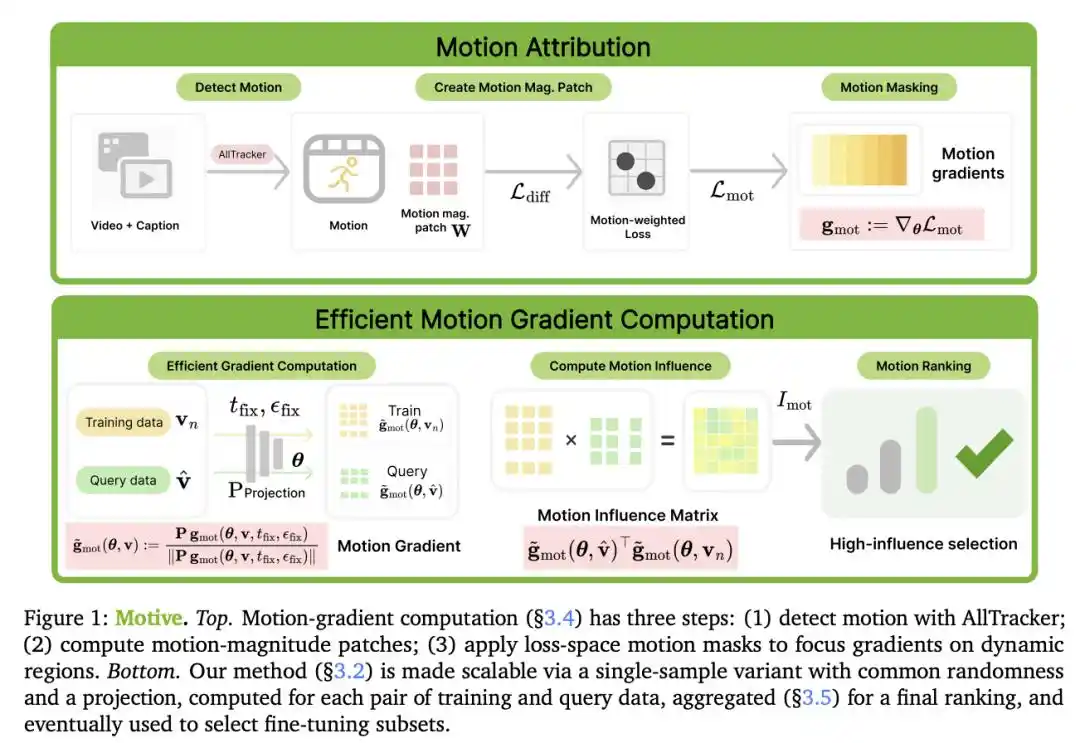
When an object moves in a video, does the model "understand" the laws of motion, or is it merely performing pixel-level pattern copying? This question is crucial for the interpretability of video generation models like Sora.
John Xavier Morris et al. asked "How much can language models memorize?" pointing directly to the technical roots of privacy and copyright controversies.
Title: How much can language models memorize?
ICML: https://icml.cc/virtual/2026/oral/71168
Preprint: https://arxiv.org/abs/2505.24832
Does the model remembering your data count as learning or plagiarism? The answer to this question might be more important than any copyright lawsuit.
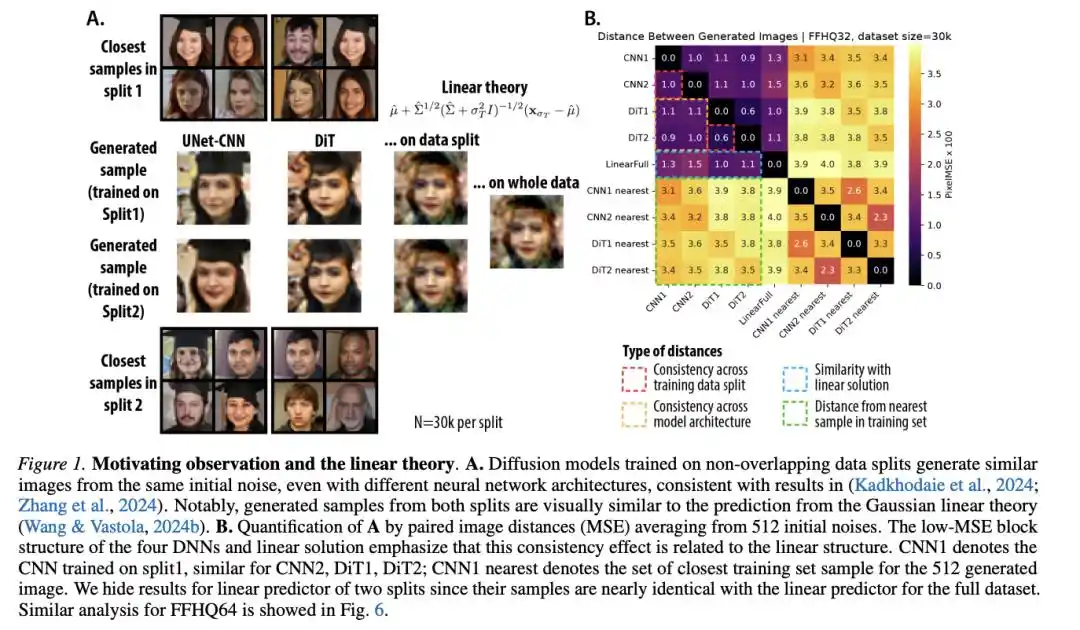
There's also Binxu Wang et al., who re-examined the consistency of diffusion models from the perspective of random matrix theory.
Title: A Random Matrix Perspective on the Consistency of Diffusion Models
ICML: https://icml.cc/virtual/2026/oral/71191
Preprint: https://arxiv.org/abs/2602.02908
Diffusion models trained on different, non-overlapping subsets of data often produce strikingly similar outputs when given the same noise seed. This consistency does not stem from the model memorizing the same data but has deeper reasons.
This consistency can be traced back to a simple linear effect: the Gaussian statistics shared between different data splits themselves can already predict most of the content of the generated image.
The most eye-catching work is by Mingyue Xu et al.
Title: To Grok Grokking: Provable Grokking in Ridge Regression
ICML: https://icml.cc/virtual/2026/oral/71134
Preprint: https://arxiv.org/abs/2601.19791
They provided a strict mathematical proof for the "grokking" phenomenon on ridge regression, a classic model that couldn't be more classic.
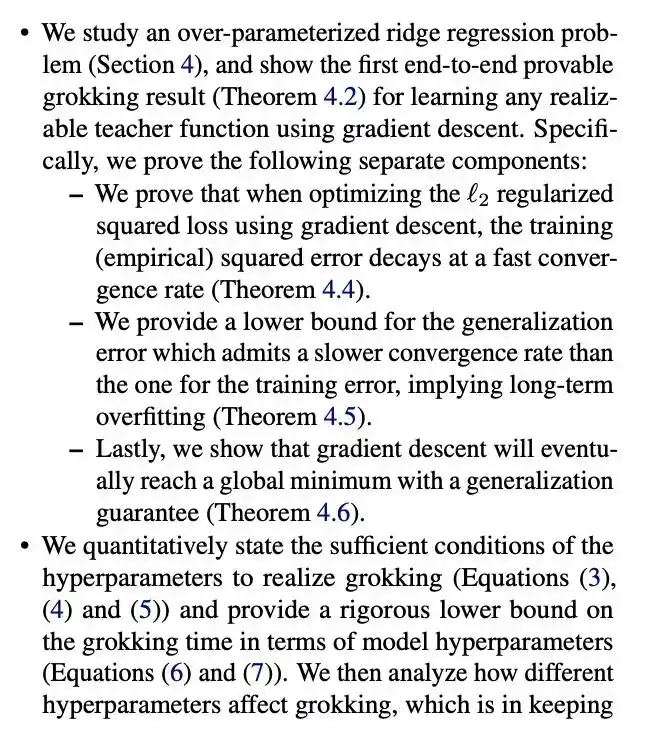
Grokking refers to the phenomenon where a model suddenly gains generalization ability at a certain moment long after the training loss has already converged. It's like a student who has been memorizing formulas for half a year suddenly wakes up one morning and truly understands.
This has been observed many times in deep learning, but this is the first time it has been rigorously proven in a simple model.
That DeepMind Paper from a Decade Ago Finally Received the Test of Time Award
The Test of Time Award was given to "Asynchronous Methods for Deep Reinforcement Learning" by Volodymyr Mnih, David Silver, and other DeepMind team members.
Title: Asynchronous Methods for Deep Reinforcement Learning
Publication: https://proceedings.mlr.press/v48/mniha16.html
The A3C algorithm (Asynchronous Advantage Actor-Critic) proposed in this paper was a benchmark in reinforcement learning when it was published in 2016.
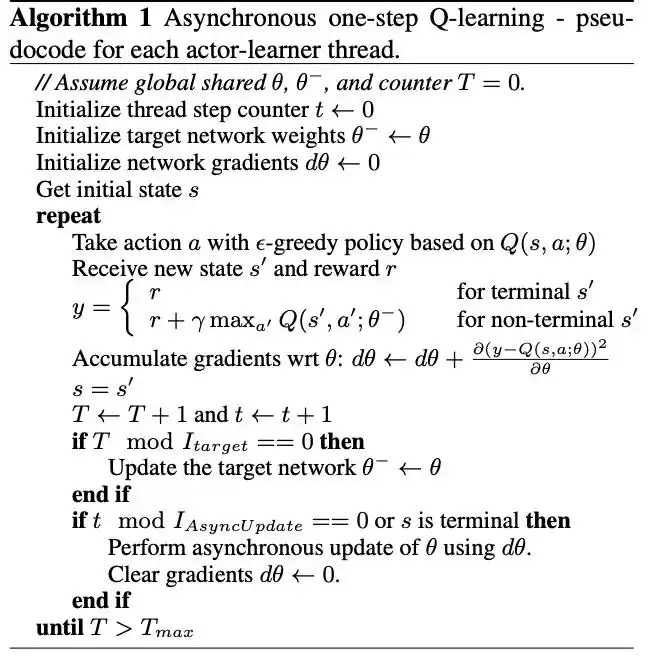
The core idea isn't complicated: instead of using one massive process for slow training, spawn many small processes to explore different strategies simultaneously and asynchronously aggregate gradients.
Simple, elegant, and effective. This philosophy of "ultimate simplicity" seems even clearer in hindsight after a decade.
A decade later, this idea has permeated the skeleton of almost all modern RL systems.
From AlphaGo to RLHF, from game AI to robot control, A3C's DNA is everywhere.
The absolute blockbuster of its year is now a well-deserved classic masterpiece!
What Signals Does ICML 2026 Release?
Spreading out this year's award list reveals three key clues.
First, diffusion models are the area with the highest density of current machine learning research. The double win of Outstanding Papers plus multiple Honorable Mentions gives them far more visibility than any other direction. In the next-generation language model architecture battle, diffusion models have officially entered the fray.
Second, AI safety research is undergoing an internal scrutiny. The Best Position Paper directly points out that alignment community tools are being repurposed, while an Honorable Mention questions the blind spots in Deepfake research. Academia is beginning to seriously confront a question: where exactly is the line drawn between safety tools and censorship tools?
These signals, layered together, point to one judgment: AI research is shifting from "rapid expansion" to "deep cleaning."
The ICML 2026 award list is the first audit report of this cleanup.
References:
https://blog.icml.cc/2026/07/05/announcing-the-icml-2026-awards/
This article is from the WeChat public account "新智元" (New Zhiyuan), author: ASI启示录, editor: David