Aave V4 crosses $250M – But ONE liquidity challenge still remains

ambcryptoPublicado a 2026-07-06Actualizado a 2026-07-06

Resumen

Aave V4 has surpassed $250 million in deposits, marking significant early adoption of its upgraded lending infrastructure. This growth is driven by enhanced capital efficiency, risk parameters, and lending options. However, a portion of these deposits came from users migrating from V3, meaning not all represent new capital entering the ecosystem. For sustained growth, Aave must continue attracting net new liquidity. While V4 deposit numbers are strong, the broader Total Value Locked (TVL) tells a more nuanced story. After a market downturn, overall TVL has recovered to 7.4 million ETH but remains below its all-time high, with withdrawals still limiting net liquidity growth. A positive sign is the substantial increase in cbETH deposits, which rose from around $18-$20 million in May to approximately $70 million by early July. This indicates growing demand for liquid staking collateral and strengthens Aave's lending capacity. Aave's future position as a dominant DeFi liquidity provider hinges on its ability to secure consistent, net-positive capital inflows beyond internal migrations.

Aave [AAVE] V4 has reached an important adoption milestone, highlighting continued demand despite a challenging DeFi environment. The protocol has now surpassed $250 million in deposits, reflecting strong early traction for its upgraded lending infrastructure.

This growth was driven by improvements in capital efficiency, enhanced risk parameters, and expanded lending options to attract additional liquidity. As well as growing the amount of deposits, it is also essential that the quality of these deposits remain high.
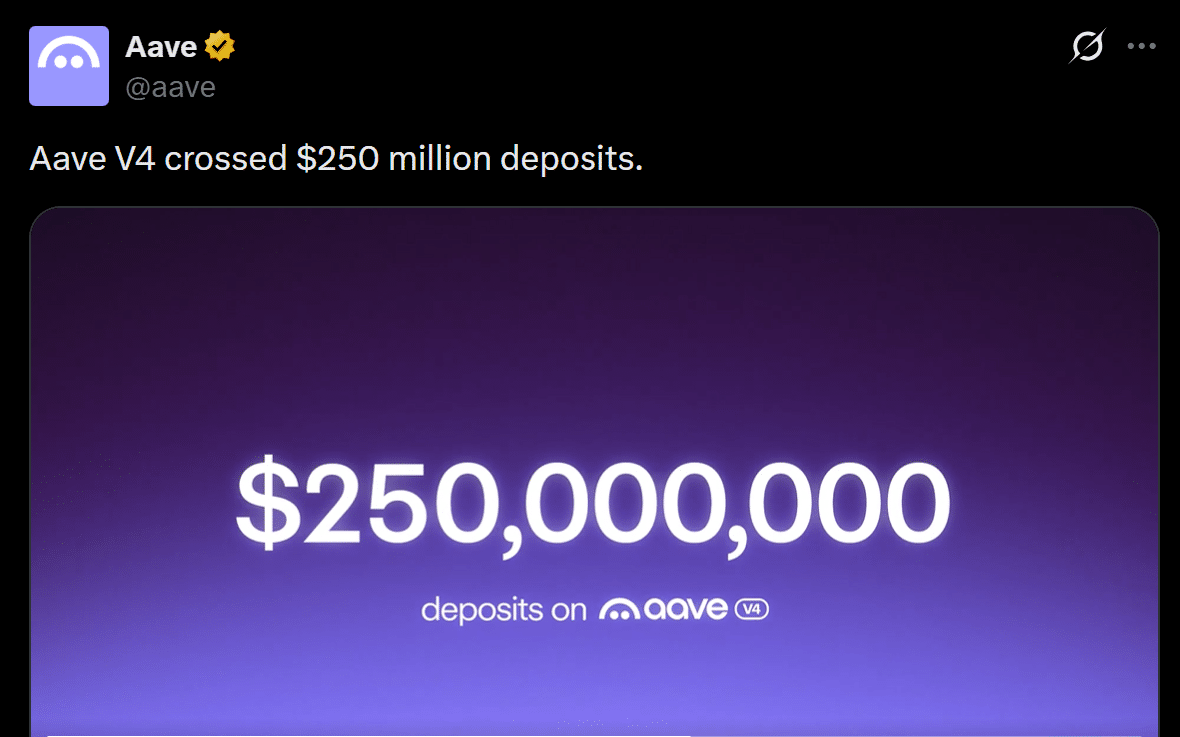
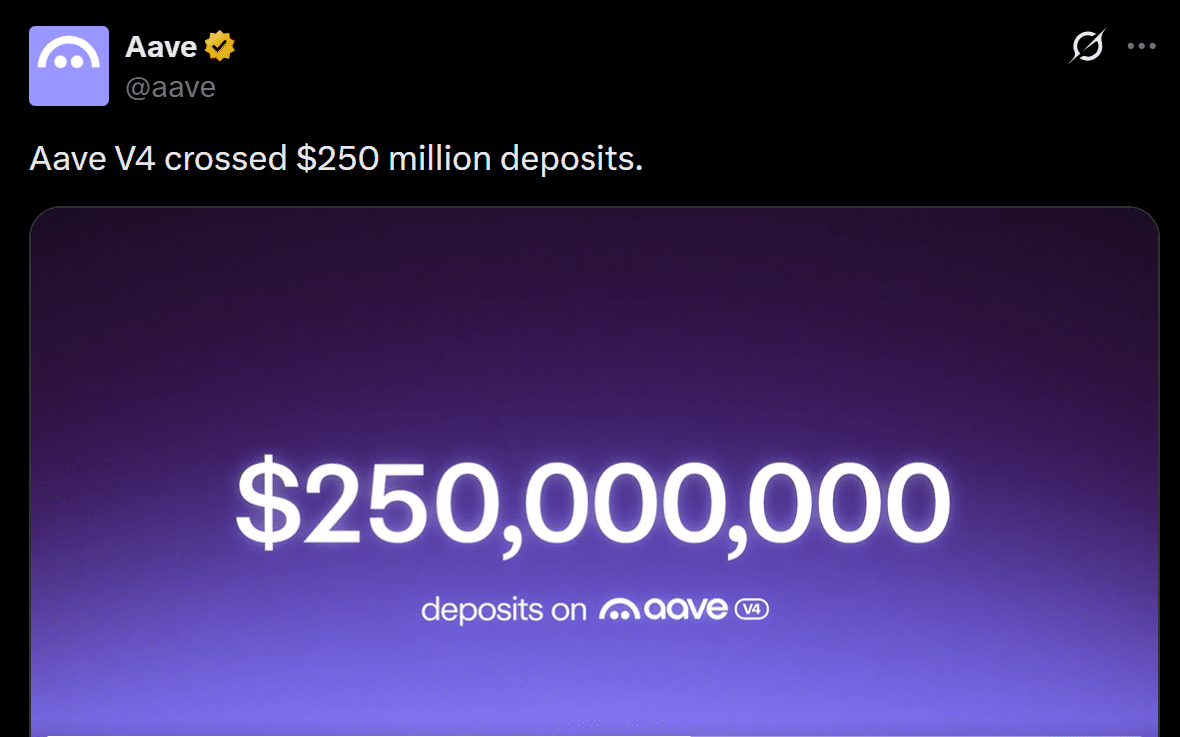
Source: Aave on X

Some portion of the deposits to V4 were due to users moving their previous positions from V3. Yet, they did not all represent new capital entering the Aave ecosystem.

Despite this, there have been positive signs indicating that new deposits continue to flow into the platform. This is in addition to the migrated assets. For Aave to be able to sustain further growth, they need to continue to draw new capital into the platform.

Should V4 continue to outperform V3 in terms of true net additions of liquidity, then Aave can solidify its position as the dominant liquidity provider within DeFi.

Broader liquidity tells a different story

Although Aave V4 continues to see record-breaking deposit numbers, the overall trend in liquidity is much more nuanced. The TVL previously reached an all-time high of about 13.4 million ETH. However, it fell dramatically due to the recent downturn in markets.

TVL has since bounced back to about 7.4 million ETH. Still far from the previous highs, this indicates that significant amounts of capital have been slow to recover even with improvements in investor sentiment.
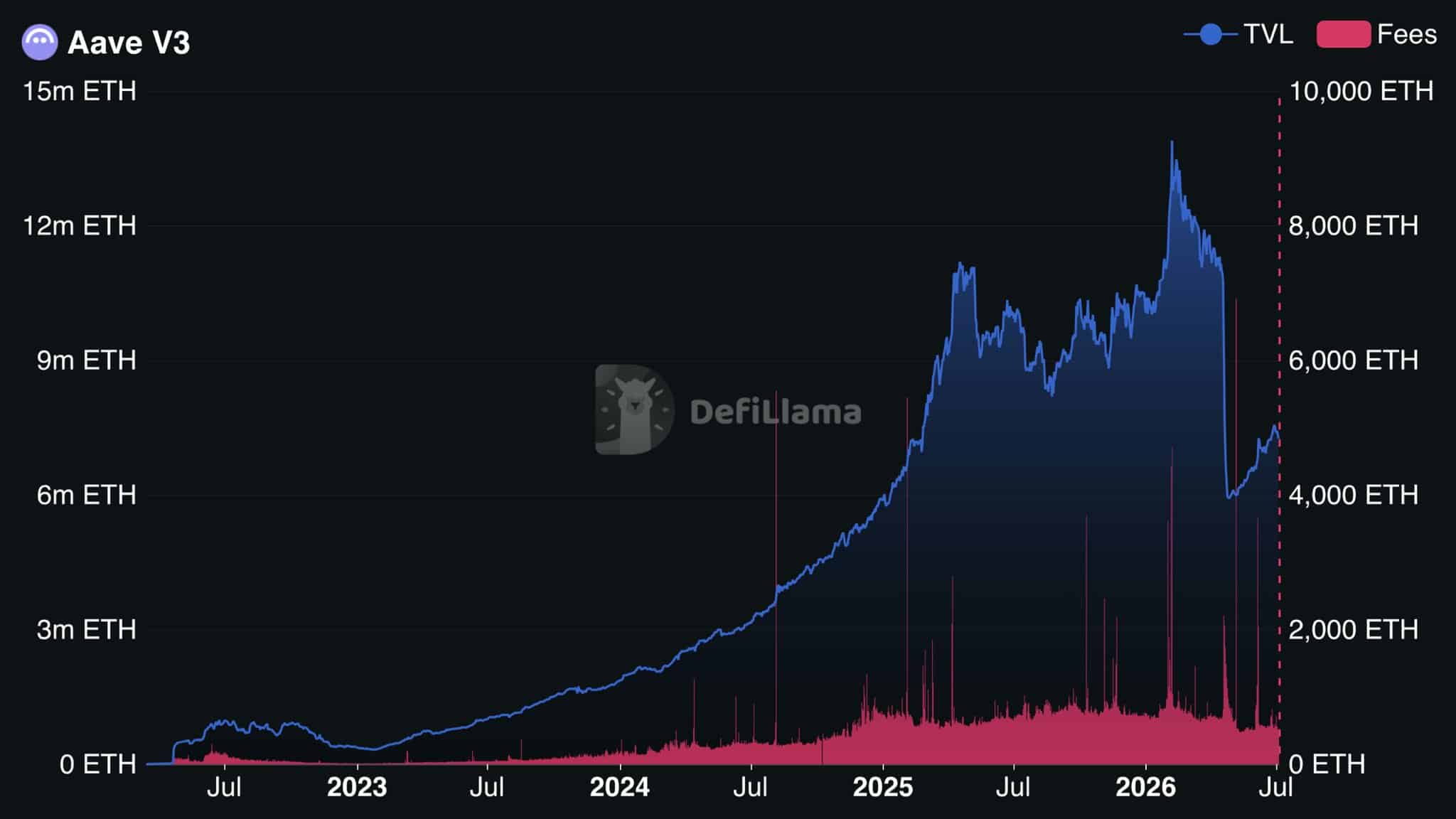
Source: DeFiLlama

That said, withdrawals are still outpacing some portion of the influx of new capital into V4, which is limiting how much liquidity grows as a whole.

While V4 has seen continuous updates to its protocols and has seen a recovery in TVL. Still, these indicators suggest a resilient position by V4 for future growth but do not show that V4 is structurally weak.

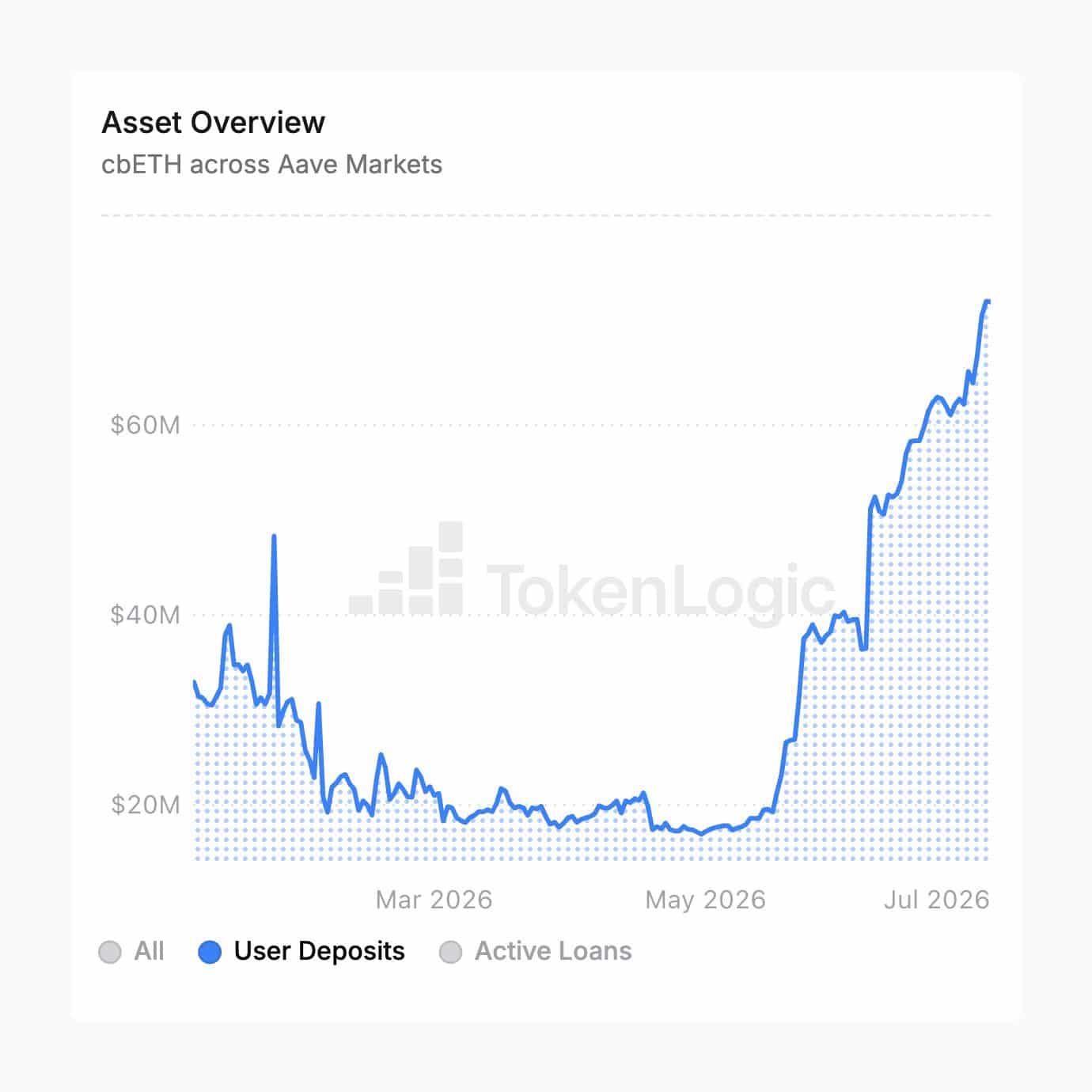
Moreover, cbETH deposits across Aave have increased lately. Deposits held near $18-$20 million through May before increasing to early July levels of approximately $70 million.
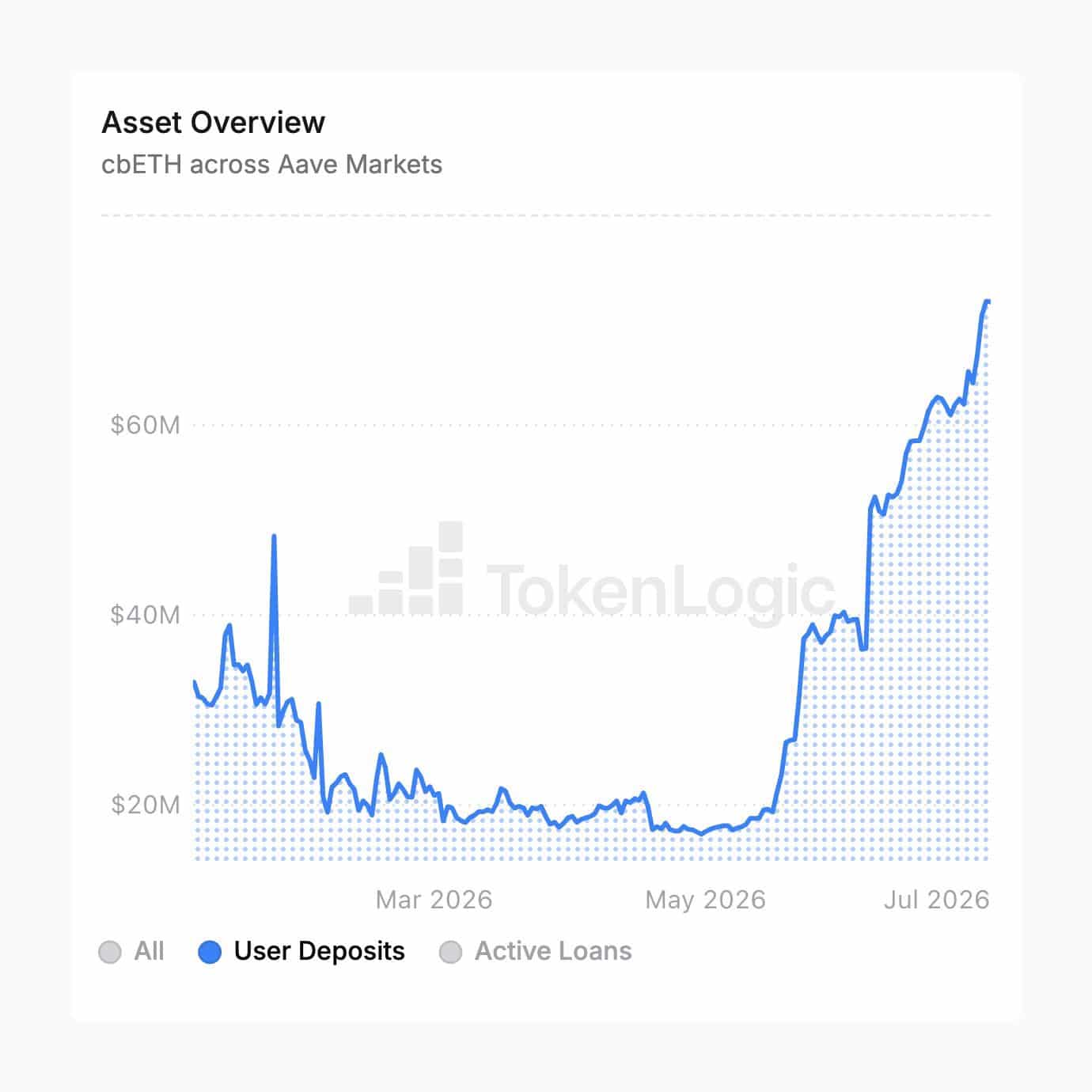
Source: TokenLogic

This rapid increase indicates a strengthening demand for liquid staking collateral; additionally, it reinforces the liquidity and lending capacity of Aave.

Whether Aave can expand once again as a larger ecosystem will be determined by the ability to continue seeing net positive flows to the platform over time, excluding internal migration.


Final Summary

  • Aave V4 growth depended on sustained net new liquidity, not internal capital migration.
  • Aave’s liquidity was strengthening as cbETH deposits continued to rise across the protocol.

Criptos en tendencia

Preguntas relacionadas

QWhat is the key challenge that Aave V4 still faces despite surpassing $250M in deposits?

AThe key challenge is attracting sustained net new liquidity, not just internal capital migration from V3, to ensure continued growth.

QHow has the overall Total Value Locked (TVL) in Aave changed recently?

AAave's overall TVL reached an all-time high of about 13.4M ETH but fell dramatically due to market conditions. It has since recovered to about 7.4M ETH, still far from the previous peak.

QWhat recent trend in a specific asset's deposits indicates strengthening demand on Aave?

AThere has been a rapid increase in cbETH (Coinbase Wrapped Staked ETH) deposits, rising from ~$18-20M in May to approximately $70M by early July.

QWhat are the main factors that drove the growth of Aave V4 deposits?

AGrowth was driven by improvements in capital efficiency, enhanced risk parameters, expanded lending options, and some migration of user positions from V3.

QWhat does the article suggest is necessary for Aave to solidify its position as the dominant DeFi liquidity provider?

AAave V4 needs to continue outperforming V3 in terms of true net additions of liquidity, meaning it must consistently attract new capital from outside its ecosystem.

Lecturas Relacionadas

Besu Patches Vulnerabilities in 5 Components: What Node Operators Need to Know

The Ethereum client Besu, developed by the Hyperledger community, has patched five security vulnerabilities discovered by blockchain security firm CertiK. These vulnerabilities, detailed in four security advisories on August 14, were all addressed in version 26.7.1, an urgent security update initially released on July 27. The intentional delay between the patch release and the public disclosure of details gave node operators a crucial window to update. JiaLiang Chang, CertiK's Director of Security Engineering, explained this "patch first, details later" model provides defenders a time advantage, allowing them to identify affected systems, test the update, and coordinate deployments—particularly important for institutional or permissioned blockchain networks requiring formal change management. The vulnerabilities, found through CertiK's "Chain Scan" attack methodology, involved issues in block announcement handling, consensus proposal buffering, WebSocket subscription limits, and JSON-RPC filter creation. If exploited, they could have allowed an attacker to exhaust a node's memory or thread resources, compromising its availability and the consensus process. Chang highlighted that while the open-source ecosystem is moving toward more formalized security testing (like differential fuzzing and bug bounty programs), coverage remains uneven. Testing often focuses more on protocol compliance than on continuous resource exhaustion, race conditions, or deployment-specific failures. He emphasized that third-party research remains vital for uncovering attack vectors beyond routine development, advocating for a mature, cumulative security model combining continuous integration, multi-node attack testing, independent audits, and regression testing for each confirmed vulnerability.

cryptonews.ruHace 25 min(s)

Besu Patches Vulnerabilities in 5 Components: What Node Operators Need to Know

cryptonews.ruHace 25 min(s)

Trading

Spot

Artículos destacados

Cómo comprar ONE

¡Bienvenido a HTX.com! Hemos hecho que comprar Harmony (ONE) sea simple y conveniente. Sigue nuestra guía paso a paso para iniciar tu viaje de criptos.Paso 1: crea tu cuenta HTXUtiliza tu correo electrónico o número de teléfono para registrarte y obtener una cuenta gratuita en HTX. Experimenta un proceso de registro sin complicaciones y desbloquea todas las funciones.Obtener mi cuentaPaso 2: ve a Comprar cripto y elige tu método de pagoTarjeta de crédito/débito: usa tu Visa o Mastercard para comprar Harmony (ONE) al instante.Saldo: utiliza fondos del saldo de tu cuenta HTX para tradear sin problemas.Terceros: hemos agregado métodos de pago populares como Google Pay y Apple Pay para mejorar la comodidad.P2P: tradear directamente con otros usuarios en HTX.Over-the-Counter (OTC): ofrecemos servicios personalizados y tipos de cambio competitivos para los traders.Paso 3: guarda tu Harmony (ONE)Después de comprar tu Harmony (ONE), guárdalo en tu cuenta HTX. Alternativamente, puedes enviarlo a otro lugar mediante transferencia blockchain o utilizarlo para tradear otras criptomonedas.Paso 4: tradear Harmony (ONE)Tradear fácilmente con Harmony (ONE) en HTX's mercado spot. Simplemente accede a tu cuenta, selecciona tu par de trading, ejecuta tus trades y monitorea en tiempo real. Ofrecemos una experiencia fácil de usar tanto para principiantes como para traders experimentados.

594 Vistas totalesPublicado en 2024.12.12Actualizado en 2026.06.02

Cómo comprar ONE

Discusiones

Bienvenido a la comunidad de HTX. Aquí puedes mantenerte informado sobre los últimos desarrollos de la plataforma y acceder a análisis profesionales del mercado. A continuación se presentan las opiniones de los usuarios sobre el precio de ONE (ONE).

活动图片