DAT longevity hinges on avoiding ‘mNAV roller coaster’: Solmate CEO

cointelegraphPublicado a 2025-12-18Actualizado a 2025-12-18

Resumen

Digitalsummary": "Solmate CEO Marco Santori argues that the longevity of digital asset treasury (DAT) companies depends on avoiding the volatility of the 'mNAV roller coaster.' While pure-play DATs rely on maintaining a high market-cap-to-net-asset-value (mNAV) ratio to grow, their survival is threatened when interest in their underlying token wanes and mNAV drops. Santori advocates for a diversified business model instead of a pure treasury play. Solmate's strategy focuses on providing bare-metal validator services and infrastructure for high-performance computing on Solana, catering to clients like hedge funds that require low-latency access. This generates cash flow, which is reinvested into buying more SOL, creating a sustainable 'infrastructure flywheel' rather than being solely dependent on token price appreciation."}

The rise of digital asset treasury (DAT) companies will go down as a meta-narrative of 2025, but the longevity of the movement will be decided by capital management and sound business strategies.

According to Solmate CEO Marco Santori, all DATs have to contend with the value of the underlying token they hold on their balance sheets. This shouldn’t be a problem for revenue-generating businesses, but pure-play DATs will be in for a bumpy ride.

“The multiple-to-net-asset value (mNAV) is how a lot of these treasury companies survive. If they’re trading at a high mNAV, meaning their market cap is bigger than the value of the coins they have on the balance sheet, then they can sell stock in an accretive way,” Santori said on Cointelegraph’s Chain Reaction X show.

“Every dollar of stock they sell, they take that and go out and buy the underlying coin with, and that increases their net asset value. So long as they can maintain the premium, they can just keep doing that. And that is the pure play treasury model. I actually think that has a future.”

Related: Sports group Brera pivots to crypto, rebrands with $300M for SOL treasury

But the issue is that mNAV will dwindle when the interest in the underlying token of a DAT wanes. Santori explained that falling token prices result in lower mNAVs.

“That means a lot of the treasury companies are kind of idle because they can’t grow efficiently and effectively. I didn’t want to be subject to that. I didn’t want that for our investors. I want to give them exposure to SOL and to the growth of the Solana network, but I didn’t want them riding an mNAV roller coaster,” Santori said.

The validator DAT strategy

Solmate is among a handful of major Solana-based DATs that have attracted significant capital in 2025. Santori, who initially helped DeFi Development Fund establish its Solana (SOL) DAT, took learnings away from that “pure-play” approach before steering the ship as CEO of Solmate.

The latter is heavily leaning into offering services based on a bare-metal server business model. A bare-metal server is a single-tenant, physical server that gives you direct access to the hardware. Unlike virtual servers, where resources are shared, a bare metal server is dedicated entirely to one user, making it ideal for high-performance computing.

Santori said that proof-of-stake protocols like Ethereum and Solana not only allow businesses to stake tokens but to actively participate in governance:

“To do that, you have to have hardware. You have to have bare metal. You have to be able to offer more services on top of your own validator. That’s why we believe it’s a virtuous cycle. We call it the infrastructure flywheel.”

In the Solana ecosystem, Santori sees a unique opportunity to offer bare-metal validator services, given that the protocol was uniquely designed for high-throughput services like exchanges and trading platforms.

“Hedge funds will pay top dollar for access to exchanges, low latency, high performance access to exchanges, so that they can get their orders in earlier than other traders can, and they can do that with more information about the market. They do that by co-locating and offering high-performance hardware,” Santori said.

Related: Solmate looks beyond SOL treasury model with RockawayX acquisition

The Solmate CEO said they aim to build infrastructure that enables that by using bare metal servers, offering co-location and loading validators with significant amounts of SOL.

“That allows us to be chosen as the leader more often in every epoch, which means we can validate more transactions, which means we can order more transactions within each particular block. The cash we earn from those services, we can plow right back into buying SOL.”

Solmate announced its acquisition of RockawayX’s operations in December 2025. This included its validator infrastructure and onchain liquidity business, as well as its venture and credit funds. The merger created a combined entity with more than $2 billion in assets under management.

Criptos en tendencia

Preguntas relacionadas

QWhat does the longevity of digital asset treasury (DAT) companies depend on, according to the article?

AThe longevity of DAT companies depends on capital management and sound business strategies, particularly their ability to avoid the 'mNAV roller coaster' by maintaining a premium multiple-to-net-asset value (mNAV).

QHow does a high mNAV benefit a pure-play treasury company?

AA high mNAV allows a pure-play treasury company to sell stock in an accretive way, using the proceeds to buy more of the underlying token, thereby increasing their net asset value and enabling continuous growth as long as the premium is maintained.

QWhy did Solmate's CEO choose not to adopt a pure-play DAT model?

ASolmate's CEO avoided the pure-play DAT model because it is subject to the volatility of mNAV, which dwindles when interest in the underlying token wanes, making it inefficient for growth and exposing investors to an 'mNAV roller coaster'.

QWhat is Solmate's primary business model to support its DAT strategy?

ASolmate leverages a bare-metal server business model to offer validator services, including co-location and high-performance hardware for hedge funds, generating cash flow that is reinvested into buying SOL and participating in network governance.

QWhat was the outcome of Solmate's acquisition of RockawayX in December 2025?

AThe acquisition of RockawayX's validator infrastructure, onchain liquidity business, and venture and credit funds created a combined entity with over $2 billion in assets under management, strengthening Solmate's infrastructure and service offerings.

Lecturas Relacionadas

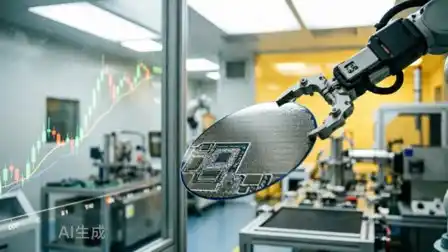
The Semiconductor Industry's Most Obscure Chokepoint Material: It Has Multiplied in Price Unnoticed, and China Just Banned Its Export

"Helium: The Silent Choke Point in Semiconductors" Helium, despite being the universe's second most abundant element, is critically scarce on Earth. It cannot be synthesized artificially and escapes Earth's gravity once released, making it a non-renewable resource. Yet, it is indispensable for advanced semiconductor manufacturing, requiring ultra-high purity (99.9999%) for processes like wafer etching, leak detection, and thermal management in lithography tools, with no viable substitutes. This low-profile resource, whose price has doubled unnoticed, suddenly gained attention when China imposed an export ban on July 10th. The ban is a response to a severe global shortage triggered months earlier. In March, missile attacks damaged the world's largest helium production hub in Qatar's Ras Laffan, halting a third of global supply with repairs expected to take 3-5 years. Concurrently, Russia tightened export controls, and the US sold off its federal helium reserve. Approximately 200 specialized transport containers, each worth ~$1 million, were stranded with perishable cargo. Global spot prices skyrocketed, and chipmakers like TSMC warned of potential impacts. China, which imports over 84% of its helium (primarily from Qatar and Russia), faces a severe squeeze. Despite being helium-poor, China has developed domestic extraction technology over five years, processing byproduct gases from LNG plants to produce ultra-pure helium. Domestic output, while still only covering less than 20% of demand, enabled the recent export ban aimed at securing domestic supply for its own expanding chip industry. The industry now faces "Helium Shortage 5.0." With key global sources constrained for years, this invisible gas—once wasted on party balloons—has become a critical, geopolitically charged bottleneck for chips, healthcare (MRI machines), and beyond, forcing the world to finally treat it as the finite strategic resource it is.

marsbitHace 2 min(s)

The Semiconductor Industry's Most Obscure Chokepoint Material: It Has Multiplied in Price Unnoticed, and China Just Banned Its Export

marsbitHace 2 min(s)

Early Investor of Unitree Bets on a Brain-Computer Interface Company

"Wabo Technologies, a brain-computer interface (BCI) startup, has secured new funding from Vertex Ventures (under Temasek), Hongtai Fund, Chengdu Future Industry Fund, and Huifengda Capital. Vertex Ventures is known for its early bet on Unitree Robotics. Inspired by the sci-fi film "Avatar," founder Zhang Xingzhi has pursued human-machine interaction for over a decade. He established Wabo in late 2025, coinciding with China's push for BCI as a future industry. Unlike companies focused solely on medical hardware, Wabo positions itself as a model company. Its core mission is to develop a "Human Neural Intent Model" that decodes EEG, EMG, and behavioral signals to understand a user's goals, confirmations, corrections, and stop intentions before physical action, translating them into standardized control signals for machines, robots, or smart devices. The young, full-stack team, backed by academic collaborators from Tianjin University and Fudan University, quickly attracted investors. The company had previously raised a seed round from Ceyuan Capital. Investors were impressed by Wabo's systematic capabilities in data collection, signal processing, and engineering, seeing potential beyond a single hardware product toward a reusable layer of human intent interpretation. Applications span medical rehabilitation, smart homes, embodied AI, and even space exploration, with Wabo partnering with Tianjin University on pioneering "space BCI" research. Wabo plans a dual-headquarters strategy, with Shanghai focusing on high-end R&D and model development, and Chengdu handling hardware, product development, and supply chain. The BCI sector in China is heating up, with over 30 financing deals in early 2026. Zhang believes future competition will center on who can build a sustainable data-model-scenario loop. He predicts industry consolidation within three years, with only companies that master this闭环 surviving. The vision from "Avatar" is inching closer to reality."

marsbitHace 17 min(s)

Early Investor of Unitree Bets on a Brain-Computer Interface Company

marsbitHace 17 min(s)

ChangXin Technology: A Cyclical Stock Standing Atop the Cycle Peak

Changxin Technology: A Cyclical Stock at the Peak On July 27, 2026, Changxin Technology topped the A-share market with a market capitalization of 3.28 trillion yuan, surging 465% on its first trading day. The company, which lost 16.3 billion yuan in 2023, reported an estimated net profit of 50-57 billion yuan for the first half of 2026. Its dramatic reversal mirrors the volatile DRAM (Dynamic Random Access Memory) cycle. The DRAM industry is inherently cyclical, with booms and busts every 3-4 years. This is due to product standardization and a significant time lag in supply adjustment. When prices rise, manufacturers expand capacity, but new production takes 2-3 years to come online, often leading to oversupply and price crashes when demand cools. Changxin's performance perfectly tracks this cycle. It recorded deep losses in 2023-2024 during the industry downturn, turned its first annual profit in 2025, and saw profits skyrocket in Q1 2026. This surge is primarily price-driven. The AI boom has led major players like Samsung and SK Hynix to shift 70-80% of new capacity to high-margin HBM (High Bandwidth Memory), creating a severe shortage and price explosion in general-purpose DRAM markets where Changxin competes. However, a massive global capacity expansion is underway. The top three manufacturers have announced nearly $70 billion in capital expenditure for 2026. Changxin itself plans to expand from three to seven 12-inch wafer fabs. This investment will translate into significant new supply in 2-3 years. While DRAM prices are expected to remain high through 2026-2027, price growth is already slowing, and a potential downturn is forecast for around 2028 as new capacity ramps up. A key challenge for Changxin is catching up in the critical HBM segment. While it has delivered HBM3 samples, leaders are already mass-producing more advanced HBM3E. Success in HBM is crucial for gaining true cyclical resilience. In conclusion, Changxin is a commendable company that has broken foreign monopolies in DRAM. Its long-term growth narrative—driven by import substitution and AI—is valid. Yet, its current valuation of 5-6x forward P/E, typical for a cyclical stock at its peak, suggests much future growth is already priced in. AI may extend the current cycle but cannot eliminate the industry's inherent volatility. For investors, the critical question is preparedness for the inevitable downturn when the cycle turns.

marsbitHace 22 min(s)

ChangXin Technology: A Cyclical Stock Standing Atop the Cycle Peak

marsbitHace 22 min(s)

What If the CLARITY Act Ultimately Fails to Pass?

This article examines the potential consequences if the CLARITY Act, a major US crypto market structure bill, fails to pass in the Senate. Having cleared the House in July 2025 and a key committee in May 2026, the bill's passage into law this year is now considered uncertain, with prediction markets showing its probability dropping from 82% in February to 35%. The article analyzes three main areas of impact should the bill fail. First, for the crypto market, analysts believe a negative reaction is limited and partially priced in already, with Bitcoin's recent weakness attributed more to macro factors. The specific details of the failed bill would matter more than its failure alone. Second, for US stocks, Coinbase (COIN) could see short-term pressure, with analysts citing a potential drop to the $140-$160 range, though its long-term thesis is not solely tied to the bill. For Circle, failure might be neutral or even positive long-term, as a passed bill could invite more stablecoin competition. Bitcoin-treasury firms like Strategy (MSTR) are seen as more directly tied to Bitcoin's price than the legislation. Third, in Washington, the failure is framed within a broader political struggle. Democratic resistance is partly linked to concerns over former President Trump's crypto holdings, making the bill a political tool. If it fails in 2026, the industry would likely rely on existing frameworks like the GENIUS Act and agency-level rules. Missing the August window likely pushes any significant progress to 2027, a period of political reshuffling after midterm elections, making consensus harder to achieve.

Odaily星球日报Hace 1 hora(s)

What If the CLARITY Act Ultimately Fails to Pass?

Odaily星球日报Hace 1 hora(s)

Trading

Spot

Artículos destacados

Cómo comprar O

¡Bienvenido a HTX.com! Hemos hecho que comprar O1 exchange (O) sea simple y conveniente. Sigue nuestra guía paso a paso para iniciar tu viaje de criptos.Paso 1: crea tu cuenta HTXUtiliza tu correo electrónico o número de teléfono para registrarte y obtener una cuenta gratuita en HTX. Experimenta un proceso de registro sin complicaciones y desbloquea todas las funciones.Obtener mi cuentaPaso 2: ve a Comprar cripto y elige tu método de pagoTarjeta de crédito/débito: usa tu Visa o Mastercard para comprar O1 exchange (O) al instante.Saldo: utiliza fondos del saldo de tu cuenta HTX para tradear sin problemas.Terceros: hemos agregado métodos de pago populares como Google Pay y Apple Pay para mejorar la comodidad.P2P: tradear directamente con otros usuarios en HTX.Over-the-Counter (OTC): ofrecemos servicios personalizados y tipos de cambio competitivos para los traders.Paso 3: guarda tu O1 exchange (O)Después de comprar tu O1 exchange (O), guárdalo en tu cuenta HTX. Alternativamente, puedes enviarlo a otro lugar mediante transferencia blockchain o utilizarlo para tradear otras criptomonedas.Paso 4: tradear O1 exchange (O)Tradear fácilmente con O1 exchange (O) en HTX's mercado spot. Simplemente accede a tu cuenta, selecciona tu par de trading, ejecuta tus trades y monitorea en tiempo real. Ofrecemos una experiencia fácil de usar tanto para principiantes como para traders experimentados.

252 Vistas totalesPublicado en 2026.06.19Actualizado en 2026.06.29

Cómo comprar O

Cómo comprar PROS

¡Bienvenido a HTX.com! Hemos hecho que comprar Pharos (PROS) sea simple y conveniente. Sigue nuestra guía paso a paso para iniciar tu viaje de criptos.Paso 1: crea tu cuenta HTXUtiliza tu correo electrónico o número de teléfono para registrarte y obtener una cuenta gratuita en HTX. Experimenta un proceso de registro sin complicaciones y desbloquea todas las funciones.Obtener mi cuentaPaso 2: ve a Comprar cripto y elige tu método de pagoTarjeta de crédito/débito: usa tu Visa o Mastercard para comprar Pharos (PROS) al instante.Saldo: utiliza fondos del saldo de tu cuenta HTX para tradear sin problemas.Terceros: hemos agregado métodos de pago populares como Google Pay y Apple Pay para mejorar la comodidad.P2P: tradear directamente con otros usuarios en HTX.Over-the-Counter (OTC): ofrecemos servicios personalizados y tipos de cambio competitivos para los traders.Paso 3: guarda tu Pharos (PROS)Después de comprar tu Pharos (PROS), guárdalo en tu cuenta HTX. Alternativamente, puedes enviarlo a otro lugar mediante transferencia blockchain o utilizarlo para tradear otras criptomonedas.Paso 4: tradear Pharos (PROS)Tradear fácilmente con Pharos (PROS) en HTX's mercado spot. Simplemente accede a tu cuenta, selecciona tu par de trading, ejecuta tus trades y monitorea en tiempo real. Ofrecemos una experiencia fácil de usar tanto para principiantes como para traders experimentados.

268 Vistas totalesPublicado en 2026.06.22Actualizado en 2026.06.29

Cómo comprar PROS

Qué es VERONA

I. Introducción al Proyecto VERONA es una blockchain construida para todos, en todas partes a través de la abstracción de cadenas. Utilizando su capa de Abstracción Generalizada, VERONA se distingue por integrar funcionalidades complejas de blockchain, como cuentas, firmas e interoperabilidad, directamente a nivel de protocolo. Este enfoque permite interactuar con aplicaciones de blockchain sin necesidad de entender las tecnologías subyacentes.1) Información Básica Nombre: VERONA (VERONA)III. Enlaces Relacionados Enlace al sitio web oficial: https://xion.burnt.com/ Libro Blanco: https://xion.burnt.com/whitepaper.pdf Exploradores: https://explorer.burnt.com/ Redes Sociales: https://x.com/burnt_xion Nota: La introducción del proyecto proviene de los materiales publicados o proporcionados por el equipo oficial del proyecto, que es solo para referencia y no constituye asesoramiento de inversión. HTX no se hace responsable de ninguna pérdida directa o indirecta resultante.

306 Vistas totalesPublicado en 2026.06.22Actualizado en 2026.06.22

Qué es VERONA

Discusiones

Bienvenido a la comunidad de HTX. Aquí puedes mantenerte informado sobre los últimos desarrollos de la plataforma y acceder a análisis profesionales del mercado. A continuación se presentan las opiniones de los usuarios sobre el precio de A (A).

活动图片