Crypto’s $30 billion lending boom is changing the market – Here’s how

ambcryptoPublicado a 2026-03-26Actualizado a 2026-03-26

Resumen

Crypto's lending sector, now valued at $30 billion, is emerging as a key pillar, shifting focus from Layer 1 blockchains like Ethereum and Tron. While L1s still dominate in value, lending protocols such as Aave and Morpho are at the center of a rapidly growing on-chain credit system. The rise of stablecoins as a medium of exchange and the expansion of tokenized assets are improving liquidity and market efficiency. This lending boom is creating a new "yield layer," where users earn returns through interest, leverage, and better capital utilization, turning holdings into productive assets.

For years, the crypto spotlight has been on L1s like Ethereum [ETH] and Tron [TRX]. Today, it seems like that’s changed.

On-chain lending is becoming one of the ecosystem’s most consequential pillars!

An assessment of the competitive landscape

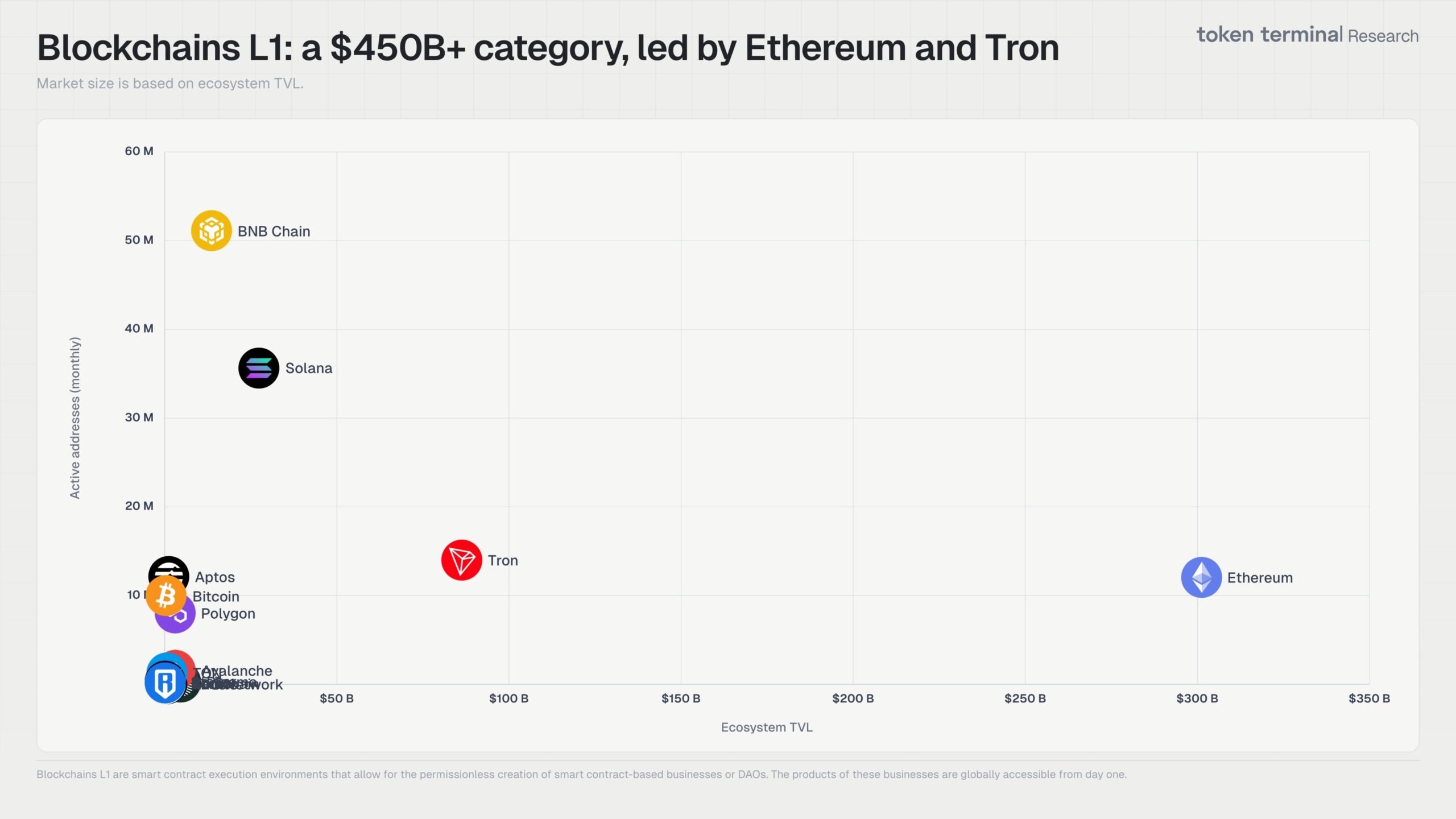
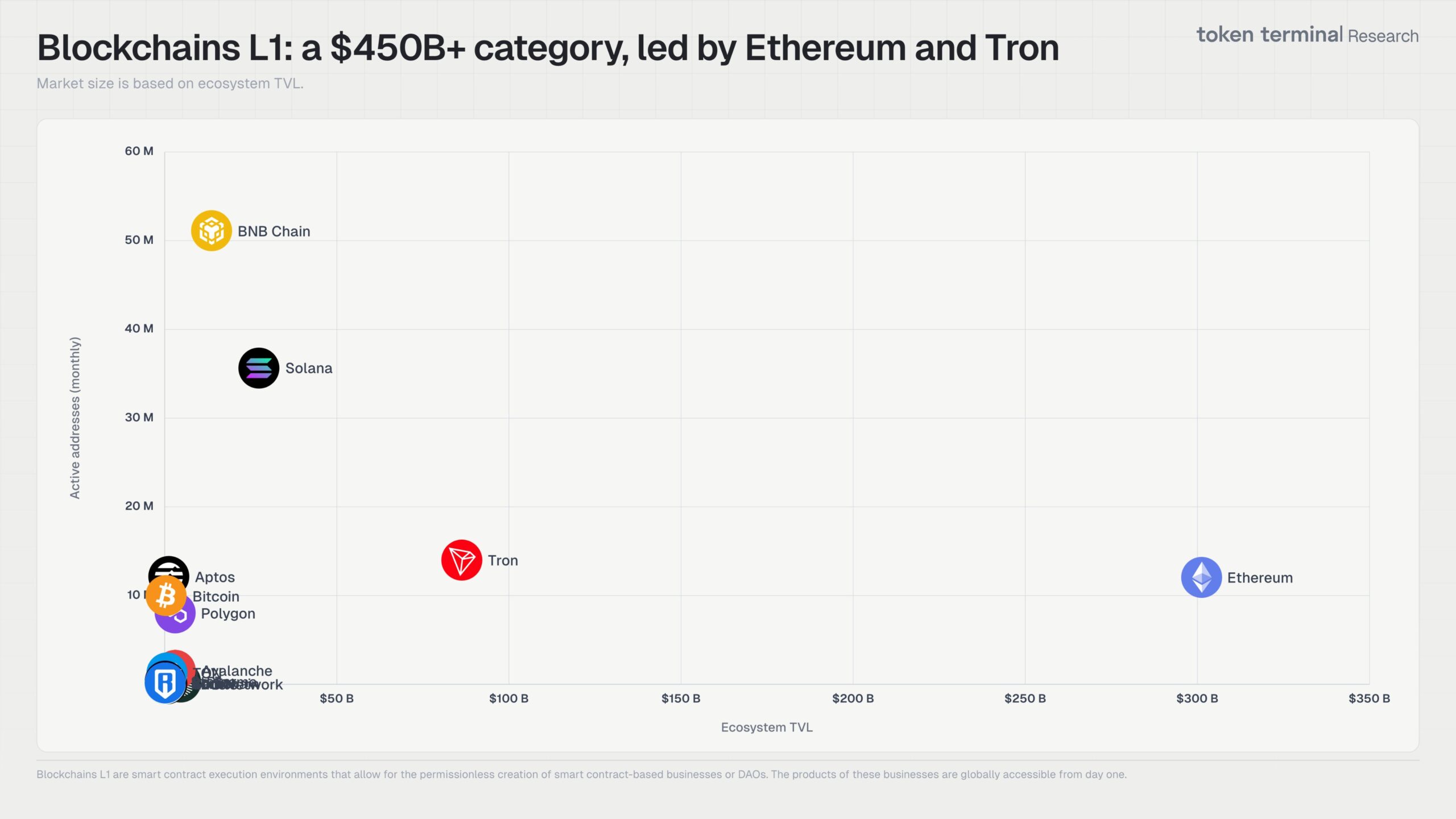
Layer 1 blockchains still anchor the crypto economy today, with the aforementioned L1s commanding a disproportionate share of ecosystem value. According to data from Token Terminal, the gap between these leaders and the rest of the race is stark.
Source: Token Terminal

Elsewhere, chains like BNB Chain [BNB] and Solana [SOL] are competing on the user activity front, even as their relative TVL lags.

The market is still concentrated at the top, but a lot more competitive than we think.

Is lending the new yield source?

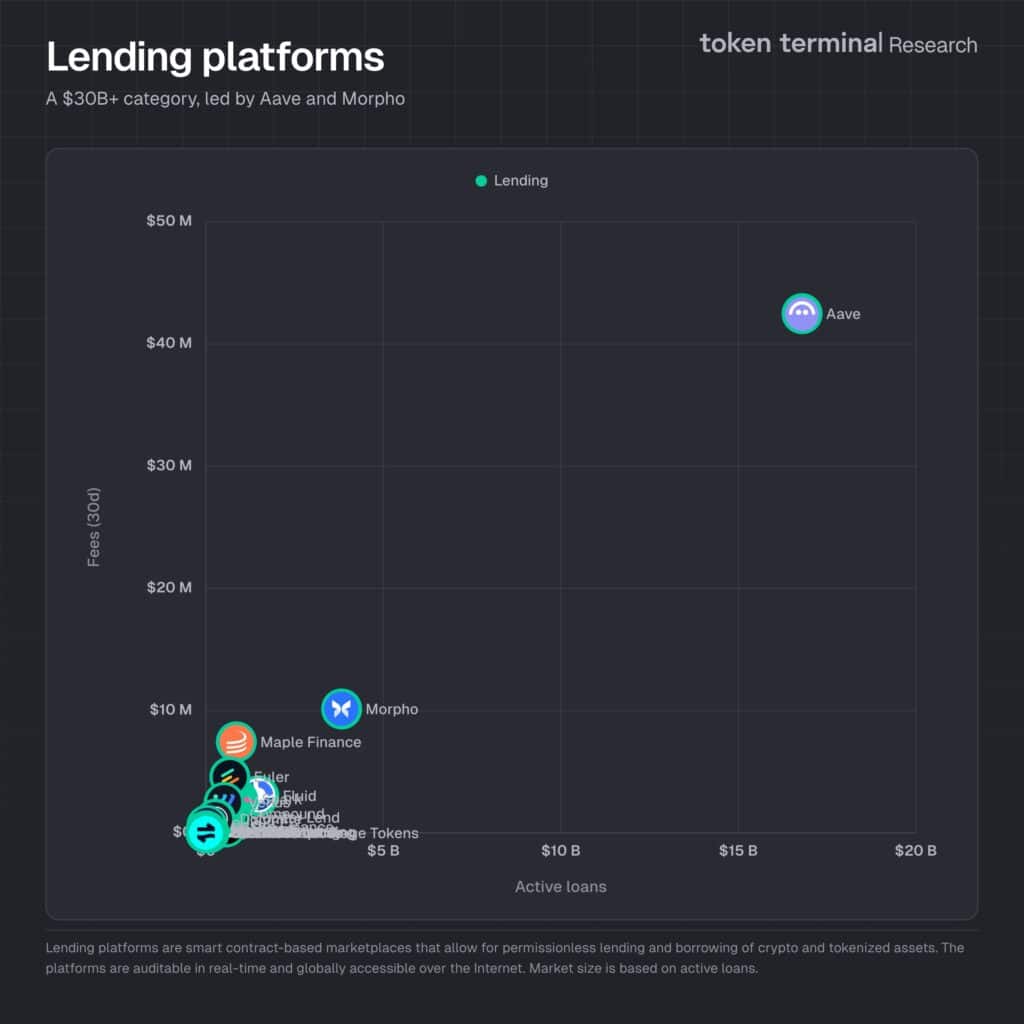
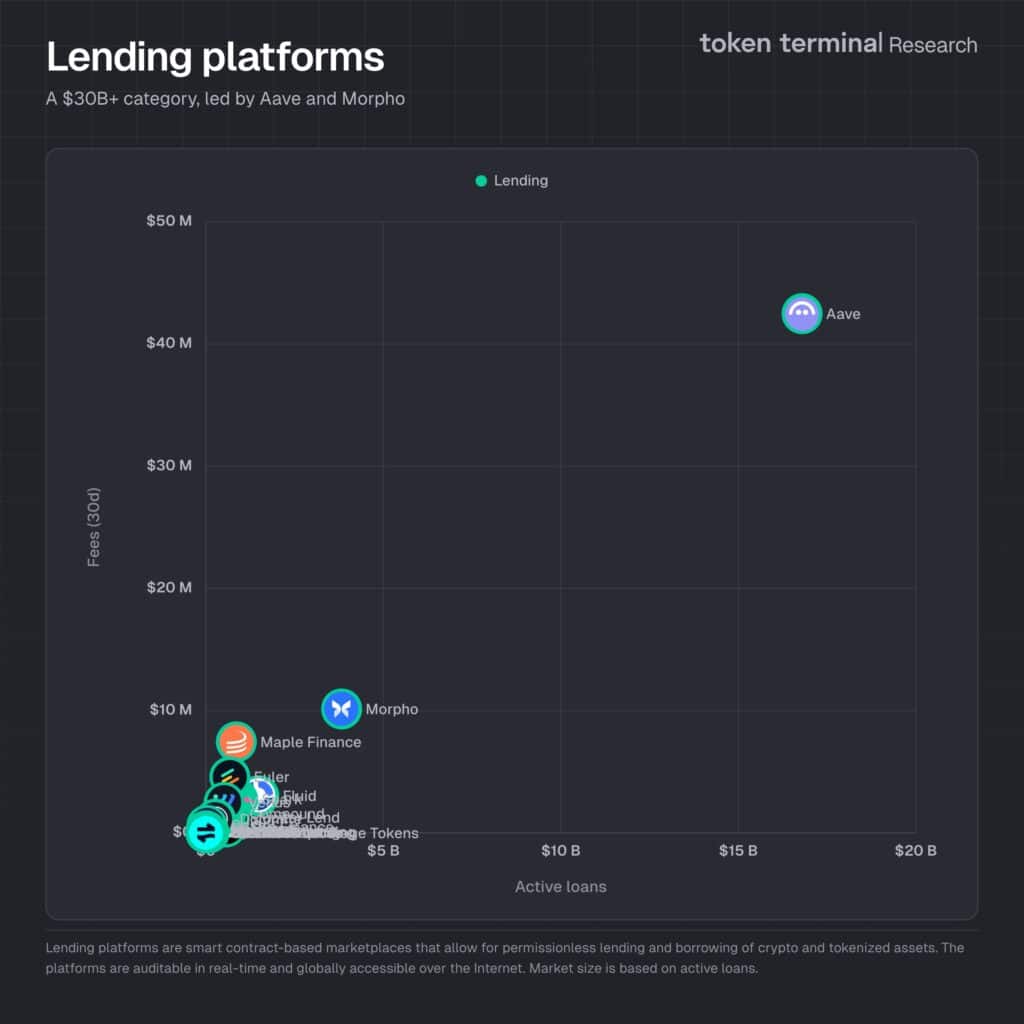
Building on that foundation, lending protocols like Aave and Morpho are now at the center of a fast-growing, on-chain credit system worth about $30 billion!

With stablecoins becoming a popular medium of exchange on-chain, they’re also a default asset for borrowing and lending. On the other hand, a new class of tokenized assets (from funds to commodities and even equities) are expanding the pool of usable collateral.
Source: Token Terminal

Together, they improve liquidity and make markets more efficient.

This is where lending begins to resemble what crypto twitter is now calling a “yield layer.” Instead of relying on buzz alone, users see returns through interest, leverage, and better capital.

In doing so, lending platforms turn holdings into productive assets, and the effects are far-reaching.

Case in point? Rhea Finance integrating with TRON.

Criptos en tendencia

Preguntas relacionadas

QWhat is the current estimated value of the on-chain credit system driven by lending protocols like Aave and Morpho?

AThe on-chain credit system driven by lending protocols like Aave and Morpho is worth about $30 billion.

QWhich Layer 1 blockchains are mentioned as commanding a disproportionate share of ecosystem value according to Token Terminal data?

AEthereum [ETH] and Tron [TRX] are mentioned as commanding a disproportionate share of ecosystem value.

QWhat are stablecoins becoming a popular medium for on-chain, according to the article?

AStablecoins are becoming a popular medium of exchange on-chain, and they are also a default asset for borrowing and lending.

QHow are lending platforms transforming user holdings, as described in the article?

ALending platforms are turning user holdings into productive assets by providing returns through interest, leverage, and better capital efficiency.

QWhat new class of assets is expanding the pool of usable collateral in the lending market?

AA new class of tokenized assets, from funds to commodities and even equities, is expanding the pool of usable collateral.

Lecturas Relacionadas

Has Bitcoin Bottomed, or Is a 'Shakeout' Approaching? What's the Situation with XRP?

Cryptocurrency analytics platform Santiment shared key insights on Bitcoin and altcoin markets, highlighting significant signals from on-chain data. Analysis shows Bitcoin's 365-day MVRV ratio has fallen to -26%, indicating substantial losses for long-term holders, a level historically associated with market bottom formations and long-term buying opportunities. While short-term MVRV is near breakeven, suggesting no clear directional signal, the annual perspective points to a bottom before bullish cycles. On-chain data reveals divergent behavior: large wallets (10-10,000 BTC) have been accumulating, adding ~18,500 BTC in 10 days, while smaller retail investors continue buying dips. Analysts caution that high retail demand can sometimes create a risk of a final market shakeout or correction. The altcoin market shows a mixed picture. Ethereum's 365-day MVRV is around -33%, but recent monthly gains combined with overly optimistic social sentiment pose a short-term correction risk. XRP is in oversold territory with 30-day and 365-day MVRVs at -57.5% and -45.5% respectively, signaling potential for a strong mid-to-long term rebound. Social activity and optimism are rising for Solana, while investor sentiment remains calmer towards Cardano. Future direction for Bitcoin and altcoins depends not only on on-chain metrics but also on macroeconomic and regulatory developments. The Federal Reserve's interest rate decision and upcoming policy rulings are increasing market volatility expectations, while uncertainty around the U.S. Congressional clarity process continues to pressure pricing. *This is not investment advice.

cryptonews.ruHace 58 min(s)

Has Bitcoin Bottomed, or Is a 'Shakeout' Approaching? What's the Situation with XRP?

cryptonews.ruHace 58 min(s)

Bank of Korea Reveals Results of Tokenized Deposit Testing

The Bank of Korea has announced the results of its pilot test for tokenized deposits. Involving 28 central banks and international financial organizations, the project saw participation from major South Korean banks including KB Kookmin Bank, NH NongHyup Bank, Shinhan Bank, Woori Bank, and Hana Bank. Transactions, from payment orders to final settlement, were completed in real time, averaging just 80 seconds. The test involved 30 transactions across 17 different scenarios—such as corporate and interbank transfers—and was conducted in six currencies, including the Korean won, US dollar, and euro, with a total transaction value reaching approximately $995,000. The central bank reported that the platform operated stably throughout, despite being only partially connected to the existing banking infrastructure. Settlements using tokenized deposits were executed seamlessly, quickly, and transparently. An internal transfer of 20 million won (about $13,890) between NH NongHyup Bank and Shinhan Bank was also successfully processed via the Project Agora platform, which involved connecting to the Bank of Korea's CBDC test platform, Project Hangang. Additionally, KB Kookmin Bank and Japan's MUFG Bank tested cross-border payments using these deposit tokens—digital certificates issued by commercial banks within the pilot, not directly by the central bank. The Bank of Korea plans to continue testing payments with tokenized deposits. This follows last year's pledge by South Korean authorities to tighten regulations for won-based stablecoins, which will require approval from both the central bank and the Financial Services Commission.

cryptonews.ruHace 3 hora(s)

Bank of Korea Reveals Results of Tokenized Deposit Testing

cryptonews.ruHace 3 hora(s)

Trading

Spot

Artículos destacados

Cómo comprar TRX

¡Bienvenido a HTX.com! Hemos hecho que comprar TRON (TRX) sea simple y conveniente. Sigue nuestra guía paso a paso para iniciar tu viaje de criptos.Paso 1: crea tu cuenta HTXUtiliza tu correo electrónico o número de teléfono para registrarte y obtener una cuenta gratuita en HTX. Experimenta un proceso de registro sin complicaciones y desbloquea todas las funciones.Obtener mi cuentaPaso 2: ve a Comprar cripto y elige tu método de pagoTarjeta de crédito/débito: usa tu Visa o Mastercard para comprar TRON (TRX) al instante.Saldo: utiliza fondos del saldo de tu cuenta HTX para tradear sin problemas.Terceros: hemos agregado métodos de pago populares como Google Pay y Apple Pay para mejorar la comodidad.P2P: tradear directamente con otros usuarios en HTX.Over-the-Counter (OTC): ofrecemos servicios personalizados y tipos de cambio competitivos para los traders.Paso 3: guarda tu TRON (TRX)Después de comprar tu TRON (TRX), guárdalo en tu cuenta HTX. Alternativamente, puedes enviarlo a otro lugar mediante transferencia blockchain o utilizarlo para tradear otras criptomonedas.Paso 4: tradear TRON (TRX)Tradear fácilmente con TRON (TRX) en HTX's mercado spot. Simplemente accede a tu cuenta, selecciona tu par de trading, ejecuta tus trades y monitorea en tiempo real. Ofrecemos una experiencia fácil de usar tanto para principiantes como para traders experimentados.

1.9k Vistas totalesPublicado en 2024.12.10Actualizado en 2026.06.02

Cómo comprar TRX

Discusiones

Bienvenido a la comunidad de HTX. Aquí puedes mantenerte informado sobre los últimos desarrollos de la plataforma y acceder a análisis profesionales del mercado. A continuación se presentan las opiniones de los usuarios sobre el precio de TRX (TRX).

活动图片