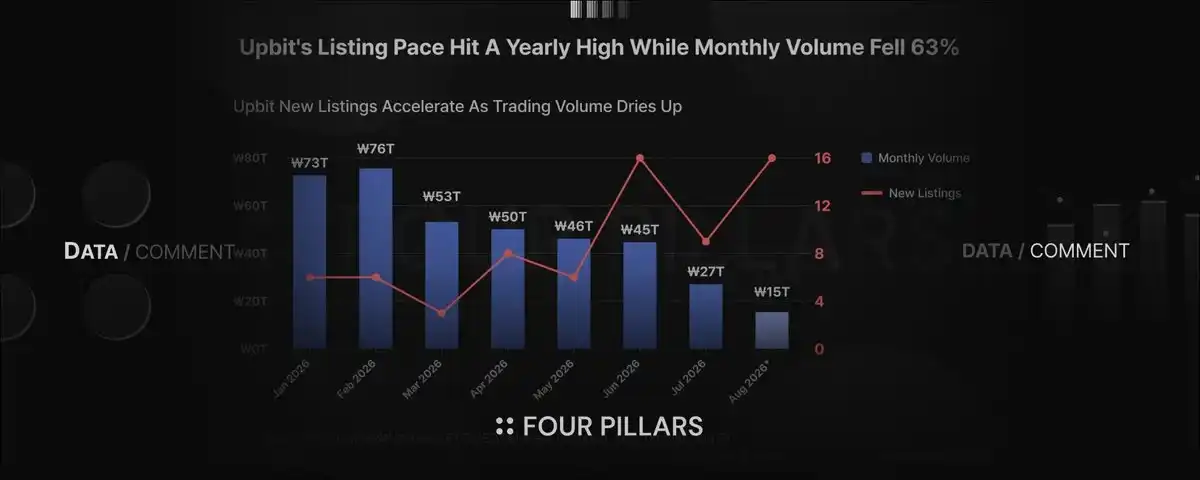
With the resumption of trading activity in cryptocurrency markets, trading volumes on centralized exchanges have increased significantly over a short period. The daily trading volume, which doubled over five days last week, has recovered from its annual low and exceeded $37 billion. However, despite this growth, the volume remains significantly below the 12-month peak of $105 billion recorded after major liquidations on October 10th.
The total trading volume for August also reflects a recovery in market activity. According to data, approximately $490 billion in transactions were executed on centralized exchanges in the first half of the month. In July, this figure was $670 billion.
Analysts note that in the current cycle, spot trading volumes on centralized exchanges (CEX) are forced to compete with spot cryptocurrency ETFs, unlike in previous periods. While a significant portion of investor demand was previously met directly through centralized exchanges, with the proliferation of ETF products, some capital for major assets like Bitcoin and Ethereum is flowing into traditional financial channels.
It is noted that the proliferation of cryptocurrency ETFs and digital asset management (DAT) companies could exert long-term pressure on centralized exchange trading volumes. In turn, demand in the altcoin market is expected to remain largely concentrated on CEX platforms. Rapid listing, a wide range of trading pairs, and advanced trading tools for tokens with small market capitalization are advantages that ETF and DAT structures cannot easily offer.
The strong market rally has also supported trading volumes. Bitcoin rose by more than 23% last week, and Ethereum by more than 30%. The altcoin market, representing the total market capitalization of cryptocurrencies excluding BTC and ETH, also grew by approximately 13% over the same period.
On the other hand, the rapid adoption of decentralized exchanges, such as Hyperliquid and Lighter, stands out as a third important factor that could divert trading volume away from CEX platforms. Nevertheless, it is suggested that all various trading infrastructures could benefit from growing demand for tokens if the market continues to rise.
*This is not investment advice.
end-content