Crypto.com says market maker boosts liquidity, denies trading edge on customers

cointelegraphPublicado a 2025-12-23Actualizado a 2025-12-23

Resumen

Crypto.com is establishing an internal market-making team to support its expansion into prediction markets, a move it states is fully compliant with regulations and designed to boost liquidity. The company denies its internal team has any unfair advantage, asserting it does not get a "first look" at customer orders or proprietary data. It emphasized that all market makers operate under the same rules to ensure fairness and that proprietary trading is not a revenue source. The practice is common among competitors like Kalshi and Polymarket, which also use market makers to provide liquidity.

Cryptocurrency exchange Crypto.com is building an internal market-making team as part of its expansion into prediction markets, a move the company says is fully aligned with federal regulations and intended to improve liquidity, even as market-making in outcome-based trading continues to draw scrutiny.

Bloomberg reported Tuesday that the exchange is recruiting for a new role on its market-making desk, citing a job posting for a “quant trader” who would help buy and sell contracts tied to the outcomes of sporting events on Crypto.com’s prediction platform.

Source: Bloomberg

The report has drawn attention to the practice of exchanges facilitating trading against customer orders, a structure that can raise questions about conflicts of interest as prediction markets gain traction across both crypto and traditional finance.

In a statement to Cointelegraph, a Crypto.com spokesperson said the company’s internal trading team is fully disclosed to the US Commodity Futures Trading Commission and makes markets across its North American derivatives business.

“The bottom line for customers is [that] more competition and liquidity on the platform creates a better overall experience,” the spokesperson said, adding that internal and external market makers operate under the same rules to ensure market fairness and integrity.

“No market maker at Crypto.com gets a ‘first look’, and our internal market maker does not have access to proprietary data or customer order flow before other market makers or market participants,” the spokesperson said.

They added that Crypto.com does not rely on proprietary trading as a revenue source. “We have a simple business model providing our retail customers access to digital assets for a fee, while staying risk neutral," they said.

Related: Phantom taps Kalshi to offer regulated prediction markets in wallet

Market-making isn’t unique to Crypto.com

Crypto.com is not the only prediction-market operator to rely on market makers to support liquidity.

The Bloomberg report noted that competitors such as Kalshi and Polymarket also use professional trading companies or dedicated liquidity providers to facilitate trading on their platforms.

Kalshi, which operates a federally regulated event-contract exchange, relies on designated market makers rather than a purely peer-to-peer order book, and those arrangements have largely been public. It has been reported that quantitative trading company Susquehanna International Group has provided market-making services to Kalshi since 2024, helping supply liquidity as trading volumes surged.

Polymarket, a decentralized prediction market that drew widespread attention during the US presidential election for accurately predicting the outcome, is also building an internal market-making unit, according to Bloomberg.
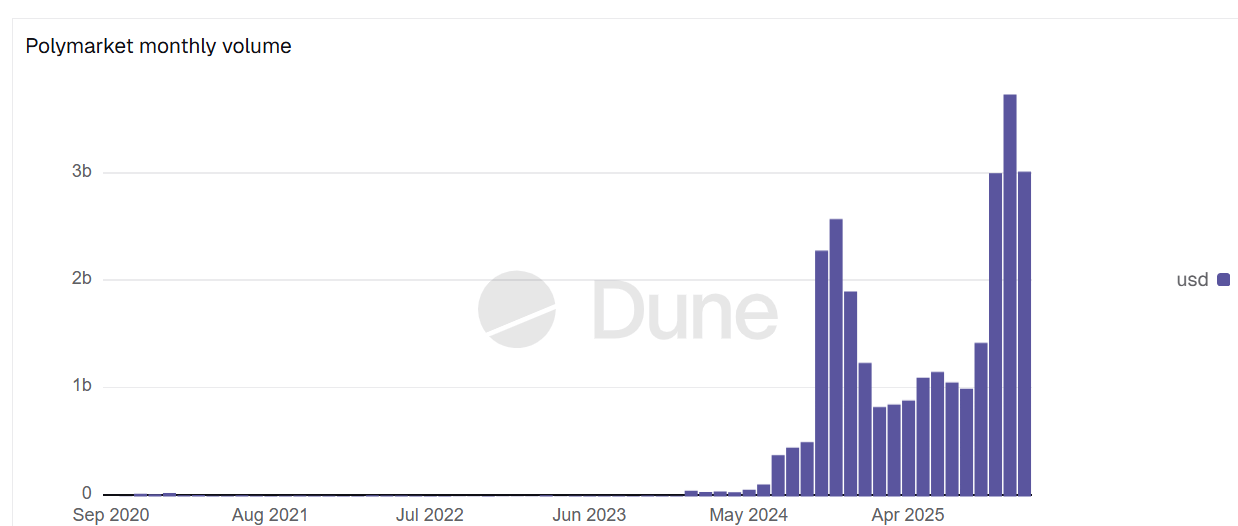
Polymarket’s monthly volumes began to surge in the run-up to the 2024 US presidential election. Source: Dune

Related: DraftKings eyes crypto offerings as it expands into prediction markets

Preguntas relacionadas

QWhat is the primary reason Crypto.com is building an internal market-making team, according to the company?

ACrypto.com states that building an internal market-making team is intended to improve liquidity and create a better overall experience for customers, and it is fully aligned with federal regulations.

QHow does Crypto.com address concerns about conflicts of interest and unfair advantages for its internal market maker?

ACrypto.com states that its internal market maker does not get a 'first look' at proprietary data or customer order flow before other market participants, and all market makers operate under the same rules to ensure fairness and integrity.

QBesides Crypto.com, which other prediction-market operators use market makers to support liquidity, as mentioned in the article?

AThe article mentions that competitors such as Kalshi and Polymarket also use professional trading companies or dedicated liquidity providers to facilitate trading on their platforms.

QWhat is Crypto.com's stated business model regarding proprietary trading and revenue?

ACrypto.com states that it does not rely on proprietary trading as a revenue source and has a simple business model of providing retail customers access to digital assets for a fee while staying risk neutral.

QWhich quantitative trading company has been reported to provide market-making services to Kalshi since 2024?

AQuantitative trading company Susquehanna International Group has been reported to provide market-making services to Kalshi since 2024.

Lecturas Relacionadas

$8 Trillion: The Second-Largest IPO in History Has Arrived

SK Hynix Makes History with World's Second-Largest IPO. The global memory chip leader SK Hynix debuted on Nasdaq, raising $26.5 billion and achieving a market cap exceeding $1.2 trillion. This marks the largest U.S. IPO by a foreign company and the second-biggest globally. The company's journey is a remarkable turnaround. Founded in 1983, its predecessor, Hyundai Electronics, faced near-bankruptcy during industry downturns before being acquired by SK Group in 2011. A pivotal early bet on HBM (High Bandwidth Memory) technology, initially with AMD in 2013, ultimately paid off with the AI boom. SK Hynix now supplies HBM3 to NVIDIA and commands 58% of the global HBM market. Driven by soaring AI demand, SK Hynix reported staggering Q1 2026 profits with a 72% operating margin. Its surging stock made it South Korea's second trillion-dollar company. Profits are shared widely with employees through a new bonus system tied to 10% of annual operating profit. The article highlights an ongoing "super memory cycle" fueled by AI, with market forecasts predicting massive growth. This presents a historic opportunity for Chinese memory chip makers. ChangXin Memory Technology (CXMT) is set for a domestic IPO, potentially reaching a ~$420 billion valuation as China's top DRAM producer. Yangtze Memory is also preparing to go public. While these "domestic storage leaders" are gaining ground, the article notes they still face technology and margin gaps compared to established giants like Samsung and SK Hynix.

marsbitHace 2 hora(s)

$8 Trillion: The Second-Largest IPO in History Has Arrived

marsbitHace 2 hora(s)

Trading

Spot
活动图片