Crypto Systems Could Be Outpaced By Quantum Tech By 2033, Says Hoskinson

bitcoinistPublicado a 2026-05-18Actualizado a 2026-05-18

Resumen

Cardano founder Charles Hoskinson warns that quantum computers could break current blockchain cryptography by 2033, with a probability exceeding 50%. He highlighted Bitcoin Improvement Proposal (BIP) 361 as a potential path for Bitcoin to migrate to quantum-resistant addresses. Most blockchains, including Bitcoin, rely on encryption vulnerable to quantum attacks. Cardano is proactively researching lattice-based cryptography and plans to adopt federal quantum-resistant standards (FIPS 203-206), leveraging its scheduled annual hard forks for seamless upgrades. Hoskinson noted that while Cardano's transition could be straightforward, Bitcoin's path is less clear due to its slower, more contested upgrade process. The broader crypto industry faces an urgent deadline to overhaul its security systems.

Crypto may need a major overhaul sooner than most people think. Cardano founder Charles Hoskinson pointed to a specific proposal — Bitcoin Improvement Proposal BIP-361 — as a potential path forward for gradually moving Bitcoin users away from older wallet addresses toward ones built to resist quantum attacks.

Speaking at Consensus Miami, Hoskinson said the window to prepare may be closing faster than the industry has assumed.

A Deadline The Industry Cannot Ignore

Hoskinson put the odds of a capable quantum computer arriving before 2033 at above 50%. That kind of machine, he said, would be powerful enough to crack the cryptographic systems that currently protect digital wallets, private keys, and transaction signatures across most major blockchain networks.

If that happens, bad actors could potentially access wallets without authorization, forge transaction signatures, or disrupt how blockchains reach agreement. He was direct: this is no longer a problem for the next generation to solve.

Most blockchains today — Bitcoin included — rely on traditional encryption methods that were never designed with quantum computing in mind.

Those systems work by making certain math problems extremely difficult for classical computers to solve. A sufficiently advanced quantum machine could blow through those same problems in a fraction of the time.

Cardano’s Quantum Defense Plan

Cardano is not waiting around. According to Hoskinson, the network already has a research program focused on quantum security, with partners involved and specific technical goals in place.

The main focus is lattice-based cryptography, a form of encryption that quantum systems would find far harder to break than older models.

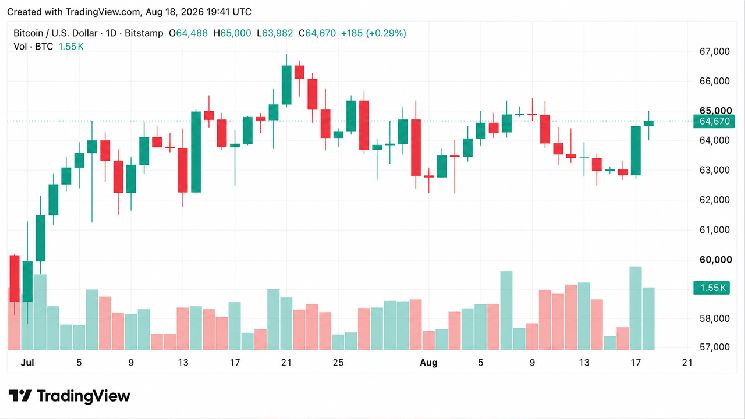
Bitcoin is currently trading at $78,371. Chart: TradingView

Cardano also plans to adopt federal quantum-resistant standards — known as FIPS 203 through 206 — which were developed to protect digital systems against future quantum-powered attacks.

Hoskinson noted that rolling out these changes on Cardano would be relatively straightforward. The network runs scheduled hard fork upgrades annually, which gives it a built-in mechanism for adopting new security standards without major disruption.
Source: Getty Images

Crypto Faces A Longer Road

For Bitcoin, the path is less clear. BIP-361 has been proposed as a way to phase in quantum-resistant wallet addresses over several years, but Bitcoin’s upgrade process is slower and more contested than Cardano’s.

Hoskinson acknowledged the difficulty but said a migration of that kind is achievable. He suggested Cardano could carry out a similar transition with relative ease given its existing upgrade structure.

Whether Bitcoin moves fast enough remains an open question — one the broader crypto industry may not be able to put off much longer.

Featured image from Unsplash, chart from TradingView

Preguntas relacionadas

QAccording to Charles Hoskinson, by what year is there more than a 50% chance that quantum computers could threaten current cryptographic systems?

ABy 2033.

QWhat is the specific Bitcoin Improvement Proposal (BIP) mentioned as a potential path for moving towards quantum-resistant wallets?

ABIP-361.

QWhat type of cryptography is Cardano focusing on for its quantum security research program?

ALattice-based cryptography.

QWhy does Hoskinson suggest Cardano could transition to quantum-resistant standards more easily than Bitcoin?

ABecause Cardano has a scheduled annual hard fork upgrade mechanism, making adoption more straightforward.

QWhat are the potential risks if quantum computers break current blockchain cryptography, as stated in the article?

ABad actors could access wallets without authorization, forge transaction signatures, or disrupt how blockchains reach consensus.

Lecturas Relacionadas

Meme Wrapped Contracts: Is alt.fun Real Innovation or Pseudo-Demand?

"Last week, the new Meme token launch platform alt.fun on Hyperliquid gained significant attention. Its flagship token ALT reached a peak market cap of $8.8 million. The platform's novelty lies in combining the mechanics of Pump.fun with leveraged trading on Hyperliquid. When a user creates a Meme token on alt.fun, they must also open a leveraged long/short position (2x, 3x, or 5x) on an underlying asset like HYPE. The platform then mints a corresponding leveraged token (LT) on BounceTech, which represents that perpetual contract position. Essentially, users are trading a tokenized derivative. This creates a dual price driver: the token's value is influenced both by market buying/selling via a bonding curve and by the performance of its underlying leveraged position. Hence the slogan: 'Your token pumps even when nobody's buying.' Tokens 'graduate' to a liquidity pool when their market cap (effectively the LT's value) reaches $9,000, achievable through either mechanism. However, this model faces key challenges. Gains are amplified only in strong, one-directional markets for the underlying asset. In volatile conditions, the mandatory 'rebalancing' of LTs leads to value decay. More fundamentally, alt.fun struggles to foster the community consensus vital for Meme tokens. Investment is driven primarily by price speculation on the underlying asset, not by narrative or cultural appeal. With limited underlying assets, token differentiation is low. The article concludes that while mechanically innovative, alt.fun may be better suited as a DeFi platform than a true Meme launchpad, as its core product lacks the community-driven essence of successful Memes."

Odaily星球日报Hace 5 min(s)

Meme Wrapped Contracts: Is alt.fun Real Innovation or Pseudo-Demand?

Odaily星球日报Hace 5 min(s)

South Korea's Financial Turmoil: Samsung Strike, AI Communism, and Crypto Market Bleeding Out

The South Korean financial market is facing a turbulent period marked by a triple threat: labor unrest at Samsung Electronics, controversial government proposals for redistributing AI profits, and a severe downturn in the cryptocurrency sector. The stability of the "Korean stock market bellwether," Samsung Electronics, is under threat as its largest union plans to strike on May 21st despite a partial court injunction. The government warns a prolonged strike could cause catastrophic losses, highlighting the high stakes for Korea's critical semiconductor industry. Simultaneously, a proposal by a presidential policy chief to redistribute "AI citizen dividends" from excess corporate taxes triggered significant foreign capital outflow and market volatility last week. While clarified as not a direct tax on company profits, the discussion underscores intense debates over wealth distribution in the AI era, where profits are concentrated in a few chip giants like Samsung and SK Hynix. In stark contrast to the booming AI-driven stock market, Korea's cryptocurrency sector is experiencing a dramatic collapse. Major exchanges Upbit and Bithumb reported steep declines in revenue and profits for Q1 2026. The overall crypto market valuation has nearly halved since early 2025, with trading volumes plummeting 74%. This is exacerbated by tightening regulations, including impending crypto taxes, strict anti-money laundering rules, and frozen assets from defunct exchanges affecting nearly 200,000 users. While regulators are tightening risk controls on financial institutions, the situation presents a new era of financial instability for Korea, caught between AI-fueled growth, social equity debates, and a crumbling crypto market.

Odaily星球日报Hace 21 min(s)

South Korea's Financial Turmoil: Samsung Strike, AI Communism, and Crypto Market Bleeding Out

Odaily星球日报Hace 21 min(s)

Nvidia's Wednesday Earnings Night: The Battle That Decides the Fate of the AI Bull Market is Here

NVIDIA is set to report its quarterly earnings after the U.S. market closes on Wednesday, May 20. This event is widely seen as a crucial test for the current AI-driven bull market. The semiconductor sector is exhibiting severe technical overbought conditions, with the Philadelphia Semiconductor Index (SOX) trading approximately 60% above its 200-day moving average—the most extreme deviation since the dot-com bubble peak of 1999/2000. Market sentiment is highly concentrated on a few AI-related stocks, raising concerns about overall market breadth. Analysts highlight a key contradiction: while fundamentals for AI and semiconductors remain strong, significant technical pressures are building. Option market activity reflects this tension. Positions are heavily skewed towards bullish calls, yet there is also notable hedging activity through put options on broad indices and sector ETFs, signaling preparation for potential downside volatility. An unusual pattern of rising stock prices alongside rising implied volatility further underscores the market's expectation for a major move. For NVIDIA specifically, the market's primary focus will be on its forward guidance for the next quarter, which is deemed more critical than the immediate earnings results. Despite a recent seven-day rally adding roughly $1.7 trillion in market cap, historical data shows NVIDIA's stock has often declined the day after its past five earnings reports. The outcome of this report is expected to have a significant ripple effect across the broader technology and semiconductor markets, given NVIDIA's pivotal role.

marsbitHace 45 min(s)

Nvidia's Wednesday Earnings Night: The Battle That Decides the Fate of the AI Bull Market is Here

marsbitHace 45 min(s)

Trading

Spot
Futuros

Artículos destacados

Cómo comprar ADA

¡Bienvenido a HTX.com! Hemos hecho que comprar Cardano (ADA) sea simple y conveniente. Sigue nuestra guía paso a paso para iniciar tu viaje de criptos.Paso 1: crea tu cuenta HTXUtiliza tu correo electrónico o número de teléfono para registrarte y obtener una cuenta gratuita en HTX. Experimenta un proceso de registro sin complicaciones y desbloquea todas las funciones.Obtener mi cuentaPaso 2: ve a Comprar cripto y elige tu método de pagoTarjeta de crédito/débito: usa tu Visa o Mastercard para comprar Cardano (ADA) al instante.Saldo: utiliza fondos del saldo de tu cuenta HTX para tradear sin problemas.Terceros: hemos agregado métodos de pago populares como Google Pay y Apple Pay para mejorar la comodidad.P2P: tradear directamente con otros usuarios en HTX.Over-the-Counter (OTC): ofrecemos servicios personalizados y tipos de cambio competitivos para los traders.Paso 3: guarda tu Cardano (ADA)Después de comprar tu Cardano (ADA), guárdalo en tu cuenta HTX. Alternativamente, puedes enviarlo a otro lugar mediante transferencia blockchain o utilizarlo para tradear otras criptomonedas.Paso 4: tradear Cardano (ADA)Tradear fácilmente con Cardano (ADA) en HTX's mercado spot. Simplemente accede a tu cuenta, selecciona tu par de trading, ejecuta tus trades y monitorea en tiempo real. Ofrecemos una experiencia fácil de usar tanto para principiantes como para traders experimentados.

1.4k Vistas totalesPublicado en 2024.12.10Actualizado en 2025.03.21

Cómo comprar ADA

Discusiones

Bienvenido a la comunidad de HTX. Aquí puedes mantenerte informado sobre los últimos desarrollos de la plataforma y acceder a análisis profesionales del mercado. A continuación se presentan las opiniones de los usuarios sobre el precio de ADA (ADA).

活动图片