Crypto Market Macro Report: Liquidity Repricing Amid Fed Rate Cuts, BOJ Rate Hikes, and the Christmas Holiday

marsbitPublicado a 2025-12-18Actualizado a 2025-12-18

Resumen

The Federal Reserve's anticipated 25-basis-point rate cut on December 11 did not signal a shift toward monetary easing. Instead, the Fed's hawkish forward guidance—indicating fewer future cuts and internal dissent among policymakers—suggested constrained future policy flexibility. This led to a "sell the news" reaction, with risk assets like U.S. equities and cryptocurrencies declining as markets repriced expectations for liquidity. Simultaneously, the Bank of Japan is expected to raise rates to 0.75% on December 19, a move that threatens the long-standing yen carry trade. Higher Japanese rates could trigger unwinding of global leveraged positions, causing broad-based selling in risk assets, including crypto, due to increased funding costs and currency risk. These events coincide with the Christmas holiday period, when reduced liquidity amplifies market volatility. The convergence of tighter Fed expectations, BOJ tightening, and seasonal illiquidity creates a fragile environment for crypto, prompting a recalibration of risk rather than a trend reversal. Investors should prioritize risk management amid heightened macro uncertainty.

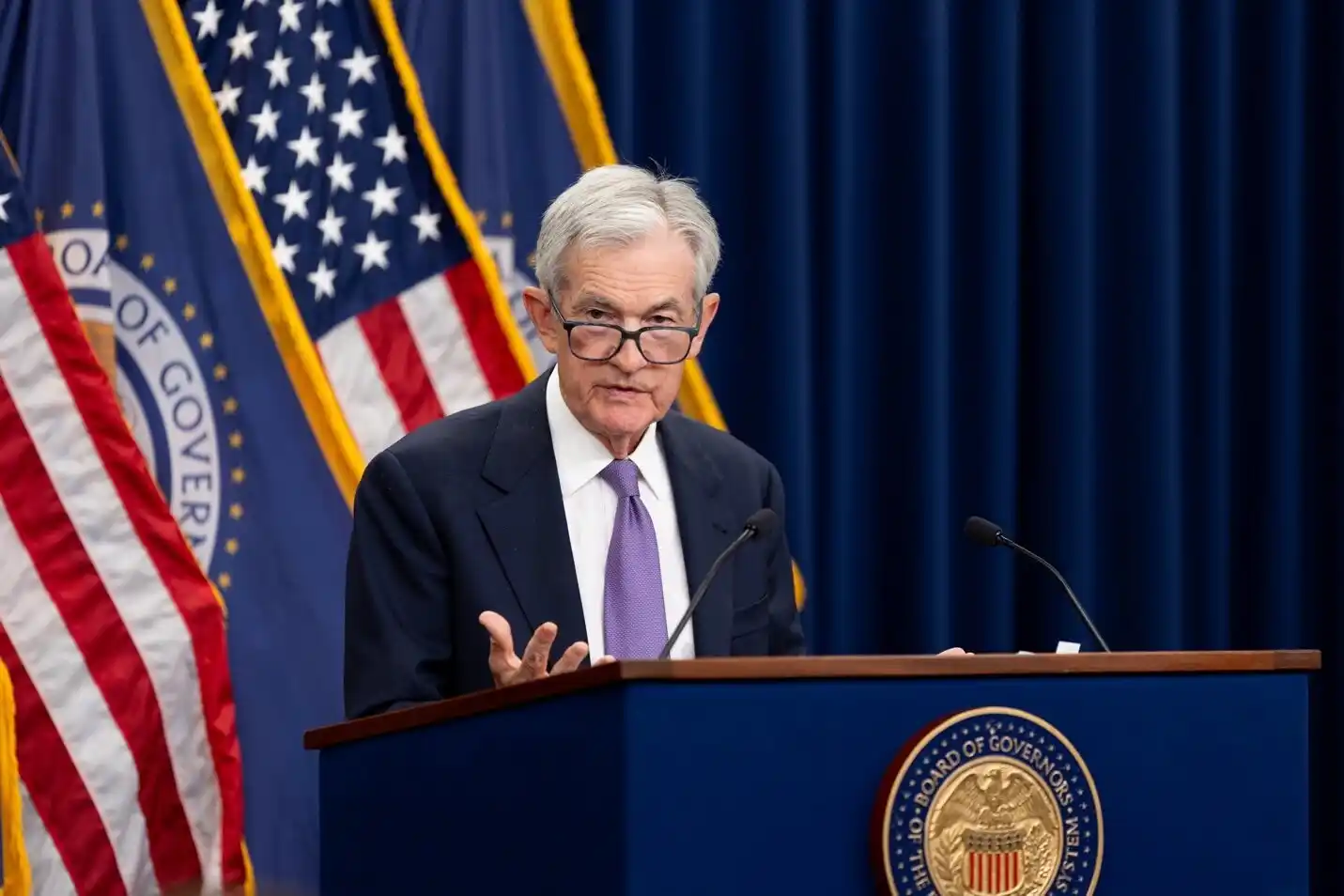
On December 11, the Federal Reserve announced a 25 basis point interest rate cut as expected. On the surface, this decision was highly consistent with market expectations and was even interpreted as a signal of a shift towards monetary easing. However, the market reaction quickly turned cold, with U.S. stocks and crypto assets falling simultaneously, and risk appetite contracting significantly. This seemingly counterintuitive trend actually reveals a key fact in the current macro environment: a rate cut itself does not equate to liquidity easing. During this super central bank week, the message conveyed by the Fed was not "re-flooding the market with liquidity" but rather a clear constraint on future policy space. From a policy perspective, changes in the dot plot had a substantial impact on market expectations. The latest forecast indicates that the Fed may only cut rates once in 2026, significantly lower than the previously priced path of 2 to 3 cuts. More importantly, in the voting structure of this meeting, 3 out of 12 voting members explicitly opposed the rate cut, with 2 advocating for keeping rates unchanged. This divergence is not marginal noise but clearly indicates that the Fed's internal vigilance toward inflation risks is far higher than the market previously understood. In other words, the current rate cut is not the start of an easing cycle but rather a technical adjustment to prevent financial conditions from tightening excessively in a high-interest-rate environment.
For this reason, what the market truly anticipates is not a "one-time rate cut" but a clear, sustainable, and forward-looking easing path. The pricing logic of risk assets relies not on the absolute level of current interest rates but on the discounting of future liquidity conditions. When investors realize that this rate cut does not open new easing space but may instead lock in future policy flexibility prematurely, the original optimistic expectations are quickly revised. The signal released by the Fed is akin to a "painkiller," temporarily alleviating tension but not changing the underlying issue. At the same time, the restrained stance revealed in the forward guidance forces the market to reassess future risk premiums. In this context, the rate cut has instead become a classic case of "buy the rumor, sell the news." Long positions built around easing expectations began to unwind, with high-valuation assets bearing the brunt. Growth and high-beta sectors in U.S. stocks were the first to come under pressure, and the crypto market was no exception. The pullback in Bitcoin and other major crypto assets was not due to a single negative factor but rather a passive reaction to the reality that "liquidity will not return quickly." When futures basis converges, marginal ETF buying weakens, and overall risk appetite declines, prices naturally gravitate toward a more conservative equilibrium level. A deeper change lies in the shifting risk structure of the U.S. economy. A growing body of research suggests that the core risk facing the U.S. economy in 2026 may no longer be a traditional cyclical recession but rather a demand-side contraction directly triggered by a significant correction in asset prices. After the pandemic, the U.S. saw an "excess retirement" group of approximately 2.5 million people. The wealth of this group is highly dependent on the performance of the stock market and risk assets, and their consumption behavior is highly correlated with asset prices. If the stock market or other risk assets experience a sustained decline, the consumption capacity of this group will contract simultaneously, creating a negative feedback loop for the overall economy. In this economic structure, the Fed's policy options are further constrained. On one hand, stubborn inflationary pressures persist, and premature or excessive easing could reignite price increases. On the other hand, if financial conditions continue to tighten and asset prices experience a systemic correction, it could quickly transmit to the real economy through the wealth effect, triggering a downturn in demand. The Fed is thus caught in an extremely complex dilemma: continuing to aggressively suppress inflation could trigger a collapse in asset prices, while tolerating higher inflation levels could help maintain financial stability and asset prices.

A growing number of market participants are beginning to accept the judgment that, in future policy games, the Fed is more likely to choose to "protect the market" rather than "protect inflation" at critical moments. This means that the long-term inflation center may shift upward, but short-term liquidity releases will be more cautious and intermittent rather than forming a sustained wave of easing. For risk assets, this is an unfriendly environment—the pace of interest rate declines is insufficient to support valuations, while liquidity uncertainty persists. It is against this macro backdrop that the impact of this super central bank week extends far beyond a single 25 basis point rate cut. It marks a further correction in market expectations of the "unlimited liquidity era" and sets the stage for the subsequent Bank of Japan rate hike and year-end liquidity contraction. For the crypto market, this is not the end of the trend but a critical phase where risks must be recalibrated and macro constraints re-understood.

II. Bank of Japan Rate Hike: The True "Liquidity Bomb Disposer"

If the Fed's role during the super central bank week was to disappoint and correct market expectations for "future liquidity," then the action the Bank of Japan is set to take on December 19 is closer to a "bomb disposal operation" directly affecting the底层 structure of global finance. The market's probability expectation for the BOJ to raise rates by 25 basis points, pushing the policy rate from 0.50% to 0.75%, is now close to 90%. This seemingly modest adjustment would mean Japan is raising its policy rate to its highest level in three decades. The key issue is not the absolute value of the rate itself but the chain reaction this change could trigger in the global capital flow logic. For a long time, Japan has been the most important and stable source of low-cost financing in the global financial system. Once this premise is broken, its impact will far exceed the Japanese domestic market.
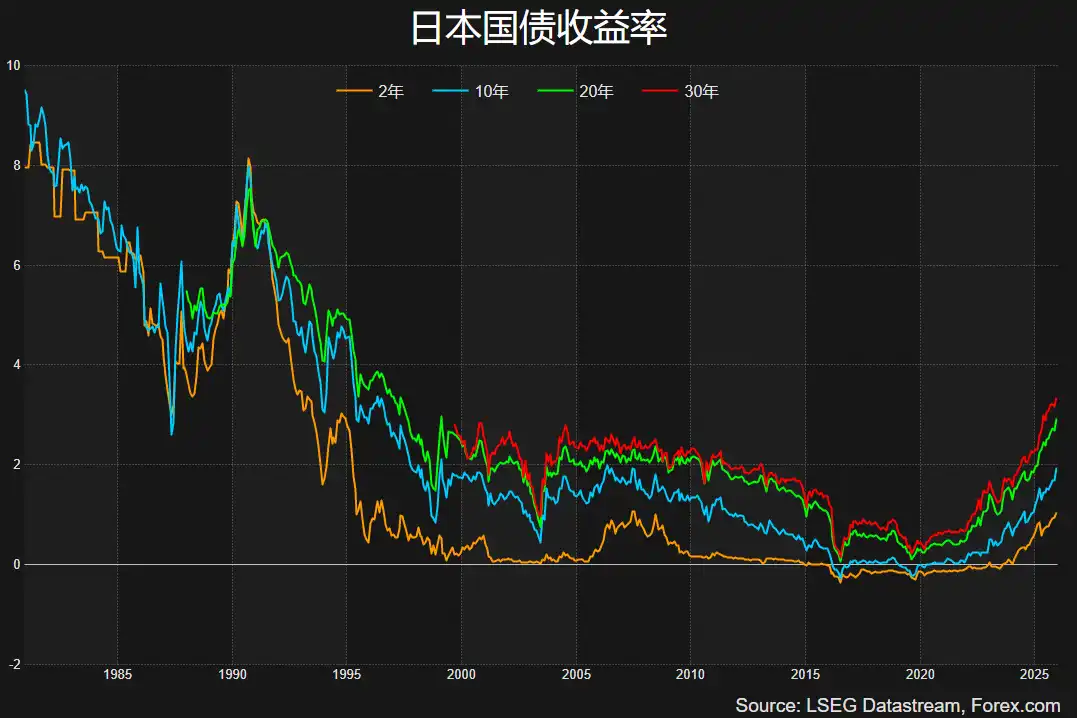
Over the past decade-plus, global capital markets have gradually formed an almost default structural consensus: the yen is a "permanent low-cost currency." Supported by long-term ultra-loose policies, institutional investors could borrow yen at near-zero or even negative costs, convert it into U.S. dollars or other high-yielding currencies, and allocate to U.S. stocks, crypto assets, emerging market bonds, and various risk assets. This model evolved from short-term arbitrage into a long-term capital structure worth trillions of dollars, deeply embedded in the global asset pricing system. Because it lasted so long and was so stable, yen carry trade gradually shifted from a "strategy" to a "background assumption," rarely priced by the market as a core risk variable. However, once the BOJ clearly enters a rate-hiking cycle, this assumption is forced to be reassessed. The impact of a rate hike is not limited to a marginal increase in financing costs; more importantly, it changes market expectations regarding the long-term direction of the yen exchange rate. When policy rates rise, and inflation and wage structures change, the yen is no longer just a passively depreciating funding currency but may transform into an asset with appreciation potential. Under such expectations, the logic of carry trade is fundamentally disrupted. Capital flows originally centered on "interest rate differentials" now incorporate considerations of "exchange rate risk," rapidly deteriorating the risk-reward ratio for capital.

In this situation, the choices facing carry trade capital are not complex but highly destructive: either close positions early to reduce exposure to yen liabilities, or passively endure the double squeeze of exchange rates and interest rates. For large-scale, highly leveraged capital, the former is often the only viable path. The specific method of closing positions is also extremely direct—selling the held risk assets, converting back to yen, and using the proceeds to repay financing. This process does not distinguish between asset quality, fundamentals, or long-term prospects but has the sole goal of reducing overall exposure, thus exhibiting clear "indiscriminate selling" characteristics. U.S. stocks, crypto assets, and emerging market assets often come under pressure simultaneously, forming highly correlated declines. History has repeatedly verified the existence of this mechanism. In August 2025, the BOJ unexpectedly raised its policy rate to 0.25%, a move not traditionally considered aggressive, yet it triggered a violent reaction in global markets. Bitcoin fell 18% in a single day, and multiple risk assets came under simultaneous pressure, taking nearly three weeks for the market to gradually complete the repair. The reason that impact was so severe was precisely because the rate hike came suddenly, forcing carry trade capital to deleverage rapidly without preparation. The upcoming December 19 meeting is different from that "black swan" event; it is more like a "gray rhino" whose tracks have been revealed in advance. The market already has some expectation of a rate hike, but expectation itself does not mean the risk has been fully priced in, especially when the hike is larger and叠加 with other macro uncertainties.

More notably, the macro environment in which this BOJ rate hike is occurring is more complex than in the past. Policies of major global central banks are diverging: the Fed is cutting rates nominally but tightening future easing space in terms of expectations; the ECB and the Bank of England are relatively cautious; while the BOJ is becoming one of the few major economies explicitly tightening policy. This policy divergence will exacerbate the volatility of cross-currency capital flows, making the unwinding of carry trades not a one-time event but potentially an evolving process that occurs in stages and repeats. For crypto markets, which are highly dependent on global liquidity, the persistence of this uncertainty means the center of price volatility may remain at a higher level for some time. Therefore, the BOJ's rate hike on December 19 is not merely a regional monetary policy adjustment but a potential trigger for a rebalancing of the global capital structure. What it "disposes of" is not the risk of a single market but the long-accumulated assumption of low-cost leverage embedded in the global financial system. In this process, crypto assets often bear the impact first due to their high liquidity and high-beta attributes. This impact does not necessarily mean a reversal of the long-term trend but is almost certain to amplify volatility, depress risk appetite in the short term, and force the market to re-examine the capital logic taken for granted over many years.

III. Christmas Holiday Market: The Underestimated "Liquidity Amplifier"

Starting December 23, major North American institutional investors gradually enter the Christmas holiday mode, and global financial markets随之 enter the most typical and最容易 underestimated period of liquidity contraction of the year. Unlike macro data or central bank decisions, the holiday does not change any fundamental variables but significantly weakens the market's "absorption capacity" for shocks in a short time. For markets like crypto assets, which highly rely on continuous trading and market maker depth, this structural decline in liquidity is often more damaging than any single negative event itself. In a normal trading environment, the market has sufficient counterparties and risk-bearing capacity. A large number of market makers, arbitrage funds, and institutional investors continuously provide two-way liquidity, allowing selling pressure to be dispersed, delayed, or even hedged.

More alarmingly, the Christmas holiday does not occur in isolation but恰好 overlaps with the current集中 release of a series of macro uncertainties. The "dovish cut but hawkish stance" signal released by the Fed during the super central bank week has significantly tightened market expectations for future liquidity; meanwhile, the upcoming BOJ rate hike decision on December 19 is shaking the long-standing capital structure of global yen carry trade. Under normal circumstances, these two types of macro shocks can be gradually digested by the market over a longer period, with prices completing repricing through repeated博弈. But when they恰好 occur during the Christmas holiday, the window of weakest liquidity, their impact is no longer linear but exhibits a clear amplification effect. The essence of this amplification effect is not panic itself but a change in market mechanisms. Insufficient liquidity means the price discovery process is compressed; the market cannot gradually absorb information through continuous trading but is forced to complete adjustments through more drastic price jumps. For the crypto market, a decline in such an environment often does not require new major negatives; merely the集中 release of existing uncertainty is enough to trigger a chain reaction: price drops trigger passive liquidation of leveraged positions, passive liquidation further increases selling pressure, selling pressure is rapidly amplified in shallow order books, ultimately forming剧烈 volatility within a short time. Historical data shows this pattern is not an exception. Whether in Bitcoin's early cycles or in the more mature stages in recent years, the period from late December to early January has always been a time when crypto market volatility is significantly higher than the annual average. Even in years with relatively stable macro environments, holiday liquidity declines are often accompanied by rapid price surges or plunges; in years with higher macro uncertainty, this time window is more likely to become an "accelerator" for trend行情. In other words, the holiday does not determine the direction but greatly amplifies the price performance once the direction is confirmed.

IV. Conclusion

In summary, the current pullback in the crypto market is closer to a阶段性 repricing triggered by changes in the global liquidity path, rather than a simple reversal of a trend行情. The Fed's rate cut did not provide new valuation support for risk assets; on the contrary, its constraints on future easing space in the forward guidance have led the market to gradually accept a new environment of "falling interest rates but insufficient liquidity." Against this backdrop, high-valuation and high-leverage assets naturally face pressure, and the adjustment in the crypto market has a clear macro logic foundation.

At the same time, the BOJ's rate hike constitutes the most structurally significant variable in this adjustment. The yen's long-standing role as the core funding currency for global carry trade means that once its low-cost assumption is broken, it triggers not just局部 capital flows but a systemic contraction of global risk asset exposure. Historical experience shows that such adjustments are often phased and repetitive; their impact is not fully released in a single trading day but rather completes the deleveraging process through sustained volatility. Crypto assets, due to their high liquidity and high-beta attributes, often reflect this pressure first, but this does not necessarily mean their long-term logic is negated.

For investors, the core challenge at this stage is not judging the direction but recognizing the environmental changes. When policy uncertainty and liquidity contraction coexist, the importance of risk management significantly outweighs trend judgment. Truly valuable market signals often appear after macro variables gradually land and arbitrage funds complete阶段性 adjustments. For the crypto market, the current period更像是一个过渡期 for recalibrating risks and rebuilding expectations, rather than the final chapter of the行情. The medium-term direction of future prices will depend on the actual recovery of global liquidity after the holiday ends and whether the policy divergence among major central banks deepens further.


Preguntas relacionadas

QWhy did the market react negatively to the Fed's rate cut despite it being in line with expectations?

AThe market reacted negatively because the Fed's forward guidance, including the dot plot indicating only one rate cut in 2026 and internal dissent among voting members, signaled constrained future policy space rather than the start of a sustained easing cycle. This led to a reassessment of risk premiums and a 'sell the news' event where optimistic positions were unwound.

QWhat is the core risk facing the U.S. economy in 2026 according to the article, and how does it affect the Fed's policy dilemma?

AThe core risk is a demand-side contraction triggered directly by a significant correction in asset prices, not a traditional cyclical recession. The Fed is trapped in a dilemma: fighting inflation aggressively could cause an asset price collapse, while tolerating higher inflation could help maintain financial stability and asset prices, likely leading them to prioritize 'protecting the market' over 'controlling inflation'.

QHow does the Bank of Japan's expected rate hike act as a 'liquidity bomb disposal' for global markets?

AThe BoJ's rate hike challenges the long-standing assumption of the yen being a permanent low-cost funding currency for global carry trades. This forces a systemic unwinding of these trades, where investors sell risk assets (like crypto and stocks) to buy back yen and repay loans, causing correlated, indiscriminate selling pressure across global markets.

QWhy is the Christmas holiday period described as a 'liquidity amplifier' for market volatility?

AThe holiday period leads to a structural decline in liquidity as major institutional investors in North America reduce activity. This thin market depth weakens the ability to absorb shocks, causing price movements to be more abrupt and exaggerated, especially when macro uncertainties are high, amplifying any existing selling pressure.

QWhat is the overall conclusion about the current crypto market correction presented in the article?

AThe correction is a phase of repricing triggered by changes in the global liquidity path, not a simple trend reversal. It is driven by the Fed's constrained easing outlook and structural impact of the BoJ's policy shift. The market is in a transitional period recalibrating risk, with future direction depending on post-holiday liquidity recovery and further central bank policy divergence.

Lecturas Relacionadas

The 'Middle Eastern Prince' Swindles a Wealthy Woman: Renting Planes and Rolls-Royces, Scamming 120 Million Over Three Years

Two brothers who posed as "Middle Eastern princes" have been sentenced in the United States to 24 and 23 years in prison, respectively, and ordered to pay over $21.2 million in restitution and back taxes. Over three years, they fraudulently obtained approximately $21 million, primarily by promoting fictitious investment projects, including a non-existent cryptocurrency mining operation in a former General Electric industrial park in East Cleveland. The brothers, aged 42 and 33, created elaborate personas: one claimed to be a wealthy royal family heir and the city's "International Economic Advisor," while the other posed as a hedge fund manager with expertise from watching the TV show *Billions*. They bolstered their image by renting luxury cars and private jets and cultivating a relationship with a local mayor's chief of staff, who provided official-looking documents and government event access. A significant portion of the victims' funds, about $18 million, came from a single Chinese investor, a woman from Sichuan with experience in Bitcoin mining. The brothers also defrauded several women, including one former girlfriend. Their scheme unraveled when the primary investor discovered her $6 million worth of mining equipment had been sold off. The case highlights a trend of impostors using fabricated "Middle Eastern royal" identities to target wealthy individuals. Similar incidents include a "Dubai prince" who recently promoted a $500 million family office in Hong Kong and a Colombian man who impersonated a Saudi prince for decades in the US before being caught and sentenced in 2019.

marsbitHace 9 min(s)

The 'Middle Eastern Prince' Swindles a Wealthy Woman: Renting Planes and Rolls-Royces, Scamming 120 Million Over Three Years

marsbitHace 9 min(s)

a16z Partner: Being in the Flow of Capital Is the True Moat

A16z Partner: Standing in the Cash Flow is the True Moat Historically, many of the strongest companies built their moats by positioning themselves within "cash flows"—facilitating value creation and transfer in a network and taking a cut. The more value flows, the larger they grow. Crypto is the first modern technology natively built for this. With open ledgers, programmable settlement, and stablecoins enabling internet-speed global value transfer, it allows startups to inherit network effects from day one. Well-designed tokens align users, developers, and the protocol towards network growth, distributing value to contributors. This model isn't new (e.g., railroads, Visa, Google, AWS) but Crypto democratizes it. It lets entrepreneurs target areas with high inefficiency and profit extraction—like traditional finance's payments, custody, FX, and settlement—to compress costs, increase speed, and redistribute value by standing in the new flow. The opportunity extends beyond finance to emerging markets like GPU/compute, AI training data, energy, and space, where new, programmable infrastructure can be built without legacy constraints. Key questions for founders: Are you already in the cash flow? Does your revenue scale 10x with network activity? Where is profit extraction highest relative to value created in your market? The strategy is clear: compress the old cost structure, position yourself in the new value stream, and let the network compound.

marsbitHace 37 min(s)

a16z Partner: Being in the Flow of Capital Is the True Moat

marsbitHace 37 min(s)

Capturing 15 Top-Tier Zero-Day Vulnerabilities: A Consensus Protocol Debug Agent Framework Built by 0G Lab in Collaboration with Teams from NUS, PKU, and BUPT

"Agents Capture 15 Critical Zero-Day Bugs: 0G Lab's Multi-Agent Framework Automates Debugging in Consensus Protocols" Distributed consensus protocols are notoriously difficult to debug due to complex, intertwined states. A novel framework, Agora, developed by 0G Labs with researchers from NUS, Peking University, and Beijing University of Posts and Telecommunications, tackles this by fusing deep domain expertise with a collaborative multi-agent LLM architecture. Agora moves beyond the limitations of single LLMs and traditional testing like fuzzing. It employs three specialized agents: an Orchestrator for global state, a Strategy agent for generating attack scenarios using distributed systems knowledge, and a TestGen agent that creates executable tests. A core innovation is its efficient "Succinct Memory & Communication" mechanism and a dynamic test harness. This allows the system to translate abstract hypotheses into concrete tests across languages like Go and Rust, run them, capture failures, and refine the approach in a closed loop—all with minimal token overhead. In rigorous evaluations on production-level protocols including Raft, EPaxos, and components from etcd and Sui, Agora discovered 15 previously unknown deep logic bugs (e.g., execution divergence, liveness violations). In stark contrast, powerful standalone LLMs like GPT-5.2 and Claude 4.5 found zero such bugs. Agora achieved this with a high precision of 73.9% and at an average cost of only about $40 per bug found. The framework demonstrates high generalizability. Its decoupled design allows the "Multi-Agent + Hypothesis-Driven Testing" paradigm to be applied to other complex domains like database concurrency control, OS kernels, and Web3 smart contract auditing. By enabling efficient, automated detection of deep logic flaws, Agora points the way for AI-powered security in critical infrastructure, aligning with the growing trends of agentic systems and automated quality control.

marsbitHace 40 min(s)

Capturing 15 Top-Tier Zero-Day Vulnerabilities: A Consensus Protocol Debug Agent Framework Built by 0G Lab in Collaboration with Teams from NUS, PKU, and BUPT

marsbitHace 40 min(s)

a16z crypto Partner: Cash Flow Is the True Moat

Title: a16z Crypto Partner: Capital Flow is the True Moat In business history, enduringly successful enterprises often share a core logic: capturing value by facilitating its creation and transfer within an ecosystem, taking a share of the proceeds. The scale of value flowing through the ecosystem directly correlates with the company's growth. Cryptography is the first modern technology natively suited to this commercial logic. Startups that don't leverage this framework in product design and business model construction miss significant opportunities. Stablecoins enable internet-speed, 24/7 global settlement of value with end-to-end programmability. With open underlying channels for capital flow and transparent unit economics, every circulating dollar globally represents potential flow in this arena. Blockchain is inherently a network business model. All transactions are recorded on a shared ledger, and each new participant strengthens this foundational system for future developers. More users and applications increase the network's value for all. Crypto entrepreneurs start with built-in network effects, unlike traditional businesses that spend years building them on legacy infrastructure. Network tokens amplify this advantage. A well-designed token system aligns users, developers, service providers, and validators around a common goal—network growth—while distributing rewards based on contribution. All proceeds flow back to ecosystem participants, creating a virtuous cycle of value circulation. This is not a new logic; the crypto industry simply makes it easier for startups to implement and scale. Historic giants like railroads, Standard Oil, AT&T, and modern leaders like Google and AWS succeeded by positioning themselves at critical junctures of value flow. In finance, Visa processed $15.7 trillion in payments (net revenue: $35.9B), and top market makers like Jane Street thrive by being in the path of order flow, benefiting from volume. Combining capital flow with network effects creates one of business's most robust models. As Jeff Bezos noted, "Your margin is my opportunity." This is acutely true in traditional finance, where sectors like payments, custody, and settlements extract significant fees (e.g., 2-3% for card networks, 6-9% for cross-border transfers). These profits represent opportunities for disruption by reducing costs and increasing efficiency, as proven by Stripe and Square in payments. Crypto founders can build the next-generation infrastructure: programmable, instant, global, and inherently embedded in capital flow paths. Opportunities extend beyond finance to markets like compute/GPU trading, AI training data, energy, robotics, and critical minerals—areas poised for massive global value movement that existing channels cannot handle. These are blue oceans for new, programmable infrastructure centered on capital flow, free from entrenched platforms and intermediaries. Founders should ask: Is your business at the heart of a value flow? Does your revenue scale 10x with ecosystem transaction growth? Where are the highest margins relative to value created in your target market? The answers point to the opportunity: cut existing costs, enter new value flow arenas, and grow through network effects.

Foresight NewsHace 41 min(s)

a16z crypto Partner: Cash Flow Is the True Moat

Foresight NewsHace 41 min(s)

Unveiling the 'White-haired Stock God' Serenity: A Spiritual Remedy for Anxious Retail Investors

The article details the rise of Serenity, dubbed the "White-Haired Stock God," whose social media posts have recently caused significant volatility in China's A-share market. Previously gaining fame in international retail investor communities, Serenity is known for his "Chokepoint Investment" strategy targeting small monopolies in the AI supply chain, reportedly achieving returns over 3612% this year. His influence stems from his background as a former AI research scientist, detailed analysis, and a massive following on X, where his subscriber count has surpassed Elon Musk's. In early June, Serenity's Chinese-language posts mentioning A-shares like LeaderDrive (Lide Xiebo), Easun, and Innolight triggered immediate 20% surges in their stock prices. He later clarified that some recommendations were crowdsourced from followers and claimed he did not hold positions in these stocks, stating his actions were "just for fun" to offer a foreign perspective on Chinese markets. This activity drew scrutiny from Chinese financial media, which warned of potential "pump-and-dump" schemes and legal risks. While anonymous, clues suggest Serenity is likely a Chinese-speaking individual living in Japan. He maintains his anonymity due to past harassment but enjoys substantial monthly income from his paid subscriptions. The article posits that Serenity embodies the market's current appetite for a charismatic, successful figure during the AI bull run, serving as an "outward projection" of bullish sentiment. It concludes by noting the cyclical nature of such market icons, warning that the same crowds that elevate them often seek scapegoats when trends reverse.

Odaily星球日报Hace 46 min(s)

Unveiling the 'White-haired Stock God' Serenity: A Spiritual Remedy for Anxious Retail Investors

Odaily星球日报Hace 46 min(s)

Trading

Spot
Futuros

Artículos destacados

Cómo comprar BILL

¡Bienvenido a HTX.com! Hemos hecho que comprar Billions Network (BILL) sea simple y conveniente. Sigue nuestra guía paso a paso para iniciar tu viaje de criptos.Paso 1: crea tu cuenta HTXUtiliza tu correo electrónico o número de teléfono para registrarte y obtener una cuenta gratuita en HTX. Experimenta un proceso de registro sin complicaciones y desbloquea todas las funciones.Obtener mi cuentaPaso 2: ve a Comprar cripto y elige tu método de pagoTarjeta de crédito/débito: usa tu Visa o Mastercard para comprar Billions Network (BILL) al instante.Saldo: utiliza fondos del saldo de tu cuenta HTX para tradear sin problemas.Terceros: hemos agregado métodos de pago populares como Google Pay y Apple Pay para mejorar la comodidad.P2P: tradear directamente con otros usuarios en HTX.Over-the-Counter (OTC): ofrecemos servicios personalizados y tipos de cambio competitivos para los traders.Paso 3: guarda tu Billions Network (BILL)Después de comprar tu Billions Network (BILL), guárdalo en tu cuenta HTX. Alternativamente, puedes enviarlo a otro lugar mediante transferencia blockchain o utilizarlo para tradear otras criptomonedas.Paso 4: tradear Billions Network (BILL)Tradear fácilmente con Billions Network (BILL) en HTX's mercado spot. Simplemente accede a tu cuenta, selecciona tu par de trading, ejecuta tus trades y monitorea en tiempo real. Ofrecemos una experiencia fácil de usar tanto para principiantes como para traders experimentados.

262 Vistas totalesPublicado en 2026.05.07Actualizado en 2026.06.02

Cómo comprar BILL

Qué es ATWO

I. Introducción al ProyectoArena Two es una plataforma interactiva descentralizada que permite a los fanáticos jugar un papel activo y tokenizado en los resultados de eventos en tiempo real. A diferencia de los modelos de transmisión tradicionales que reducen a los fanáticos a espectadores pasivos, Arena Two aprovecha la tecnología blockchain para permitir que los fanáticos voten directamente en tiempo real e influyan en los resultados en el campo.II. Información del TokenNombre del token: ATWO (Arena Two)III. Enlaces RelacionadosSitio web: https://arenatwo.com/Exploradores: https://basescan.org/token/0x499D35eBE6cEe9B2Ac35Fd003fcBbeeB9CFc7B32Twitter: https://x.com/arenatwoXNota: La introducción del proyecto proviene de los materiales publicados o proporcionados por el equipo oficial del proyecto, que es solo para referencia y no constituye asesoramiento de inversión. HTX no se hace responsable de ninguna pérdida directa o indirecta resultante.

161 Vistas totalesPublicado en 2026.05.18Actualizado en 2026.06.02

Qué es ATWO

Cómo comprar ATWO

¡Bienvenido a HTX.com! Hemos hecho que comprar Arena Two (ATWO) sea simple y conveniente. Sigue nuestra guía paso a paso para iniciar tu viaje de criptos.Paso 1: crea tu cuenta HTXUtiliza tu correo electrónico o número de teléfono para registrarte y obtener una cuenta gratuita en HTX. Experimenta un proceso de registro sin complicaciones y desbloquea todas las funciones.Obtener mi cuentaPaso 2: ve a Comprar cripto y elige tu método de pagoTarjeta de crédito/débito: usa tu Visa o Mastercard para comprar Arena Two (ATWO) al instante.Saldo: utiliza fondos del saldo de tu cuenta HTX para tradear sin problemas.Terceros: hemos agregado métodos de pago populares como Google Pay y Apple Pay para mejorar la comodidad.P2P: tradear directamente con otros usuarios en HTX.Over-the-Counter (OTC): ofrecemos servicios personalizados y tipos de cambio competitivos para los traders.Paso 3: guarda tu Arena Two (ATWO)Después de comprar tu Arena Two (ATWO), guárdalo en tu cuenta HTX. Alternativamente, puedes enviarlo a otro lugar mediante transferencia blockchain o utilizarlo para tradear otras criptomonedas.Paso 4: tradear Arena Two (ATWO)Tradear fácilmente con Arena Two (ATWO) en HTX's mercado spot. Simplemente accede a tu cuenta, selecciona tu par de trading, ejecuta tus trades y monitorea en tiempo real. Ofrecemos una experiencia fácil de usar tanto para principiantes como para traders experimentados.

193 Vistas totalesPublicado en 2026.05.18Actualizado en 2026.06.02

Cómo comprar ATWO

Discusiones

Bienvenido a la comunidad de HTX. Aquí puedes mantenerte informado sobre los últimos desarrollos de la plataforma y acceder a análisis profesionales del mercado. A continuación se presentan las opiniones de los usuarios sobre el precio de A (A).

活动图片













