Crypto Exec Warns Tokenization Is Moving Faster Than Expected

bitcoinistPublicado a 2025-12-22Actualizado a 2025-12-22

According to a post shared on X by Keith Grossman, president of crypto payments firm MoonPay, finance is heading toward an onchain future that could unfold over several years.

The view comes as large banks and asset managers begin product tokenization, a move that once seemed extreme but is now being treated as a practical step by major institutions.

Regulatory Signals Push Institutions Forward

Based on reports cited by Grossman, progress has accelerated because rules are becoming clearer. Legislative efforts, regulatory guidance, bank involvement and accounting standards are starting to line up.

That combination reduces uncertainty, which is often what slows large pools of capital. BlackRock has already launched tokenized funds, while Franklin Templeton is running tokenized money market funds on public blockchains.

Those actions suggest that tokenization is no longer confined to pilot labs or internal trials. It is being used with real assets and real clients.

Tokenization: Big Players Making Their Presence Felt

Banks are also taking part. Citi, Bank of America and JPMorgan Chase have all been linked to onchain settlement tests, tokenized deposits and near real-time asset transfers.

These projects focus on reducing friction in back-end processes that have existed for decades. Settlement that once took days could be shortened to minutes if shared ledgers are used. That change alone alters how risk, liquidity and cost are managed across markets.

Grossman framed the moment as similar to earlier shifts in other industries. He pointed to how legacy media struggled when distribution moved online more than 20 years ago.

At the time, many firms tried to protect old revenue streams instead of adapting. Some survived by changing early. Others lost influence as new platforms took control.

BTCUSD now trading at $89,363. Chart: TradingView

Tokenization: Old Revenue Lines Face Pressure

In finance, the pressure point sits in areas such as reconciliation, clearing, settlement and custody. These roles have long supported steady margins, partly because they depend on complex and slow systems.

Reports have disclosed that software and shared protocols can now handle much of that work. As a result, some services may become cheaper and less profitable over time.
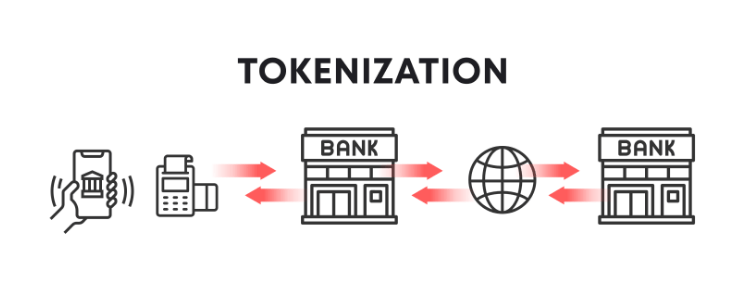
Image: Blaize Tech

That does not mean banks disappear. According to Grossman’s view, they remain central players, much like they did after ATMs reduced teller roles or when voice-over-internet systems cut long-distance call costs for telecom firms.

The institutions stayed, but their shape changed. The same pattern is expected here. Banks may rely more on software, fewer manual steps and new forms of infrastructure control.

Tokenization is moving faster than expected, according to MoonPay president Keith Grossman. Banks and asset managers are testing tokenized funds and onchain settlement, signaling that what was once experimental is now becoming practical.

The lenders and other big players are among the firms pushing the shift, showing the trend is already under way.

Featured image from Unsplash, chart from TradingView

Preguntas relacionadas

QAccording to Keith Grossman, why is the progress in tokenization accelerating?

AProgress has accelerated because rules are becoming clearer, with legislative efforts, regulatory guidance, bank involvement, and accounting standards starting to line up, which reduces uncertainty.

QWhich major financial institutions are mentioned as actively participating in tokenization efforts?

ABlackRock, Franklin Templeton, Citi, Bank of America, and JPMorgan Chase are mentioned as major institutions participating in tokenization.

QWhat key benefit of using shared ledgers for settlement is highlighted in the article?

AThe key benefit is that settlement, which once took days, could be shortened to minutes, altering how risk, liquidity, and cost are managed across markets.

QHow does Keith Grossman frame the current shift in finance, comparing it to another industry?

AHe frames it as similar to the shift in legacy media over 20 years ago, where distribution moved online and firms that adapted early survived while others lost influence to new platforms.

QWhat specific areas in finance are identified as facing pressure from tokenization and new technology?

AThe pressure points are in areas such as reconciliation, clearing, settlement, and custody, which have long supported steady margins due to complex and slow systems.

Lecturas Relacionadas

Uncovering the Truth About Agent Commerce, Payments, and Infrastructure

Decoding Agent Commerce, Payments, and Infrastructure: The Reality Over the past year, I've been building infrastructure for the Agent economy, engaging with major players like Stripe, Visa, Coinbase, Google, and dozens of startups. A clear conclusion emerges: true, large-scale demand does not yet exist. Startups face structural challenges. Data points illustrate this gap. Stripe's Agent commerce platform has over 1,000 merchants but only single-digit transacting agents. Visa's Agent payment token requires 9-month KYC and a $250M revenue threshold, accessible only to giants like Amazon. On-chain analysis reveals actual daily Agent transaction volume is around $17k, half of which are test transactions. The article analyzes four potential markets: **1. Agent-to-Merchant (A2M):** Current AI shopping UX is often inferior to traditional e-commerce for visual, comparison-heavy purchases (clothing, electronics). Chat interfaces are a step back. Real merchant interest is defensive "Agent Engine Optimization," fearing future obsolescence, not current demand. Potential exists in high-frequency, low-decision purchases (e.g., food delivery) or simplifying terrible UX (complex checkouts, non-native shoppers), but these require massive consumer distribution channels dominated by giants like DoorDash and Amazon. **2. Agent-to-API (A2A):** Developers already have subscriptions and billing for core APIs (compute, data). The argument for micro-payments via crypto for sub-dollar API calls is addressed by pre-paid balances today. The deeper issue is supplier resistance; major SaaS firms rely on enterprise contracts, not fractional cent pricing. Opportunity lies in the long tail of niche services, but this is a smaller market catering to developers, a historically low-paying group. **3. Agent-to-Agent (A2A):** This remains a theoretical long-term vision with near-zero current transaction volume. It involves unique challenges: discovery, trust, negotiation, dispute resolution. When it materializes, it will require a fundamentally new settlement infrastructure for high-speed, variable-value, multi-party transactions. It's a real long-term bet, but not the current market. **4. Agent-to-Finance (A2F):** This is the only category with existing, paying demand. Integrating AI into financial workflows (trading, portfolio management) is a natural evolution and enables new capabilities like autonomous rebalancing. However, competition favors incumbents with regulatory licenses, compliance infrastructure, and existing client relationships. **The Real Issue:** Why is infrastructure still being built? Incumbents can afford long-term bets, and payment companies see every problem as a nail for their payment hammer. However, payment is just one piece. The core challenge is *coordination*—orchestrating work between Agents and humans, verifying outcomes, and settling results. Payment is part of settlement, which is part of coordination. Companies that solve the coordination problem will subsume payments, not the other way around. Startups lack the infinite runway of giants and must find today's real market, which, after a year of exploration, lies outside these four categories—in an area with real, growing, and underserved activity.

marsbitHace 4 hora(s)

Uncovering the Truth About Agent Commerce, Payments, and Infrastructure

marsbitHace 4 hora(s)

Trading

Spot
Futuros

Artículos destacados

Cómo comprar BILL

¡Bienvenido a HTX.com! Hemos hecho que comprar Billions Network (BILL) sea simple y conveniente. Sigue nuestra guía paso a paso para iniciar tu viaje de criptos.Paso 1: crea tu cuenta HTXUtiliza tu correo electrónico o número de teléfono para registrarte y obtener una cuenta gratuita en HTX. Experimenta un proceso de registro sin complicaciones y desbloquea todas las funciones.Obtener mi cuentaPaso 2: ve a Comprar cripto y elige tu método de pagoTarjeta de crédito/débito: usa tu Visa o Mastercard para comprar Billions Network (BILL) al instante.Saldo: utiliza fondos del saldo de tu cuenta HTX para tradear sin problemas.Terceros: hemos agregado métodos de pago populares como Google Pay y Apple Pay para mejorar la comodidad.P2P: tradear directamente con otros usuarios en HTX.Over-the-Counter (OTC): ofrecemos servicios personalizados y tipos de cambio competitivos para los traders.Paso 3: guarda tu Billions Network (BILL)Después de comprar tu Billions Network (BILL), guárdalo en tu cuenta HTX. Alternativamente, puedes enviarlo a otro lugar mediante transferencia blockchain o utilizarlo para tradear otras criptomonedas.Paso 4: tradear Billions Network (BILL)Tradear fácilmente con Billions Network (BILL) en HTX's mercado spot. Simplemente accede a tu cuenta, selecciona tu par de trading, ejecuta tus trades y monitorea en tiempo real. Ofrecemos una experiencia fácil de usar tanto para principiantes como para traders experimentados.

234 Vistas totalesPublicado en 2026.05.07Actualizado en 2026.06.02

Cómo comprar BILL

Qué es ATWO

I. Introducción al ProyectoArena Two es una plataforma interactiva descentralizada que permite a los fanáticos jugar un papel activo y tokenizado en los resultados de eventos en tiempo real. A diferencia de los modelos de transmisión tradicionales que reducen a los fanáticos a espectadores pasivos, Arena Two aprovecha la tecnología blockchain para permitir que los fanáticos voten directamente en tiempo real e influyan en los resultados en el campo.II. Información del TokenNombre del token: ATWO (Arena Two)III. Enlaces RelacionadosSitio web: https://arenatwo.com/Exploradores: https://basescan.org/token/0x499D35eBE6cEe9B2Ac35Fd003fcBbeeB9CFc7B32Twitter: https://x.com/arenatwoXNota: La introducción del proyecto proviene de los materiales publicados o proporcionados por el equipo oficial del proyecto, que es solo para referencia y no constituye asesoramiento de inversión. HTX no se hace responsable de ninguna pérdida directa o indirecta resultante.

147 Vistas totalesPublicado en 2026.05.18Actualizado en 2026.06.02

Qué es ATWO

Cómo comprar ATWO

¡Bienvenido a HTX.com! Hemos hecho que comprar Arena Two (ATWO) sea simple y conveniente. Sigue nuestra guía paso a paso para iniciar tu viaje de criptos.Paso 1: crea tu cuenta HTXUtiliza tu correo electrónico o número de teléfono para registrarte y obtener una cuenta gratuita en HTX. Experimenta un proceso de registro sin complicaciones y desbloquea todas las funciones.Obtener mi cuentaPaso 2: ve a Comprar cripto y elige tu método de pagoTarjeta de crédito/débito: usa tu Visa o Mastercard para comprar Arena Two (ATWO) al instante.Saldo: utiliza fondos del saldo de tu cuenta HTX para tradear sin problemas.Terceros: hemos agregado métodos de pago populares como Google Pay y Apple Pay para mejorar la comodidad.P2P: tradear directamente con otros usuarios en HTX.Over-the-Counter (OTC): ofrecemos servicios personalizados y tipos de cambio competitivos para los traders.Paso 3: guarda tu Arena Two (ATWO)Después de comprar tu Arena Two (ATWO), guárdalo en tu cuenta HTX. Alternativamente, puedes enviarlo a otro lugar mediante transferencia blockchain o utilizarlo para tradear otras criptomonedas.Paso 4: tradear Arena Two (ATWO)Tradear fácilmente con Arena Two (ATWO) en HTX's mercado spot. Simplemente accede a tu cuenta, selecciona tu par de trading, ejecuta tus trades y monitorea en tiempo real. Ofrecemos una experiencia fácil de usar tanto para principiantes como para traders experimentados.

188 Vistas totalesPublicado en 2026.05.18Actualizado en 2026.06.02

Cómo comprar ATWO

Discusiones

Bienvenido a la comunidad de HTX. Aquí puedes mantenerte informado sobre los últimos desarrollos de la plataforma y acceder a análisis profesionales del mercado. A continuación se presentan las opiniones de los usuarios sobre el precio de A (A).

活动图片














