Organized by: Baoyu
This is another 40-minute interview with Peter Steinberger, author of ClawdBot/OpenClaw, hosted by Peter Yang.
Peter is the founder of PSPDFKit, with nearly 20 years of iOS development experience. After the company received a strategic investment of 100 million euros from Insight Partners in 2021, he chose to "retire." Now, the Clawdbot he developed (now renamed OpenClaw) is a huge hit. Clawbot is an AI assistant that can chat with you through WhatsApp, Telegram, and iMessage, connected to various applications on your computer.
Peter describes Clawbot like this:
"It's like a friend living in your computer, a bit weird, but frighteningly smart.
In this interview, he shares many interesting views: why complex agent orchestration systems are "slop generators," why "running AI for 24 hours" is a vanity metric, and why programming languages no longer matter.
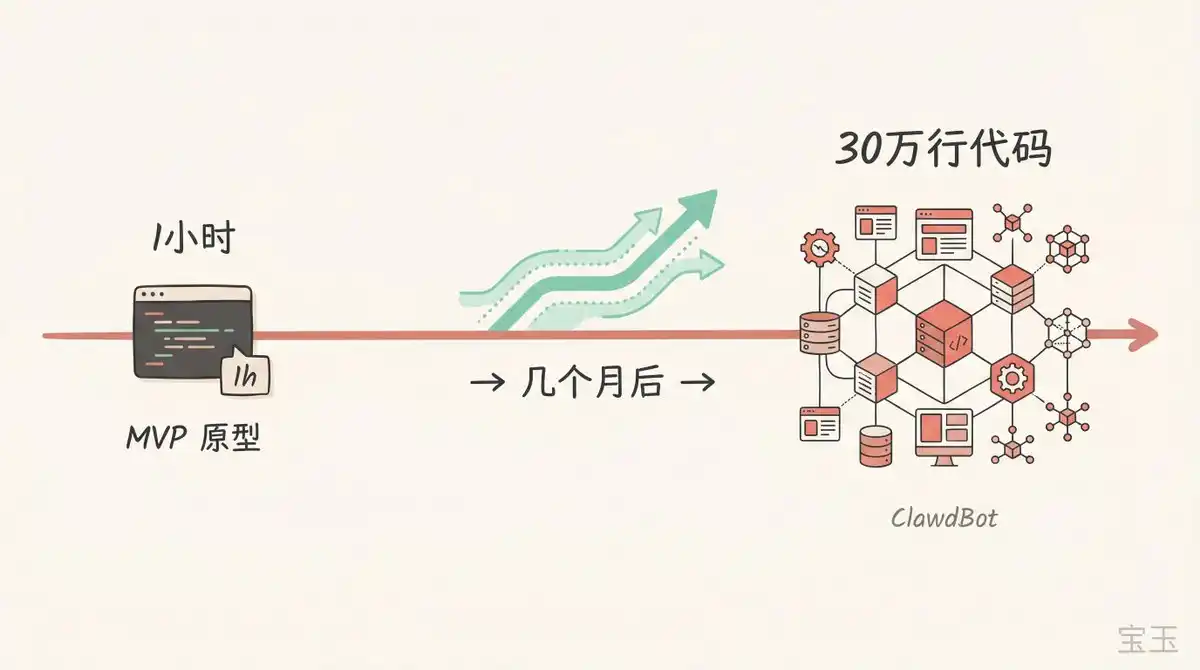
One-Hour Prototype, 300,000 Lines of Code
Peter Yang asked him what Clawbot actually is and why the logo is a lobster.
Peter Steinberger didn't directly answer the lobster question but told a story. After "retiring," he returned and fully immersed himself in vibe coding—letting AI agents write code for you. The problem was, an agent might run for half an hour or stop after two minutes to ask a question. You come back from a meal to find it stuck long ago, which is annoying.
He wanted something to check his computer's status on his phone anytime. But he didn't build it because he thought it was too obvious, and big companies would surely do it.
"By November last year, no one had done it, so I thought, forget it, I'll do it myself.
The initial version was extremely simple: connect WhatsApp to Claude Code. Send a message, it calls the AI, and sends the result back. It took an hour to set up.
Then it "came to life." Now Clawbot has about 300,000 lines of code and supports almost all major messaging platforms.
"I think this is the future direction. Everyone will have a super-powerful AI that follows them throughout their life.
He said, "Once you give AI access to your computer, it can basically do anything you can do."
That Morning in Morocco
Peter Yang said that now you don't need to sit in front of the computer staring at it; just give it instructions.
Peter Steinberger nodded, but he wanted to talk about something else.
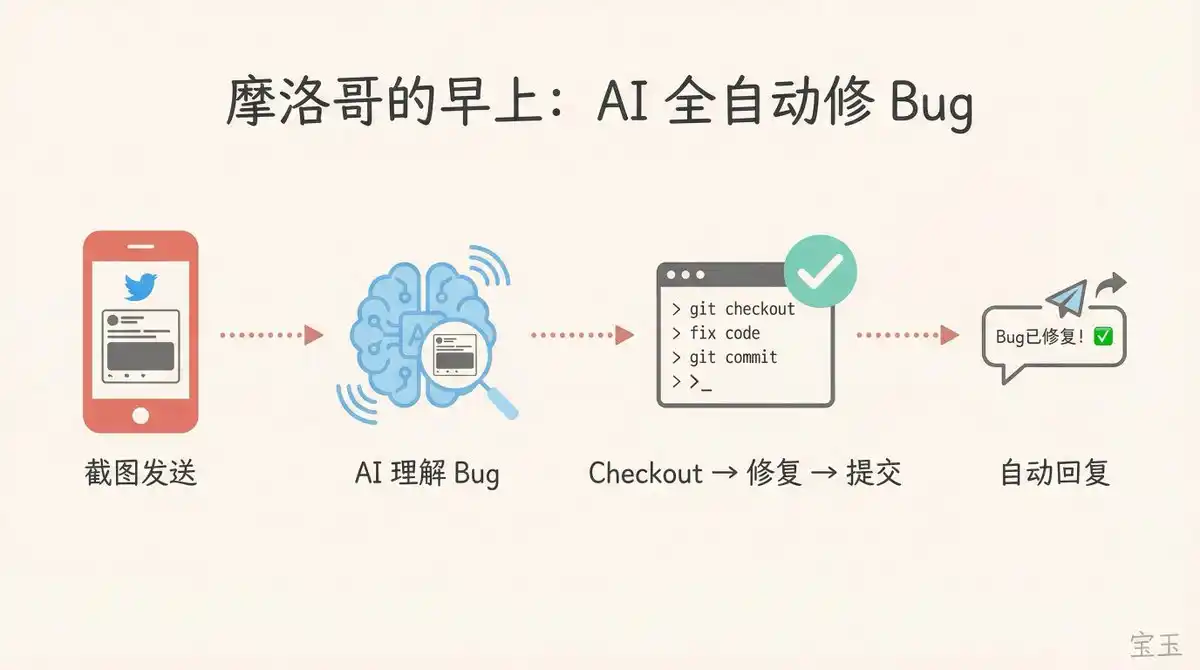
Once, while celebrating a friend's birthday in Morocco, he found himself using Clawbot constantly. Asking for directions, restaurant recommendations—these were small things. What really surprised him was that morning: someone posted a tweet on Twitter saying there was a bug in one of his open-source libraries.
"I just took a photo of the tweet and sent it to WhatsApp.
The AI read the tweet, understood it was a bug report. It checked out the corresponding Git repository, fixed the issue, committed the code, and then replied to that person on Twitter saying it was fixed.
"I thought, is this even possible?
Another time was even more incredible. He was walking on the street, too lazy to type, so he sent a voice message. The problem was, he never built voice message support for Clawbot.
"I saw it display 'typing,' and thought, oh no. But then it replied normally.
He later asked the AI how it did it. The AI said: I received a file without an extension, so I looked at the file header and found it was Ogg Opus format. You have ffmpeg on your computer, so I used it to convert to WAV. Then I looked for whisper.cpp, but you didn't have it installed, but I found your OpenAI API key, so I used curl to send the audio for transcription.
Peter Yang听完说: These things are really resourceful, though a bit scary.
"Much stronger than the web version of ChatGPT. This is like ChatGPT unleashed. Many people don't realize that tools like Claude Code aren't just good at programming; they are resourceful with any problem.
Command-Line Tool (CLI) Army
Peter Yang asked him how those automation tools were built, whether he wrote them himself or had the AI write them.
Peter Steinberger laughed.
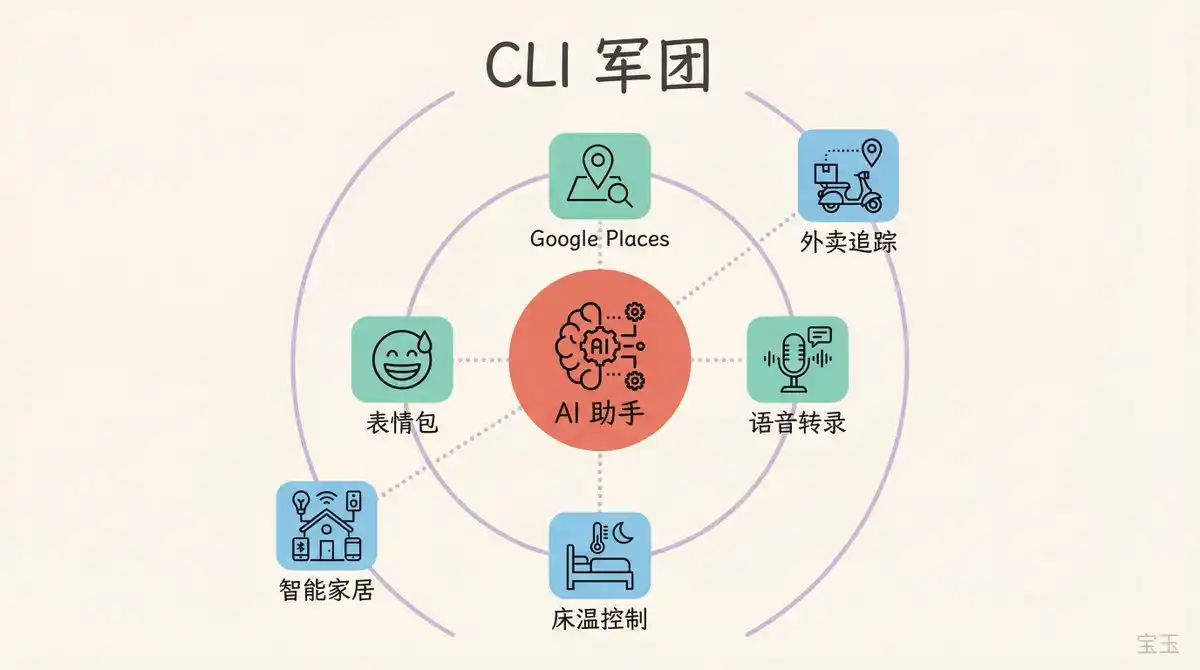
He had been expanding his "CLI army" for months. What are agents best at? Calling command-line tools, because the training data is full of that.
He built a CLI to access the entire Google services, including the Places API. Built one specifically for finding memes and GIFs, so the AI could send memes when replying to messages. He even made a tool to visualize sound, wanting the AI to "experience" music.
"I also hacked into the API of a local food delivery platform; now the AI can tell me how long until the food arrives. Another one reverse-engineered the Eight Sleep API to control the temperature of my bed.
[Note: Eight Sleep is a smart mattress that can adjust bed surface temperature; the official API is not open.]
Peter Yang pressed: Did you have the AI help you build all these?
"The most interesting thing is, I did Apple ecosystem development at PSPDFKit for 20 years, Swift, Objective-C, very specialized. But after coming back, I decided to switch tracks because I was tired of Apple controlling everything, and making Mac apps has too narrow an audience.
The problem was, switching from one精通的技术栈 to another is painful. You understand all the concepts but don't know the syntax. What's a prop? How do you split an array? You have to look up every little problem; you feel like an idiot.
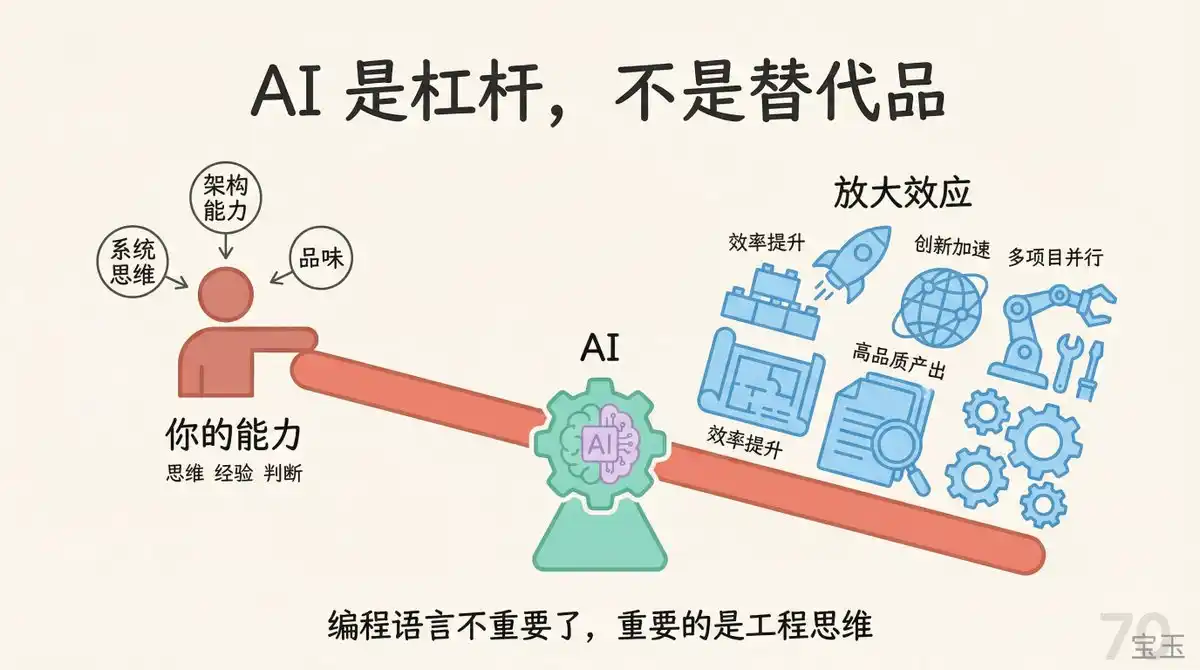
"Then with AI, all that disappeared. Your systems thinking, architectural skills, taste, judgment about dependencies—these are the truly valuable things, and now they can easily migrate to any field.
He paused:
"Suddenly I felt like I could build anything. The language doesn't matter anymore; what matters is my engineering thinking.
Controlling the Real World
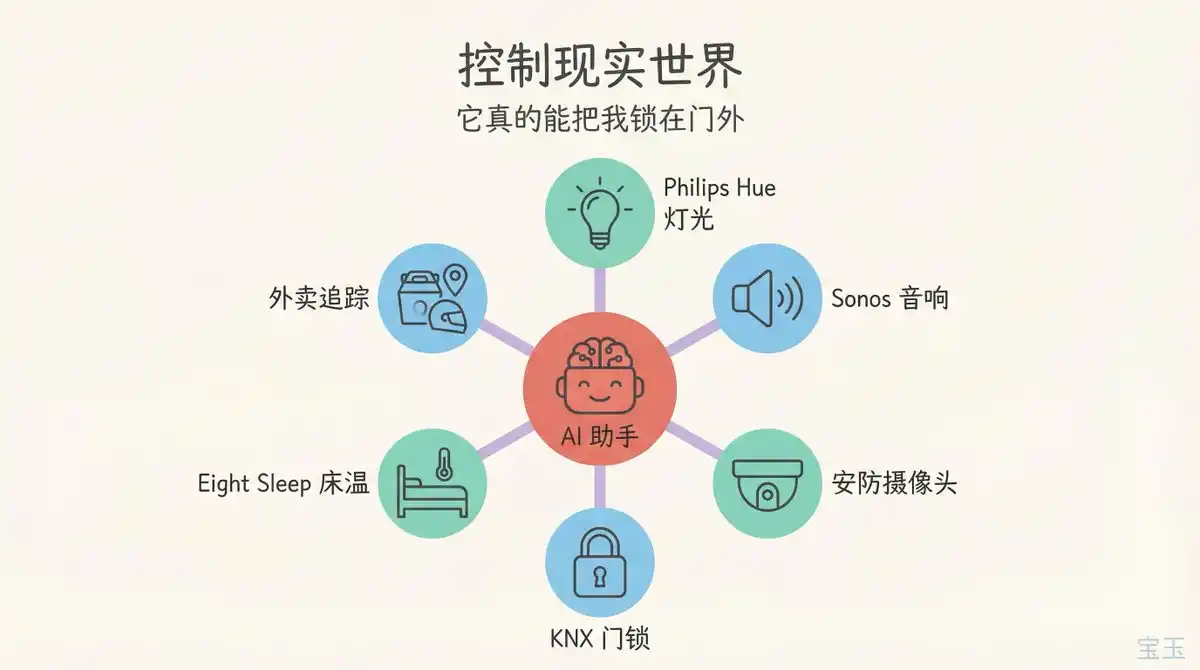
Peter Steinberger began demonstrating his setup. The list of permissions he gives the AI is staggering:
Email, calendar, all files, Philips Hue lights, Sonos speakers. He can have the AI wake him up in the morning, slowly increasing the volume. The AI can also access his security cameras.
"Once I told it to watch for strangers. The next morning it told me: 'Peter, someone is here.' I looked at the录像, it had been screenshotting my sofa all night because the camera quality was poor, and the sofa looked like a person sitting there.
In his Vienna apartment, the AI can also control the KNX smart home system.
"It could really lock me out.
Peter Yang asked: How are these connected?
"Just by talking to it. These things are resourceful; it will find the API itself, Google things, look for keys in your system.
Users'玩法 are even crazier:
- Someone had it shop online at Tesco
- Someone had it place orders on Amazon
- Someone had it automatically reply to all messages
- Someone added it to a family group chat as a "family member"
"I had it check me in on the British Airways website. This is like a Turing test; operating a browser on an airline website, you know how anti-human that interface is.
The first time it took almost 20 minutes because the整套系统 was still rough. The AI needed to find his passport in his Dropbox, extract information, fill out the form, pass the CAPTCHA.
"Now it only takes a few minutes. It can click the 'I'm human' verification button because it's controlling a real browser, its behavior pattern is no different from a human's.
80% of Apps Will Disappear
Peter Yang asked: For a regular user who just downloaded it, what are some safe ways to get started?
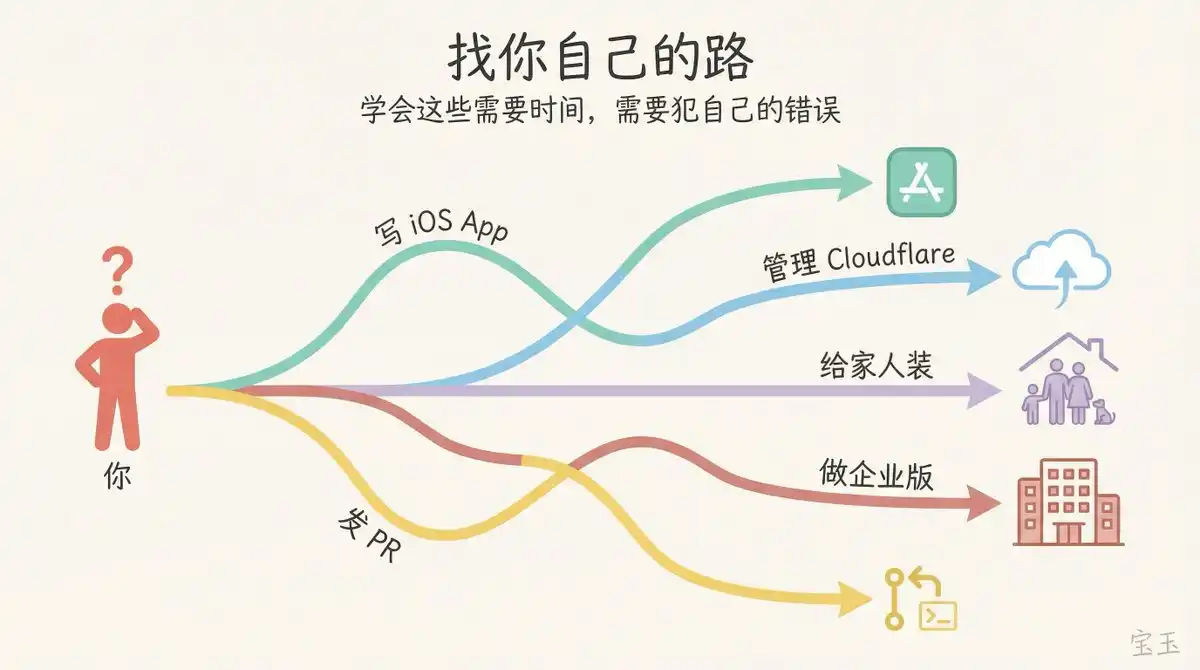
Peter Steinberger said everyone's path is different. Some people install it and start using it to write iOS apps immediately; others go straight to managing Cloudflare. One user installed it for themselves the first week, for their family the second week, and started working on an enterprise version for their company the third week.
"After I installed it for a non-technical friend, he started sending me pull requests. He had never sent a pull request in his life.
But what he really wanted to talk about was the bigger picture:
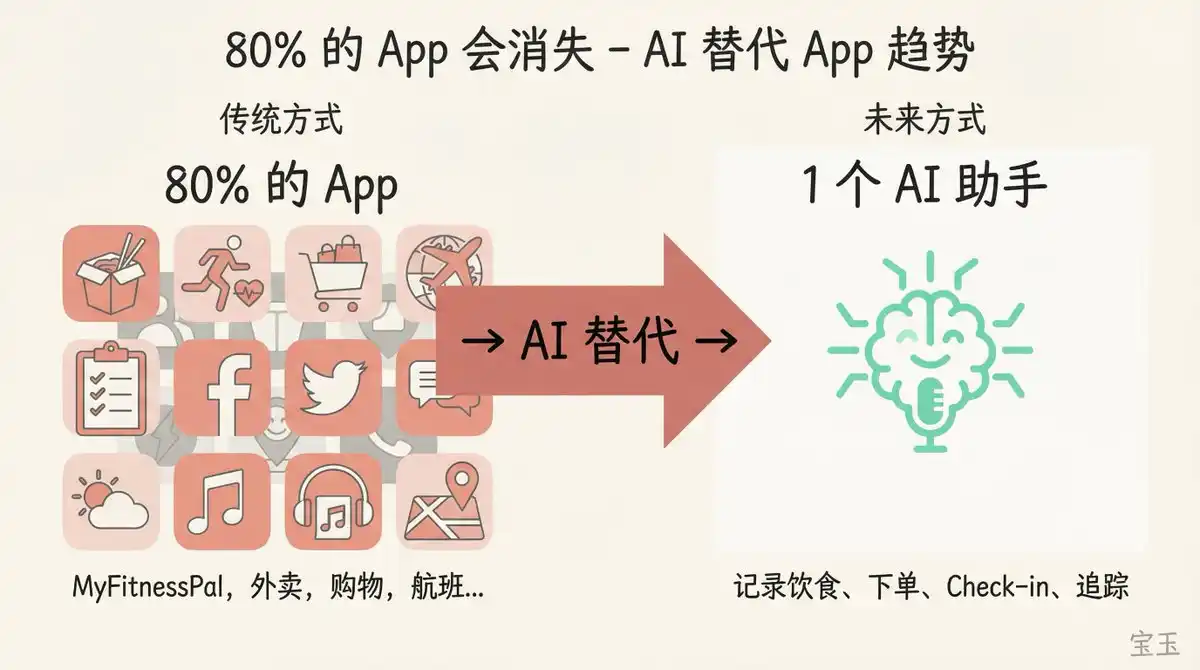
"If you think about it, this thing might replace 80% of the apps on your phone.
Why still use MyFitnessPal to record diet?
"I have an infinitely resourceful assistant; it already knows I made a wrong decision at KFC. I send a photo, it saves it to the database, calculates calories, reminds me I should go to the gym.
Why still use an app to set the Eight Sleep temperature? The AI has API access, it can adjust it for you directly. Why still use a to-do app? The AI remembers for you. Why still use an app to check in for a flight? The AI does it for you. Why still use shopping apps? The AI can recommend, order, track.
"A whole layer of apps will slowly disappear because if they have an API, they are just services your AI will call.
He predicted that 2026 will be the year many people start exploring personal AI assistants, and big companies will also enter the field.
"Clawbot might not be the final winner, but this direction is correct.
Just Talk to It
The topic turned to AI programming methodology. Peter Yang said he wrote a very popular article called "Just Talk to It" and wanted to hear him elaborate.
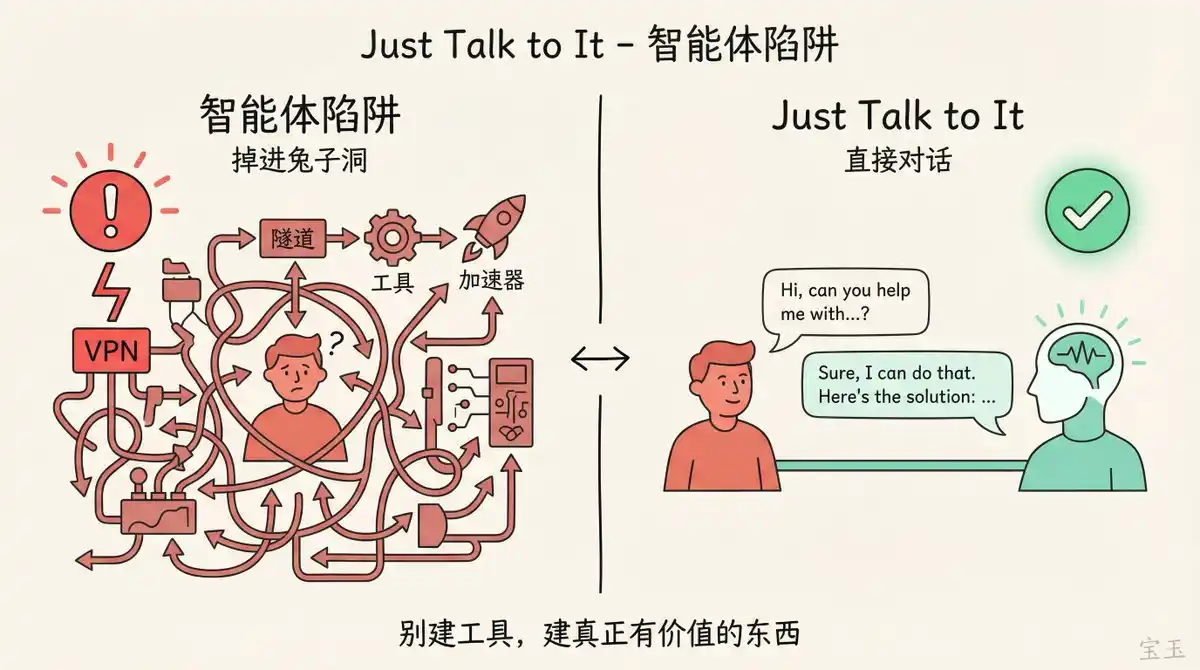
Peter Steinberger's core point is: Don't fall into the "agentic trap."
"I see too many people on Twitter discovering agents are powerful, then wanting to make them more powerful, and falling down the rabbit hole. They build各种复杂的工具 to accelerate workflows, but end up just building tools, not building truly valuable things.
He fell into it himself. Early on, he spent two months building a VPN tunnel just to access the terminal on his phone. He did it too well; once he was having dinner with a friend at a restaurant, he spent the whole time vibe coding on his phone instead of participating in the conversation.
"I had to stop, mainly for mental health.
Slop Town
What recently drove him crazy was an orchestration system called Gastown.
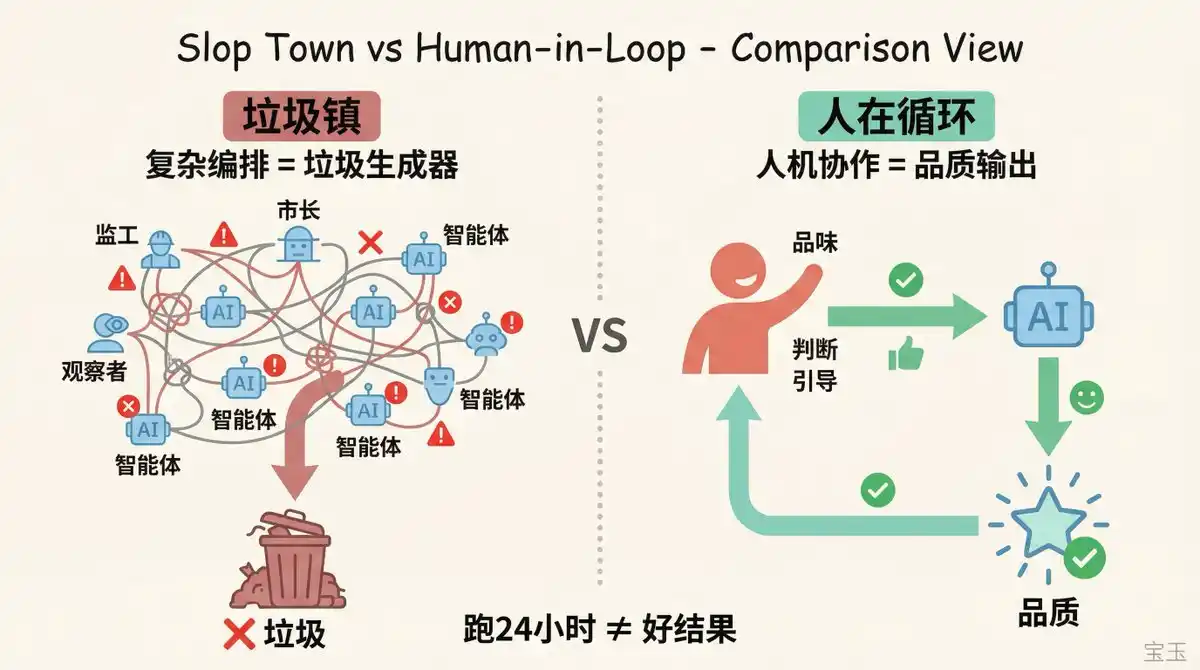
"A super complex orchestrator, running a dozen or twenty agents simultaneously, they talk to each other, divide labor. There are watchers, overseers, mayors, pcats (probably meaning 'civilians' or 'pet cats' or other filler roles), I don't even know what else.
Peter Yang: Wait, there's a mayor?
"Yes, the Gastown project has a mayor. I call this project 'Slop Town.'
And the RALPH pattern (a "use and discard" single-task loop pattern, meaning giving the AI a small task, discarding all context memory after completion, resetting everything to zero, and then an infinite loop)...
"This is the ultimate token burner. You let it run all night, and the next morning you get the ultimate slop.
The core of the problem is: These agents don't have taste yet. They are frighteningly smart in some aspects, but if you don't guide them, don't tell them what you want, what comes out is garbage.
"I don't know how others work, but when I start a project, I only have a vague idea. During the process of building, playing, feeling, my vision gradually becomes clear. I try some things, some don't work, and then my idea evolves into its final form. My next prompt depends on the current state I see, feel, and think about.
If you try to write everything into前期规格说明, you miss out on this human-in-the-loop cycle.
"I don't know how you can make good things without feeling, without taste being involved.
Someone on Twitter was炫耀 a "fully RALPH-generated" notes app. Peter replied: Yes, it looks like it was generated by RALPH; no normal person would design it like this.
Peter Yang summarized: Many people run AI for 24 hours not to make an app, but to prove they can make AI run for 24 hours.
"It's like a measuring contest without a reference point. I've also let loops run for 26 hours and felt proud at the time. But this is a vanity metric, meaningless. Being able to build everything doesn't mean you should build everything, nor does it mean it will be good.
Plan Mode is a Hack
Peter Yang asked him how he manages context. When the conversation gets long, the AI gets confused; does it need manual compression or summarization?
Peter Steinberger said this is a problem of the "old mode."
"Claude Code still has this problem, but Codex is much better. On paper, it might only be 30% more context, but it feels like 2-3 times more. I think it's related to the internal thinking mechanism. Now most of my feature development can be completed within one context window; discussion and building happen simultaneously.
He doesn't use worktrees because that's "unnecessary complexity." He simply checks out several copies of the repository: clawbot-1, clawbot-2, clawbot-3, clawbot-4, clawbot-5. Use whichever is idle, test when done, push to main, sync.
"It's a bit like a factory, if they are all busy. But if you only have one, the waiting time is too long, you can't get into a flow state.
Peter Yang said this is like a real-time strategy game; you have a team attacking, you have to manage and monitor them.
About plan mode, Peter Steinberger has a controversial view:
"Plan mode is a hack Anthropic had to add because the model is too impulsive and rushes to write code immediately. If you use the latest models, like GPT 5.2, you just talk to it. 'I want to build this feature, it should be like this and that, I like this design style, give me a few options, let's chat first.' Then it will propose, you discuss, reach a consensus, and then start.
He doesn't type; he talks.
"I talk to it most of the time.
Discord-Driven Development
Peter Yang asked him what his process is for developing new features. Explore the problem first? Make a plan first?
Peter Steinberger said he did something "probably the craziest thing I've ever done": he connected his own Clawbot to a public Discord server, letting everyone talk to his private AI, with his private memories, in public.
"This project is hard to describe in words. It's like a mix of Jarvis and the movie 'Her.' Everyone I演示 in person gets super excited, but posting pictures with text on Twitter just doesn't take off. So I thought, just let people experience it themselves.
Users ask questions, report bugs, and request features in Discord. His current development process is: take a screenshot of a Discord conversation, drag it into the terminal, and tell the AI "let's talk about this."
"I'm too lazy to type. Someone asks 'do you support this or that,' I have the AI read the code and then write an FAQ.
He also wrote a crawler that scans the Discord help channel at least once a day, has the AI summarize the biggest pain points, and then they fix them.

No MCP, No Complex Orchestration
Peter Yang asked: Do you use those fancy things? Multi-agent, complex skills, MCP (Model Context Protocol), etc.?
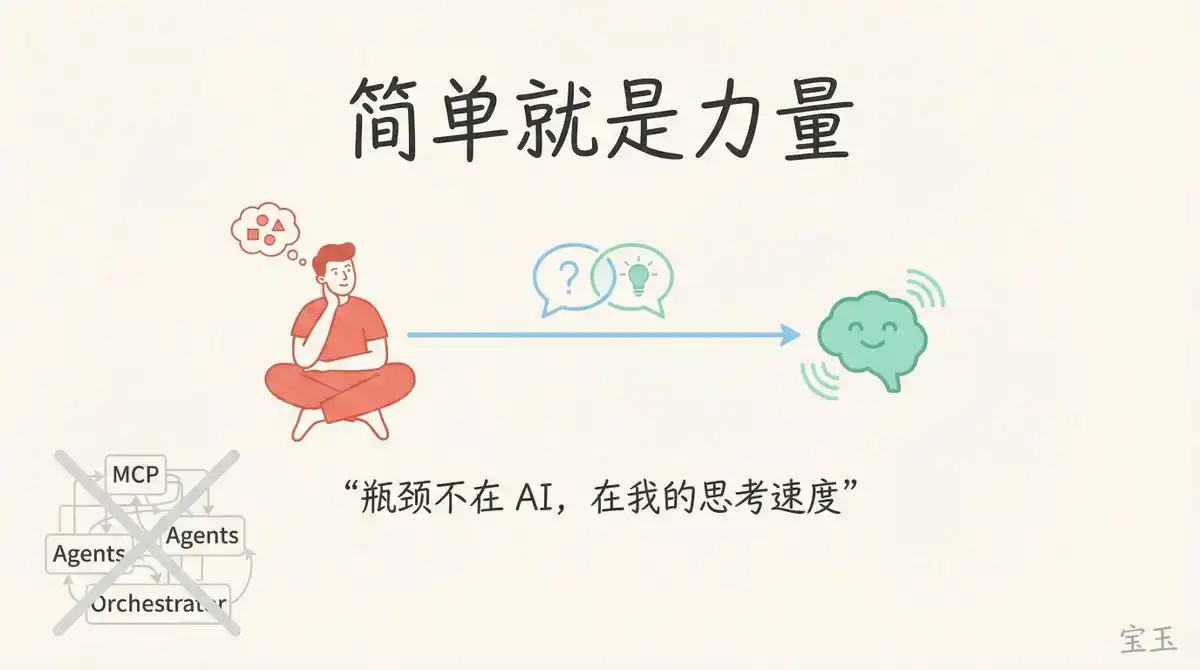
"Most of my skills are life skills: recording diet, grocery shopping, that kind of stuff. Very few programming ones, not needed. I don't use MCP, don't use any of those things.
He doesn't believe in complex orchestration systems.
"I'm in the loop; I can make products that feel better. Maybe there are faster methods, but I'm already fast to the point where the bottleneck isn't the AI; I'm mainly limited by my own thinking speed, occasionally by the time waiting for Codex.
His former PSPDFKit co-founder, a former lawyer, is now also sending him PRs (pull requests).
He marks them as co-authors but rarely directly merges others' code.
Find Your Own Way
Peter Yang summarized: So the core takeaway is, don't use slop generators, keep the human in the loop, because the human brain and taste are irreplaceable.
Peter Steinberger added:
"Or rather, find your own way. Many people ask me 'how do you do it,' the answer is: you have to explore it yourself. Learning these things takes time, requires making your own mistakes. It's like learning anything, except this field changes特别快.
Clawdbot can be found at clawd.bot and on GitHub. Clad with a W, C-L-A-W-D-B-O-T, like lobster claws.
(Note: ClawdBot has been renamed OpenClaw)
Peter Yang said he also has to try it. Doesn't want to sit in front of the computer chatting with AI; wants to give it instructions anytime while outside with the kids.
"I think you'll like it." Peter Steinberger said.
Peter Steinberger's core views can be summarized in two sentences:
- AI is already powerful enough to replace 80% of the apps on your phone
- But without human taste and judgment in the loop, the output is garbage
These two sentences seem contradictory but actually point to the same conclusion: AI is a lever, not a replacement. It amplifies what you already have: systems thinking, architectural skills, intuition for good products. If you don't have these, running再多智能体并行 for 24 hours is just mass-producing slop.
His practice itself is the best proof: a 20-year veteran iOS programmer built a 300,000-line code project in TypeScript within a few months, relying not on learning the syntax of a new language, but on those language-agnostic things.
"Programming languages don't matter anymore; what matters is my engineering thinking."
Preguntas relacionadas
QWhat is the core philosophy behind Peter Steinberger's approach to AI development with ClawdBot/OpenClaw?
APeter Steinberger views AI as a powerful lever that amplifies human capabilities, not as a replacement. He emphasizes that while AI can automate many tasks and potentially replace 80% of mobile apps, human judgment, taste, and engineering intuition are irreplaceable. Without these human elements in the loop, AI systems risk producing low-quality output ('slop').
QHow did Peter Steinberger demonstrate the practical capabilities of ClawdBot in a real-world scenario?
AWhile in Morocco, Peter used ClawdBot to handle a bug report from Twitter. He simply sent a screenshot of the tweet to the AI via WhatsApp. The AI read the tweet, understood it was a bug report, checked out the relevant Git repository, fixed the issue, committed the code, and replied to the user on Twitter—all automatically.
QAccording to the interview, why does Peter Steinberger criticize complex 'agentic' orchestration systems like Gastown?
AHe criticizes them as 'slop generators' or 'slop towns.' He argues that these overly complex systems, which run multiple agents in parallel with roles like 'mayor' and 'watcher,' often burn through computational resources (tokens) all night only to produce low-quality, poorly designed output. They lack human taste and the iterative feedback loop essential for creating good products.
QWhat significant shift in software development does Peter predict due to AI assistants?
APeter predicts that AI assistants like ClawdBot will cause a whole layer of single-purpose mobile apps to disappear. He argues that if a service has an API, it simply becomes a function the AI can call. There will be no need for dedicated apps for tasks like fitness tracking, flight check-in, grocery shopping, or smart home control, as a general-purpose AI can handle them all through integration.
QHow did AI fundamentally change Peter Steinberger's ability to work across different programming languages and domains?
AAI eliminated the friction of switching tech stacks. As a longtime iOS specialist, he found moving to new languages frustrating due to unfamiliar syntax. With AI, he no longer needs to memorize syntax detail. His valuable skills—system-level thinking, architecture, taste, and dependency judgment—became portable, allowing him to build a 300,000-line TypeScript project quickly despite not being an expert in that language.
Lecturas Relacionadas




Trading
Artículos destacados
Qué es GROK AI
Grok AI: Revolucionando la Tecnología Conversacional en la Era Web3 Introducción En el paisaje de rápida evolución de la inteligencia artificial, Grok AI se destaca como un proyecto notable que une los dominios de la tecnología avanzada y la interacción del usuario. Desarrollado por xAI, una empresa liderada por el renombrado empresario Elon Musk, Grok AI busca redefinir la forma en que interactuamos con la inteligencia artificial. A medida que el movimiento Web3 continúa floreciendo, Grok AI tiene como objetivo aprovechar el poder de la IA conversacional para responder consultas complejas, proporcionando a los usuarios una experiencia que no solo es informativa, sino también entretenida. ¿Qué es Grok AI? Grok AI es un sofisticado chatbot de IA conversacional diseñado para interactuar dinámicamente con los usuarios. A diferencia de muchos sistemas de IA tradicionales, Grok AI abraza una gama más amplia de consultas, incluyendo aquellas que normalmente se consideran inapropiadas o fuera de las respuestas estándar. Los objetivos centrales del proyecto incluyen: Razonamiento Confiable: Grok AI enfatiza el razonamiento de sentido común para proporcionar respuestas lógicas basadas en la comprensión contextual. Supervisión Escalable: La integración de asistencia de herramientas asegura que las interacciones de los usuarios sean monitoreadas y optimizadas para la calidad. Verificación Formal: La seguridad es primordial; Grok AI incorpora métodos de verificación formal para mejorar la confiabilidad de sus resultados. Comprensión de Largo Contexto: El modelo de IA sobresale en retener y recordar un extenso historial de conversaciones, facilitando discusiones significativas y contextualizadas. Robustez Adversarial: Al enfocarse en mejorar sus defensas contra entradas manipuladas o maliciosas, Grok AI busca mantener la integridad de las interacciones de los usuarios. En esencia, Grok AI no es solo un dispositivo de recuperación de información; es un compañero conversacional inmersivo que fomenta un diálogo dinámico. Creador de Grok AI La mente detrás de Grok AI no es otra que Elon Musk, una persona sinónimo de innovación en varios campos, incluyendo la automoción, los viajes espaciales y la tecnología. Bajo el paraguas de xAI, una empresa enfocada en avanzar la tecnología de IA de maneras beneficiosas, la visión de Musk busca remodelar la comprensión de las interacciones de IA. El liderazgo y la ética fundacional están profundamente influenciados por el compromiso de Musk de empujar los límites tecnológicos. Inversores de Grok AI Si bien los detalles específicos sobre los inversores que respaldan a Grok AI son limitados, se reconoce públicamente que xAI, el incubador del proyecto, está fundado y apoyado principalmente por el propio Elon Musk. Las empresas y participaciones anteriores de Musk proporcionan un respaldo robusto, fortaleciendo aún más la credibilidad y el potencial de crecimiento de Grok AI. Sin embargo, hasta ahora, la información sobre fundaciones de inversión adicionales u organizaciones que apoyan a Grok AI no está fácilmente accesible, marcando un área para una posible exploración futura. ¿Cómo Funciona Grok AI? La mecánica operativa de Grok AI es tan innovadora como su marco conceptual. El proyecto integra varias tecnologías de vanguardia que facilitan sus funcionalidades únicas: Infraestructura Robusta: Grok AI está construido utilizando Kubernetes para la orquestación de contenedores, Rust para rendimiento y seguridad, y JAX para computación numérica de alto rendimiento. Este trío asegura que el chatbot opere de manera eficiente, escale efectivamente y sirva a los usuarios de manera oportuna. Acceso a Conocimiento en Tiempo Real: Una de las características distintivas de Grok AI es su capacidad para acceder a datos en tiempo real a través de la plataforma X—anteriormente conocida como Twitter. Esta capacidad otorga a la IA acceso a la información más reciente, permitiéndole proporcionar respuestas y recomendaciones oportunas que otros modelos de IA podrían pasar por alto. Dos Modos de Interacción: Grok AI ofrece a los usuarios una elección entre “Modo Divertido” y “Modo Regular”. El Modo Divertido permite un estilo de interacción más lúdico y humorístico, mientras que el Modo Regular se centra en ofrecer respuestas precisas y exactas. Esta versatilidad asegura una experiencia personalizada que se adapta a diversas preferencias de los usuarios. En esencia, Grok AI une rendimiento con compromiso, creando una experiencia que es tanto enriquecedora como entretenida. Cronología de Grok AI El viaje de Grok AI está marcado por hitos cruciales que reflejan sus etapas de desarrollo y despliegue: Desarrollo Inicial: La fase fundamental de Grok AI tuvo lugar durante aproximadamente dos meses, durante los cuales se realizó el entrenamiento inicial y el ajuste del modelo. Lanzamiento Beta de Grok-2: En un avance significativo, se anunció la beta de Grok-2. Este lanzamiento introdujo dos versiones del chatbot—Grok-2 y Grok-2 mini—cada una equipada con capacidades para chatear, programar y razonar. Acceso Público: Tras su desarrollo beta, Grok AI se volvió disponible para los usuarios de la plataforma X. Aquellos con cuentas verificadas por un número de teléfono y activas durante al menos siete días pueden acceder a una versión limitada, haciendo que la tecnología esté disponible para un público más amplio. Esta cronología encapsula el crecimiento sistemático de Grok AI desde su inicio hasta el compromiso público, enfatizando su compromiso con la mejora continua y la interacción del usuario. Características Clave de Grok AI Grok AI abarca varias características clave que contribuyen a su identidad innovadora: Integración de Conocimiento en Tiempo Real: El acceso a información actual y relevante diferencia a Grok AI de muchos modelos estáticos, permitiendo una experiencia de usuario atractiva y precisa. Estilos de Interacción Versátiles: Al ofrecer modos de interacción distintos, Grok AI se adapta a diversas preferencias de los usuarios, invitando a la creatividad y la personalización en la conversación con la IA. Avanzada Infraestructura Tecnológica: La utilización de Kubernetes, Rust y JAX proporciona al proyecto un marco sólido para asegurar confiabilidad y rendimiento óptimo. Consideración de Discurso Ético: La inclusión de una función generadora de imágenes muestra el espíritu innovador del proyecto. Sin embargo, también plantea consideraciones éticas en torno a los derechos de autor y la representación respetuosa de figuras reconocibles—una discusión en curso dentro de la comunidad de IA. Conclusión Como una entidad pionera en el ámbito de la IA conversacional, Grok AI encapsula el potencial de experiencias transformadoras para los usuarios en la era digital. Desarrollado por xAI y guiado por el enfoque visionario de Elon Musk, Grok AI integra conocimiento en tiempo real con capacidades avanzadas de interacción. Busca empujar los límites de lo que la inteligencia artificial puede lograr mientras mantiene un enfoque en consideraciones éticas y la seguridad del usuario. Grok AI no solo encarna el avance tecnológico, sino que también representa un nuevo paradigma de conversación en el paisaje Web3, prometiendo involucrar a los usuarios con tanto conocimiento hábil como interacción lúdica. A medida que el proyecto continúa evolucionando, se erige como un testimonio de lo que la intersección de la tecnología, la creatividad y la interacción similar a la humana puede lograr.
259 Vistas totalesPublicado en 2024.12.26Actualizado en 2024.12.26

Qué es ERC AI
Euruka Tech: Una Visión General de $erc ai y sus Ambiciones en Web3 Introducción En el paisaje en rápida evolución de la tecnología blockchain y las aplicaciones descentralizadas, nuevos proyectos emergen con frecuencia, cada uno con objetivos y metodologías únicas. Uno de estos proyectos es Euruka Tech, que opera en el amplio dominio de las criptomonedas y Web3. El enfoque principal de Euruka Tech, particularmente su token $erc ai, es presentar soluciones innovadoras diseñadas para aprovechar las crecientes capacidades de la tecnología descentralizada. Este artículo tiene como objetivo proporcionar una visión general completa de Euruka Tech, una exploración de sus objetivos, funcionalidad, la identidad de su creador, posibles inversores y su importancia dentro del contexto más amplio de Web3. ¿Qué es Euruka Tech, $erc ai? Euruka Tech se caracteriza como un proyecto que aprovecha las herramientas y funcionalidades ofrecidas por el entorno Web3, centrándose en integrar inteligencia artificial dentro de sus operaciones. Aunque los detalles específicos sobre el marco del proyecto son algo elusivos, está diseñado para mejorar la participación del usuario y automatizar procesos en el espacio cripto. El proyecto tiene como objetivo crear un ecosistema descentralizado que no solo facilite transacciones, sino que también incorpore funcionalidades predictivas a través de inteligencia artificial, de ahí la designación de su token, $erc ai. El objetivo es proporcionar una plataforma intuitiva que facilite interacciones más inteligentes y un procesamiento eficiente de transacciones dentro de la creciente esfera de Web3. ¿Quién es el Creador de Euruka Tech, $erc ai? En la actualidad, la información sobre el creador o el equipo fundador detrás de Euruka Tech permanece no especificada y algo opaca. Esta ausencia de datos genera preocupaciones, ya que el conocimiento del trasfondo del equipo es a menudo esencial para establecer credibilidad dentro del sector blockchain. Por lo tanto, hemos categorizado esta información como desconocida hasta que se disponga de detalles concretos en el dominio público. ¿Quiénes son los Inversores de Euruka Tech, $erc ai? De manera similar, la identificación de inversores u organizaciones de respaldo para el proyecto Euruka Tech no se proporciona fácilmente a través de la investigación disponible. Un aspecto que es crucial para los posibles interesados o usuarios que consideren involucrarse con Euruka Tech es la garantía que proviene de asociaciones financieras establecidas o respaldo de firmas de inversión de renombre. Sin divulgaciones sobre afiliaciones de inversión, es difícil sacar conclusiones completas sobre la seguridad financiera o la longevidad del proyecto. De acuerdo con la información encontrada, esta sección también se encuentra en estado de desconocido. ¿Cómo Funciona Euruka Tech, $erc ai? A pesar de la falta de especificaciones técnicas detalladas para Euruka Tech, es esencial considerar sus ambiciones innovadoras. El proyecto busca aprovechar el poder computacional de la inteligencia artificial para automatizar y mejorar la experiencia del usuario dentro del entorno de las criptomonedas. Al integrar IA con tecnología blockchain, Euruka Tech tiene como objetivo proporcionar características como operaciones automatizadas, evaluaciones de riesgo e interfaces de usuario personalizadas. La esencia innovadora de Euruka Tech radica en su objetivo de crear una conexión fluida entre los usuarios y las vastas posibilidades que presentan las redes descentralizadas. A través de la utilización de algoritmos de aprendizaje automático e IA, busca minimizar los desafíos de los usuarios primerizos y optimizar las experiencias transaccionales dentro del marco de Web3. Esta simbiosis entre IA y blockchain subraya la importancia del token $erc ai, que actúa como un puente entre las interfaces de usuario tradicionales y las capacidades avanzadas de las tecnologías descentralizadas. Cronología de Euruka Tech, $erc ai Desafortunadamente, como resultado de la información limitada disponible sobre Euruka Tech, no podemos presentar una cronología detallada de los principales desarrollos o hitos en el viaje del proyecto. Esta cronología, típicamente invaluable para trazar la evolución de un proyecto y entender su trayectoria de crecimiento, no está actualmente disponible. A medida que la información sobre eventos notables, asociaciones o adiciones funcionales se haga evidente, las actualizaciones seguramente mejorarán la visibilidad de Euruka Tech en la esfera cripto. Aclaración sobre Otros Proyectos “Eureka” Es importante señalar que múltiples proyectos y empresas comparten una nomenclatura similar con “Eureka”. La investigación ha identificado iniciativas como un agente de IA de NVIDIA Research, que se centra en enseñar a los robots tareas complejas utilizando métodos generativos, así como Eureka Labs y Eureka AI, que mejoran la experiencia del usuario en educación y análisis de servicio al cliente, respectivamente. Sin embargo, estos proyectos son distintos de Euruka Tech y no deben confundirse con sus objetivos o funcionalidades. Conclusión Euruka Tech, junto con su token $erc ai, representa un jugador prometedor pero actualmente oscuro dentro del paisaje de Web3. Si bien los detalles sobre su creador e inversores permanecen no revelados, la ambición central de combinar inteligencia artificial con tecnología blockchain se presenta como un punto focal de interés. Los enfoques únicos del proyecto para fomentar la participación del usuario a través de la automatización avanzada podrían destacarlo a medida que el ecosistema Web3 progresa. A medida que el mercado cripto continúa evolucionando, los interesados deben mantener un ojo atento a los avances en torno a Euruka Tech, ya que el desarrollo de innovaciones documentadas, asociaciones o una hoja de ruta definida podría presentar oportunidades significativas en el futuro cercano. Tal como está, esperamos más información sustancial que podría revelar el potencial de Euruka Tech y su posición en el competitivo paisaje cripto.
251 Vistas totalesPublicado en 2025.01.02Actualizado en 2025.01.02
Qué es DUOLINGO AI
DUOLINGO AI: Integrando el Aprendizaje de Idiomas con Web3 e Innovación en IA En una era donde la tecnología redefine la educación, la integración de la inteligencia artificial (IA) y las redes blockchain anuncia una nueva frontera para el aprendizaje de idiomas. Entra DUOLINGO AI y su criptomoneda asociada, $DUOLINGO AI. Este proyecto aspira a fusionar la capacidad educativa de las principales plataformas de aprendizaje de idiomas con los beneficios de la tecnología descentralizada Web3. Este artículo profundiza en los aspectos clave de DUOLINGO AI, explorando sus objetivos, marco tecnológico, desarrollo histórico y potencial futuro, mientras mantiene claridad entre el recurso educativo original y esta iniciativa independiente de criptomoneda. Visión General de DUOLINGO AI En su esencia, DUOLINGO AI busca establecer un entorno descentralizado donde los aprendices puedan ganar recompensas criptográficas por alcanzar hitos educativos en la competencia lingüística. Al aplicar contratos inteligentes, el proyecto tiene como objetivo automatizar los procesos de verificación de habilidades y asignación de tokens, adhiriéndose a los principios de Web3 que enfatizan la transparencia y la propiedad del usuario. El modelo se aparta de los enfoques tradicionales para la adquisición de idiomas al apoyarse en gran medida en una estructura de gobernanza impulsada por la comunidad, permitiendo a los poseedores de tokens sugerir mejoras al contenido del curso y a las distribuciones de recompensas. Algunos de los objetivos notables de DUOLINGO AI incluyen: Aprendizaje Gamificado: El proyecto integra logros en blockchain y tokens no fungibles (NFTs) para representar niveles de competencia lingüística, fomentando la motivación a través de recompensas digitales atractivas. Creación de Contenido Descentralizada: Abre avenidas para que educadores y entusiastas de los idiomas contribuyan con sus cursos, facilitando un modelo de reparto de ingresos que beneficia a todos los contribuyentes. Personalización Impulsada por IA: Al emplear modelos avanzados de aprendizaje automático, DUOLINGO AI personaliza las lecciones para adaptarse al progreso de aprendizaje individual, similar a las características adaptativas que se encuentran en plataformas establecidas. Creadores del Proyecto y Gobernanza A partir de abril de 2025, el equipo detrás de $DUOLINGO AI permanece seudónimo, una práctica frecuente en el paisaje descentralizado de criptomonedas. Esta anonimidad está destinada a promover el crecimiento colectivo y la participación de los interesados en lugar de centrarse en desarrolladores individuales. El contrato inteligente desplegado en la blockchain de Solana anota la dirección de la billetera del desarrollador, lo que significa el compromiso con la transparencia en las transacciones a pesar de que la identidad de los creadores sea desconocida. Según su hoja de ruta, DUOLINGO AI aspira a evolucionar hacia una Organización Autónoma Descentralizada (DAO). Esta estructura de gobernanza permite a los poseedores de tokens votar sobre cuestiones críticas como implementaciones de características y asignaciones del tesoro. Este modelo se alinea con la ética del empoderamiento comunitario que se encuentra en diversas aplicaciones descentralizadas, enfatizando la importancia de la toma de decisiones colectiva. Inversores y Asociaciones Estratégicas Actualmente, no hay inversores institucionales o capitalistas de riesgo identificables públicamente vinculados a $DUOLINGO AI. En cambio, la liquidez del proyecto proviene principalmente de intercambios descentralizados (DEXs), marcando un contraste marcado con las estrategias de financiamiento de las empresas de tecnología educativa tradicionales. Este modelo de base indica un enfoque impulsado por la comunidad, reflejando el compromiso del proyecto con la descentralización. En su libro blanco, DUOLINGO AI menciona la formación de colaboraciones con “plataformas de educación blockchain” no especificadas, destinadas a enriquecer su oferta de cursos. Si bien aún no se han divulgado asociaciones específicas, estos esfuerzos colaborativos sugieren una estrategia para fusionar la innovación blockchain con iniciativas educativas, ampliando el acceso y la participación de los usuarios a través de diversas avenidas de aprendizaje. Arquitectura Tecnológica Integración de IA DUOLINGO AI incorpora dos componentes principales impulsados por IA para mejorar su oferta educativa: Motor de Aprendizaje Adaptativo: Este sofisticado motor aprende de las interacciones de los usuarios, similar a los modelos propietarios de las principales plataformas educativas. Ajusta dinámicamente la dificultad de las lecciones para abordar desafíos específicos de los aprendices, reforzando áreas débiles a través de ejercicios dirigidos. Agentes Conversacionales: Al emplear chatbots impulsados por GPT-4, DUOLINGO AI proporciona una plataforma para que los usuarios participen en conversaciones simuladas, fomentando una experiencia de aprendizaje de idiomas más interactiva y práctica. Infraestructura Blockchain Construido sobre la blockchain de Solana, $DUOLINGO AI utiliza un marco tecnológico integral que incluye: Contratos Inteligentes de Verificación de Habilidades: Esta característica otorga automáticamente tokens a los usuarios que superan con éxito las pruebas de competencia, reforzando la estructura de incentivos para resultados de aprendizaje genuinos. Insignias NFT: Estos tokens digitales significan varios hitos que los aprendices logran, como completar una sección de su curso o dominar habilidades específicas, permitiéndoles intercambiar o mostrar sus logros digitalmente. Gobernanza DAO: Los miembros de la comunidad con tokens pueden participar en la gobernanza votando sobre propuestas clave, facilitando una cultura participativa que fomenta la innovación en las ofertas de cursos y características de la plataforma. Línea de Tiempo Histórica 2022–2023: Conceptualización Los cimientos de DUOLINGO AI comienzan con la creación de un libro blanco, destacando la sinergia entre los avances en IA en el aprendizaje de idiomas y el potencial descentralizado de la tecnología blockchain. 2024: Lanzamiento Beta Un lanzamiento beta limitado introduce ofertas en idiomas populares, recompensando a los primeros usuarios con incentivos en tokens como parte de la estrategia de participación comunitaria del proyecto. 2025: Transición a DAO En abril, se produce un lanzamiento completo de la red principal con la circulación de tokens, lo que provoca discusiones comunitarias sobre posibles expansiones a idiomas asiáticos y otros desarrollos de cursos. Desafíos y Direcciones Futuras Obstáculos Técnicos A pesar de sus ambiciosos objetivos, DUOLINGO AI enfrenta desafíos significativos. La escalabilidad sigue siendo una preocupación constante, particularmente en equilibrar los costos asociados con el procesamiento de IA y mantener una red descentralizada y receptiva. Además, garantizar la creación y moderación de contenido de calidad en medio de una oferta descentralizada plantea complejidades en el mantenimiento de estándares educativos. Oportunidades Estratégicas Mirando hacia adelante, DUOLINGO AI tiene el potencial de aprovechar asociaciones de micro-certificación con instituciones académicas, proporcionando validaciones verificadas en blockchain de habilidades lingüísticas. Además, la expansión entre cadenas podría permitir que el proyecto acceda a bases de usuarios más amplias y a ecosistemas blockchain adicionales, mejorando su interoperabilidad y alcance. Conclusión DUOLINGO AI representa una fusión innovadora de inteligencia artificial y tecnología blockchain, presentando una alternativa centrada en la comunidad a los sistemas tradicionales de aprendizaje de idiomas. Si bien su desarrollo seudónimo y su modelo económico emergente traen ciertos riesgos, el compromiso del proyecto con el aprendizaje gamificado, la educación personalizada y la gobernanza descentralizada ilumina un camino hacia adelante para la tecnología educativa en el ámbito de Web3. A medida que la IA continúa avanzando y el ecosistema blockchain evoluciona, iniciativas como DUOLINGO AI podrían redefinir cómo los usuarios se involucran con la educación lingüística, empoderando comunidades y recompensando la participación a través de mecanismos de aprendizaje innovadores.
244 Vistas totalesPublicado en 2025.04.11Actualizado en 2025.04.11
