
Connecting China, US, and Asia-Pacific Capital: Asia Pacific Innovation Center (APIC) Officially Launches in Kuala Lumpur, Building a New Global Business Empowerment Ecosystem

深潮Publicado a 2025-12-10Actualizado a 2025-12-10

Resumen

Asia Pacific Innovation Center (APIC) has officially launched in Kuala Lumpur, Malaysia, as a strategic hub connecting China, the U.S., Asia-Pacific, and the Middle East. APIC aims to reshape the regional business landscape by integrating Web3 innovation incubation, global education, and cross-border capital investment. Chaired by Eugene Xiao, the center is built on three core drivers: business enablement (offering end-to-end support for startups and digital transformation), education (partnering with institutions like MIT, UCLA Anderson, and UKM to deliver cutting-edge tech programs), and alliance ecosystems (supported by organizations including DID Alliance and 42X Fund). During the launch, APIC signed six Memoranda of Understanding with key entities such as the Singapore Digital Chamber of Commerce and Malaysia Fujian Chamber of Commerce to advance digital trade, enterprise innovation, youth development, and social responsibility. Positioned as an open and collaborative platform, APIC seeks to foster global connectivity in business, talent, and technology, driving sustainable growth across the Asia-Pacific region.

A new landmark designed to reshape the Asia-Pacific business landscape—the Asia Pacific Innovation Center (APIC)—was officially launched today in Kuala Lumpur, Malaysia. As a key commercial hub connecting China, the United States, the Asia-Pacific region, and the Middle East, the opening of APIC marks the official establishment of a new ecosystem integrating Web3 innovation incubation, global education empowerment, and cross-border capital integration.

At the opening ceremony held that evening, DID Alliance Chairman and APIC Chairman Eugene Xiao delivered a speech, outlining the center's vision to global partners. Based in the strategic location of Kuala Lumpur, APIC is committed to breaking down geographical barriers by integrating top global financial, technological, and educational resources to provide enterprises with end-to-end support from startup incubation to international expansion.
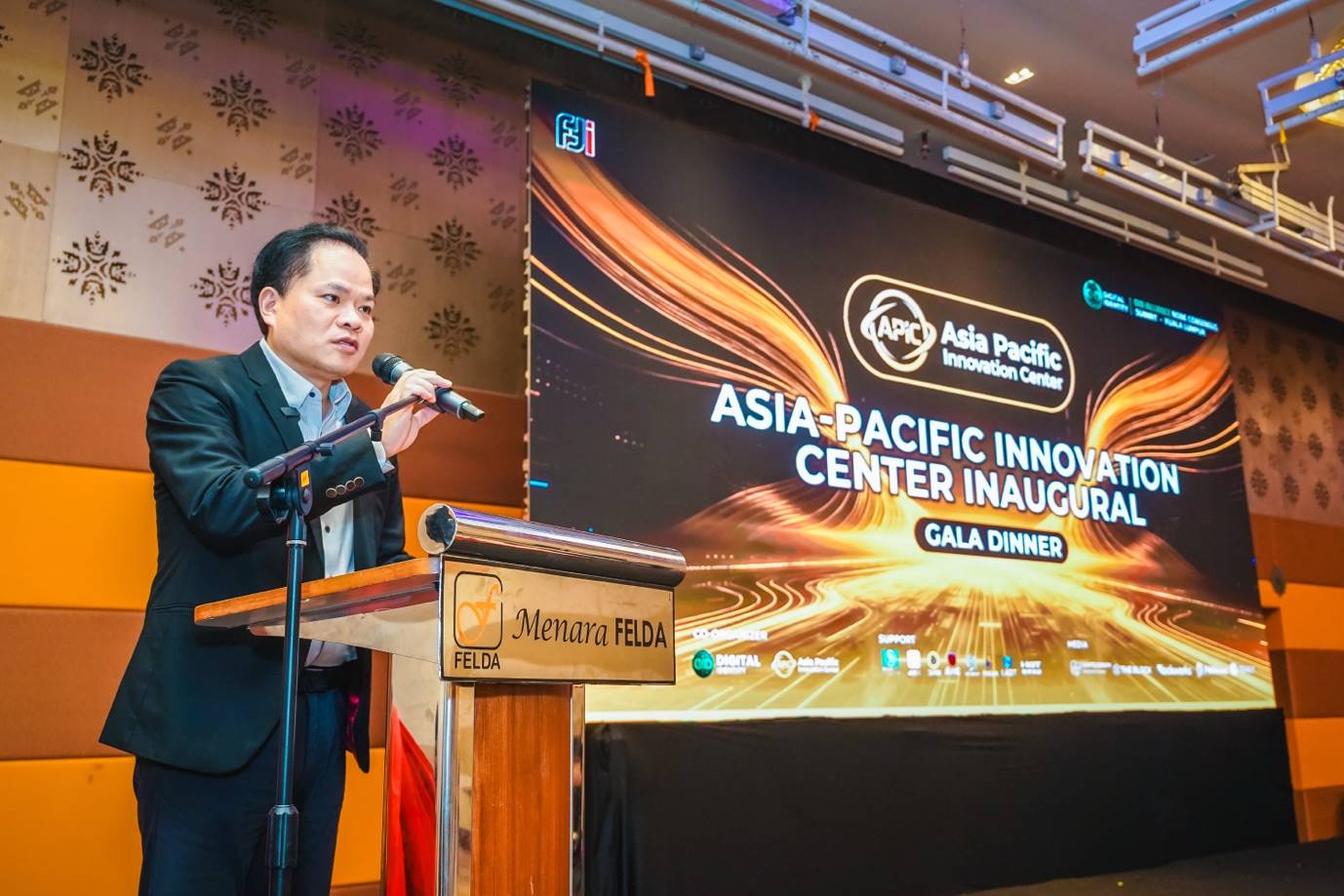
Three Core Drivers Defining the Future of Business

APIC is not just a physical space but a dynamic resource integration platform. Eugene emphasized in his speech that the center's core competitiveness is condensed into three driving forces:

1. Business-Driven: Building a global end-to-end service system. APIC will serve as a convergence point for Web3 innovation projects and traditional businesses, providing not only one-stop incubation support from technology and compliance to market entry but also assisting traditional enterprises in digital transformation and helping them expand overseas.

2. Education Empowerment: Cultivating future global leaders. The center announced strategic partnerships with top global institutions such as the Massachusetts Institute of Technology (MIT), UCLA Anderson School of Management, and the National University of Malaysia (UKM) to introduce blockchain and cutting-edge technology courses. By issuing authoritative certificates, APIC aims to supply the industry with professionals possessing a global perspective.

3. Alliance Ecosystem: Building a cross-regional strategic network. With the strong support of institutions such as DID Alliance, HotLink, 42X Fund, DPIN, Tang Ren Dao, and HKIT, APIC has established a diverse ecosystem covering finance, technology, and industry, providing members with unparalleled capital support and forward-looking insights.

Six Strategic Signings to Build a Diverse and Win-Win Ecosystem

At the inauguration ceremony, the Asia Pacific Innovation Center demonstrated its strong resource cohesion by signing Memoranda of Understanding (MOUs) with six heavyweight institutions, comprehensively deploying in four key areas: digital economy, business innovation, education, and social responsibility:

· Promoting the Digital Economy and Trade Connectivity: APIC signed strategic cooperation agreements with the Singapore Digital Chamber of Commerce (SDCC) and the Malaysia Fujian Chamber of Commerce (MFCCI). The parties will focus on cross-border digital trade, regional tech ecosystem development, and the integration of global resources for Fujian entrepreneurs, jointly exploring new opportunities in the Asia-Pacific digital economy.

· Empowering Enterprise Innovation and Global Expansion: APIC partnered with Regal Global Sdn Bhd. The two parties will engage in in-depth collaboration in business development, high-value project incubation, and corporate cross-border strategic initiatives to help enterprises achieve leapfrog growth.

· Deepening International Education and Youth Development: Focusing on the power of the future, APIC signed cooperation agreements with Globalfront International Sdn Bhd and the World Quanzhou Youth Friendship Association Malaysia Branch. The parties will commit to promoting international academic exchanges, cultivating young leaders, and fostering cross-cultural business cooperation to reserve innovative talent for the Asia-Pacific region.

· Practicing Social Responsibility: APIC established a partnership with the Malaysian community volunteer organization (AKRAM), aiming to empower communities through technology and education, and to drive social welfare and sustainable development.
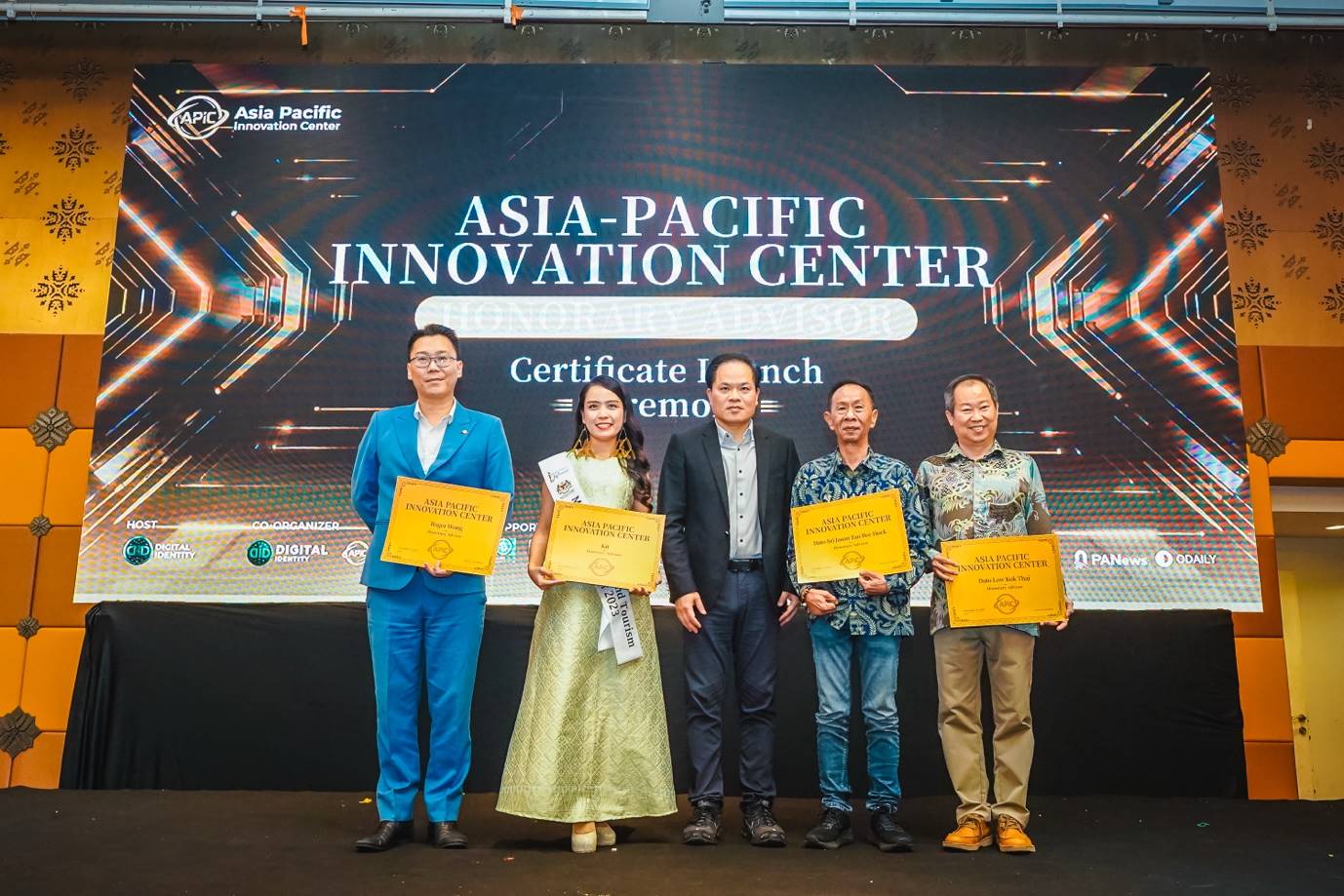
Looking Ahead: Building an Open Business Ecosystem

Eugene stated in his closing remarks: "The establishment of the Asia Pacific Innovation Center is our new interpretation of the concept of 'connection.' We position ourselves as a strategic hub connecting global capital and markets, but this is not just about connecting commercial interests; it is about the deep integration of talent, wisdom, and opportunities. Looking to the future, APIC will become an important engine driving regional cooperation and innovation. We look forward to joining hands with all partners to build an open, diverse, and win-win business ecosystem, injecting new growth energy into the Asia-Pacific region."

About the Asia Pacific Innovation Center (APIC)

The Asia Pacific Innovation Center (APIC) is an independent business, finance, and trade empowerment platform headquartered in Kuala Lumpur, Malaysia. As a strategic hub connecting capital and markets in China, the United States, the Asia-Pacific region, and the Middle East, APIC is dedicated to facilitating efficient linkages within the global business ecosystem. By integrating Web3 innovation projects, traditional business wisdom, and world-class educational resources, the center provides enterprises, investors, and institutions with technical support, compliance consulting, market expansion, and capital对接 services, helping partners achieve sustainable growth in the complex global market.


Preguntas relacionadas

QWhat is the Asia Pacific Innovation Center (APIC) and where is it located?

AThe Asia Pacific Innovation Center (APIC) is a strategic commercial hub located in Kuala Lumpur, Malaysia. It is designed to connect capital and markets across China, the US, the Asia-Pacific, and the Middle East, integrating Web3 innovation incubation, global education, and cross-border capital.

QWhat are the three core drivers of APIC's competitiveness as outlined by Chairman Eugene Xiao?

AThe three core drivers are: 1. Business-Driven: Creating a global, full-chain service system for Web3 projects and traditional businesses. 2. Education Empowerment: Partnering with top universities like MIT and UCLA to offer courses and certifications in blockchain and frontier tech. 3. Alliance Ecosystem: Building a cross-regional strategic network with support from institutions like DID Alliance, HotLink, and 42X Fund.

QWhich four key areas did APIC's six strategic Memorandum of Understanding (MOU) signings focus on?

AThe six MOUs focused on four key areas: 1. Promoting the Digital Economy and Trade, 2. Empowering Enterprise Innovation and Global Expansion, 3. Deepening International Education and Youth Development, and 4. Practicing Social Responsibility.

QName two specific academic institutions that APIC has formed strategic educational partnerships with.

AAPIC has formed strategic educational partnerships with the Massachusetts Institute of Technology (MIT) and the UCLA Anderson School of Management.

QWhat is the overarching vision for APIC's role in the region according to its leadership?

AThe overarching vision for APIC is to serve as a strategic hub that deeply integrates talent, wisdom, and opportunity, not just commercial interests. It aims to be an important engine for regional cooperation and innovation, building an open, diverse, and win-win business ecosystem to inject new growth energy into the Asia-Pacific region.

Lecturas Relacionadas

The Recursive AI Anthropic Warned About: Tian Yuandong's New Company Has Just Taken the "First Step"

Anthropic recently highlighted the rapid progress toward "recursive self-improvement," where AI systems autonomously design and train their successors. In response, Recursive Superintelligence, a new company co-founded by former Meta researcher Tian Yuan Dong, has publicly demonstrated its first step toward automating AI research. The company released a system designed to autonomously execute the full AI research cycle: generating ideas, implementing code, running experiments, and learning from results. It validated this approach by achieving state-of-the-art results on three diverse benchmarks: 1. **NanoChat Autoresearch:** Optimizing a small language model's validation loss under a fixed 5-minute GPU budget, improving upon the community's best result. 2. **NanoGPT Speedrun:** Reducing the time to train a GPT model to a specific loss on 8 H100 GPUs from 79.7 seconds to 77.5 seconds, beating a highly optimized, human-driven community effort. 3. **SOL-ExecBench:** Improving the overall score on NVIDIA's suite of 235 GPU kernel optimization tasks by 18%, closing the gap to the hardware limit. The system discovered novel optimizations in this highly specialized domain without direct human expertise. Recursive's system operates as a general framework, capable of parallel exploration and cross-task knowledge transfer while incorporating safeguards against reward hacking. The company, backed by $650M in funding and a star-studded team including Richard Socher and Alexey Dosovitskiy, aims to create AI that recursively enhances its own research capabilities. This development represents an early but concrete move toward a new paradigm where AI accelerates its own advancement. It occurs alongside Anthropic's warnings about the need for industry coordination and potential pauses when recursive self-improvement thresholds are reached, highlighting the dual trajectory of rapid technical progress and growing calls for careful stewardship.

marsbitHace 4 min(s)

The Recursive AI Anthropic Warned About: Tian Yuandong's New Company Has Just Taken the "First Step"

marsbitHace 4 min(s)

The Gold Buy-on-the-Dip Guide: Watch Interest Rates, Not Just War

"Gold Buying Guide: Focus on Interest Rates, Not Just War" Four months ago, gold buyers likely didn't anticipate buying at a peak that even a war couldn't sustain. After hitting a record high of $5,596 on January 29, gold entered a bear market just 91 days later, its fastest decline since 2008. A key trigger was the Fed's hawkish shift, highlighting that monetary policy, not geopolitics, is the primary driver. The article argues that the traditional "buy gold in turmoil" script has changed. While the US-Iran conflict initially boosted prices, the sustained rally in oil prices heightened inflation fears, forcing central banks to maintain or consider tighter policy. Since gold yields no interest, higher rates increase its opportunity cost, eroding its appeal. This dynamic was evident when gold fell sharply on May 18 despite positive peace talks, as lower oil prices eased inflation and thus rate hike pressures. The recent sell-off is also part of a broader market deleveraging. Correlations between gold, Nasdaq, and Bitcoin spiked as leveraged investors sold liquid assets to cover losses, creating a synchronized downturn. Historically, gold bottoms align with policy shifts, not conflict resolutions. The 2008 and 2022 bear markets ended with shifts to extreme easing and peak inflation expectations, respectively. For potential buyers, the author suggests monitoring three signals: 1) Peak interest rate hike expectations, 2) Reopening of the Strait of Hormuz (to ease oil/inflation pressure), and 3) A return to net inflows for Gold ETFs, indicating the end of forced selling. While predicting the exact bottom is impossible, the author's personal strategy involves scaling into a position across price levels like $4000, $3700, and $3500, committing no more than 30% of the intended total allocation initially, and adding the remainder only if key signals emerge. The core conclusion: In turbulent times, watching interest rates is more crucial than watching wars.

marsbitHace 10 min(s)

The Gold Buy-on-the-Dip Guide: Watch Interest Rates, Not Just War

marsbitHace 10 min(s)

Recent On-Chain Review: No Clear Narrative Under U.S. Stock Market Pressure, Just Hype

This article analyzes the current state of the Solana meme coin and community token ecosystem, highlighting a market caught between two dominant forces: attention-based PvP and a gradual return to community-centric projects. The first part explores the "Attention PvP" dynamic, where success is driven by celebrity endorsements, viral events, and speed. Examples include $JOTCHUA, which surged after its meme creator's social media activity, and $WORLDCUP, which outperformed a similar Base chain project ($PITCH) largely due to influencer support. The recent "pump.fun GO" feature, allowing bounty tasks for token promotion, is critiqued for fostering sensationalist and often negative stunts—like people getting token tickers tattooed on their bodies for rewards—reminiscent of old internet shock content. In contrast, the article points to a resurgence of organic, community-driven tokens that survive market volatility through strong holder bases and shared ideology, not just hype. Influencer Ansem is cited, arguing that durable meme coins rely on communities willing to endure losses and promote their core message daily. Examples given are older tokens like $neet (anti-work ethos), $troll, $buttcoin, and $triplet, which have maintained relative price stability. A prime example of this community-build model is the new project $KINS, the token for the browser-based MMORPG Kintara. Its success stems not from advanced graphics but from consistently delivering updates, fostering player trust, and creating genuine engagement (e.g., in-game economies, events, property auctions). It has attracted a growing player base and even notable KOLs as participants, demonstrating that sustainable growth can come from building trust rather than orchestrating pumps. The article concludes by questioning whether the market is ultimately a game of mutual trust or mutual deception, expressing hope that such reflection might lead to a healthier ecosystem.

marsbitHace 11 min(s)

Recent On-Chain Review: No Clear Narrative Under U.S. Stock Market Pressure, Just Hype

marsbitHace 11 min(s)

On-Chain Scene on Opening Day: $20 Billion Already Staked, How Do On-Chain Contracts Know Who Wins?

On the opening day of the 2026 World Cup, over $2 billion had already been wagered on just the "tournament winner" contracts on platforms like Polymarket and Kalshi. This article explores how these blockchain-based prediction markets actually function once the games begin. It breaks down the massive volume and explains how single-game and tournament-long contracts are priced, with values moving between 1-99 cents to reflect implied probabilities. A key mechanism highlighted is "elimination zeroing," where a team's "champion yes" contract immediately settles to zero once they are mathematically eliminated. The core technical question answered is: how does a smart contract "know" who won a real-world match? The answer lies in oracles. The article details two primary paradigms: UMA's "optimistic oracle" (used by most of Polymarket), which allows a challenge period after a proposed result, and Chainlink's multi-source data aggregation (used by FIFA partners like ADI Predictstreet), which automates settlement with minimal dispute windows. Finally, the article injects a note of caution, citing research estimating that a significant portion of historical trading volume on these platforms might be "wash trading" to inflate numbers. It concludes by contrasting the legal status of these "event contracts" under CFTC rules in the U.S. versus traditional, state-regulated sports betting. As the tournament progresses, the real-time operation of this multi-billion dollar machine—its settlements, eliminations, and underlying mechanisms—becomes a story as compelling as the football itself.

marsbitHace 26 min(s)

On-Chain Scene on Opening Day: $20 Billion Already Staked, How Do On-Chain Contracts Know Who Wins?

marsbitHace 26 min(s)

Trading

Spot
Futuros

Artículos destacados

Cómo comprar BILL

¡Bienvenido a HTX.com! Hemos hecho que comprar Billions Network (BILL) sea simple y conveniente. Sigue nuestra guía paso a paso para iniciar tu viaje de criptos.Paso 1: crea tu cuenta HTXUtiliza tu correo electrónico o número de teléfono para registrarte y obtener una cuenta gratuita en HTX. Experimenta un proceso de registro sin complicaciones y desbloquea todas las funciones.Obtener mi cuentaPaso 2: ve a Comprar cripto y elige tu método de pagoTarjeta de crédito/débito: usa tu Visa o Mastercard para comprar Billions Network (BILL) al instante.Saldo: utiliza fondos del saldo de tu cuenta HTX para tradear sin problemas.Terceros: hemos agregado métodos de pago populares como Google Pay y Apple Pay para mejorar la comodidad.P2P: tradear directamente con otros usuarios en HTX.Over-the-Counter (OTC): ofrecemos servicios personalizados y tipos de cambio competitivos para los traders.Paso 3: guarda tu Billions Network (BILL)Después de comprar tu Billions Network (BILL), guárdalo en tu cuenta HTX. Alternativamente, puedes enviarlo a otro lugar mediante transferencia blockchain o utilizarlo para tradear otras criptomonedas.Paso 4: tradear Billions Network (BILL)Tradear fácilmente con Billions Network (BILL) en HTX's mercado spot. Simplemente accede a tu cuenta, selecciona tu par de trading, ejecuta tus trades y monitorea en tiempo real. Ofrecemos una experiencia fácil de usar tanto para principiantes como para traders experimentados.

262 Vistas totalesPublicado en 2026.05.07Actualizado en 2026.06.02

Cómo comprar BILL

Qué es ATWO

I. Introducción al ProyectoArena Two es una plataforma interactiva descentralizada que permite a los fanáticos jugar un papel activo y tokenizado en los resultados de eventos en tiempo real. A diferencia de los modelos de transmisión tradicionales que reducen a los fanáticos a espectadores pasivos, Arena Two aprovecha la tecnología blockchain para permitir que los fanáticos voten directamente en tiempo real e influyan en los resultados en el campo.II. Información del TokenNombre del token: ATWO (Arena Two)III. Enlaces RelacionadosSitio web: https://arenatwo.com/Exploradores: https://basescan.org/token/0x499D35eBE6cEe9B2Ac35Fd003fcBbeeB9CFc7B32Twitter: https://x.com/arenatwoXNota: La introducción del proyecto proviene de los materiales publicados o proporcionados por el equipo oficial del proyecto, que es solo para referencia y no constituye asesoramiento de inversión. HTX no se hace responsable de ninguna pérdida directa o indirecta resultante.

161 Vistas totalesPublicado en 2026.05.18Actualizado en 2026.06.02

Qué es ATWO

Cómo comprar ATWO

¡Bienvenido a HTX.com! Hemos hecho que comprar Arena Two (ATWO) sea simple y conveniente. Sigue nuestra guía paso a paso para iniciar tu viaje de criptos.Paso 1: crea tu cuenta HTXUtiliza tu correo electrónico o número de teléfono para registrarte y obtener una cuenta gratuita en HTX. Experimenta un proceso de registro sin complicaciones y desbloquea todas las funciones.Obtener mi cuentaPaso 2: ve a Comprar cripto y elige tu método de pagoTarjeta de crédito/débito: usa tu Visa o Mastercard para comprar Arena Two (ATWO) al instante.Saldo: utiliza fondos del saldo de tu cuenta HTX para tradear sin problemas.Terceros: hemos agregado métodos de pago populares como Google Pay y Apple Pay para mejorar la comodidad.P2P: tradear directamente con otros usuarios en HTX.Over-the-Counter (OTC): ofrecemos servicios personalizados y tipos de cambio competitivos para los traders.Paso 3: guarda tu Arena Two (ATWO)Después de comprar tu Arena Two (ATWO), guárdalo en tu cuenta HTX. Alternativamente, puedes enviarlo a otro lugar mediante transferencia blockchain o utilizarlo para tradear otras criptomonedas.Paso 4: tradear Arena Two (ATWO)Tradear fácilmente con Arena Two (ATWO) en HTX's mercado spot. Simplemente accede a tu cuenta, selecciona tu par de trading, ejecuta tus trades y monitorea en tiempo real. Ofrecemos una experiencia fácil de usar tanto para principiantes como para traders experimentados.

194 Vistas totalesPublicado en 2026.05.18Actualizado en 2026.06.02

Cómo comprar ATWO

Discusiones

Bienvenido a la comunidad de HTX. Aquí puedes mantenerte informado sobre los últimos desarrollos de la plataforma y acceder a análisis profesionales del mercado. A continuación se presentan las opiniones de los usuarios sobre el precio de A (A).

活动图片













