ChangXin's Debut: The Missed 50 Billion Yuan by Country Garden, and the Handover of an Era

marsbitPublicado a 2026-07-28Actualizado a 2026-07-28

Resumen

On July 27, 2026, Changxin Memory Technologies (CXMT) debuted on the STAR Market, its share price surging 471.59%. With a market cap exceeding ICBC, it became China’s most valuable A-share company, highlighting a dramatic technological and economic shift. In 2021, at the peak of China's real estate boom, developer Country Garden invested 2 billion yuan (20 billion) for a 1.56% stake in the fledgling chipmaker through its venture capital arm. The investment was strategic; CXMT represented a crucial "chain-blocker" in China's semiconductor supply chain. Country Garden’s unique "perpetual capital" model allowed for long-term bets on hard tech, from space rockets to memory chips. However, the property sector’s severe downturn forced Country Garden's hand. Facing immense liquidity pressure to fund construction and deliver pre-sold homes, it sold its entire CXMT stake back to Hefei's state-owned capital for the original 2 billion yuan in December 2024. By the IPO date, that stake was worth roughly 50 billion yuan, a 500 billion opportunity lost. This story encapsulates a pivotal transition. Money accumulated during the property boom was redirected to seed next-generation industries like semiconductors. Yet the old cycle collapsed faster than the new one could mature. While Country Garden accurately foresaw the strategic importance of chip manufacturing, it ultimately misjudged how long its own capital could wait, becoming a poignant symbol of an era's handover from bricks and mo...

On the morning of July 27, 2026, at 9:30, ChangXin Technology opened for trading on the STAR Market.

The issue price was 8.66 yuan, the opening price was 49.50 yuan, a gain of 471.59%. Based on the 66.881 billion shares post-issuance, the total market capitalization reached 3.31 trillion yuan, surpassing Industrial and Commercial Bank of China to become the company with the highest market cap in the A-share market. At midday, the stock price reached 54.65 yuan, pushing the total market cap to nearly 3.66 trillion yuan at one point; the closing turnover was 141.187 billion yuan, setting a new record for a single stock's single-day turnover on the A-share market.

Reportedly, 9.4288 million retail investors participated in the online subscription, with a winning rate of 0.4714%. Selling one lot of 500 shares at the opening could net a profit of 20,000 yuan. ChangXin raised 57.919 billion yuan based on the initial offering size, making it the largest IPO on the STAR Market since its launch.

After the bell rang, people quickly calculated the fortunes of the old shareholders. What was the value of Hefei State-owned Assets' holding? How much was Alibaba's stake worth? And the employee stock ownership platform?

But one name was missing from the list: Country Garden.
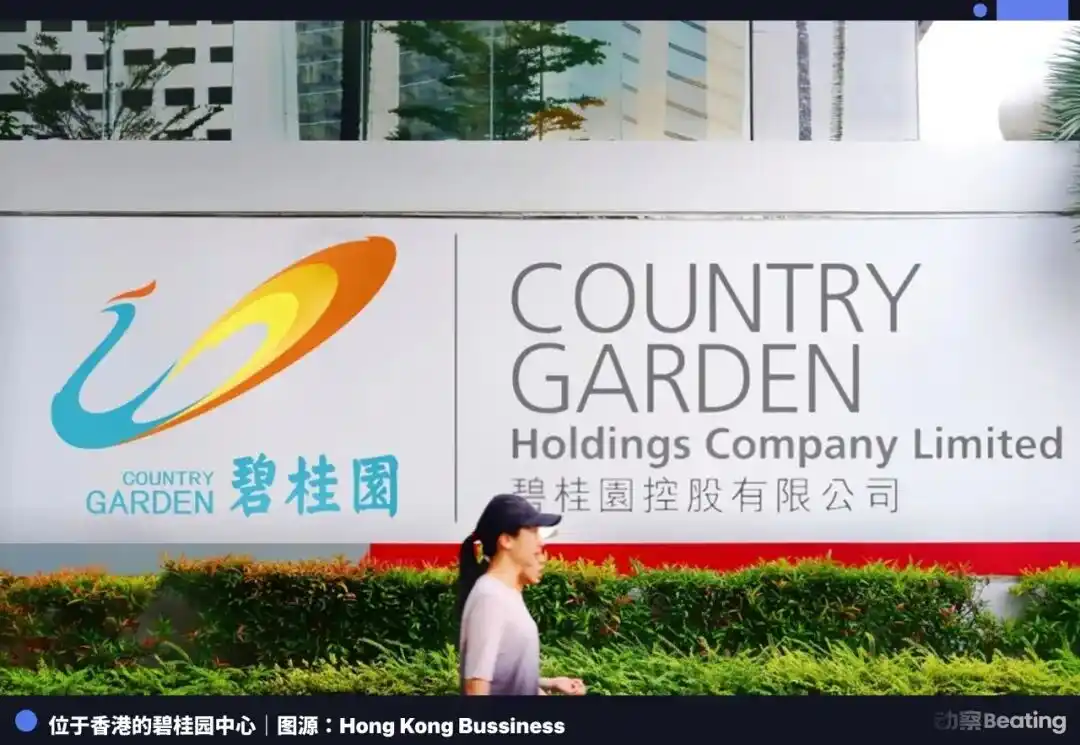
In 2021, it invested 2 billion yuan to acquire approximately 2.24% of ChangXin's equity. After several rounds of capital increases and dilution, its stake was reduced to 1.56%. In December 2024, Country Garden sold this entire stake to Hefei State-owned Assets, recovering 2 billion yuan. On the day of ChangXin's debut, the shares Country Garden once held were worth roughly 50 billion yuan.

Five years ago, it correctly judged an extremely difficult matter. Nineteen months ago, it was forced to sell that judgment.

Country Garden assessed the industry correctly, but miscalculated how long it could wait.

Why Did a Property Seller Venture into Hard Tech Research?

Country Garden Capital (CGC) was established in 2019.

A year before its establishment, Country Garden proposed a transformation into a "high-tech comprehensive enterprise." At that time, it was still one of China's private enterprises with the most abundant cash flow. The property main business could provide large amounts of proprietary capital, and the group's brand helped this new investment arm access projects that smaller institutions couldn't reach. Back then, it certainly didn't lack money, but it lacked a path beyond real estate.

CGC's first high-profile hard tech investment was in rockets.

In 2019, the team spent nearly six months interviewing domestic commercial aerospace companies to first understand the industry's real bottlenecks. Remote sensing, communications, and navigation all had satellite launch needs, and the bottleneck lay in launch capacity. Ultimately, they selected LandSpace, which was then focusing on medium-to-large liquid-fuel rockets, and exclusively invested 500 million yuan in its Series C round in December. They later led two more consecutive rounds, boosting LandSpace's valuation from around 3 billion yuan to over 10 billion yuan.

This episode is quite illustrative of how Country Garden learned to invest.

It brought its house-building approach into venture capital. Real estate development is inherently a business highly dependent on supply chains; Country Garden was most familiar with how to break down a long chain and find its most critical nodes.

In investment, this approach was given two names. Core companies on the industrial chain were called "chain anchors," and bottlenecks were called "chain constraints." Before entering a new industry, the team had to conduct complete industry research; in principle, projects couldn't enter investment decision-making without it. Its first semiconductor investment was Unisoc, a "chain anchor" enterprise; moving towards the manufacturing end, ChangXin was the kind of unavoidable "chain constraint" enterprise.

Country Garden's capital allocation was also distinctive. Most ordinary RMB funds have a lifespan; they must exit after seven or ten years. CGC primarily used the group's proprietary capital, which managing partner Niu Ruolei then called "perpetual capital," theoretically without time constraints. It adopted a barbell strategy, investing in very early-stage technology projects on one end and super unicorns close to IPO with single investments exceeding 1 billion yuan on the other, rarely participating in the most crowded growth stage in the middle.

By early 2022, CGC had independently completed over 90 investments, backing 26 unicorns and 10 listed companies; 52% of the investment amount was placed in hard tech fields like advanced manufacturing, semiconductors, and carbon neutrality. The list included ChangXin, LandSpace, Unisoc, Biren Technology, BYD Semiconductor, SJ Semiconductor, SVOLT, Dreame Technology.

Why Invest 2 Billion in ChangXin?

The DRAM produced by ChangXin is the memory used when computers, phones, and servers are running. The product may seem small, but behind it lies a massive factory that needs to be sustained.

A wafer fab must continuously buy equipment, modify processes, support engineers, and endure the severe cyclical fluctuations of memory prices. By the end of 2024, ChangXin had accumulated losses of approximately 38.52 billion yuan on its books. Before the IPO, it already had three 12-inch wafer fabs, nearly 20,000 employees, including over 6,000 R&D personnel.

In 2025, Samsung, SK Hynix, and Micron still collectively held over 90% of the global DRAM market. In semiconductors, many tracks can start with a smart, small team, but DRAM cannot. Design capability, manufacturing processes, yield, equipment, and capital—fail at any one, and you cannot achieve scale.

ChangXin was founded in 2016. On September 20, 2019, it announced the production of its self-developed manufacturing project, with the first appearance of its 8Gb DDR4, proving that mainland China finally had an enterprise crossing the threshold of "whether it can be made" for DRAM mass manufacturing.

Therefore, when Country Garden entered in 2021, ChangXin's earliest technical risks had decreased, while the most expensive phases of capacity expansion, iteration, and market competition were still ahead. This position precisely fell on the large-investment end of Country Garden's "barbell."

On July 5, 2021, Country Garden Capital (Haikou) signed a Series B capital increase agreement with ChangXin and other shareholders. The unified price for the Series B was 2.219 yuan per registered capital unit, with an initial fundraising cap of 26 billion yuan. Country Garden invested 2 billion yuan, subscribing to approximately 901.3 million registered capital units, holding 2.24% post-investment.

The same round also included National Integrated Circuit Industry Investment Fund Phase II, Anhui Provincial Investment Group, China Structure Reform Fund, China Merchants Bank, Xiaomi, Midea, and other institutions and companies; in December of that year, the fundraising cap was raised again to 36 billion yuan.

From Unisoc's chip design to ChangXin's wafer manufacturing to SJ Semiconductor's packaging, Country Garden Capital pieced together the semiconductor chain segment by segment. Investing in ChangXin was because they believed manufacturing was the unavoidable "chain constraint" for China's semiconductors.

China was a major global demand market for DRAM, and at that time, mainland规模化 supply was almost starting from zero. As long as ChangXin survived, expansion itself would allow it to grow rapidly.

This judgment later proved quite accurate. By the fourth quarter of 2025, ChangXin's global market share based on sales rose to 7.67%, becoming China's No. 1 and the world's No. 4; in the first quarter of 2026, revenue was 50.8 billion yuan, with net profit attributable to the parent company reaching 24.762 billion yuan. It took many years to turn "can manufacture" into "can sell," and it coincided with AI servers pushing memory demand to a new height.

"Perpetual Capital" Suddenly Had a Deadline

2021 was the year of ChangXin's Series B funding, and also the peak year for China's real estate sales.

That year, 1.794 billion square meters of commercial housing were sold nationwide, with sales value reaching 18.19 trillion yuan. By 2025, the sales area of newly built commercial housing was only 881 million square meters, almost halving in four years. The national population was 1.4126 billion at the end of 2021, and negative growth began the following year.

In the ebbing tide, Country Garden was among the first to feel the impact. In 2021, 68% of its sales came from third- and fourth-tier cities. These cities once gave Country Garden its broadest market but also made it harder to pivot when demand contracted.
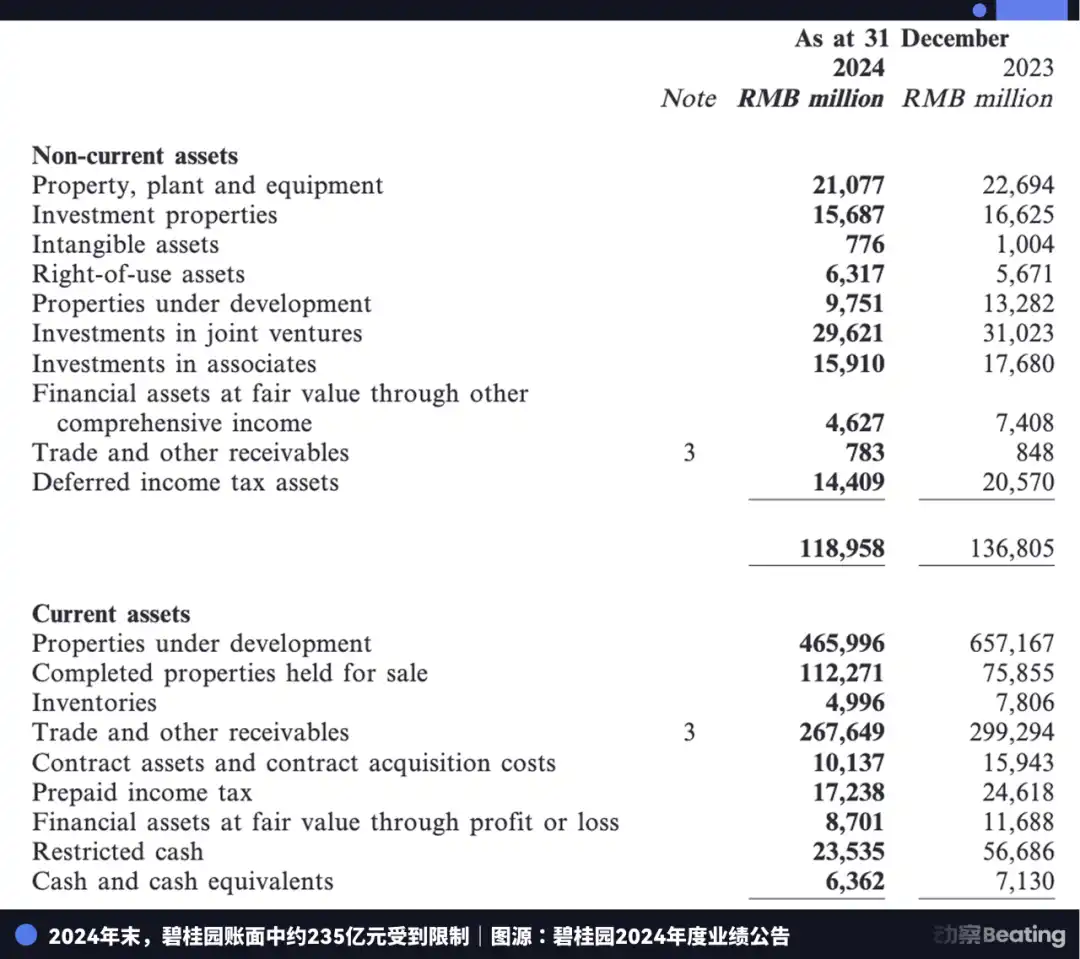
At its peak, Country Garden's equity contract sales were 558 billion yuan, with cash collection of 502.2 billion yuan, and available cash of 181.3 billion yuan. Three years later, equity contract sales dropped to 47.2 billion yuan, with a net loss attributable to the parent of 32.8 billion yuan, and total borrowings of 253.5 billion yuan. At year-end, total cash was 29.9 billion yuan, of which 23.5 billion was restricted, leaving only 6.362 billion yuan listed as cash and cash equivalents.

Two billion yuan on Country Garden's books in 2021 was an industrial investment that could wait ten years. By 2024, it was equivalent to nearly one-third of the year-end free cash.

Pre-sale payments received by sales offices do not truly belong to the developer. Behind each pre-sale payment is a house yet to be delivered; the money must eventually become steel, concrete, elevators, and keys.

From 2022 to November 2025, Country Garden delivered approximately 1.8 million housing units cumulatively. To deliver these units, starting from 2022, it sold equity stakes, hotels, major assets, and even corporate vehicles, cumulatively recovering over 65 billion yuan. The 2 billion yuan from ChangXin was part of this.

On May 31, 2024, Bloomberg reported that Country Garden Capital was seeking a buyer for its ChangXin stake, asking for about 2 billion yuan. The transaction was still under review and might not be completed. Country Garden later responded that the group was assessing its asset portfolio and potential disposal opportunities to optimize its asset-liability structure.

In June, ChangXin completed a new round of capital increase, with 12 investors subscribing to 10.8 billion yuan at 2.61 yuan per share. Based on this price, Country Garden's holding was already worth over 2.3 billion yuan.

On December 27, the seller Huibi Fund V, the buyer Hefei Jianchang, and ChangXin Technology signed a share transfer agreement, with the final price still at 2 billion yuan, approximately 2.22 yuan per share. Hefei Jianchang is directly held 87.45% by Hefei Construction Investment Holding Group, with the ultimate beneficial owner being the Hefei State-owned Assets Supervision and Administration Commission. The entity taking over Country Garden's stake was the state-owned capital of the city where ChangXin is based.

This was no longer a composed investment institution choosing the optimal exit window. Both buyer and seller knew the seller needed cash, and the last semblance of dignity Country Garden could maintain was to get its principal back intact.

The payment arrangement in the agreement also reflected this urgency. ChangXin was to provide a sealed new shareholder register on the tenth business day; Hefei Jianchang would pay in full upon receiving the register and payment notice. Hefei Construction Investment also provided joint and several guarantees for 99.985% of the consideration, up to 1.9997 billion yuan. If not completed within 180 days, the party not in breach could terminate the agreement. Other old shareholders explicitly or implicitly waived their pre-emptive rights.

Country Garden's announcement specified the use of this 2 billion yuan as general working capital, mainly for project construction such as completing pre-sold projects. ChangXin's equity was turned into construction payments for the work sites.

Judging from the changes in shareholding during the reporting period disclosed in ChangXin's prospectus, Country Garden was also the only early-stage external investor that completely sold off its holding, not waiting for the IPO. Some made small transfers, some moved shares to related platforms; only it truly cleared its position.

The Tale of Twenty-Four Cities

At the end of 1958, a large number of cadres, workers, and equipment from Shenyang's Factory 111 migrated southwest. Some sold their houses and furniture, taking their families by train and ship across thousands of kilometers to Chengdu. In January 1959, Factory 420 was formally established. It later became an important aviation engine factory in southwestern China, with workshops, dormitories, schools, and canteens all connected, the lives of generations revolving around the machinery.
Half a century later, Chengdu's eastern suburbs adjusted their industrial layout. The old site of Factory 420 was handed over for real estate development, the original factory area becoming the residential complex "Twenty-Four Cities."

Upon hearing that a state-owned factory with tens of thousands of workers was to be turned into residential housing within a year, Jia Zhangke felt there was "too much that could be said" about this event and thus filmed "24 City." In the movie, people sit in front of the old factory buildings, talking about production lines, collective dormitories, and a vanished way of life.

Country Garden's bell-ringing in Hong Kong, China, was on April 20, 2007. The issue price was HK$5.38, and it closed at HK$7.27 on its first trading day. The public offering was oversubscribed 255.7 times, freezing approximately HK$330 billion. Yang Huiyan, not yet thirty, held 58.19% of the shares; real estate created China's new richest person that morning.

Factory 420 becoming Twenty-Four Cities and Country Garden becoming a rising star in the capital market happened in the same era. There was a strong sense of direction in cities then; old factories represented the past, commodity housing represented the future; the land under the production lines was vacated, built into residential properties, and only then was its value rediscovered.

Country Garden grew precisely within this direction. It connected land, population mobility, and pre-sale funds into a massive machine, moving from Shunde to over two hundred cities. By 2019, it was attempting to channel the private capital accumulated from real estate towards rockets, chips, and new energy.

The money earned from the old industry should naturally fund the new industries not yet mature. It's just that the old cycle receded too quickly, and the new cycle arrived too slowly.

On July 27, 2026, the bell rang again. This time, standing on the podium was a wafer manufacturing enterprise.


Criptos en tendencia

Preguntas relacionadas

QAccording to the article, what was the opening price and market capitalization of Changxin Technology on its first day of trading on the Science and Technology Innovation Board?

AChangxin Technology opened at 49.50 yuan per share, and based on 66.881 billion shares post-issuance, its initial market capitalization reached 3.31 trillion yuan, making it the highest-valued company on the A-share market at that time.

QWhy did Country Garden (BGY) have to sell its stake in Changxin Technology in December 2024, despite having made a correct judgment about the company's potential?

ACountry Garden sold its stake because it faced severe liquidity pressure. The sharp downturn in China's real estate market, particularly impacting its core businesses in third- and fourth-tier cities, forced it to sell assets to generate cash for 'guaranteed housing delivery' and other operational needs. The 20 billion yuan recovered was equivalent to nearly one-third of its free cash at the end of 2024.

QHow did BGY Venture Capital's investment strategy, particularly its 'dumbbell strategy', differ from typical RMB funds?

ABGY Venture Capital primarily used the group's own capital, which was described as 'perpetual capital' without a fixed time limit for exit. It employed a 'dumbbell strategy,' focusing on very early-stage technological projects on one end and large-scale, near-IPO 'super unicorns' like Changxin on the other, while largely avoiding the crowded mid-stage growth investment segment typical of many RMB funds.

QWhat was the significance of Changxin Technology's DRAM production in 2019 for China's semiconductor industry?

AIn September 2019, Changxin announced the production of its independently manufactured 8Gb DDR4 DRAM. This milestone proved that a mainland Chinese company had finally crossed the threshold of 'whether it could be produced at scale' for DRAM manufacturing, addressing a critical 'chain chokepoint' in the domestic semiconductor supply chain.

QWhat broader symbolic transition does the article suggest by contrasting the stories of Country Garden's 2007 IPO and Changxin Technology's 2026 IPO?

AThe article suggests a symbolic transition from one economic era to another. Country Garden's 2007 IPO represented the peak of the real estate-driven growth model, transforming land value. In contrast, Changxin's 2026 IPO represents the rise of hard technology and advanced manufacturing. It highlights the intended but disrupted flow of capital from the 'old cycle' of real estate to fund the 'new cycle' of innovation, which arrived too slowly for capital-strapped traditional players like Country Garden.

Lecturas Relacionadas

In Conversation with Ray Dalio: We Are Currently in an AI Bubble, with 1% of My Portfolio in Bitcoin

Ray Dalio, founder of Bridgewater Associates, warns in an interview that the current AI boom shows classic bubble characteristics, which could lead to significant economic downturns as seen in past cycles like 1929 or 2000. He explains that speculative enthusiasm, fueled by debt and overvaluation, often precedes a crash when rising rates or taxation force asset sales, causing widespread losses and recession. Dalio also outlines his "Big Cycle" theory, describing an approximate 80-year pattern where widening wealth gaps, massive government deficits, and shifting geopolitical power (like China's rise) create internal conflict and global instability. He emphasizes that we are in a late-cycle, transitional phase where traditional powers like the US and UK face decline. For personal wealth protection, Dalio advises diversification beyond cash into assets like stocks, bonds, real estate, and particularly gold, which he prefers over Bitcoin. While he holds about 1% of his portfolio in Bitcoin as a non-printable hard asset, he views gold as more secure from technological or governmental threats. Regarding AI's impact, Dalio believes it will disproportionately benefit capital owners, worsening inequality by replacing both physical and cognitive labor. He suggests that human intuition and emotional intelligence, combined with AI, will be key for future workers. On taxation, Dalio argues that wealth taxes are impractical and risk triggering asset sell-offs, reducing productive investment. He points to the UK as a cautionary example of debt, low productivity, and political strife. Geopolitically, Dalio foresees a more regionalized world, with the US showing weakness in prolonged conflicts like with Iran, akin to past imperial declines. The ideal outcome, he suggests, is coexisting powerful blocs (e.g., Americas, China-Asia Pacific) without major war.

marsbitHace 1 hora(s)

In Conversation with Ray Dalio: We Are Currently in an AI Bubble, with 1% of My Portfolio in Bitcoin

marsbitHace 1 hora(s)

Daily 7.2 Trillion KRW: Foreign Capital's Record Net Buying on Friday! Wall Street Says Headwinds for Korean Stock Fund Flows Have Subsided

South Korean stock market sees a dramatic shift in fund flows. On July 31, foreign investors made a record net purchase of approximately KRW 7.2 trillion in KOSPI stocks, marking a fundamental reversal from the persistent large-scale net outflows seen in previous months. This contributed to a significant narrowing of foreign net selling in July to KRW 9.8 trillion, down sharply from KRW 48.4 trillion in June and KRW 44.5 trillion in May. Simultaneously, domestic institutional pressure eased. South Korean pension funds and asset managers turned to a net buying position in July, purchasing KRW 1.0 trillion worth of KOSPI shares, contrasting with net sales in May and June. Market volatility is expected to be dampened by new financial regulations. Effective July 31, the Financial Services Commission tightened access for retail investors to single-stock leveraged ETFs by raising the minimum cash deposit requirement. Trading volumes for these products subsequently dropped to about 50% of their monthly average. Citigroup Research maintains its year-end KOSPI target of 10,000 points. The firm cites several supportive factors: the substantial easing of headwinds from capital outflows, a robust fundamental outlook for the semiconductor sector, historically low market valuations, strong economic fundamentals, and the potential for policy support from financial authorities if needed.

marsbitHace 1 hora(s)

Daily 7.2 Trillion KRW: Foreign Capital's Record Net Buying on Friday! Wall Street Says Headwinds for Korean Stock Fund Flows Have Subsided

marsbitHace 1 hora(s)

Thanks to Dice Rolls, Bitcoin Keys Are Stored Offline, But Not Everyone Will Do It

The article discusses using dice rolls to generate secure Bitcoin wallet seeds, providing entropy independent of potentially flawed hardware random number generators. It explains that each fair dice roll offers about 2.585 bits of entropy, with around 50 rolls needed for a standard 12-word seed phrase and 99+ recommended for higher security. This method gained attention after a vulnerability was revealed in some Coldcard hardware wallets, where a faulty firmware RNG (dating back to 2021) compromised generated keys. The analysis notes that while a dice-generated main seed was safe from this specific flaw, other Coldcard functions (like creating paper wallets, backup keys, or passwords) could still be vulnerable if they used the defective RNG. The piece argues that while dice-based entropy is technically robust, the manual process is error-prone, tedious, and unrealistic for most new users, who might make mistakes in recording or inputting rolls. It concludes that while manual entropy generation should remain an option for advanced users, the long-term goal is to develop reliable, user-friendly hardware and software that securely generates randomness without requiring specialized knowledge. Coldcard users are advised to check their firmware version and replace any secondary secrets (like paper wallet keys) created with vulnerable devices, while also considering multi-signature setups with devices from different manufacturers for added security.

cryptonews.ruHace 7 hora(s)

Thanks to Dice Rolls, Bitcoin Keys Are Stored Offline, But Not Everyone Will Do It

cryptonews.ruHace 7 hora(s)

Trading

Spot

Artículos destacados

Qué es $S$

Entendiendo SPERO: Una Visión General Completa Introducción a SPERO A medida que el panorama de la innovación continúa evolucionando, la aparición de tecnologías web3 y proyectos de criptomonedas juega un papel fundamental en la configuración del futuro digital. Un proyecto que ha atraído la atención en este campo dinámico es SPERO, denotado como SPERO,$$s$. Este artículo tiene como objetivo reunir y presentar información detallada sobre SPERO, para ayudar a entusiastas e inversores a comprender sus fundamentos, objetivos e innovaciones dentro de los dominios web3 y cripto. ¿Qué es SPERO,$$s$? SPERO,$$s$ es un proyecto único dentro del espacio cripto que busca aprovechar los principios de descentralización y tecnología blockchain para crear un ecosistema que promueva la participación, la utilidad y la inclusión financiera. El proyecto está diseñado para facilitar interacciones de igual a igual de nuevas maneras, proporcionando a los usuarios soluciones y servicios financieros innovadores. En su esencia, SPERO,$$s$ tiene como objetivo empoderar a los individuos al proporcionar herramientas y plataformas que mejoren la experiencia del usuario en el espacio de las criptomonedas. Esto incluye habilitar métodos de transacción más flexibles, fomentar iniciativas impulsadas por la comunidad y crear caminos para oportunidades financieras a través de aplicaciones descentralizadas (dApps). La visión subyacente de SPERO,$$s$ gira en torno a la inclusividad, buscando cerrar brechas dentro de las finanzas tradicionales mientras aprovecha los beneficios de la tecnología blockchain. ¿Quién es el Creador de SPERO,$$s$? La identidad del creador de SPERO,$$s$ sigue siendo algo oscura, ya que hay recursos públicos limitados que proporcionan información de fondo detallada sobre su(s) fundador(es). Esta falta de transparencia puede derivarse del compromiso del proyecto con la descentralización, una ética que muchos proyectos web3 comparten, priorizando las contribuciones colectivas sobre el reconocimiento individual. Al centrar las discusiones en torno a la comunidad y sus objetivos colectivos, SPERO,$$s$ encarna la esencia del empoderamiento sin señalar a individuos específicos. Como tal, comprender la ética y la misión de SPERO sigue siendo más importante que identificar a un creador singular. ¿Quiénes son los Inversores de SPERO,$$s$? SPERO,$$s$ cuenta con el apoyo de una diversa gama de inversores que van desde capitalistas de riesgo hasta inversores ángeles dedicados a fomentar la innovación en el sector cripto. El enfoque de estos inversores generalmente se alinea con la misión de SPERO, priorizando proyectos que prometen avances tecnológicos sociales, inclusión financiera y gobernanza descentralizada. Estas fundaciones de inversores suelen estar interesadas en proyectos que no solo ofrecen productos innovadores, sino que también contribuyen positivamente a la comunidad blockchain y sus ecosistemas. El respaldo de estos inversores refuerza a SPERO,$$s$ como un contendiente notable en el dominio de proyectos cripto que evoluciona rápidamente. ¿Cómo Funciona SPERO,$$s$? SPERO,$$s$ emplea un marco multifacético que lo distingue de los proyectos de criptomonedas convencionales. Aquí hay algunas de las características clave que subrayan su singularidad e innovación: Gobernanza Descentralizada: SPERO,$$s$ integra modelos de gobernanza descentralizada, empoderando a los usuarios para participar activamente en los procesos de toma de decisiones sobre el futuro del proyecto. Este enfoque fomenta un sentido de propiedad y responsabilidad entre los miembros de la comunidad. Utilidad del Token: SPERO,$$s$ utiliza su propio token de criptomoneda, diseñado para servir diversas funciones dentro del ecosistema. Estos tokens permiten transacciones, recompensas y la facilitación de servicios ofrecidos en la plataforma, mejorando la participación y la utilidad general. Arquitectura en Capas: La arquitectura técnica de SPERO,$$s$ apoya la modularidad y escalabilidad, permitiendo la integración fluida de características y aplicaciones adicionales a medida que el proyecto evoluciona. Esta adaptabilidad es fundamental para mantener la relevancia en el cambiante paisaje cripto. Participación de la Comunidad: El proyecto enfatiza iniciativas impulsadas por la comunidad, empleando mecanismos que incentivan la colaboración y la retroalimentación. Al nutrir una comunidad sólida, SPERO,$$s$ puede abordar mejor las necesidades de los usuarios y adaptarse a las tendencias del mercado. Enfoque en la Inclusión: Al ofrecer tarifas de transacción bajas e interfaces amigables para el usuario, SPERO,$$s$ busca atraer a una base de usuarios diversa, incluyendo a individuos que anteriormente pueden no haber participado en el espacio cripto. Este compromiso con la inclusión se alinea con su misión general de empoderamiento a través de la accesibilidad. Cronología de SPERO,$$s$ Entender la historia de un proyecto proporciona información crucial sobre su trayectoria de desarrollo y hitos. A continuación se presenta una cronología sugerida que mapea eventos significativos en la evolución de SPERO,$$s$: Fase de Conceptualización e Ideación: Las ideas iniciales que forman la base de SPERO,$$s$ fueron concebidas, alineándose estrechamente con los principios de descentralización y enfoque comunitario dentro de la industria blockchain. Lanzamiento del Whitepaper del Proyecto: Tras la fase conceptual, se lanzó un whitepaper completo que detalla la visión, los objetivos y la infraestructura tecnológica de SPERO,$$s$ para generar interés y retroalimentación de la comunidad. Construcción de Comunidad y Primeras Interacciones: Se realizaron esfuerzos de divulgación activa para construir una comunidad de primeros adoptantes y posibles inversores, facilitando discusiones en torno a los objetivos del proyecto y obteniendo apoyo. Evento de Generación de Tokens: SPERO,$$s$ llevó a cabo un evento de generación de tokens (TGE) para distribuir sus tokens nativos a los primeros seguidores y establecer liquidez inicial dentro del ecosistema. Lanzamiento de la dApp Inicial: La primera aplicación descentralizada (dApp) asociada con SPERO,$$s$ se puso en marcha, permitiendo a los usuarios interactuar con las funcionalidades centrales de la plataforma. Desarrollo Continuo y Alianzas: Actualizaciones y mejoras continuas a las ofertas del proyecto, incluyendo alianzas estratégicas con otros actores en el espacio blockchain, han moldeado a SPERO,$$s$ en un jugador competitivo y en evolución en el mercado cripto. Conclusión SPERO,$$s$ se erige como un testimonio del potencial de web3 y las criptomonedas para revolucionar los sistemas financieros y empoderar a los individuos. Con un compromiso con la gobernanza descentralizada, la participación comunitaria y funcionalidades diseñadas de manera innovadora, allana el camino hacia un paisaje financiero más inclusivo. Como con cualquier inversión en el espacio cripto que evoluciona rápidamente, se anima a los posibles inversores y usuarios a investigar a fondo y participar de manera reflexiva con los desarrollos en curso dentro de SPERO,$$s$. El proyecto muestra el espíritu innovador de la industria cripto, invitando a una mayor exploración de sus innumerables posibilidades. Mientras el viaje de SPERO,$$s$ aún se desarrolla, sus principios fundamentales pueden, de hecho, influir en el futuro de cómo interactuamos con la tecnología, las finanzas y entre nosotros en ecosistemas digitales interconectados.

214 Vistas totalesPublicado en 2024.12.17Actualizado en 2024.12.17

Qué es $S$

Qué es AGENT S

Agent S: El Futuro de la Interacción Autónoma en Web3 Introducción En el paisaje en constante evolución de Web3 y las criptomonedas, las innovaciones están redefiniendo constantemente cómo los individuos interactúan con las plataformas digitales. Uno de estos proyectos pioneros, Agent S, promete revolucionar la interacción humano-computadora a través de su marco agente abierto. Al allanar el camino para interacciones autónomas, Agent S busca simplificar tareas complejas, ofreciendo aplicaciones transformadoras en inteligencia artificial (IA). Esta exploración detallada profundizará en las complejidades del proyecto, sus características únicas y las implicaciones para el dominio de las criptomonedas. ¿Qué es Agent S? Agent S se presenta como un marco agente abierto innovador, diseñado específicamente para abordar tres desafíos fundamentales en la automatización de tareas informáticas: Adquisición de Conocimiento Específico del Dominio: El marco aprende inteligentemente de diversas fuentes de conocimiento externas y experiencias internas. Este enfoque dual le permite construir un rico repositorio de conocimiento específico del dominio, mejorando su rendimiento en la ejecución de tareas. Planificación a Largo Plazo de Tareas: Agent S emplea planificación jerárquica aumentada por la experiencia, un enfoque estratégico que facilita la descomposición y ejecución eficiente de tareas complejas. Esta característica mejora significativamente su capacidad para gestionar múltiples subtareas de manera eficiente y efectiva. Manejo de Interfaces Dinámicas y No Uniformes: El proyecto introduce la Interfaz Agente-Computadora (ACI), una solución innovadora que mejora la interacción entre agentes y usuarios. Utilizando Modelos de Lenguaje Multimodal de Gran Escala (MLLMs), Agent S puede navegar y manipular diversas interfaces gráficas de usuario sin problemas. A través de estas características pioneras, Agent S proporciona un marco robusto que aborda las complejidades involucradas en la automatización de la interacción humana con las máquinas, preparando el terreno para una multitud de aplicaciones en IA y más allá. ¿Quién es el Creador de Agent S? Si bien el concepto de Agent S es fundamentalmente innovador, la información específica sobre su creador sigue siendo elusiva. El creador es actualmente desconocido, lo que resalta ya sea la etapa incipiente del proyecto o la elección estratégica de mantener a los miembros fundadores en el anonimato. Independientemente de la anonimidad, el enfoque sigue siendo en las capacidades y el potencial del marco. ¿Quiénes son los Inversores de Agent S? Dado que Agent S es relativamente nuevo en el ecosistema criptográfico, la información detallada sobre sus inversores y patrocinadores financieros no está documentada explícitamente. La falta de información disponible públicamente sobre las bases de inversión u organizaciones que apoyan el proyecto plantea preguntas sobre su estructura de financiamiento y hoja de ruta de desarrollo. Comprender el respaldo es crucial para evaluar la sostenibilidad del proyecto y su posible impacto en el mercado. ¿Cómo Funciona Agent S? En el núcleo de Agent S se encuentra una tecnología de vanguardia que le permite funcionar de manera efectiva en diversos entornos. Su modelo operativo se basa en varias características clave: Interacción Humano-Computadora Similar a la Humana: El marco ofrece planificación avanzada de IA, esforzándose por hacer que las interacciones con las computadoras sean más intuitivas. Al imitar el comportamiento humano en la ejecución de tareas, promete elevar las experiencias de los usuarios. Memoria Narrativa: Empleada para aprovechar experiencias de alto nivel, Agent S utiliza memoria narrativa para hacer un seguimiento de las historias de tareas, mejorando así sus procesos de toma de decisiones. Memoria Episódica: Esta característica proporciona a los usuarios una guía paso a paso, permitiendo que el marco ofrezca apoyo contextual a medida que se desarrollan las tareas. Soporte para OpenACI: Con la capacidad de ejecutarse localmente, Agent S permite a los usuarios mantener el control sobre sus interacciones y flujos de trabajo, alineándose con la ética descentralizada de Web3. Fácil Integración con APIs Externas: Su versatilidad y compatibilidad con varias plataformas de IA aseguran que Agent S pueda encajar sin problemas en ecosistemas tecnológicos existentes, convirtiéndolo en una opción atractiva para desarrolladores y organizaciones. Estas funcionalidades contribuyen colectivamente a la posición única de Agent S dentro del espacio cripto, ya que automatiza tareas complejas y de múltiples pasos con una intervención humana mínima. A medida que el proyecto evoluciona, sus posibles aplicaciones en Web3 podrían redefinir cómo se desarrollan las interacciones digitales. Cronología de Agent S El desarrollo y los hitos de Agent S pueden encapsularse en una cronología que resalta sus eventos significativos: 27 de septiembre de 2024: El concepto de Agent S fue lanzado en un documento de investigación integral titulado “Un Marco Agente Abierto que Usa Computadoras Como un Humano”, mostrando las bases del proyecto. 10 de octubre de 2024: El documento de investigación fue puesto a disposición del público en arXiv, ofreciendo una exploración profunda del marco y su evaluación de rendimiento basada en el benchmark OSWorld. 12 de octubre de 2024: Se lanzó una presentación en video, proporcionando una visión visual de las capacidades y características de Agent S, involucrando aún más a posibles usuarios e inversores. Estos marcadores en la cronología no solo ilustran el progreso de Agent S, sino que también indican su compromiso con la transparencia y la participación comunitaria. Puntos Clave Sobre Agent S A medida que el marco Agent S continúa evolucionando, varios atributos clave destacan, subrayando su naturaleza innovadora y potencial: Marco Innovador: Diseñado para proporcionar un uso intuitivo de las computadoras similar a la interacción humana, Agent S aporta un enfoque novedoso a la automatización de tareas. Interacción Autónoma: La capacidad de interactuar de manera autónoma con las computadoras a través de GUI significa un salto hacia soluciones informáticas más inteligentes y eficientes. Automatización de Tareas Complejas: Con su metodología robusta, puede automatizar tareas complejas y de múltiples pasos, haciendo que los procesos sean más rápidos y menos propensos a errores. Mejora Continua: Los mecanismos de aprendizaje permiten a Agent S mejorar a partir de experiencias pasadas, mejorando continuamente su rendimiento y eficacia. Versatilidad: Su adaptabilidad en diferentes entornos operativos como OSWorld y WindowsAgentArena asegura que pueda servir a una amplia gama de aplicaciones. A medida que Agent S se posiciona en el paisaje de Web3 y criptomonedas, su potencial para mejorar las capacidades de interacción y automatizar procesos significa un avance significativo en las tecnologías de IA. A través de su marco innovador, Agent S ejemplifica el futuro de las interacciones digitales, prometiendo una experiencia más fluida y eficiente para los usuarios en diversas industrias. Conclusión Agent S representa un audaz avance en la unión de la IA y Web3, con la capacidad de redefinir cómo interactuamos con la tecnología. Aunque aún se encuentra en sus primeras etapas, las posibilidades para su aplicación son vastas y atractivas. A través de su marco integral que aborda desafíos críticos, Agent S busca llevar las interacciones autónomas al primer plano de la experiencia digital. A medida que nos adentramos más en los reinos de las criptomonedas y la descentralización, proyectos como Agent S sin duda desempeñarán un papel crucial en la configuración del futuro de la tecnología y la colaboración humano-computadora.

607 Vistas totalesPublicado en 2025.01.14Actualizado en 2025.01.14

Qué es AGENT S

Cómo comprar S

¡Bienvenido a HTX.com! Hemos hecho que comprar Sonic (S) sea simple y conveniente. Sigue nuestra guía paso a paso para iniciar tu viaje de criptos.Paso 1: crea tu cuenta HTXUtiliza tu correo electrónico o número de teléfono para registrarte y obtener una cuenta gratuita en HTX. Experimenta un proceso de registro sin complicaciones y desbloquea todas las funciones.Obtener mi cuentaPaso 2: ve a Comprar cripto y elige tu método de pagoTarjeta de crédito/débito: usa tu Visa o Mastercard para comprar Sonic (S) al instante.Saldo: utiliza fondos del saldo de tu cuenta HTX para tradear sin problemas.Terceros: hemos agregado métodos de pago populares como Google Pay y Apple Pay para mejorar la comodidad.P2P: tradear directamente con otros usuarios en HTX.Over-the-Counter (OTC): ofrecemos servicios personalizados y tipos de cambio competitivos para los traders.Paso 3: guarda tu Sonic (S)Después de comprar tu Sonic (S), guárdalo en tu cuenta HTX. Alternativamente, puedes enviarlo a otro lugar mediante transferencia blockchain o utilizarlo para tradear otras criptomonedas.Paso 4: tradear Sonic (S)Tradear fácilmente con Sonic (S) en HTX's mercado spot. Simplemente accede a tu cuenta, selecciona tu par de trading, ejecuta tus trades y monitorea en tiempo real. Ofrecemos una experiencia fácil de usar tanto para principiantes como para traders experimentados.

1.2k Vistas totalesPublicado en 2025.01.15Actualizado en 2026.06.02

Cómo comprar S

Discusiones

Bienvenido a la comunidad de HTX. Aquí puedes mantenerte informado sobre los últimos desarrollos de la plataforma y acceder a análisis profesionales del mercado. A continuación se presentan las opiniones de los usuarios sobre el precio de S (S).

活动图片













