Chainlink Adds 12 Integrations Across 10 Blockchains

bitcoinistPublicado a 2026-08-25Actualizado a 2026-08-25

Resumen

Chainlink has announced 12 new integrations across 10 different blockchains, expanding its infrastructure for cross-chain data and services. These integrations span DeFi, liquidity, and data services, reinforcing Chainlink's position as a widely used oracle network. The update highlights Chainlink's operational growth and multi-chain reach, which is crucial as the crypto ecosystem becomes increasingly fragmented. While this expansion strengthens the network's long-term utility and relevance for applications needing reliable external data—such as lending markets and derivatives platforms—the announcement should be viewed as an infrastructure story, not a signal for immediate LINK token price movement. The key takeaway is Chainlink's continued ability to add integrations across diverse chains, maintaining its role as a critical connective layer in the data-dependent crypto landscape.

Chainlink has announced 12 new integrations across 10 blockchains, adding another weekly update to its growing cross-chain data and infrastructure footprint.

The integrations span DeFi, liquidity, and data services, according to Chainlink’s update. The development reinforces Chainlink’s position as one of the most widely used oracle and infrastructure networks in crypto.

That does not mean LINK’s price must move.

This is an operational development story, not a price prediction. The point is that Chainlink continues to expand its network reach across multiple ecosystems.

TL;DR

  • Chainlink announced 12 new integrations across 10 blockchains.
  • The integrations cover DeFi, liquidity, and data services.
  • The update should be framed as infrastructure growth, not LINK price speculation.

Why Integrations Matter

Oracle networks live or die by usage.

Chainlink’s value to developers comes from the reliability and breadth of its data, automation, cross-chain, and infrastructure services. Each new integration adds another example of a protocol depending on Chainlink infrastructure.

That matters because crypto applications need external information.

Lending markets need prices. Perpetuals need market data. RWAs need off-chain references. Cross-chain applications need messaging. Automated systems need triggers. Chainlink has spent years positioning itself as the connective layer for those needs.

A weekly integration update is not dramatic by itself, but the accumulation matters.

Multi-Chain Reach Is The Main Signal

The 10-chain spread is important.

Crypto is increasingly multi-chain. Applications no longer build only on Ethereum or one L2. Liquidity, users, and protocols are spread across many networks. Infrastructure providers need to support that reality.

Chainlink’s cross-chain presence helps it stay relevant across ecosystems.

If a new DeFi protocol launches on a newer chain, it still needs trusted data. If a tokenized asset platform expands to another network, it still needs pricing and verification. Chainlink wants to be the default provider for those needs.

DeFi Still Depends On Oracles

DeFi remains one of the clearest use cases for oracle infrastructure.

Lending protocols, derivatives platforms, synthetic assets, structured products, and automated vaults all require accurate and timely data. Bad oracle data can lead to bad liquidations, wrong pricing, and user losses.

That is why oracle reputation matters.

Protocols tend to choose infrastructure providers with track records, broad integrations, and battle-tested systems. Chainlink’s continued integration flow helps maintain that reputation.

Do Not Overstate The Market Impact

It is tempting to turn every Chainlink integration update into a token-price story.

That would be the wrong framing.

Integrations can support long-term network utility, but they do not automatically create immediate price movement for LINK. Token economics, fee capture, staking demand, market sentiment, and broader liquidity all matter.

The clean read is operational.

More protocols are using Chainlink services across more chains. That strengthens the infrastructure narrative, but it is not a guarantee of market performance.

What Comes Next

The next thing to watch is depth, not just count.

Twelve integrations sound good, but the market will want to know which ones drive meaningful usage, fees, liquidity, or developer adoption. A small integration and a major protocol integration are not equal.

Still, breadth has value.

Chainlink’s ability to keep adding integrations across many networks shows that its infrastructure remains in demand. As crypto becomes more multi-chain and data-dependent, that role may become even more important.

For now, the latest update adds another layer to Chainlink’s infrastructure story: more chains, more integrations, and continued relevance across the DeFi stack.

This article is based on Chainlink’s weekly integration update and developer materials.

This article was written by the News Desk and edited by Samuel Rae.

This report is based on information released in disclosures at primary source documentation.

Criptos en tendencia

Preguntas relacionadas

QWhat is the main purpose of the article's information about Chainlink's new integrations?

AThe article frames the news as an operational development story highlighting Chainlink's infrastructure growth and expanding multi-chain network reach, not as a price prediction or speculation about the LINK token.

QAccording to the article, why are integrations important for an oracle network like Chainlink?

AOracle networks depend on usage for survival. Each new integration demonstrates another protocol relying on Chainlink's infrastructure, showcasing its reliability and breadth of services, which is crucial as crypto applications need external data for functions like lending, derivatives, and cross-chain messaging.

QWhat is highlighted as the 'Main Signal' from the announcement of 12 integrations across 10 blockchains?

AThe main signal is Chainlink's multi-chain reach. As crypto becomes increasingly multi-chain with users and protocols spread across many networks, Chainlink's ability to support 10 different blockchains helps it stay relevant and be the default provider for trusted data and infrastructure across ecosystems.

QWhat does the article caution readers against regarding the integration updates?

AThe article cautions readers not to overstate the market impact or automatically turn integration updates into a token-price story. While integrations support long-term network utility, immediate price movement for LINK depends on other factors like token economics, fee capture, staking demand, and market sentiment.

QWhat does the article suggest should be watched next regarding Chainlink's integrations?

AThe article suggests watching the depth of integrations, not just the count. The market will want to see which integrations drive meaningful usage, fees, liquidity, or developer adoption, as a major protocol integration holds more value than a small one, though breadth across networks still demonstrates ongoing demand.

Lecturas Relacionadas

330 Days Later, Nexperia China Management Team Makes a Major Announcement: What Have They Brought?

Nexperia China's management team announced a major new product launch 330 days after their supply chain was disrupted. The company has established a fully localized, closed-loop supply chain in China and is now releasing over 100 new products, including SGT T2X automotive-grade MOSFETs and HCS high-speed logic ICs, all manufactured on a 12-inch wafer platform. The supply disruption in late 2025 severed wafer supply from overseas, forcing Nexperia China to rebuild its production capabilities domestically. Moving to the 12-inch platform offers significant advantages: improved cost efficiency with per-chip costs dropping 10-30%, better performance consistency with parameter variations narrowing to ~5%, and higher, more stable yields. A key achievement is the development of the world's first 12-inch Bipolar platform, reaching small-scale production in just 11 months, showcasing the speed and capability of China's semiconductor supply chain. The company is backing its production ramp with competitive pricing and guaranteed supply. Several logic ICs and power MOSFETs have seen price reductions of 20-30% compared to last year's highs. To ensure direct and transparent customer access, Nexperia China has launched its own e-commerce platform for real-time inventory, pricing, and ordering. CEO Zhang Qiuming emphasized that this transformation is about "protection"—protecting customers, the industry, employees, and the continuity of globalization itself. By building a resilient, China-based manufacturing hub, Nexperia aims to provide a stable, high-quality supply for the global market, moving forward with a "China for China, China for Global" strategy.

marsbitHace 18 min(s)

330 Days Later, Nexperia China Management Team Makes a Major Announcement: What Have They Brought?

marsbitHace 18 min(s)

Zcash Price Surge Enhances Its Advantage Over Bitcoin in Mining Revenue and AI High-Performance Computing

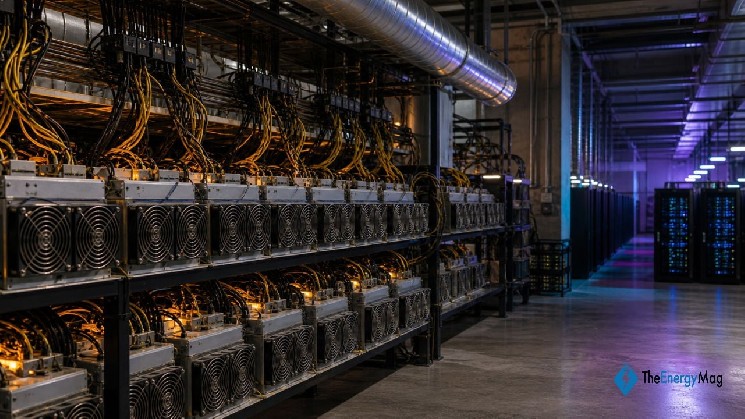
According to analysis by The Energy Mag, Bitmain's Z15 Pro miner for Zcash cryptocurrency generated approximately $727.30 in gross revenue per megawatt-hour of electricity as of Monday, which is about 3.3 times higher than the estimated industry average for high-performance computing (HPC) at $222.73 per MWh. This marks a significant increase in the mining advantage of Zcash over HPC, from about $150 per MWh in late June to over $500 currently. The performance gap compared to Bitcoin mining hardware like the S23 Pro also widened substantially. The surge is driven primarily by a sharp price increase in Zcash (ZEC), which rose roughly 70% in seven days to trade around $890, setting what analysts consider a practical all-time high based on more liquid trading history. Bitcoin also saw gains of over 20%, rising above $77,000, but its mining revenue growth was far less pronounced than Zcash's. The broader cryptocurrency rally was initially fueled by the U.S. Treasury's decision to expand long-term bond purchases, which lowered yields and weakened the dollar, prompting investors to shift towards alternative assets like gold and cryptocurrencies. Regulatory developments, including former President Trump's push for the Clarity Act and outlined lighter rules for digital asset firms, provided additional momentum. A subsequent short squeeze, with over $4 billion in bearish crypto positions liquidated, further amplified upward pressure. Upcoming U.S. economic data and Federal Reserve Chair Kevin Warsh's speech at the Jackson Hole symposium are seen as key tests. Hawkish signals on inflation could strengthen the dollar and Treasury yields, potentially reversing some of the liquidity-driven crypto gains, while a softer stance may support further demand for risk assets.

cryptonews.ruHace 23 min(s)

Zcash Price Surge Enhances Its Advantage Over Bitcoin in Mining Revenue and AI High-Performance Computing

cryptonews.ruHace 23 min(s)

Trading

Spot

Artículos destacados

Cómo comprar LINK

¡Bienvenido a HTX.com! Hemos hecho que comprar ChainLink (LINK) sea simple y conveniente. Sigue nuestra guía paso a paso para iniciar tu viaje de criptos.Paso 1: crea tu cuenta HTXUtiliza tu correo electrónico o número de teléfono para registrarte y obtener una cuenta gratuita en HTX. Experimenta un proceso de registro sin complicaciones y desbloquea todas las funciones.Obtener mi cuentaPaso 2: ve a Comprar cripto y elige tu método de pagoTarjeta de crédito/débito: usa tu Visa o Mastercard para comprar ChainLink (LINK) al instante.Saldo: utiliza fondos del saldo de tu cuenta HTX para tradear sin problemas.Terceros: hemos agregado métodos de pago populares como Google Pay y Apple Pay para mejorar la comodidad.P2P: tradear directamente con otros usuarios en HTX.Over-the-Counter (OTC): ofrecemos servicios personalizados y tipos de cambio competitivos para los traders.Paso 3: guarda tu ChainLink (LINK)Después de comprar tu ChainLink (LINK), guárdalo en tu cuenta HTX. Alternativamente, puedes enviarlo a otro lugar mediante transferencia blockchain o utilizarlo para tradear otras criptomonedas.Paso 4: tradear ChainLink (LINK)Tradear fácilmente con ChainLink (LINK) en HTX's mercado spot. Simplemente accede a tu cuenta, selecciona tu par de trading, ejecuta tus trades y monitorea en tiempo real. Ofrecemos una experiencia fácil de usar tanto para principiantes como para traders experimentados.

1.3k Vistas totalesPublicado en 2024.12.13Actualizado en 2026.06.02

Cómo comprar LINK

Discusiones

Bienvenido a la comunidad de HTX. Aquí puedes mantenerte informado sobre los últimos desarrollos de la plataforma y acceder a análisis profesionales del mercado. A continuación se presentan las opiniones de los usuarios sobre el precio de LINK (LINK).

活动图片