Cardano Van Rossem Upgrade Moves Closer To Mainnet As Governance Phase Advances

bitcoinistPublicado a 2026-06-18Actualizado a 2026-06-18

Resumen

Cardano's Van Rossem protocol upgrade is progressing through its final governance and readiness phase, following its successful enactment on the PreProd testnet. This upgrade is a key test of Cardano's on-chain governance model post-Voltaire, involving coordination among stakeholders. Traders are monitoring the rollout closely, as a smooth process could boost confidence in ADA, while delays could hurt sentiment, especially in a weak market. While PreProd success is a positive step, the focus is now on mainnet activation and clear communication from official channels. Ultimately, a technically sound and uneventful execution would validate Cardano's governance process, serving as a concrete development catalyst.

Cardano’s Van Rossem upgrade is moving deeper into its governance and readiness phase, keeping ADA traders focused on whether the network can carry the next protocol change smoothly toward mainnet activation.

TL;DR

  • Van Rossem is Cardano’s next major protocol upgrade path.
  • Intersect updates show PreProd progress and mainnet governance activity, but wording should stay careful until full enactment is confirmed.
  • The upgrade matters because it tests Cardano’s on-chain governance process after Voltaire.
  • ADA traders are watching both technical readiness and sentiment around the rollout.

Cardano Upgrade Moves Through Governance

Intersect’s latest ecosystem updates show Cardano’s Van Rossem hard fork moving through the final stretch of governance and validation work. The organization’s weekly update said Cardano governance and technical development had moved forward, with the PreProd testnet hard fork enacted and focus shifting toward mainnet readiness.

That matters because Van Rossem is not just another routine software update. It is part of Cardano’s post-Voltaire era, where governance bodies, stake pool operators, exchanges, and ecosystem groups all play a visible role in coordinating protocol changes.

Why Traders Care About The Rollout

For altcoin traders, upgrade cycles can create two very different reactions. A smooth rollout can support confidence in the chain’s roadmap. Delays or unclear communication can weigh on sentiment, especially when a token is already fighting a broader market slowdown.

Cardano’s challenge is to show that its governance model can handle meaningful technical updates without creating unnecessary friction. The more decentralized the process becomes, the more important coordination is. That means the market will be watching not only whether Van Rossem goes live, but how clearly the ecosystem communicates the steps along the way.

PreProd Progress, Mainnet Caution

The safest read is that Van Rossem has advanced meaningfully, but traders should avoid treating every governance update as final mainnet completion unless the source explicitly confirms enactment. PreProd success is important because it gives developers and ecosystem participants a closer rehearsal of the upgrade path. Mainnet activation is the bigger milestone.

This is why the next official communications from Intersect and Cardano governance channels matter. Exchanges and infrastructure providers need enough readiness to reduce risk around deposits, withdrawals, and application continuity.

ADA Setup Remains Event-Sensitive

ADA’s price reaction may depend less on the name of the upgrade and more on market conditions around it. If Bitcoin stabilizes and risk appetite improves, a clean Cardano upgrade path could add fuel to an existing rebound. If the broader market remains weak, even a successful technical milestone may struggle to produce a sustained move.

Still, Van Rossem is worth watching because it gives Cardano a concrete development narrative at a time when traders are looking for real catalysts rather than vague roadmap promises.

The cleanest outcome for Cardano would be boring execution: infrastructure upgrades, governance confirmation, exchange readiness, and no major disruption for users. That may not sound exciting, but for a network that has made governance a central part of its identity, proving the process works is the real catalyst.

This article was written by the News Desk and edited by Samuel Rae.

Originally sourced from Intersect MBO at Intersect MBO

Criptos en tendencia

Preguntas relacionadas

QWhat is the significance of the Van Rossem upgrade for the Cardano network?

AThe Van Rossem upgrade is significant as it is the next major protocol upgrade for Cardano, and it serves as a key test of the network's on-chain governance process following the implementation of the Voltaire era.

QAccording to the article, what are the two possible market reactions to a major upgrade cycle for an altcoin like ADA?

AThe two possible reactions are: a smooth rollout can support confidence in the chain's roadmap and positively impact sentiment, while delays or unclear communication can weigh on sentiment, especially during broader market slowdowns.

QWhat recent progress has been made on the Van Rossem upgrade, and what is the current focus?

ARecent progress includes the Van Rossem hard fork being successfully enacted on the PreProd testnet. The current focus has shifted toward mainnet readiness and governance confirmation.

QWhy is the communication from Intersect and Cardano governance channels important for the mainnet activation?

AClear communication is crucial because exchanges and infrastructure providers need sufficient readiness information to manage risks around deposits, withdrawals, and application continuity, ensuring a smooth transition to the mainnet.

QHow might broader market conditions influence ADA's price reaction to a successful Van Rossem upgrade?

AIf Bitcoin stabilizes and overall risk appetite improves, a clean upgrade could add fuel to a potential ADA rebound. However, if the broader market remains weak, even a successful technical milestone may not be enough to generate a sustained positive price move.

Lecturas Relacionadas

The Reality of Payments in Latin America Is Not What You Think

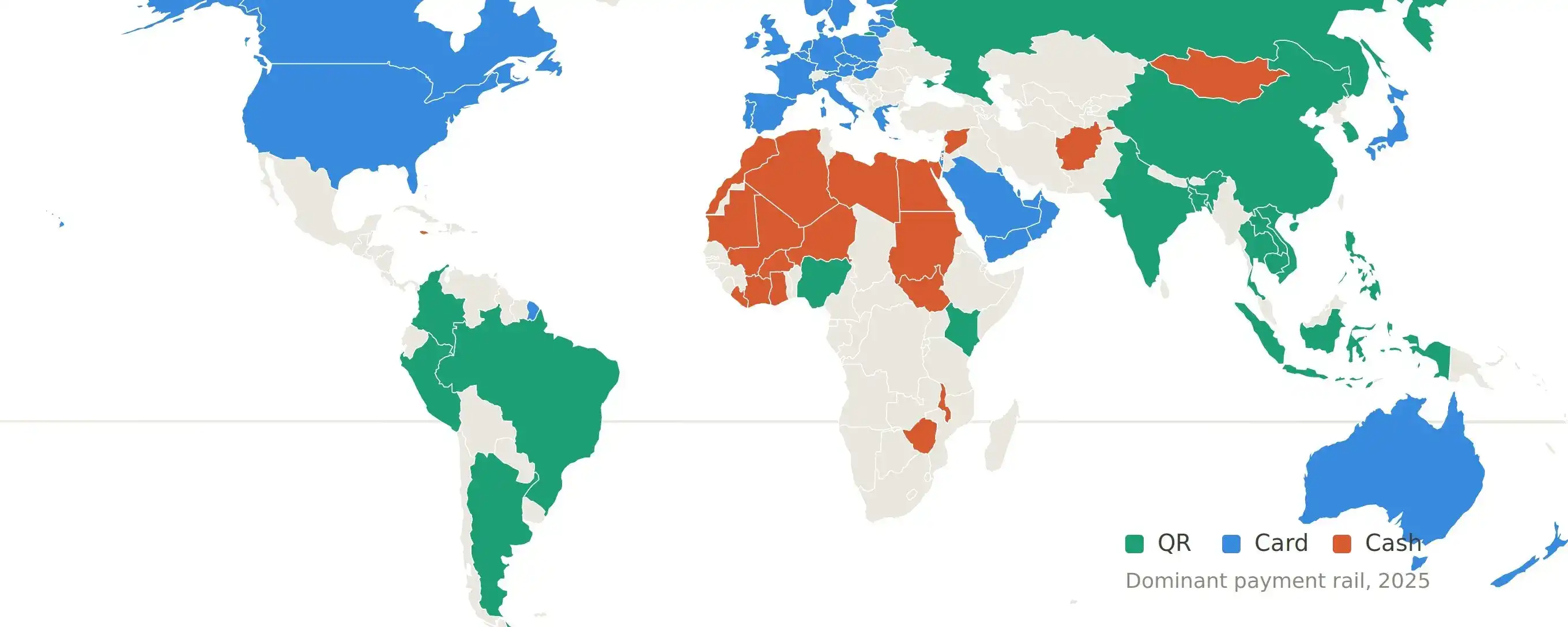
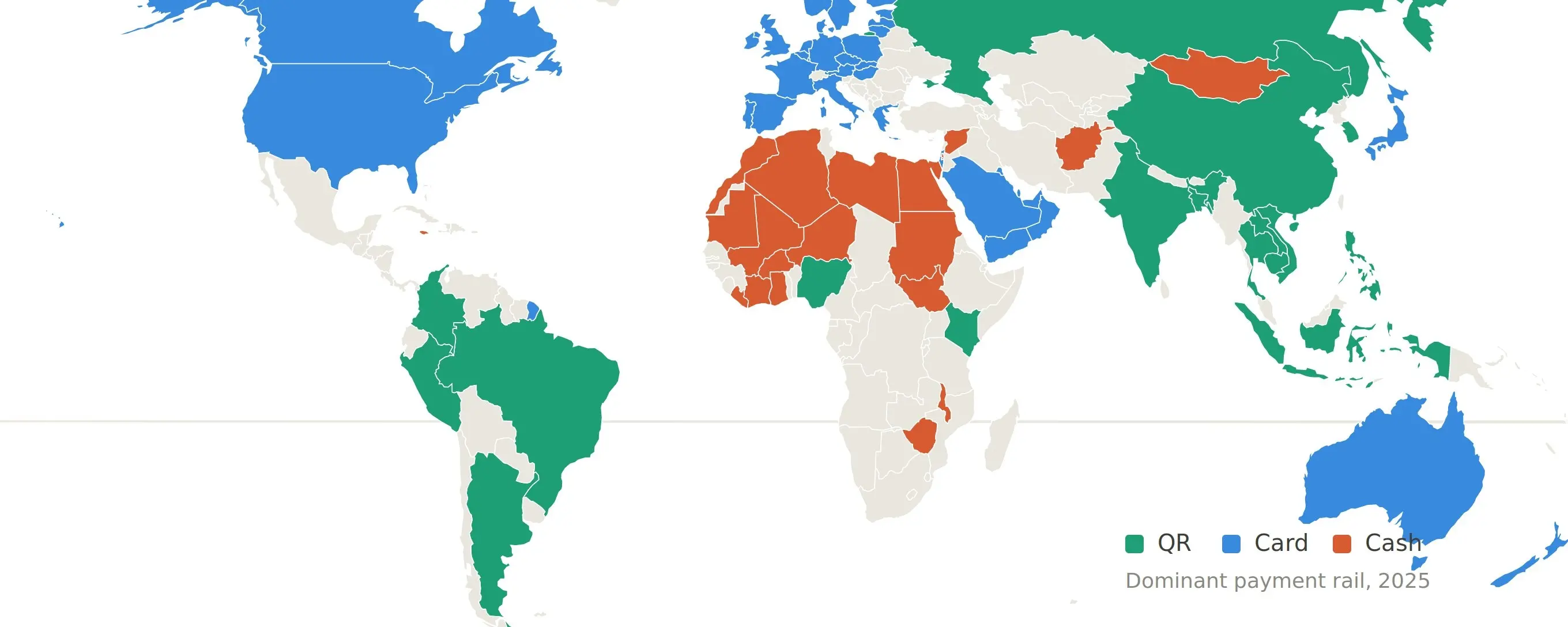
The payment landscape in Latin America is undergoing a fundamental shift, driven by on-the-ground realities that challenge common perceptions. Based on over 500 hours of field research across the region, key insights emerge. Firstly, QR code payments, like Brazil's Pix, are becoming the dominant payment method in most emerging markets, overtaking cards. However, these domestic instant payment systems lack international interoperability, creating a significant gap for cross-border users. Secondly, the narrative around crypto cards is often misunderstood; their primary volume comes from high-net-worth professionals using them for salary conversions (e.g., USDT to local currency via Pix), not retail micro-payments. Competition in payments is shifting from customer acquisition to controlling the settlement layer, leading fintechs to acquire banking licenses for efficiency. Thirdly, treating "Latin America" as a single market is a mistake. Countries like Argentina, Brazil, and Mexico have distinct economic realities, user segments, and regulatory approaches. Brazil alone has at least five distinct user segments with different financial flows. Overlooked markets like Guatemala, Honduras, and El Salvador (the "forgotten five") offer high remittance volumes with lower competitive density. Finally, regulation in Latin America is often ahead of the US, with clearer frameworks for digital assets and a pragmatic approach from regulators focused on safety rather than obstruction. The margin on stablecoin forex is rapidly compressing toward zero, meaning future winners will be those building value-added services on top of the infrastructure, not just the cheapest exchange.

marsbitHace 8 min(s)

The Reality of Payments in Latin America Is Not What You Think

marsbitHace 8 min(s)

Making Music in a Bear Market: The Survival Experiment of a Bitcoin Band

"Orange Pill Jam: A Bitcoin Band's Survival in the Bear Market" Orange Pill Jam is a musical group exploring themes of financial sovereignty and privacy, born from the Bitcoin community. Formed after singer Mermaid performed her song "Dollar Apocalypse" at a 2022 conference, the band creates music intended for both Bitcoin enthusiasts and general audiences. Their creative process involves Mermaid writing lyrics and melodies, which producer/multi-instrumentalist Michi then shapes with a precise, rhythm-focused approach, often demanding numerous retakes to achieve his unique standard of timing. Their songs, like "Cypherpunks' Manifesto" and "Fire of Freedom," tackle concepts of digital privacy, the pitfalls of "free" services, and personal sovereignty, influenced by experiences in places like El Salvador. Despite operating in a crypto bear market with a Copyleft model (offering music for free sharing/remixing and accepting optional Bitcoin donations), they face practical challenges. Their growth is slow on platforms like YouTube and Spotify, which aren't optimized for their niche content. The band also navigates the rise of AI-generated music. While acknowledging AI's efficiency for certain tasks, they believe human creativity occupies a unique space that algorithms cannot replicate—the ability to create new genres and capture intangible rhythmic feeling. For Orange Pill Jam, the core argument for both Bitcoin in a downturn and human artistry in the AI age lies in this irreplaceable, intentional, and imperfectly human creative process. Their project persists as an anti-algorithm experiment, valuing the unquantifiable impact of music over scalable metrics.

marsbitHace 14 min(s)

Making Music in a Bear Market: The Survival Experiment of a Bitcoin Band

marsbitHace 14 min(s)

Latin America's Payments Landscape Is Not What You Think It Is

This report challenges common misconceptions about Latin America's payment landscape, based on over 500 hours of firsthand research. Key findings include: 1) Crypto card transaction volume primarily comes from high-net-worth individuals receiving USDT salaries, not retail spending. 2) QR code payments (e.g., Brazil's Pix, Argentina's Mercado Pago) are the dominant payment method across most emerging markets, not cards. 3) A major untapped opportunity lies in enabling cross-border interoperability between domestic instant payment systems. 4) Payment competition is shifting from customer acquisition to owning the settlement layer (e.g., acquiring banks). 5) Latin America is not a single market; Brazil, Mexico, Argentina, and smaller "forgotten five" countries (e.g., Guatemala, Honduras) have vastly different dynamics. 6) Stablecoin-to-fiat conversion margins are collapsing toward zero, pushing companies to build value-added services on top. 7) Future payment winners will be multi-country brands, not single-corridor specialists. 8) Marketing must target specific user segments (e.g., digital nomads, unbanked immigrants) with tailored messaging, not a generic "Brazilian" audience. 9) Contrary to perception, Latin American regulators are often ahead of the US in creating frameworks for digital assets and instant payments, with clear licensing deadlines. The core takeaway is that the region's payment rules are being rewritten, moving beyond cards and stablecoin arbitrage towards integrated, cross-border QR-based solutions.

链捕手Hace 25 min(s)

Latin America's Payments Landscape Is Not What You Think It Is

链捕手Hace 25 min(s)

Trading

Spot
Futuros

Artículos destacados

Cómo comprar ADA

¡Bienvenido a HTX.com! Hemos hecho que comprar Cardano (ADA) sea simple y conveniente. Sigue nuestra guía paso a paso para iniciar tu viaje de criptos.Paso 1: crea tu cuenta HTXUtiliza tu correo electrónico o número de teléfono para registrarte y obtener una cuenta gratuita en HTX. Experimenta un proceso de registro sin complicaciones y desbloquea todas las funciones.Obtener mi cuentaPaso 2: ve a Comprar cripto y elige tu método de pagoTarjeta de crédito/débito: usa tu Visa o Mastercard para comprar Cardano (ADA) al instante.Saldo: utiliza fondos del saldo de tu cuenta HTX para tradear sin problemas.Terceros: hemos agregado métodos de pago populares como Google Pay y Apple Pay para mejorar la comodidad.P2P: tradear directamente con otros usuarios en HTX.Over-the-Counter (OTC): ofrecemos servicios personalizados y tipos de cambio competitivos para los traders.Paso 3: guarda tu Cardano (ADA)Después de comprar tu Cardano (ADA), guárdalo en tu cuenta HTX. Alternativamente, puedes enviarlo a otro lugar mediante transferencia blockchain o utilizarlo para tradear otras criptomonedas.Paso 4: tradear Cardano (ADA)Tradear fácilmente con Cardano (ADA) en HTX's mercado spot. Simplemente accede a tu cuenta, selecciona tu par de trading, ejecuta tus trades y monitorea en tiempo real. Ofrecemos una experiencia fácil de usar tanto para principiantes como para traders experimentados.

1.5k Vistas totalesPublicado en 2024.12.10Actualizado en 2026.06.02

Cómo comprar ADA

Discusiones

Bienvenido a la comunidad de HTX. Aquí puedes mantenerte informado sobre los últimos desarrollos de la plataforma y acceder a análisis profesionales del mercado. A continuación se presentan las opiniones de los usuarios sobre el precio de ADA (ADA).

活动图片