Blockchain Capital: The Next Bull Market May Be Closer Than You Think

marsbitPublicado a 2026-08-19Actualizado a 2026-08-19

Resumen

Blockchain Capital partners discuss the industry's evolution beyond infrastructure, noting key shifts despite market pessimism. The "buyback and burn" token model remains effective for aligning interests. The crypto industry is compared to the early 2000s internet, post-broadband but pre-mobile explosion, positioned at the flat part of the S-curve. A "fat application" theory is replacing the "fat protocol" era, as cheap, abundant block space shifts value creation and fees to the application layer, similar to trends anticipated in AI. While industry veterans feel a "growing pain" as compliance increases, decentralized ideals persist as the foundation. A major catalyst is real-world asset (RWA) tokenization, starting with stablecoins. Data shows every $1B in new stablecoin issuance drives ~$122B in annual on-chain economic activity and ~$19M in protocol revenue. The next wave involves tokenized stocks, progressing from access for global investors to composability within DeFi. The future may involve "sidecar" models where compliant, tokenized traditional assets coexist with permissionless DeFi, boosting overall liquidity without full integration.

Source: Bankless

Compiled by: Felix, PANews

Aleks Larsen and Spencer Bogart, General Partners at Blockchain Capital, recently joined the 'Bankless' podcast to discuss the inevitable trend of the crypto market transitioning from infrastructure to the application layer. Blockchain Capital pointed out that the widespread adoption of stablecoins has accumulated massive liquidity for on-chain finance, driving revenue growth for lending and trading protocols.

Furthermore, tokenizing stocks and venture capital funds will lead to an exponential improvement in the capital efficiency of the financial system. Although traditional finance and the crypto ethos grapple with compliance, the restructuring of the global financial system by tokenization technology is already unstoppable. PANews has compiled the highlights of the conversation.
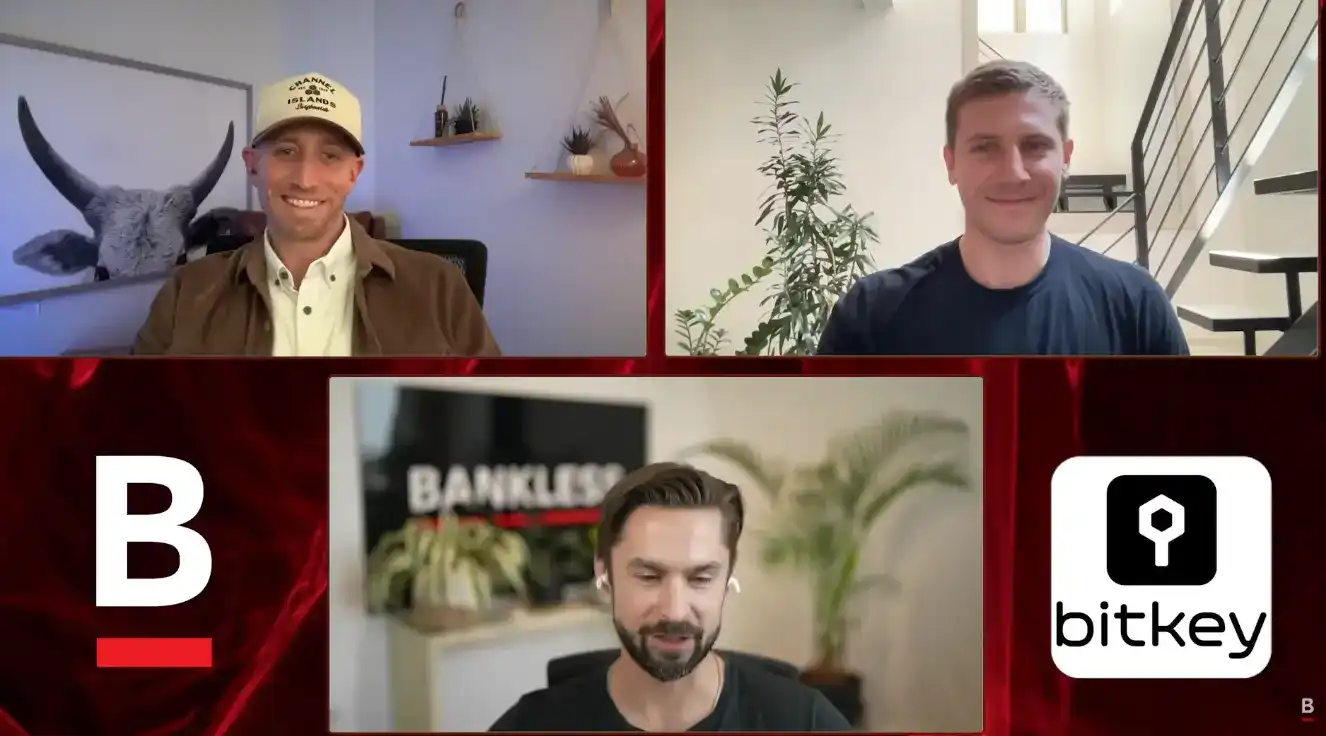
Host: Spencer, I recall our first conversation in the industry was back in 2018 or 2019, discussing MKR's value capture model.

Spencer: Yes, at the time we were even considering buying MKR. Now, in 2026, the most modern projects like Hyperliquid, Lighter, and Venice still adopt the "buyback and burn" model pioneered by MKR. Despite endless debates in the past about the low capital efficiency of this model, it has arguably 'never lost' in practice.

Aleks: Absolutely. I was actually very critical of this model in the past, thinking that in the endgame, when only the last token remains, there must be substantial cash flow that can be directly distributed to holders; otherwise, it's difficult to build a valuation model. But now I think that was overthinking it. The 'buyback and burn' model works very well today.

Spencer: Exactly, the main reason is that unless the 'Clarity Act' passes, the legal rights of token holders remain very vague. In theory, as an investor, if you're a startup, I'd certainly hope you reinvest cash flow into new growth opportunities. But in reality, most crypto protocols haven't demonstrated the ability to expand across boundaries and succeed, so many token holders prefer the team to 'plant a flag in the sand,' clearly signaling to the market that 'we will forever buy back and burn.' This at least removes uncertainty.

Additionally, due to the mixed quality of early crypto tokens. Serious, high-quality projects must, from day one, use 'real money' to buy back and burn tokens to prove to the market that they are different. While this might not be the dominant model five years from now, at this stage, it's the most effective and credible commitment to align interests with token holders.

Host: There's a narrative now that 'crypto VC is dead,' with all the big funds expanding their investment scope to frontier tech like AI and robotics, but Blockchain Capital chose to double down during the industry downturn. And strangely, I see two extremes simultaneously: on one hand, traditional financial institutions are eager to dive into blockchain; on the other, crypto OGs are very pessimistic. How should we understand this rift?

Aleks: We're accustomed to zooming out, not over-focusing on price fluctuations during bull and bear cycles. This 'token bear market' is actually very special because it's accompanied by the most positive catalysts in history. We've seen the 'Genius Act' and the gradually clarifying 'Clarity Act.' Rules are being established, and traditional institutions are entering on a large scale.

More importantly, some applications have broken through the industry's information bubble and entered the mainstream: like prediction markets (projects like Polymarket, where many users don't even care if it's built on crypto tech) and stablecoins (providing extremely cheap cross-border dollar payments and remittance channels). These sectors have achieved strong unilateral growth even during the bear market. It's just that AI has absorbed all the market's attention over the past year or so, especially with the explosion of coding agents and open-source Claude 7-8 months ago, causing many to be distracted during low token prices.

Host: You often mention the 'S-curve.' Can you explain in detail where the crypto industry is on that curve now?

Aleks: The development trajectory of the crypto industry is highly similar to the internet. The internet commercialized starting in 1989, exploring for the first 10 years until 2000 when it had a few hundred million users, but it was still extremely difficult to use and bandwidth-limited. Then, from 2000 to 2005, came the broadband transition. I think the crypto industry has just experienced its own 'broadband transition.' Block space has become extremely cheap and abundant. In 2020, Solana was the first monolithic chain to demonstrate high performance and a scaling path, and by 2024, L2s truly became widely adopted, and even Ethereum is gradually achieving scaling. This has become the new normal for the industry.

Looking back at the internet, the broadband transition didn't lead to an immediate explosion; it waited for the mobile explosion from 2006-2010 to bend the S-curve upward. If 2015, the birth of Ethereum, represents the starting 'clock,' we are only 10 to 11 years into development. Among 700 million crypto holders, perhaps only 10% are active on-chain users, because it's only in the last 2-3 years that truly user-friendly, consumer-grade technology stacks (like embedded wallets, social recovery, spending limits, and passwordless logins) that don't require users to be cryptographers have truly matured and become widespread.

Therefore, we are currently in the 2003-2004 phase of the internet, the 'flat bottom of the S-curve' after broadband adoption but before the mobile explosion. Once edge applications like stablecoins and prediction markets thoroughly penetrate the center, the S-curve will experience an upward inflection point.

Host: Perhaps our generation was too young and impatient in 2021, thinking we could change the world tomorrow, but technology and infrastructure need time to mature. However, this still doesn't fully explain why the OGs are so disheartened.

Spencer: It's a psychological 'growing pain.' When a startup reaches the IPO stage, early core employees often miss the times when they were 'rebellious pirates' and can't stand the company becoming a compliant giant to succeed. It's like having a friend who discovers a very niche, individualistic band, but when that band explodes and is embraced by the mainstream, he feels regret instead, claiming 'I only like their early albums.'

Aleks: Yes, industry conferences are now full of people in suits, everyone talking about permissioned channels, compliance, and access, not cypherpunk. But finance is inherently a highly regulated sector; you can't grow big without playing by the rules.

However, the decentralization and neutrality of Ethereum and Bitcoin still have an extremely strong underlying appeal for institutions because they provide better trust assumptions. The cypherpunk dream hasn't died; it's just operating in a low-key, more scalable form as the underlying network for the financial system. We are genuinely upgrading the plumbing of the global financial system. While it may not sound as 'sexy' as it used to, the efficiency gains will tangibly benefit everyone.

Host: Indeed. And you mentioned a detail earlier: for the first time in history, traditional institutions are proactively delving into and deploying crypto assets during a price decline, without market frenzy narratives. Also, in 2025 and 2026, the industry seems to have completely moved beyond the 'investing in infrastructure for infrastructure's sake' cycle. What does this represent in terms of industry evolution?

Spencer: In 2019, interacting with Uniswap could cost a few dollars or even over ten dollars in friction costs. At that time, severely insufficient block space was the industry's biggest bottleneck. This led capital, driven by market fervor, to over-invest in infrastructure, resulting in today's situation of severe oversupply of block space, with many blocks sitting empty. But abundant, cheap block space is an absolute prerequisite for application developers to flourish.

The data is very clear. In 2021, over 70% of fees paid by users went to the infrastructure layer. In 2025, the total fees at the application layer surpassed the infrastructure layer for the first time in history. This means that with the sharp drop in transaction costs, value is finally shifting upward in the protocol stack (to the application layer). A healthy ecosystem shouldn't allow the underlying communication infrastructure to extract the vast majority of monopoly rents. This is precisely the traditional banking rent model we're trying to break with crypto technology.

Host: So, is this the so-called 'fat application theory' replacing the earlier 'fat protocol theory'?

Aleks: Exactly. The underlying protocol layer shouldn't capture massive profits because the essence of blockchain is to reduce intermediary extraction and improve efficiency. But the higher-level logic is 'thin protocol, large market': even if your take rate is extremely low, once you expand the underlying market size of global finance by an order of magnitude, the total absolute value captured will still be enormous.

Host: That's interesting. If we migrate this 'fat protocol to fat application' reasoning to the AI field, does AI investment and evolution follow similar patterns?

Aleks: The similarities are striking. In crypto, teams raised billions in valuation with just a whitepaper. This is identical to how AI Labs now easily secure sky-high valuations based on research vision and star-studded teams. In crypto, we look at testnet TPS and Benchmarks; in AI, it's various Model Benchmarks. In crypto, exchange listings provide liquidity; in AI, it's getting distribution channels through hyperscale cloud providers.

But there's a huge difference. Token prices in crypto are a completely public and transparent sentiment thermometer. Once the narrative breaks, a token can drop 90% in a month. The bubble and downward pressure in AI are currently hidden in private capital markets. It might not crash directly like Crypto but manifest as down rounds, talent drain, etc.

Host: Will the AI application layer explode like Crypto's?

Spencer: Absolutely. As Palantir Technologies CEO Alex Karp emphasizes, having models and intelligence alone cannot directly produce the results enterprises want. Someone must go to the front lines to translate intelligence into actual workflows and outputs.

Interestingly, AI VCs have recently panicked about 'software having no moat.' We, as crypto VCs, find it quite amusing because the crypto industry has been dealing with a brutal environment for the past 10 years where 'everything is open-source, anyone can fork the code at any time, and there is no software moat.'

Aleks: General model weights will gradually commoditize, but the 'harness' - how to use them to solve real problems - will not. In complex, hardcore fields where 'no error is allowed' (like semiconductor manufacturing, complex tax audits, etc.), applications leveraging frontier models plus fine-tuning, supplemented with proprietary enterprise datasets and closed-loop feedback, will build moats so deep that general models cannot breach them.

Host: Back to RWA tokenization. As the first generation of the most successful RWA, what insights has the development of stablecoins given us?

Spencer: Few people know that Blockchain Capital is the only venture capital firm that invested in all three major stablecoin issuers (Tether, Circle, Paxos) a decade ago. Today, the total stablecoin market cap is around $300 billion. I'm almost over 90% certain that by 2030, this number will skyrocket to several trillion dollars (even two trillion). Previously, stablecoins were driven by a retail flywheel, but now each new flywheel turn comes with institutional push, 'onboarding' traditional stocks, money market funds, and government bonds onto the chain because the capital efficiency of a global, 24/7, programmable underlying network is just too high.

The core of stablecoins is far more than just a 'payment product'; their stickiness is extremely high. Once dollars are on-chain, the vast majority of funds settle and are injected as working capital into lending, exchanges, and other on-chain ecosystems, catalyzing massive economic activity. We conducted precise quantitative analysis: Every $1 billion in net new stablecoin issuance creates about $122 billion in economic activity on-chain within a year. This $1 billion directly delivers approximately $19 million in recurring protocol revenue to downstream on-chain protocols within a year.

Host: So, besides stablecoins, how will the eagerly anticipated 'stock tokenization' evolve?

Spencer: Stock tokenization will have two waves. The first wave is about access. Global investors (especially non-US users) have an extremely strong demand for convenient, frictionless, one-click trading of US stocks. The second wave is about composability. Once my Apple stock token is on-chain, countless lending services, securities lending protocols can openly compete to offer me the best collateral rates and yields. This is the ultimate manifestation of capital efficiency.

Currently, there are mainly two competing approaches. One is the X-Stocks model represented by Backed (acquired by Kraken). It issues debt instruments through a Cayman SPV to track stocks. The benefit is that it's completely permissionless, requires no KYC, and can freely circulate in DeFi. But the fatal flaw is that you own a debt owed by the SPV, not actual shares in Apple. For large institutions with tens of billions, this credit and legal risk is unacceptable. The other is a compliant channel for direct ownership of shares. This requires us to compromise on permissionlessness.

Host: So, does this mean the 'suit-wearing bigwigs' of traditional finance and the 'pirates' of crypto must have one side compromise?

Spencer: No need. We don't necessarily have to force them to merge. Those tens of trillions in traditional stocks can operate in 'sidecar mode' alongside the main public blockchain. They may have regulatory fences but exist parallel to purely permissionless DeFi liquidity pools. This will actually greatly accelerate the liquidity of pure cypherpunk systems because the massive funds sitting in stock tokens can be converted to ETH with one click and operate in purely decentralized, permissionless contexts.


Preguntas relacionadas

QAccording to Blockchain Capital's analysis, at what stage of the S-curve is the crypto industry currently positioned, and what is the comparison to the internet era?

AThe crypto industry is currently in the 'flat bottom' phase of the S-curve, specifically compared to the 2003-2004 period of the internet. This is after the 'broadband transition' (akin to cheap, abundant block space with the maturation of L2s) but before the major inflection point upward (akin to the mobile internet boom). They estimate that only about 10% of the 700 million crypto holders are active on-chain users, with consumer-friendly tech stacks only maturing in recent years.

QWhat significant shift in value capture between infrastructure and application layers does Blockchain Capital highlight as a key development in 2025?

AIn 2025, for the first time in history, the total fees generated by the application layer surpassed those of the infrastructure layer. This marks a critical shift from the 'fat protocol' era (where over 70% of user fees went to infrastructure in 2021) to the 'fat application' era, indicating that value is now moving up the protocol stack as transaction costs have plummeted.

QWhat is the 'multiplier effect' that Blockchain Capital quantifies regarding new stablecoin issuance and its impact on on-chain economic activity?

ABlockchain Capital's quantitative analysis shows that for every $1 billion in net new stablecoin issuance, it will generate approximately $122 billion in on-chain economic activity within a year. Furthermore, that $1 billion will directly contribute about $19 million in recurring protocol revenue to downstream on-chain protocols over the same period.

QHow does Spencer Bogart characterize the psychological 'growing pains' experienced by crypto OGs (Original Gangsters) as the industry matures?

ASpencer Bogart compares it to the psychology of early employees in a startup who miss the 'rebellious pirate' days and struggle when the company becomes a large, compliant entity to be successful. It's similar to a fan of a niche band who feels a sense of loss when the band goes mainstream, preferring 'their early albums.'

QWhat are the two main competing approaches for stock tokenization discussed in the article, and what is a key trade-off between them?

AThe two main approaches are: 1) The 'X-Stocks' model (exemplified by Backed), which uses a Cayman SPV to issue debt instruments pegged to stocks. It's permissionless and DeFi-native but carries counterparty risk as the holder owns a debt claim, not the actual stock. 2) Compliant channels offering direct ownership of the stock. This provides real ownership but requires compromises on permissionlessness (e.g., KYC). The trade-off is essentially between perfect permissionlessness/counterparty risk and regulatory compliance/real ownership.

Lecturas Relacionadas

Manufacturing's Share Drops Below 25%: Is Hangzhou Unconcerned?

Hangzhou is entering a critical phase of industrial restructuring. While its manufacturing-to-GDP ratio has fallen below 25%, the city is not alarmed. Instead, it is strategically navigating a dual focus: advancing advanced manufacturing and expanding its service sector, particularly producer services. Recently, the city celebrated the IPO of a humanoid robotics company, seen as a milestone in moving beyond its e-commerce era. Simultaneously, it set an ambitious target for its service sector: to exceed 2 trillion yuan in value by 2030, with producer services making up over 60%. Data shows a clear trend: the service sector's share of GDP has risen to 75.3%, while manufacturing's share has declined to around 20.1%. This shift revives the debate on whether a strong service sector weakens a city's manufacturing "foundation." Hangzhou's approach challenges the notion of a fixed manufacturing "red line" near 25%. The city argues that the quality and integration of industries matter more than simple ratios. Its strategy is "using software to drive hardware," leveraging its core strengths in digital economy and producer services—like R&D, software, and supply chain management—to empower and add value to manufacturing. This is embodied by its emerging "AI era" companies, whose innovation in Hangzhou feeds into national industrial chains. The city believes that for a hub like Hangzhou, the key is not merely boosting visible manufacturing output, but strengthening the "invisible" competitive edge provided by high-end producer services, which ultimately determine manufacturing profitability. National policy is also shifting from insisting on a "stable" manufacturing share to acknowledging a "reasonable" range, allowing for quality-focused development. Hangzhou's future industrial blueprint aims for a manufacturing share above 22% of GDP by 2027, coupled with a dominant, high-value service sector. The goal is not to choose between manufacturing and services, but to deeply integrate them, using advanced services as the accelerator for next-generation manufacturing.

marsbitHace 13 min(s)

Manufacturing's Share Drops Below 25%: Is Hangzhou Unconcerned?

marsbitHace 13 min(s)

SEC Suddenly Proposes "Regulation Crypto": U.S. Token Fundraising May Become Legal Again

On August 18, the U.S. Securities and Exchange Commission (SEC) proposed a landmark set of permanent rules, "Regulation Crypto Assets," specifically designed for crypto asset investment contracts. The 402-page proposal introduces two registration exemption paths and a groundbreaking safe harbor mechanism, representing the SEC's first dedicated crypto-specific regulatory framework. Two exemption tiers are proposed: a "Startup Exemption" allowing a one-time raise of up to $5 million within four years with basic disclosure requirements, and a "Financing Exemption" permitting raises of up to $75 million every 12 months with stricter obligations, including financial statements and ongoing reporting. Both paths require "principles-based narrative disclosure," a flexible approach distinct from traditional IPO forms. The most transformative element is the investment contract safe harbor. It provides a legal path for tokens to "graduate" from being classified as securities. If an issuer completes or permanently ceases its "essential managerial efforts" as promised in the investment contract and meets specific conditions, it can file with the SEC to have the token exit the securities framework. This creates a novel legal lifecycle where a token can begin as a regulated security for fundraising and later become a non-security asset as the network decentralizes. This move is seen as the SEC pragmatically filling a legislative vacuum, as the stalled CLARITY Act in Congress faces significant delays. The proposal aims to offer a compliant pathway for token offerings within the U.S., countering the trend of projects moving overseas. While currently a proposal open for a 60-day public comment period, it signals a major potential shift from an enforcement-heavy approach toward establishing clearer rules for the crypto industry.

marsbitHace 17 min(s)

SEC Suddenly Proposes "Regulation Crypto": U.S. Token Fundraising May Become Legal Again

marsbitHace 17 min(s)

Late Qing County Magistrates' 'Official Debt' and the Crypto World's 'Exchange Listings': The Cross-Temporal Truth of Financializing Power

This article draws parallels between financialization of power in late Qing Dynasty China and the modern cryptocurrency industry. It opens with a staggering contemporary corruption case involving billions, illustrating how official positions control massive cash flows, akin to toll booths. The core analysis focuses on Du Fengzhi, a late Qing county magistrate. His 22-year journey from passing the provincial exam to finally obtaining a post highlights how bureaucratic "qualification" (like a VC investment) doesn't guarantee immediate benefit. Crucially, upon receiving his appointment, Du had to borrow heavily—"official debt"—to cover travel and networking costs to actually assume his position. Lenders, seeing his future post as a revenue-generating asset, offered loans with exorbitant effective interest rates (e.g., borrowing 4000 taels but receiving only 2000), effectively discounting and financializing his future power. Once in office, Du faced immense pressure from both public tax quotas and his crippling private debt. His diaries reveal aggressive, sometimes extreme, tax collection methods (sealing ancestral temples, pressuring local gentry) to meet these demands. The article argues this created a system where public duty and private financial survival became indistinguishable, with corruption evolving from operational necessity to normalized practice. The piece consistently analogizes this to crypto: VC funding as mere "qualification," the costly "listing" process on exchanges, the role of market makers and KOLs as intermediaries akin to local gentry, and the relentless pressure on funded projects to deliver returns—often leading to perpetual pivots, artificial metrics, and ultimately, the extraction of value from retail liquidity. Both systems, it concludes, are driven by the financialization of future potential, trapping individuals in cycles of debt and obligation with limited alternatives for upward mobility.

marsbitHace 24 min(s)

Late Qing County Magistrates' 'Official Debt' and the Crypto World's 'Exchange Listings': The Cross-Temporal Truth of Financializing Power

marsbitHace 24 min(s)

U.S. Stock Market Trends (August 19th): AI Hardware Rally Loosens, Long-Term Bond Yields Challenge Tech Valuations

U.S. stocks weakened further on Tuesday, with major indices hitting two-week lows for a third consecutive session. Pressure centered on the AI hardware sector, as the previously rebounding Philadelphia Semiconductor Index fell sharply. Meanwhile, persistently high long-term Treasury yields and rising oil prices fueled by Middle East tensions prompted a cautious reassessment of high-valuation tech assets. Key closing data: The S&P 500 fell 0.69%, the Dow Jones dropped 0.22%, and the Nasdaq declined 1.33%. The 10-year Treasury yield hovered near 4.70%, while the 30-year yield briefly touched a new high since 2007 before settling around 5.28%. WTI crude rose to $84.94. The chip sector led the decline, with the Philadelphia Semiconductor Index dropping about 5%. Losses spread across memory, optical communication, and AI infrastructure stocks. This shift indicates investor focus is moving from chasing AI demand momentum to evaluating valuations and earnings timing. The "Magnificent Seven" stocks showed mixed performance, with pressure more concentrated on AI hardware than software giants. The market is observing whether capital will rotate back to large-cap tech, sustaining the internal AI sector rotation, or if the broader AI trade is entering a cooling phase. Chinese stocks were mostly weaker, with the Nasdaq Golden Dragon China Index down about 1%. Baidu's stock fell sharply post-earnings due to profit pressure from AI investments, while Alibaba gained. Persistently high long-term bond yields and rising oil prices are re-emerging as key anchors for U.S. stock pricing, constraining valuation multiples for AI-related companies. Corporate events, including earnings from Home Depot and AI financing news like Anthropic's reported credit line expansion, continue to highlight cost and capital expenditure pressures. Focus for the coming sessions: 1) Whether the 30-year Treasury yield stabilizes below 5.30%, and 2) The market's ability to absorb the chip sector sell-off, determining if it's a pre-earnings consolidation or the start of a broader AI hardware cool-down.

marsbitHace 28 min(s)

U.S. Stock Market Trends (August 19th): AI Hardware Rally Loosens, Long-Term Bond Yields Challenge Tech Valuations

marsbitHace 28 min(s)

Galaxy Research: Crypto Lending Contracts for Third Consecutive Quarter, Market Undergoing Orderly Deleveraging

**Galaxy Research Report: Crypto Lending Market Sees Orderly Deleveraging for Third Consecutive Quarter** The crypto asset-backed lending market contracted for a third consecutive quarter in Q2 2026, shrinking by $11.33B (-16.78%) to a total of $56.16B. This represents a 40.13% decline from the Q3 2025 peak. The process is marked by a controlled, "stair-step" decline rather than the sharp, cascading collapses seen in 2022, suggesting a healthier, more orderly deleveraging driven by market retrenchment rather than forced liquidations. Key findings include: * **CeFi vs. DeFi:** Centralized Finance (CeFi) lending ($22.98B) surpassed Decentralized Finance (DeFi) lending ($20.43B) for the first time since Q3 2023, as DeFi loan volumes fell 27.61% quarter-over-quarter. * **Market Leaders:** Tether remains the dominant CeFi lender, holding 58.54% market share. CeFi's top three players (Tether, Maple, Nexo) control nearly 75% of that segment. * **Corporate Debt:** Debt used by companies for digital asset treasury strategies declined by $1.5B to $16.1B, mainly due to a debt buyback by MicroStrategy. * **Rates & Leverage:** Stablecoin borrowing costs edged higher. Analysis of Aave V3 shows e-mode loans, primarily used for leveraged Ethereum staking strategies, carry significantly higher risk (debt-weighted avg. Health Factor ~1.06) compared to standard loans. * **Futures:** Aggregate futures open interest (OI) was relatively stable, down only 3.08% to $103.2B at quarter-end, though it has since rebounded. BTC and ETH futures OI together comprised 65% of the total. In conclusion, the crypto market continues to shed leverage in a measured manner. If this trend persists, the market may avoid the type of disorderly, cascading failures seen in the last cycle, even if lending activity continues to contract.

marsbitHace 49 min(s)

Galaxy Research: Crypto Lending Contracts for Third Consecutive Quarter, Market Undergoing Orderly Deleveraging

marsbitHace 49 min(s)

Trading

Spot
活动图片