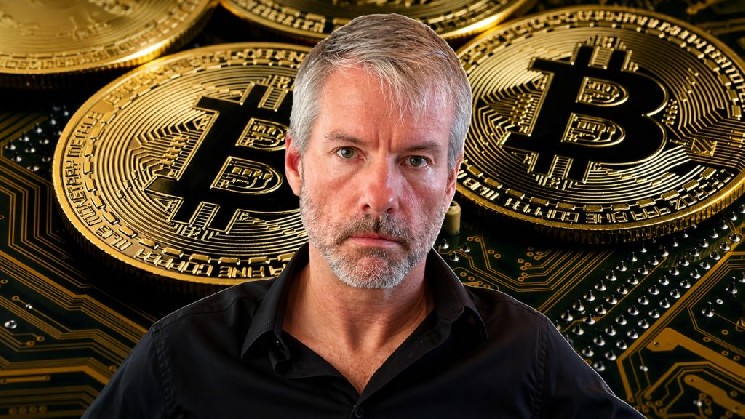
BlackRock moves 47K Ethereum in a day: But the real story isn’t a sell-off

ambcryptoPublicado a 2025-12-17Actualizado a 2025-12-17

Resumen

Even as Ethereum's price struggles around $3,000, institutional activity remains robust. On December 16, BlackRock moved 47,463 ETH (worth $140 million) to Coinbase Prime, not as a sell-off but as part of necessary rebalancing for its iShares Ethereum Trust (ETHA) amid significant market outflows. The same day, ETHA saw a net outflow of $221.3 million, accounting for nearly 99% of total outflows from U.S. Ethereum ETFs. Despite this, BlackRock's actions reflect institutional confidence and operational adaptation rather than exit. With ETHA holding 3.7 million ETH ($11 billion), it has been surpassed by BitMine Immersion's nearly 4 million ETH accumulation. BlackRock's recent $28.78 million ETH acquisition further underscores its commitment to Ethereum as critical financial infrastructure, not just speculative asset, for its BUIDL fund operations. Institutional moves, not retail sentiment, are currently steering Ethereum's market dynamics.

Even as Ethereum’s price hesitates around the $3,000 price level, the institutional engine behind the iShares Ethereum Trust (ETHA) is running at full speed.

On the 16th of December, on-chain data flagged a massive $140 million transfer as BlackRock deposited 47,463 ETH into Coinbase Prime.

Far from a simple “sell-off” signal, this move reflects the complex rebalancing needed to manage the leading spot Ethereum [ETH] ETF during heavy market liquidations.

What does this move tell us about BlackRock?

While retail traders hesitate, BlackRock’s major rebalancing shows strong institutional confidence, as ETF issuers must keep adjusting ETH holdings to match inflows.

This strategy helps stabilize the fund during volatility and reinforces Ethereum’s growing acceptance in traditional finance.

Though BlackRock remains the institutional “gold standard,” it is no longer the undisputed heavyweight in the Ethereum treasury race.

As of mid-December, BlackRock’s ETHA fund holds approximately 3.7 million ETH (approx. $11 billion).

However, this massive stash has officially been eclipsed by BitMine Immersion (BMNR).

Under the leadership of Tom Lee, BitMine has aggressively expanded its treasury to nearly 4 million ETH, signaling a “MicroStrategy-style” accumulation play that prioritizes protocol-level dominance over simple ETF fee collection.

Decoding the December liquidity drain

The timing of BlackRock’s 47,463 ETH deposit follows a turbulent period for US-based Ethereum ETFs.

On the 16th of December, Farside Investors’ data revealed a staggering net outflow of $221.3 million from BlackRock’s ETHA.

This single-day redemption accounted for nearly 99% of the total $224.2 million pulled from all US Ethereum ETFs combined.

All in all, this suggests that while the “institutional machinery” is moving funds on-chain, it is largely to facilitate heavy redemptions from investors who are rotating capital or de-risking amidst a lackluster Q4 performance for the asset.

Ethereum’s resistance at $3,000

That being said, this institutional reshuffling occurred against a backdrop of technical fragility.

At the time of reporting, Ethereum was trading at $2,935.44.

Despite a microscopic 0.77% gain in a 24-hour window, the broader trend remains bearish with ETH plummeting by 11.58% over the past seven days, according to CoinMarketCap

Hence, for BlackRock, the challenge is now two-fold: managing the logistics of massive ETF outflows while simultaneously defending a price floor that retail traders seem increasingly unwilling to support.

BlackRock’s another recent ETH acquisition

This coincided with BlackRock’s recent $28.78 million acquisition of Ethereum, which the broader market has largely misread as mere price speculation.

In reality, this move signalled BlackRock’s formal validation of Ethereum not as a “digital gold” alternative to Bitcoin, but as the essential financial infrastructure of the future.

By securing this bundle of ETH, the world’s largest asset manager is effectively stockpiling the “fuel” necessary to run its BUIDL fund, which operates exclusively on the Ethereum blockchain.

Ultimately, this acquisition shows BlackRock is no longer just participating in crypto, but actively building on Ethereum as mission-critical infrastructure for future global finance.


Final Thoughts

  • Institutional activity and not retail sentiment are steering Ethereum’s market, with BlackRock’s rapid moves reflecting ETF mechanics.
  • The $221 million ETF outflow highlights a liquidity crunch, but BlackRock’s rapid repositioning shows institutions are adapting, not exiting.


Criptos en tendencia

Lecturas Relacionadas

Upbit is Anxious: A Hasty Counterattack Aimed at Regaining Stablecoin Market Share

Title: Upbit's Rushed Counterattack to Reclaim Stablecoin Market Share Facing a dramatic shift in South Korea's stablecoin market, leading exchange Upbit launched a promotional campaign from July 26 to August 9, waiving the 0.05% trading fee for stablecoins paired with the Korean Won (KRW) and rapidly listing new stablecoins like RLUSD and USDG. This move is a direct response to its plummeting market share in this sector. Historically a duopoly with Bithumb, the market has been reshaped since October 2025 when Coinone permanently removed fees for USDC trading. By June 2026, Coinone led with 34.8% of stablecoin volume, followed by Bithumb (31.1%) and Upbit (30.1%). This contrasts sharply with the overall crypto market, where Upbit commands 60%. The data shows stablecoin demand is highly sensitive to fees, as users primarily buy them to transfer capital overseas for derivatives trading or forex arbitrage. South Korean exchanges have seen a net outflow of stablecoins for 18 consecutive months, totaling approximately 14.9 trillion KRW, underscoring their role as a cross-border capital conduit. Upbit's limited-time promotion initially boosted its daily stablecoin volume by 162%, but the surge was almost entirely in USDT (98.1% of volume). The newly listed stablecoins saw negligible, fleeting interest. Furthermore, the promotional effect quickly waned in the second week, with volume dropping 33% on weekdays. A concurrent weakening of the KRW also contributed to the trading spike, independent of the fee waiver. The analysis suggests that once the promotion ends, Upbit is unlikely to retain its temporary gains unless it matches Coinone's permanent zero-fee policy, forcing a choice between market share and fee revenue. Upbit's strategic push may be less about immediate profit and more about preparing for future regulatory shifts. With South Korea's *Digital Asset Basic Act* on the horizon, which will regulate KRW-backed stablecoins, and following Dunamu's (Upbit's parent) integration into Naver Financial to build a payment ecosystem, securing a dominant position in the dollar stablecoin distribution channel holds long-term strategic value. However, potential regulatory conflicts could prevent Upbit from listing a future Naver-issued KRW stablecoin, making the current fight for dollar stablecoin flow even more critical.

marsbitHace 4 hora(s)

Upbit is Anxious: A Hasty Counterattack Aimed at Regaining Stablecoin Market Share

marsbitHace 4 hora(s)

Michael Saylor Compares Bitcoin and Gold!

Michael Saylor, founder of MicroStrategy, argues that Bitcoin fundamentally changes how wealth is stored and transferred by transforming digital scarcity into economic value. He describes Bitcoin as the first digital monetary network, combining computers, digital networks, and cryptography. It digitizes monetary assets, allowing their supply to be controlled by public protocols rather than institutions, thus converting economic value into information transmissible over global networks. Comparing Bitcoin to gold, Saylor states that while increasing Bitcoin's supply is harder, its integration with software and transfer is easier. He highlights Bitcoin's proof-of-work mechanism, which ties it to the physical world by consuming real energy to secure the ledger, making past transactions immutable. This creates a shared security system involving miners, energy companies, and investors. Saylor suggests "digital monetary energy" is a more accurate term than "digital gold." He emphasizes that the Bitcoin network is an adaptive ecosystem of miners, nodes, developers, and users. Its core design is intentionally simple, focused on maintaining a secure ledger for scarce digital assets, with complex functionalities built in higher-layer applications. This architecture allows Bitcoin to serve as a foundation for transmitting value and fostering innovation in payments and financial services. Saylor notes Bitcoin's deeper impact lies in creating digital sovereignty, where private keys give individuals permissionless control over their economic power, with ownership verified mathematically, not by institutions. He concludes that while gold's physical scarcity makes it money, Bitcoin's digital scarcity does the same, characterizing Bitcoin as the monetary energy of the digital age.

cryptonews.ruHace 5 hora(s)

Michael Saylor Compares Bitcoin and Gold!

cryptonews.ruHace 5 hora(s)

Trading

Spot

Artículos destacados

Cómo comprar SAMSUNGEM

¡Bienvenido a HTX.com! Hemos hecho que comprar Samsung Electro-Mechanics (SAMSUNGEM) sea simple y conveniente. Sigue nuestra guía paso a paso para iniciar tu viaje de criptos.Paso 1: crea tu cuenta HTXUtiliza tu correo electrónico o número de teléfono para registrarte y obtener una cuenta gratuita en HTX. Experimenta un proceso de registro sin complicaciones y desbloquea todas las funciones.Obtener mi cuentaPaso 2: ve a Comprar cripto y elige tu método de pagoTarjeta de crédito/débito: usa tu Visa o Mastercard para comprar Samsung Electro-Mechanics (SAMSUNGEM) al instante.Saldo: utiliza fondos del saldo de tu cuenta HTX para tradear sin problemas.Terceros: hemos agregado métodos de pago populares como Google Pay y Apple Pay para mejorar la comodidad.P2P: tradear directamente con otros usuarios en HTX.Over-the-Counter (OTC): ofrecemos servicios personalizados y tipos de cambio competitivos para los traders.Paso 3: guarda tu Samsung Electro-Mechanics (SAMSUNGEM)Después de comprar tu Samsung Electro-Mechanics (SAMSUNGEM), guárdalo en tu cuenta HTX. Alternativamente, puedes enviarlo a otro lugar mediante transferencia blockchain o utilizarlo para tradear otras criptomonedas.Paso 4: tradear Samsung Electro-Mechanics (SAMSUNGEM)Tradear fácilmente con Samsung Electro-Mechanics (SAMSUNGEM) en HTX's mercado spot. Simplemente accede a tu cuenta, selecciona tu par de trading, ejecuta tus trades y monitorea en tiempo real. Ofrecemos una experiencia fácil de usar tanto para principiantes como para traders experimentados.

91 Vistas totalesPublicado en 2026.08.14Actualizado en 2026.08.14

Cómo comprar SAMSUNGEM

Qué es LGELECTRONICS

El activo subyacente del contrato es LG Electronics Inc. LG Electronics Inc es una empresa global de electrónica con sede en Corea del Sur, dedicada a la electrónica de consumo, electrodomésticos y componentes para vehículos.

103 Vistas totalesPublicado en 2026.08.14Actualizado en 2026.08.14

Qué es LGELECTRONICS

Cómo comprar LGELECTRONICS

¡Bienvenido a HTX.com! Hemos hecho que comprar LG Electronics (LGELECTRONICS) sea simple y conveniente. Sigue nuestra guía paso a paso para iniciar tu viaje de criptos.Paso 1: crea tu cuenta HTXUtiliza tu correo electrónico o número de teléfono para registrarte y obtener una cuenta gratuita en HTX. Experimenta un proceso de registro sin complicaciones y desbloquea todas las funciones.Obtener mi cuentaPaso 2: ve a Comprar cripto y elige tu método de pagoTarjeta de crédito/débito: usa tu Visa o Mastercard para comprar LG Electronics (LGELECTRONICS) al instante.Saldo: utiliza fondos del saldo de tu cuenta HTX para tradear sin problemas.Terceros: hemos agregado métodos de pago populares como Google Pay y Apple Pay para mejorar la comodidad.P2P: tradear directamente con otros usuarios en HTX.Over-the-Counter (OTC): ofrecemos servicios personalizados y tipos de cambio competitivos para los traders.Paso 3: guarda tu LG Electronics (LGELECTRONICS)Después de comprar tu LG Electronics (LGELECTRONICS), guárdalo en tu cuenta HTX. Alternativamente, puedes enviarlo a otro lugar mediante transferencia blockchain o utilizarlo para tradear otras criptomonedas.Paso 4: tradear LG Electronics (LGELECTRONICS)Tradear fácilmente con LG Electronics (LGELECTRONICS) en HTX's mercado spot. Simplemente accede a tu cuenta, selecciona tu par de trading, ejecuta tus trades y monitorea en tiempo real. Ofrecemos una experiencia fácil de usar tanto para principiantes como para traders experimentados.

81 Vistas totalesPublicado en 2026.08.14Actualizado en 2026.08.14

Cómo comprar LGELECTRONICS

Discusiones

Bienvenido a la comunidad de HTX. Aquí puedes mantenerte informado sobre los últimos desarrollos de la plataforma y acceder a análisis profesionales del mercado. A continuación se presentan las opiniones de los usuarios sobre el precio de A (A).

活动图片