Bitcoin's 'Never-Setting Sun' and Altcoins' 'Twilight of the Gods': Has the Four-Year Cycle Really Ended?

marsbitPublicado a 2025-12-25Actualizado a 2025-12-25

Resumen

The crypto market in 2025 is experiencing an unprecedented divergence: Bitcoin (BTC) reached new highs of $125,000 driven by institutional inflows via ETFs, while Ethereum (ETH) struggled around $2,800, and most altcoins fell 80-95% from their 2021 peaks. The traditional four-year cycle—where BTC leads, ETH follows, and altcoins surge—has broken down. This "great divergence" is fueled by institutionalization. BTC has become a "digital tech stock," correlated with Nasdaq, as traditional asset managers like BlackRock channel hundreds of billions solely into Bitcoin, creating a "one-way siphon" that leaves altcoins behind. ETH faces a "midlife crisis" due to Layer 2 solutions diverting value away from the mainnet and a lack of compelling new narratives. Altcoins are in a "liquidity black hole," plagued by high FDV/low float VC tokens, meme coin fatigue, and collapsing exchange liquidity. Major 2026 forecasts from Grayscale and CoinShares predict this structural shift is permanent. They expect BTC dominance to rise further, with BTC potentially reaching $150,000, while ETH undergoes a painful transformation. Most altcoins will be wiped out in a "Darwinian cleansing," with only projects offering real utility, sustainable revenue, and a clear regulatory path surviving. The four-year cycle isn't dead but has transformed. Future cycles may be "lame bull markets" where BTC rallies alone or with minimal spillover, signaling a permanent shift from a speculative, retail-driven market ...

As 2025 draws to a close, the crypto market is exhibiting an unprecedented "split" landscape: Bitcoin (BTC) is repeatedly hitting new all-time highs, driven by institutional capital, having once touched $125,000; Ethereum (ETH) is struggling around $2,800, still significantly below its historical peak; and the once "rising tide that lifted all boats" altcoins have plunged into an abyss, with most projects down 80-95% from their 2021 highs, failing to recover even as BTC reaches new heights.

This completely deviates from the classic narrative of the crypto market over the past decade. The traditional "four-year cycle" script—"BTC rises first → ETH catches up → altcoins surge in rotation—seems to have completely failed in 2025. The familiar "carving the mark on the moving boat" strategy of veteran players has now become a joke of "carving the mark to find fish".

Meanwhile, outlook reports for 2026 from institutions like Grayscale and CoinShares further reinforce a harsh reality: the "class solidification" of the crypto market is accelerating—BTC is becoming the "digital gold" for institutional asset allocation, while altcoins are relegated to a "twilight of the gods" with dried-up liquidity.

Is this a temporary failure of the cycle, or a permanent change in market structure? This article will deconstruct this ongoing "crypto paradigm shift" from four dimensions: phenomenon observation, underlying mechanisms, institutional behavior, and liquidity structure.

I. Phenomenon Observation: The "Great Divergence" Between BTC and Altcoins

1.1 Data Doesn't Lie: Unprecedented Performance Divergence

The crypto market in 2025 can be aptly described as "a tale of two extremes".
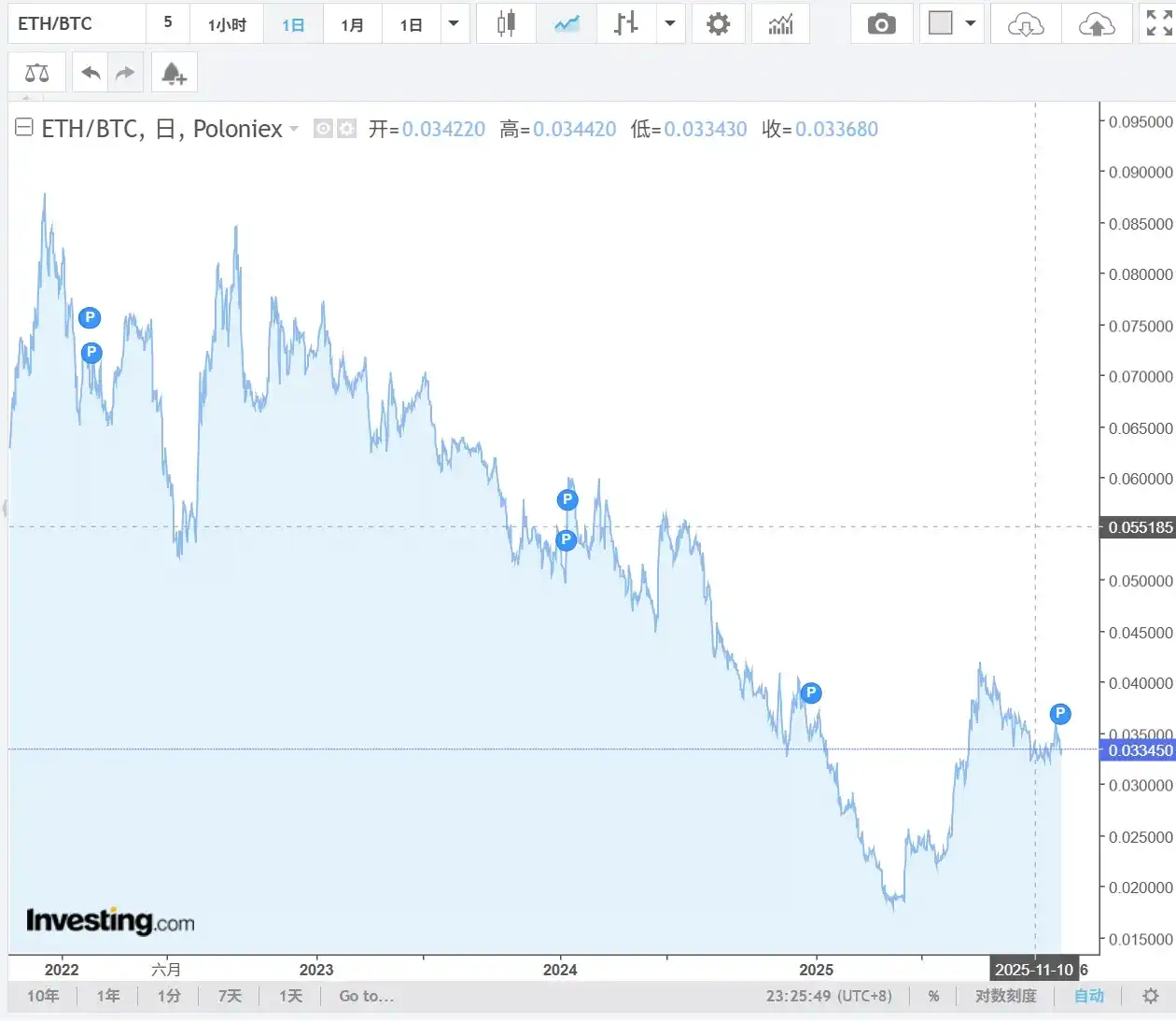
Chart: ETH/BTC Exchange Rate

1. Bitcoin's "Never-Setting Sun":

  • Robust Price Performance: Rose from around $70,000 at the start of the year to a high of $125,000 (+78%), still maintaining between $86,000-$88,000 even after pullbacks.
  • Institutional Capital Inflow: Spot ETFs saw net inflows of tens of billions of dollars, with products like BlackRock's IBIT dominating the market.
  • Highly Concentrated Holdings: ETFs hold over a million BTC; MicroStrategy holds about 670,000 BTC (3.2% of circulating supply).
  • Increased Market Dominance: BTC's dominance surged from 50% in early 2024 to 59-60% currently, a multi-year high.

2. Ethereum's "Midlife Crisis":

  • Severely Lagging Gains: Limited gains this year, current price around $2,800, far inferior to BTC's performance.
  • Collapse in Relative Value: ETH/BTC rate fell to multi-year lows, down over 60% from its historical high.
  • Lackluster Institutional Interest: Total AUM of spot ETFs is far lower than BTC ETFs, with periodic outflows.
  • Sluggish On-Chain Activity: Significantly reduced Gas fees, reflecting weak user activity and network demand.

3. Altcoins' "Twilight of the Gods":

  • Seasonal Indicator Collapse: Altcoin Season Index remained below 20 all year (above 50 indicates altcoin season), the longest period of depression on record.
  • Widespread Underperformance: Most projects in the top 100 by market cap underperformed BTC this year; many are down over 80% from 2021 highs.
  • New Listings Immediately Break Issue Price: New coins listed on major CEXs in 5 routinely broke their issue price upon listing; VC coins became "poison".
  • Liquidity Drying Up: Average daily trading volume for altcoins plummeted over 70% compared to 2021; insufficient CEX depth means any selling pressure can trigger a crash.
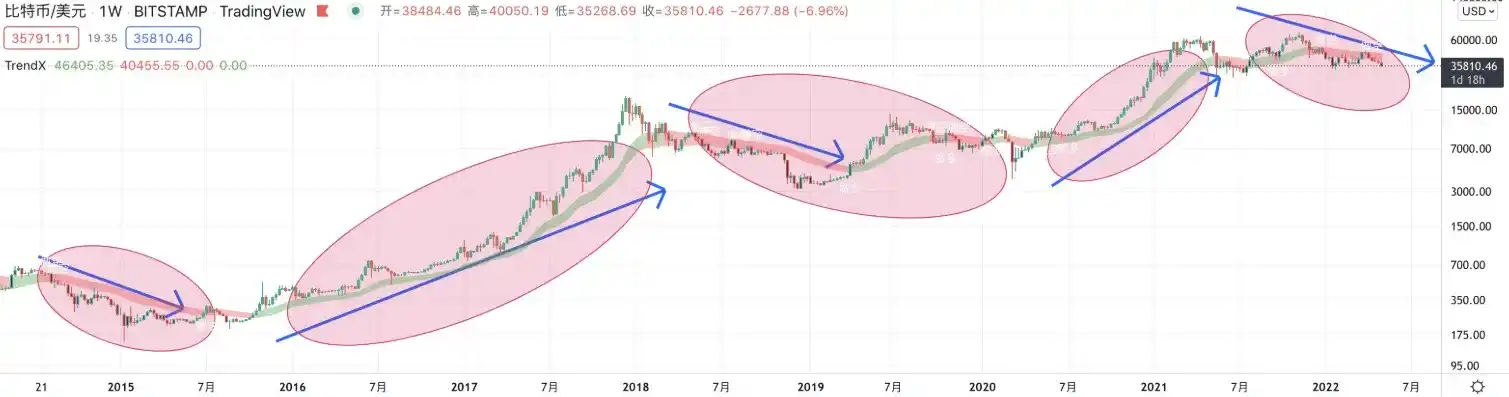
1.2 Historical Comparison: This Time "It's Really Different"

Looking back at the past three bull markets, the rotation logic of "BTC → ETH → altcoins" was almost an iron law of the market:

2017 Bull Market: The Classic Three-Stage Rocket

  • BTC rose from $1,000 to $20,000 (+1,900%)
  • ETH skyrocketed from $8 to $1,400 (+17,400%)
  • ICO泡沫引爆,山寨币普遍50-500倍涨幅 (ICO bubble ignited, altcoins普遍 gained 50-500x)

2020-2021 Bull Market: The DeFi and NFT Carnival

  • BTC rose from $10,000 to $69,000 (+590%)
  • ETH rose from $200 to $4,800 (+2,300%)
  • DeFi Summer and NFT frenzy pushed altcoins to gains of 10-100x普遍.

2024-2025 Bull Market: Transmission Mechanism Failure

  • BTC rose significantly from its low to $125,000 (+78%+)
  • ETH gains limited, hovering around $2,800
  • Altcoins collectively flatlined, even falling further as BTC hit new highs

The core difference is clear: In 2025, BTC's gains no longer "spill over" to ETH and altcoins. Capital seems trapped behind an invisible wall within the BTC ecosystem. The name of that wall is "institutionalization".

II. Underlying Mechanisms: How Institutional ETFs "Rewrite the Rules of the Game"

2.1 BTC Becomes a "Shadow of US Tech Stocks"
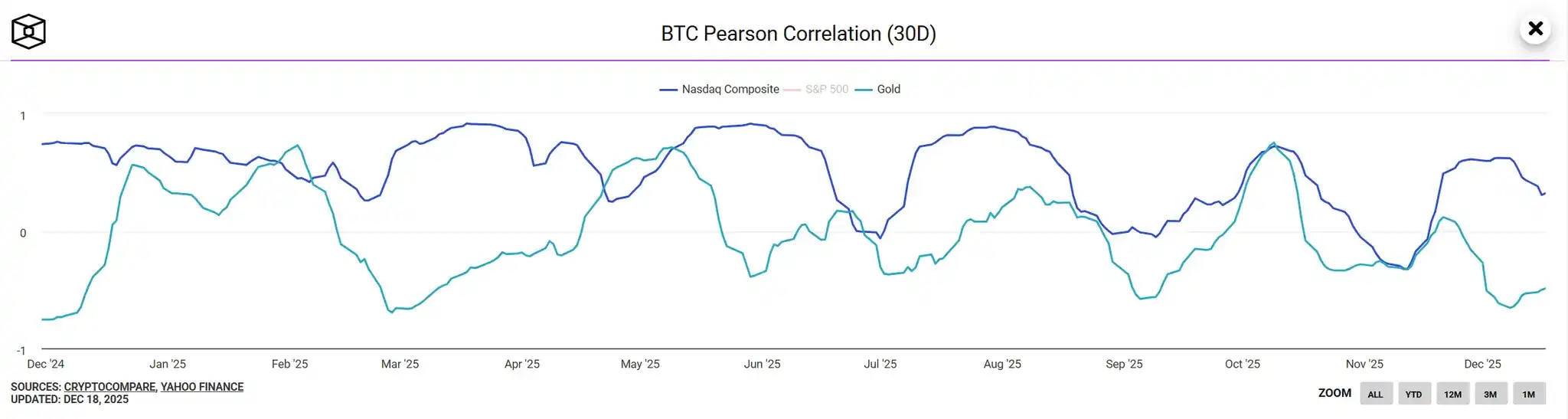
Chart: 30-day correlation coefficient between BTC and Nasdaq/Gold

In January 2024, the US SEC approved spot BTC ETFs, marking the crypto market's entry into the "institutional era." However, a side effect of this milestone is BTC gradually detaching from crypto-native narratives and becoming a "satellite asset" of traditional finance.

High Correlation with Nasdaq

In 2025, the 30-day correlation coefficient between BTC and the Nasdaq 100 index remained stable in the 0.75-0.85 range, hitting a record high; its correlation with gold dropped below 0.2. When US tech stocks (like Nvidia, Tesla) surged, BTC ETF inflows accelerated; when US stocks corrected, BTC fell in sync.

Essential Shift: BTC is no longer "digital gold" (safe-haven asset), but "digital tech stock" (risk asset). Its pricing power has shifted from crypto natives to Wall Street fund managers.

"One-Way Siphoning" Effect of Institutional Buying

Clients of traditional asset management giants like BlackRock and Fidelity (pensions, family offices, high-net-worth individuals) only recognize BTC, not altcoins. The reason isn't a deep understanding of crypto technology, but a trifecta of "regulatory compliance + sufficient liquidity + brand recognition":

  • BTC has SEC-approved spot ETFs.
  • BTC has CME futures and a well-developed derivatives market.
  • BTC has 15 years of brand accumulation.

In contrast, altcoins are still "unidentified assets" in the eyes of institutions,叠加 regulatory risk, liquidity risk, and project risk,根本无法 passing traditional financial due diligence.

Structural Solidification of Capital Flows: In 2025, of the hundreds of billions flowing into BTC ETFs, over 95% was locked within the BTC ecosystem, with less than 5% flowing into ETH/altcoins via OTC trades or DeFi bridges. This starkly contrasts with the past "capital spillover effect".

MicroStrategy's "Infinite Ammo" Model

Michael Saylor's MicroStrategy has become another dominant force in the BTC market. By issuing convertible bonds, secondary offerings, etc., the company continuously buys BTC, currently holding about 670,000 BTC (cost ~$30 billion).

More crucially, MSTR's stock price has long traded at a 2-3x premium to the value of its held BTC, making it a proxy tool for retail investors to "leveraged long BTC". A positive feedback loop is thus formed:

MSTR stock price rises → Market cap膨胀 → Ability to issue debt increases → Buys more BTC → Pushes BTC price higher → MSTR stock price rises again

This "corporate hoarding" model further siphons capital that could have flowed into altcoins, strengthening BTC's dominance.

2.2 Why Did ETH "Fall Behind"? Layer 2's "Vampire Attack"

Ethereum's weak performance is not only due to lack of institutional interest but also internal contradictions within its own ecosystem.

Layer 2's Liquidity Fragmentation Dilemma

The TVL (Total Value Locked) of Layer 2 networks like Arbitrum, Optimism, Base, zkSync has exceeded tens of billions,接近 60% of the mainnet's. But the problem is, the tokens of these L2s (ARB, OP, etc.) do not adequately capture value for ETH, instead diverting users and capital.

Core Contradiction: When users transact on L2s, the Gas fees paid are in L2 tokens or stablecoins, not ETH. The economic model of L2s is structurally decoupled from the ETH mainnet—the more successful L2s are, the lower the demand for ETH. This is a classic "vampire attack".

Staking Yield's "Prisoner's Dilemma"

After transitioning to PoS, ETH staking offers an annual yield of ~3-4%. Although liquid staking derivatives (like Lido's stETH) account for a significant portion of the total stake, this has not pushed the ETH price higher.

Paradox: Staked ETH is locked, reducing circulating supply (theoretically bullish for price), but it also reduces speculative demand (actually suppressing price). ETH has been downgraded from "programmable money" to "interest-bearing bond", but its 3-4% yield cannot compete with US Treasuries at 4.5%, let alone attract crypto investors seeking high returns.

Narrative Vacuum Lacking Killer Apps

The DeFi Summer and NFT frenzy of 2021 made ETH synonymous with the "world computer". But in 2025:

  • DeFi TVL halved from its peak.
  • NFT trading volume crashed 90%.
  • Emerging applications like AI Agent, on-chain games have not yet achieved scale.

The narrative contrast is stark: BTC has a clear positioning as "digital gold + institutional allocation", Solana has market consensus as "high-performance公链 + Meme culture", while ETH's positioning is模糊—not "hard currency" enough, nor "sexy" enough.

2.3 Altcoins' "Liquidity Black Hole"

If BTC is the "empire on which the sun never sets", and ETH is having a "midlife crisis", then altcoins are experiencing a true "twilight of the gods"—former star projects are falling, new projects are stillborn.

VC Coins' "High FDV Low Float" Death Trap

In 2024-2025, many VC-backed projects launched with extremely high valuations (FDV often $1-5 billion), but with only 5-10% circulating supply. This model is doomed:

  • Retail investors buy at high prices.
  • VC and team unlock selling pressure持续 for 1-3 years.
  • Prices grind lower long-term, even valuable projects can't escape.

Typical case: A知名 Layer 1 project launched with FDV $3 billion, circulating market cap only $300 million. 6 months later, price down 80%, FDV still $1 billion—valuation still inflated, but retail investors are wiped out.

Meme Coins' "Ponzi Game" and Market Fatigue

In 2025, Meme coins on Solana (like BONK, WIF, POPCAT) briefly attracted capital, but are "zero-sum games"—early players harvest later players. Lacking real value支撑, 90% of Meme coins go to zero within 3 months.

More serious is the market fatigue effect: After being "harvested" repeatedly (2022 Terra collapse, FTX bankruptcy, 2024-2025 VC coin暴雷), retail investors gradually远离 the altcoin market,形成 a psychological trauma of "once bitten, twice shy".

CEX's "Liquidity Drought" and Death Spiral

Altcoin trading volume on top exchanges like Binance, Coinbase暴跌 over 70% compared to 2021; smaller exchanges are closing down浪潮. Reasons include:

  • Regulatory Pressure: SEC's ongoing lawsuits against Binance, Coinbase.
  • User Loss: Shift to compliant products like BTC ETFs.
  • Declining Project Quality: Bad money drives out good.

Low liquidity leads to increased price volatility (order book depth for a 10% move might be less than $100k), further scaring away investors, forming a death spiral: "liquidity dries up → price crashes → investors leave → liquidity dries up further".

Narrative Exhaustion and Homogeneous Competition Dilemma

2017 had ICOs, 2020 had DeFi, 2021 had NFTs and Metaverse, 2024 had AI and RWA... but 2025 has no new narrative真正 igniting the market.

Existing sectors (Layer 1, Layer 2, DeFi, NFT) are highly saturated, projects are heavily homogenized, users cannot distinguish good from bad. Final result: Capital doesn't know where to invest, so it just "parks" in BTC.

III. Institutional Perspective: Grayscale and CoinShares' 2026 Predictions

3.1 Grayscale Report: Dawn of the Institutional Era and a Tiered Landscape

Grayscale, in its 《2026 Digital Asset Outlook: Dawn of the Institutional Era》, clearly states the crypto market is entering a new phase dominated by traditional finance.
BTC: Irreversible Institutionalization Process

Grayscale expects 2026 to accelerate the shift in digital asset investment structure, driven by two main themes:

  • Macro Demand for Alternative Store-of-Value Assets: Ongoing fiscal imbalances, inflation risks, and global money supply growth drive demand for BTC and ETH as scarce digital commodities.
  • Increasing Regulatory Clarity: Expect more countries to approve crypto ETP products; US might pass bipartisan market structure legislation, further integrating blockchain finance.

Key catalysts include:

  • The 20 Millionth Bitcoin即将 Mined: The 20 millionth BTC (out of 21 million) will be mined in March 2026, a milestone reinforcing BTC's fixed supply transparency and scarcity narrative.
  • Rising Institutional Allocation: US state pensions, sovereign wealth funds (like Harvard Endowment and UAE's Mubadala have already started) will gradually increase BTC allocation from current <0.5% to higher levels.
  • Hedge Against USD Devaluation: Amid soaring US debt and global de-dollarization trend, BTC's hedging属性 as "digital gold" becomes more prominent.

Grayscale predicts BTC could hit a new all-time high in H1 2026,突破 $150,000 as a base case.
ETH: "Sideways Accumulation" Amid Painful Transformation

Grayscale直言 ETH is undergoing a "painful transformation", needing time to adapt to institutional adoption and regulatory standards. Three转型 directions include:

  • Deep Binding of Layer 2 and Mainnet: Through economic model improvements (like further evolution of EIP-4844), making L2 success truly benefit ETH value.
  • Institutional-Grade DeFi/RWA Apps: Scaling compliant use cases like tokenized bonds, on-chain asset management.
  • Mass Consumer Adoption: On-chain social, gaming apps breaking out of "small circles".

But these transformations need 1-2 years to verify. Grayscale predicts 2026 is more likely a "sideways accumulation" phase for ETH, with relatively limited price gains, far from replicating the explosive growth of 2017 or 2021.

Altcoins: Tiered Fate and Survival of the Fittest

The report emphasizes "Not all tokens will successfully transition out of the old era", altcoins will show clear stratification:

Tier 1: Quasi-Institutional Grade Assets

  • Representatives: Solana, Avalanche, Polygon
  • Characteristics: Real users, institutional backing, regulatory path.
  • Expectation: May attract some institutional capital, but gains far inferior to BTC.

Tier 2: Ecosystem & Utility Tokens

  • Representatives: DeFi protocols (Aave, Morpho, Uniswap), AI chains (Bittensor, Near)
  • Characteristics: Benefit from real use case growth, have cash flow支撑.
  • Expectation: Limited upside, but can survive in the "utility era".

Tier 3: Speculative Tokens

  • Representatives: Meme coins, purely narrative projects, high FDV low float VC coins.
  • Characteristics: Lack practical utility, rely on retail FOMO.
  • Expectation: High probability of归零 or marginalization.

Grayscale clearly states the "普涨时代 universal rising tide era" for altcoins is彻底 over, the traditional four-year halving cycle is瓦解, replaced by more stable institutional capital inflows. Only projects with sustainable revenue, real users, and a regulatory path will survive; the rest will disappear in the "survival of the fittest".

3.2 CoinShares: From Speculation to Utility, "Hybrid Finance" Defines the Future

CoinShares' 《Outlook 2026: Toward Convergence and Beyond》 report proposes a more radical view: 2025 is the last year of speculation-driven markets, 2026 will shift towards utility, cash flow, and integration.
The Rise of "Hybrid Finance"

CoinShares introduces the "Hybrid Finance" concept: deep integration of public blockchains with traditional financial systems, creating new infrastructure neither can build alone. The core story for 2026 is "convergence":

1. Traditional Institutions Building on Public Chains:

  • BlackRock issuing on-chain money market funds (BUIDL)
  • Franklin Templeton launching tokenized treasuries
  • Banks like Citi, HSBC conducting bond issuance on private chains

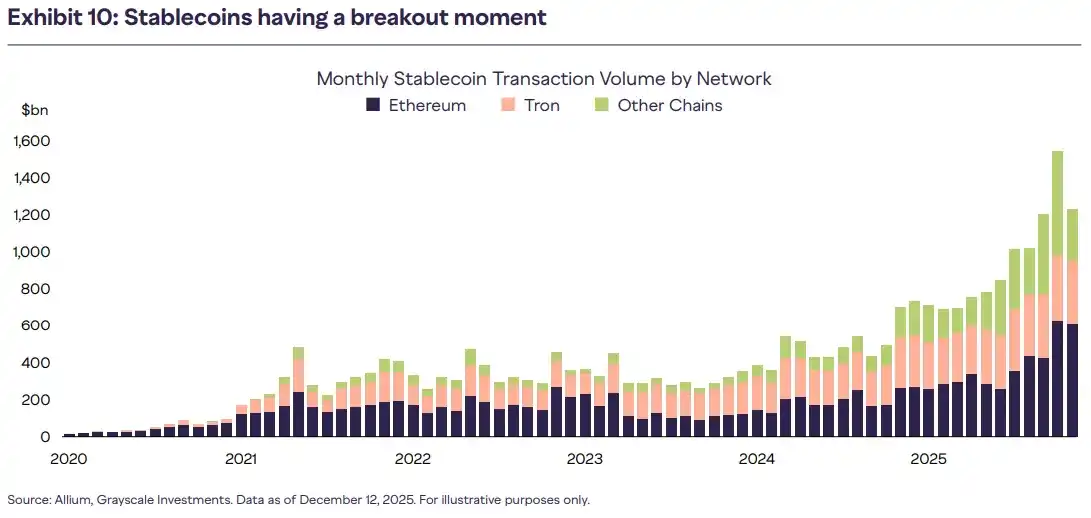
2. Stablecoins Shift from Crypto Tool to Global Payment Rail:

  • Regulatory frameworks like US GENIUS Act, EU MiCA provide green lights.
  • After Stripe acquires Bridge, businesses can integrate stablecoin payments directly via API.
  • Stablecoin market cap moves from $200B towards $500B.

3. Tokenization Explosion:

  • Private credit, tokenized treasuries dominate the market.
  • On-chain products offer faster settlement, lower cost, global distribution.
  • RWA (Real World Asset) market cap expected to突破 $50 billion in 2026.

4. Value Capture Era:

  • Apps like Hyperliquid use revenue to buy back/burn tokens.
  • Tokens upgrade from "governance tools" to "equity-like assets".
  • Cash flow and fundamentals become core valuation metrics.

Institutional Dominance and Disappearing Retail FOMO

CoinShares points out that 2025 BTC ETF inflows exceeded $90 billion, showing institutional mainstreaming is irreversible. Meanwhile, retail FOMO sentiment has significantly weakened due to past trauma, narrative fatigue, and regulatory uncertainty. Retail capital chooses to观望 or is limited to mainstream assets like BTC.

2026 Price Scenario Predictions

CoinShares provides three scenarios based on macro environment:

  • Soft Landing (Base Case): BTC突破 $150,000, ETH follows limitedly, quasi-institutional altcoins rise moderately.
  • Stable Growth: BTC maintains in $110,000-$140,000 range, market volatility decreases.
  • Stagflation/Recession: Short-term pressure but medium-term recovery, BTC's "digital gold" attributes highlighted.

Core Predictions:

  • BTC's dominance rises further to over 65% (currently 59-60%).
  • Institutions dominate pricing power, retail influence marginalized.
  • Liquidity concentrates towards utility projects; only projects with "real users + real revenue + compliance path" win.
  • 90% of existing altcoins will be eliminated, market completes "natural selection".

Ultimate Judgment: CoinShares believes 2026 is not about digital assets "challenging" traditional finance, but becoming part of mainstream finance. Utility wins, hybrid finance defines the future, the crypto market will transform from "disruptor" to "integrator".

IV. Core Question: Has the Four-Year Cycle Really Ended?

4.1 The Nature of the Cycle: From "Supply-Driven" to "Demand-Driven"

The past four-year cycle was essentially a supply-driven model:

Classic Transmission of Halving Effect: BTC halving → Miner selling pressure reduces → Supply contracts → Price rises → Triggers FOMO → Retail floods in → Capital spills over to ETH → Spills over further to altcoins.

Cyclical Entry of New Capital: Each bull market had new capital sources (2017 ICO retail, 2021 DeFi/NFT players & pandemic money printing潮), this capital followed the natural flow path "BTC→ETH→altcoins".

2025 Structural Change: Demand-Side Restructuring

However, in 2025, the demand side changed fundamentally:

  • Institutional Capital's "Directed Demand": Only buys BTC, not altcoins, preventing capital "spillover".
  • Retail FOMO's "Permanent Absence": After the 2022 crash, retail lost confidence in altcoins, dare not chase even as BTC hits new highs.
  • Solidification of Liquidity Tiers: The liquidity pools of BTC, ETH, and altcoins are彻底割裂 split, capital cannot flow freely as before.

Conclusion: The "halving → BTC rise → altcoin rotation" logic of the four-year cycle hasn't ended, but its transmission mechanism has been interrupted by institutionalization. Future cycles might be "lame bull markets" of "BTC rises alone → ETH barely follows → altcoins continue to languish".

4.2 Do Altcoins Have a Future?

The answer is: Most altcoins have no future, but a few sectors still have room to survive.

Altcoin Types With No Future

  • High FDV Low Float VC Coins: Inherently flawed economic model, retail is always the bag holder.
  • Meme Coins with No Practical Use: Except for a few "cultural symbols" (like DOGE, SHIB), most will go to zero.
  • Homogeneous Layer 1/Layer 2: The market only needs 3-5 major公链 (ETH, Solana, BNB Chain, etc.), the rest are "zombie chains".

The crypto market in 2025 is undergoing a painful but necessary "rite of passage"—transitioning from a retail-dominated casino to an institution-dominated asset allocation market.

Bitcoin's "never-setting sun" is not a victory for crypto, but the "taming" of crypto by traditional finance. When BTC becomes a "shadow of US tech stocks", it gains liquidity and compliance, but loses its original intention of "decentralized money". This is progress, but also compromise.

The altcoins' "twilight of the gods" is not an end, but the eve of rebirth. When the bubble bursts and bad coins are purged, truly valuable projects will rise from the ashes. History always rhymes—every bubble破裂孕育 the seeds of the next era.

The four-year cycle has not ended; it has merely changed its face. Future bull markets may no longer be a狂欢 of "all coins rising together", but a残酷竞赛 of "the strong get stronger, the weak get eliminated". In this race, those who understand the new rules, embrace institutionalization, and adhere to value investing will have the last laugh.

Data for this report was compiled and edited by WolfDAO. Please contact us if you have any questions for updates;

Author: Nikka / WolfDAO( X : @10xWolfdao )

Preguntas relacionadas

QWhat is the main reason for the unprecedented divergence between Bitcoin and altcoins in 2025 according to the article?

AThe main reason is the structural shift driven by institutionalization, particularly the approval of spot Bitcoin ETFs. This created a 'one-way siphon effect' where institutional capital from traditional asset managers like BlackRock and Fidelity flowed almost exclusively into Bitcoin, with less than 5% spilling over into ETH or altcoins. This broke the traditional cycle where Bitcoin's gains would overflow into the broader crypto market.

QHow did the article describe the change in Bitcoin's correlation and its new perceived role in the market?

AThe article states that Bitcoin's 30-day correlation with the Nasdaq 100 index reached a historically high range of 0.75-0.85, while its correlation with gold fell below 0.2. This signifies a fundamental转变: Bitcoin is no longer perceived as 'digital gold' (a safe-haven asset) but has instead become a 'digital tech stock' (a risk-on asset), with its pricing power shifting from crypto natives to Wall Street fund managers.

QWhat two major themes did Grayscale's 2026 outlook report identify as drivers for the structural shift in digital asset investing?

AGrayscale's report identified two major themes: 1) Macro demand for alternative store-of-value assets, driven by ongoing fiscal imbalances, inflation risks, and global money supply growth, boosting demand for scarce digital commodities like BTC and ETH. 2) Increasing regulatory clarity, with expectations for more countries approving crypto ETPs and potential bipartisan market structure legislation in the U.S., further integrating blockchain finance.

QAccording to the article, what is the 'vampire attack' problem facing Ethereum (ETH)?

AThe 'vampire attack' refers to the problem where the success of Layer 2 networks (like Arbitrum, Optimism) does not fully benefit ETH's value. Users on L2s pay transaction fees in the L2's native token or stablecoins, not ETH. This creates a structural decoupling: the more successful the L2 ecosystems become, the lower the direct demand for ETH itself, as economic activity is siphoned away from the mainnet.

QWhat concept did CoinShares introduce in its 2026 outlook, and what does it represent?

ACoinShares introduced the concept of 'Hybrid Finance' (HyFi). It represents the deep integration of public blockchains with traditional financial systems, creating new infrastructure that neither could build alone. This convergence involves traditional institutions building on public chains (e.g., BlackRock's on-chain money market fund), stablecoins becoming global payment rail, the explosion of tokenization (e.g., real-world assets), and a new era of value capture where tokens are valued based on cash flows and fundamentals.

Lecturas Relacionadas

Trading

Spot
Futuros

Artículos destacados

Qué es $S$

Entendiendo SPERO: Una Visión General Completa Introducción a SPERO A medida que el panorama de la innovación continúa evolucionando, la aparición de tecnologías web3 y proyectos de criptomonedas juega un papel fundamental en la configuración del futuro digital. Un proyecto que ha atraído la atención en este campo dinámico es SPERO, denotado como SPERO,$$s$. Este artículo tiene como objetivo reunir y presentar información detallada sobre SPERO, para ayudar a entusiastas e inversores a comprender sus fundamentos, objetivos e innovaciones dentro de los dominios web3 y cripto. ¿Qué es SPERO,$$s$? SPERO,$$s$ es un proyecto único dentro del espacio cripto que busca aprovechar los principios de descentralización y tecnología blockchain para crear un ecosistema que promueva la participación, la utilidad y la inclusión financiera. El proyecto está diseñado para facilitar interacciones de igual a igual de nuevas maneras, proporcionando a los usuarios soluciones y servicios financieros innovadores. En su esencia, SPERO,$$s$ tiene como objetivo empoderar a los individuos al proporcionar herramientas y plataformas que mejoren la experiencia del usuario en el espacio de las criptomonedas. Esto incluye habilitar métodos de transacción más flexibles, fomentar iniciativas impulsadas por la comunidad y crear caminos para oportunidades financieras a través de aplicaciones descentralizadas (dApps). La visión subyacente de SPERO,$$s$ gira en torno a la inclusividad, buscando cerrar brechas dentro de las finanzas tradicionales mientras aprovecha los beneficios de la tecnología blockchain. ¿Quién es el Creador de SPERO,$$s$? La identidad del creador de SPERO,$$s$ sigue siendo algo oscura, ya que hay recursos públicos limitados que proporcionan información de fondo detallada sobre su(s) fundador(es). Esta falta de transparencia puede derivarse del compromiso del proyecto con la descentralización, una ética que muchos proyectos web3 comparten, priorizando las contribuciones colectivas sobre el reconocimiento individual. Al centrar las discusiones en torno a la comunidad y sus objetivos colectivos, SPERO,$$s$ encarna la esencia del empoderamiento sin señalar a individuos específicos. Como tal, comprender la ética y la misión de SPERO sigue siendo más importante que identificar a un creador singular. ¿Quiénes son los Inversores de SPERO,$$s$? SPERO,$$s$ cuenta con el apoyo de una diversa gama de inversores que van desde capitalistas de riesgo hasta inversores ángeles dedicados a fomentar la innovación en el sector cripto. El enfoque de estos inversores generalmente se alinea con la misión de SPERO, priorizando proyectos que prometen avances tecnológicos sociales, inclusión financiera y gobernanza descentralizada. Estas fundaciones de inversores suelen estar interesadas en proyectos que no solo ofrecen productos innovadores, sino que también contribuyen positivamente a la comunidad blockchain y sus ecosistemas. El respaldo de estos inversores refuerza a SPERO,$$s$ como un contendiente notable en el dominio de proyectos cripto que evoluciona rápidamente. ¿Cómo Funciona SPERO,$$s$? SPERO,$$s$ emplea un marco multifacético que lo distingue de los proyectos de criptomonedas convencionales. Aquí hay algunas de las características clave que subrayan su singularidad e innovación: Gobernanza Descentralizada: SPERO,$$s$ integra modelos de gobernanza descentralizada, empoderando a los usuarios para participar activamente en los procesos de toma de decisiones sobre el futuro del proyecto. Este enfoque fomenta un sentido de propiedad y responsabilidad entre los miembros de la comunidad. Utilidad del Token: SPERO,$$s$ utiliza su propio token de criptomoneda, diseñado para servir diversas funciones dentro del ecosistema. Estos tokens permiten transacciones, recompensas y la facilitación de servicios ofrecidos en la plataforma, mejorando la participación y la utilidad general. Arquitectura en Capas: La arquitectura técnica de SPERO,$$s$ apoya la modularidad y escalabilidad, permitiendo la integración fluida de características y aplicaciones adicionales a medida que el proyecto evoluciona. Esta adaptabilidad es fundamental para mantener la relevancia en el cambiante paisaje cripto. Participación de la Comunidad: El proyecto enfatiza iniciativas impulsadas por la comunidad, empleando mecanismos que incentivan la colaboración y la retroalimentación. Al nutrir una comunidad sólida, SPERO,$$s$ puede abordar mejor las necesidades de los usuarios y adaptarse a las tendencias del mercado. Enfoque en la Inclusión: Al ofrecer tarifas de transacción bajas e interfaces amigables para el usuario, SPERO,$$s$ busca atraer a una base de usuarios diversa, incluyendo a individuos que anteriormente pueden no haber participado en el espacio cripto. Este compromiso con la inclusión se alinea con su misión general de empoderamiento a través de la accesibilidad. Cronología de SPERO,$$s$ Entender la historia de un proyecto proporciona información crucial sobre su trayectoria de desarrollo y hitos. A continuación se presenta una cronología sugerida que mapea eventos significativos en la evolución de SPERO,$$s$: Fase de Conceptualización e Ideación: Las ideas iniciales que forman la base de SPERO,$$s$ fueron concebidas, alineándose estrechamente con los principios de descentralización y enfoque comunitario dentro de la industria blockchain. Lanzamiento del Whitepaper del Proyecto: Tras la fase conceptual, se lanzó un whitepaper completo que detalla la visión, los objetivos y la infraestructura tecnológica de SPERO,$$s$ para generar interés y retroalimentación de la comunidad. Construcción de Comunidad y Primeras Interacciones: Se realizaron esfuerzos de divulgación activa para construir una comunidad de primeros adoptantes y posibles inversores, facilitando discusiones en torno a los objetivos del proyecto y obteniendo apoyo. Evento de Generación de Tokens: SPERO,$$s$ llevó a cabo un evento de generación de tokens (TGE) para distribuir sus tokens nativos a los primeros seguidores y establecer liquidez inicial dentro del ecosistema. Lanzamiento de la dApp Inicial: La primera aplicación descentralizada (dApp) asociada con SPERO,$$s$ se puso en marcha, permitiendo a los usuarios interactuar con las funcionalidades centrales de la plataforma. Desarrollo Continuo y Alianzas: Actualizaciones y mejoras continuas a las ofertas del proyecto, incluyendo alianzas estratégicas con otros actores en el espacio blockchain, han moldeado a SPERO,$$s$ en un jugador competitivo y en evolución en el mercado cripto. Conclusión SPERO,$$s$ se erige como un testimonio del potencial de web3 y las criptomonedas para revolucionar los sistemas financieros y empoderar a los individuos. Con un compromiso con la gobernanza descentralizada, la participación comunitaria y funcionalidades diseñadas de manera innovadora, allana el camino hacia un paisaje financiero más inclusivo. Como con cualquier inversión en el espacio cripto que evoluciona rápidamente, se anima a los posibles inversores y usuarios a investigar a fondo y participar de manera reflexiva con los desarrollos en curso dentro de SPERO,$$s$. El proyecto muestra el espíritu innovador de la industria cripto, invitando a una mayor exploración de sus innumerables posibilidades. Mientras el viaje de SPERO,$$s$ aún se desarrolla, sus principios fundamentales pueden, de hecho, influir en el futuro de cómo interactuamos con la tecnología, las finanzas y entre nosotros en ecosistemas digitales interconectados.

72 Vistas totalesPublicado en 2024.12.17Actualizado en 2024.12.17

Qué es $S$

Qué es AGENT S

Agent S: El Futuro de la Interacción Autónoma en Web3 Introducción En el paisaje en constante evolución de Web3 y las criptomonedas, las innovaciones están redefiniendo constantemente cómo los individuos interactúan con las plataformas digitales. Uno de estos proyectos pioneros, Agent S, promete revolucionar la interacción humano-computadora a través de su marco agente abierto. Al allanar el camino para interacciones autónomas, Agent S busca simplificar tareas complejas, ofreciendo aplicaciones transformadoras en inteligencia artificial (IA). Esta exploración detallada profundizará en las complejidades del proyecto, sus características únicas y las implicaciones para el dominio de las criptomonedas. ¿Qué es Agent S? Agent S se presenta como un marco agente abierto innovador, diseñado específicamente para abordar tres desafíos fundamentales en la automatización de tareas informáticas: Adquisición de Conocimiento Específico del Dominio: El marco aprende inteligentemente de diversas fuentes de conocimiento externas y experiencias internas. Este enfoque dual le permite construir un rico repositorio de conocimiento específico del dominio, mejorando su rendimiento en la ejecución de tareas. Planificación a Largo Plazo de Tareas: Agent S emplea planificación jerárquica aumentada por la experiencia, un enfoque estratégico que facilita la descomposición y ejecución eficiente de tareas complejas. Esta característica mejora significativamente su capacidad para gestionar múltiples subtareas de manera eficiente y efectiva. Manejo de Interfaces Dinámicas y No Uniformes: El proyecto introduce la Interfaz Agente-Computadora (ACI), una solución innovadora que mejora la interacción entre agentes y usuarios. Utilizando Modelos de Lenguaje Multimodal de Gran Escala (MLLMs), Agent S puede navegar y manipular diversas interfaces gráficas de usuario sin problemas. A través de estas características pioneras, Agent S proporciona un marco robusto que aborda las complejidades involucradas en la automatización de la interacción humana con las máquinas, preparando el terreno para una multitud de aplicaciones en IA y más allá. ¿Quién es el Creador de Agent S? Si bien el concepto de Agent S es fundamentalmente innovador, la información específica sobre su creador sigue siendo elusiva. El creador es actualmente desconocido, lo que resalta ya sea la etapa incipiente del proyecto o la elección estratégica de mantener a los miembros fundadores en el anonimato. Independientemente de la anonimidad, el enfoque sigue siendo en las capacidades y el potencial del marco. ¿Quiénes son los Inversores de Agent S? Dado que Agent S es relativamente nuevo en el ecosistema criptográfico, la información detallada sobre sus inversores y patrocinadores financieros no está documentada explícitamente. La falta de información disponible públicamente sobre las bases de inversión u organizaciones que apoyan el proyecto plantea preguntas sobre su estructura de financiamiento y hoja de ruta de desarrollo. Comprender el respaldo es crucial para evaluar la sostenibilidad del proyecto y su posible impacto en el mercado. ¿Cómo Funciona Agent S? En el núcleo de Agent S se encuentra una tecnología de vanguardia que le permite funcionar de manera efectiva en diversos entornos. Su modelo operativo se basa en varias características clave: Interacción Humano-Computadora Similar a la Humana: El marco ofrece planificación avanzada de IA, esforzándose por hacer que las interacciones con las computadoras sean más intuitivas. Al imitar el comportamiento humano en la ejecución de tareas, promete elevar las experiencias de los usuarios. Memoria Narrativa: Empleada para aprovechar experiencias de alto nivel, Agent S utiliza memoria narrativa para hacer un seguimiento de las historias de tareas, mejorando así sus procesos de toma de decisiones. Memoria Episódica: Esta característica proporciona a los usuarios una guía paso a paso, permitiendo que el marco ofrezca apoyo contextual a medida que se desarrollan las tareas. Soporte para OpenACI: Con la capacidad de ejecutarse localmente, Agent S permite a los usuarios mantener el control sobre sus interacciones y flujos de trabajo, alineándose con la ética descentralizada de Web3. Fácil Integración con APIs Externas: Su versatilidad y compatibilidad con varias plataformas de IA aseguran que Agent S pueda encajar sin problemas en ecosistemas tecnológicos existentes, convirtiéndolo en una opción atractiva para desarrolladores y organizaciones. Estas funcionalidades contribuyen colectivamente a la posición única de Agent S dentro del espacio cripto, ya que automatiza tareas complejas y de múltiples pasos con una intervención humana mínima. A medida que el proyecto evoluciona, sus posibles aplicaciones en Web3 podrían redefinir cómo se desarrollan las interacciones digitales. Cronología de Agent S El desarrollo y los hitos de Agent S pueden encapsularse en una cronología que resalta sus eventos significativos: 27 de septiembre de 2024: El concepto de Agent S fue lanzado en un documento de investigación integral titulado “Un Marco Agente Abierto que Usa Computadoras Como un Humano”, mostrando las bases del proyecto. 10 de octubre de 2024: El documento de investigación fue puesto a disposición del público en arXiv, ofreciendo una exploración profunda del marco y su evaluación de rendimiento basada en el benchmark OSWorld. 12 de octubre de 2024: Se lanzó una presentación en video, proporcionando una visión visual de las capacidades y características de Agent S, involucrando aún más a posibles usuarios e inversores. Estos marcadores en la cronología no solo ilustran el progreso de Agent S, sino que también indican su compromiso con la transparencia y la participación comunitaria. Puntos Clave Sobre Agent S A medida que el marco Agent S continúa evolucionando, varios atributos clave destacan, subrayando su naturaleza innovadora y potencial: Marco Innovador: Diseñado para proporcionar un uso intuitivo de las computadoras similar a la interacción humana, Agent S aporta un enfoque novedoso a la automatización de tareas. Interacción Autónoma: La capacidad de interactuar de manera autónoma con las computadoras a través de GUI significa un salto hacia soluciones informáticas más inteligentes y eficientes. Automatización de Tareas Complejas: Con su metodología robusta, puede automatizar tareas complejas y de múltiples pasos, haciendo que los procesos sean más rápidos y menos propensos a errores. Mejora Continua: Los mecanismos de aprendizaje permiten a Agent S mejorar a partir de experiencias pasadas, mejorando continuamente su rendimiento y eficacia. Versatilidad: Su adaptabilidad en diferentes entornos operativos como OSWorld y WindowsAgentArena asegura que pueda servir a una amplia gama de aplicaciones. A medida que Agent S se posiciona en el paisaje de Web3 y criptomonedas, su potencial para mejorar las capacidades de interacción y automatizar procesos significa un avance significativo en las tecnologías de IA. A través de su marco innovador, Agent S ejemplifica el futuro de las interacciones digitales, prometiendo una experiencia más fluida y eficiente para los usuarios en diversas industrias. Conclusión Agent S representa un audaz avance en la unión de la IA y Web3, con la capacidad de redefinir cómo interactuamos con la tecnología. Aunque aún se encuentra en sus primeras etapas, las posibilidades para su aplicación son vastas y atractivas. A través de su marco integral que aborda desafíos críticos, Agent S busca llevar las interacciones autónomas al primer plano de la experiencia digital. A medida que nos adentramos más en los reinos de las criptomonedas y la descentralización, proyectos como Agent S sin duda desempeñarán un papel crucial en la configuración del futuro de la tecnología y la colaboración humano-computadora.

346 Vistas totalesPublicado en 2025.01.14Actualizado en 2025.01.14

Qué es AGENT S

Cómo comprar S

¡Bienvenido a HTX.com! Hemos hecho que comprar Sonic (S) sea simple y conveniente. Sigue nuestra guía paso a paso para iniciar tu viaje de criptos.Paso 1: crea tu cuenta HTXUtiliza tu correo electrónico o número de teléfono para registrarte y obtener una cuenta gratuita en HTX. Experimenta un proceso de registro sin complicaciones y desbloquea todas las funciones.Obtener mi cuentaPaso 2: ve a Comprar cripto y elige tu método de pagoTarjeta de crédito/débito: usa tu Visa o Mastercard para comprar Sonic (S) al instante.Saldo: utiliza fondos del saldo de tu cuenta HTX para tradear sin problemas.Terceros: hemos agregado métodos de pago populares como Google Pay y Apple Pay para mejorar la comodidad.P2P: tradear directamente con otros usuarios en HTX.Over-the-Counter (OTC): ofrecemos servicios personalizados y tipos de cambio competitivos para los traders.Paso 3: guarda tu Sonic (S)Después de comprar tu Sonic (S), guárdalo en tu cuenta HTX. Alternativamente, puedes enviarlo a otro lugar mediante transferencia blockchain o utilizarlo para tradear otras criptomonedas.Paso 4: tradear Sonic (S)Tradear fácilmente con Sonic (S) en HTX's mercado spot. Simplemente accede a tu cuenta, selecciona tu par de trading, ejecuta tus trades y monitorea en tiempo real. Ofrecemos una experiencia fácil de usar tanto para principiantes como para traders experimentados.

715 Vistas totalesPublicado en 2025.01.15Actualizado en 2025.03.21

Cómo comprar S

Discusiones

Bienvenido a la comunidad de HTX. Aquí puedes mantenerte informado sobre los últimos desarrollos de la plataforma y acceder a análisis profesionales del mercado. A continuación se presentan las opiniones de los usuarios sobre el precio de S (S).

活动图片














