Bitcoin Mining Difficulty Drops for the Third Time in a Row. What Does This Mean?

RBK-cryptoPublicado a 2025-12-11Actualizado a 2025-12-11

Resumen

Bitcoin mining difficulty has decreased for the third consecutive time, dropping by 0.74% to 148.2 trillion on December 11. This means miners now need to compute approximately 148 trillion hash functions on average to add a new block and earn the 3.125 BTC reward (around $281,000 at current rates). This prolonged decline in difficulty, last seen in 2024 after the halving event, reflects reduced mining activity. The global hashrate has fallen from its peak of 1.31 Zh/s on October 24 to 1.14 Zh/s, indicating some miners are switching off unprofitable equipment. According to Anton Gonterev, Commercial Director of Intelion, this adjustment reflects the market adapting to Bitcoin's lower price. Since reaching approximately $126,000 on October 6, Bitcoin's price has fallen 28% to $90,000. Despite this, mining difficulty is still over 40% higher than a year ago, indicating sustained structural demand for computational power and continued investor interest in mining. The current correction is seen as a normal industry dynamic where less efficient operators are gradually leaving the network. Mining is shifting towards players with modern equipment, stable infrastructure, and controlled project economics, particularly those with access to predictable, competitive energy prices. These efficient operators remain stable despite short-term fluctuations in Bitcoin's price or mining difficulty.

On the morning of December 11, Bitcoin's mining difficulty decreased by 0.74%. According to Cloverpool, the indicator dropped to 148.2 T (trillion). This means that miners now need to compute approximately 148 trillion hash functions on average to add one block to the Bitcoin network and receive the new reward of 3.125 BTC (about $281,000 at the current exchange rate).

Today's drop in Bitcoin's mining difficulty is the third consecutive one. Such a prolonged decline was only observed in 2024 during the months following the halving, when the miners' reward was cut in half, and they turned off equipment that had become unprofitable.

The difficulty recalculation takes into account the reduced activity of miners, indicated by the global hashrate—the total power of all devices actively mining Bitcoin. The hashrate reached a maximum of 1.31 Zh/s (zettahashes per second) on October 24. As of 5:00 PM Moscow time on December 11, the average hashrate over the past 24 hours is 1.14 Zh/s.

"An Element of Industry Dynamics"

The current decrease in mining difficulty reflects the market's adaptation to a more restrained Bitcoin price, says Anton Gonterev, Commercial Director of Intelion. After reaching a new high of around $126,000 on October 6, the first cryptocurrency has since depreciated by 28%, to $90,000.

Nevertheless, a year ago, the difficulty was approximately at 104 T, and a growth of over 40% over the year indicates the continuation of structural demand for computing power, the expert says. According to him, investor interest in mining remains, and the market still highly values Bitcoin's long-term potential.

He noted that against this backdrop, the differences in mining costs are particularly noticeable: operators with predictable and competitive energy prices navigate such cycles much more confidently. This fully applies to sites with their own generation, where it is possible to maintain low electricity costs and reduce the impact of market fluctuations, the expert says.

"This is precisely why the current correction is perceived by us as a normal element of industry dynamics. Less efficient capacities are gradually leaving, and the share of mining is shifting to those who rely on modern equipment, sustainable infrastructure, and controlled project economics. Such operators remain stable regardless of short-term movements in difficulty or the price of Bitcoin," said Gonterev.

"The market in Russia is emerging": Anatoly Popov — on Sber's crypto strategy

The Central Bank responded to the call to "exit the sandbox" and allow stablecoins

The Central Bank proposed limiting ordinary Russians' right to buy cryptocurrency

Preguntas relacionadas

QWhat is Bitcoin mining difficulty and how much did it drop on December 11th?

ABitcoin mining difficulty is a measure of how hard it is to find a new block compared to the easiest it can ever be. On the morning of December 11th, it dropped by 0.74% to 148.2 trillion, meaning miners now need to compute an average of 148 trillion hash functions to add a new block.

QHow many times in a row has the Bitcoin mining difficulty fallen recently, and when was a similar prolonged decline last observed?

AThe drop on December 11th was the third consecutive decline in a row. A similar prolonged period of falling difficulty was observed earlier in 2024, for several months after the halving event.

QWhat is the global hashrate and what does its recent drop from the October 24th peak indicate?

AThe global hashrate is the total combined processing power of all devices actively mining Bitcoin. It reached a peak of 1.31 Zh/s (zettahashes per second) on October 24th. Its subsequent drop to an average of 1.14 Zh/s by December 11th indicates reduced mining activity, which directly led to the decrease in mining difficulty.

QAccording to Anton Gonterev, what does the current drop in mining difficulty reflect, and what is a key factor that helps some operators weather market cycles?

AAccording to Anton Gonterev, the current drop in mining difficulty reflects the market's adaptation to a more restrained Bitcoin price. He states that operators with predictable and competitive energy costs, particularly those with their own power generation, navigate these cycles with significantly more confidence.

QDespite the recent drop, what does the 40%+ annual growth in mining difficulty from a year ago (104 T) signify according to the expert?

AThe growth of over 40% from the approximate level of 104 T a year ago signifies the continuation of structural demand for computing power. It shows that investor interest in mining persists and the market still highly values the long-term potential of Bitcoin.

Lecturas Relacionadas

Anthropic Cries Wolf: Is the AGI Threat Real, or Just an IPO Story?

Anthropic has published an article titled "When AI builds itself," discussing the emerging concept of "recursive self-improvement," where AI begins to actively participate in designing, training, testing, and optimizing its own subsequent versions. The company presents internal data showing that by May 2026, over 80% of code merged into its codebase was written by Claude, its AI model. Claude's capabilities have expanded to handling complex, open-ended engineering tasks, achieving a 76% success rate in such areas, and even contributing to research processes, such as optimizing code performance and conducting AI safety experiments. Anthropic outlines an evolution from human-driven development to AI-assisted workflows, culminating in the current stage where AI agents can autonomously write, run, and delegate code. The company cautions that the path toward a "closed loop," where AI continuously improves itself, is becoming visible. It calls for coordinated global mechanisms to potentially slow or pause frontier AI development to allow safety research and societal structures to catch up. However, the timing of this warning coincides with Anthropic's preparations for an IPO, framing the narrative not just as a safety concern but also as a demonstration of Claude's advanced capabilities and its integral role in accelerating Anthropic's own R&D—creating a potential "flywheel" effect for competitive advantage. This contrasts with OpenAI's recent, more policy-oriented discussion of the same risks, highlighting the competitive dynamics in the AI industry as companies position themselves in both the technological and regulatory landscape.

marsbitHace 32 min(s)

Anthropic Cries Wolf: Is the AGI Threat Real, or Just an IPO Story?

marsbitHace 32 min(s)

BIT Research: ETF Purchases Have Slowed, Strategy (MicroStrategy) Has Slowed, What Else Can Drive Bitcoin's Rise?

Market Refocus on Inflation and Rate Expectations Weighs on Bitcoin Currently, the market is in a phase of macro-repricing dominated by inflation and interest rate expectations. Bitcoin, which previously benefited from easy liquidity and low inflation, is seeing its core bullish drivers weaken. These drivers were market expectations for interest rate cuts and strong inflows from Bitcoin ETFs and institutions like MicroStrategy (referred to as "Strategy" in the text). The logic has shifted. Recent high inflation data (e.g., CPI hitting 3.8% in a May 2026 report) has caused the market to sharply reduce its rate cut expectations for 2025 and even price in potential hikes. This is a key constraint for Bitcoin, as it lacks cash flows and is highly sensitive to rate expectations. Concurrently, institutional capital flows have slowed significantly. Following the hot CPI data, Bitcoin ETFs saw accelerated outflows, with around $4.3 billion leaving over a period. MicroStrategy's ability to keep adding substantial Bitcoin to its balance sheet is also diminishing. Together, ETF and MicroStrategy holdings total roughly $110 billion, but their momentum as growth engines is cooling. In summary, Bitcoin's current pressure stems not from its own fundamentals but from a changing macro environment. As long as inflation stays elevated, Bitcoin is likely to remain in a consolidating phase. However, historically, inflation eventually peaks. Once it recedes and rate cut expectations rebuild, institutional capital could return, potentially fueling a new and more robust recovery phase for Bitcoin.

marsbitHace 40 min(s)

BIT Research: ETF Purchases Have Slowed, Strategy (MicroStrategy) Has Slowed, What Else Can Drive Bitcoin's Rise?

marsbitHace 40 min(s)

Earning 1000 Trillion in Half a Year, 'Pocketing' 20 Million per Capita: This Round of Wealth Creation in the Korean Stock Market is Unprecedented in Scale

The South Korean stock market is experiencing an unprecedented wealth surge in 2026, with household equity and fund asset values soaring by over 1,000 trillion KRW (~$730bn) year-to-date. This translates to an average per capita wealth increase of roughly 20 million KRW, fueled by a historic 109% rally in the KOSPI index. The boom is driven by three converging forces: an AI-driven semiconductor supercycle boosting giants like Samsung and SK Hynix; the government's "Value-Up" market reforms addressing long-standing corporate governance issues; and aggressive real estate regulations that have locked capital within financial markets, preventing profits from flowing back into property. This has triggered a wealth effect, boosting high-end consumption significantly. However, the gains are highly concentrated. The two semiconductor behemoths account for over half the index's value, but retail investors own relatively low stakes in them, systematically missing the biggest rallies. Wealth and consumption benefits are skewed towards luxury goods and imported cars, bypassing mainstream retail. Further risks stem from excessive leverage, with high trading volume in leveraged ETFs, and a market sentiment heavily reliant on the AI sector's fortunes and speculative rumors. While this cycle marks a potential shift from real estate to equities as a primary wealth generator for Koreans, its sustainability, amid structural imbalances and leverage, remains a critical test.

marsbitHace 45 min(s)

Earning 1000 Trillion in Half a Year, 'Pocketing' 20 Million per Capita: This Round of Wealth Creation in the Korean Stock Market is Unprecedented in Scale

marsbitHace 45 min(s)

Behind ZEC's Over 30% Plunge: An 'Unlimited Minting' Vulnerability with No Way to Prove if It Was Ever Exploited

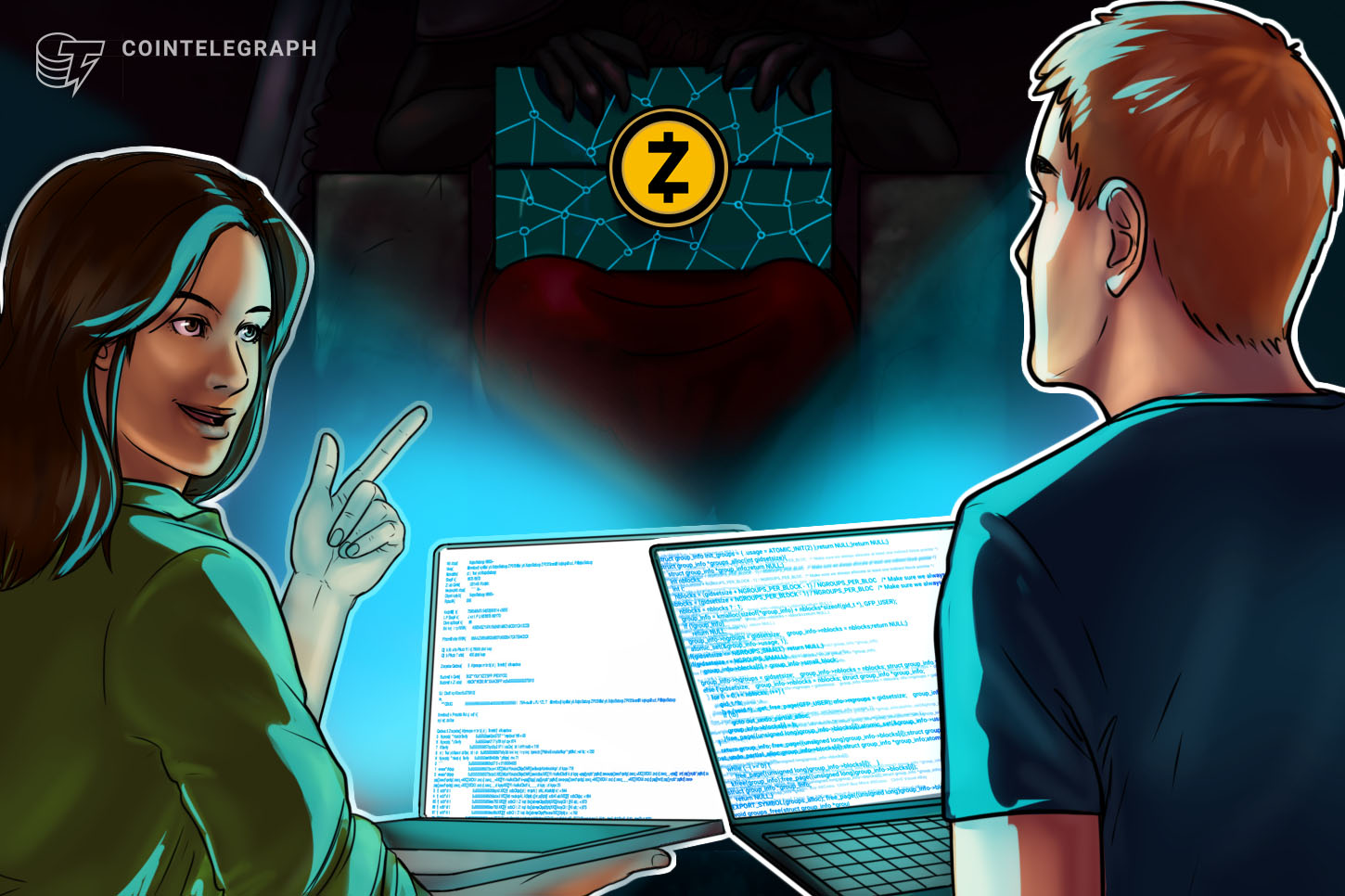
A critical vulnerability was discovered in Zcash's Orchard privacy pool, allowing for the theoretical creation of undetectable counterfeit ZEC. Researcher Taylor Hornby found the flaw on May 29th, 2024, within the Orchard circuit's cryptographic constraints, which could let an attacker bypass asset conservation rules. Although a rapid emergency fix was deployed within days via a coordinated soft and hard fork, a core uncertainty remains: due to Orchard's privacy features, it is impossible to cryptographically prove whether this "unlimited mint" flaw was exploited in the nearly four years since the pool's 2022 launch. This uncertainty, rather than the patched flaw itself, triggered a market panic, causing ZEC's price to drop over 30%. While the Zcash Foundation stated no evidence of exploitation was found, independent entity Shielded Labs emphasized the impossibility of definitively proving no counterfeit ZEC was ever created. The incident highlights the unique trust challenge in privacy systems. To address this, developers are proposing a new network upgrade with enhanced auditing to allow verifiable proof of supply integrity. Notably, the researcher utilized the newly released AI model Claude Opus 4.8 as a tool during the security review, signaling the growing role of advanced AI in uncovering complex cryptographic vulnerabilities.

marsbitHace 47 min(s)

Behind ZEC's Over 30% Plunge: An 'Unlimited Minting' Vulnerability with No Way to Prove if It Was Ever Exploited

marsbitHace 47 min(s)

Trading

Spot
Futuros

Artículos destacados

Cómo comprar BILL

¡Bienvenido a HTX.com! Hemos hecho que comprar Billions Network (BILL) sea simple y conveniente. Sigue nuestra guía paso a paso para iniciar tu viaje de criptos.Paso 1: crea tu cuenta HTXUtiliza tu correo electrónico o número de teléfono para registrarte y obtener una cuenta gratuita en HTX. Experimenta un proceso de registro sin complicaciones y desbloquea todas las funciones.Obtener mi cuentaPaso 2: ve a Comprar cripto y elige tu método de pagoTarjeta de crédito/débito: usa tu Visa o Mastercard para comprar Billions Network (BILL) al instante.Saldo: utiliza fondos del saldo de tu cuenta HTX para tradear sin problemas.Terceros: hemos agregado métodos de pago populares como Google Pay y Apple Pay para mejorar la comodidad.P2P: tradear directamente con otros usuarios en HTX.Over-the-Counter (OTC): ofrecemos servicios personalizados y tipos de cambio competitivos para los traders.Paso 3: guarda tu Billions Network (BILL)Después de comprar tu Billions Network (BILL), guárdalo en tu cuenta HTX. Alternativamente, puedes enviarlo a otro lugar mediante transferencia blockchain o utilizarlo para tradear otras criptomonedas.Paso 4: tradear Billions Network (BILL)Tradear fácilmente con Billions Network (BILL) en HTX's mercado spot. Simplemente accede a tu cuenta, selecciona tu par de trading, ejecuta tus trades y monitorea en tiempo real. Ofrecemos una experiencia fácil de usar tanto para principiantes como para traders experimentados.

233 Vistas totalesPublicado en 2026.05.07Actualizado en 2026.06.02

Cómo comprar BILL

Qué es ATWO

I. Introducción al ProyectoArena Two es una plataforma interactiva descentralizada que permite a los fanáticos jugar un papel activo y tokenizado en los resultados de eventos en tiempo real. A diferencia de los modelos de transmisión tradicionales que reducen a los fanáticos a espectadores pasivos, Arena Two aprovecha la tecnología blockchain para permitir que los fanáticos voten directamente en tiempo real e influyan en los resultados en el campo.II. Información del TokenNombre del token: ATWO (Arena Two)III. Enlaces RelacionadosSitio web: https://arenatwo.com/Exploradores: https://basescan.org/token/0x499D35eBE6cEe9B2Ac35Fd003fcBbeeB9CFc7B32Twitter: https://x.com/arenatwoXNota: La introducción del proyecto proviene de los materiales publicados o proporcionados por el equipo oficial del proyecto, que es solo para referencia y no constituye asesoramiento de inversión. HTX no se hace responsable de ninguna pérdida directa o indirecta resultante.

142 Vistas totalesPublicado en 2026.05.18Actualizado en 2026.06.02

Qué es ATWO

Cómo comprar ATWO

¡Bienvenido a HTX.com! Hemos hecho que comprar Arena Two (ATWO) sea simple y conveniente. Sigue nuestra guía paso a paso para iniciar tu viaje de criptos.Paso 1: crea tu cuenta HTXUtiliza tu correo electrónico o número de teléfono para registrarte y obtener una cuenta gratuita en HTX. Experimenta un proceso de registro sin complicaciones y desbloquea todas las funciones.Obtener mi cuentaPaso 2: ve a Comprar cripto y elige tu método de pagoTarjeta de crédito/débito: usa tu Visa o Mastercard para comprar Arena Two (ATWO) al instante.Saldo: utiliza fondos del saldo de tu cuenta HTX para tradear sin problemas.Terceros: hemos agregado métodos de pago populares como Google Pay y Apple Pay para mejorar la comodidad.P2P: tradear directamente con otros usuarios en HTX.Over-the-Counter (OTC): ofrecemos servicios personalizados y tipos de cambio competitivos para los traders.Paso 3: guarda tu Arena Two (ATWO)Después de comprar tu Arena Two (ATWO), guárdalo en tu cuenta HTX. Alternativamente, puedes enviarlo a otro lugar mediante transferencia blockchain o utilizarlo para tradear otras criptomonedas.Paso 4: tradear Arena Two (ATWO)Tradear fácilmente con Arena Two (ATWO) en HTX's mercado spot. Simplemente accede a tu cuenta, selecciona tu par de trading, ejecuta tus trades y monitorea en tiempo real. Ofrecemos una experiencia fácil de usar tanto para principiantes como para traders experimentados.

186 Vistas totalesPublicado en 2026.05.18Actualizado en 2026.06.02

Cómo comprar ATWO

Discusiones

Bienvenido a la comunidad de HTX. Aquí puedes mantenerte informado sobre los últimos desarrollos de la plataforma y acceder a análisis profesionales del mercado. A continuación se presentan las opiniones de los usuarios sobre el precio de A (A).

活动图片