Meanwhile, funds flowed out of the AI hardware sector and into safe-haven assets such as gold and Bitcoin, with spot gold rising 1.05% to a near three-month high and Bitcoin once approaching $80,000 intraday.
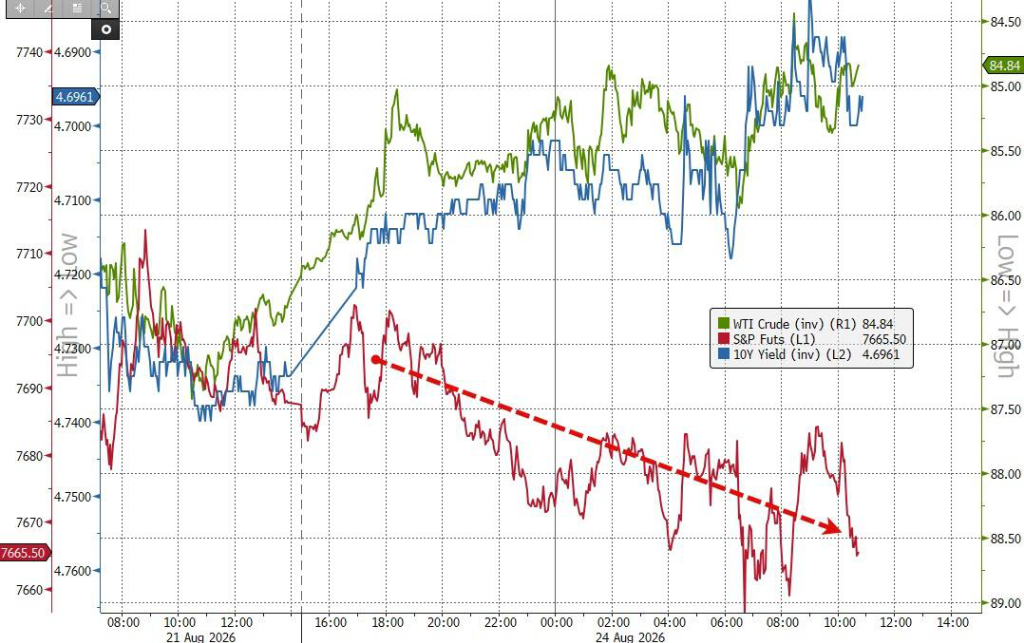
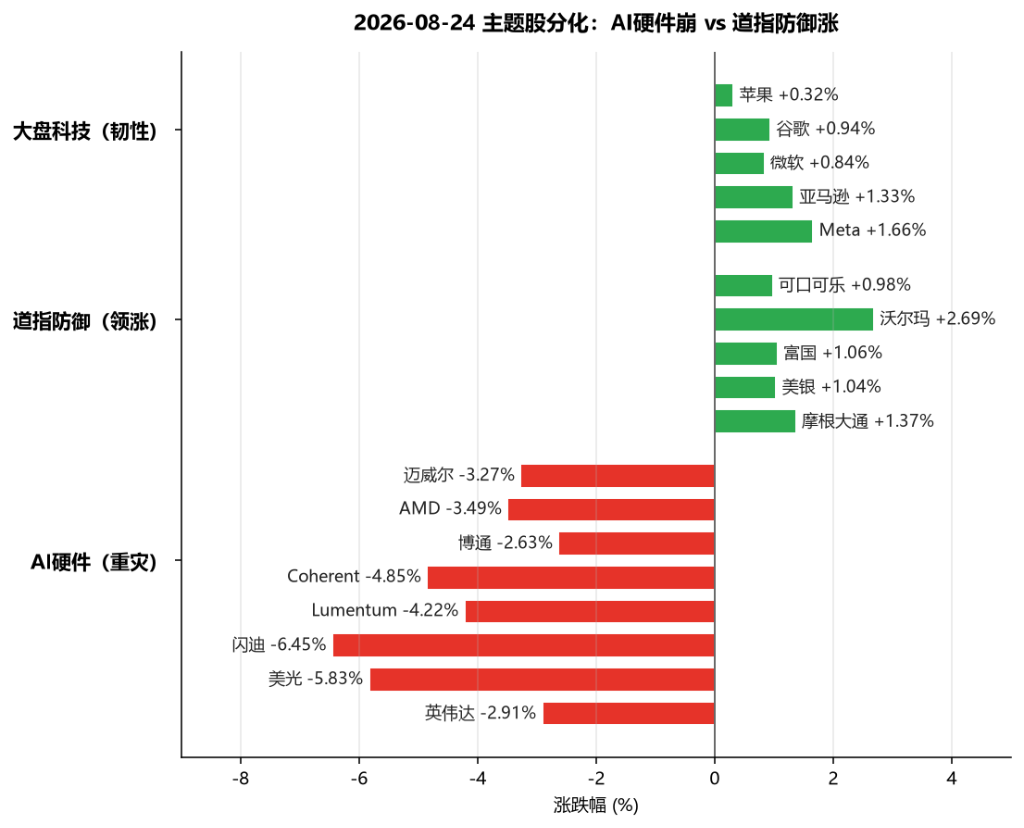
There was a clear divergence within U.S. stocks. The heavy slump in AI hardware stocks dragged down the Nasdaq to lead the decline, with NVIDIA falling for the seventh consecutive session, marking its longest losing streak since September 2022. Memory and optical communication were the hardest-hit areas.
The Dow Jones, however, managed a two-day rally against the trend, supported by defensive stocks in financials and consumer staples. Walmart rose 2.69% and JPMorgan Chase rose 1.37%. Among mega-cap tech stocks, Meta rose 1.66% and Amazon rose 1.33%, also showing resilience.
Cross-asset, the simultaneous decline in bond yields and oil prices coexisted with the rise of gold, the U.S. dollar, and Bitcoin, reflecting a tug-of-war between concerns over fiscal sustainability and geopolitical safe-haven demand. The U.S. Dollar Index edged up 0.20% to 98.93, still below the 99 mark.
This week is a "critical week" with NVIDIA's earnings report after the close on Wednesday, Fed Chair Wash's speech at Jackson Hole on Friday, and the release of July core PCE data, which may amplify market volatility.
AI Hardware Continues Plunge, NVIDIA's Seven-Day Losing Streak Longest Since 2022, Nasdaq Leads Decline
AI hardware stocks continued their plunge, dragging down U.S. stock trading on Monday. The Nasdaq closed down 0.76% at 25,980.19 points, leading the decline among the three major indices, while the Philadelphia Semiconductor Index fell nearly 4%.
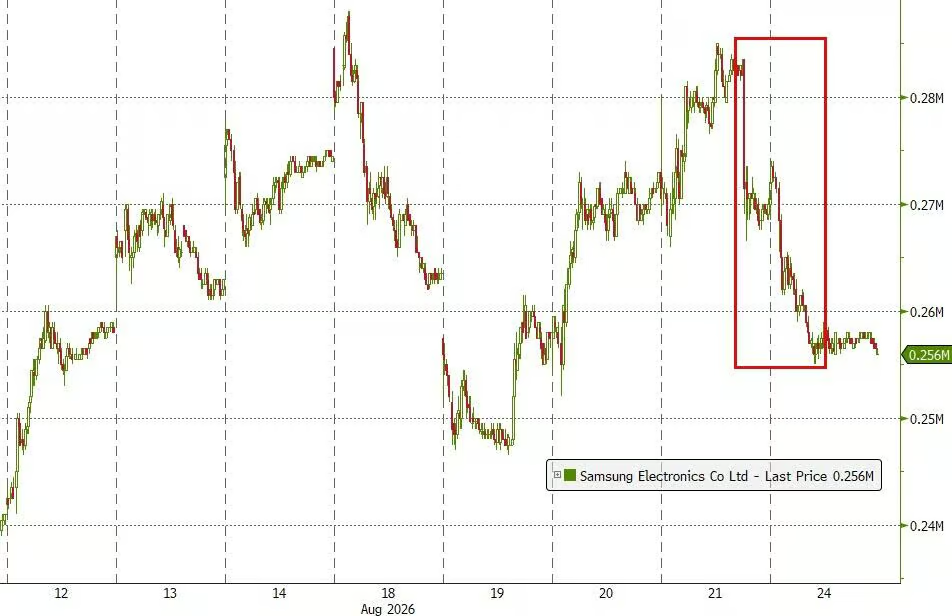
Samsung Electronics' weekend slump of over 8% due to a shareholder return plan falling short of expectations became the trigger for the continued plunge in memory chip stocks on Monday.
NVIDIA extended its risk-off sell-off ahead of earnings, closing down 2.91% at $208.48, marking its seventh consecutive day of decline and its longest losing streak since September 2022. The cumulative decline over this period reached about 7%, while its credit default swap spread also rose to a record high.
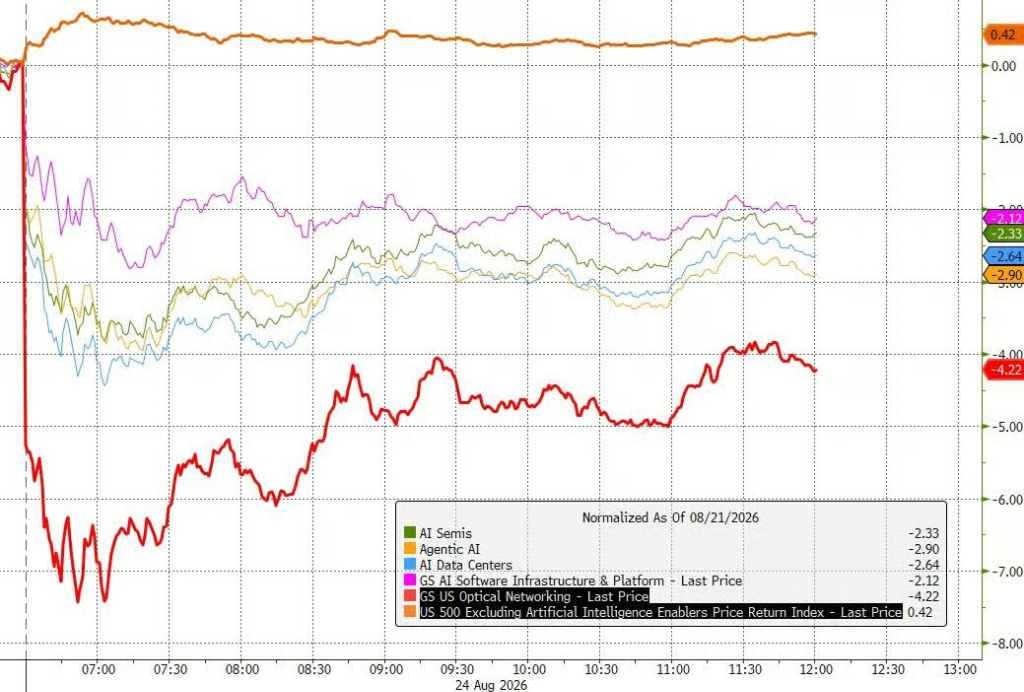
Memory and optical communication sectors were the hardest hit. SanDisk closed down 6.45%, Micron Technology fell 5.83%, Seagate Technology fell over 6%, and SK Hynix fell nearly 5%; Applied Optoelectronics plunged about 14% intraday after announcing its third ATM offering of $600 million this year, raising concerns about cash flow.
In the optical communication sector, Lumentum fell 4.22%, Coherent fell 4.85%, and Ciena fell 6.02%.
Broadcom's CDS hitting a new high intensified "phantom leverage" concerns. Broadcom closed down 2.63%. Its 5-year credit default swap price rose 28 basis points since August, surpassing the increases for Oracle and SpaceX. The yield on its bonds maturing in 2031 rose 14 basis points over the same period.
JPMorgan strategist Tarek Hamid warned that the off-balance-sheet credit support for the AI ecosystem, such as lease contracts, purchase commitments, and residual value guarantees, could ultimately reach "trillions of dollars."
Adding pressure to the AI trade were cracks in fundamentals. On one hand, NVIDIA, due to soaring costs of memory chips like HBM, has notified hyperscale customers such as Microsoft, Google, and Oracle that AI server prices will increase by more than 15% starting next year.
On the other hand, the divergence between the Silicon Valley Data Center LLM token spending index and the S&P 500 excluding AI Enablers index indicates intensifying pressure from "unit cost collapse" facing AI software commercialization.
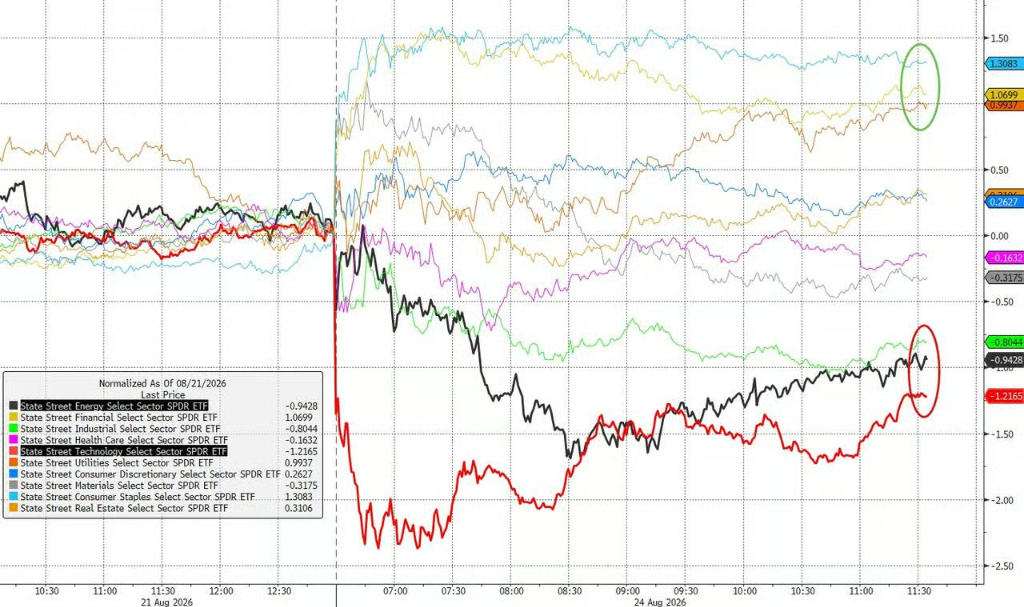
BTIG strategist Jonathan Krinsky highlighted near-term risks. The scenario where both Technology and Energy sectors fall more than 1% has occurred only 14 times in the past two years and only twice this year. The S&P 500 averaged a decline of 0.80% the next day with a 71.4% probability of decline. He suggested traders monitor whether a "day with over 80% of NYSE stocks declining" materializes to determine if it is a true de-risking move or a sector rotation.
Dow Gains Two Days Against Trend, Financials and Consumer Staples Lead, Mega-Cap Tech Relatively Resilient
Against the backdrop of declines in both the Nasdaq and the S&P 500, the Dow Jones Industrial Average rose 0.26% against the trend to close at 53,417.16 points, marking its second consecutive gain and refreshing a recent high.
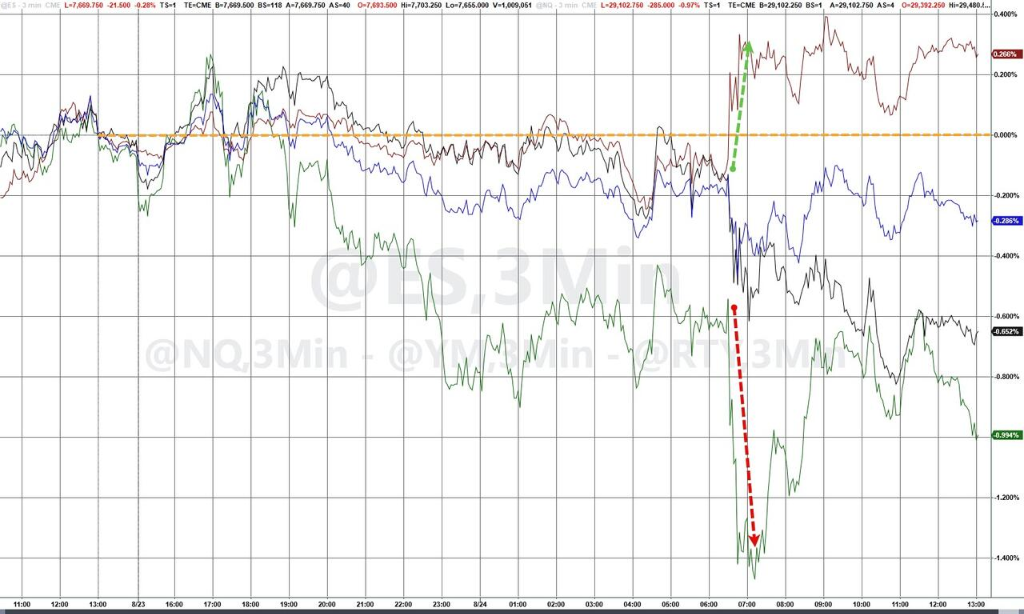
This was underpinned by a rotation of funds out of the AI hardware sector into defensive sectors like Financials and Consumer Staples, as well as into mega-cap tech leaders.
The Financials sector became the backbone of the Dow's gains. JPMorgan Chase closed up 1.37%, Bank of America rose 1.04%, and Wells Fargo rose 1.06%. The market anticipates Fed Chair Wash's Jackson Hole speech may signal a hawkish tilt, which could benefit banks' net interest margins.
The Consumer Staples sector also performed steadily, with Walmart closing up 2.69% to hit a recent high, and Coca-Cola up 0.98%. Barchart data shows its year-to-date gain of about 33% has outperformed the entire Mag 7 basket.
Mega-cap tech leaders performed starkly differently from AI hardware. Meta closed up 1.66%, Amazon rose 1.33%, Microsoft rose 0.84%, Google rose 0.94%, and Apple rose 0.32%. Funds flowing out of richly valued AI hardware sub-sectors like memory and optical communication moved into large tech platforms with stable cash flows and relatively reasonable valuations. Tesla bucked the trend, falling 3.83%, making it the weakest performer among the Mag 7.
The underlying logic of the sector rotation is internal divergence within the "AI trade." Concepts such as optical communication, memory chips, and HBM, which have been leading gains this year, are now facing the test of earnings delivery, while previously lagging financials, consumer staples, and cash-cow mega-cap tech are gaining relative appeal.
The intraday divergence among the eleven major sectors was clear — Financials gained about 1.07% and Consumer Staples rose 0.26% to lead gains, while the Technology sector fell 1.22% and the Energy sector fell over 1% to lead declines, highlighting a pronounced structural feature.
Bessente Eyes TGA Trillion for Bond Buys, Bond Yields and Oil Prices Both Drop
Bond yields and oil prices retreated simultaneously on Monday.
As mentioned by Wall Street News, U.S. Treasury Secretary Bessente said on Monday local time that the U.S. Treasury will conduct its next bond buyback operation on September 9 and hinted that subsequent operations will continue.
Earlier on Monday, U.S. media cited a Treasury official saying the U.S. Treasury is considering using funds from the Treasury General Account (TGA), which is close to $1 trillion in size, to fund its recently expanded Treasury bond buyback plan. However, the official did not disclose how much the Treasury would ultimately use or when it would begin. Related reports indicate the TGA's current size is approximately $950 billion.
The 10-year Treasury yield fell about 3 basis points intraday to 4.70%, the 30-year yield fell about 2 basis points to 5.25%, and the 2-year yield fell about 1 basis point to 4.22%, with the yield curve flattening notably.
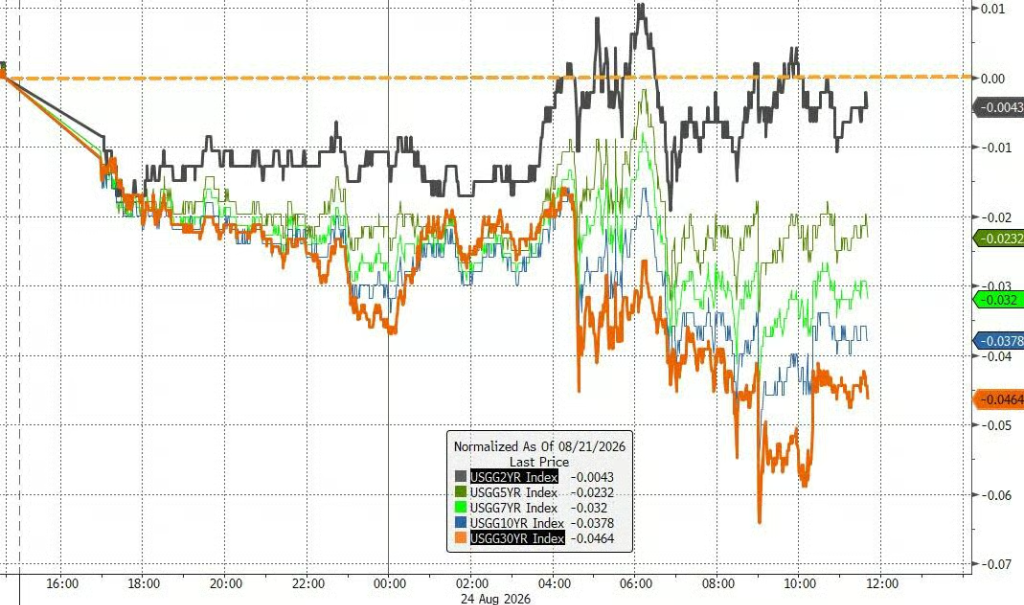
However, the decline in bond yields provided limited relief to the AI sell-off. Morgan Stanley rates strategist Martin Tobias stated in a phone interview that the Treasury could raise $80 billion to $200 billion from the Fed's cash reserves to expand buybacks, which is precisely the "signal" Bessente wants to convey.
But Goldman Sachs strategists George Cole and William Marshall explicitly countered in an August 21 research report, "Treasury bond buybacks are unlikely to fundamentally reset interest rate levels," because the underlying causes of long-end volatility, such as U.S. economic resilience and the reassessment of the Fed's policy path, remain unresolved.
Societe Generale and Deutsche Bank similarly believe the yield curve will still steepen, which contradicts Bessente's goal of lowering long-end rates through bond purchases; Citi believes the 20-year Treasury may benefit the most from reduced auction sizes.