Behind the 2000 BTC Incident: The Fundamental Problem of CEX Ledgers

marsbitPublicado a 2026-02-10Actualizado a 2026-02-10

Resumen

On February 6, Korean crypto exchange Bithumb mistakenly distributed 2,000 BTC (worth approximately $1.6 million at the time) to each of 249 users due to a unit configuration error in a promotional event, instead of the intended 2,000 KRW (about $1.4). The total erroneous distribution amounted to 62,000 BTC, with a notional value of $41.5–44 billion, far exceeding Bithumb’s actual Bitcoin holdings of 42,600 BTC. Although Bithumb recovered over 99% of the misallocated funds within 35 minutes by freezing accounts and covering the remainder with company assets, the incident exposed a fundamental flaw in centralized exchanges (CEXs): their reliance on internal ledgers that are decoupled from on-chain assets. Unlike decentralized exchanges, where transactions occur on-chain, CEXs use internal databases to record user balances, allowing instant—but potentially unbacked—asset entries. This creates systemic risk, as seen in historical failures like Mt. Gox (where internal ledger mismasks hid massive theft) and FTX (where customer funds were secretly diverted). The event underscores the trust asymmetry in CEXs: users see balances as real assets, but they are merely IOU promises. The Korean Financial Supervisory Service has since launched inspections, signaling heightened regulatory scrutiny. Bithumb’s near-disaster serves as a critical reminder of the inherent vulnerabilities in CEXs’ accounting models.

Original | Odaily Planet Daily (@OdailyChina)

Author | Ding Dang (@XiaMiPP)
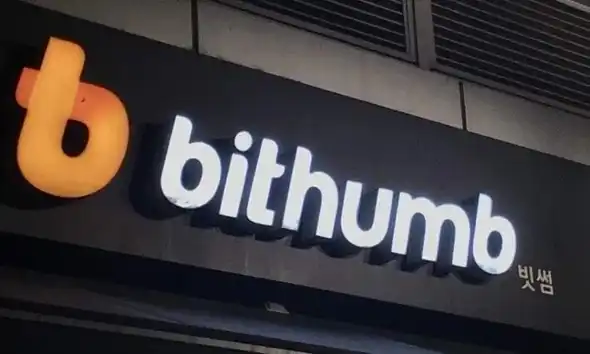
On the evening of February 6, during a routine marketing event, the Korean cryptocurrency exchange Bithumb created an incident significant enough to be recorded in the annals of the crypto industry.

This was originally just a very small-scale "random treasure chest" event. According to the official design, the platform planned to distribute cash rewards totaling approximately 620,000 KRW to 695 participating users. Among them, 249 users actually opened the treasure chests and claimed the rewards, which amounted to about 2000 KRW per person, equivalent to just $1.4 USD. However, due to a backend unit configuration error, the reward unit was mistakenly set to BTC (Bitcoin) instead of KRW (Korean Won). This instantly resulted in an "airdrop" of 2000 BTC to each user who opened a chest, totaling 620,000 BTC. The displayed assets in a single account exceeded $160 million USD.

At the then price of about 98 million KRW per BTC (approximately $67,000 USD), the book value of these "out-of-thin-air" bitcoins was about $41.5–44 billion USD. Although these assets did not exist on-chain, they were "tradable" within the exchange's internal system. The consequences were almost immediate: the BTC/KRW trading pair on the Bithumb platform plummeted from the global average price to 81.11 million KRW (about $55,000 USD) within just over ten minutes, a drop of nearly 17%; the global BTC market also briefly fell by about 3%, and over $400 million was liquidated in the derivatives market.

Bithumb's "Swift Recovery": Is It Really Something to Celebrate?

In a subsequent incident disclosure announcement, Bithumb stated that within 35 minutes of the erroneous payment, it had restricted transactions and withdrawals for the 695 affected customers. Over 99% of the erroneously paid amount has been recovered, and the remaining 0.3% (1788 BTC) that had been sold was covered by the company's own assets, ensuring no impact on user assets. Simultaneously, the platform launched a series of compensation measures. Starting February 8, user compensation was rolled out in batches, including distributing 20,000 KRW compensation to users online during the incident, refunding the price difference to users who sold at a low price plus an additional 10% consolation payment, and offering a 0% trading fee promotion on all products for 7 days starting February 9.

At this point, the entire incident seemed to have been brought under "control."

But another question still lingers in our minds: Why could Bithumb's backend, in one go, generate 620,000 BTC that simply did not exist?

To answer this question, we must return to the core, yet least understood by average users, layer of centralized exchanges: the accounting method.

Unlike decentralized exchanges where every transaction occurs directly on the blockchain and balances are determined in real-time by the on-chain state, centralized exchanges, in pursuit of extreme trading speed, low latency, and minimal cost, almost universally adopt a hybrid model of "internal ledger + delayed settlement."

The balances, transaction records, and profit/loss charts users see are essentially just numerical changes in the exchange's database. When you deposit, trade, or withdraw, only the parts that truly involve on-chain asset movements (like withdrawing to an external wallet, cross-exchange transfers, large internal settlements) trigger actual blockchain transfer operations. In the vast majority of everyday scenarios, the exchange only needs to modify a single database field internally to complete "one asset change"—this is the fundamental reason why Bithumb was able to instantly "generate out of thin air" 620,000 BTC in displayed balances.

This model offers tremendous convenience: millisecond-order matching, zero Gas fees, support for complex financial products like leverage, contracts, and lending. But the flip side of this convenience is a fatal asymmetry of trust: users believe "my balance is my asset," but in reality, users only possess an IOU (I Owe You) from the platform. As long as the backend permissions are sufficiently broad and the validation mechanisms lax enough, a simple parameter error or malicious operation can cause the numbers in the database to severely disconnect from the real on-chain holdings.

According to data disclosed by Bithumb for the third quarter of 2025, the platform's actual Bitcoin holdings were approximately 42,600 BTC, of which only 175 BTC were company-owned assets, and the rest were user custodial assets. Yet, in this incident, the system was able to credit user accounts with a BTC amount more than ten times the size of its real holdings in one go.

More importantly, these "phantom balances" were not just displayed in the backend; they could participate in real matching within the platform, affect prices, and create a false sense of liquidity. This is no longer just a single-point technical bug, but a systemic risk inherent in the architecture of centralized exchanges: the severe disconnect between the internal ledger and real on-chain assets.

The Bithumb incident is merely a moment when this risk was amplified enough for everyone to see.

Mt.Gox: How Ledger Illusion Once Destroyed an Era

History has repeatedly confirmed this with painful lessons. For example, the collapse of Mt.Gox in 2014. Even though over a decade has passed, we can still remember the market panic caused every time large transfers were made for exchange reimbursements.

Mt.Gox, as the world's largest Bitcoin exchange at the time, once accounted for over 70% of Bitcoin trading volume. However, in February 2014, it suddenly suspended withdrawals and declared bankruptcy, claiming to have "lost" approximately 850,000 BTC (valued at about $460 million at the time, later adjusted in some reports to around 744,000 BTC). On the surface, this was due to hackers exploiting a "transaction malleability" vulnerability in the Bitcoin protocol, altering transaction IDs causing the exchange to mistakenly believe withdrawals hadn't occurred, thus resending funds. But deeper investigations (including reports by security teams like WizSec in 2015) revealed a harsher truth: the vast majority of the lost Bitcoins had been gradually stolen between 2011 and 2013, yet Mt.Gox failed to detect it for years because its internal accounting system never performed regular, comprehensive reconciliations with the on-chain state.

Mt.Gox's internal ledger allowed for "magic transactions": employees or intruders could arbitrarily add or delete user balances without corresponding on-chain transfers. The hot wallet was repeatedly compromised, funds were slowly transferred to unknown addresses, but the platform continued to show "normal balances." It was even rumored that after a major theft in 2011, management chose to conceal it rather than declare bankruptcy, leading to subsequent operations continuing on a "fractional reserve" basis. This ledger illusion was maintained for years until the hole became too large to cover in 2014, using the "transaction malleability bug" as an excuse for the public announcement. Ultimately, Mt.Gox's bankruptcy not only destroyed user trust but also caused Bitcoin's price to plummet over 20%, becoming the most famous case of "trust collapse" in crypto history.

FTX: When the Ledger Becomes a "Cover-Up Tool" Instead of a "Recording Tool"

Recently, due to the popularity of Openclaw, another topic has emerged: the intersection of crypto and AI, which peaked during the FTX era. Before its collapse, FTX had heavily invested in the AI field, its most famous case being leading a hundreds-of-millions-of-dollars funding round for AI startup Anthropic. Had FTX not fallen, its Anthropic stake could be worth tens of billions of dollars today, but bankruptcy liquidation turned this "AI lottery ticket" to dust. The reason for its collapse was that FTX's internal ledger was long and deliberately mismatched with real assets. Through commingling of funds and covert operations, client deposits became a "back garden" that could be freely misappropriated.

FTX was highly intertwined with its quantitative trading sister company, Alameda Research, both controlled by Sam Bankman-Fried (SBF). Alameda's balance sheet was filled with FTT, a native token issued by FTX itself. This asset had little external market anchoring; its value primarily relied on internal liquidity and artificially maintained prices. More critically, the FTX platform granted Alameda nearly unlimited credit lines (disclosed once as high as $65 billion), and the real "collateral" for this line was FTX users' deposits.

These client funds were secretly transferred to Alameda for use in high-leverage trading, venture investments, and even SBF's personal luxury spending, real estate purchases, and political donations. The internal ledger played a "cover-up" role here.

According to court documents, FTX's database could easily record client deposits as "normal balances," while simultaneously using custom code to keep Alameda's accounts in negative balance without triggering any automatic liquidation or risk alerts. The balances users saw in the app seemed safe and reliable, but the actual on-chain assets had long been挪走 (moved away) to fill Alameda's loss holes or prop up the FTT price.

FTX creditor repayments are still not fully resolved, and the bankruptcy liquidation process is still ongoing.

Bithumb's 35 Minutes is Just a Narrow Window

Returning to Bithumb, the fact that this incident was contained within 35 minutes does not掩盖 (mask) the severity of this risk. On the contrary, it precisely illustrates the limits of emergency response: the disaster was only contained within a "can cover the hole out of pocket" scope because the number of affected users was limited (only 695), the erroneous assets had not yet been大规模上链 (moved on-chain on a large scale), and the platform had extremely strong account control capabilities (the ability to freeze trading/withdrawal/login permissions in bulk with one click). Had this blunder occurred at the full platform user level, or if some users had already withdrawn the "phantom coins" to other exchanges or even on-chain, Bithumb could likely triggered a larger-scale systemic shock.

Even regulators have noticed this. On February 9, the Korean Financial Supervisory Service (FSS) stated that the erroneous Bitcoin distribution incident at Bithumb highlights the systemic vulnerabilities existing in the crypto asset field, necessitating further strengthening of regulatory rules. FSS Governor Lee Chan-jin pointed out at a press conference that the incident reflects structural problems in the electronic systems of virtual assets. Regulatory authorities are conducting a key review on this matter and will incorporate related risks into subsequent legislative considerations to promote the inclusion of digital assets into a more完善的 (complete/sound) regulatory framework. An emergency on-site inspection has been launched and explicitly stated it will be expanded to other local exchanges like Upbit and Coinone. This likely means regulators have understood this signal.

Conclusion

Bithumb's $40 billion phantom airdrop, seemingly absurd on the surface, is actually insightful. It laid out a long-standing problem in the most直观的 (intuitive) way. The convenience of centralized exchanges is essentially built on a highly asymmetric trust relationship: users believe the "balance" in their account is equivalent to real assets, but in reality, it is only a unilateral commitment from the platform to the user. Once internal controls fail or are maliciously exploited, 'your balance' can instantly vanish into thin air.

Therefore, even if the Bithumb incident ended "under control," it should not be interpreted as a successful crisis management case, but rather as an alarm bell that must be heard. The speed, low cost, and high liquidity pursued by exchanges are always obtained at the cost of users relinquishing direct control over their assets. As long as this premise is not正视 (acknowledged/faced squarely), similar risks cannot truly disappear.


Preguntas relacionadas

QWhat was the fundamental cause behind Bithumb's accidental distribution of 2000 BTC per user instead of the intended 2000 KRW?

AThe fundamental cause was a backend configuration mistake where the reward unit was incorrectly set to BTC instead of KRW. This error occurred within the exchange's internal ledger system, which allows for the creation of database entries that are not backed by real on-chain assets.

QHow does the internal ledger system of a centralized exchange (CEX) like Bithumb differ from a decentralized exchange (DEX)?

AA CEX uses an 'internal ledger + delayed settlement' model where user balances and transactions are primarily just numerical changes in a database for speed and low cost. Only actions like withdrawals trigger real blockchain transactions. A DEX, in contrast, executes every trade directly on the blockchain, with balances determined by the real-time on-chain state.

QWhat major historical event is cited as an example of the catastrophic failure that can result from a disconnect between an exchange's internal ledger and real assets?

AThe collapse of Mt. Gox in 2014 is cited. Its internal accounting system allowed 'magic transactions' where balances could be altered without corresponding on-chain movements, leading to the loss of hundreds of thousands of Bitcoin that went undetected for years.

QAccording to the article, what role did FTX's internal ledger play in its downfall?

AFTX's internal ledger was used as a 'cover-up tool.' It displayed normal user balances while secretly allowing customer funds to be misappropriated and transferred to its sister company, Alameda Research, for high-risk investments and other uses, creating a massive asset liability mismatch.

QWhy does the article argue that Bithumb's successful recovery of most funds does not eliminate the underlying risk?

AThe recovery was only possible because the error was limited to a small number of users and the 'ghost coins' had not been widely withdrawn on-chain. The article argues this incident exposes a systemic vulnerability in the CEX model where internal ledgers can become severely decoupled from real assets, a risk that remains inherent to the architecture.

Lecturas Relacionadas

Trading

Spot
Futuros

Artículos destacados

Qué es BITCOIN

Entendiendo HarryPotterObamaSonic10Inu (ERC-20) y Su Posición en el Espacio Cripto En los últimos años, el mercado de criptomonedas ha sido testigo de un aumento en la popularidad de las monedas meme, capturando el interés no solo de los comerciantes, sino también de aquellos que buscan compromiso comunitario y valor de entretenimiento. Entre estos tokens únicos se encuentra HarryPotterObamaSonic10Inu (ERC-20), un proyecto intrigante que mezcla referencias culturales en el tejido de las criptomonedas. Este artículo profundiza en los aspectos clave de HarryPotterObamaSonic10Inu, explorando sus mecanismos, ethos impulsado por la comunidad y su relación con el paisaje cripto más amplio. ¿Qué es HarryPotterObamaSonic10Inu (ERC-20)? Como su nombre sugiere, HarryPotterObamaSonic10Inu es una moneda meme construida sobre la blockchain de Ethereum, clasificada bajo el estándar ERC-20. A diferencia de las criptomonedas tradicionales que pueden enfatizar la utilidad práctica o el potencial de inversión, este token prospera en el valor de entretenimiento y la fuerza de su comunidad. El proyecto tiene como objetivo fomentar un entorno donde los usuarios comprometidos puedan reunirse, compartir ideas y participar en actividades inspiradas por diversos fenómenos culturales. Una característica notable de HarryPotterObamaSonic10Inu es su cero impuestos en las transacciones. Este atractivo elemento tiene como objetivo incentivar el comercio y la participación comunitaria, sin cargos adicionales que puedan disuadir a los comerciantes de pequeña escala. El suministro total de la moneda está establecido en mil millones de tokens, una cifra que marca su intención de mantener una circulación sustancial dentro de la comunidad. Creador de HarryPotterObamaSonic10Inu (ERC-20) Los orígenes de HarryPotterObamaSonic10Inu están algo envueltos en misterio; los detalles sobre el creador siguen siendo desconocidos. El desarrollo de este token carece de un equipo identificable o de un plan explícito, lo cual no es inusual dentro del sector de monedas meme. En cambio, el proyecto ha surgido de manera orgánica, con su progreso muy dependiente del entusiasmo y la participación de su comunidad. Inversores de HarryPotterObamaSonic10Inu (ERC-20) En cuanto a inversiones externas y respaldo, HarryPotterObamaSonic10Inu también sigue siendo ambiguo. El token no lista ninguna fundación de inversión conocida o apoyo organizacional significativo. En cambio, la savia del proyecto es su comunidad de base, que informa su crecimiento y sostenibilidad a través de la acción colectiva y el compromiso en el espacio cripto. ¿Cómo Funciona HarryPotterObamaSonic10Inu (ERC-20)? Como una moneda meme, HarryPotterObamaSonic10Inu opera principalmente fuera de los marcos tradicionales que a menudo rigen el valor de los activos. Hay varios aspectos distintivos que definen cómo funciona el proyecto: Transacciones Sin Impuestos: Sin tarifas impositivas en las transacciones, los usuarios pueden comprar y vender el token libremente sin preocuparse por costos ocultos. Compromiso Comunitario: El proyecto prospera en la interacción comunitaria, aprovechando plataformas de redes sociales para crear entusiasmo y facilitar la participación. Las discusiones, el intercambio de contenido y el compromiso son elementos cruciales que ayudan a expandir su alcance y fomentar la lealtad entre los seguidores. Sin Utilidad Práctica: Cabe señalar que HarryPotterObamaSonic10Inu no ofrece utilidad concreta dentro del ecosistema financiero. Más bien, se clasifica como un token principalmente para actividades de entretenimiento y comunitarias. Referencia Cultural: El token incorpora astutamente elementos de la cultura popular para atraer interés, conectando con entusiastas de los memes y seguidores de las criptomonedas por igual. HarryPotterObamaSonic10Inu ejemplifica cómo las monedas meme operan de manera diferente a los proyectos de criptomonedas más tradicionales, ingresando al mercado como construcciones sociales innovadoras en lugar de activos utilitarios. Cronología de HarryPotterObamaSonic10Inu (ERC-20) La historia de HarryPotterObamaSonic10Inu está marcada por varios hitos notables: Creación: El token surgió de un meme viral, capturando la imaginación de muchos entusiastas de las criptomonedas. Las fechas específicas de creación no están disponibles, subrayando su ascenso orgánico. Listado en Exchanges: HarryPotterObamaSonic10Inu ha llegado a varios exchanges, permitiendo un acceso y comercio más fácil por parte de la comunidad. Iniciativas de Compromiso Comunitario: Actividades continuas destinadas a mejorar la interacción comunitaria, incluyendo concursos, campañas en redes sociales y generación de contenido por parte de fanáticos y defensores. Planes de Expansión Futuros: La hoja de ruta del proyecto incluye el lanzamiento de una colección de NFT, mercancía y un sitio de comercio electrónico relacionado con sus temas culturales, involucrando aún más a la comunidad e intentando añadir más dimensiones a su ecosistema. Puntos Clave Sobre HarryPotterObamaSonic10Inu (ERC-20) Naturaleza Impulsada por la Comunidad: El proyecto prioriza la participación colectiva y la creatividad, asegurando que la involucración de los usuarios esté a la vanguardia de su desarrollo. Clasificación como Moneda Meme: Representa la epítome de las criptomonedas basadas en el entretenimiento, diferenciándose de los vehículos de inversión tradicionales. Sin Afiliación Directa con Bitcoin: A pesar de la similitud en el nombre del ticker, HarryPotterObamaSonic10Inu es distinto y no tiene relación con Bitcoin u otras criptomonedas establecidas. Enfoque en la Colaboración: HarryPotterObamaSonic10Inu está diseñado para crear un espacio para la colaboración y el intercambio de historias entre sus poseedores, proporcionando una vía para la creatividad y el vínculo comunitario. Perspectivas Futuras: La ambición de expandirse más allá de su premisa inicial hacia NFTs y mercancías describe un camino para que el proyecto potencialmente ingrese a avenidas más tradicionales dentro de la cultura digital. A medida que las monedas meme continúan capturando la imaginación de la comunidad de criptomonedas, HarryPotterObamaSonic10Inu (ERC-20) se destaca debido a sus lazos culturales y su enfoque centrado en la comunidad. Si bien puede no encajar en el molde típico de un token impulsado por la utilidad, su esencia radica en la alegría y la camaradería fomentadas entre sus seguidores, destacando la naturaleza en evolución de las criptomonedas en una era cada vez más digital. A medida que el proyecto continúa desarrollándose, será importante observar cómo las dinámicas comunitarias influyen en su trayectoria en el cambiante paisaje de la tecnología blockchain.

1.3k Vistas totalesPublicado en 2024.04.01Actualizado en 2024.12.03

Qué es BITCOIN

Cómo comprar BTC

¡Bienvenido a HTX.com! Hemos hecho que comprar Bitcoin (BTC) sea simple y conveniente. Sigue nuestra guía paso a paso para iniciar tu viaje de criptos.Paso 1: crea tu cuenta HTXUtiliza tu correo electrónico o número de teléfono para registrarte y obtener una cuenta gratuita en HTX. Experimenta un proceso de registro sin complicaciones y desbloquea todas las funciones.Obtener mi cuentaPaso 2: ve a Comprar cripto y elige tu método de pagoTarjeta de crédito/débito: usa tu Visa o Mastercard para comprar Bitcoin (BTC) al instante.Saldo: utiliza fondos del saldo de tu cuenta HTX para tradear sin problemas.Terceros: hemos agregado métodos de pago populares como Google Pay y Apple Pay para mejorar la comodidad.P2P: tradear directamente con otros usuarios en HTX.Over-the-Counter (OTC): ofrecemos servicios personalizados y tipos de cambio competitivos para los traders.Paso 3: guarda tu Bitcoin (BTC)Después de comprar tu Bitcoin (BTC), guárdalo en tu cuenta HTX. Alternativamente, puedes enviarlo a otro lugar mediante transferencia blockchain o utilizarlo para tradear otras criptomonedas.Paso 4: tradear Bitcoin (BTC)Tradear fácilmente con Bitcoin (BTC) en HTX's mercado spot. Simplemente accede a tu cuenta, selecciona tu par de trading, ejecuta tus trades y monitorea en tiempo real. Ofrecemos una experiencia fácil de usar tanto para principiantes como para traders experimentados.

4.7k Vistas totalesPublicado en 2024.12.12Actualizado en 2025.03.21

Cómo comprar BTC

Qué es $BITCOIN

ORO DIGITAL ($BITCOIN): Un Análisis Integral Introducción al ORO DIGITAL ($BITCOIN) ORO DIGITAL ($BITCOIN) es un proyecto basado en blockchain que opera en la red Solana, cuyo objetivo es combinar las características de los metales preciosos tradicionales con la innovación de las tecnologías descentralizadas. Aunque comparte un nombre con Bitcoin, a menudo referido como “oro digital” debido a su percepción como un refugio de valor, ORO DIGITAL es un token separado diseñado para crear un ecosistema único dentro del paisaje Web3. Su meta es posicionarse como un activo digital alternativo viable, aunque los detalles sobre sus aplicaciones y funcionalidades aún están en desarrollo. ¿Qué es ORO DIGITAL ($BITCOIN)? ORO DIGITAL ($BITCOIN) es un token de criptomoneda diseñado explícitamente para su uso en la blockchain de Solana. A diferencia de Bitcoin, que proporciona un papel de almacenamiento de valor ampliamente reconocido, este token parece centrarse en aplicaciones y características más amplias. Aspectos notables incluyen: Infraestructura Blockchain: El token está construido sobre la blockchain de Solana, conocida por su capacidad para manejar transacciones de alta velocidad y bajo costo. Dinámicas de Suministro: ORO DIGITAL tiene un suministro máximo limitado a 100 cuatrillones de tokens (100P $BITCOIN), aunque los detalles sobre su suministro circulante no se han divulgado actualmente. Utilidad: Si bien las funcionalidades precisas no están delineadas explícitamente, hay indicios de que el token podría ser utilizado para diversas aplicaciones, potencialmente involucrando aplicaciones descentralizadas (dApps) o estrategias de tokenización de activos. ¿Quién es el Creador de ORO DIGITAL ($BITCOIN)? En la actualidad, la identidad de los creadores y el equipo de desarrollo detrás de ORO DIGITAL ($BITCOIN) sigue siendo desconocida. Esta situación es típica entre muchos proyectos innovadores dentro del espacio blockchain, particularmente aquellos alineados con las finanzas descentralizadas y fenómenos de monedas meme. Si bien tal anonimato puede fomentar una cultura impulsada por la comunidad, intensifica las preocupaciones sobre la gobernanza y la responsabilidad. ¿Quiénes son los Inversores de ORO DIGITAL ($BITCOIN)? La información disponible indica que ORO DIGITAL ($BITCOIN) no tiene patrocinadores institucionales conocidos ni inversiones destacadas de capital de riesgo. El proyecto parece operar en un modelo de peer-to-peer centrado en el apoyo y la adopción de la comunidad en lugar de rutas de financiamiento tradicionales. Su actividad y liquidez se sitúan principalmente en intercambios descentralizados (DEX), como PumpSwap, en lugar de plataformas de trading centralizadas establecidas, lo que resalta aún más su enfoque de base. Cómo Funciona ORO DIGITAL ($BITCOIN) Los mecanismos operativos de ORO DIGITAL ($BITCOIN) pueden elaborarse en función de su diseño blockchain y atributos de red: Mecanismo de Consenso: Al aprovechar el único proof-of-history (PoH) de Solana combinado con un modelo de proof-of-stake (PoS), el proyecto asegura una validación de transacciones eficiente que contribuye al alto rendimiento de la red. Tokenómica: Si bien los mecanismos deflacionarios específicos no se han detallado extensamente, el vasto suministro máximo de tokens implica que podría atender microtransacciones o casos de uso nicho que aún están por definirse. Interoperabilidad: Existe el potencial de integración con el ecosistema más amplio de Solana, incluyendo varias plataformas de finanzas descentralizadas (DeFi). Sin embargo, los detalles sobre integraciones específicas permanecen no especificados. Cronología de Eventos Clave Aquí hay una cronología que destaca hitos significativos relacionados con ORO DIGITAL ($BITCOIN): 2023: El despliegue inicial del token ocurre en la blockchain de Solana, marcado por su dirección de contrato. 2024: ORO DIGITAL gana visibilidad al estar disponible para trading en intercambios descentralizados como PumpSwap, permitiendo a los usuarios comerciar contra SOL. 2025: El proyecto presencia actividad de trading esporádica y potencial interés en compromisos liderados por la comunidad, aunque no se han documentado asociaciones notables o avances técnicos hasta el momento. Análisis Crítico Fortalezas Escalabilidad: La infraestructura subyacente de Solana soporta altos volúmenes de transacciones, lo que podría mejorar la utilidad de $BITCOIN en varios escenarios de transacción. Accesibilidad: El potencial bajo precio de trading por token podría atraer a inversores minoristas, facilitando una participación más amplia debido a oportunidades de propiedad fraccionada. Riesgos Falta de Transparencia: La ausencia de patrocinadores, desarrolladores o un proceso de auditoría conocidos públicamente puede generar escepticismo sobre la sostenibilidad y confiabilidad del proyecto. Volatilidad del Mercado: La actividad de trading depende en gran medida del comportamiento especulativo, lo que puede resultar en una volatilidad de precios significativa y en incertidumbre para los inversores. Conclusión ORO DIGITAL ($BITCOIN) surge como un proyecto intrigante pero ambiguo dentro del ecosistema de Solana en rápida evolución. Si bien intenta aprovechar la narrativa del “oro digital”, su alejamiento del papel establecido de Bitcoin como refugio de valor subraya la necesidad de una diferenciación más clara de su utilidad y estructura de gobernanza previstas. La aceptación y adopción futura dependerán probablemente de abordar la actual opacidad y de definir sus estrategias operativas y económicas de manera más explícita. Nota: Este informe abarca información sintetizada disponible hasta octubre de 2023, y pueden haber ocurrido desarrollos más allá del período de investigación.

83 Vistas totalesPublicado en 2025.05.13Actualizado en 2025.05.13

Qué es $BITCOIN

Discusiones

Bienvenido a la comunidad de HTX. Aquí puedes mantenerte informado sobre los últimos desarrollos de la plataforma y acceder a análisis profesionales del mercado. A continuación se presentan las opiniones de los usuarios sobre el precio de BTC (BTC).

活动图片













