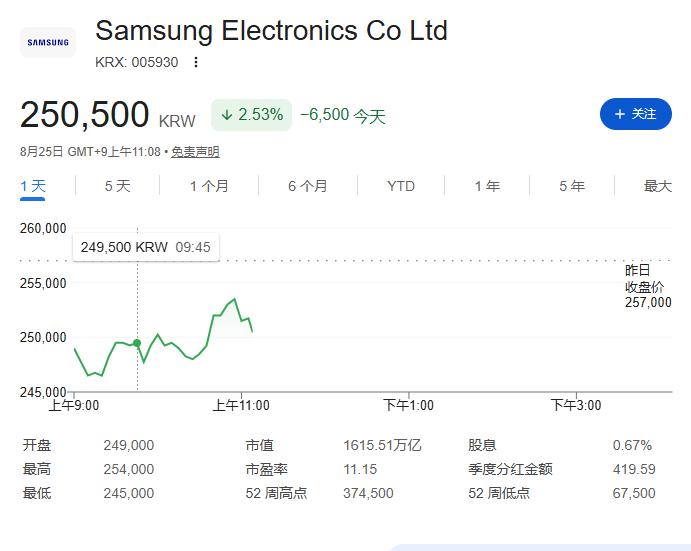
South Korean memory chip giants Samsung Electronics and SK Hynix fell sharply on Monday, dragging the benchmark KOSPI index down by more than 4% at one point and putting pressure on technology stocks across the Asia-Pacific region. Market sentiment turned cautious as investors trimmed their exposure to tech shares, awaiting Nvidia's earnings report this week for a key signal on the outlook for artificial intelligence-related trading.
On August 25, Samsung Electronics saw its intraday drop exceed 4%, while SK Hynix's decline at one point exceeded 6%. Together, they contributed the most to a 0.5% decline in the MSCI Asia Pacific Index, though their losses have since narrowed. Pressure on Samsung's stock price partly stemmed from a shareholder return plan announced last Friday that fell short of market expectations—despite the company announcing it would return between 90 trillion and 110 trillion won (approximately $65 billion to $80 billion) to shareholders this year, about five times the record set in 2020, analysts noted the scale still fell short of market estimates and lacked direct stock price-boosting measures like treasury stock cancellation.
SK Hynix also faces internal pressure. The company's union members on Tuesday rejected a tentative wage agreement, with 50.08% of the 15,045 employees who voted casting 'no' ballots. The agreement included a 6.3% pay raise and revisions to a profit-sharing bonus scheme—40% to be paid in cash and 60% in company stock. The union is expected to restart wage negotiations with management.
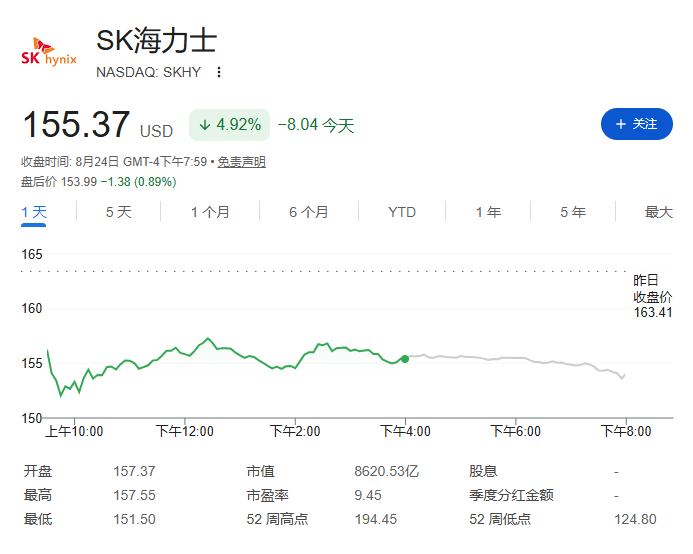
The decline in Asia-Pacific tech stocks extended losses from Wall Street's previous session. On Monday, major U.S. semiconductor stocks faced selling pressure, with the Nasdaq 100 index falling nearly 1%, and Nvidia recording its longest losing streak since 2022. Nvidia is scheduled to report earnings this Wednesday, and the market will closely watch whether its results can halt the recent weakness in chip stocks.
South Korean Stocks Rebound After Plunge, Japanese Stocks Recover and Turn Positive
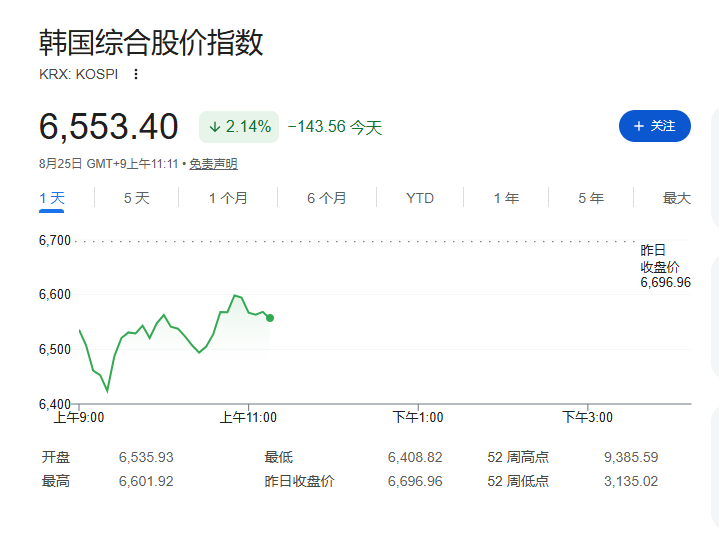
The KOSPI index showed a pronounced 'deep V' pattern intraday, plunging 4.3% to 6,408.82 points before recovering somewhat. At the time of writing, the KOSPI was trading at 6,531.74 points, down 2.14%; Samsung Electronics fell about 3%, while SK Hynix dropped about 5%.
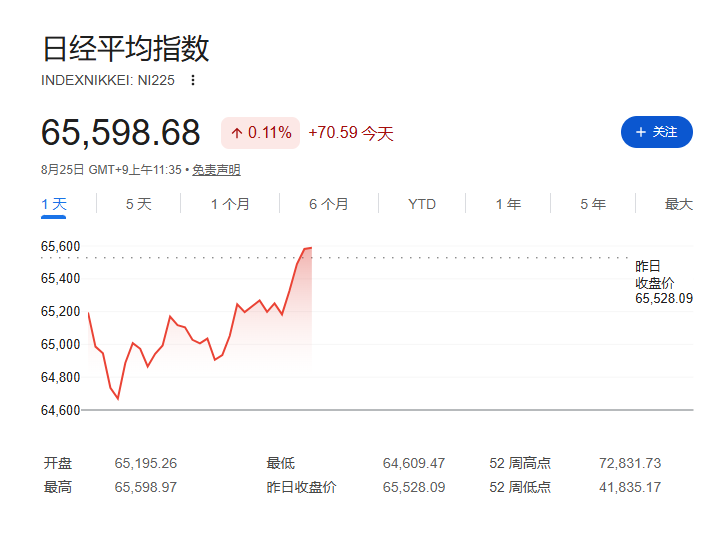
Japanese stocks also opened lower and fell, with the Nikkei 225 Index declining 0.9%, but it recovered and turned positive during the session. Among individual stocks, Kioxia Holdings fell nearly 3%, while Advantest and Panasonic Holdings both fell more than 3%. On the news front, former Bank of Japan Policy Board member Makoto Ando said the BOJ is likely to raise interest rates next month and could hike again as early as January next year. He warned that if the central bank maintains its current policy, it could trigger another round of yen selling, pushing up import costs and accelerating inflation. "The BOJ is essentially backed into a corner, and the market has almost fully priced in a rate hike. If the BOJ doesn't hike, the yen could weaken significantly again."
U.S. Treasury Yields Volatile at High Levels, Bitcoin Rises Above $80,000
U.S. Treasury yields remained elevated, with the 10-year yield at 4.71%. Earlier reports suggested the U.S. Treasury might use its cash reserves to buy back older, high-yielding debt to lower borrowing costs, but Treasury Secretary Scott Bessent later gave no clear signals about changes in debt management in his remarks. "We haven't bought a single bond yet," Bessent said in response to a question at a press conference.
Gold edged lower, with spot gold down 0.2% to around $4,640 per ounce. Gold had earlier climbed to its highest level since May, supported by dollar weakness concerns stemming from Federal Reserve intervention in the bond market. Bitcoin rose for a third consecutive day, breaking above $80,000 for the first time since mid-May. According to Bloomberg strategist Mark Cranfield, the simultaneous strength in gold and cryptocurrencies both point to shared market concerns about the long-term weakening outlook for the U.S. dollar.

Nvidia Earnings and Jackson Hole Conference Form Dual Focus This Week
According to Bloomberg, investors are weighing geopolitical risks against a busy week of economic data and corporate earnings, with the outlook for technology stocks becoming a key variable testing overall risk sentiment. Nvidia's earnings are seen as a crucial barometer for confidence in AI-related trading, which has faced pressure in recent months as investor doubts deepen over whether massive AI spending will translate into corresponding profits.
Chris Larkin of Morgan Stanley's E*Trade said: "Details of U.S. economic sanctions on Iran, the Treasury's efforts to lower long-term yields, and economic data will largely shape the market's sentiment backdrop. But earnings from Nvidia and other tech stocks will be a significant weight influencing market momentum."
Richard Reyle, Chief Investment Officer at Questar Capital Partners, noted that Nvidia's earnings and Federal Reserve Chair Kevin Warsh's scheduled speech on Friday at the Jackson Hole symposium form the two pillars for markets this week. "These two things are usually unrelated, but Nvidia needs to deliver strong results to steady one leg of the stock market, while Warsh needs to provide clear guidance on the direction of interest rates to steady the other leg."