Why Did Gold Surge in August? Employment, Inflation, and Oil Prices Are Tugging at the Fed

Publicado a 2026-08-25Actualizado a 2026-08-25

Resumen

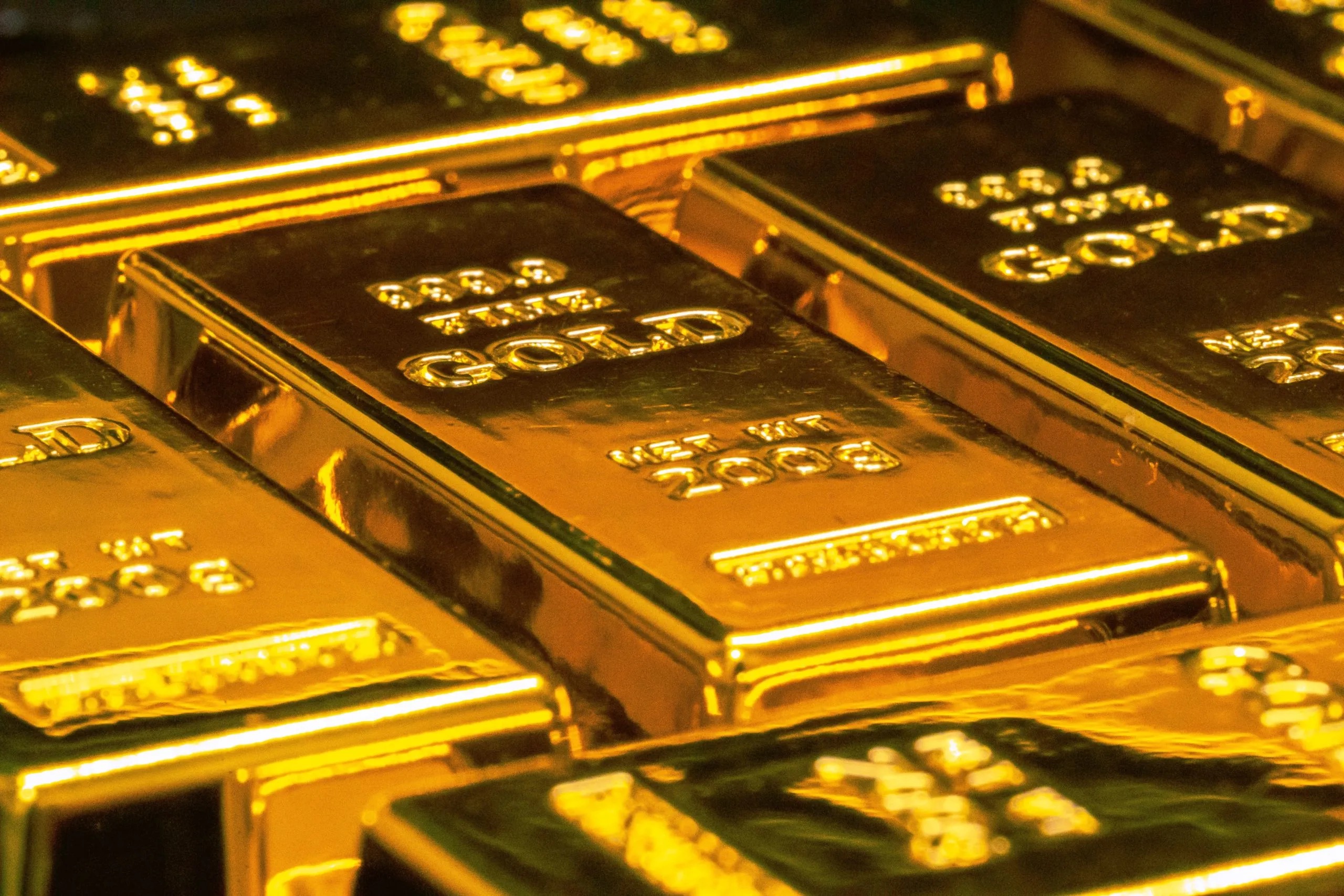
Gold rose by approximately 11% in August, marking the second strongest month of the year. Weak employment figures and cooling inflation have reduced the likelihood of interest rate hikes, with a retreat in the US dollar and Treasury yields further fueling the rally; however, high oil prices may push inflation up again, potentially leading the Federal Reserve to adopt a more hawkish stance.

The rally in gold in August did not appear suddenly as an isolated market move. As of the time of writing by CNBC-TV18, the price of gold has risen by approximately 11% this month, second only to the gain of about 13% in January. The core change driving this market action is a significant reduction in market expectations for a Federal Reserve interest rate hike in September.

Employment Data First Altered Rate Expectations

At the beginning of August, the market believed the probability of a Fed rate hike in September exceeded 70%. Subsequently, the released U.S. employment report was significantly weaker than expected, leading investors to question whether the economy could withstand further tightening. Consequently, the probability of a rate hike fell rapidly.

The impact of weaker employment on gold is not directly from risk aversion sentiment but is transmitted through interest rate expectations. The market perceives the Fed as having greater difficulty raising rates, leading to a decline in bond yields, which increases the attractiveness of gold relative to bonds.

Cooling Inflation Provided a Second Push for Gold

Subsequent data on consumer and producer prices showed that inflationary pressures, excluding energy influences, were lower than market concerns earlier. By the time of the report's publication, the probability of a September rate hike had dropped to about 32%. The simultaneous retreat of the U.S. dollar and Treasury yields further amplified gold's gains.

A weaker dollar reduces the cost of gold for overseas buyers, while falling yields decrease the opportunity cost of holding gold. The simultaneous appearance of these two transmission channels explains why gold prices were able to break through key levels continuously in a short period.

Oil Prices Can Be Both Positive and Negative for Gold

High oil prices and Middle East risks typically increase safe-haven demand and also strengthen stagflation trades, seemingly beneficial for gold. However, persistently rising oil prices can also push up overall inflation, forcing the Fed to reconsider rate hikes. If yields and the dollar rebound as a result, gold could face pressure instead.

This is also the most important contradiction for subsequent market trends: weakening economic data and cooling core inflation support the Fed's decision to hold steady, while energy prices and geopolitical risks could cause inflation to flare up again.

Gold's rally in August has a clear macroeconomic foundation, but the market has already traded to higher price levels based on "reduced rate hike probability." Going forward, data must continue to support a dovish policy for gold prices to stabilize after the breakout; if inflation unexpectedly rebounds or the Fed's stance turns hawkish, profit-taking at high levels could lead to a rapid sell-off. For investors, it is essential not to interpret rising oil prices solely as a positive for safe-haven assets, but also to observe concurrently whether they reignite expectations for rate hikes.

Lecturas Relacionadas

Wall Street Morning Report: Nvidia Falls for 7 Consecutive Days, AI Stocks Continue to Bleed Out; U.S. Treasury Buybacks Criticized as Temporary Fix, Inflation and Deficit Are the Real Big Problems

Wall Street Morning Report: Tech and Treasury Tensions U.S. stocks were mixed. The Dow gained 0.26%, supported by defensive and consumer staples stocks, while the S&P 500 fell 0.28% and the Nasdaq dropped 0.76% amid a sell-off in AI hardware. The U.S. announced new sanctions targeting Iran's key economic sectors, temporarily easing oil prices (Brent -2.35%). However, concerns over potential disruption to the Strait of Hormuz could pressure European natural gas prices. Meanwhile, the Treasury's upcoming bond buyback plan faced criticism from major banks (Goldman Sachs, Deutsche Bank, Citadel), who argue it doesn't address the root causes of high long-term yields: persistent inflation and the massive fiscal deficit. The 10-year Treasury yield dipped slightly to around 4.70%. Gold rose, with Citi raising its short-term target to $4,800/oz. The AI hardware and semiconductor sector saw intense selling. The Philadelphia Semiconductor Index fell nearly 3%. NVIDIA dropped 2.91%, marking its seventh consecutive daily decline—its longest losing streak since 2022—due to pre-earnings caution despite strong analyst estimates. Memory chip stocks (Micron -6%, others down 5-6%) fell after Samsung's shareholder returns disappointed, raising cycle peak fears. Optical communications was also a big loser, led by Applied Optoelectronics (-14%) on equity dilution concerns. Wall Street is growing wary of off-balance-sheet credit risks in AI infrastructure financing. In other moves, Tesla fell 3.83% on a major China recall. Meta rose 1.66% on news of its upcoming "Hatch" AI platform. Defensive stocks like Visa and Walmart supported the Dow. Key upcoming events include the Jefferies Semiconductor Conference (Aug 25-26), Gamescom (Aug 26-30), and NVIDIA's earnings report (Aug 28).

marsbitHace 23 min(s)

Wall Street Morning Report: Nvidia Falls for 7 Consecutive Days, AI Stocks Continue to Bleed Out; U.S. Treasury Buybacks Criticized as Temporary Fix, Inflation and Deficit Are the Real Big Problems

marsbitHace 23 min(s)

Analog Chip Giants TI and ADI Are Stepping Up

Analog chip giants Texas Instruments (TI) and Analog Devices (ADI) have both reported strong quarterly results, signaling an industry recovery. TI's Q2 2026 revenue reached $5.463 billion, a 23% year-over-year (YoY) increase. ADI's Q3 FY2026 revenue hit $4.022 billion, up 40% YoY, marking a new quarterly record. Both companies benefited from rising demand in industrial and data center markets, though their growth paths differed. TI experienced broad-based strength across its segments. Industrial revenue (33% of total) grew approximately 30% YoY, while data center revenue (9%) doubled. The automotive segment (33%) also showed a strong rebound, attributed to demand from China's EV/hybrid market and low inventory levels at automakers. ADI's growth was led by its industrial (49% of revenue, +53% YoY) and communications (16%, +84% YoY) segments, with data center products constituting 80% of the latter. Management highlighted a significant "AI exposure," with data center and ATE-related businesses now accounting for 20% of total revenue. Key differences emerged in their strategies and supply chain dynamics. ADI attributed a larger portion of its growth to AI infrastructure demand and has built "strategic inventory" to a record high of ~$1.93 billion to support future growth, despite channel inventory being below target levels. Its product lead times have extended to up to six months, and price increases are contributing to margin expansion. TI's inventory remained high at $4.6 billion but saw improved turnover. The company emphasized that its growth is primarily volume-driven, with minimal contribution from recent price hikes. TI maintains a competitive lead time below 13 weeks and expressed confidence in its capacity sufficiency for the next three years. In summary, both companies are riding a recovery wave fueled by industrial and AI/data center demand. TI's approach leverages its broad market presence and prepared capacity, while ADI is more focused on AI-driven growth and strategic inventory buildup. Their differing paths highlight the evolving structure of demand within the analog semiconductor market's rebound.

marsbitHace 48 min(s)

Analog Chip Giants TI and ADI Are Stepping Up

marsbitHace 48 min(s)

Trading

Spot
活动图片