Are People Who Hold Cryptocurrency Really Filing Taxes?

marsbitPublicado a 2026-04-15Actualizado a 2026-04-15

Resumen

A study analyzing IRS data from 2013 to 2021 suggests that many cryptocurrency investors in the U.S. may be evading taxes. Researchers found that only 6.5% of taxpayers reported crypto transactions during this period, despite surveys indicating that 12–21% of American adults held crypto. The study, published in a Springer Nature accounting journal, describes crypto investors as typically having lower incomes, being younger, and more likely to invest in meme stocks compared to traditional investors. Many also trade without considering tax implications, possibly due to a lack of expertise or the highly volatile nature of cryptocurrencies. However, stricter IRS reporting rules are set to take effect in 2026, requiring exchanges like Coinbase to issue tax forms and potentially improving compliance.

Written by: Olga Kharif

Compiled by: Saoirse, Foresight News
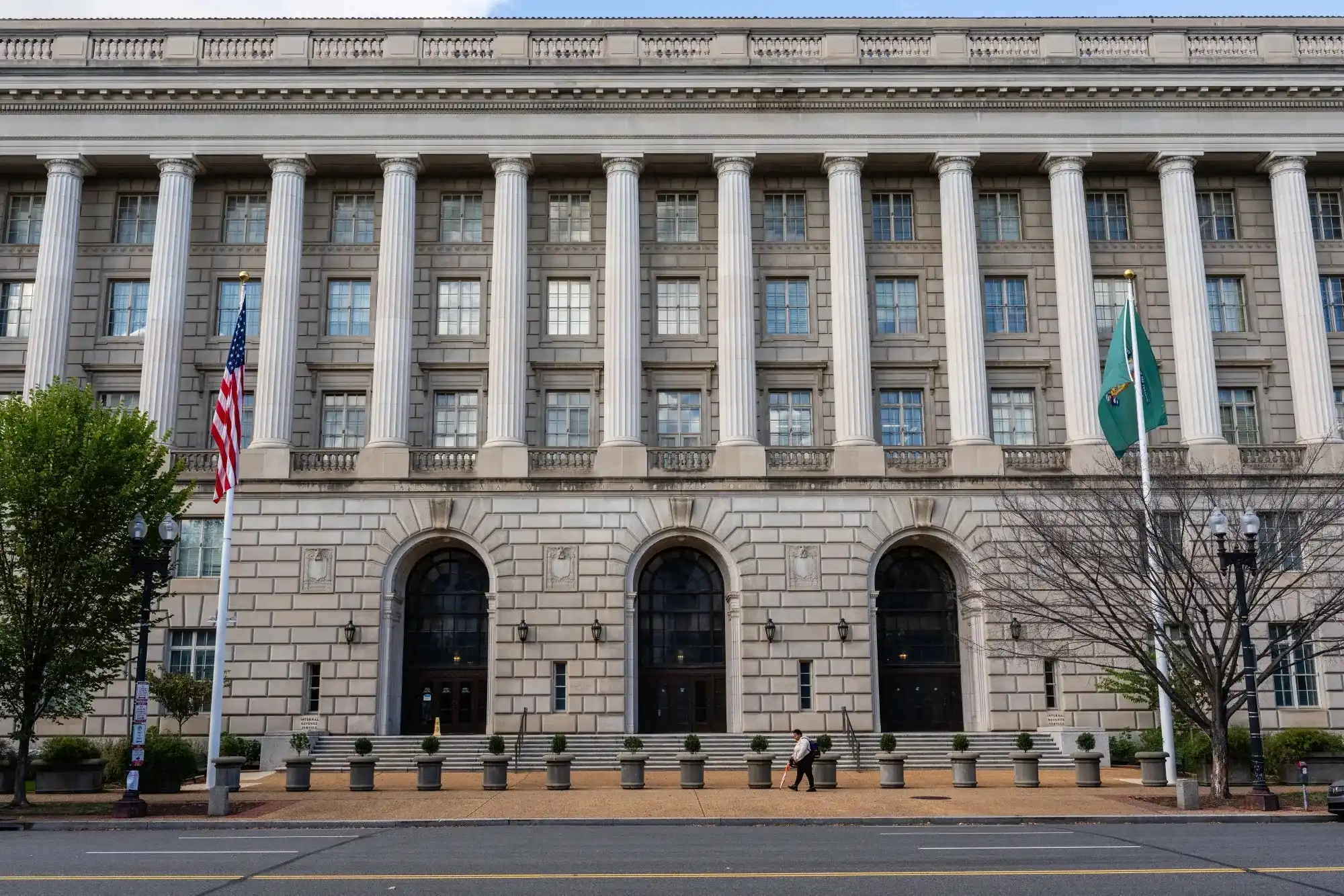
The Internal Revenue Service building in Washington, D.C. Photographer: Eric Lee / Bloomberg

Tyler Menzer says that to gain a deeper understanding of the situation of cryptocurrency investors, he has been sifting through IRS data for several years and has concluded that these investors may be deliberately evading taxes.

Just like a widely circulated internet meme from a few years ago—the late Arizona Cardinals coach Dennis Green once angrily said about a winning opponent, "They are who we thought they were!"—when it comes to fulfilling tax obligations to Uncle Sam, the typical cryptocurrency player is probably the same. (Meaning, as expected, cryptocurrency players don't want to pay taxes to the IRS.)

Tyler Menzer is an assistant professor in the accounting department at the Neely School of Business at Texas Christian University and has access to millions of anonymous taxpayer data provided by the IRS for research. He and his co-authors of a recently published study found that, at least from 2013 to 2021, very few taxpayers reported cryptocurrency transactions on their tax returns; even when they did, this group was significantly different from traditional stock investors.

"Cryptocurrency holders are more likely to hold meme stocks than other investors," Menzer said in an interview. "They are younger and likely have lower incomes. The core conclusion of our paper is that this is a distinct group of taxpayers and investors. Their trading methods are different, and their compliance performance may also be different. Many are probably not reporting their crypto assets to the IRS."
The Internal Revenue Service building in Washington, D.C. Photographer: Samuel Corum / Bloomberg

Other surveys and studies show that by 2021, about 12% to 21% of U.S. adults had held cryptocurrency, but Menzer and his team found that only 6.5% had reported cryptocurrency transactions to the IRS. The study's timeframe predates the approval of U.S. ETFs to hold physical cryptocurrencies in early 2024, a policy that has since completely reshaped the overall investor landscape.

The paper, titled "Who Reports Cryptocurrency to the IRS?", was co-authored by University of North Carolina at Chapel Hill professor Jeffrey Hoopes, Tyler Menzer, and University of Iowa accounting professor Jaron Wilde. It was published in March of this year in the accounting research journal under Springer Nature. The research primarily focused on Bitcoin and Ethereum transactions.

The IRS did not immediately respond to a request for comment.

Data from cryptocurrency investment tracking and tax compliance software company CoinTracker shows that in 2025, digital asset accounts held for less than one year averaged a loss of $636; transactions for assets held for more than one year averaged a profit of $2,692. In the 2025 tax year, cryptocurrency investors averaged 836 transactions that required tax reporting.

Cryptocurrency traders also often sell their holdings without considering the tax implications at all, a phenomenon Menzer attributes to a lack of investor sophistication and the high volatility of crypto assets themselves. The market bellwether Bitcoin has fallen about 40% since hitting an all-time high in October. Many traditional stock investors, however, deliberately time their sales to qualify for lower tax rates.

However, this situation is about to change soon. The IRS has tightened reporting requirements for the 2026 tax year, moving cryptocurrency regulation closer to the stock market system. U.S. exchanges like Coinbase are required to issue transaction forms, and taxpayers must truthfully report whether they hold cryptocurrency, regardless of whether they receive the new Form 1099-DA. Rules regarding wash sales and other compliance loopholes are also under review.

style="text-align: start;">Whether the libertarian anti-tax sentiment that has prevailed in the crypto space since its inception can persist remains to be seen, especially as tax day approaches.


Preguntas relacionadas

QWhat did Tyler Menzer and his co-authors discover about cryptocurrency investors and tax filing from 2013 to 2021?

AThey discovered that very few taxpayers reported cryptocurrency transactions on their tax returns during this period. Even when they did, this group was distinctly different from traditional stock investors, with characteristics such as being younger, having potentially lower incomes, and being more likely to hold meme stocks. The core conclusion was that this is a distinct group of taxpayers and investors who are likely non-compliant, with many probably not reporting their crypto assets to the IRS.

QAccording to the article, what percentage of US adults had held cryptocurrency by 2021, and what percentage actually reported it to the IRS?

AVarious surveys and studies showed that between 12% to 21% of US adults had held cryptocurrency by 2021. However, the research by Menzer and his team found that only 6.5% of people reported cryptocurrency transactions to the IRS.

QWhat changes is the IRS implementing for the 2026 tax year regarding cryptocurrency reporting?

AThe IRS is tightening reporting requirements for the 2026 tax year to bring cryptocurrency regulations more in line with the stock market. US exchanges like Coinbase will be required to issue new 1099-DA forms, and taxpayers must report whether they hold cryptocurrency, regardless of whether they receive this form. Rules regarding wash sales and other compliance loopholes are also under consideration.

QHow did the profitability of cryptocurrency investments differ based on holding period in 2025, according to CoinTracker?

AAccording to CoinTracker data from 2025, digital asset accounts held for less than one year averaged a loss of $636. In contrast, assets held for more than one year averaged a profit of $2,692.

QWhat reason does Tyler Menzer suggest for why cryptocurrency traders often sell their holdings without considering the tax implications?

AMenzer attributes this behavior to a combination of investor inexperience and the highly volatile nature of the crypto assets themselves, which can lead to impulsive trading decisions without regard for tax consequences.

Lecturas Relacionadas

ZEC Co-Founder Responds to Orchard Vulnerability: No Signs of Theft, Orchard Pool to Be Sealed

ZEC Co-Founder Addresses Orchard Vulnerability: No Signs of Theft, Plans to Sunset Orchard Pool A security vulnerability was recently discovered in Zcash's Orchard shielded pool, raising key concerns. The primary questions are whether the flaw was exploited, if user funds are safe, whether users can verify the total ZEC supply, and if other similar vulnerabilities exist. Analysis suggests the vulnerability was likely not exploited prior to its discovery. It was found proactively by a researcher using specialized tools, not due to an active breach. The development team and mining pools acted quickly to contain the issue. Typical financially-motivated attacks would likely have left visible on-chain evidence, which has not been observed. User funds in Orchard are considered safe and should be recoverable, assuming no prior exploitation. If the flaw was never used, all legitimate funds can be withdrawn. The article outlines risks associated with moving funds to transparent addresses or other pools, but concludes that leaving assets in place is a reasonable option. Currently, users cannot independently verify that the total ZEC supply hasn't been inflated due to this bug. However, the planned Ironwood network upgrade is designed to resolve this. It will permanently close the Orchard pool to new deposits and internal transfers, allowing only withdrawals. This mechanism will cap total withdrawals at the amount of legitimately deposited funds, enabling anyone to cryptographically verify the supply post-upgrade. Multiple teams, including Shielded Labs, have conducted extensive audits focused on counterfeiting vulnerabilities, assisted by advanced AI tools. No additional flaws of this type have been found so far, increasing confidence that no other similar undisclosed vulnerabilities exist. In summary, evidence indicates the Orchard bug was probably not used, user funds are secure, and no other counterfeiting flaws are currently known. The upcoming Ironwood upgrade will restore users' ability to independently verify the total ZEC supply, closing this chapter.

Foresight NewsHace 5 min(s)

ZEC Co-Founder Responds to Orchard Vulnerability: No Signs of Theft, Orchard Pool to Be Sealed

Foresight NewsHace 5 min(s)

Microsoft Announces Commercial-Grade Quantum Computer to be Completed in Three Years: Will the Boots Land?

Microsoft announces plans to build a commercially viable quantum computer by 2029, a significant acceleration from the previous industry consensus of a decade. The breakthrough is fueled by their new Majorana 2 quantum chip, which boasts a record-breaking average qubit lifetime of 20 seconds—a 1,000-fold reliability improvement over its predecessor. This leap was achieved by leveraging topological qubits, a theoretically more stable technology using Majorana zero modes, and switching the core superconducting material from aluminum to lead. Crucially, Microsoft's "Discovery" agentic AI platform accelerated the R&D process. AI agents autonomously analyzed vast experimental data, optimized manufacturing parameters (like the lead alloy composition), and solved issues like "ghost noise," dramatically speeding up experimentation. While the 20-second coherence time is a landmark, challenges remain: scaling from 12 qubits to the millions needed for practical applications, managing compilation costs, and verifying quantum results. Skeptics call for peer-reviewed data, and questions persist about whether even 20 seconds is sufficient for complex algorithms like breaking RSA encryption. The race is on with other approaches (superconducting, trapped ions), but Microsoft's confidence in its topological roadmap signals a potential shortcut to a scalable quantum future.

marsbitHace 24 min(s)

Microsoft Announces Commercial-Grade Quantum Computer to be Completed in Three Years: Will the Boots Land?

marsbitHace 24 min(s)

Is There Really a "World Cup Curse" in the Market?

Is there really a "World Cup Curse" affecting markets? Historical data shows global equity markets often underperform during the tournament. The S&P 500 has averaged negative returns of -1.5% to -2.11% across 19 World Cups since 1950, with declines in 58% of events. China's Shanghai Composite fell in 71% of tournaments since 1994. Studies confirm reduced trading activity during matches, with volumes dropping significantly, especially when a home nation plays. A team's loss can also lead to negative sentiment and selling pressure in its domestic market the next day. However, the "curse" may be partly attributed to seasonal weakness. Many tournaments are held in June-July, a historically weaker period for stocks ("Sell in May and go away"). The 2022 Qatar World Cup, held in November-December, saw a smaller drop in trading volume compared to summer events, suggesting timing plays a role. The cryptocurrency market's performance during World Cups has been mixed and largely driven by its own major catalysts (e.g., Mt. Gox hack, FTX collapse, halving cycles) rather than the tournament. Investment opportunities have shifted over time. Traditional beneficiaries like TV manufacturers have seen fading returns as streaming platforms become the core viewing channel. Classic consumer plays like beer and sportswear face challenges from changing consumption trends. Newer digital assets, like fractionalized collectible player cards on blockchain, have seen explosive growth. While gambling is a traditional sector, prediction markets are emerging. In conclusion, while a statistical correlation exists, the World Cup's direct impact on markets is likely limited and intertwined with seasonal patterns. With lower liquidity during the event, the simplest strategy for many might be to step back from trading and enjoy the games.

marsbitHace 31 min(s)

Is There Really a "World Cup Curse" in the Market?

marsbitHace 31 min(s)

Trading

Spot
Futuros

Artículos destacados

Cómo comprar PEOPLE

¡Bienvenido a HTX.com! Hemos hecho que comprar ConstitutionDAO (PEOPLE) sea simple y conveniente. Sigue nuestra guía paso a paso para iniciar tu viaje de criptos.Paso 1: crea tu cuenta HTXUtiliza tu correo electrónico o número de teléfono para registrarte y obtener una cuenta gratuita en HTX. Experimenta un proceso de registro sin complicaciones y desbloquea todas las funciones.Obtener mi cuentaPaso 2: ve a Comprar cripto y elige tu método de pagoTarjeta de crédito/débito: usa tu Visa o Mastercard para comprar ConstitutionDAO (PEOPLE) al instante.Saldo: utiliza fondos del saldo de tu cuenta HTX para tradear sin problemas.Terceros: hemos agregado métodos de pago populares como Google Pay y Apple Pay para mejorar la comodidad.P2P: tradear directamente con otros usuarios en HTX.Over-the-Counter (OTC): ofrecemos servicios personalizados y tipos de cambio competitivos para los traders.Paso 3: guarda tu ConstitutionDAO (PEOPLE)Después de comprar tu ConstitutionDAO (PEOPLE), guárdalo en tu cuenta HTX. Alternativamente, puedes enviarlo a otro lugar mediante transferencia blockchain o utilizarlo para tradear otras criptomonedas.Paso 4: tradear ConstitutionDAO (PEOPLE)Tradear fácilmente con ConstitutionDAO (PEOPLE) en HTX's mercado spot. Simplemente accede a tu cuenta, selecciona tu par de trading, ejecuta tus trades y monitorea en tiempo real. Ofrecemos una experiencia fácil de usar tanto para principiantes como para traders experimentados.

452 Vistas totalesPublicado en 2024.12.12Actualizado en 2026.06.02

Cómo comprar PEOPLE

Discusiones

Bienvenido a la comunidad de HTX. Aquí puedes mantenerte informado sobre los últimos desarrollos de la plataforma y acceder a análisis profesionales del mercado. A continuación se presentan las opiniones de los usuarios sobre el precio de PEOPLE (PEOPLE).

活动图片











