Anchorage Digital and Real Finance Partner to Advance Institutional RWA Tokenization

TheNewsCryptoPublicado a 2026-06-03Actualizado a 2026-06-03

Resumen

Anchorage Digital, the first federally chartered crypto bank in the U.S., and Real Finance, a Layer 1 blockchain for real-world asset (RWA) tokenization, have announced a strategic partnership. The collaboration aims to support the full lifecycle of tokenized assets, covering issuance, custody, settlement, servicing, and secondary liquidity. Key areas include Anchorage providing regulated custody for the Real Finance ecosystem and its $ASSET token, serving as a foundational custody layer for institutional products on the blockchain, and mutual support for each other's institutional client pipelines. Executives from both companies emphasized that tokenization alone is insufficient for institutional adoption, highlighting the need for integrated, regulated infrastructure for custody, settlement, and lifecycle management to move from pilots to functional on-chain capital markets. The partnership seeks to address fragmentation in the tokenized asset ecosystem by combining blockchain technology, regulated custody, and tokenization infrastructure to support assets like private credit, real estate, and financial instruments.

Anchorage Digital, which is home to the first federally chartered cryptocurrency bank in the United States and a qualified institutional custodian, and Real Finance, which is an EVM-compatible Layer 1 blockchain that was purpose-built for real-world asset (RWA) tokenization, have announced today that they have formed a strategic partnership to support the full lifecycle of tokenized assets. This partnership will cover issuance, custody, settlement, servicing, and secondary liquidity.

Through the cooperation, the capabilities of Anchorage Digital in the areas of regulated custody, treasury management, settlement, and institutional security will be merged with those of Real Finance in the areas of issuance infrastructure, lifecycle management tools, risk visibility framework, and programmable financial primitives.

In order to facilitate the cooperation, many main areas have been designed:

  • Treasury & Ecosystem Custody: Anchorage Digital will offer regulated custody and treasury infrastructure for the Real Finance ecosystem and its native $ASSET token.
  • Foundational Custody Layer: Anchorage Digital will act as a custody layer that supports greater institutional involvement when new tokenized financial products are deployed on the Real Finance Layer 1 blockchain. This layer is known as the foundational custody layer.
  • Mutual Pipeline Support: The two organizations will support one another’s institutional pipelines. Through its asset issuers and onboarding activities, Real Finance will generate extra demand for regulated custody. Anchorage Digital, on the other hand, will link institutional customers with tokenization and blockchain infrastructure solutions that are based on Real Finance.

Ivo Grigorov, CEO of Real Finance, said:

“Real Finance and Anchorage Digital are collaboratively building the institutional infrastructure for the next generation of tokenized financial markets. Tokenization alone is not enough. Institutions need trusted, regulated layers that integrate custody, servicing, settlement, and lifecycle management. Together we are moving the industry from experimentation toward functional on-chain capital markets and delivering the unified experience institutions demand.”

Nathan McCauley, Co-Founder and CEO, Anchorage Digital, said:

“RWAs are one of the clearest examples of how blockchain can modernize capital markets, but institutions need more than tokenization rails alone. They need regulated, secure infrastructure that can support custody, settlement, and lifecycle connectivity at scale. Our partnership with Real Finance brings together the core building blocks institutions need to move from isolated pilots to real onchain capital markets.”

As real-world assets continue to move onchain, institutions require more than tokenization infrastructure alone. The ecosystem of tokenized assets continues to be fragmented in terms of issuance, custody and compliance, settlement, service, and liquidity infrastructure. Institutions consistently cite operational trust and disconnected counterparties as barriers preventing tokenized assets from maturing into functional onchain capital markets.

In order to solve these difficulties, the businesses have said that the alliance is designed to bring together blockchain technology, regulated custody, treasury management, settlement capabilities, and tokenization infrastructure inside a framework that is more linked. It has been said by the corporations that this framework is intended to provide support for tokenized private credit, money, real estate, structured goods, and financial instruments that are connected with banks.


TagsAltcoinBlockchain

Preguntas relacionadas

QWhat is the main purpose of the strategic partnership between Anchorage Digital and Real Finance?

AThe main purpose of the partnership is to support the full lifecycle of tokenized real-world assets (RWAs), covering issuance, custody, settlement, servicing, and secondary liquidity, by merging Anchorage Digital's regulated institutional services with Real Finance's blockchain infrastructure for RWA tokenization.

QWhat are the three key areas designed to facilitate the cooperation between Anchorage Digital and Real Finance?

AThe three key areas are: 1) Treasury & Ecosystem Custody, where Anchorage Digital provides regulated custody for the Real Finance ecosystem; 2) Foundational Custody Layer, where Anchorage acts as a custody layer for new tokenized products on Real Finance; and 3) Mutual Pipeline Support, where both companies support each other's institutional client pipelines.

QAccording to Ivo Grigorov, CEO of Real Finance, what do institutions need beyond just tokenization?

AIvo Grigorov stated that institutions need trusted, regulated layers that integrate custody, servicing, settlement, and lifecycle management to move from experimentation toward functional on-chain capital markets.

QWhat problem does Nathan McCauley of Anchorage Digital identify that the partnership aims to solve?

ANathan McCauley identifies that while RWAs show blockchain's potential, institutions need more than tokenization rails alone. They require regulated, secure infrastructure for custody, settlement, and lifecycle connectivity at scale to move from isolated pilots to real onchain capital markets.

QAccording to the article, what are the main barriers preventing tokenized assets from maturing into functional onchain capital markets?

AThe main barriers cited by institutions are operational trust and disconnected counterparties, stemming from a fragmented ecosystem in issuance, custody, compliance, settlement, service, and liquidity infrastructure.

Lecturas Relacionadas

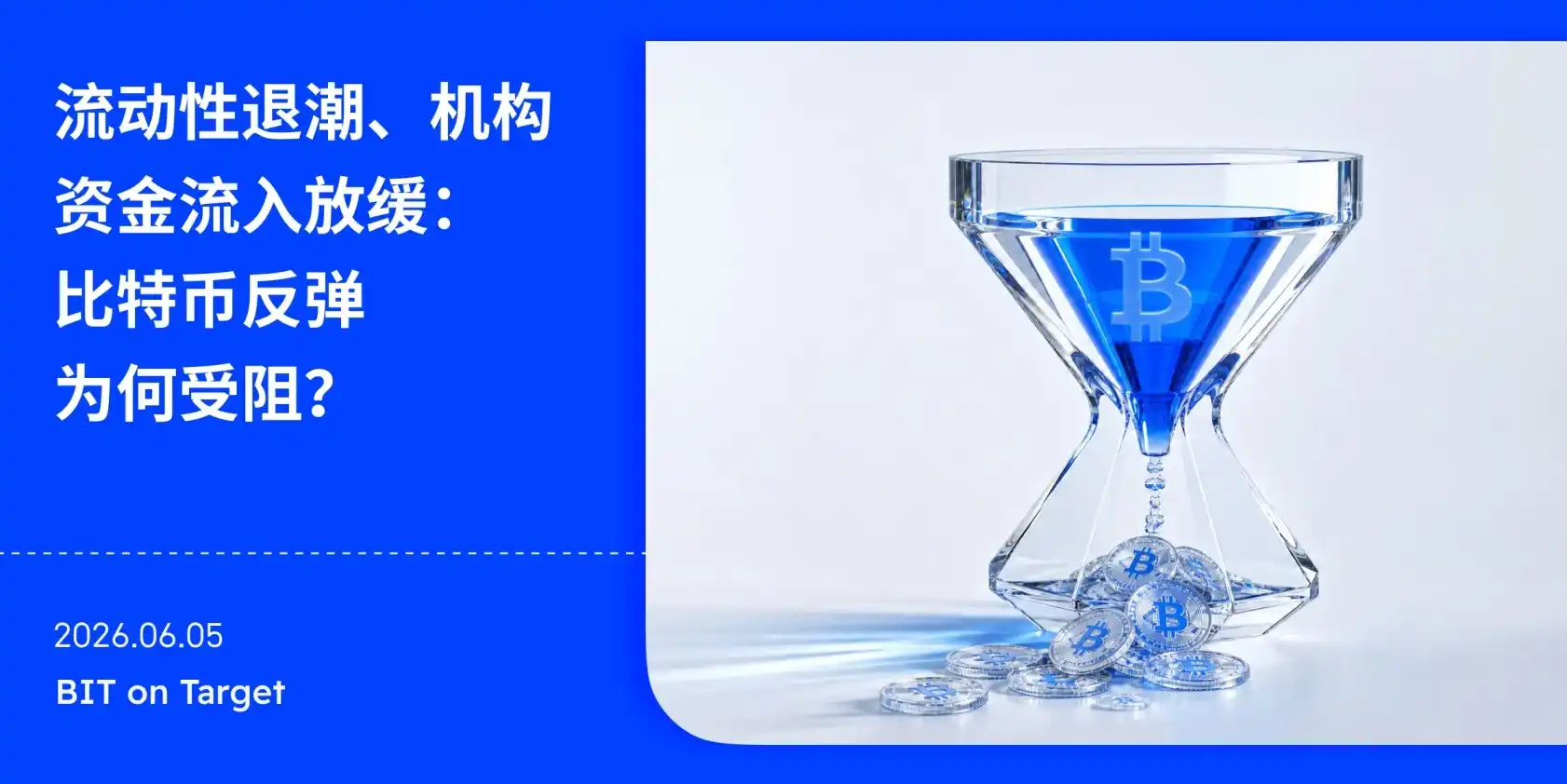
BIT Research: ETF Purchases Have Slowed, Strategy (MicroStrategy) Has Slowed, What Else Can Drive Bitcoin's Rise?

Market Refocus on Inflation and Rate Expectations Weighs on Bitcoin Currently, the market is in a phase of macro-repricing dominated by inflation and interest rate expectations. Bitcoin, which previously benefited from easy liquidity and low inflation, is seeing its core bullish drivers weaken. These drivers were market expectations for interest rate cuts and strong inflows from Bitcoin ETFs and institutions like MicroStrategy (referred to as "Strategy" in the text). The logic has shifted. Recent high inflation data (e.g., CPI hitting 3.8% in a May 2026 report) has caused the market to sharply reduce its rate cut expectations for 2025 and even price in potential hikes. This is a key constraint for Bitcoin, as it lacks cash flows and is highly sensitive to rate expectations. Concurrently, institutional capital flows have slowed significantly. Following the hot CPI data, Bitcoin ETFs saw accelerated outflows, with around $4.3 billion leaving over a period. MicroStrategy's ability to keep adding substantial Bitcoin to its balance sheet is also diminishing. Together, ETF and MicroStrategy holdings total roughly $110 billion, but their momentum as growth engines is cooling. In summary, Bitcoin's current pressure stems not from its own fundamentals but from a changing macro environment. As long as inflation stays elevated, Bitcoin is likely to remain in a consolidating phase. However, historically, inflation eventually peaks. Once it recedes and rate cut expectations rebuild, institutional capital could return, potentially fueling a new and more robust recovery phase for Bitcoin.

marsbitHace 8 min(s)

BIT Research: ETF Purchases Have Slowed, Strategy (MicroStrategy) Has Slowed, What Else Can Drive Bitcoin's Rise?

marsbitHace 8 min(s)

Earning 1000 Trillion in Half a Year, 'Pocketing' 20 Million per Capita: This Round of Wealth Creation in the Korean Stock Market is Unprecedented in Scale

The South Korean stock market is experiencing an unprecedented wealth surge in 2026, with household equity and fund asset values soaring by over 1,000 trillion KRW (~$730bn) year-to-date. This translates to an average per capita wealth increase of roughly 20 million KRW, fueled by a historic 109% rally in the KOSPI index. The boom is driven by three converging forces: an AI-driven semiconductor supercycle boosting giants like Samsung and SK Hynix; the government's "Value-Up" market reforms addressing long-standing corporate governance issues; and aggressive real estate regulations that have locked capital within financial markets, preventing profits from flowing back into property. This has triggered a wealth effect, boosting high-end consumption significantly. However, the gains are highly concentrated. The two semiconductor behemoths account for over half the index's value, but retail investors own relatively low stakes in them, systematically missing the biggest rallies. Wealth and consumption benefits are skewed towards luxury goods and imported cars, bypassing mainstream retail. Further risks stem from excessive leverage, with high trading volume in leveraged ETFs, and a market sentiment heavily reliant on the AI sector's fortunes and speculative rumors. While this cycle marks a potential shift from real estate to equities as a primary wealth generator for Koreans, its sustainability, amid structural imbalances and leverage, remains a critical test.

marsbitHace 13 min(s)

Earning 1000 Trillion in Half a Year, 'Pocketing' 20 Million per Capita: This Round of Wealth Creation in the Korean Stock Market is Unprecedented in Scale

marsbitHace 13 min(s)

Behind ZEC's Over 30% Plunge: An 'Unlimited Minting' Vulnerability with No Way to Prove if It Was Ever Exploited

A critical vulnerability was discovered in Zcash's Orchard privacy pool, allowing for the theoretical creation of undetectable counterfeit ZEC. Researcher Taylor Hornby found the flaw on May 29th, 2024, within the Orchard circuit's cryptographic constraints, which could let an attacker bypass asset conservation rules. Although a rapid emergency fix was deployed within days via a coordinated soft and hard fork, a core uncertainty remains: due to Orchard's privacy features, it is impossible to cryptographically prove whether this "unlimited mint" flaw was exploited in the nearly four years since the pool's 2022 launch. This uncertainty, rather than the patched flaw itself, triggered a market panic, causing ZEC's price to drop over 30%. While the Zcash Foundation stated no evidence of exploitation was found, independent entity Shielded Labs emphasized the impossibility of definitively proving no counterfeit ZEC was ever created. The incident highlights the unique trust challenge in privacy systems. To address this, developers are proposing a new network upgrade with enhanced auditing to allow verifiable proof of supply integrity. Notably, the researcher utilized the newly released AI model Claude Opus 4.8 as a tool during the security review, signaling the growing role of advanced AI in uncovering complex cryptographic vulnerabilities.

marsbitHace 15 min(s)

Behind ZEC's Over 30% Plunge: An 'Unlimited Minting' Vulnerability with No Way to Prove if It Was Ever Exploited

marsbitHace 15 min(s)

imToken's 10th Anniversary Unveils Strategic Direction for the Next Decade: Evolving from a Trusted Main Wallet to a Personal Digital Hub

On its tenth anniversary, decentralized wallet imToken announced its strategic vision for the next decade: evolving from a "trusted main wallet" into a "personal control interface." This new direction aims to help users manage not only digital assets but also identity, permissions, and AI agent actions in an increasingly open and intelligent internet. imToken outlined that while the past decade focused on Store, Send, and Stake—securing assets, enabling transfers, and facilitating network participation—the future introduces a fourth core proposition: Sign. This expanded concept goes beyond transaction signing to encompass expressing intent, granting permissions, setting rules, delegating actions, and revoking authorizations. As AI agents gain autonomy, imToken emphasizes the need for clear, verifiable, and revocable user control over their actions. CEO Ben He stated that imToken's mission is shifting from enabling ownership of digital assets to ensuring user sovereignty over their entire digital world in the AI era. The company's core principle has been upgraded from "Digital Assets, Under Your Control" to "Your Digital World, Under Your Control." Future development will focus on three areas: upholding self-custody principles, extending security from transactions to authorizations and automated actions, and building product capabilities for managing permissions, delegations, policies, and revocations. imToken views the wallet's role as expanding into a trusted control interface for human-AI collaboration, where managing keys, signatures, and permissions forms the infrastructure for personal digital sovereignty. Founded in 2016, imToken serves millions of users across 150+ countries, providing non-custodial wallet services supporting over 50 blockchain networks.

marsbitHace 16 min(s)

imToken's 10th Anniversary Unveils Strategic Direction for the Next Decade: Evolving from a Trusted Main Wallet to a Personal Digital Hub

marsbitHace 16 min(s)

Trading

Spot
Futuros

Artículos destacados

Cómo comprar HOME

¡Bienvenido a HTX.com! Hemos hecho que comprar Defi.app (HOME) sea simple y conveniente. Sigue nuestra guía paso a paso para iniciar tu viaje de criptos.Paso 1: crea tu cuenta HTXUtiliza tu correo electrónico o número de teléfono para registrarte y obtener una cuenta gratuita en HTX. Experimenta un proceso de registro sin complicaciones y desbloquea todas las funciones.Obtener mi cuentaPaso 2: ve a Comprar cripto y elige tu método de pagoTarjeta de crédito/débito: usa tu Visa o Mastercard para comprar Defi.app (HOME) al instante.Saldo: utiliza fondos del saldo de tu cuenta HTX para tradear sin problemas.Terceros: hemos agregado métodos de pago populares como Google Pay y Apple Pay para mejorar la comodidad.P2P: tradear directamente con otros usuarios en HTX.Over-the-Counter (OTC): ofrecemos servicios personalizados y tipos de cambio competitivos para los traders.Paso 3: guarda tu Defi.app (HOME)Después de comprar tu Defi.app (HOME), guárdalo en tu cuenta HTX. Alternativamente, puedes enviarlo a otro lugar mediante transferencia blockchain o utilizarlo para tradear otras criptomonedas.Paso 4: tradear Defi.app (HOME)Tradear fácilmente con Defi.app (HOME) en HTX's mercado spot. Simplemente accede a tu cuenta, selecciona tu par de trading, ejecuta tus trades y monitorea en tiempo real. Ofrecemos una experiencia fácil de usar tanto para principiantes como para traders experimentados.

217 Vistas totalesPublicado en 2025.06.10Actualizado en 2026.06.02

Cómo comprar HOME

Discusiones

Bienvenido a la comunidad de HTX. Aquí puedes mantenerte informado sobre los últimos desarrollos de la plataforma y acceder a análisis profesionales del mercado. A continuación se presentan las opiniones de los usuarios sobre el precio de HOME (HOME).

活动图片