Altcoin season index sits at 32: ‘Still in the gutter,’ believes expert

ambcryptoPublicado a 2026-04-07Actualizado a 2026-04-07

Resumen

In a recent analysis, CoinGecko highlighted that the altcoin market remains in a prolonged slump, with the Altcoin Season Index at 32, indicating continued Bitcoin dominance. Historically, capital rotated from Bitcoin to Ethereum and then to altcoins after Bitcoin reached a new all-time high (ATH). However, this cycle has diverged due to the influence of Bitcoin ETFs approved in 2024, which have concentrated institutional investment in Bitcoin rather than spreading to altcoins. Despite Bitcoin hitting an ATH of $126,000 in October 2025, altcoins have underperformed. Some in the crypto community anticipate an altseason, but key indicators suggest otherwise. Bitcoin's dominance remains strong, and altcoins like Dogecoin, Solana, and Cardano have not trended positively. Santiment’s Weighted Sentiment analysis shows Bitcoin as the only cryptocurrency with positive sentiment, while altcoins linger in negative territory. Additionally, the RSI for most tokens, including Bitcoin, is below the neutral 50-level, reflecting bearish market conditions. On-chain data remains pessimistic, contradicting optimistic analyst predictions for an imminent altseason.

In a recent YouTube stream, data aggregator CoinGecko noted that altcoins have remained in a slump for a sustained period of time.

The platform also analyzed previous cycles, highlighting a recurring pattern—capital always rotates from Bitcoin into Ethereum and then into other altcoins once Bitcoin hits a new all-time high (ATH).

Bitcoin’s all-time high of $126,000 has come and gone, but altcoins are still in the gutter.

However, the current market isn’t following past patterns. Bitcoin reached its ATH of $126,000 back in October 2025, yet altcoins have still failed to outperform.

This change in pattern is notably because of the approval of exchange-traded funds (ETFs) and other related products approved in 2024. For perspective, in the new cycle, money is coming in, but mostly from institutions via ETFs, and “tends to stay concentrated in Bitcoin.”

So, with the biggest concentration lying in the hands of Spot Bitcoin ETFs, the altseason does appear like a far-fetched dream.

CoinGecko brought up this discrepancy, noting,

It doesn’t trickle down into smaller tokens the way retail flows used to.

The weight of the situation

The CoinMarketCap Altcoin Index, sitting at 32 at the time of reporting, further suggests that the Bitcoin season is still in action.
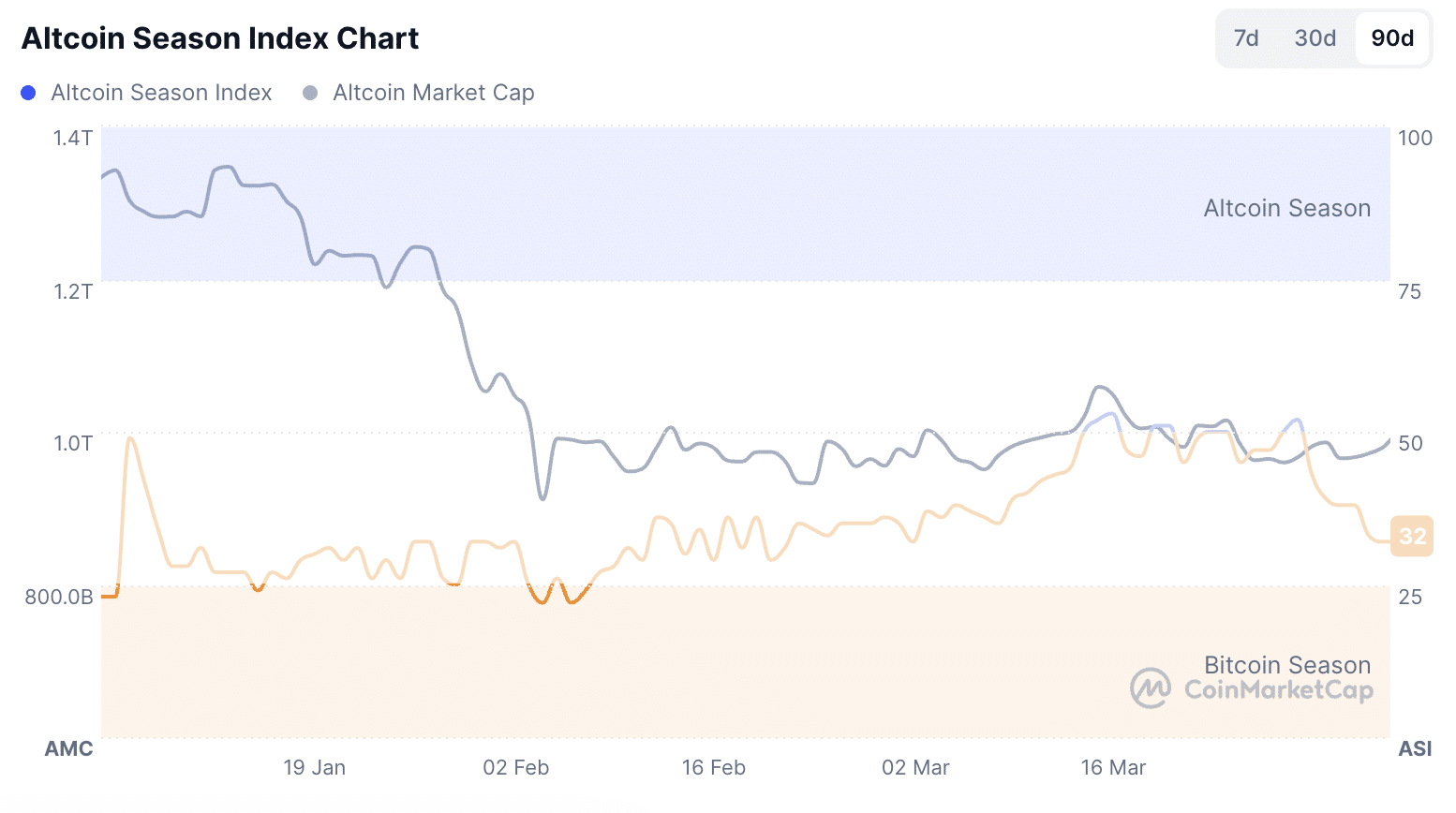
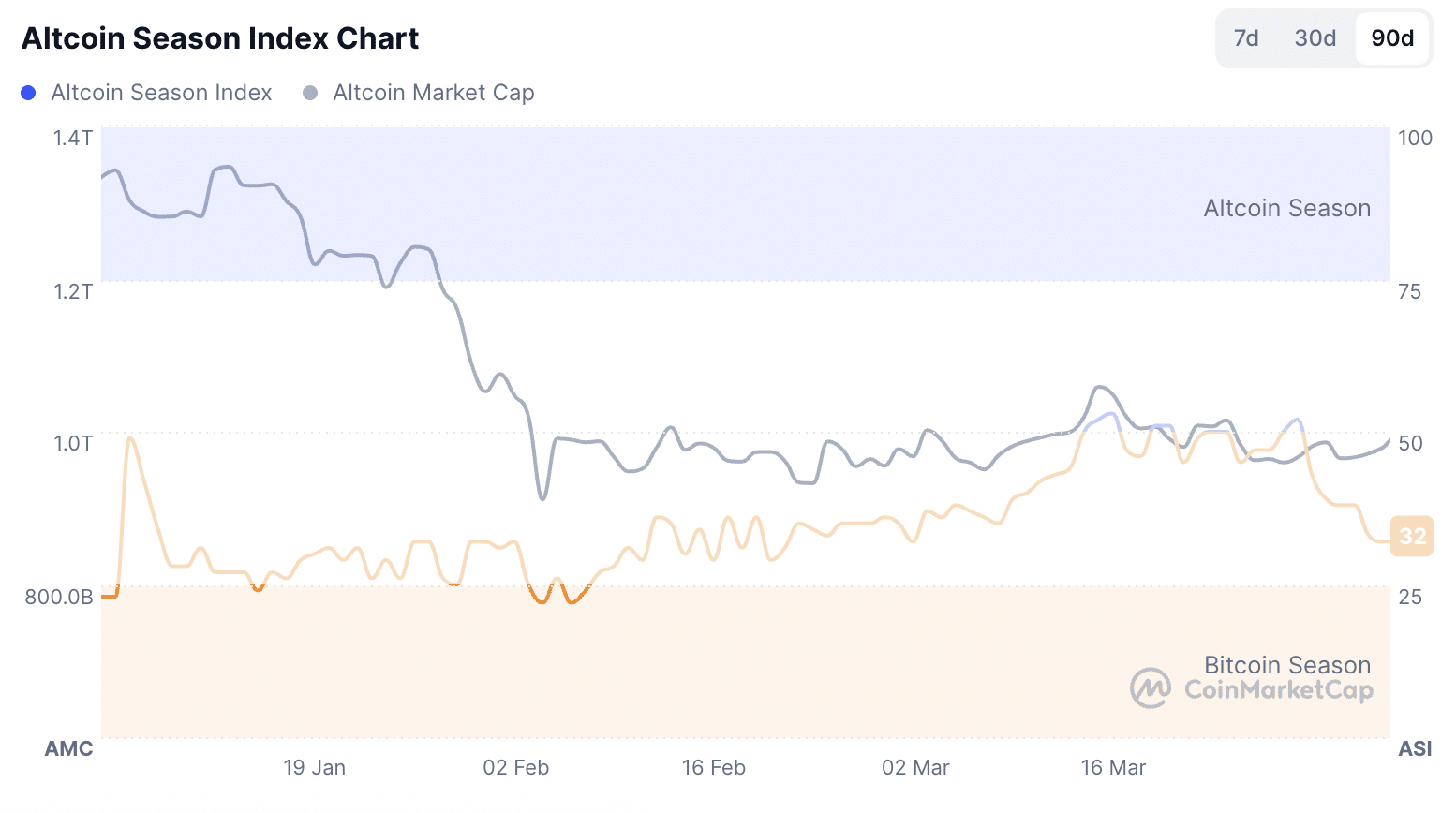
Source: CoinMarketCap

However, others in the crypto community still believe that the altcoin season is “just around the corner.”
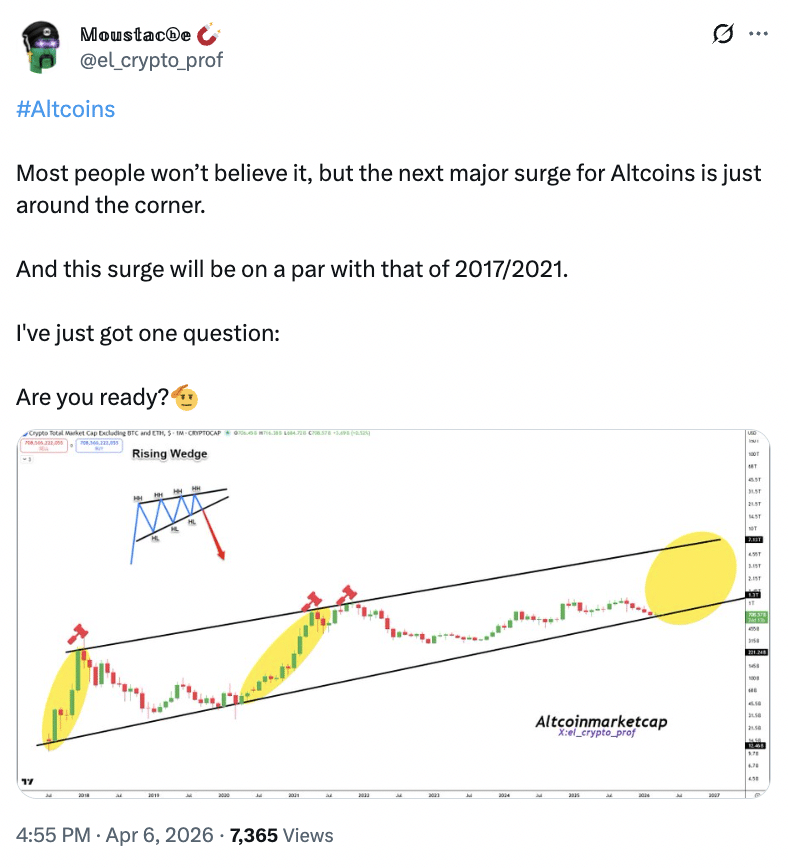
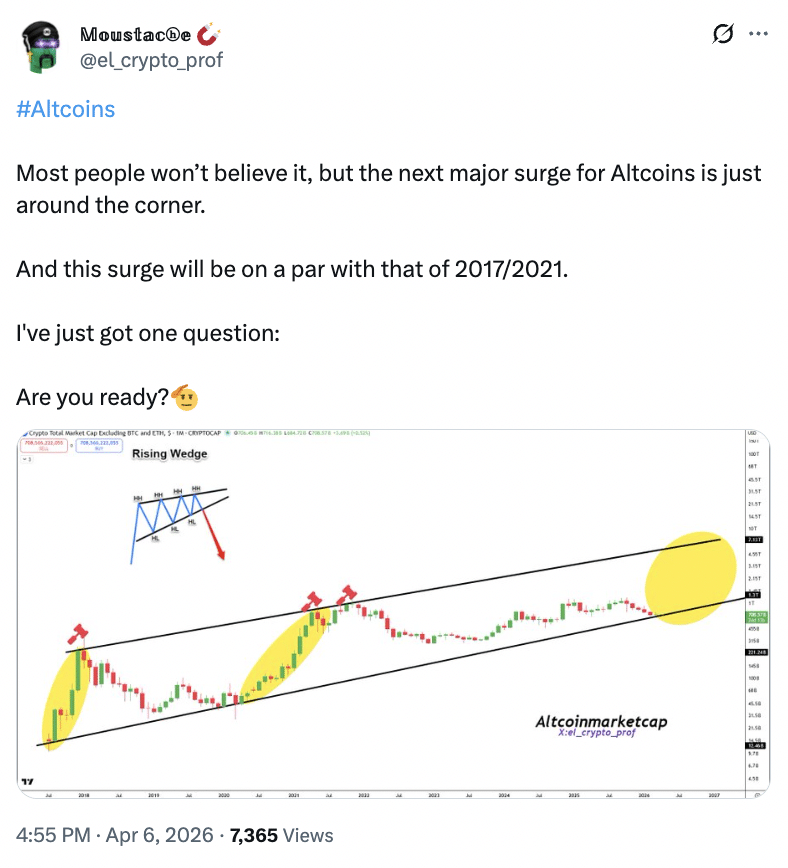
Source: X

If the altcoin season is actually about to happen, then Bitcoin dominance needs to weaken. Moreover, the top 10 altcoins trending in 90 days should include big names like Dogecoin, Solana, and Cardano.
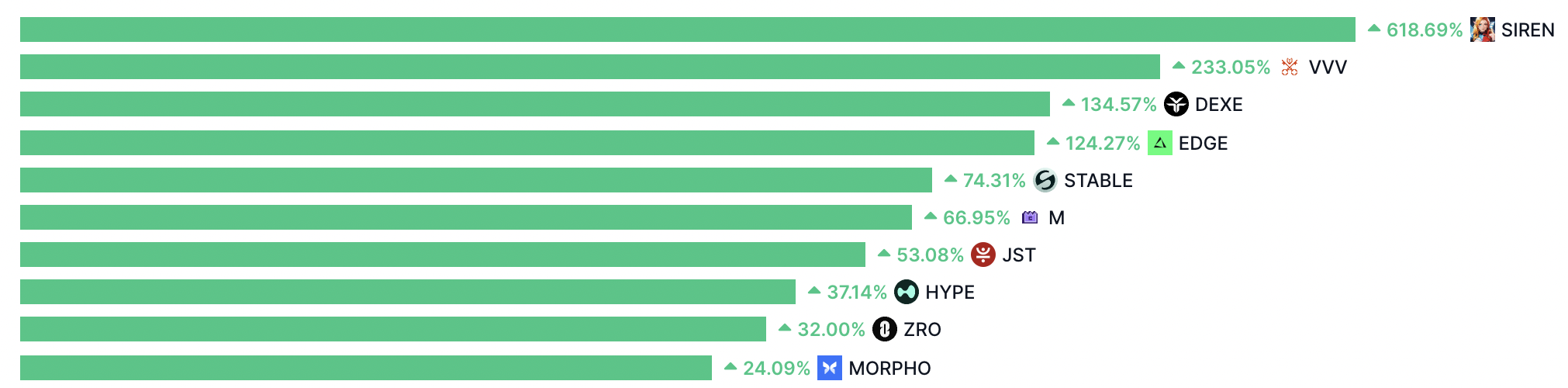
Source: CoinMarketCap

This was further confirmed by Santiment’s Weighted Sentiment analysis. The chart clearly shows that Bitcoin is the only token with positive Weighted Sentiment, whereas other altcoins are below the 50-level mark in the negative zone.
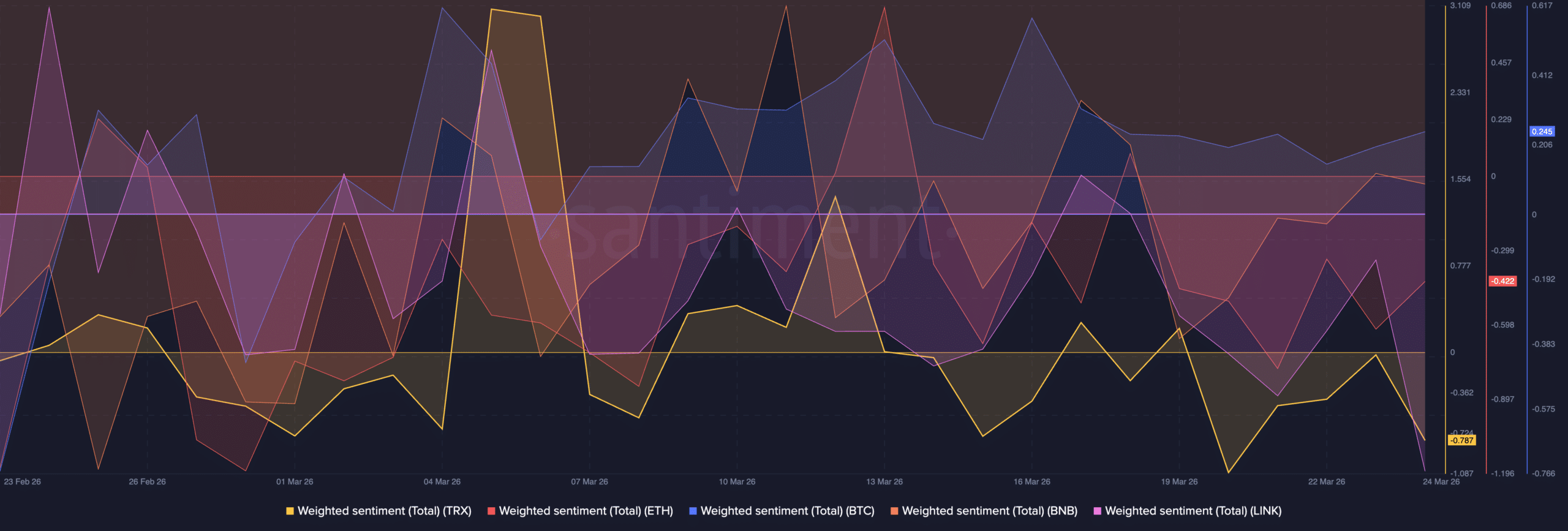
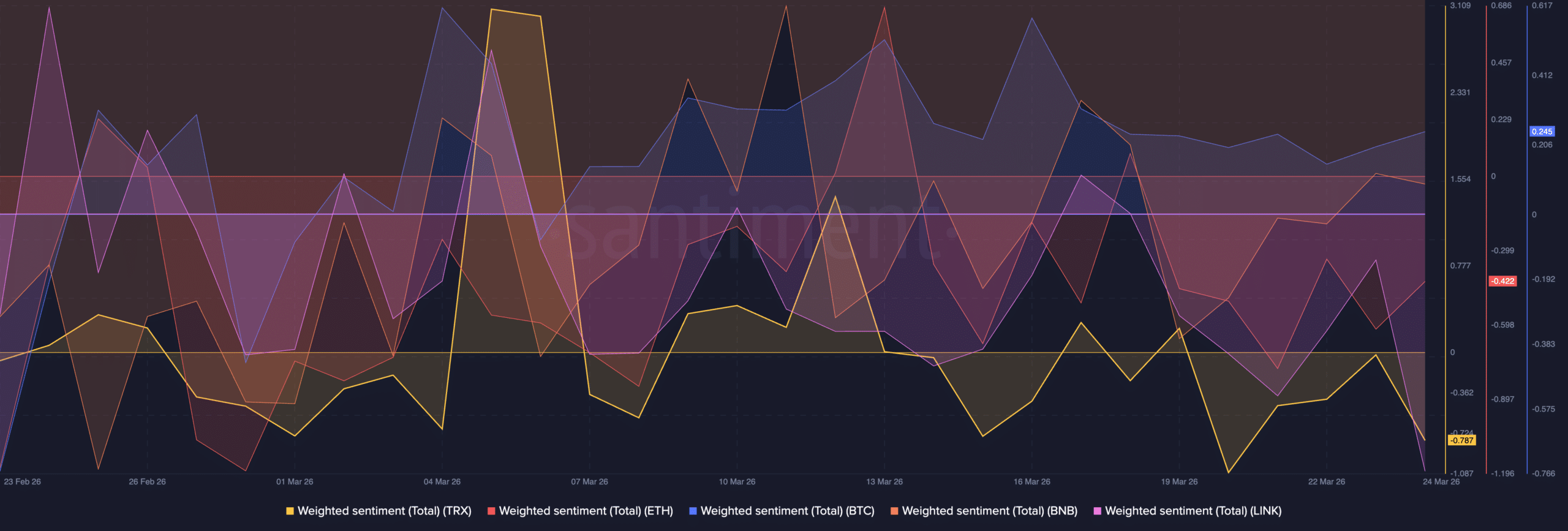
Source: Santiment

But the RSI of all the tokens, including Bitcoin, lying below the 50-level mark, aka the neutral level, suggests that the overall market sentiment is in the sellers’ hands.
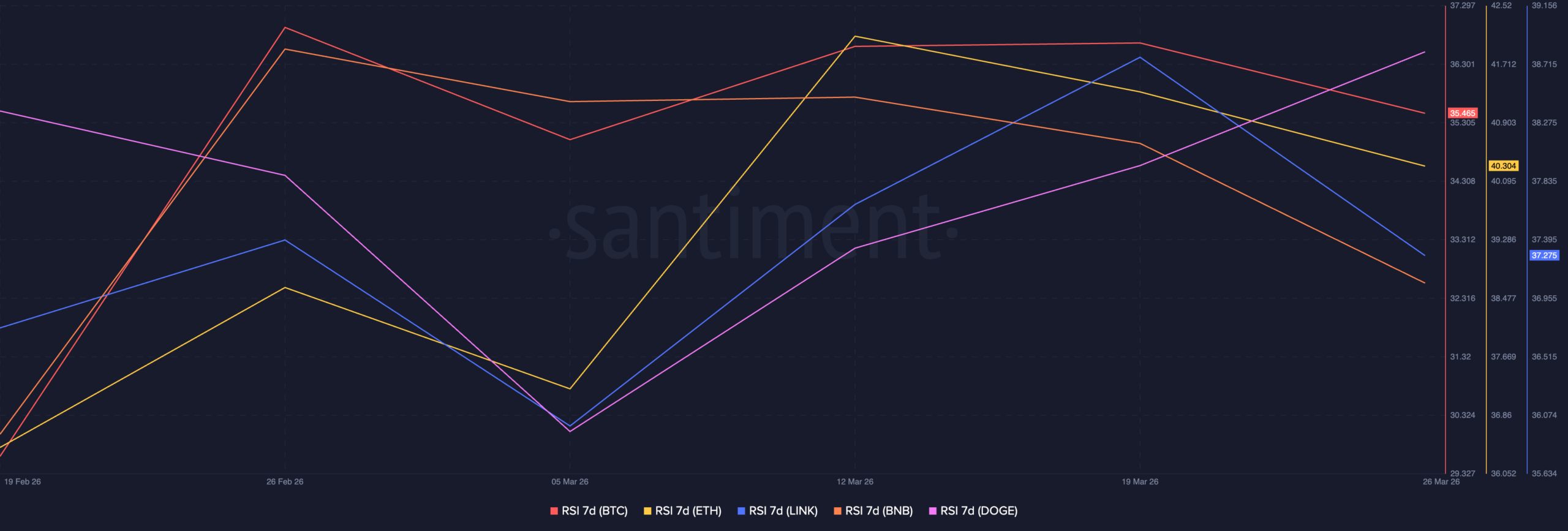
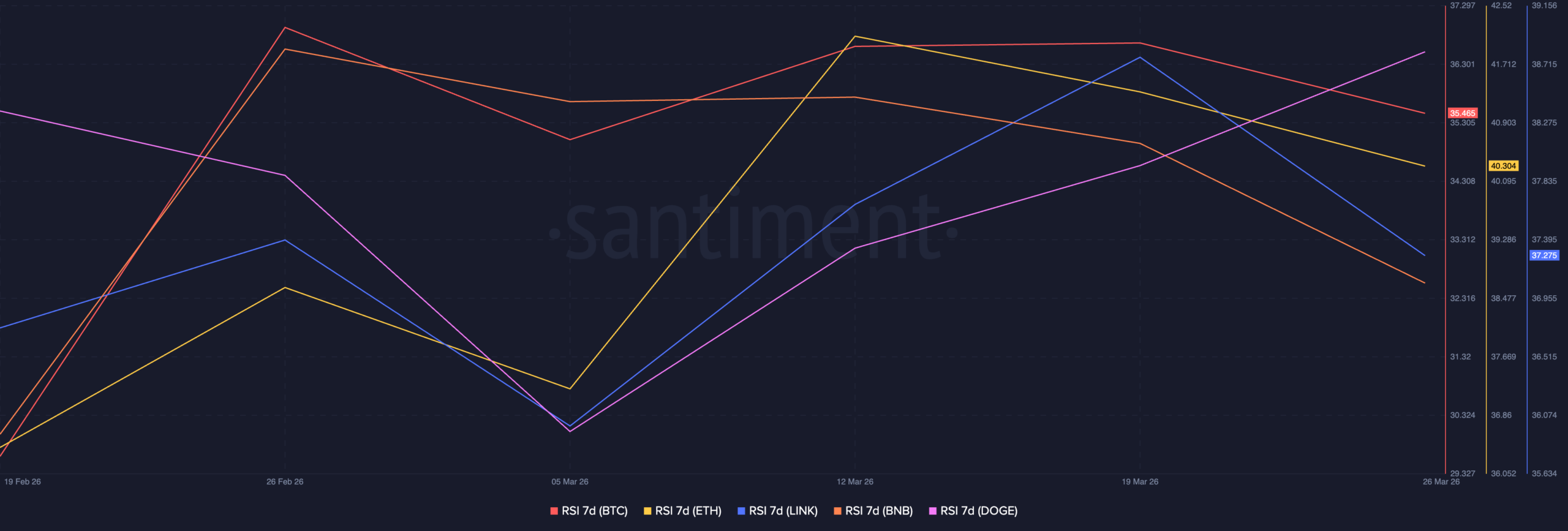
Source: Santiment

This was further confirmed by AMBCrypto’s recent analysis, which also suggests that analysts are in favor of an altseason, but the on-chain data looks pessimistic.


Final Summary

  • CoinGecko believes that altcoins are in the “gutter” after Bitcoin hit an ATH back in October 2025.
  • However, hope for an upcoming altseason remains strong among investors.

Preguntas relacionadas

QWhat is the current state of the altcoin market according to the article?

AThe altcoin market is in a prolonged slump, with the Altcoin Season Index sitting at 32, indicating it is 'still in the gutter' and has failed to outperform Bitcoin.

QWhat key factor does the article cite for the change in the traditional market pattern where capital rotates from Bitcoin to altcoins?

AThe approval of Bitcoin exchange-traded funds (ETFs) and other related products in 2024 is the key factor. Institutional money flowing in via ETFs tends to stay concentrated in Bitcoin and does not trickle down into smaller altcoins like retail flows used to.

QWhat does the CoinMarketCap Altcoin Index value of 32 suggest about the current market season?

AAn Altcoin Index value of 32 suggests that the market is still in a 'Bitcoin season,' meaning Bitcoin is dominating the market performance and altcoins are not outperforming it.

QAccording to the article, what two conditions need to be met for an altcoin season to be considered happening?

AFor an altcoin season to happen, Bitcoin's dominance needs to weaken, and the top 10 altcoins trending over 90 days should include major names like Dogecoin, Solana, and Cardano.

QWhat does the Weighted Sentiment analysis from Santiment, as mentioned in the article, reveal about market sentiment for Bitcoin versus altcoins?

ASantiment's Weighted Sentiment analysis shows that Bitcoin is the only token with a positive sentiment score, while all other altcoins are in the negative zone below the 50-level mark.

Lecturas Relacionadas

CPU Makes a Comeback to the Table, A $170 Billion "Power Seizure" Drama Begins

A new era is dawning for the server CPU (Central Processing Unit), driven by the shift from AI model training to large-scale reasoning and the rise of Agentic AI. This article explores how the CPU is reclaiming a central role in the AI data center. For years, the focus has been on the GPU (Graphics Processing Unit) for AI training. However, as AI moves to the inference and Agent phase—where tasks involve complex, multi-step reasoning, tool calls, and data management—the workload balance is flipping. Studies show CPUs now handle over 70% of the workload in Agentic AI, up from 10-30% in training. This is because Agent tasks generate massive intermediate data (KV Cache) that exceeds GPU memory, forcing it to be offloaded to the CPU's larger, more scalable memory pools. This increased importance is translating into market changes. Major players are taking note: NVIDIA launched its first standalone CPU line, Vera, based on ARM architecture and optimized for Agent performance. AMD doubled its server CPU market forecast to over $1200 billion by 2030. Analyst reports project the total server CPU market could reach $1700 billion by 2030, with AI-driven demand being a primary driver. Furthermore, the classic ratio of CPUs to GPUs in AI servers is rapidly changing, converging from 1:8 toward 1:1 for Agent deployments. This surge in demand has led to a rare industry-wide price increase of 10-15% for server CPUs from Intel and AMD, breaking a decade-long trend of "more performance for the same price." Demand is bifurcating into high-core-count CPUs for in-rack GPU support and moderate-core CPUs for standalone Agent task orchestration. In China, this global trend presents an opportunity for domestic CPU manufacturers like Hygon (海光信息) and Huawei Kunpeng, who are bolstered by both growing AI infrastructure needs and national policies promoting technological self-reliance ("xin chuang"). The maturity of their software ecosystems is also accelerating, evidenced by faster adaptation to new AI models. In conclusion, the narrative is shifting from a GPU-centric view to one where CPU-GPU synergy is critical. The CPU is no longer a peripheral component but a performance-defining bottleneck and a key growth driver in the AI hardware stack, opening a massive new market estimated in the hundreds of billions of dollars.

marsbitHace 3 hora(s)

CPU Makes a Comeback to the Table, A $170 Billion "Power Seizure" Drama Begins

marsbitHace 3 hora(s)

TechFlow Intelligence: AMD AI Director Publicly Criticizes Claude Code for "Becoming Dumber and Lazier", Trump Claims Full Ceasefire in Hormuz But Strait Still Has 80 Unexploded Mines

TechFlow Intelligence Report: This daily digest covers key developments in AI, crypto, hardware, and geopolitics. In AI, SK Telecom faces US export control scrutiny over its partnership with Anthropic, while a Gemini user reports being misled in a scam scenario, sparking safety debates. China's Z.AI launches the GLM-5.2 model, rivaling Claude Opus without NVIDIA chips. In crypto, Bithumb lists ReProtocol, and Upbit delists KernelDAO. On the hardware front, MIT researchers build a custom OS to study chips, ASML denies US claims its advanced lithography machines are in China, and Amazon considers selling its in-house AI chips. Apple's future A21 Pro chip may use TSMC's latest N2P process. Major tech issues include 10,000 GitHub repositories distributing malware and Apple patching a critical eavesdropping flaw in Beats earbuds. US stocks rise, led by semiconductors, with Intel surging 10.6%, while SpaceX falls 3.5%. Geopolitically, despite a US-Iran deal, the Strait of Hormuz remains risky with ~80 uncleared mines, stalling 80M barrels of oil on standby tankers. Iran postpones Switzerland talks, and Trump calls the agreement an "unconditional surrender." The report highlights a contrast: temporary geopolitical calm versus the ongoing, fundamental restructuring of tech supply chains and chip independence.

marsbitHace 3 hora(s)

TechFlow Intelligence: AMD AI Director Publicly Criticizes Claude Code for "Becoming Dumber and Lazier", Trump Claims Full Ceasefire in Hormuz But Strait Still Has 80 Unexploded Mines

marsbitHace 3 hora(s)

Trading

Spot
Futuros
活动图片