AI Leads to Layoffs? Research Shows AI Is More Expensive Than the People It Replaces

marsbitPublicado a 2026-06-09Actualizado a 2026-06-09

Resumen

Title: AI Layoffs? Research Shows AI is More Expensive Than the Workers It Replaces. This year, nearly 50,000 employees have been laid off due to AI, with companies initially believing AI could replace human jobs. However, recent findings indicate that the actual operational costs of AI often exceed the expense of the human labor it was meant to replace. Examples include Uber exhausting its annual AI budget in just four months, Microsoft cutting Claude Code licenses due to high costs, and an Anthropic employee incurring $150,000 in API usage in a single month. A CloudZero survey reveals that 45% of enterprises spend over $100,000 monthly on AI, yet only 8% of S&P 500 companies report any AI-related revenue, and half struggle to measure ROI. Analyst Scott Galloway predicts a shift toward cheaper Chinese AI models, which are 10 to 30 times more affordable than American counterparts. Data shows Chinese models' usage among developers surged from 1% in 2024 to over 60% by mid-2026, with 80% of U.S. AI startups adopting them. This trend may prompt regulatory responses, such as potential restrictions from the Trump administration.

Authors: Scott Galloway / Ed Elson / Mia Silverio

Translation: TechFlow

TechFlow Introduction: Nearly 50,000 people have been laid off this year due to AI, but more and more companies are finding that the cost of using AI is higher than human labor. Uber burned through its entire 2026 AI budget in four months, Microsoft is cutting Claude Code licenses in multiple departments, and an Anthropic employee used up $150,000 in API credits in a single month. Scott Galloway believes companies will ultimately turn to Chinese large language models that are 10-30 times cheaper, which will force Trump to impose restrictions.

Is AI More Expensive Than the People It Replaces?

Nearly 50,000 employees have been laid off this year, citing AI as the reason. This figure nearly equals the total for all of 2025. For companies adopting AI, the logic is simple: AI can do the jobs people do.

But in recent weeks, this logic has hit a wall. More and more companies are discovering that the actual cost of using AI is higher than the human labor it is intended to replace.
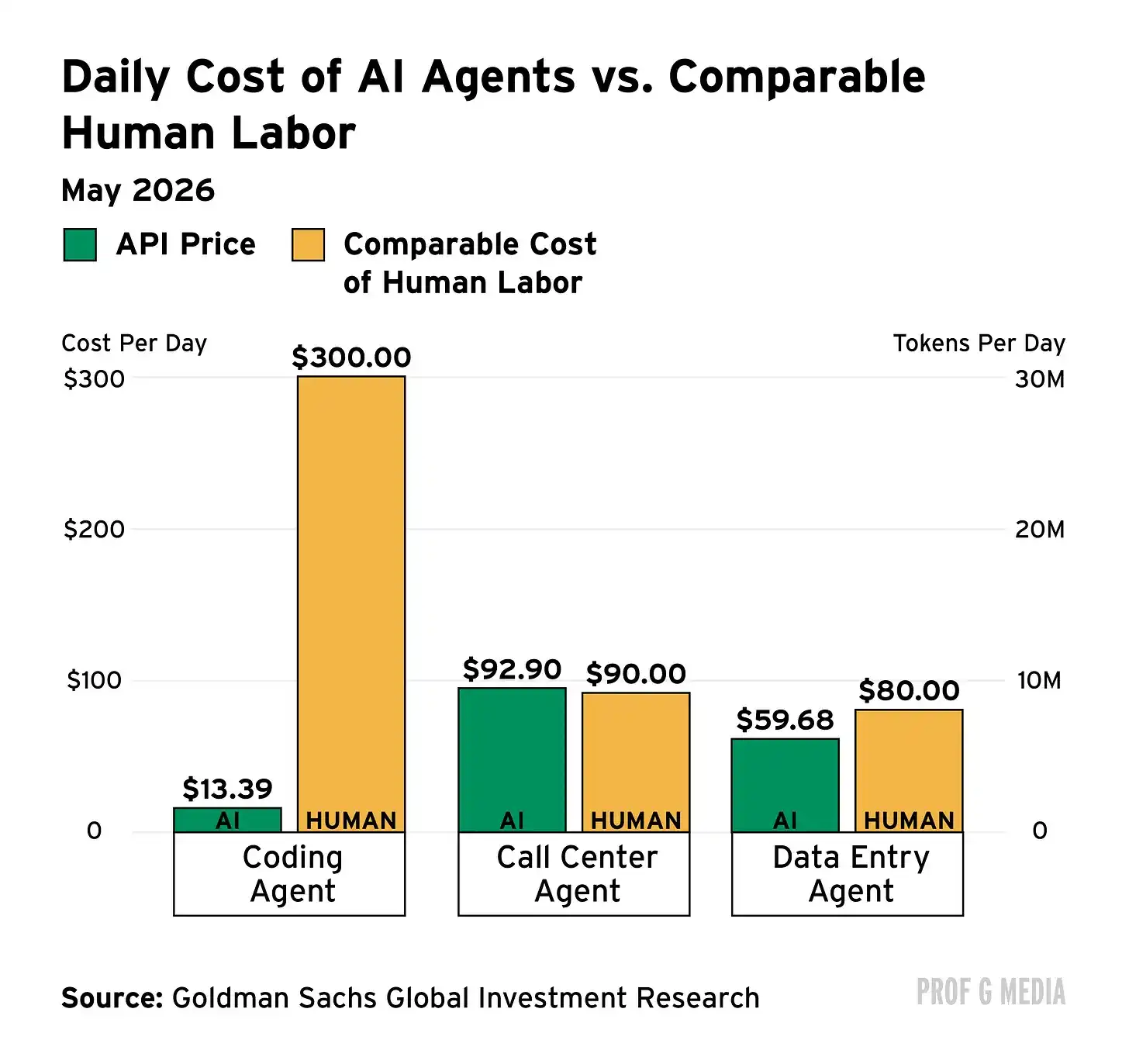
Figure: The AI Cost Shock for Businesses – AI spending and cost feedback from companies like Uber, Microsoft, Nvidia, Meta

Uber burned through its entire 2026 AI budget in just four months. The COO said it's becoming increasingly difficult to justify AI expenditures internally. Microsoft is cutting Claude Code licenses in multiple departments for one simple reason: cost.

A Nvidia executive stated that compute costs now "far exceed employee costs." Meta, Pinterest, and Spotify all cited rising inference costs as a drag on margins in their Q1 earnings reports.

How big are corporate AI budgets? A survey by cloud cost management company CloudZero shows that in 2025, 45% of businesses spent over $100,000 per month on AI, up from only 20% the previous year.

An even more extreme case within Anthropic: one employee spent $150,000 on Claude Code in a single month. For that to be financially justifiable, this engineer would need to do the work of 11 average engineers.

In the current market, the performative value of the word "efficiency" has been consistently rewarded, to the point where companies don't even need to actually calculate efficiency. 79% of S&P 500 companies mentioned AI in their recent earnings calls, but only 8% disclosed any AI-related revenue.
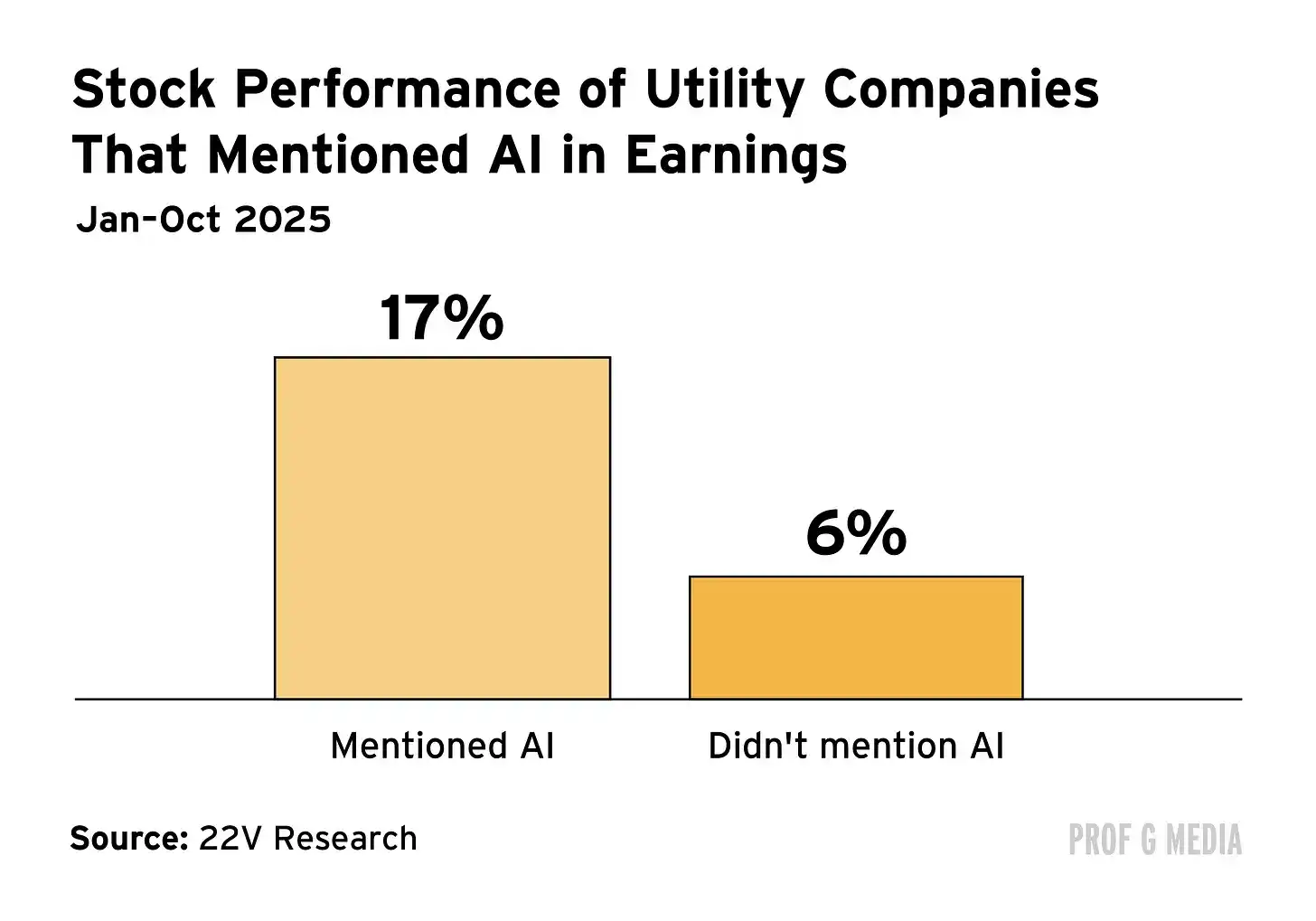
Figure: S&P 500 Companies' AI Rhetoric vs. Actual Revenue Disclosure

The same CloudZero report also found that only half</strong of the surveyed companies expressed confidence in their ability to assess the return on their AI investments. Match Group CEO Spencer Rascoff said AI costs the company $5 to $10 million annually. When asked about ROI, he said, "I think we benefit from it, but it's hard to feel."

Chinese Large Models Will Be the Biggest Winners

Scott Galloway's judgment is: companies will ultimately turn to the cheapest models, which are Chinese large language models. Chinese models are 10 to 30 times cheaper than American models.

Data is already validating this trend: the share of Chinese models in developer usage surged from about 1% in 2024 to over 60% in May of this year, and 80% of US AI startups are using Chinese open-source AI models.
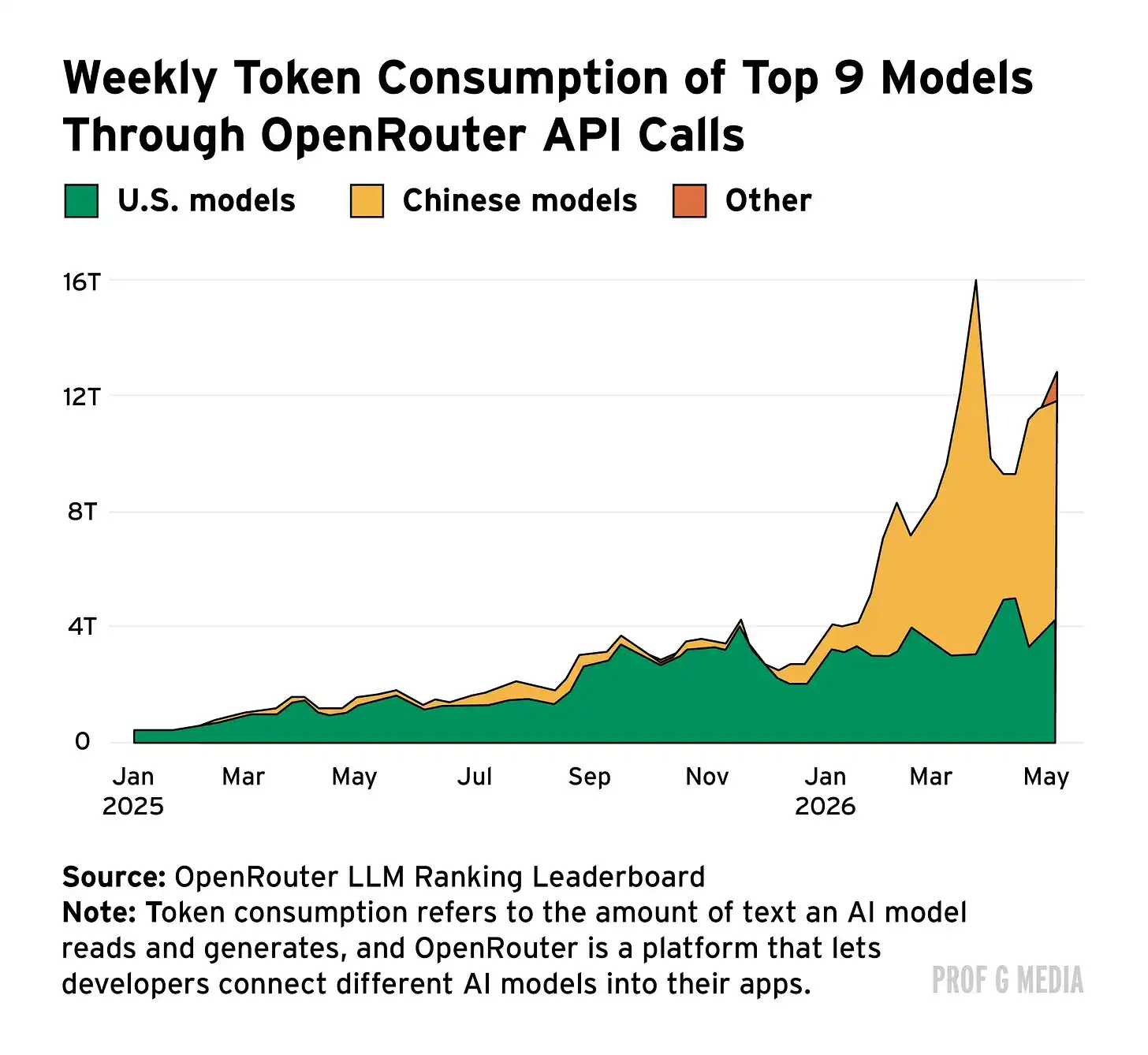
Figure: Changes in Share of Chinese Large Models in Developer Usage & Usage by US AI Startups


Criptos en tendencia

Preguntas relacionadas

QWhat is the main finding about AI's cost compared to human labor based on the article?

AThe article finds that an increasing number of companies are discovering that the actual operational cost of AI is higher than the cost of the human labor it is intended to replace.

QWhich companies are mentioned as facing significant AI cost challenges?

AUber, Microsoft, Nvidia, Meta, Pinterest, Spotify, and Anthropic are mentioned as companies facing high AI costs or budgetary issues.

QAccording to the article, what percentage of S&P 500 companies disclosed AI-related revenue in their recent earnings calls?

AOnly 8% of S&P 500 companies disclosed any AI-related revenue in their recent earnings calls, despite 79% mentioning AI.

QWhat does Scott Galloway predict will be the solution for companies struggling with high AI costs?

AScott Galloway predicts that companies will eventually turn to cheaper Chinese large language models, which are 10 to 30 times less expensive than American models.

QWhat dramatic increase in usage of Chinese AI models is highlighted in the data presented?

AThe data shows that the share of Chinese models among developers soared from about 1% in 2024 to over 60% by May of the article's year, with 80% of U.S. AI startups using Chinese open-source AI models.

Lecturas Relacionadas

In Conversation with Ray Dalio: We Are Currently in an AI Bubble, with 1% of My Portfolio in Bitcoin

Ray Dalio, founder of Bridgewater Associates, warns in an interview that the current AI boom shows classic bubble characteristics, which could lead to significant economic downturns as seen in past cycles like 1929 or 2000. He explains that speculative enthusiasm, fueled by debt and overvaluation, often precedes a crash when rising rates or taxation force asset sales, causing widespread losses and recession. Dalio also outlines his "Big Cycle" theory, describing an approximate 80-year pattern where widening wealth gaps, massive government deficits, and shifting geopolitical power (like China's rise) create internal conflict and global instability. He emphasizes that we are in a late-cycle, transitional phase where traditional powers like the US and UK face decline. For personal wealth protection, Dalio advises diversification beyond cash into assets like stocks, bonds, real estate, and particularly gold, which he prefers over Bitcoin. While he holds about 1% of his portfolio in Bitcoin as a non-printable hard asset, he views gold as more secure from technological or governmental threats. Regarding AI's impact, Dalio believes it will disproportionately benefit capital owners, worsening inequality by replacing both physical and cognitive labor. He suggests that human intuition and emotional intelligence, combined with AI, will be key for future workers. On taxation, Dalio argues that wealth taxes are impractical and risk triggering asset sell-offs, reducing productive investment. He points to the UK as a cautionary example of debt, low productivity, and political strife. Geopolitically, Dalio foresees a more regionalized world, with the US showing weakness in prolonged conflicts like with Iran, akin to past imperial declines. The ideal outcome, he suggests, is coexisting powerful blocs (e.g., Americas, China-Asia Pacific) without major war.

marsbitHace 1 hora(s)

In Conversation with Ray Dalio: We Are Currently in an AI Bubble, with 1% of My Portfolio in Bitcoin

marsbitHace 1 hora(s)

Daily 7.2 Trillion KRW: Foreign Capital's Record Net Buying on Friday! Wall Street Says Headwinds for Korean Stock Fund Flows Have Subsided

South Korean stock market sees a dramatic shift in fund flows. On July 31, foreign investors made a record net purchase of approximately KRW 7.2 trillion in KOSPI stocks, marking a fundamental reversal from the persistent large-scale net outflows seen in previous months. This contributed to a significant narrowing of foreign net selling in July to KRW 9.8 trillion, down sharply from KRW 48.4 trillion in June and KRW 44.5 trillion in May. Simultaneously, domestic institutional pressure eased. South Korean pension funds and asset managers turned to a net buying position in July, purchasing KRW 1.0 trillion worth of KOSPI shares, contrasting with net sales in May and June. Market volatility is expected to be dampened by new financial regulations. Effective July 31, the Financial Services Commission tightened access for retail investors to single-stock leveraged ETFs by raising the minimum cash deposit requirement. Trading volumes for these products subsequently dropped to about 50% of their monthly average. Citigroup Research maintains its year-end KOSPI target of 10,000 points. The firm cites several supportive factors: the substantial easing of headwinds from capital outflows, a robust fundamental outlook for the semiconductor sector, historically low market valuations, strong economic fundamentals, and the potential for policy support from financial authorities if needed.

marsbitHace 1 hora(s)

Daily 7.2 Trillion KRW: Foreign Capital's Record Net Buying on Friday! Wall Street Says Headwinds for Korean Stock Fund Flows Have Subsided

marsbitHace 1 hora(s)

Thanks to Dice Rolls, Bitcoin Keys Are Stored Offline, But Not Everyone Will Do It

The article discusses using dice rolls to generate secure Bitcoin wallet seeds, providing entropy independent of potentially flawed hardware random number generators. It explains that each fair dice roll offers about 2.585 bits of entropy, with around 50 rolls needed for a standard 12-word seed phrase and 99+ recommended for higher security. This method gained attention after a vulnerability was revealed in some Coldcard hardware wallets, where a faulty firmware RNG (dating back to 2021) compromised generated keys. The analysis notes that while a dice-generated main seed was safe from this specific flaw, other Coldcard functions (like creating paper wallets, backup keys, or passwords) could still be vulnerable if they used the defective RNG. The piece argues that while dice-based entropy is technically robust, the manual process is error-prone, tedious, and unrealistic for most new users, who might make mistakes in recording or inputting rolls. It concludes that while manual entropy generation should remain an option for advanced users, the long-term goal is to develop reliable, user-friendly hardware and software that securely generates randomness without requiring specialized knowledge. Coldcard users are advised to check their firmware version and replace any secondary secrets (like paper wallet keys) created with vulnerable devices, while also considering multi-signature setups with devices from different manufacturers for added security.

cryptonews.ruHace 6 hora(s)

Thanks to Dice Rolls, Bitcoin Keys Are Stored Offline, But Not Everyone Will Do It

cryptonews.ruHace 6 hora(s)

Trading

Spot

Artículos destacados

Cómo comprar PEOPLE

¡Bienvenido a HTX.com! Hemos hecho que comprar ConstitutionDAO (PEOPLE) sea simple y conveniente. Sigue nuestra guía paso a paso para iniciar tu viaje de criptos.Paso 1: crea tu cuenta HTXUtiliza tu correo electrónico o número de teléfono para registrarte y obtener una cuenta gratuita en HTX. Experimenta un proceso de registro sin complicaciones y desbloquea todas las funciones.Obtener mi cuentaPaso 2: ve a Comprar cripto y elige tu método de pagoTarjeta de crédito/débito: usa tu Visa o Mastercard para comprar ConstitutionDAO (PEOPLE) al instante.Saldo: utiliza fondos del saldo de tu cuenta HTX para tradear sin problemas.Terceros: hemos agregado métodos de pago populares como Google Pay y Apple Pay para mejorar la comodidad.P2P: tradear directamente con otros usuarios en HTX.Over-the-Counter (OTC): ofrecemos servicios personalizados y tipos de cambio competitivos para los traders.Paso 3: guarda tu ConstitutionDAO (PEOPLE)Después de comprar tu ConstitutionDAO (PEOPLE), guárdalo en tu cuenta HTX. Alternativamente, puedes enviarlo a otro lugar mediante transferencia blockchain o utilizarlo para tradear otras criptomonedas.Paso 4: tradear ConstitutionDAO (PEOPLE)Tradear fácilmente con ConstitutionDAO (PEOPLE) en HTX's mercado spot. Simplemente accede a tu cuenta, selecciona tu par de trading, ejecuta tus trades y monitorea en tiempo real. Ofrecemos una experiencia fácil de usar tanto para principiantes como para traders experimentados.

552 Vistas totalesPublicado en 2024.12.12Actualizado en 2026.06.02

Cómo comprar PEOPLE

Discusiones

Bienvenido a la comunidad de HTX. Aquí puedes mantenerte informado sobre los últimos desarrollos de la plataforma y acceder a análisis profesionales del mercado. A continuación se presentan las opiniones de los usuarios sobre el precio de PEOPLE (PEOPLE).

活动图片












